


Simon Li
-
Posts
269 -
Joined
-
Last visited
Content Type
Profiles
Toronto Blue Jays Videos
2026 Toronto Blue Jays Top Prospects Ranking
Toronto Blue Jays Free Agent & Trade Rumors, Notes, & Tidbits
Guides & Resources
2025 Toronto Blue Jays Draft Pick Tracker
News
2026 Toronto Blue Jays Draft Tracker: Picks & Bonuses
Forums
Blogs
Events
Store
Downloads
Gallery
Everything posted by Simon Li
-
Blue Jays Affiliate Overview (May 4-May 6) Triple-A Buffalo Bisons Series vs Lehigh Valley IronPigs (Philadelphia Phillies): 1-1 Season Record: 16-19 Double-A New Hampshire Fisher Cats Series vs Portland Sea Dogs (Boston Red Sox): 1-0 Season Record: 16-10 High-A Vancouver Canadians Series vs Eugene Emeralds (San Francisco Giants): 0-1 Season Record: 11-17 Single-A Dunedin Blue Jays Series vs Bradenton Marauders (Pittsburgh Pirates): 0-2 Season Record: 11-18 FCL Blue Jays Week Record: 3-0 Season Record: 3-0 Triple-A Buffalo Bisons Season Record: 16-19 Series Opponent: Lehigh Valley IronPigs (Philadelphia Phillies) May 5: The Buffalo Bisons opened a new series on Tuesday, this one against the Lehigh Valley IronPigs. The game was placed into the relievers' hands from the start, as it was a bullpen game for Buffalo. Hayden Juenger and Devereaux Harrison pitched well, combining for four innings and allowing zero runs to cross home plate. Brendan Cellucci and Brendon Little were next up out of the pen, and they imploded in an epic way. Cellucci surrendered a three-run home run in his inning of work. Little then was bit by an error. After getting a double play ball, Little walked two, with a runner reaching on Riley Tirotta's error in between. Otto Kemp then blasted a grand slam off of Little; it went 104 mph off the bat and traveled 423 feet. While the pitching and fielding put Buffalo in a bind in the middle innings, the bats were nonexistent until the end of the game. There were a couple of standouts at the plate, though. Charles McAdoo and Ismael Munguia were almost perfect on the day. McAdoo collected five hits, while Munguia added three. Having only scored one run up until the top of the ninth, Buffalo tried to pull off a comeback down 7-1. Josh Kasevich knocked in a run on a single, and then McAdoo notched his fifth and final hit of the game, a big three-run home run to left field. The comeback was nearing completion, but Josh Rivera struck out to end the game, with Buffalo falling 7-5. May 6: Wednesday's game against the Lehigh Valley IronPigs was by far the best and most complete game Buffalo has played on the season. The bats came alive early and never stopped. The Bisons recorded 15 hits on the day, including five doubles. With two more base knocks, Ismael Munguia continued his torrid start to his time at Triple-A. He ended the game with his batting average at .375. Jonatan Clase opened up the scoring by knocking in Munguia following his double to lead off the game. RJ Schreck began his big game with an RBI single to score Clase. In the second inning, Charles McAdoo doubled home a run, and then Schreck doubled in two more. Schreck was 3-for-5 for the game, with two doubles, five RBI, and two runs scored. On the pitching side, Austin Voth pitched four strong innings, not allowing a run to score and only giving up three hits. Yariel Rodríguez and Jesse Hahn wrapped up the final 3.1 innings and didn't allow a run either. Buffalo took this game with ease in a full team effort, 11-1. Double-A New Hampshire Season Record: 16-10 Series vs. Portland Sea Dogs (Boston Red Sox) May 5: New Hampshire kicked off their series with the Portland Sea Dogs in a fast manner. In the top of the first, Jace Bohrofen lifted a ball over the right field fence for his eighth home run of the season to give the Fisher Cats a one-run lead. In the fourth, New Hampshire would strike again. This time, a Cutter Coffey double scored a run. Nate Baez and Johanfran Garcia launched home runs in the fourth and seventh innings, respectively, for Portland to tie the game. In the top of the ninth, Aaron Parker took his turn at crushing a solo home run, as the Fisher Cats took a one-run lead. Conor Larkin came in and closed the game for his fourth save and a 3-2 New Hampshire win. May 6: Postponed High-A Vancouver Season Record: 11-17 Series vs Eugene Emeralds (San Francisco Giants) May 4: The Canadians had to face the red-hot Emeralds, who have won every single series they have played this season. Danny Thompson Jr. bounced back from his previous start, although he got tagged for a two-run double in the first inning. He still struck out six batters in four innings of work and didn’t allow a run after that. The Canadians threatened in the second inning, loading the bases with one out, but J.R. Freethy grounded into a double play. That was the only time the Canadians threatened the Emeralds’ starter Charlie McDaniel, who went a little over four innings of scoreless pitching. Reece Wissinger has struggled since getting promoted to Vancouver, and he gave up two more runs to make it a 4-0 ball game. Kelena Sauer, on the other hand, continued to pitch well, with three strikeouts in a perfect inning. The Canadians answered back in the seventh inning, with Peyton Williams continuing his hot start, driving in two with a double, and the Canadians had runners on second and third with one out in the eighth inning, but all they could muster was a sac fly from Tucker Toman, leading to a close 3-4 loss. Single-A Dunedin Season Record: 11-18 Series vs Bradenton Marauders (Pittsburgh Pirates) May 5: After losing the first three-game series against Bradenton, the D-Jays hoped to turn it around this series. Dylan Watts was once again solid in his second pro start, showing good velocity and allowing only two runs in 4.2 innings, including one homer to the “Password” Jhostynxon Garcia, who was on a rehab assignment for the Pirates. Utilityman Dariel Ramon, who’s played six different positions already early on in this season, hit a double to score Blaine Bullard to get Dunedin on the board in the fifth, and Yorman Licourt hit a solo shot to tie it up in the sixth inning. Diego Dominguez struck out five people in over three innings of work in relief, keeping it a tie for the Jays, but in the top of the ninth, Jack Eshleman gave up a solo homer, which ended up losing the game for the Jays, who couldn’t get Will Cresswell in after he hit a double with two outs. May 6: The Jays were undone once again by their own poor defense. Brayden Heidel started this game, and despite three walks, he was able to prevent any damage, going nearly four innings of scoreless baseball. Luis Victorino replaced Heidel and pitched well into the sixth inning, but a throwing error broke the game open for the Marauders, and after Victorino hit a batter with a pitch, he was replaced for Carson Myers. Unfortunately for Myers, a catcher’s interference loaded the bases, and he gave up a grand slam to make it a five-run inning for Bradenton. Eduar Gonzalez was the new pitcher after Myers was taken out, and after allowing a run to score on an RBI single, Juan Rosas made another mistake defensively with a passed ball, leading to another unearned run to score, making five of the seven for Bradenton off of Dunedin miscues. Addison Barger prevented the shutout with a towering homer to right field, but that was it for the Jays. FCL Blue Jays Season Record: 3-0 May 5: The FCL Blue Jays faced off against the FCL Tigers in a game dominated by pitching on Tuesday. Carson Messina was back on the mound for the Blue Jays squad after only pitching two innings last season before getting hurt. He was fantastic, going three perfect innings, not allowing a hit, walk, or run, and striking out three. Edgar Gallegos went two innings without giving up a run, and Josbel Garcia closed the game with two perfect innings and one strikeout for the save. The FCL Blue Jays won 2-0. Transactions 05/06/26 New Hampshire Fisher Cats activated RHP Yondrei Rojas from the 7-day injured list. 05/06/26 New Hampshire Fisher Cats activated CF Victor Arias from the 7-day injured list. 05/05/26 Buffalo Bisons activated LF Jonatan Clase from the 7-day injured list. 05/05/26 Buffalo Bisons transferred RF Je'Von Ward to the Development List. 05/05/26 Dunedin Blue Jays placed RHP Dayne Pengelly on the 7-day injured list. 05/05/26 SS Owen Gregg assigned to Dunedin Blue Jays from FCL Blue Jays. 05/05/26 SS Eric Snow assigned to Dunedin Blue Jays from New Hampshire Fisher Cats. 05/05/26 OF David Guzman assigned to Dunedin Blue Jays from FCL Blue Jays. 05/04/26 RHP Michael De La Cruz assigned to FCL Blue Jays from DSL Blue Jays Blue. 05/04/26 Dunedin Blue Jays placed SS Raimundo De Los Santos on the 7-day injured list. 05/04/26 Dunedin Blue Jays placed OF Enmanuel Bonilla on the 7-day injured list. 05/04/26 New Hampshire Fisher Cats transferred RHP Fernando Perez to the Development List. View full article
-
- 1
-

-
- rj schreck
- charles mcadoo
- (and 1 more)
-
 Blue Jays Affiliate Overview (May 4-May 6) Triple-A Buffalo Bisons Series vs Lehigh Valley IronPigs (Philadelphia Phillies): 1-1 Season Record: 16-19 Double-A New Hampshire Fisher Cats Series vs Portland Sea Dogs (Boston Red Sox): 1-0 Season Record: 16-10 High-A Vancouver Canadians Series vs Eugene Emeralds (San Francisco Giants): 0-1 Season Record: 11-17 Single-A Dunedin Blue Jays Series vs Bradenton Marauders (Pittsburgh Pirates): 0-2 Season Record: 11-18 FCL Blue Jays Week Record: 3-0 Season Record: 3-0 Triple-A Buffalo Bisons Season Record: 16-19 Series Opponent: Lehigh Valley IronPigs (Philadelphia Phillies) May 5: The Buffalo Bisons opened a new series on Tuesday, this one against the Lehigh Valley IronPigs. The game was placed into the relievers' hands from the start, as it was a bullpen game for Buffalo. Hayden Juenger and Devereaux Harrison pitched well, combining for four innings and allowing zero runs to cross home plate. Brendan Cellucci and Brendon Little were next up out of the pen, and they imploded in an epic way. Cellucci surrendered a three-run home run in his inning of work. Little then was bit by an error. After getting a double play ball, Little walked two, with a runner reaching on Riley Tirotta's error in between. Otto Kemp then blasted a grand slam off of Little; it went 104 mph off the bat and traveled 423 feet. While the pitching and fielding put Buffalo in a bind in the middle innings, the bats were nonexistent until the end of the game. There were a couple of standouts at the plate, though. Charles McAdoo and Ismael Munguia were almost perfect on the day. McAdoo collected five hits, while Munguia added three. Having only scored one run up until the top of the ninth, Buffalo tried to pull off a comeback down 7-1. Josh Kasevich knocked in a run on a single, and then McAdoo notched his fifth and final hit of the game, a big three-run home run to left field. The comeback was nearing completion, but Josh Rivera struck out to end the game, with Buffalo falling 7-5. May 6: Wednesday's game against the Lehigh Valley IronPigs was by far the best and most complete game Buffalo has played on the season. The bats came alive early and never stopped. The Bisons recorded 15 hits on the day, including five doubles. With two more base knocks, Ismael Munguia continued his torrid start to his time at Triple-A. He ended the game with his batting average at .375. Jonatan Clase opened up the scoring by knocking in Munguia following his double to lead off the game. RJ Schreck began his big game with an RBI single to score Clase. In the second inning, Charles McAdoo doubled home a run, and then Schreck doubled in two more. Schreck was 3-for-5 for the game, with two doubles, five RBI, and two runs scored. On the pitching side, Austin Voth pitched four strong innings, not allowing a run to score and only giving up three hits. Yariel Rodríguez and Jesse Hahn wrapped up the final 3.1 innings and didn't allow a run either. Buffalo took this game with ease in a full team effort, 11-1. Double-A New Hampshire Season Record: 16-10 Series vs. Portland Sea Dogs (Boston Red Sox) May 5: New Hampshire kicked off their series with the Portland Sea Dogs in a fast manner. In the top of the first, Jace Bohrofen lifted a ball over the right field fence for his eighth home run of the season to give the Fisher Cats a one-run lead. In the fourth, New Hampshire would strike again. This time, a Cutter Coffey double scored a run. Nate Baez and Johanfran Garcia launched home runs in the fourth and seventh innings, respectively, for Portland to tie the game. In the top of the ninth, Aaron Parker took his turn at crushing a solo home run, as the Fisher Cats took a one-run lead. Conor Larkin came in and closed the game for his fourth save and a 3-2 New Hampshire win. May 6: Postponed High-A Vancouver Season Record: 11-17 Series vs Eugene Emeralds (San Francisco Giants) May 4: The Canadians had to face the red-hot Emeralds, who have won every single series they have played this season. Danny Thompson Jr. bounced back from his previous start, although he got tagged for a two-run double in the first inning. He still struck out six batters in four innings of work and didn’t allow a run after that. The Canadians threatened in the second inning, loading the bases with one out, but J.R. Freethy grounded into a double play. That was the only time the Canadians threatened the Emeralds’ starter Charlie McDaniel, who went a little over four innings of scoreless pitching. Reece Wissinger has struggled since getting promoted to Vancouver, and he gave up two more runs to make it a 4-0 ball game. Kelena Sauer, on the other hand, continued to pitch well, with three strikeouts in a perfect inning. The Canadians answered back in the seventh inning, with Peyton Williams continuing his hot start, driving in two with a double, and the Canadians had runners on second and third with one out in the eighth inning, but all they could muster was a sac fly from Tucker Toman, leading to a close 3-4 loss. Single-A Dunedin Season Record: 11-18 Series vs Bradenton Marauders (Pittsburgh Pirates) May 5: After losing the first three-game series against Bradenton, the D-Jays hoped to turn it around this series. Dylan Watts was once again solid in his second pro start, showing good velocity and allowing only two runs in 4.2 innings, including one homer to the “Password” Jhostynxon Garcia, who was on a rehab assignment for the Pirates. Utilityman Dariel Ramon, who’s played six different positions already early on in this season, hit a double to score Blaine Bullard to get Dunedin on the board in the fifth, and Yorman Licourt hit a solo shot to tie it up in the sixth inning. Diego Dominguez struck out five people in over three innings of work in relief, keeping it a tie for the Jays, but in the top of the ninth, Jack Eshleman gave up a solo homer, which ended up losing the game for the Jays, who couldn’t get Will Cresswell in after he hit a double with two outs. May 6: The Jays were undone once again by their own poor defense. Brayden Heidel started this game, and despite three walks, he was able to prevent any damage, going nearly four innings of scoreless baseball. Luis Victorino replaced Heidel and pitched well into the sixth inning, but a throwing error broke the game open for the Marauders, and after Victorino hit a batter with a pitch, he was replaced for Carson Myers. Unfortunately for Myers, a catcher’s interference loaded the bases, and he gave up a grand slam to make it a five-run inning for Bradenton. Eduar Gonzalez was the new pitcher after Myers was taken out, and after allowing a run to score on an RBI single, Juan Rosas made another mistake defensively with a passed ball, leading to another unearned run to score, making five of the seven for Bradenton off of Dunedin miscues. Addison Barger prevented the shutout with a towering homer to right field, but that was it for the Jays. FCL Blue Jays Season Record: 3-0 May 5: The FCL Blue Jays faced off against the FCL Tigers in a game dominated by pitching on Tuesday. Carson Messina was back on the mound for the Blue Jays squad after only pitching two innings last season before getting hurt. He was fantastic, going three perfect innings, not allowing a hit, walk, or run, and striking out three. Edgar Gallegos went two innings without giving up a run, and Josbel Garcia closed the game with two perfect innings and one strikeout for the save. The FCL Blue Jays won 2-0. Transactions 05/06/26 New Hampshire Fisher Cats activated RHP Yondrei Rojas from the 7-day injured list. 05/06/26 New Hampshire Fisher Cats activated CF Victor Arias from the 7-day injured list. 05/05/26 Buffalo Bisons activated LF Jonatan Clase from the 7-day injured list. 05/05/26 Buffalo Bisons transferred RF Je'Von Ward to the Development List. 05/05/26 Dunedin Blue Jays placed RHP Dayne Pengelly on the 7-day injured list. 05/05/26 SS Owen Gregg assigned to Dunedin Blue Jays from FCL Blue Jays. 05/05/26 SS Eric Snow assigned to Dunedin Blue Jays from New Hampshire Fisher Cats. 05/05/26 OF David Guzman assigned to Dunedin Blue Jays from FCL Blue Jays. 05/04/26 RHP Michael De La Cruz assigned to FCL Blue Jays from DSL Blue Jays Blue. 05/04/26 Dunedin Blue Jays placed SS Raimundo De Los Santos on the 7-day injured list. 05/04/26 Dunedin Blue Jays placed OF Enmanuel Bonilla on the 7-day injured list. 05/04/26 New Hampshire Fisher Cats transferred RHP Fernando Perez to the Development List.
 -
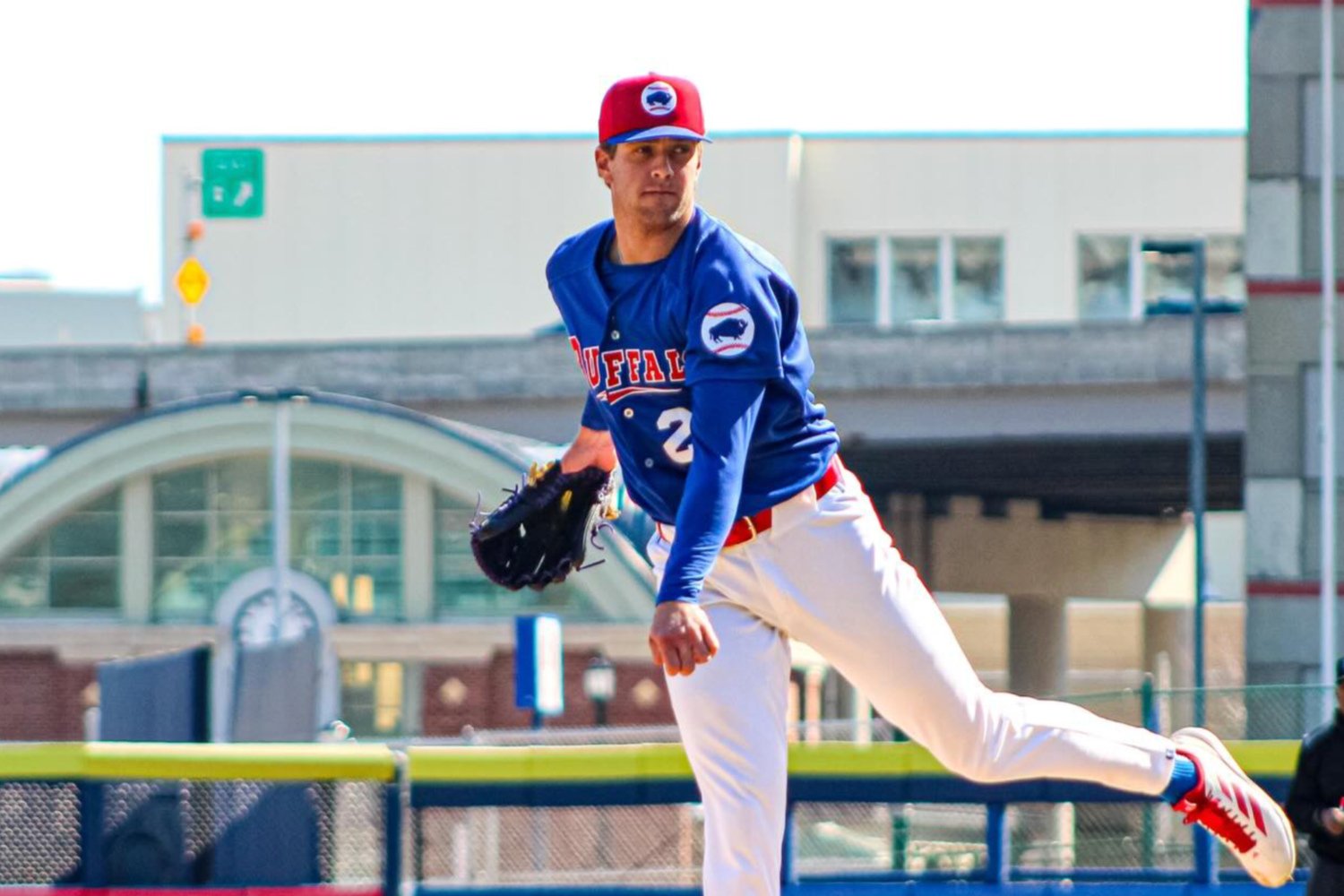 The first month of the season for minor league baseball has concluded, and these were the Blue Jays' best minor league relievers to start off the year. The Jays have established a strong bullpen core in the major leagues and have done a better job of talent identification and pitcher development over the past few years. Relievers are highly volatile pitchers, and one or two bad outings could make an otherwise good month a horrific one. The performances of relievers, let alone minor league ones, can be highly skewed by variance. Instead of just focusing on results like ERA, evaluating the ways that pitchers get hitters out and their ability to keep runners from getting on base is more important. Honourable Mentions LHP Brendon Little - Buffalo Bisons - 9 IP, 1.00 ERA, 2.53 FIP, 44.4 K%, 22.2 BB%, 1.44 WHIP The enigmatic Brendon Little was demoted down to Buffalo after a disappointing start in the majors, but the lefty made good use of the reset, not allowing a single run until the last day of the month. The walks continue to be an issue; walking over 22 percent of the batters he’s faced is not ideal. Yet, the tantalizing whiffs and strikeout potential are ever-present, as he’s struck out double that. For now, Joe Mantiply and Mason Fluharty have been solid in the majors, but Little might be the first one up if anything happens to them. RHP Aaron Munson - Vancouver Canadians, New Hampshire Fisher Cats - 11 ⅓ IP, 3.97 ERA, 2.90 FIP, 33.3 K%, 13.7 BB%, 1.50 WHIP Aaron Munson pitched well enough to get the call to Double A, and despite a few games where he lost the zone and gave up multiple earned runs, he also had games where he pitched three shutout innings in relief with five strikeouts or more twice. The 2023 19th-rounder was a fixture in the Canadians ‘pen in 2025, and now will try to replicate that success in Double A. Top 5 #5 - RHP Kelena Sauer - Vancouver Canadians - 9 ⅓ IP, 1.93 ERA, 2.62 FIP, 30.2 K%, 11.6 BB%, 1.71 WHIP Kelena Sauer returned from a lost year after undergoing elbow surgery and rehabbing for all of 2025. The 2023 15th-rounder showed interesting stuff in 2024 before the injury, and has looked sharp, pitching to a 1.93 ERA despite bad BABIP luck. Five of his six appearances were scoreless appearances, and despite the rust, he has really impressed. #4 - LHP Carson Myers - Dunedin Blue Jays - 12 ⅓ IP, 4.38 ERA, 1.83 FIP, 38.2 K%, 9.1 BB%, 1.30 WHIP Carson Myers was an undrafted free agent that the Jays signed after the 2025 draft, who pitched to a 3.18 ERA in 10 appearances in 2025 for his pro debut. His walks were a big problem though, as he walked 16.7% of the batters he faced. He’s improved his command immensely, and despite a worse ERA, the process has been significantly better for Myers. He halved his walk rate and has struck out over 38 percent of the batters he’s faced. His low velocity limits his upside, but his lower three-quarters slot is a weird look for hitters. #3 - RHP Holden Wilkerson - Vancouver Canadians - 18.2 IP, 1.93 ERA, 3.31 ERA, 29.1 K%, 8.9 BB%, 1.13 WHIP An 18th-rounder last season out of Virginia Military Institute, Holden Wilkerson showed some flashes of potential in Dunedin, despite some poor results. He has piggybacked off of Johnny King in each of his outings, and they have been one of the hardest duos to face in the minor leagues, similar to Trey Yesavage and Gage Stanifer in 2025. Wilkerson struggled last season, leaking the ball over the plate too often and getting hit hard, but he’s done a good job of striking out hitters and inducing groundballs when he does get hit, while still walking less than 9% of the batters he’s faced. #2 - RHP Conor Larkin - New Hampshire Fisher Cats - 10 ⅓ IP, 0.00 ERA, 2.45 FIP, 30.6 K%, 8.3 BB%, 0.58 WHIP Conor Larkin was the Jays’ ninth-rounder in the 2021 draft and signed for just $77,500 out of Penn State. The now 27-year-old hasn’t made it above Double A yet, but has been a solid reliever in the minors over the past four years. He’s yet to allow a run early on in this minor league season and should get a chance at Triple A sooner than later. He’s struck out over 30 percent of the batters he’s faced, walked just over eight percent, and has had a solid groundball rate of 45.5%. He won’t get on any prospect lists for the Jays, but could pitch some lower-leverage major league innings with his solid velocity, sidearm delivery and high-spin offerings. #1 - LHP - Brendan Cellucci - New Hampshire Fisher Cats, Buffalo Bisons - 10 ⅓ IP, 0.87 ERA, 2.69 FIP, 46.2 K%, 12.8 BB%, 1.16 WHIP Brendan Cellucci was playing in Indy Ball last year and was exceptional, pitching to a 1.96 ERA and striking out 32 batters in 18 innings of work. The Jays took a chance on him, as they’ve spent a lot of time and effort finding Indy Ball darlings. Cellucci rewarded them with a really strong start to the season, striking out over 46% of the batters he faced with a below-average but not bad walk rate. The lefty has done a great job using his sinker-slider combo to keep hitters off balance, and when not striking out hitters, he also has a groundball rate of 62.5% when he does get hit. Although he has below-average velocity, he has solid extension to make up for it. He may be blocked by a litany of lefty reliever options on the 40-man roster, but he’s been an interesting find for the Blue Jays.
 -
The first month of the season for minor league baseball has concluded, and these were the Blue Jays' best minor league relievers to start off the year. The Jays have established a strong bullpen core in the major leagues and have done a better job of talent identification and pitcher development over the past few years. Relievers are highly volatile pitchers, and one or two bad outings could make an otherwise good month a horrific one. The performances of relievers, let alone minor league ones, can be highly skewed by variance. Instead of just focusing on results like ERA, evaluating the ways that pitchers get hitters out and their ability to keep runners from getting on base is more important. Honourable Mentions LHP Brendon Little - Buffalo Bisons - 9 IP, 1.00 ERA, 2.53 FIP, 44.4 K%, 22.2 BB%, 1.44 WHIP The enigmatic Brendon Little was demoted down to Buffalo after a disappointing start in the majors, but the lefty made good use of the reset, not allowing a single run until the last day of the month. The walks continue to be an issue; walking over 22 percent of the batters he’s faced is not ideal. Yet, the tantalizing whiffs and strikeout potential are ever-present, as he’s struck out double that. For now, Joe Mantiply and Mason Fluharty have been solid in the majors, but Little might be the first one up if anything happens to them. RHP Aaron Munson - Vancouver Canadians, New Hampshire Fisher Cats - 11 ⅓ IP, 3.97 ERA, 2.90 FIP, 33.3 K%, 13.7 BB%, 1.50 WHIP Aaron Munson pitched well enough to get the call to Double A, and despite a few games where he lost the zone and gave up multiple earned runs, he also had games where he pitched three shutout innings in relief with five strikeouts or more twice. The 2023 19th-rounder was a fixture in the Canadians ‘pen in 2025, and now will try to replicate that success in Double A. Top 5 #5 - RHP Kelena Sauer - Vancouver Canadians - 9 ⅓ IP, 1.93 ERA, 2.62 FIP, 30.2 K%, 11.6 BB%, 1.71 WHIP Kelena Sauer returned from a lost year after undergoing elbow surgery and rehabbing for all of 2025. The 2023 15th-rounder showed interesting stuff in 2024 before the injury, and has looked sharp, pitching to a 1.93 ERA despite bad BABIP luck. Five of his six appearances were scoreless appearances, and despite the rust, he has really impressed. #4 - LHP Carson Myers - Dunedin Blue Jays - 12 ⅓ IP, 4.38 ERA, 1.83 FIP, 38.2 K%, 9.1 BB%, 1.30 WHIP Carson Myers was an undrafted free agent that the Jays signed after the 2025 draft, who pitched to a 3.18 ERA in 10 appearances in 2025 for his pro debut. His walks were a big problem though, as he walked 16.7% of the batters he faced. He’s improved his command immensely, and despite a worse ERA, the process has been significantly better for Myers. He halved his walk rate and has struck out over 38 percent of the batters he’s faced. His low velocity limits his upside, but his lower three-quarters slot is a weird look for hitters. #3 - RHP Holden Wilkerson - Vancouver Canadians - 18.2 IP, 1.93 ERA, 3.31 ERA, 29.1 K%, 8.9 BB%, 1.13 WHIP An 18th-rounder last season out of Virginia Military Institute, Holden Wilkerson showed some flashes of potential in Dunedin, despite some poor results. He has piggybacked off of Johnny King in each of his outings, and they have been one of the hardest duos to face in the minor leagues, similar to Trey Yesavage and Gage Stanifer in 2025. Wilkerson struggled last season, leaking the ball over the plate too often and getting hit hard, but he’s done a good job of striking out hitters and inducing groundballs when he does get hit, while still walking less than 9% of the batters he’s faced. #2 - RHP Conor Larkin - New Hampshire Fisher Cats - 10 ⅓ IP, 0.00 ERA, 2.45 FIP, 30.6 K%, 8.3 BB%, 0.58 WHIP Conor Larkin was the Jays’ ninth-rounder in the 2021 draft and signed for just $77,500 out of Penn State. The now 27-year-old hasn’t made it above Double A yet, but has been a solid reliever in the minors over the past four years. He’s yet to allow a run early on in this minor league season and should get a chance at Triple A sooner than later. He’s struck out over 30 percent of the batters he’s faced, walked just over eight percent, and has had a solid groundball rate of 45.5%. He won’t get on any prospect lists for the Jays, but could pitch some lower-leverage major league innings with his solid velocity, sidearm delivery and high-spin offerings. #1 - LHP - Brendan Cellucci - New Hampshire Fisher Cats, Buffalo Bisons - 10 ⅓ IP, 0.87 ERA, 2.69 FIP, 46.2 K%, 12.8 BB%, 1.16 WHIP Brendan Cellucci was playing in Indy Ball last year and was exceptional, pitching to a 1.96 ERA and striking out 32 batters in 18 innings of work. The Jays took a chance on him, as they’ve spent a lot of time and effort finding Indy Ball darlings. Cellucci rewarded them with a really strong start to the season, striking out over 46% of the batters he faced with a below-average but not bad walk rate. The lefty has done a great job using his sinker-slider combo to keep hitters off balance, and when not striking out hitters, he also has a groundball rate of 62.5% when he does get hit. Although he has below-average velocity, he has solid extension to make up for it. He may be blocked by a litany of lefty reliever options on the 40-man roster, but he’s been an interesting find for the Blue Jays. View full article
-
- 1
-
-
- brendan cellucci
- conor larkin
- (and 3 more)
-
Blue Jays Minor League Recap: Fisher Cats Pitch a Combined No-Hitter
Simon Li posted an article in Minor Leagues
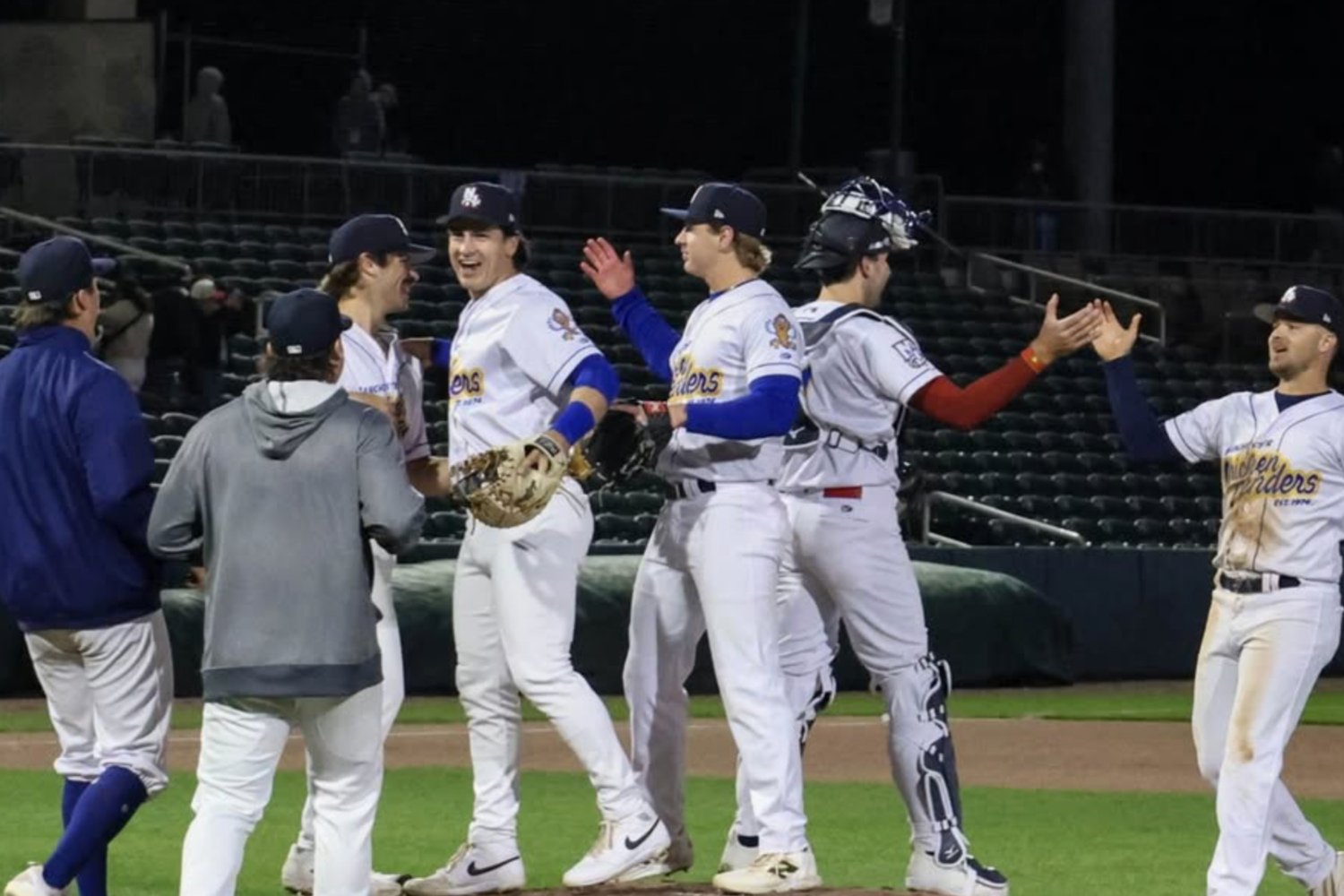 Blue Jays Affiliate Overview (April 28-April 29) Triple-A Buffalo Bisons Series vs. Scranton/Wilkes-Barre RailRiders (New York Yankees): 0-1 Season Record: 13-15 Double-A New Hampshire Fisher Cats Series vs. Binghamton Rumble Ponies (New York Mets): 3-0 Season Record: 13-8 High-A Vancouver Canadians Series vs. Hillsboro Hops (Arizona Diamondbacks): 0-2 Season Record: 9-14 Single-A Dunedin Blue Jays Series vs. Jupiter Hammerheads (Miami Marlins): 1-1 Season Record: 10-13 Triple-A Buffalo Bisons Season Record: 13-14 Series Opponent: Scranton/Wilkes-Barre RailRiders (New York Yankees) April 28: Buffalo opened a new series on Tuesday, this one against the Scranton/Wilkes-Barre RailRiders, and they couldn’t have started the game any better. The Bisons jumped all over the RailRiders in the opening frame, scoring five runs before the fans were even sitting down for lunch. Riley Tirotta opened up the scoring with an RBI single to third base, plating Carlos Mendoza. Willie MacIver followed it up with a two-run single in his second game with the Blue Jays organization, following a trade from the Texas Rangers. Two more runs would score on the next play, thanks to a throwing error on the RailRiders’ third baseman Duncan Pastore. With a five-run lead already in hand, Buffalo sent a rehabbing José Berríos to the mound, and things unraveled quite fast. He coughed up a lead-off home run to Spencer Jones, then Jones got him again in the second inning with a two-run single. In the third, Berríos got tagged again, this time by a Seth Brown two-run home run. Adam Macko came into the game for Berríos in the fifth and didn't fare any better, giving up a three-run home run himself. Jones capped off a monster game for the RailRiders with another home run in the bottom of the eighth, putting the game out of reach for the Bisons. Buffalo fell 9-6 to the RailRiders in this one. April 29: Postponed Double-A New Hampshire Season Record: 13-8 Series vs. Binghamton Rumble Ponies (New York Mets) April 28: Tuesday night was the beginning of a series with the Binghamton Rumble Ponies, and it was a game for the history books. Jace Bohrofen broke open a scoreless game in the fourth inning with an RBI single. Then, Eddie Micheletti Jr. added an RBI single, and Cutter Coffey roped a two-run double. Bohrofen would launch his seventh homer of the season to put New Hampshire up five and add a run on a ball-in-play error in the seventh. Bohrofen went 3-for-4 with the two RBIs, including the home run, but that wasn't the story of the night. The pitching was equal parts historic and historic. Jackson Wentworth started on the mound for New Hampshire and went 4.2 innings without allowing a hit or an earned run. Wentworth did allow four free passes, though. Next came Nate Garkow, who pitched 1.1 innings and didn't give up a hit or run, but also surrendered a walk. Irv Carter then entered the game and went two hitless innings, didn't surrender a run, but walked four as well. He added four strikeouts. Then came Kai Peterson for the ninth. After a leadoff walk, he got two flyouts that set up a matchup between him and Eli Serrano III. For history. On the second pitch of the at-bat, Serrano hit a ball to Micheletti, who caught the fly ball for the no-hitter! It came with 10 walks on the night, but who is counting, because history is history. April 29, Game 1: In the first game of the doubleheader, the bats came alive for the Fisher Cats, who were set up nicely with a good six innings from starting pitcher Chris McElvain. He gave up just two runs in the first inning and then finished six innings with no more runs allowed. New Hampshire got on the board in the second, when Jay Harry hit a two-run double and Ismael Munguia drove in a run on a groundout. With the one-run lead, the Fisher Cats would pile on four more the next inning. Cutter Coffey cleared the bases with a three-run double, and Harry brought him home on an error by the Rumble Ponies. New Hampshire would go on and win this one 8-2. April 29, Game 2: Game two on the night was another comeback affair for the Fisher Cats. They began the game down three runs when Binghamton took a two-run lead in the first and added a third run in the fourth inning. Patrick Winkel drove in two runs with a double for New Hampshire in their half of the fourth inning. In the fifth, Eddie Micheletti Jr. brought home a run, and then Jay Harry knocked in two more runs to give New Hampshire the lead. In the shortened game that didn't have many hits, that is where the scoring ended, as New Hampshire won again, this time 5-3. High-A Vancouver Season Record: 9-14 Series vs. Hillsboro Hops (Arizona Diamondbacks) April 28: Daniel Guerra starts have become must-watches, as the big righty had his fourth start with six strikeouts or more, with the only run he gave up being a solo shot in the second inning. Arjun Nimmala then hit a mammoth homer the inning after to give the Canadians the lead, the furthest in Nat Bailey since 2022. Peyton Williams helped expand the lead with a double and then scored on two straight balks from Junior Sanchez. The Canadians were unable to do anything else against Sanchez, as he struck out 10 Vancouver hitters. Jay Schueler, who’s been lights out in relief so far, gave up his first homer of the season after walking a batter to give up the lead. Schueler was replaced in the eighth by Eminen Flores, who was also great in relief prior to this game, but he gave up two runs himself, as he lost his command. The Canadians couldn’t get anything else going, so they lost after a good start to the game. April 29: After not allowing a run prior to this game, Danny Thompson Jr. proved to be mortal, giving up four runs in 3.1 innings in an uncharacteristic start. He was hurt by some bad BABIP luck, as he gave up seven hits, but he still struck out five batters. The offense once again sputtered, only getting five hits and three walks, as the team went 0-for-7 with RISP and left six runners on base. Juanmi Vasquez allowed another run, and Reece Wissinger’s Vancouver debut allowed two more runs, leading to a 7-0 loss for the Canadians. Single-A Dunedin Season Record: 10-13 Series vs Jupiter Hammerheads (Miami Marlins) April 28: It was a tough day defensively for both teams, as the Hammerheads and the D-Jays faced off for the first time this season. Both starters pitched three or more scoreless innings, with Dylan Watts striking out a career high seven batters while also generating 17 whiffs in his first professional start. Luis Victorino came after him, and after getting a lineout, two runners got on base with a single and a walk. The Jays could have gotten out of the inning, but an unfortunate fielding error from Juan Sanchez led to an RBI single and then a grand slam, putting the Jays in a large hole. The Jays then allowed another run on a throwing error from Will Cresswell in the fifth inning, giving Victorino six unearned runs on the night. The Jays were able to answer back; this time, the Hammerheads took their turn with an error, as third baseman Emilio Barreras had one of his three errors of the game, resulting in three unearned runs. Another Barreras error gave the Jays another run in the eighth, but Mason Davenport gave up a homer in the ninth to set the lead back to three. Eric Snow brought it a run closer after Sanchez took a walk, but they couldn’t come back from the mistakes made in the fourth. April 29: Nolan Perry’s domination continues, as although the 22-year-old didn’t have the strong stuff that he did in previous starts, he went 4.1 innings, only allowing one run. On the season, he’s at a 1.71 ERA in four games pitched. Juan Rosas drove in the first run of the game, and then the Jays took advantage of some poor defense with the bases loaded after, as starter Dameivi Tineo threw the ball away, allowing all three baserunners to score. Blaine Bullard then added another run for a five-run inning with an RBI single. A strong relief outing from Carson Myers maintained the Jays’ lead, and although the Hammerheads got a bit closer with two runs in the eighth and ninth, the Jays were able to take the win to even the series. Transactions 04/29/26 RHP Tomoya Kinjo assigned to DSL Blue Jays Blue. 04/28/26 Toronto Blue Jays sent RHP José Berríos on a rehab assignment to Buffalo Bisons. 04/28/26 Toronto Blue Jays optioned RHP Chase Lee to Buffalo Bisons. 04/28/26 LHP Ramon Suarez assigned to Dunedin Blue Jays from FCL Blue Jays. 04/28/26 RHP Reece Wissinger assigned to Vancouver Canadians from Dunedin Blue Jays. 04/28/26 New Hampshire Fisher Cats placed LHP Javen Coleman on the 7-day injured list. 04/28/26 2B Adrian Pinto assigned to New Hampshire Fisher Cats from Vancouver Canadians. 04/28/26 RHP Aaron Munson assigned to New Hampshire Fisher Cats from Vancouver Canadians.
 -
Blue Jays Affiliate Overview (April 28-April 29) Triple-A Buffalo Bisons Series vs. Scranton/Wilkes-Barre RailRiders (New York Yankees): 0-1 Season Record: 13-15 Double-A New Hampshire Fisher Cats Series vs. Binghamton Rumble Ponies (New York Mets): 3-0 Season Record: 13-8 High-A Vancouver Canadians Series vs. Hillsboro Hops (Arizona Diamondbacks): 0-2 Season Record: 9-14 Single-A Dunedin Blue Jays Series vs. Jupiter Hammerheads (Miami Marlins): 1-1 Season Record: 10-13 Triple-A Buffalo Bisons Season Record: 13-14 Series Opponent: Scranton/Wilkes-Barre RailRiders (New York Yankees) April 28: Buffalo opened a new series on Tuesday, this one against the Scranton/Wilkes-Barre RailRiders and they couldn’t have started the game any better. The Bisons jumped all over the RailRiders in the opening frame, scoring five runs before the fans were even sitting down for lunch. Riley Tirotta opened up the scoring with an RBI single to third base, plating Carlos Mendoza. Willie MacIver followed it up with a two-run single in his second game with the Blue Jays organization, following a trade from the Texas Rangers. Two more runs would score on the next play, thanks to a throwing error on the RailRiders’ third baseman Duncan Pastore. With a five run lead already in hand, Buffalo sent a rehabbing Jose Berrios to the mound and things unraveled quite fast. He coughed up a lead-off home run to Spencer Jones, then Jones got him again in the second inning with a two-run single. In the third, Berrios got tagged again, this time by a Seth Brown two-run home run. Adam Macko came into the game for Berrios in the fifth and didn't fare any better, giving up a three-run home run himself. Jones capped off a monster game for the RailRiders, with another home run in the bottom of the eighth and putting the lead out of reach for the Bisons. Buffalo fell 9-6 to the RailRiders in this one. April 29: Postponed Double-A New Hampshire Season Record: 13-8 Series vs. Binghamton Rumble Ponies (New York Mets) April 28: Tuesday Night was the beginning of a series with the Binghamton Rumble Ponies and it was a game for the history books. Jace Bohrofen broke open a scoreless game in the fourth inning with an RBI single. Then, Eddie Micheletti Jr. added an RBI single and Cutter Coffey roped a two-run double. Bohrofen would launch his seventh homer of the season to put New Hampshire up five and add a run on a ball in play error in the seventh. Bohrofen went 3-4 with the two RBIs, including the home run, but that wasn't the story of the night. The pitching was equal parts historic and historic. Jackson Wentworth started on the mound for New Hampshire and went 4.2 innings, didn't allow a hit, or an earned run. Wentworth did allow four free passes though. Next came Nate Garkow, who pitched 1.1 innings and didn't give up a hit or run, but also surrendered a walk. Irv Carter then entered the game and went two hitless innings, didn't surrender a run, but walked four as well. He did add four strikeouts. Then came Kai Peterson for the ninth. After a leadoff walk, he got two flyouts that set up a matchup between him and Eli Serrano III. For history. On the second pitch of the at-bat, Serrano hit a ball to Micheletti, who caught the fly ball for the no-hitter! It came with 10 walks on the night, but who is counting, because history is history. April 29, Game 1: In the first game of the double header, the bats came alive for the Fisher Cats, who were set up nicely with a good six innings from starting pitcher Chris McElvain. He gave up just two runs in the first inning and then finished six innings with no more runs allowed. New Hampshire got on the board in the second, when Jay Harry hit a two-run double and Ismael Munguia drove in a run on a groundout. With the one-run lead, the Fisher Cats would pile on four more the next inning. Cutter Coffey cleared the bases with a three-run double and Harry brought him home on an error by the Rumble Ponies. New Hampshire would go on and win this one 8-2. April 29, Game 2: Game two on the night was another comeback affair for the Fisher Cats. They began the game down three runs when Binghamton took a two-run lead in the first and added a third run in the fourth inning. Patrick Winkel drove in two runs with a double for New Hampshire in their half of the fourth inning. In the fifth. Eddie Micheletti Jr. brought home a run and then Jay Harry knocked in two more runs to give New Hampshire the lead. In the shortened game that didn't have many hits, that is where the scoring ended, as New Hampshire won again, this time 5-3. High-A Vancouver Season Record: 9-14 Series vs. Hillsboro Hops (Arizona Diamondbacks) April 28: Daniel Guerra starts have become must see watches, as the big righty had his fourth start with six strikeouts or more, with the only run he gave up being a solo shot in the second inning. Arjun Nimmala then hit a mammoth homer the inning after to give the Canadians the lead, the furthest in Nat Bailey since 2022. Peyton Williams helped expand the lead with a double then scored on two straight balks from Junior Sanchez. The Canadians were unable to do anything else going against Sanchez, as he struck out ten Vancouver hitters. Jay Schueler, who’s been lights out in relief so far, gave up his first homer of the season after walking a batter to give up the lead. Schueler was replaced in the eighth by Eminen Flores, who too was great in relief prior to this game, but also gave up two runs, as he lost his command. The Canadians couldn’t get anything else going, so they lost after a good start to the game. April 29: After not allowing a single run prior to this game, Danny Thompson Jr. proved to be mortal, giving up four runs in three and a thirds innings in an uncharacteristic start. He was hurt by some bad BABIP luck, as he gave up seven hits, as he still struck out five batters. The offense once again sputtered, only getting five hits and three walks, as the team went 0-7 with RISP and left 6 runners on base. Juanmi Vasquez allowed another run and Reese Wissinger’s Vancouver debut allowed two more runs, leading to a 7-0 loss for Vancouver. Single-A Dunedin Season Record: 10-13 Series vs Jupiter Hammerheads (Miami Marlins) April 28: It was a tough day defensively for both teams, as the Hammerheads and the D-Jays faced off for the first time this season. Both starters pitched three or more scoreless innings, with Dylan Watts striking out a career high seven batters while also generating 17 whiffs in his first professional start. Luis Victorino came after him, and after getting a lineout, two runners got on base with a single and a walk. The Jays could have gotten out of the inning, but an unfortunate fielding error from Juan Sanchez led to an RBI single and then a grand slam, putting the Jays in a large hole. The Jays then allowed another run on a throwing error from Will Cresswell in the fifth inning, giving Victorino six unearned runs on the night. The Jays were able to answer back as this time the Hammerheads took their turn with an error, as third baseman Emilio Barreras had one of his three errors of the game, resulting in three unearned runs. Another Barreras error gave the Jays another run in the eighth, but Mason Davenport gave up a homer in the ninth to set the lead back to three. Eric Snow brought it a run closer after Sanchez took a walk, but they couldn’t come back from the mistakes made in the fourth. April 29: Nolan Perry’s domination continues, as although the 22 year old didn’t have the strong stuff that he did in previous starts, went four innings and a third only allowing a single run. On the season he’s at a 1.71 ERA in four games pitched. Juan Rosas drove in the first run of the game, and then the Jays took advantage of some poor defense with the bases loaded after, as starter Dameivi Tineo threw the ball away allowing all three baserunners to score. Blaine Bullard then added another run for a five run inning with an RBI single. A strong relief outing from Carson Myers maintained the Jays’ lead, and although the Hammerheads got a bit closer with two runs in the eighth and ninth, the Jays were able to take the win to even the series. Transactions 04/29/26 RHP Tomoya Kinjo assigned to DSL Blue Jays Blue. 04/28/26 Toronto Blue Jays sent RHP José Berríos on a rehab assignment to Buffalo Bisons. 04/28/26 Toronto Blue Jays optioned RHP Chase Lee to Buffalo Bisons. 04/28/26 LHP Ramon Suarez assigned to Dunedin Blue Jays from FCL Blue Jays. 04/28/26 RHP Reece Wissinger assigned to Vancouver Canadians from Dunedin Blue Jays. 04/28/26 New Hampshire Fisher Cats placed LHP Javen Coleman on the 7-day injured list. 04/28/26 2B Adrian Pinto assigned to New Hampshire Fisher Cats from Vancouver Canadians. 04/28/26 RHP Aaron Munson assigned to New Hampshire Fisher Cats from Vancouver Canadians. View full article
-
Blue Jays Affiliate Overview (April 21 – April 22) Triple-A Buffalo Bisons Series vs. Columbus Clippers (Cleveland Guardians): 1-1 Season Record: 11-12 Double-A New Hampshire Fisher Cats Series vs. Reading Fightin Phils (Philadelphia Phillies): 0-2 Season Record: 8-7 High-A Vancouver Canadians Series vs. Tri-City Dust Devils (Los Angeles Angels): 2-0 Season Record: 8-9 Single-A Dunedin Blue Jays Series vs. Fort Myers Mighty Mussels (Minnesota Twins): 1-1 Season Record: 9-8 Triple-A Buffalo Bisons Season Record: 11-12 Series Opponent: Rochester Red Wings (Washington Nationals) April 21: Tuesday was hopefully the last Trey Yesavage day in the minor leagues. With him on the mound for Buffalo, there was building hope and anticipation that the team could get back to .500 and then finally break through that barrier. It wasn't meant to be, as Yesavage struggled with his control in the game and made some costly errors as well. In the top of the first inning, Yesavage made a fielding error and a throwing error on a ball hit to him after a walk to Travis Bazzana, which allowed Bazzana to score. The next batter singled, driving in another run and putting Buffalo in a 2-0 hole. In the top of the third, Yesavage gave up a lead-off double, walked the bases loaded, then walked in a run, before being pulled from the game. His replacement, Brendan Cellucci, couldn't stop the bleeding, as he gave up a sacrifice fly to the first batter he faced. Yesavage's final line was 2.1 innings pitched, two hits, four runs (two earned), four walks, and only two strikeouts. Hopefully, he did enough to make his next start for the big league club, because the results weren't there at all. At the plate, you could say the hitters followed Yesavage's lead and didn't put up much of a fight. They got an RBI double from Josh Kasevich and an RBI single from William Simoneit. Simoneit ended up raising his average for the season up to .318. The rest of the team struggled, as they only totaled four hits for the game and fell to Columbus 5-2, dropping to two games below the .500 mark. April 22: In the second game of the series against the Columbus Clippers, Buffalo got some lights-out performances from the bullpen to slam the door and take the win. Austin Voth started the game and had some trouble in the first two innings. He ended up surrendering three runs (two unearned), thanks to an error by second baseman Carlos Mendoza. Voth wouldn't make it out of the third inning, and once the bullpen came into the game, Buffalo pitchers cranked up the swing-and-miss stuff. Jorge Alcala, Chase Lee, Michael Plassmeyer, Brendon Little, and Jesse Hahn would combine to throw 6.1 innings, not allow a run, strike out 12, and give up just one hit. Little pitched in his seventh game since being demoted from the big league club, and his ERA still stands at zero. It might not be too much longer before he gets called back up to the Toronto bullpen. Mendoza made up for his first-inning error by helping to tie the game up at three in the fifth inning. He had an RBI single, and Yohendrick Pinango added another run on a sacrifice fly. Buffalo continued to fight, especially when Columbus relief pitcher Daniel Espino came into the game in the bottom of the eighth inning. Pinango led the inning off with a single, Charles McAdoo was hit by a pitch, then RJ Schreck singled to load up the bases. Riley Tirotta came up to the plate and worked a bases-loaded walk, scoring Pinango to take the lead. The walk was Tirotta's third of the game, to go along with a single. After Espino was replaced on the mound by Jake Miller, Rafael Lantigua added to the Buffalo lead with an RBI single. The Bisons would turn to Hahn in the ninth, and he came through, striking out two and securing the win for Buffalo, 5-3. Double-A New Hampshire Season Record: 8-7 Series vs. Reading Fightin Phils (Philadelphia Phillies) April 21: The series kickoff against the Reading Fightin Phils on Tuesday was one to forget for the New Hampshire Fisher Cats. The Fisher Cats struck first in the fourth inning, when Jace Bohrofen launched his sixth home run of the year. New Hampshire starting pitcher Jackson Wentworth made it through 3.2 innings clean, but then the rails came off, and he came crashing down. With two outs in the fourth, the Fightin Phills scored nine runs. Bryan Rincon homered, Austin Murray homered, and Alex Binelas hit a grand slam. In the eighth inning, down seven, Sean Keys continued his torrid hot start to the season, this time with a home run on a line drive to left field. New Hampshire would lose this one 9-3. April 22: The Fisher Cats struggled against the Fightin Phils for a second consecutive day in this one. They only managed six hits and two runs, with Alex Stone driving in a run on an RBI single in the seventh inning and Jorge Burgos scoring on an error as well. Alex Binelas kicked off the scoring in the fourth with a two-run home run against New Hampshire starting pitcher Chris McElvain. McElvain went a solid six innings and just surrendered the two runs, but Reading took the lead in the eighth on an RBI triple and a sacrifice fly. New Hampshire couldn't get the offense going again, as they fell 4-2. High-A Vancouver Season Record: 8-9 Series vs. Tri-City Dust Devils (Los Angeles Angels) April 21: The Blue Jays and the Canadians both played series with the Angels and their High-A affiliate, respectively. The Canadians started off the season slowly, just like their major league club, and both hoped to turn it around. Vancouver came out guns blazing, as the recently promoted Peyton Williams got the game going in the first with a sac fly, before Jacob Sharp knocked in two more runs on a single to put the Canadians up 3-0 without looking back. Landen Maroudis seems to have put his rough 2025 behind him, as he once again had a strong start, going the longest he’s gone all season and striking out four again. His returned velocity has also come with improved command, as he didn’t walk a single batter. The offense continued to tack on runs, as Matt Scannell took the lead to five in the third on a two-RBI single, and in the fourth inning, they exploded for seven runs, as they batted around the Dust Devils. Gilberto Batista got the win, but struggled a bit with his command, walking three batters and only striking out one. He would have gone unscathed if not for a Williams throwing error, but instead gave up three unearned runs. The Canadians tacked on another four runs, and Juanmi Vasquez had his first scoreless appearance of the season to end it off. Seven of the Canadians hitters had two hits or more, and Arjun Nimmala led the way with three hits, two doubles, and a walk. April 22: Game two of the series had a completely different flow than the first one, as the pitching was on display this time. Daniel Guerra continued to impress after being named the Northwest League Pitcher of the Week in the previous week, going five two-hit innings, striking out three, but also walking three. He faced some trouble in the fourth inning, as he walked the bases loaded, but was able to come out of it unscathed. The offense was harder to come by this game, but Arjun Nimmala scored J.R. Freethy on an RBI double to break the tie in the fourth, and Tucker Toman got his 13th RBI of the season on a sac fly in the sixth. Aaron Munson got his first hold of the season, with two scoreless innings, and Kelena Sauer’s return to pitching after missing 2025 has been great. He recorded his first save of the season, striking out four batters over two no-hit innings. Single-A Dunedin Season Record: 9-8 Series vs. Fort Myers Mighty Mussels (Minnesota Twins) April 21: The D-Jays took advantage of some poor defense from the Mighty Mussels, with the Jays stealing four bases and creating havoc on the basepaths, which resulted in rushed plays and four errors from the Mussels. Dariel Ramon got to third after stealing a base and moving up on a throwing error, and after Blaine Bullard walked and stole second, that put Juan Sanchez up at the dish. A fielding error allowed Sanchez to take first while Ramon and Bullard both scored. Troy Guthrie relied on his newfound slider to generate a lot of chases and showed off his advanced command again. He struck out four in four innings and only allowed one run in the bottom of the fourth. Dylan Watts continued the strong pitching for Dunedin, as the high-powered reliever sat 96 mph with his four-seam fastball and struck out four batters in three innings, but allowed a run to tie the game in the sixth. David Beckles came up clutch for the Jays, as after Adrian Pinto doubled, Beckles drove him in for the winning run. Jack Eshleman shut the door in the eighth and ninth for his third save of the year, highlighted by a clutch pickoff to end the game. April 22: José Berríos made his second rehab start and dominated Single-A hitters, to the tune of four scoreless innings, with five Ks, only allowing three hits. The veteran righty went up to 55 pitches, and hopefully should soon provide reinforcement to the major league club, which has been struck mightily by the injury bug. The Jays offense couldn’t support Berríos’ start, however, as they struck out thirteen times and struggled to get on base, with only four hits and three walks on the night. Juan Sanchez had his first extra-base hit of the season with a 104.5 mph scorcher to center field, but the Jays could not capitalize. Franly Urena threw two scoreless innings after Berríos was taken out, but Lluveres Severino struggled after walking a batter, committing a throwing error on a pickoff attempt, then walking another batter before hitting a batter to load the bases. Diego Dominguez replaced him and struck out a batter, but allowed two inherited runs to score on a single for the only runs of the ballgame. Transactions 04/21/26 C Patrick Winkel assigned to New Hampshire Fisher Cats. 04/21/26 Toronto Blue Jays signed free agent C Patrick Winkel to a minor league contract. 04/20/26 Dunedin Blue Jays placed C Jaxson West on the 7-day injured list. 04/20/26 RHP Aiden Taggart assigned to FCL Blue Jays from Dunedin Blue Jays. View full article
-
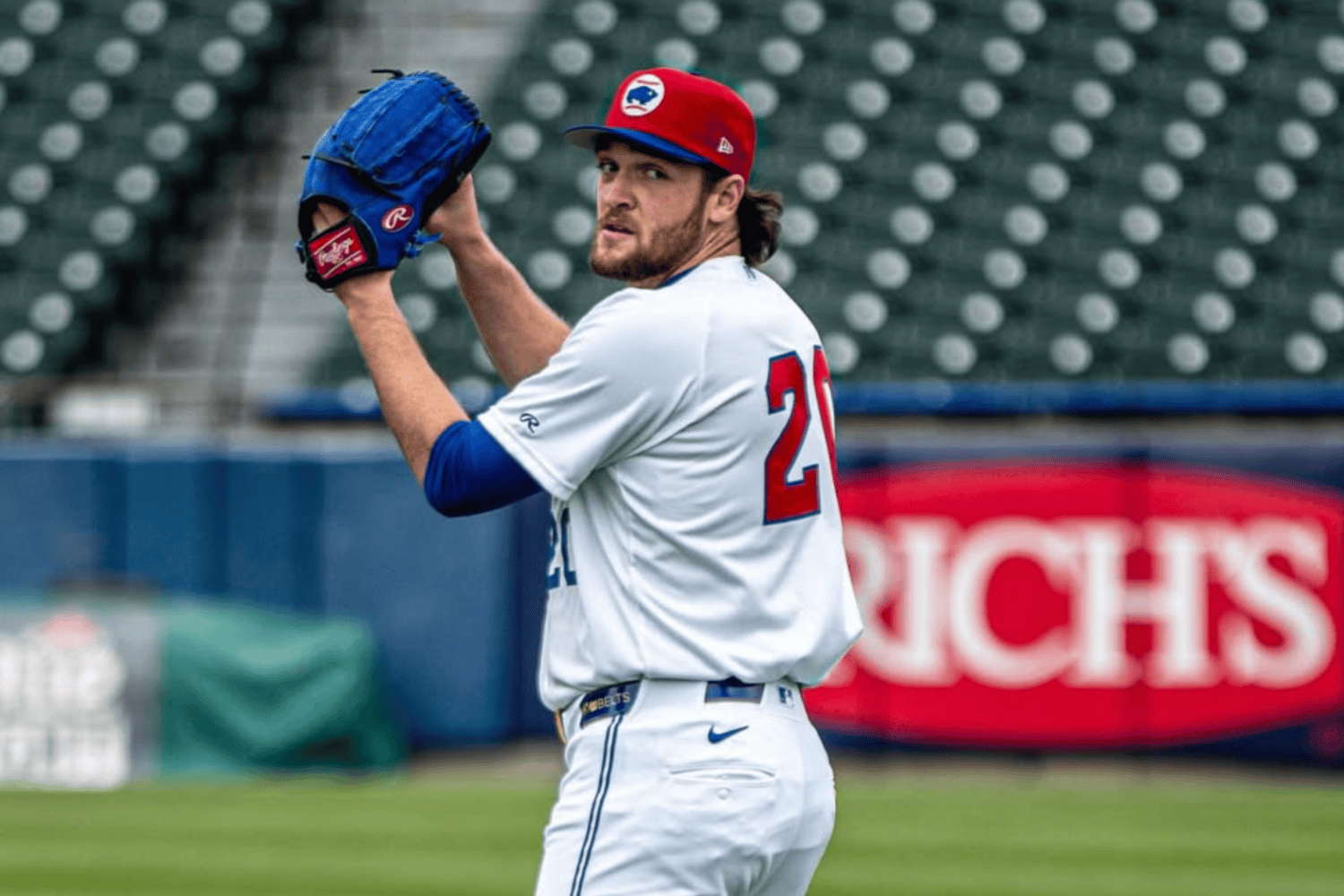 Blue Jays Affiliate Overview (April 21 – April 22) Triple-A Buffalo Bisons Series vs. Columbus Clippers (Cleveland Guardians): 1-1 Season Record: 11-12 Double-A New Hampshire Fisher Cats Series vs. Reading Fightin Phils (Philadelphia Phillies): 0-2 Season Record: 8-7 High-A Vancouver Canadians Series vs. Tri-City Dust Devils (Los Angeles Angels): 2-0 Season Record: 8-9 Single-A Dunedin Blue Jays Series vs. Fort Myers Mighty Mussels (Minnesota Twins): 1-1 Season Record: 9-8 Triple-A Buffalo Bisons Season Record: 11-12 Series Opponent: Rochester Red Wings (Washington Nationals) April 21: Tuesday was hopefully the last Trey Yesavage day in the minor leagues. With him on the mound for Buffalo, there was building hope and anticipation that the team could get back to .500 and then finally break through that barrier. It wasn't meant to be, as Yesavage struggled with his control in the game and made some costly errors as well. In the top of the first inning, Yesavage made a fielding error and a throwing error on a ball hit to him after a walk to Travis Bazzana, which allowed Bazzana to score. The next batter singled, driving in another run and putting Buffalo in a 2-0 hole. In the top of the third, Yesavage gave up a lead-off double, walked the bases loaded, then walked in a run, before being pulled from the game. His replacement, Brendan Cellucci, couldn't stop the bleeding, as he gave up a sacrifice fly to the first batter he faced. Yesavage's final line was 2.1 innings pitched, two hits, four runs (two earned), four walks, and only two strikeouts. Hopefully, he did enough to make his next start for the big league club, because the results weren't there at all. At the plate, you could say the hitters followed Yesavage's lead and didn't put up much of a fight. They got an RBI double from Josh Kasevich and an RBI single from William Simoneit. Simoneit ended up raising his average for the season up to .318. The rest of the team struggled, as they only totaled four hits for the game and fell to Columbus 5-2, dropping to two games below the .500 mark. April 22: In the second game of the series against the Columbus Clippers, Buffalo got some lights-out performances from the bullpen to slam the door and take the win. Austin Voth started the game and had some trouble in the first two innings. He ended up surrendering three runs (two unearned), thanks to an error by second baseman Carlos Mendoza. Voth wouldn't make it out of the third inning, and once the bullpen came into the game, Buffalo pitchers cranked up the swing-and-miss stuff. Jorge Alcala, Chase Lee, Michael Plassmeyer, Brendon Little, and Jesse Hahn would combine to throw 6.1 innings, not allow a run, strike out 12, and give up just one hit. Little pitched in his seventh game since being demoted from the big league club, and his ERA still stands at zero. It might not be too much longer before he gets called back up to the Toronto bullpen. Mendoza made up for his first-inning error by helping to tie the game up at three in the fifth inning. He had an RBI single, and Yohendrick Pinango added another run on a sacrifice fly. Buffalo continued to fight, especially when Columbus relief pitcher Daniel Espino came into the game in the bottom of the eighth inning. Pinango led the inning off with a single, Charles McAdoo was hit by a pitch, then RJ Schreck singled to load up the bases. Riley Tirotta came up to the plate and worked a bases-loaded walk, scoring Pinango to take the lead. The walk was Tirotta's third of the game, to go along with a single. After Espino was replaced on the mound by Jake Miller, Rafael Lantigua added to the Buffalo lead with an RBI single. The Bisons would turn to Hahn in the ninth, and he came through, striking out two and securing the win for Buffalo, 5-3. Double-A New Hampshire Season Record: 8-7 Series vs. Reading Fightin Phils (Philadelphia Phillies) April 21: The series kickoff against the Reading Fightin Phils on Tuesday was one to forget for the New Hampshire Fisher Cats. The Fisher Cats struck first in the fourth inning, when Jace Bohrofen launched his sixth home run of the year. New Hampshire starting pitcher Jackson Wentworth made it through 3.2 innings clean, but then the rails came off, and he came crashing down. With two outs in the fourth, the Fightin Phills scored nine runs. Bryan Rincon homered, Austin Murray homered, and Alex Binelas hit a grand slam. In the eighth inning, down seven, Sean Keys continued his torrid hot start to the season, this time with a home run on a line drive to left field. New Hampshire would lose this one 9-3. April 22: The Fisher Cats struggled against the Fightin Phils for a second consecutive day in this one. They only managed six hits and two runs, with Alex Stone driving in a run on an RBI single in the seventh inning and Jorge Burgos scoring on an error as well. Alex Binelas kicked off the scoring in the fourth with a two-run home run against New Hampshire starting pitcher Chris McElvain. McElvain went a solid six innings and just surrendered the two runs, but Reading took the lead in the eighth on an RBI triple and a sacrifice fly. New Hampshire couldn't get the offense going again, as they fell 4-2. High-A Vancouver Season Record: 8-9 Series vs. Tri-City Dust Devils (Los Angeles Angels) April 21: The Blue Jays and the Canadians both played series with the Angels and their High-A affiliate, respectively. The Canadians started off the season slowly, just like their major league club, and both hoped to turn it around. Vancouver came out guns blazing, as the recently promoted Peyton Williams got the game going in the first with a sac fly, before Jacob Sharp knocked in two more runs on a single to put the Canadians up 3-0 without looking back. Landen Maroudis seems to have put his rough 2025 behind him, as he once again had a strong start, going the longest he’s gone all season and striking out four again. His returned velocity has also come with improved command, as he didn’t walk a single batter. The offense continued to tack on runs, as Matt Scannell took the lead to five in the third on a two-RBI single, and in the fourth inning, they exploded for seven runs, as they batted around the Dust Devils. Gilberto Batista got the win, but struggled a bit with his command, walking three batters and only striking out one. He would have gone unscathed if not for a Williams throwing error, but instead gave up three unearned runs. The Canadians tacked on another four runs, and Juanmi Vasquez had his first scoreless appearance of the season to end it off. Seven of the Canadians hitters had two hits or more, and Arjun Nimmala led the way with three hits, two doubles, and a walk. April 22: Game two of the series had a completely different flow than the first one, as the pitching was on display this time. Daniel Guerra continued to impress after being named the Northwest League Pitcher of the Week in the previous week, going five two-hit innings, striking out three, but also walking three. He faced some trouble in the fourth inning, as he walked the bases loaded, but was able to come out of it unscathed. The offense was harder to come by this game, but Arjun Nimmala scored J.R. Freethy on an RBI double to break the tie in the fourth, and Tucker Toman got his 13th RBI of the season on a sac fly in the sixth. Aaron Munson got his first hold of the season, with two scoreless innings, and Kelena Sauer’s return to pitching after missing 2025 has been great. He recorded his first save of the season, striking out four batters over two no-hit innings. Single-A Dunedin Season Record: 9-8 Series vs. Fort Myers Mighty Mussels (Minnesota Twins) April 21: The D-Jays took advantage of some poor defense from the Mighty Mussels, with the Jays stealing four bases and creating havoc on the basepaths, which resulted in rushed plays and four errors from the Mussels. Dariel Ramon got to third after stealing a base and moving up on a throwing error, and after Blaine Bullard walked and stole second, that put Juan Sanchez up at the dish. A fielding error allowed Sanchez to take first while Ramon and Bullard both scored. Troy Guthrie relied on his newfound slider to generate a lot of chases and showed off his advanced command again. He struck out four in four innings and only allowed one run in the bottom of the fourth. Dylan Watts continued the strong pitching for Dunedin, as the high-powered reliever sat 96 mph with his four-seam fastball and struck out four batters in three innings, but allowed a run to tie the game in the sixth. David Beckles came up clutch for the Jays, as after Adrian Pinto doubled, Beckles drove him in for the winning run. Jack Eshleman shut the door in the eighth and ninth for his third save of the year, highlighted by a clutch pickoff to end the game. April 22: José Berríos made his second rehab start and dominated Single-A hitters, to the tune of four scoreless innings, with five Ks, only allowing three hits. The veteran righty went up to 55 pitches, and hopefully should soon provide reinforcement to the major league club, which has been struck mightily by the injury bug. The Jays offense couldn’t support Berríos’ start, however, as they struck out thirteen times and struggled to get on base, with only four hits and three walks on the night. Juan Sanchez had his first extra-base hit of the season with a 104.5 mph scorcher to center field, but the Jays could not capitalize. Franly Urena threw two scoreless innings after Berríos was taken out, but Lluveres Severino struggled after walking a batter, committing a throwing error on a pickoff attempt, then walking another batter before hitting a batter to load the bases. Diego Dominguez replaced him and struck out a batter, but allowed two inherited runs to score on a single for the only runs of the ballgame. Transactions 04/21/26 C Patrick Winkel assigned to New Hampshire Fisher Cats. 04/21/26 Toronto Blue Jays signed free agent C Patrick Winkel to a minor league contract. 04/20/26 Dunedin Blue Jays placed C Jaxson West on the 7-day injured list. 04/20/26 RHP Aiden Taggart assigned to FCL Blue Jays from Dunedin Blue Jays.
 -
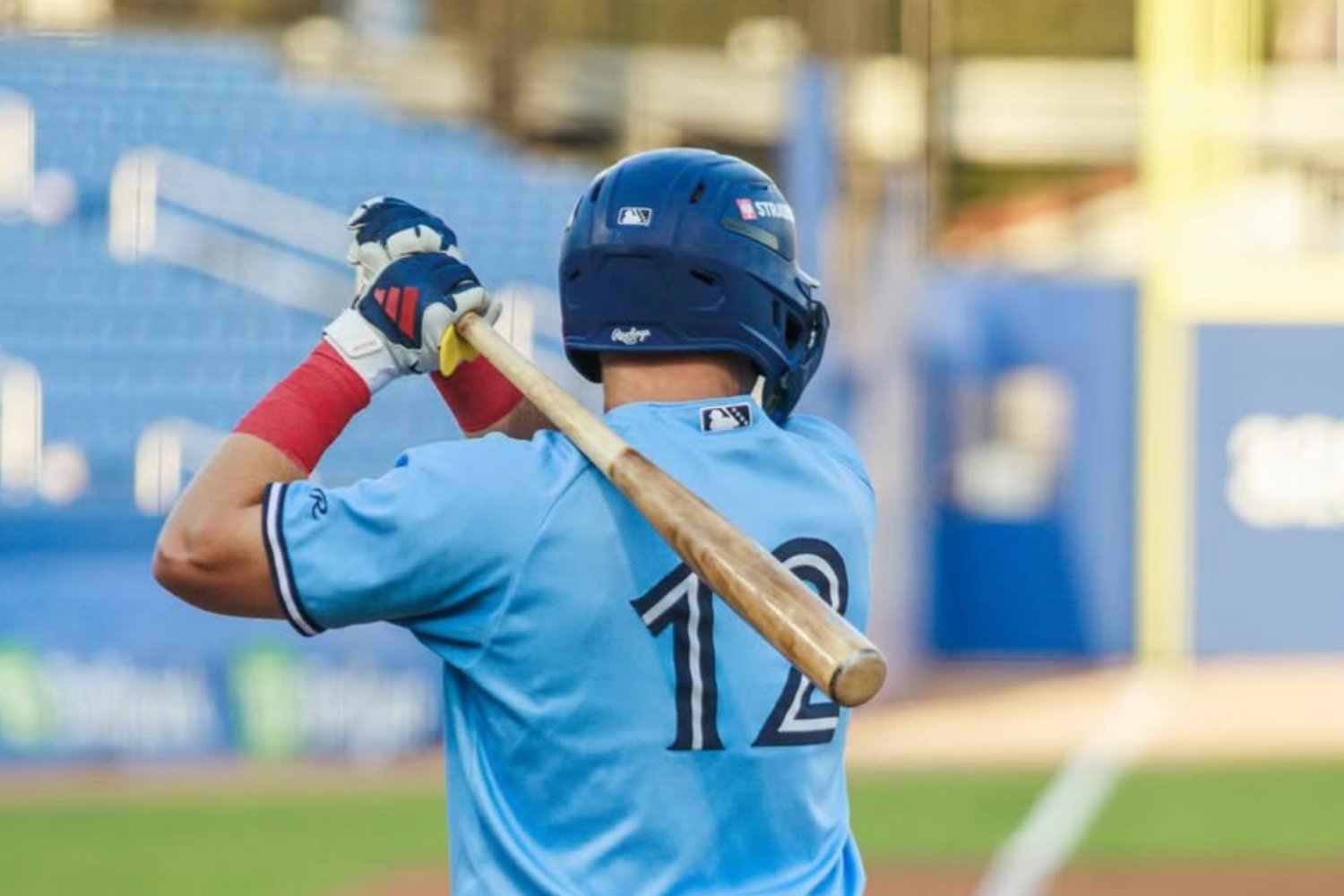 Blue Jays Affiliate Overview (April 14-April 15) Triple-A Buffalo Bisons Series vs. Rochester Red Wings (Washington Nationals): 1-1 Season Record: 8-9 Double-A New Hampshire Fisher Cats Series vs. Chesapeake Baysox (Baltimore Orioles): 2-0 Season Record: 6-4 High-A Vancouver Canadians Series vs. Spokane Indians (Colorado Rockies): 1-1 Season Record: 3-8 Single-A Dunedin Blue Jays Series vs. Clearwater Threshers (Philadelphia Phillies): 1-1 Season Record: 6-5 Triple-A Buffalo Bisons Season Record: 8-9 Series Opponent: Rochester Red Wings (Washington Nationals) April 14: The Buffalo Bisons finally got to play a game in warmer weather on Tuesday, and it showed on the field. Yohendrick Pinango, Riley Tirotta, and RJ Schreck each connected for home runs. Tirotta's was the loudest and farthest of the three, coming off the bat with an exit velocity of 108.7 mph and going 413 feet over the center field wall for a solo home run. Pinango's home run extended his hit streak to six games and gave him hits in 11 of his last 12 games. He has been locked in to start the season and could be pushing for a call-up midseason if the need arises for the big league team. All of Buffalo's runs in the game came on those three blasts, which was good because as a team, they struck out 14 times. Rafael Lantigua had three of the strikeouts himself, on his way to a 1-for-5 game, which raised his batting average to .143 for the year. On the mound for the Bisons was Austin Voth, who set the tone early, going four solid innings, giving up only one run, walking zero, and striking out three. Jorge Alcala replaced Devereaux Harrison in the top of the sixth with a runner on first base. He ran into trouble and ultimately gave up a two-run double to Trey Lipscomb. Hayden Juenger came into the game in the eighth and did enough to get the two-inning save. The Bisons' 5-3 win brought their record back to .500, where they have hovered for most of the season. April 15: Wednesday was a big day for Bisons fans, as it was a Trey Yesavage day. He was on the mound for Buffalo, making his first rehab start, working his way back to the major league team. It was a rough start for him, to say the least. In the first two innings, he gave up a combined three runs: two on home runs from Dylan Crews and Andres Chaparro and the third scoring on a double play ball. He worked the third and fourth innings relatively clean, only giving up a walk and a single. His day wrapped up after getting a groundout and giving up a single in the fifth inning. For the game, he pitched 4.1 innings, surrendering seven hits and allowing three runs to score, but he did strike out five. At the plate, RJ Schreck hit his second home run in as many games, this one with an exit velocity of 97.9 mph, going 380 feet to right center. The big shot came in the top of the third inning and scored Yohendrick Pinango, tying the game up at three. Unfortunately for the Bisons, Jesse Hahn coughed up three runs in the sixth inning, and the bats couldn't answer. Buffalo fell 6-3 and yet again couldn't crack the .500 mark, as they fell a game below it with an 8-9 record for the year. Double-A New Hampshire Season Record: 6-4 Series vs. Chesapeake Baysox (Baltimore Orioles) April 14: Postponed April 15, Game 1: New Hampshire had their bats going in the first game of the doubleheader on Wednesday. Jorge Burgos got things going in the second inning with an RBI single to right field and then again in the bottom of the third inning with a bases-loaded walk. Nick Goodwin and Aaron Parker would add RBI singles to put New Hampshire up comfortably by six runs. In the fourth, Jace Bohrofen crushed a two-run home run to right field, his first of the game. Up 8-1, the Fisher Cats put together another massive inning on the season in the bottom of the sixth. Twelve runs would score, with the two big hits being a second Bohrofen homer and Sean Keys capping off the scoring barrage with a three-run blast. Seven New Hampshire hitters had multi-hit games, and Keys led the way with two doubles and the home run. Bohrofen had the two homers, and Eddie Micheletti Jr. pushed across three hits as well. The Fisher Cats won an easy one, 20-1. Game 2: The second game of the doubleheader started out much more slowly than the first one, but ended with a bang on offense as well for the Fisher Cats. New Hampshire took the lead in the first inning on a Sean Keys RBI single, bringing home Eddie Micheletti Jr. An RBI fielder's choice would put them up by two runs in the second inning, before Aron Estrada tied the game with an RBI groundout in the third and a sacrifice fly in the fifth. An RBI groundout, a bases-loaded walk, and a bases-loaded HBP put the Baysox up by three runs. In the bottom of the fifth, Keys would change that, as his big day and season continued, this time with another three-run home run to right field to tie the game. In the sixth, New Hampshire put together another big inning on offense, with a run on an error, an RBI single, and 2 RBI doubles to put them back up five runs. The Fisher Cats would hold on after a late comeback in the seventh by the Baysox, and win 10-8. High-A Vancouver Season Record: 3-8 Series vs. Spokane Indians (Colorado Rockies) April 14: There was pitching dominance from starters, with Austin Cates and Brody Brecht going head-to-head. Cates gave up an early solo homer to Kelvin Hidalgo in the bottom of the second. After that, Cates was almost unstoppable, striking out seven straight batters before he allowed a runner to score on a wild pitch, ending his day there but still tying his career high of 10 strikeouts. Brecht also looked good for Spokane, and other than a Carter Cunningham run-scoring triple, didn’t allow a run to score in three innings, while he struck out six. After Cates was taken out, Juanmi Vasquez gave up a three-run homer to Alan Espinal, to put the Canadians down four, and despite a homer from Kendry Chirinos and an RBI single from Tucker Toman, they couldn’t come back from that deficit. April 15: The Canadians' offense woke up, as they tagged five runs on Spokane’s starter Yujanyer Herrera. Carter Cunningham hit a double and was moved to third, and then scored on a pickoff play at first. Then, in the third inning with the bases loaded, Kendry Chirinos had his second homer in as many days with a grand slam to break the game open. Landen Maroudis pitched well heading into the fourth inning, but was taken out after a single and a walk for Gilberto Batista, who then allowed both inherited runners to score. Batista struggled the inning after as well, allowing four earned runs to give up the lead. The Canadians' offense could not be denied, as Alexis Hernandez took the lead right back with a two-RBI triple before scoring himself on a wild pitch. Carson Pierce stopped the bleeding for the Canadians with two more scoreless innings after replacing Batista, and the Canadians broke double digits as the Northwest League Player of the Week, Carter Cunningham, went deep for the fourth time this season for the second grand slam of the day. Maddox Latta hit a homer to cap off a 14-point explosion for the Canadians, who are hopefully turning it around. Single-A Dunedin Season Record: 6-5 Series vs. Clearwater Threshers (Philadelphia Phillies): 1-1 April 14: In the first game of the series against Clearwater, the Jays trotted out Brayden Heidel, who struggled, giving up three runs while walking two batters and giving up two hits. The relief corps also did poorly after replacing him, with Reece Wissinger allowing two more runs after. Aldo Gaxiola got a run back with his second homer of the year, but the Jays continued to give up runs as Carson Myers let in another two runs. Blaine Bullard’s power has been better than advertised, as he hit his third homer of the year 104.9 mph and 423 feet, but once again the Jays kept on letting up runs as Franly Urena gave up two homers. The Jays' offense could not stop homering, as this time their No. 2 prospect JoJo Parker got his first homer of the season, and the rehabbing Adrian Pinto hit the Jays’ fourth homer of the day to bring it within two in the bottom of the night, but they could not pull out the win. April 15: The Jays pulled out a gutsy win in extras, as Troy Guthrie had his first shaky start. The Jays went down three runs by the third inning, and the Threshers' pitching held the Jays scoreless until the bottom of the sixth, with the red-hot Jaxson West knocking in the first run for the Jays on an RBI single. The Threshers immediately got that run back in the seventh on a double against Dylan Watts, as the Jays still were down three runs heading into the bottom of the eighth. After a Peyton Williams walk and a Yorman Licourt single, Eric Snow had a clutch double with one out to cut the lead to one. Mason Davenport allowed three runners in a shaky inning but ended up striking the side in the top of the ninth, allowing the Jays to tie it up on a sac fly after they loaded the bases for Williams. No other runs would score, so they would go to extras, and after a scoreless inning from Diego Dominguez, the bases were juiced for JoJo with two outs. He went up to the plate and had a nine-pitch at-bat in which he fouled off three pitches with two strikes before walking it off on an RBI walk to win the game and even up the series. Transactions 04/15/26 Toronto Blue Jays sent RHP Trey Yesavage on a rehab assignment to Buffalo Bisons. 04/15/26 C Charlie Saum assigned to New Hampshire Fisher Cats from Dunedin Blue Jays. 04/15/26 New Hampshire Fisher Cats placed C Geovanny Planchart on the 7-day injured list retroactive to April 14, 2026. 04/14/26 Buffalo Bisons transferred RHP Pat Gallagher to the Development List. 04/14/26 Toronto Blue Jays optioned 2B Tyler Fitzgerald to Buffalo Bisons. 04/14/26 C Giaconino Lasaracina assigned to DSL Blue Jays Red. 04/14/26 Vancouver Canadians sent 2B Adrian Pinto on a rehab assignment to Dunedin Blue Jays. 04/14/26 RHP Trace Baker assigned to Vancouver Canadians from Dunedin Blue Jays. 04/14/26 Vancouver Canadians activated RHP Trace Baker.
 -
Blue Jays Affiliate Overview (April 14-April 15) Triple-A Buffalo Bisons Series vs. Rochester Red Wings (Washington Nationals): 1-1 Season Record: 8-9 Double-A New Hampshire Fisher Cats Series vs. Chesapeake Baysox (Baltimore Orioles): 2-0 Season Record: 6-4 High-A Vancouver Canadians Series vs. Spokane Indians (Colorado Rockies): 1-1 Season Record: 3-8 Single-A Dunedin Blue Jays Series vs. Clearwater Threshers (Philadelphia Phillies): 1-1 Season Record: 6-5 Triple-A Buffalo Bisons Season Record: 8-9 Series Opponent: Rochester Red Wings (Washington Nationals) April 14: The Buffalo Bisons finally got to play a game in warmer weather on Tuesday, and it showed on the field. Yohendrick Pinango, Riley Tirotta, and RJ Schreck each connected for home runs. Tirotta's was the loudest and farthest of the three, coming off the bat with an exit velocity of 108.7 mph and going 413 feet over the center field wall for a solo home run. Pinango's home run extended his hit streak to six games and gave him hits in 11 of his last 12 games. He has been locked in to start the season and could be pushing for a call-up midseason if the need arises for the big league team. All of Buffalo's runs in the game came on those three blasts, which was good because as a team, they struck out 14 times. Rafael Lantigua had three of the strikeouts himself, on his way to a 1-for-5 game, which raised his batting average to .143 for the year. On the mound for the Bisons was Austin Voth, who set the tone early, going four solid innings, giving up only one run, walking zero, and striking out three. Jorge Alcala replaced Devereaux Harrison in the top of the sixth with a runner on first base. He ran into trouble and ultimately gave up a two-run double to Trey Lipscomb. Hayden Juenger came into the game in the eighth and did enough to get the two-inning save. The Bisons' 5-3 win brought their record back to .500, where they have hovered for most of the season. April 15: Wednesday was a big day for Bisons fans, as it was a Trey Yesavage day. He was on the mound for Buffalo, making his first rehab start, working his way back to the major league team. It was a rough start for him, to say the least. In the first two innings, he gave up a combined three runs: two on home runs from Dylan Crews and Andres Chaparro and the third scoring on a double play ball. He worked the third and fourth innings relatively clean, only giving up a walk and a single. His day wrapped up after getting a groundout and giving up a single in the fifth inning. For the game, he pitched 4.1 innings, surrendering seven hits and allowing three runs to score, but he did strike out five. At the plate, RJ Schreck hit his second home run in as many games, this one with an exit velocity of 97.9 mph, going 380 feet to right center. The big shot came in the top of the third inning and scored Yohendrick Pinango, tying the game up at three. Unfortunately for the Bisons, Jesse Hahn coughed up three runs in the sixth inning, and the bats couldn't answer. Buffalo fell 6-3 and yet again couldn't crack the .500 mark, as they fell a game below it with an 8-9 record for the year. Double-A New Hampshire Season Record: 6-4 Series vs. Chesapeake Baysox (Baltimore Orioles) April 14: Postponed April 15, Game 1: New Hampshire had their bats going in the first game of the doubleheader on Wednesday. Jorge Burgos got things going in the second inning with an RBI single to right field and then again in the bottom of the third inning with a bases-loaded walk. Nick Goodwin and Aaron Parker would add RBI singles to put New Hampshire up comfortably by six runs. In the fourth, Jace Bohrofen crushed a two-run home run to right field, his first of the game. Up 8-1, the Fisher Cats put together another massive inning on the season in the bottom of the sixth. Twelve runs would score, with the two big hits being a second Bohrofen homer and Sean Keys capping off the scoring barrage with a three-run blast. Seven New Hampshire hitters had multi-hit games, and Keys led the way with two doubles and the home run. Bohrofen had the two homers, and Eddie Micheletti Jr. pushed across three hits as well. The Fisher Cats won an easy one, 20-1. Game 2: The second game of the doubleheader started out much more slowly than the first one, but ended with a bang on offense as well for the Fisher Cats. New Hampshire took the lead in the first inning on a Sean Keys RBI single, bringing home Eddie Micheletti Jr. An RBI fielder's choice would put them up by two runs in the second inning, before Aron Estrada tied the game with an RBI groundout in the third and a sacrifice fly in the fifth. An RBI groundout, a bases-loaded walk, and a bases-loaded HBP put the Baysox up by three runs. In the bottom of the fifth, Keys would change that, as his big day and season continued, this time with another three-run home run to right field to tie the game. In the sixth, New Hampshire put together another big inning on offense, with a run on an error, an RBI single, and 2 RBI doubles to put them back up five runs. The Fisher Cats would hold on after a late comeback in the seventh by the Baysox, and win 10-8. High-A Vancouver Season Record: 3-8 Series vs. Spokane Indians (Colorado Rockies) April 14: There was pitching dominance from starters, with Austin Cates and Brody Brecht going head-to-head. Cates gave up an early solo homer to Kelvin Hidalgo in the bottom of the second. After that, Cates was almost unstoppable, striking out seven straight batters before he allowed a runner to score on a wild pitch, ending his day there but still tying his career high of 10 strikeouts. Brecht also looked good for Spokane, and other than a Carter Cunningham run-scoring triple, didn’t allow a run to score in three innings, while he struck out six. After Cates was taken out, Juanmi Vasquez gave up a three-run homer to Alan Espinal, to put the Canadians down four, and despite a homer from Kendry Chirinos and an RBI single from Tucker Toman, they couldn’t come back from that deficit. April 15: The Canadians' offense woke up, as they tagged five runs on Spokane’s starter Yujanyer Herrera. Carter Cunningham hit a double and was moved to third, and then scored on a pickoff play at first. Then, in the third inning with the bases loaded, Kendry Chirinos had his second homer in as many days with a grand slam to break the game open. Landen Maroudis pitched well heading into the fourth inning, but was taken out after a single and a walk for Gilberto Batista, who then allowed both inherited runners to score. Batista struggled the inning after as well, allowing four earned runs to give up the lead. The Canadians' offense could not be denied, as Alexis Hernandez took the lead right back with a two-RBI triple before scoring himself on a wild pitch. Carson Pierce stopped the bleeding for the Canadians with two more scoreless innings after replacing Batista, and the Canadians broke double digits as the Northwest League Player of the Week, Carter Cunningham, went deep for the fourth time this season for the second grand slam of the day. Maddox Latta hit a homer to cap off a 14-point explosion for the Canadians, who are hopefully turning it around. Single-A Dunedin Season Record: 6-5 Series vs. Clearwater Threshers (Philadelphia Phillies): 1-1 April 14: In the first game of the series against Clearwater, the Jays trotted out Brayden Heidel, who struggled, giving up three runs while walking two batters and giving up two hits. The relief corps also did poorly after replacing him, with Reece Wissinger allowing two more runs after. Aldo Gaxiola got a run back with his second homer of the year, but the Jays continued to give up runs as Carson Myers let in another two runs. Blaine Bullard’s power has been better than advertised, as he hit his third homer of the year 104.9 mph and 423 feet, but once again the Jays kept on letting up runs as Franly Urena gave up two homers. The Jays' offense could not stop homering, as this time their No. 2 prospect JoJo Parker got his first homer of the season, and the rehabbing Adrian Pinto hit the Jays’ fourth homer of the day to bring it within two in the bottom of the night, but they could not pull out the win. April 15: The Jays pulled out a gutsy win in extras, as Troy Guthrie had his first shaky start. The Jays went down three runs by the third inning, and the Threshers' pitching held the Jays scoreless until the bottom of the sixth, with the red-hot Jaxson West knocking in the first run for the Jays on an RBI single. The Threshers immediately got that run back in the seventh on a double against Dylan Watts, as the Jays still were down three runs heading into the bottom of the eighth. After a Peyton Williams walk and a Yorman Licourt single, Eric Snow had a clutch double with one out to cut the lead to one. Mason Davenport allowed three runners in a shaky inning but ended up striking the side in the top of the ninth, allowing the Jays to tie it up on a sac fly after they loaded the bases for Williams. No other runs would score, so they would go to extras, and after a scoreless inning from Diego Dominguez, the bases were juiced for JoJo with two outs. He went up to the plate and had a nine-pitch at-bat in which he fouled off three pitches with two strikes before walking it off on an RBI walk to win the game and even up the series. Transactions 04/15/26 Toronto Blue Jays sent RHP Trey Yesavage on a rehab assignment to Buffalo Bisons. 04/15/26 C Charlie Saum assigned to New Hampshire Fisher Cats from Dunedin Blue Jays. 04/15/26 New Hampshire Fisher Cats placed C Geovanny Planchart on the 7-day injured list retroactive to April 14, 2026. 04/14/26 Buffalo Bisons transferred RHP Pat Gallagher to the Development List. 04/14/26 Toronto Blue Jays optioned 2B Tyler Fitzgerald to Buffalo Bisons. 04/14/26 C Giaconino Lasaracina assigned to DSL Blue Jays Red. 04/14/26 Vancouver Canadians sent 2B Adrian Pinto on a rehab assignment to Dunedin Blue Jays. 04/14/26 RHP Trace Baker assigned to Vancouver Canadians from Dunedin Blue Jays. 04/14/26 Vancouver Canadians activated RHP Trace Baker. View full article
- 1 reply
-
- 1
-
-
- jojo parker
- trey yesavage
- (and 1 more)
-
Toronto Blue Jays 2026 Top Prospect Rankings: No. 3 Ricky Tiedemann
Simon Li posted an article in Minor Leagues
.jpg.a90636630816ea70547e979827d37c96.jpg) Jays Centre is counting down the top 20 prospects in the Toronto Blue Jays organization. Check out prior entries in the series here: No. 20 to 16 No. 15 to 11 No. 10 No. 9 No. 8 No. 7 No. 6 No. 5 No. 4 No. 3: LHP Ricky Tiedemann It has been a long time since we have seen Ricky Tiedemann pitch in a game. The once top prospect for the Toronto Blue Jays has had setback after setback with an arm injury, as he last pitched on June 10, 2024. Although the talent is undeniable, the question regarding his health remains ever the issue. Tiedemann was added to the 40-man roster prior to the Rule 5 draft in order to protect him from getting selected by other teams, but that has now started the clock for him, and the Jays need to see real production out of him before he runs out of option years, The easiest way for Tiedemann to do that is to show that he’s healthy and that his stuff remains as nasty as it was pre-elbow surgery. Unfortunately for Tiedemann, every time that it has felt like he would have a chance to show his skills, he has instead faced a setback. He was unable to pitch in the Arizona Fall League, and despite a full offseason of rest, he had another setback before spring training, forcing him to miss that as well. Before the injury, Tiedemann showed two plus pitches. His fastball sat in the mid-90s and touched 98 mph, with solid ride and a lot of run. He also threw a sweeper with nasty break as his main secondary pitch, but recent reports say that he’s now throwing a different type of slider that will have more velo and have less break in order to reduce injury risk. His changeup was his best pitch out of JuCo, but it took a step back compared to his other pitches as he progressed. Tiedemann is still a physical specimen, standing 6-foot-4 and weighing over 250 lbs, and his whippy arm action creates a ton of deception out of his lower slot. He showed decent command in 2022 and 2023, but as injury concerns popped up, so did walk issues. A lack of reps will most likely cause him to struggle even more with command when he comes back, as he’ll need to regain a feel for his delivery. Tiedemann started the 2026 season on the 7-day injured list, and given his injury history, the Jays are rightfully starting him slowly. He’ll be used mostly in a bulk relief role; his potential as a strong mid-rotation pitcher is tantalizing, but the lack of a clean bill of health and all the time he's missed mean his injury risk is high. If the Jays want to prioritize winning now, they might use him as a reliever in the final stretch instead of focusing primarily on his development. If Tiedemann can stay healthy, however, he may finally showcase the potential that he flashed when he last pitched nearly two years ago.
Jays Centre is counting down the top 20 prospects in the Toronto Blue Jays organization. Check out prior entries in the series here: No. 20 to 16 No. 15 to 11 No. 10 No. 9 No. 8 No. 7 No. 6 No. 5 No. 4 No. 3: LHP Ricky Tiedemann It has been a long time since we have seen Ricky Tiedemann pitch in a game. The once top prospect for the Toronto Blue Jays has had setback after setback with an arm injury, as he last pitched on June 10, 2024. Although the talent is undeniable, the question regarding his health remains ever the issue. Tiedemann was added to the 40-man roster prior to the Rule 5 draft in order to protect him from getting selected by other teams, but that has now started the clock for him, and the Jays need to see real production out of him before he runs out of option years, The easiest way for Tiedemann to do that is to show that he’s healthy and that his stuff remains as nasty as it was pre-elbow surgery. Unfortunately for Tiedemann, every time that it has felt like he would have a chance to show his skills, he has instead faced a setback. He was unable to pitch in the Arizona Fall League, and despite a full offseason of rest, he had another setback before spring training, forcing him to miss that as well. Before the injury, Tiedemann showed two plus pitches. His fastball sat in the mid-90s and touched 98 mph, with solid ride and a lot of run. He also threw a sweeper with nasty break as his main secondary pitch, but recent reports say that he’s now throwing a different type of slider that will have more velo and have less break in order to reduce injury risk. His changeup was his best pitch out of JuCo, but it took a step back compared to his other pitches as he progressed. Tiedemann is still a physical specimen, standing 6-foot-4 and weighing over 250 lbs, and his whippy arm action creates a ton of deception out of his lower slot. He showed decent command in 2022 and 2023, but as injury concerns popped up, so did walk issues. A lack of reps will most likely cause him to struggle even more with command when he comes back, as he’ll need to regain a feel for his delivery. Tiedemann started the 2026 season on the 7-day injured list, and given his injury history, the Jays are rightfully starting him slowly. He’ll be used mostly in a bulk relief role; his potential as a strong mid-rotation pitcher is tantalizing, but the lack of a clean bill of health and all the time he's missed mean his injury risk is high. If the Jays want to prioritize winning now, they might use him as a reliever in the final stretch instead of focusing primarily on his development. If Tiedemann can stay healthy, however, he may finally showcase the potential that he flashed when he last pitched nearly two years ago. -
Jays Centre is counting down the top 20 prospects in the Toronto Blue Jays organization. Check out prior entries in the series here: No. 20 to 16 No. 15 to 11 No. 10 No. 9 No. 8 No. 7 No. 6 No. 5 No. 4 No. 3: LHP Ricky Tiedemann It has been a long time since we have seen Ricky Tiedemann pitch in a game. The once top prospect for the Toronto Blue Jays has had setback after setback with an arm injury, as he last pitched on June 10, 2024. Although the talent is undeniable, the question regarding his health remains ever the issue. Tiedemann was added to the 40-man roster prior to the Rule 5 draft in order to protect him from getting selected by other teams, but that has now started the clock for him, and the Jays need to see real production out of him before he runs out of option years, The easiest way for Tiedemann to do that is to show that he’s healthy and that his stuff remains as nasty as it was pre-elbow surgery. Unfortunately for Tiedemann, every time that it has felt like he would have a chance to show his skills, he has instead faced a setback. He was unable to pitch in the Arizona Fall League, and despite a full offseason of rest, he had another setback before spring training, forcing him to miss that as well. Before the injury, Tiedemann showed two plus pitches. His fastball sat in the mid-90s and touched 98 mph, with solid ride and a lot of run. He also threw a sweeper with nasty break as his main secondary pitch, but recent reports say that he’s now throwing a different type of slider that will have more velo and have less break in order to reduce injury risk. His changeup was his best pitch out of JuCo, but it took a step back compared to his other pitches as he progressed. Tiedemann is still a physical specimen, standing 6-foot-4 and weighing over 250 lbs, and his whippy arm action creates a ton of deception out of his lower slot. He showed decent command in 2022 and 2023, but as injury concerns popped up, so did walk issues. A lack of reps will most likely cause him to struggle even more with command when he comes back, as he’ll need to regain a feel for his delivery. Tiedemann started the 2026 season on the 7-day injured list, and given his injury history, the Jays are rightfully starting him slowly. He’ll be used mostly in a bulk relief role; his potential as a strong mid-rotation pitcher is tantalizing, but the lack of a clean bill of health and all the time he's missed mean his injury risk is high. If the Jays want to prioritize winning now, they might use him as a reliever in the final stretch instead of focusing primarily on his development. If Tiedemann can stay healthy, however, he may finally showcase the potential that he flashed when he last pitched nearly two years ago. View full article
-
Blue Jays Affiliate Overview (April 7-April 8) Triple-A Buffalo Bisons Series vs. Syracuse Mets (New York Mets): 2-0 Season Record: 5-6 Double-A New Hampshire Fisher Cats Series vs. Portland Sea Dogs (Boston Red Sox): 2-0 Season Record: 3-1 High-A Vancouver Canadians Series vs. Eugene Emeralds (San Francisco Giants): 0-2 Season Record: 0-5 Single-A Dunedin Blue Jays Series vs. St. Lucie Mets (New York Mets): 0-0 Season Record: 1-2 Triple-A Buffalo Bisons Season Record: 5-6 Series Opponent: Syracuse Mets (New York Mets) April 7: Postponed April 8, Game 1: In game one of the doubleheader, pitching reigned supreme, as temperatures remained frigid and not hitter-friendly. The Buffalo Bisons had Grant Rogers on the bump to start, and he worked around a few walks and a few singles to blank the Mets for four innings. In the first, he induced a groundball for a double play and then worked the edges of the zone to get Vidal Brujan to strikeout looking with two men on. In the second, he again managed to get a double play ball after allowing a walk; this time, it was on a slider down and out of the zone. He ended the third inning by striking out Ryan Clifford on a face-high fastball (89.6 mph). Despite his shorter outing, he worked on the edges of the strike zone to most of the batters and allowed the cold temperatures to aid him with weak contact. The Bisons did little with their bats as well, only collecting three hits in the game and scoring two runs. The first came on an RBI groundout from Riley Tirotta in the second, and the other scored in the third when Carlos Mendoza scored on a fielding error by the Mets’ third baseman. Buffalo was shut down for the final four innings, only getting one baserunner on a walk. After a recent demotion from the major league team, Brendon Little came into the game in relief of Rogers and had a relatively clean inning. Jackson Cluff popped up, Little walked CJ Stubbs, and then got Yonny Hernández to roll over on a sinker down and out of the zone for a double play. Chase Lee came in for Little and worked the final two innings with relative ease, only allowing two hits and striking out two. The Bisons took game one of the doubleheader 2-0. April 8, Game 2: Game two of the doubleheader was an all-around excellent game for the Bisons. They didn't get many hits, only two, but they were timely and all of the damage needed for the pitching staff to secure the win for Buffalo. Rafael Lantigua and Yohendrick Pinango both hit two-run home runs, their second of the season, to power the offense. Lantigua's home run came in the first on a changeup right down the middle. Pinango took a sweeper inside over the fence for his home run; the ball came off the bat at 97.3 mph, had a launch angle of 24 degrees, and only went 349 feet. The four runs were just enough, as the Buffalo pitchers got 15 of the 21 outs in the game via strikeouts. Yariel Rodríguez racked up six of those strikeouts, while Brendan Cellucci had five. Celluci has been really good in his two appearances this season, having pitched 3.2 innings and getting nine of those 11 outs from strikeouts. He might be someone who could come up and help the big league club if he continues to dominate like this. Buffalo grabbed the sweep of the doubleheader with a 4-3 win in game two. Double-A New Hampshire Season Record: 3-1 Series vs. Portland Sea Dogs (Boston Red Sox) April 7: The New Hampshire Fisher Cats kicked off their series against the Portland Sea Dogs in a winning fashion, but it wasn't a pretty sight for the batters getting hits. New Hampshire and Portland combined for 12 runs on just a single hit by the end of the top of the second inning. Two hit-by-pitches, a couple of walks, and a sacrifice fly put Portland up by two in the first inning. In the top of the second, the Fisher Cats got eight walks, two hit-by-pitches, a sacrifice fly, and a single. That put 10 runs on the board in the half inning, with just one hit. In the bottom of the second inning, Portland walked three more times, followed by another sacrifice fly and an RBI double. Portland would tack on three more runs, but New Hampshire pulled this one out despite the lack of hits, winning 12-7. Sean Keys continued his hot start at Double-A, going 1-for-2, with two walks, a HBP, two RBI, and two runs scored. April 8: In the Wednesday game of the series, New Hampshire smashed their way to a big win again. This time, they actually used a multitude of hits on their way to 11 runs. Geovanny Planchart drove in two runs in the second inning with an RBI single. Eddie Micheletti Jr. and Jorge Burgos followed with RBI singles as well to make it 5-0. In the third, Je'Von Ward and Planchart added RBI singles to put the Fisher Cats up seven. Jace Bohrofen had the big hit of the game, launching a home run to right field in the fifth inning, giving New Hampshire a seven-run lead again. The Fisher Cats put up three more runs later in the game and ran away with this one, 11-3. High-A Vancouver Season Record: 0-5 Series vs. Eugene Emeralds (San Francisco Giants) April 7: Johnny King made his debut for the Canadians, but it was a mixed bag. There were definitely some first-start jitters for the young pitcher, as although he struck out three batters in just an inning, he was wild, giving up two walks and a hit, which led to him throwing 32 pitches in just the first inning. Because of the elevated pitch count, Holden Wilkerson relieved King in the second inning. Wilkerson pitched well, with seven strikeouts in 3.1 innings, but gave up a homer in the fifth to put the Canadians down 3-0. The Canadians brought it within one after a clutch hit from Carter Cunningham, but Eminen Flores gave up a run off a sac fly. Cunningham brought it within one again with his first homer of the season, but the Canadians couldn’t score anything else. Dub Gleed also made his debut after coming from the Marlins org and had himself two hits and a walk. April 8: Austin Cates had an uncharacteristic start for Vancouver, as he went four innings but walked four batters and allowed six hits, which resulted in three earned runs, including a solo homer to former Dodgers top prospect Diego Cartaya. Aaron Munson came on in relief and gave up only one hit and a walk in three innings of work, while striking out five batters, to keep the score close. The Canadians' offense struggled to get going, however, as they weren’t able to get a run until the bottom of the eighth inning, when a throwing error put runners on the corners and let Alexis Hernandez drive in their first run of the game to bring it within two runs. Juanmi Vasquez was able to erase a runner on a fielder’s choice into a pickoff at first, but he was unable to get out of the inning unscathed, as he struggled with his command and allowed three hits in a row to let the Emeralds score another two runs. In the ninth inning, the Canadians showed some patience, with Maddox Latta walking then advancing on a balk, before Manuel Beltre drove him in with a single. However, they could not capitalize, as after Brennan Orf walked, Kendry Chirinos, Matt Scannell, and Hernandez all struck out as the potential tying runs at the plate. Single-A Dunedin Season Record: 1-2 Series vs. St. Lucie Mets (New York Mets) April 7 - Suspended Game Jays Centre’s 18th-ranked prospect Brandon Barriera had his first start since going down with an elbow injury last season. Despite glowing reviews in the back fields, the poor conditions were hard on Barriera, as he only sat in the low 90s instead of the mid-90s as reported. His command also lagged, which happens with a lack of reps. He also didn’t generate any whiffs, but it was still nice to see him back in action after barely pitching since getting drafted. Dunedin got on the board first with Enmanuel Bonilla’s first hit in A-ball, but after Barriera gave up two runs in the bottom of the second, the game was suspended. It's set to finish on April 9. April 8 - Postponed Transactions 04/07/26 OF Matt Scannell assigned to Vancouver Canadians from Dunedin Blue Jays. 04/07/26 RHP Austin Marozas assigned to New Hampshire Fisher Cats from Vancouver Canadians. 04/07/26 SS Dub Gleed assigned to Vancouver Canadians. View full article
-
 Blue Jays Affiliate Overview (April 7-April 8) Triple-A Buffalo Bisons Series vs. Syracuse Mets (New York Mets): 2-0 Season Record: 5-6 Double-A New Hampshire Fisher Cats Series vs. Portland Sea Dogs (Boston Red Sox): 2-0 Season Record: 3-1 High-A Vancouver Canadians Series vs. Eugene Emeralds (San Francisco Giants): 0-2 Season Record: 0-5 Single-A Dunedin Blue Jays Series vs. St. Lucie Mets (New York Mets): 0-0 Season Record: 1-2 Triple-A Buffalo Bisons Season Record: 5-6 Series Opponent: Syracuse Mets (New York Mets) April 7: Postponed April 8, Game 1: In game one of the doubleheader, pitching reigned supreme, as temperatures remained frigid and not hitter-friendly. The Buffalo Bisons had Grant Rogers on the bump to start, and he worked around a few walks and a few singles to blank the Mets for four innings. In the first, he induced a groundball for a double play and then worked the edges of the zone to get Vidal Brujan to strikeout looking with two men on. In the second, he again managed to get a double play ball after allowing a walk; this time, it was on a slider down and out of the zone. He ended the third inning by striking out Ryan Clifford on a face-high fastball (89.6 mph). Despite his shorter outing, he worked on the edges of the strike zone to most of the batters and allowed the cold temperatures to aid him with weak contact. The Bisons did little with their bats as well, only collecting three hits in the game and scoring two runs. The first came on an RBI groundout from Riley Tirotta in the second, and the other scored in the third when Carlos Mendoza scored on a fielding error by the Mets’ third baseman. Buffalo was shut down for the final four innings, only getting one baserunner on a walk. After a recent demotion from the major league team, Brendon Little came into the game in relief of Rogers and had a relatively clean inning. Jackson Cluff popped up, Little walked CJ Stubbs, and then got Yonny Hernández to roll over on a sinker down and out of the zone for a double play. Chase Lee came in for Little and worked the final two innings with relative ease, only allowing two hits and striking out two. The Bisons took game one of the doubleheader 2-0. April 8, Game 2: Game two of the doubleheader was an all-around excellent game for the Bisons. They didn't get many hits, only two, but they were timely and all of the damage needed for the pitching staff to secure the win for Buffalo. Rafael Lantigua and Yohendrick Pinango both hit two-run home runs, their second of the season, to power the offense. Lantigua's home run came in the first on a changeup right down the middle. Pinango took a sweeper inside over the fence for his home run; the ball came off the bat at 97.3 mph, had a launch angle of 24 degrees, and only went 349 feet. The four runs were just enough, as the Buffalo pitchers got 15 of the 21 outs in the game via strikeouts. Yariel Rodríguez racked up six of those strikeouts, while Brendan Cellucci had five. Celluci has been really good in his two appearances this season, having pitched 3.2 innings and getting nine of those 11 outs from strikeouts. He might be someone who could come up and help the big league club if he continues to dominate like this. Buffalo grabbed the sweep of the doubleheader with a 4-3 win in game two. Double-A New Hampshire Season Record: 3-1 Series vs. Portland Sea Dogs (Boston Red Sox) April 7: The New Hampshire Fisher Cats kicked off their series against the Portland Sea Dogs in a winning fashion, but it wasn't a pretty sight for the batters getting hits. New Hampshire and Portland combined for 12 runs on just a single hit by the end of the top of the second inning. Two hit-by-pitches, a couple of walks, and a sacrifice fly put Portland up by two in the first inning. In the top of the second, the Fisher Cats got eight walks, two hit-by-pitches, a sacrifice fly, and a single. That put 10 runs on the board in the half inning, with just one hit. In the bottom of the second inning, Portland walked three more times, followed by another sacrifice fly and an RBI double. Portland would tack on three more runs, but New Hampshire pulled this one out despite the lack of hits, winning 12-7. Sean Keys continued his hot start at Double-A, going 1-for-2, with two walks, a HBP, two RBI, and two runs scored. April 8: In the Wednesday game of the series, New Hampshire smashed their way to a big win again. This time, they actually used a multitude of hits on their way to 11 runs. Geovanny Planchart drove in two runs in the second inning with an RBI single. Eddie Micheletti Jr. and Jorge Burgos followed with RBI singles as well to make it 5-0. In the third, Je'Von Ward and Planchart added RBI singles to put the Fisher Cats up seven. Jace Bohrofen had the big hit of the game, launching a home run to right field in the fifth inning, giving New Hampshire a seven-run lead again. The Fisher Cats put up three more runs later in the game and ran away with this one, 11-3. High-A Vancouver Season Record: 0-5 Series vs. Eugene Emeralds (San Francisco Giants) April 7: Johnny King made his debut for the Canadians, but it was a mixed bag. There were definitely some first-start jitters for the young pitcher, as although he struck out three batters in just an inning, he was wild, giving up two walks and a hit, which led to him throwing 32 pitches in just the first inning. Because of the elevated pitch count, Holden Wilkerson relieved King in the second inning. Wilkerson pitched well, with seven strikeouts in 3.1 innings, but gave up a homer in the fifth to put the Canadians down 3-0. The Canadians brought it within one after a clutch hit from Carter Cunningham, but Eminen Flores gave up a run off a sac fly. Cunningham brought it within one again with his first homer of the season, but the Canadians couldn’t score anything else. Dub Gleed also made his debut after coming from the Marlins org and had himself two hits and a walk. April 8: Austin Cates had an uncharacteristic start for Vancouver, as he went four innings but walked four batters and allowed six hits, which resulted in three earned runs, including a solo homer to former Dodgers top prospect Diego Cartaya. Aaron Munson came on in relief and gave up only one hit and a walk in three innings of work, while striking out five batters, to keep the score close. The Canadians' offense struggled to get going, however, as they weren’t able to get a run until the bottom of the eighth inning, when a throwing error put runners on the corners and let Alexis Hernandez drive in their first run of the game to bring it within two runs. Juanmi Vasquez was able to erase a runner on a fielder’s choice into a pickoff at first, but he was unable to get out of the inning unscathed, as he struggled with his command and allowed three hits in a row to let the Emeralds score another two runs. In the ninth inning, the Canadians showed some patience, with Maddox Latta walking then advancing on a balk, before Manuel Beltre drove him in with a single. However, they could not capitalize, as after Brennan Orf walked, Kendry Chirinos, Matt Scannell, and Hernandez all struck out as the potential tying runs at the plate. Single-A Dunedin Season Record: 1-2 Series vs. St. Lucie Mets (New York Mets) April 7 - Suspended Game Jays Centre’s 18th-ranked prospect Brandon Barriera had his first start since going down with an elbow injury last season. Despite glowing reviews in the back fields, the poor conditions were hard on Barriera, as he only sat in the low 90s instead of the mid-90s as reported. His command also lagged, which happens with a lack of reps. He also didn’t generate any whiffs, but it was still nice to see him back in action after barely pitching since getting drafted. Dunedin got on the board first with Enmanuel Bonilla’s first hit in A-ball, but after Barriera gave up two runs in the bottom of the second, the game was suspended. It's set to finish on April 9. April 8 - Postponed Transactions 04/07/26 OF Matt Scannell assigned to Vancouver Canadians from Dunedin Blue Jays. 04/07/26 RHP Austin Marozas assigned to New Hampshire Fisher Cats from Vancouver Canadians. 04/07/26 SS Dub Gleed assigned to Vancouver Canadians.
 -
Toronto Blue Jays 2026 Top Prospects, No. 6: Gage Stanifer
Simon Li posted an article in Minor Leagues
 Jays Centre is counting down the top 20 prospects in the Toronto Blue Jays organization. Check out prior entries in the series here: No. 20 to 16 No. 15 to 11 No. 10 No. 9 No. 8 No. 7 No. 6: Gage Stanifer (Dunedin, Vancouver, New Hampshire) ERA FIP xFIP IP G GS K% BB% K-BB% HR/9 SwStr% Whiff% WHIP BABIP LOB% LD% GB% FB% IFFB% HR/FB 2.86 2.70 3.11 110 16 27 35.5% 12.8% 22.7% 0.33 15.8% 36.9% 1.17 .296 74.6% 22.7% 44.9% 32.4% 16.4% 5.5% Another breakout prospect for the Jays in 2025, Gage Stanifer went from an unknown 19th-rounder to a borderline top-100 prospect. Prior to the 2025 season, Stanifer struggled in the Florida Complex League and Single A, pitching to an ERA over 6.00 across his first two professional seasons. Despite decent stuff, he walked a lot of batters. In 2025, Stanifer set a career high in innings pitched, with 110, and went from Single-A Dunedin up to Double-A New Hampshire, mainly piggybacking off of Trey Yesavage. He’s expected to start the 2026 season back at Double A. One of the big things that stood out for Stanifer from his previous seasons, compared to 2025, was that he was able to make significant gains in velocity after a very productive offseason. Stanifer went from sitting 92 mph on his four-seam fastball to 95 mph. The shape of his fastball was also still very solid, with 17.8 inches of vertical break and 12.6 inches of run, and because it was such an effective offering for him, and because he could consistently throw it for strikes, Stanifer threw it over two-thirds of the time in Dunedin. His main secondary, thrown more against righties than lefties, is a slider that gets more depth than normal, which gives it a sort of “deathball” shape (-5.1 inches of vertical break). It was extremely effective as a whiff generator, but Stanifer could sometimes lose the zone with it, too often leading to middling chase rates. His third pitch is a split-changeup that’s still a work in progress. The shape is intriguing, with 15 inches of vertical separation from his fastball and nearly 14 inches of fade, but he’s still developing a feel for it. He only throws it to lefties, making him nearly a two-pitch pitcher against each handedness of hitter. Stanifer’s arsenal and stuff propelled him to the top of the minor league leaderboards, as out of all qualified minor league pitchers, he led the pack with an absurd 35.5% K-rate, above the Cardinals’ Braden Davis and the Yankees’ Carlos Lagrange. The stuff did tick down in spring training a bit — Stanifer’s velo was not where it was in the 2025 season — leading to some poor results, but he assuaged the velo drop off with an electric Spring Breakout performance against the Phillies, striking out four batters in three scoreless innings while only giving up a single walk. The Phillies’ announcers sang his praises throughout, and his velo ticked back up; he sat 95.6 mph and touched 97.4 mph with his four-seamer. Stanifer does have some concerns going forward, however. Although he has reined in the walks, he still walks over 10% of the batters he faces, which is fringy for a starting pitcher. Scouts also have concerns about the repeatability of the delivery. Those concerns could take his outlook from a solid fourth starter to more of a back-end bullpen piece. Stanifer may also want to add a pitch or more to his arsenal to better fit the role of a starter. Although his three-pitch mix has shown effectiveness already, he may need more weapons going forward. A bridge pitch like a cutter could provide that for him. Stanifer will start the season in Double-A New Hampshire and will be challenged against upper-level hitters again. The Jays currently have a crowded rotation, but there’s the slightest chance that Stanifer could make his MLB debut this season as a reliever if he progresses well and the Jays need some extra firepower in the ‘pen.
 -
Jays Centre is counting down the top 20 prospects in the Toronto Blue Jays organization. Check out prior entries in the series here: No. 20 to 16 No. 15 to 11 No. 10 No. 9 No. 8 No. 7 No. 6: Gage Stanifer (Dunedin, Vancouver, New Hampshire) ERA FIP xFIP IP G GS K% BB% K-BB% HR/9 SwStr% Whiff% WHIP BABIP LOB% LD% GB% FB% IFFB% HR/FB 2.86 2.70 3.11 110 16 27 35.5% 12.8% 22.7% 0.33 15.8% 36.9% 1.17 .296 74.6% 22.7% 44.9% 32.4% 16.4% 5.5% Another breakout prospect for the Jays in 2025, Gage Stanifer went from an unknown 19th-rounder to a borderline top-100 prospect. Prior to the 2025 season, Stanifer struggled in the Florida Complex League and Single A, pitching to an ERA over 6.00 across his first two professional seasons. Despite decent stuff, he walked a lot of batters. In 2025, Stanifer set a career high in innings pitched, with 110, and went from Single-A Dunedin up to Double-A New Hampshire, mainly piggybacking off of Trey Yesavage. He’s expected to start the 2026 season back at Double A. One of the big things that stood out for Stanifer from his previous seasons, compared to 2025, was that he was able to make significant gains in velocity after a very productive offseason. Stanifer went from sitting 92 mph on his four-seam fastball to 95 mph. The shape of his fastball was also still very solid, with 17.8 inches of vertical break and 12.6 inches of run, and because it was such an effective offering for him, and because he could consistently throw it for strikes, Stanifer threw it over two-thirds of the time in Dunedin. His main secondary, thrown more against righties than lefties, is a slider that gets more depth than normal, which gives it a sort of “deathball” shape (-5.1 inches of vertical break). It was extremely effective as a whiff generator, but Stanifer could sometimes lose the zone with it, too often leading to middling chase rates. His third pitch is a split-changeup that’s still a work in progress. The shape is intriguing, with 15 inches of vertical separation from his fastball and nearly 14 inches of fade, but he’s still developing a feel for it. He only throws it to lefties, making him nearly a two-pitch pitcher against each handedness of hitter. Stanifer’s arsenal and stuff propelled him to the top of the minor league leaderboards, as out of all qualified minor league pitchers, he led the pack with an absurd 35.5% K-rate, above the Cardinals’ Braden Davis and the Yankees’ Carlos Lagrange. The stuff did tick down in spring training a bit — Stanifer’s velo was not where it was in the 2025 season — leading to some poor results, but he assuaged the velo drop off with an electric Spring Breakout performance against the Phillies, striking out four batters in three scoreless innings while only giving up a single walk. The Phillies’ announcers sang his praises throughout, and his velo ticked back up; he sat 95.6 mph and touched 97.4 mph with his four-seamer. Stanifer does have some concerns going forward, however. Although he has reined in the walks, he still walks over 10% of the batters he faces, which is fringy for a starting pitcher. Scouts also have concerns about the repeatability of the delivery. Those concerns could take his outlook from a solid fourth starter to more of a back-end bullpen piece. Stanifer may also want to add a pitch or more to his arsenal to better fit the role of a starter. Although his three-pitch mix has shown effectiveness already, he may need more weapons going forward. A bridge pitch like a cutter could provide that for him. Stanifer will start the season in Double-A New Hampshire and will be challenged against upper-level hitters again. The Jays currently have a crowded rotation, but there’s the slightest chance that Stanifer could make his MLB debut this season as a reliever if he progresses well and the Jays need some extra firepower in the ‘pen. View full article
-
Jays Centre is counting down the top 20 prospects in the Toronto Blue Jays organization. Check out prior entries in the series here: No. 20 to 16 No. 15 to 11 No. 10 No. 9: OF Yohendrick Pinango (New Hampshire, Buffalo) PA H 2B 3B HR OPS wRC+ wOBA K% BB% SwStr% Whiff% PULL% CENT% OPPO% LD% GB% FB% IFFB% SB CS SB% 90th EV 533 117 29 2 15 .790 122 .362 20.1% 13.1% 7.5% 20.2% 42.3% 23.1% 34.6% 23.0% 24.7% 34.3% 28.0% 6 0 100% 108.8 Yohendrick Pinango had a breakout season with the Jays in 2025, just after getting acquired from the Chicago Cubs in exchange for Nate Pearson at the 2024 trade deadline. Pinango was always and still is a data darling, but he finally parlayed that into real-life results this past season. He was Rule 5 eligible this offseason, and the Jays left him unprotected, to the dismay of many prospect watchers and analysts, but he was not selected, and the Jays subsequently re-signed him to a minor league contract. The outfielder was merely an afterthought in the roller coaster trade deadline for the Jays in 2024, as they made a flurry of trades, and he struggled to perform in his first stint in the Jays organization. Pinango got out of the gates hot in 2025, however, torching Double-A New Hampshire in his second go-around there. In 47 games and 192 plate appearances, Pinango scorched for a 169 wRC+, slashing .298/.406/.522. He was promoted to Triple-A Buffalo and fell back down to earth, hitting just under the league average; however, that doesn’t tell the whole story. Despite Pinango’s performance dropping off after reaching Triple A, the underlying metrics still supported stronger results from him going forward. Pinango paired strong contact metrics (87.4% zone-contact rate, 20.2% whiff rate) with consistent hard contact due to his fast bat speed (91.9 mph average exit velocity, 108.8 mph 90th percentile exit velocity). He is also disciplined, although a bit passive, with a 39.2% swing rate and just a 25.6% chase rate. The issue with his offensive profile is his launch angles. When Pinango is making the most impact on the ball, his launch angles are suboptimal, resulting in lower liners or grounders instead of balls lifted in the air. He’s able to spray the ball with his current launch angles, being adept at hitting the ball the other way. Still, there is a ton of power for Pinango to unlock if he can start lifting the ball consistently. If he can tap into that, he could have 20-plus home run power. Defensively and on the basepaths, Pinango is quite limited. He did steal 100% of the bags that he attempted in 2025, but he runs poorly, which carries over to his defense. His already limited defensive profile due to his build and height forces him to play corner outfield, and with his below-average speed, he’s below average there as well. That limits his floor and ceiling, as his bat is the only carrying tool for Pinango. The Jays are still quite loaded in the outfield, with Daulton Varsho, George Springer, Jesús Sánchez, Myles Straw, Nathan Lukes, RJ Schreck, and Jonatan Clase all potentially being ahead of Pinango on the depth chart. When Anthony Santander gets healthy, he’ll also be in the mix. Pinango's path forward to the major leagues will need to come off of an excellent second stint in Triple A, where he will hope to show that his underlying batted ball data can turn into real production. View full article
-
Toronto Blue Jays 2026 Top Prospect Rankings: No. 9 Yohendrick Pinango
Simon Li posted an article in Minor Leagues
 Jays Centre is counting down the top 20 prospects in the Toronto Blue Jays organization. Check out prior entries in the series here: No. 20 to 16 No. 15 to 11 No. 10 No. 9: OF Yohendrick Pinango (New Hampshire, Buffalo) PA H 2B 3B HR OPS wRC+ wOBA K% BB% SwStr% Whiff% PULL% CENT% OPPO% LD% GB% FB% IFFB% SB CS SB% 90th EV 533 117 29 2 15 .790 122 .362 20.1% 13.1% 7.5% 20.2% 42.3% 23.1% 34.6% 23.0% 24.7% 34.3% 28.0% 6 0 100% 108.8 Yohendrick Pinango had a breakout season with the Jays in 2025, just after getting acquired from the Chicago Cubs in exchange for Nate Pearson at the 2024 trade deadline. Pinango was always and still is a data darling, but he finally parlayed that into real-life results this past season. He was Rule 5 eligible this offseason, and the Jays left him unprotected, to the dismay of many prospect watchers and analysts, but he was not selected, and the Jays subsequently re-signed him to a minor league contract. The outfielder was merely an afterthought in the roller coaster trade deadline for the Jays in 2024, as they made a flurry of trades, and he struggled to perform in his first stint in the Jays organization. Pinango got out of the gates hot in 2025, however, torching Double-A New Hampshire in his second go-around there. In 47 games and 192 plate appearances, Pinango scorched for a 169 wRC+, slashing .298/.406/.522. He was promoted to Triple-A Buffalo and fell back down to earth, hitting just under the league average; however, that doesn’t tell the whole story. Despite Pinango’s performance dropping off after reaching Triple A, the underlying metrics still supported stronger results from him going forward. Pinango paired strong contact metrics (87.4% zone-contact rate, 20.2% whiff rate) with consistent hard contact due to his fast bat speed (91.9 mph average exit velocity, 108.8 mph 90th percentile exit velocity). He is also disciplined, although a bit passive, with a 39.2% swing rate and just a 25.6% chase rate. The issue with his offensive profile is his launch angles. When Pinango is making the most impact on the ball, his launch angles are suboptimal, resulting in lower liners or grounders instead of balls lifted in the air. He’s able to spray the ball with his current launch angles, being adept at hitting the ball the other way. Still, there is a ton of power for Pinango to unlock if he can start lifting the ball consistently. If he can tap into that, he could have 20-plus home run power. Defensively and on the basepaths, Pinango is quite limited. He did steal 100% of the bags that he attempted in 2025, but he runs poorly, which carries over to his defense. His already limited defensive profile due to his build and height forces him to play corner outfield, and with his below-average speed, he’s below average there as well. That limits his floor and ceiling, as his bat is the only carrying tool for Pinango. The Jays are still quite loaded in the outfield, with Daulton Varsho, George Springer, Jesús Sánchez, Myles Straw, Nathan Lukes, RJ Schreck, and Jonatan Clase all potentially being ahead of Pinango on the depth chart. When Anthony Santander gets healthy, he’ll also be in the mix. Pinango's path forward to the major leagues will need to come off of an excellent second stint in Triple A, where he will hope to show that his underlying batted ball data can turn into real production.
 -
 It's an exciting time around baseball for prospect watchers and fans looking towards the future, as MLB's Spring Breakout is coming soon, with top prospects from every team suiting up and putting on a showcase. The Blue Jays' prospects will face the Phillies' prospects on Saturday, March 21 at 1:05 p.m. E.T., on the road in Clearwater at BayCare Ballpark. Here is the Blue Jays' 2026 Spring Breakout roster: Pitchers RHP Austin Cates LHP Javen Coleman RHP Daniel Guerra LHP Adam Macko RHP Landen Maroudis RHP Carson Messina RHP Nolan Perry RHP Grant Rogers RHP Gage Stanifer Catchers Edward Duran Aaron Parker Brandon Valenzuela Infielders 3B Cutter Coffey SS Josh Kasevich 3B/1B Sean Keys 3B/1B Charles McAdoo SS Arjun Nimmala SS JoJo Parker 3B Tim Piasentin SS Josh Rivera 3B Juan Sanchez Outfielders Jace Bohrofen Blaine Bullard Jake Casey Eddie Micheletti Jr. Yohendrick Pinango RJ Schreck And here are some key things to pay attention to during the game: Debuts for Some High-Profile 2025 Draftees JoJo Parker was the Jays’ first-round pick, as they used the eighth overall pick on him, but he has yet to make his professional debut. In spring training, he was in the minor league camp, which hid him from the general public. This will be the first time that Jays fans will get to see him live on a broadcast. Parker is still only 19, and despite the advanced hit tool, this will be his first look at professional pitching in a game setting. High schoolers Tim Piasentin, out of Alberta, and Blaine Bullard are also making their debuts in this Spring Breakout game. They’re definitely more raw than Parker is, but the Jays shelled out big bonuses for both of them of $747,500 and $1,697,500, respectively. Juan Sanchez wasn’t drafted in 2025, but was signed out of international amateur free agency and had a breakout 2025 in the Dominican Summer League. This will be his first time in action with Statcast data publicly available, and hopefully, fans will get to see his plus power and advanced physicality. Return of the Injured Players Nolan Perry was a 12th-round pick in the 2022 draft for the Blue Jays, and in his age-20 season with the Dunedin Blue Jays, he pitched to a 2.93 ERA in 14 starts with a 27.5% K-rate, although he walked batters 18.8% of the time. Despite his lack of command, he was positioned for a breakout before heading to the injured list due to Tommy John surgery, making him miss all of the 2025 season. This will be his first time pitching in a game since he had the surgery, and it will be nice to see him back in action. Carson Messina is the brother of Rockies prospect Cole Messina, and unlike his brother, he pitches instead of catching. Signed out of high school for a $550,000 bonus, he was shelved for the 2025 season with elbow inflammation, but is back and throwing again. If he gets into this game, we’ll get to see him in pro action for the first time since his one appearance in the Complex League in 2025. He reportedly hit triple digits in that appearance, and hopefully, he’s healthy enough to do so again. Landen Maroudis had a lost 2025 season after returning from Tommy John surgery, showing reduced stuff, velocity and command. Reportedly, he’s back sitting where he was in the first Spring Breakout game: the mid 90s. If Maroudis has returned to his pre-Tommy John form, he’ll return as a breakout candidate for the Blue Jays. The 2027 Spring Breakout event will be modified to be a tournament-style bracket, but in 2026, it will just be a singular exhibition game. This will mean that some players won't be able to get in the game, due to the limited number of innings and teams wanting to protect the health of their prospects. Still, this is a great day for all prospect watchers across every organization and should provide great insight into the future of the Blue Jays.
 -
It's an exciting time around baseball for prospect watchers and fans looking towards the future, as MLB's Spring Breakout is coming soon, with top prospects from every team suiting up and putting on a showcase. The Blue Jays' prospects will face the Phillies' prospects on Saturday, March 21 at 1:05 p.m. E.T., on the road in Clearwater at BayCare Ballpark. Here is the Blue Jays' 2026 Spring Breakout roster: Pitchers RHP Austin Cates LHP Javen Coleman RHP Daniel Guerra LHP Adam Macko RHP Landen Maroudis RHP Carson Messina RHP Nolan Perry RHP Grant Rogers RHP Gage Stanifer Catchers Edward Duran Aaron Parker Brandon Valenzuela Infielders 3B Cutter Coffey SS Josh Kasevich 3B/1B Sean Keys 3B/1B Charles McAdoo SS Arjun Nimmala SS JoJo Parker 3B Tim Piasentin SS Josh Rivera 3B Juan Sanchez Outfielders Jace Bohrofen Blaine Bullard Jake Casey Eddie Micheletti Jr. Yohendrick Pinango RJ Schreck And here are some key things to pay attention to during the game: Debuts for Some High-Profile 2025 Draftees JoJo Parker was the Jays’ first-round pick, as they used the eighth overall pick on him, but he has yet to make his professional debut. In spring training, he was in the minor league camp, which hid him from the general public. This will be the first time that Jays fans will get to see him live on a broadcast. Parker is still only 19, and despite the advanced hit tool, this will be his first look at professional pitching in a game setting. High schoolers Tim Piasentin, out of Alberta, and Blaine Bullard are also making their debuts in this Spring Breakout game. They’re definitely more raw than Parker is, but the Jays shelled out big bonuses for both of them of $747,500 and $1,697,500, respectively. Juan Sanchez wasn’t drafted in 2025, but was signed out of international amateur free agency and had a breakout 2025 in the Dominican Summer League. This will be his first time in action with Statcast data publicly available, and hopefully, fans will get to see his plus power and advanced physicality. Return of the Injured Players Nolan Perry was a 12th-round pick in the 2022 draft for the Blue Jays, and in his age-20 season with the Dunedin Blue Jays, he pitched to a 2.93 ERA in 14 starts with a 27.5% K-rate, although he walked batters 18.8% of the time. Despite his lack of command, he was positioned for a breakout before heading to the injured list due to Tommy John surgery, making him miss all of the 2025 season. This will be his first time pitching in a game since he had the surgery, and it will be nice to see him back in action. Carson Messina is the brother of Rockies prospect Cole Messina, and unlike his brother, he pitches instead of catching. Signed out of high school for a $550,000 bonus, he was shelved for the 2025 season with elbow inflammation, but is back and throwing again. If he gets into this game, we’ll get to see him in pro action for the first time since his one appearance in the Complex League in 2025. He reportedly hit triple digits in that appearance, and hopefully, he’s healthy enough to do so again. Landen Maroudis had a lost 2025 season after returning from Tommy John surgery, showing reduced stuff, velocity and command. Reportedly, he’s back sitting where he was in the first Spring Breakout game: the mid 90s. If Maroudis has returned to his pre-Tommy John form, he’ll return as a breakout candidate for the Blue Jays. The 2027 Spring Breakout event will be modified to be a tournament-style bracket, but in 2026, it will just be a singular exhibition game. This will mean that some players won't be able to get in the game, due to the limited number of innings and teams wanting to protect the health of their prospects. Still, this is a great day for all prospect watchers across every organization and should provide great insight into the future of the Blue Jays. View full article
-
- 1
-
-
Toronto Blue Jays 2026 Top Prospect Rankings: No. 16-20
Simon Li replied to Simon Li's topic in Blue Jays Minor League Talk
There are some guys that I would have ranked over these three that have a ton of promise as well. The depth is definitely lacking a bit, mostly due to us selling every deadline, but there are still 10+ prospects that could have been considered for the last 3 slots.- 9 replies
-
- 1
-
-
- rj schreck
- yeuni munoz
- (and 3 more)
-
 The Toronto Blue Jays have had some of the strongest catching tandems in the sport over the past decade, as they have the third-highest fWAR amongst catchers since the 2015 MLB season. They’ve now locked up their star catcher Alejandro Kirk for the foreseeable future, and with some recent trades and development amongst prospects, the Jays should be set for at least the next few years. Toronto Blue Jays Catchers at a Glance Starter: Alejandro Kirk Backup: Tyler Heineman Depth: CJ Stubbs, Robert Brooks, Brandon Valenzuela, Geovanny Planchart Prospects: Valenzuela, Edward Duran, Juan Caricote, Franklin Rojas, Aaron Parker Blue Jays C fWAR rank in 2025: 2nd out of 30 Blue Jays C FGDC Projection for 2026: 2nd out of 30 The Good Alejandro Kirk is at minimum a top-five catcher in the sport, but has an argument to be the second best. The stocky catcher once again showed elite glovework in 2025, trailing only Patrick Bailey in Framing Run Value, and got snubbed from winning his first Gold Glove. Kirk also put it together once again on the offensive end, slashing .282/.348/.421 for a 116 wRC+, which was good for fifth overall among qualified primary catchers. Kirk’s underlying metrics point to even more offensive excellence, as the catcher paired a 91st-percentile hard-hit rate with a diminutive whiff rate, and the projections think that he will either repeat or exceed his last season’s performance. Adding on to the brilliance of Alejandro Kirk, the magician and super-sub Tyler Heineman was incredible in 2025 as well, putting up 2.1 fWAR off the bench. His offensive performance was buoyed by an unsustainable BABIP of .347, but Heiney’s defensive profile makes him a valuable second-string catcher even without carrying a 120 wRC+. Heineman also had a +8 Fielding Run Value, which helped the Blue Jays lead the league in defensive value from the catcher position last season. He is unlikely to come near his offensive production from the 2025 season, but will be a stable presence whenever Kirk needs to sit. The Jays made some high-profile moves around the trade deadline last year to shore up their bullpen, but a trade that seemed to sneak under the radar was their acquisition of Brandon Valenzuela from the Padres in exchange for Will Wagner. Heralded for his defensive chops, Valenzuela showed a plus arm last season, with 33 runners caught stealing in the minors. The Jays might have also found something offensively, as in a tiny sample size in spring training (as of March 13), Valenzuela has started off scorching, making consistent and loud contact. Graphic via @TJStats Lastly, the Jays are lacking a little at the catcher position in the minors, but they just gave out their biggest international amateur free agency signing bonus of the period to a Venezuelan catcher named Juan Caricote. Edward Duran showed flashes in A-ball in 2025 and should be pushing to join the 40-man roster after a good 2026 season, while Franklin Rojas has been one of the better hitters in the Dominican Summer League for the Blue Jays. The Bad With Kirk signed through the 2030 season, the Jays have no pressing need for another starting-caliber catching prospect in their system. Still, there is a glaring talent gap between Kirk and the prospects in the organization. The top catching prospects for the Jays all profile more as backup catchers or third-stringers, and although the Jays have shown a penchant for developing starting catchers (Gabriel Moreno, Danny Jansen and Kirk in recent years), they could be in a tough spot if Kirk is hurt for an extended amount of time. The Jays also lack depth options with MLB experience like they had last season, with Ali Sánchez and Christian Bethancourt having left the org. Instead, Valenzuela will most likely be the main third-string catcher, and he has yet to play an MLB game. If he isn’t available, the next catcher is CJ Stubbs, who has a singular game with the Nationals under his belt. After that, Robert Brooks and recent minor league signing Geovanny Planchart could see game time if worse comes to worst. These are all nitpicky, however, as things will have to go really wrong for these issues to rear their ugly heads, and the Jays value the catcher position heavily, which leads me to believe that these issues can be resolved. The Bottom Line Alejandro Kirk has reclaimed his spot as one of the best catchers in the game, and the Jays’ success at catcher will reflect mostly on his performance. With Bo Bichette leaving the organization, Kirk becomes the Jays’ second most important position player for the foreseeable future, and at his peak, he is one of the best in the game. The depth charts do look a little light without him, and Heineman will not repeat the performance of his previous season, but Toronto still has a solid contingent of defensively capable catchers whenever Kirk needs a rest. Hopefully, the Jays will develop some of their younger catching prospects to be ready when Kirk is a free agent after 2030, but for now, they’re in a great spot.
 -
The Toronto Blue Jays have had some of the strongest catching tandems in the sport over the past decade, as they have the third-highest fWAR amongst catchers since the 2015 MLB season. They’ve now locked up their star catcher Alejandro Kirk for the foreseeable future, and with some recent trades and development amongst prospects, the Jays should be set for at least the next few years. Toronto Blue Jays Catchers at a Glance Starter: Alejandro Kirk Backup: Tyler Heineman Depth: CJ Stubbs, Robert Brooks, Brandon Valenzuela, Geovanny Planchart Prospects: Valenzuela, Edward Duran, Juan Caricote, Franklin Rojas, Aaron Parker Blue Jays C fWAR rank in 2025: 2nd out of 30 Blue Jays C FGDC Projection for 2026: 2nd out of 30 The Good Alejandro Kirk is at minimum a top-five catcher in the sport, but has an argument to be the second best. The stocky catcher once again showed elite glovework in 2025, trailing only Patrick Bailey in Framing Run Value, and got snubbed from winning his first Gold Glove. Kirk also put it together once again on the offensive end, slashing .282/.348/.421 for a 116 wRC+, which was good for fifth overall among qualified primary catchers. Kirk’s underlying metrics point to even more offensive excellence, as the catcher paired a 91st-percentile hard-hit rate with a diminutive whiff rate, and the projections think that he will either repeat or exceed his last season’s performance. Adding on to the brilliance of Alejandro Kirk, the magician and super-sub Tyler Heineman was incredible in 2025 as well, putting up 2.1 fWAR off the bench. His offensive performance was buoyed by an unsustainable BABIP of .347, but Heiney’s defensive profile makes him a valuable second-string catcher even without carrying a 120 wRC+. Heineman also had a +8 Fielding Run Value, which helped the Blue Jays lead the league in defensive value from the catcher position last season. He is unlikely to come near his offensive production from the 2025 season, but will be a stable presence whenever Kirk needs to sit. The Jays made some high-profile moves around the trade deadline last year to shore up their bullpen, but a trade that seemed to sneak under the radar was their acquisition of Brandon Valenzuela from the Padres in exchange for Will Wagner. Heralded for his defensive chops, Valenzuela showed a plus arm last season, with 33 runners caught stealing in the minors. The Jays might have also found something offensively, as in a tiny sample size in spring training (as of March 13), Valenzuela has started off scorching, making consistent and loud contact. Graphic via @TJStats Lastly, the Jays are lacking a little at the catcher position in the minors, but they just gave out their biggest international amateur free agency signing bonus of the period to a Venezuelan catcher named Juan Caricote. Edward Duran showed flashes in A-ball in 2025 and should be pushing to join the 40-man roster after a good 2026 season, while Franklin Rojas has been one of the better hitters in the Dominican Summer League for the Blue Jays. The Bad With Kirk signed through the 2030 season, the Jays have no pressing need for another starting-caliber catching prospect in their system. Still, there is a glaring talent gap between Kirk and the prospects in the organization. The top catching prospects for the Jays all profile more as backup catchers or third-stringers, and although the Jays have shown a penchant for developing starting catchers (Gabriel Moreno, Danny Jansen and Kirk in recent years), they could be in a tough spot if Kirk is hurt for an extended amount of time. The Jays also lack depth options with MLB experience like they had last season, with Ali Sánchez and Christian Bethancourt having left the org. Instead, Valenzuela will most likely be the main third-string catcher, and he has yet to play an MLB game. If he isn’t available, the next catcher is CJ Stubbs, who has a singular game with the Nationals under his belt. After that, Robert Brooks and recent minor league signing Geovanny Planchart could see game time if worse comes to worst. These are all nitpicky, however, as things will have to go really wrong for these issues to rear their ugly heads, and the Jays value the catcher position heavily, which leads me to believe that these issues can be resolved. The Bottom Line Alejandro Kirk has reclaimed his spot as one of the best catchers in the game, and the Jays’ success at catcher will reflect mostly on his performance. With Bo Bichette leaving the organization, Kirk becomes the Jays’ second most important position player for the foreseeable future, and at his peak, he is one of the best in the game. The depth charts do look a little light without him, and Heineman will not repeat the performance of his previous season, but Toronto still has a solid contingent of defensively capable catchers whenever Kirk needs a rest. Hopefully, the Jays will develop some of their younger catching prospects to be ready when Kirk is a free agent after 2030, but for now, they’re in a great spot. View full article
-
- 1
-
-
- alejandro kirk
- brandon valenzuela
- (and 2 more)
-
Toronto Blue Jays 2026 Top Prospect Rankings: No. 16-20
Simon Li replied to Simon Li's topic in Blue Jays Minor League Talk
The tools do not necessarily match the results so people are mixed on how high his ceiling can be. He's probably most suited to be a 4th outfielder type/platoon bat. There's a disconnect between the scouts/analysts essentially. I personally had him closer to the top 10, but I can see the argument for him being lower than that.- 9 replies
-
- 1
-
-
- rj schreck
- yeuni munoz
- (and 3 more)
-
The Toronto Blue Jays had a great year on the farm in 2025, and although there were some key subtractions as they added at the deadline to compete for the division, the minor league system is in a stronger place than it was this same time last year. Here are the prospects ranked 16th to 20th in the Jays organization, as voted on by JaysCentre writers. 20. RHP Landen Maroudis (FCL, Dunedin Blue Jays) ERA FIP xFIP IP G GS K% BB% K-BB% HR/9 SwStr% Whiff% WHIP BABIP LOB% LD% GB% FB% IFFB% HR/FB 6.55 6.11 6.88 45.1 18 17 15.7% 20.8% -5.1% 0.2 10.1% 24.9% 1.79 .282 63.3% 14.6% 46.3% 39.% 12.5% 2.1% Landen Maroudis was a name to watch at the beginning of the 2024 season. He had a promising showing in an appearance in the MLB Spring Breakout game and pitched in just three games in Single-A Dunedin before heading to the injured list with an elbow injury. After more than a year of rehab and recovery, Maroudis was back pitching, but things had changed significantly. His velocity on his fastball, once sitting at 94 mph, only sat at 90 mph. The pitch dropped from 13 inches of vertical break down to 11, but did gain four inches of run. His control disappeared, as he walked more batters than he struck out and had a strike rate of just 51.8%. Maroudis will only be 21 years old in the 2026 season, and despite the setback to his health, pitch quality, velocity, and command, there’s practically nowhere for him to go but up. With a full offseason not spent rehabbing, there’s reason to believe that he’ll rediscover the velocity that he had prior to the elbow surgery, and that he’ll find some semblance of command as well. His pitches looked mediocre due to the lack of velocity, but when he was able to find the zone, Single-A hitters didn’t make great contact, and his curveball had a whiff rate of over 40%. Maroudis’ future looks much shakier than ever before, but the athleticism and potential from when the Jays gave him a $1.5 million signing bonus in 2023 can still prevail if he returns to form. Maroudis will get another chance to pitch in Dunedin this season, and reportedly, his velocity is back up to the 93-95 mph range. 19. OF Yeuni Munoz (FCL, Dunedin Blue Jays) PA H 2B 3B HR OPS wRC+ wOBA K% BB% SwStr% Whiff% PULL% CENT% OPPO% LD% GB% FB% IFFB% SB CS SB% 90th EV 127 28 8 0 6 .809 125 .380 29.9% 9.4% 16.6% 33.6% 56.9% 25.0% 18.1% 18.6% 50.0% 31.4% 27.3% 2 1 66.67% 107.1 Yeuni Munoz was signed out of the Dominican Republic in 2021, and although he hit decently in the Dominican Summer League as a 17-year-old, he hasn’t been able to put together a season worth remembering since, as he has struggled with inconsistency and injuries. However, as a 21-year-old in his second trip to Single-A, he really found his footing out of the gate, hitting .323/.408/.645 for a 186 wRC+ in April, with extremely strong batted ball data to back up the performance. He was consistently at the top of the exit velocity leaderboards after every game. Unfortunately for Munoz, he hurt his knee, which sidelined him until August. He struggled to make contact as effectively upon his return, resulting in a quieter end to his season. Yet, Munoz showed improved contact metrics; his 67.8% contact rate was still poor, but a 10% increase from his 2024 season. His power was on display as well, with a max exit velocity of 112.2 mph, a 107.1 mph 90th percentile exit velocity, and a 92.4 mph average exit velocity. Munoz was seemingly on the pathway to being a breakout prospect for the Jays, but the expectations have dampened due to his inability to stay healthy. He will project to have plus power given his strong exit velocities as a 21-year-old, but he’s already only a corner outfielder at this stage of his career, and he isn’t much of a runner with his hulking frame, meaning that the majority of his value will have to come from his bat. His strikeout issues are still a large concern, as he ran nearly a 30% K rate even with improved contact metrics. If Munoz can make just enough contact, he has a path to being a platoon hitter with power; he’ll just need to stay healthy enough to get enough reps to prove it. 18. LHP Brandon Barriera (FCL) ERA FIP xFIP IP G GS K% BB% K-BB% HR/9 SwStr% Whiff% WHIP BABIP LOB% LD% GB% FB% IFFB% HR/FB 14.29 6.21 6.64 5.2 5 5 21.4% 28.6% -7.10% 0.0 15.9% N/A 1.94 0.231 25.0% 10.0% 60.0% 30.0% 33.3% 0.0% Brandon Barriera has been snake-bitten ever since he was drafted by the Toronto Blue Jays back in 2022 as their first-round pick. He dealt with multiple arm injuries in his first professional season and had issues with his conditioning. He then had elbow surgery in 2024 after making just one start, leading to another injury-plagued season. Despite the injuries, reports came out on Barriera looking really good on the backfields, showing much improved stuff. He returned to pitching in the Florida Complex League, where he only pitched five and a third of an inning, with extremely wild command, walking nearly 30% of the batters that he faced. Adding on to his injury woes, he then fractured his elbow, putting him on the injured list for the rest of the season. Despite the poor results, and another season cut short by injury, Barriera’s fastball reached 99 mph, and his cutter and slider both looked great despite the wildness. Barriera has a ton of reliever risk, given his prolonged injury history and inability to throw strikes, and his future outlook will highly depend on if he can stay on the field or not. The Jays will take it slow with him to ensure that he can stay healthy. If he can figure out a consistent release point that allows him to throw strikes, he’ll jump up this list. 17. 1B/3B Sean Keys (Vancouver Canadians) PA H 2B 3B HR OPS wRC+ wOBA K% BB% SwStr% Whiff% PULL% CENT% OPPO% LD% GB% FB% IFFB% SB CS SB% 90th EV 529 92 22 1 19 .773 119 .360 22.1% 16.3% 8.4% 27.4% 53.4% 22.0% 24.6% 19.7% 38.8% 41.4% 25.8% 8 1 88.9% 102.7 Sean Keys was selected in the fourth round of the 2024 draft by the Blue Jays out of Bucknell. In his first stint in Single-A Dunedin, he showed an advanced approach, with a 134 wRC+ in 98 plate appearances. The Jays then sent him up to Vancouver the following year, where Keys performed solidly but didn’t have numbers that jumped off the page, hitting .217/.365/.408 for a 119 wRC+ in 529 plate appearances. Vancouver is one of the toughest parks in which to hit in the minor leagues, however, and Keys showed underlying metrics that signified he had a much better season than his results showed, with strong barrel rates and plate discipline. Keys is strong bodied, standing 6-foot-2 and weighing 232 pounds, and when he made contact, he had strong exit velocities that translated to above-average raw power, as he was adept at turning on pitches at optimal launch angles, leading to a Vancouver Canadians record 19 homers in a single season. Defensively, Keys is most suited to first base. Although he has the arm for third, the range can be a little stretched thin at the position. He’s still new at first, and it shows a bit, but he’s a smart player and has taken to it pretty well. His glove is secondary to his bat, which is where he will derive most, if not all of his value. He’ll most likely get a chance to see more advanced pitching soon, as he’s on track to start the season off with Double-A New Hampshire. 16. OF RJ Schreck (New Hampshire FisherCats, Buffalo Bisons) PA H 2B 3B HR OPS wRC+ wOBA K% BB% SwStr% Whiff% PULL% CENT% OPPO% LD% GB% FB% IFFB% SB CS SB% 90th EV 427 85 14 2 18 .854 143 .393 21.3% 16.4% 8.2% 22.1% 55.4% 21.1% 23.5% 21.9% 35.6% 42.5% 31.4% 9 1 90.0% 103.3 RJ Schreck was acquired from the Seattle Mariners at the 2024 trade deadline for the old vet Justin Turner after breaking out with their High-A team. He continued that momentum with the Jays organization, with a strong finish to the year at Double-A for the New Hampshire Fisher Cats, slashing .255/.377/.521 in 114 plate appearances. He was even better in 2025, continuing his success with a .266/.396/.518 slash line before getting promoted to Triple-A Buffalo. Schreck did deal with an injury after his promotion to Buffalo but still performed well after coming back. He capped off his season in Triple-A with a 129 wRC+. Schreck’s offensive production is backed by solid swing decisions that may be a little passive, with a 22.3% chase rate as well as an innate ability to barrel the ball in the air to the pull side. His raw exit velocities do not jump off the page, and although he’s stronger than he was just a few years ago, his average exit velocities were below average in Triple-A. His max and 90th percentile exit velocities were fringe-average as well, although he did set a new career high max velocity at 111.9 mph in Double-A. Although the data looks very good for Schreck, there are some concerns with his swing being a little too long and stiff to match up to higher velocities. The Jays have found success with similar style hitters to Schreck — older prospects carried by a strong approach more than significant tools like Davis Schneider and Spencer Horwitz —which gives him a solid floor as a platoon bat/fourth outfielder, but the ceiling may also be limited in the same vein. Defensively, Schreck is more suited to the corners, especially as an average runner, but the Jays like to throw him out in center field anyway. There’s a bit of a crowded outfield situation, even with the injury to Anthony Santander, as the Jays just acquired Jesús Sánchez, but there’s definitely a path forward for Schreck as a fourth outfielder. Schreck will be a part of Team Israel in the 2026 WBC, which will give him a chance to face MLB-level talent. View full article
- 9 replies
-
- 1
-
-
- rj schreck
- yeuni munoz
- (and 3 more)
.jpg.a90636630816ea70547e979827d37c96.jpg)
