


Simon Li
-
Posts
269 -
Joined
-
Last visited
Content Type
Profiles
Toronto Blue Jays Videos
2026 Toronto Blue Jays Top Prospects Ranking
Toronto Blue Jays Free Agent & Trade Rumors, Notes, & Tidbits
Guides & Resources
2025 Toronto Blue Jays Draft Pick Tracker
News
2026 Toronto Blue Jays Draft Tracker: Picks & Bonuses
Forums
Blogs
Events
Store
Downloads
Gallery
Everything posted by Simon Li
-
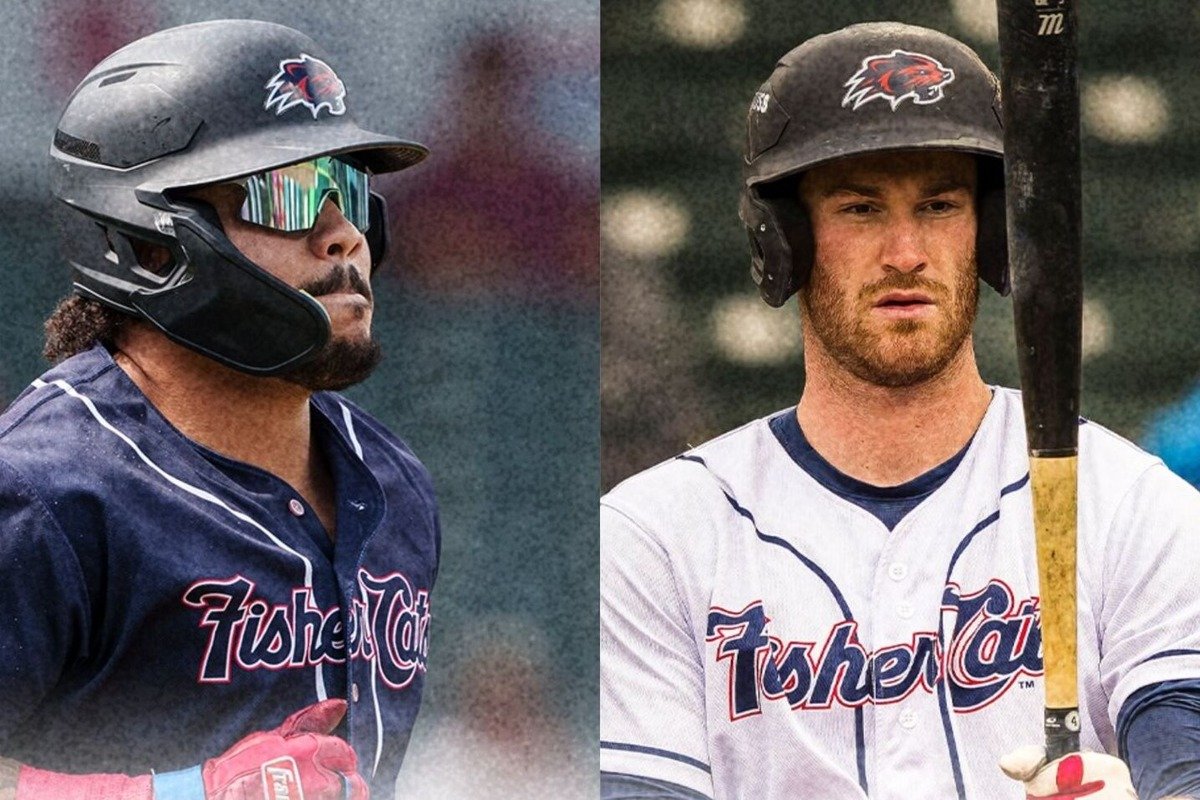 CURRENT W-L Records Buffalo Bisons: 23-34 New Hampshire Fisher Cats: 23-30 Vancouver Canadians: 25-28 Dunedin Blue Jays: 26-26 FCL Blue Jays: 15-8 DSL Blue Jays Blue: 1-1 DSL Blue Jays Red: 0-2 Transactions 06/04/25 - Buffalo Bisons activated LHP Trenton Wallace. 06/04/25 - LF RJ Schreck assigned to Buffalo Bisons from New Hampshire Fisher Cats. 06/04/25 - Toronto Blue Jays sent C Ali Sánchez outright to Buffalo Bisons. 06/04/25 - CF Gabriel Martinez assigned to New Hampshire Fisher Cats from Vancouver Canadians. 06/03/25 - Buffalo Bisons activated C Christian Bethancourt from the 7-day injured list. 06/03/25 - LHP Trenton Wallace roster status changed by Buffalo Bisons. 06/03/25 - Buffalo Bisons placed SS Leo Jiménez on the 7-day injured list. 06/03/25 - Buffalo Bisons sent 3B Will Wagner on a rehab assignment to FCL Blue Jays. 06/03/25 - Buffalo Bisons placed RHP Kevin Gowdy on the temporarily inactive list. 06/03/25 - Toronto Blue Jays sent RHP Nick Sandlin on a rehab assignment to FCL Blue Jays. 06/03/25 - FCL Blue Jays placed SS Gavin Smith on the full-season injured list. 06/03/25 - New Hampshire Fisher Cats placed RHP Dahian Santos on the full-season injured list. 06/03/25 - C Hayden Gilliland assigned to Vancouver Canadians from New Hampshire Fisher Cats. 06/03/25 - Vancouver Canadians placed OF Brennan Orf on the full-season injured list. Buffalo Bisons Buffalo (8), Syracuse (5) - 6/3 Box Score The Buffalo Bisons kicked off their week-long series with the Syracuse Mets on Tuesday, and it sure was an exciting one. The Mets started with rehabbing major leaguer Frankie Montas on the mound, and Buffalo struck quickly in the first inning. Will Robertson pulled a cutter over the plate for a 405-foot home run to right field. The lead didn't last long for Buffalo, as the Mets got to the Bisons' starter for four runs in the first inning: one run on an RBI single, and three runs on a Donovan Walton home run. All of the runs were unearned, though, because Buffalo committed three errors in the inning, one by CJ Van Eyk and two by Damiano Palmegiani. In the third inning, Buffalo began clawing back, with Will Robertson hitting his second home run off of Montas and Orelvis Martinez launching a 408-foot home run right after to go back-to-back. In the fifth inning, the same combination went wild again, with Robertson hitting his third home run of the game, once again off of Montas. Martinez would get to face Colin Poche instead of Montas, but the result was the same. He hit a 112-mph, 428-foot blast to left field for his second home run of the game, giving Buffalo a two-run lead. In the ninth inning, Buffalo added two more runs, with Robertson just missing his fourth home run of the game. This time, he settled for an RBI double. Martinez added a rocket single, and Rainer Nunez drove in the second run. Buffalo would finish this game off and win 8-5. Will Roberton: 4-5, 4 R, 5 RBI, 0 BB, 1 K, 3 HR, 1 2B CJ Van Eyk: 5 IP, 3 H, 0 ER, 0 BB, 3 K Buffalo (6), Syracuse (7) - 6/4 Box Score In the Wednesday game of the series, Buffalo again got on the scoreboard first. This time it was via a home run from RJ Schreck, who is continuing his home run swing, which began in May. He now has 10 home runs since May 2. In the bottom of the third, the Mets would even up the score on an RBI triple and an RBI single. In the top of the sixth, Martinez hit a towering home run to left field, his eighth home run of the season. In the Mets' half of the sixth, though, they would put up a four-spot again, with three hits and an error. In the top of the ninth inning, down four, Buffalo put together a string of hits. Nunez singled, Josh Rivera walked, and then Yohendrick Pinango hit a three-run home run, his first at Triple A. Robertson singled, and then Martinez came up to bat. He got a slider in the zone from Dedniel Núñez and hit a missile to shortstop at 102.1 mph. Unfortunately, it was a groundball and resulted in the game-ending double play. Buffalo lost this one 7-6. Orelvis Martinez: 2-5, 2 R, 1 RBI, 0 BB, 0 K, 1 HR Martinez is looking very confident at the plate so far in June. He is hitting the ball very hard and often, while limiting the strikeouts and even taking a competitive walk when needed. He still swings a lot, and often at breaking balls off the plate, but he is finding a groove and now has hit three home runs in his last two games. A big June could see him get another chance in the major leagues sooner than his season numbers would suggest. He is turning a very slow April start around in a big way right now. Lazaro Estrada: 4.1 IP, 4 H, 2 ER, 3 BB, 6 K New Hampshire Fisher Cats New Hampshire (4), Altoona (0) - 6/3 Box Score New Hampshire opened a new series on Tuesday against the Altoona Curve. They sent Ryan Watson to the mound, and it may have been the best performance of his career. He went deep into the game, 6.2 innings, and only gave up two hits. His pièce de résistance was the nine strikeouts he racked up on his way to keeping Altoona off the scoreboard entirely. As for the offense, Jace Bohrofen launched his eighth home run of the season to center field in the bottom of the second inning. In the fifth, a sacrifice bunt by Jacob Sharp scored Dasan Brown. Who says small ball is dead? The bunt was followed up by an RBI single from Schreck. The final run in the game for New Hampshire came in the eighth inning on a Cade Doughty single. The Fisher Cats shut out the Curve 4-0. Jace Bohrofen: 1-3, 1 R, 1 RBI, 1 BB, 1 K, 1 HR, 1 SB Ryan Watson: 6.2 IP, 2 H, 0 ER, 0 BB, 9 K New Hampshire (3), Altoona (0) - 6/4 Box Score Wednesday's game would ultimately extend the New Hampshire win streak to three, as they dominated for the second straight game. Devereaux Harrison took the mound for his first start in June and was looking to find more consistency in his results. He certainly could not have asked for a better game against the Curve. He went six innings in this one, matching much of what Watson did the night before. He only allowed two hits, walked three, and struck out five en route to blanking Altoona on the scoreboard. Geison Urbaez and Conor Larkin would come out of the bullpen to pitch the final three innings and complete the shutout of the Curve. Bohrofen provided all of the offense the Fisher Cats would need, with a two-run home run in the bottom of the first inning. Just for good measure, Doughty singled home Bohrofen in the third. New Hampshire now has two straight shutouts of Altoona, as they win 3-0. Jace Bohrofen: 3-4, 2 R, 2 RBI, 0 BB. 1 K, 1 HR It was Bohrofen's second home run in as many days and his ninth of the season. After a rough May, he has started June on fire. Devereaux Harrison: 6 IP, 2 H, 0 ER, 3 BB, 5 K Vancouver Canadians Vancouver (4), Tri-City (2) - 6/3 Box Score This was an epic pitching duel, as Khal Stephen and Austin Gordon both went six innings or more, with Stephen allowing one earned run, and an extra unearned run, while Gordon gave up just a solo shot to red-hot Nick Goodwin in the top of the fifth. The bullpen also came through for the Canadians, as Yondrei Rojas, Julio Ortiz and Aaron Munson didn’t allow a run in three innings. A Devils error in the ninth proved to be extremely costly, as Goodwin came on in the top of the ninth with a runner on first and third with two outs, and hit a three-run homer to give the Canadians a win. Nick Goodwin: 3-4, 2 R, 4 RBI, 2 HR Goodwin lived up to his last name, as he led the Canadians to a good win, with a two-homer night, knocking in all four of their runs in a tight game against Tri-City. Goodwin has joined a plethora of other Jays prospects swinging a hot bat in recent weeks. Khal Stephen: 6 IP, 3 H, 2 R, 1 ER, 0 BB, 11 K Stephen, after being just okay in his few Vancouver starts, had his best start of his short pro career, striking out a career-high 11 batters, getting 17 swings and misses, and not allowing a walk. The second-rounder has been showing top-100 stuff, and his command of his secondaries has been exceptional early on in his career. Vancouver (5), Tri-City (7) - 6/4 Box Score The balls were flying in this one, as the two teams combined for nine extra base hits, including two homers apiece, with Victor Arias and Je'Von Ward both getting their second homers of the season. Jackson Wentworth struggled once again, this time allowing seven runs in four innings of work. Tri-City starter Keythel Key wasn’t much better, as he allowed five runs in five innings. However, after the starters came out for both teams, the bullpens for both teams were stellar, as they both allowed zero runs. The Canadians pen struck out seven batters in five innings, while the Devils bullpen mustered five in four innings. Victor Arias: 3-5, 1 R, 1 RBI, 1 HR, 2 K Arias has made loud contact all season long, but because of sub-optimal launch angles, he hasn’t been able to tap into much of his power yet. However, he did hit a low liner to the opposite field for a bomb on the second pitch of the game. He added another two hits on the night, and he’s been one of many bright spots in the Canadians offense. Jonathan Todd: 1.1 IP, 1 H, 2 BB, 4 K Dunedin Blue Jays Dunedin (3), St. Lucie (2) - 6/3 Box Score Colby Holcombe’s blonde locks took the mound, but he struggled early with command, giving up four walks and getting taken out of the game early with just 2 ⅔ innings under his belt. The bullpen locked it down once Holcombe left, combining for eight strikeouts without giving up a run. The game remained close going into the eighth inning, but Tucker Toman hit an RBI single in the eighth that made it even, and although Edward Duran had his hit streak broken, he was the winning run with Kendry Chirinos driving him in. Tucker Toman: 2-4, 1 R, 1 RBI Toman was the second Jays farm system hitter to give the team a chance to win it in the top of the ninth with two outs. Eminen Flores: 2 IP, 0 H, 0 ER, 1 BB, 5 K Dunedin, St. Lucie - 6/4 PPD FCL Blue Jays F-BLU (0), F-YAN (5) - 6/3 Box Score Nick Sandlin, who is rehabbing in the Complex League for the Blue Jays, got the start in this one and pitched a relatively clean first inning. He only walked one batter and didn't give up a hit or run. In the top of the third inning, the Yankees' squad got three runs off of Sann Omosoko on six hits. The Yankees would add one more in the fourth and one in the fifth to take a 5-0 lead. The Blue Jays' hitters only managed four singles in the game and didn't really threaten to score after the first inning, when David Beckles was thrown out at home following an error. The Blue Jays' squad would lose 5-0. Maykel Minosa: 1-2, 0 R, 0 RBI, 1 BB, 1 K Raimundo De Los Santos: 1 IP, 0 H, 0 ER, 0 BB, 2 K DSL Blue Jays Blue D-BJB (6), D-PIG (1) F/7 - 6/3 Box Score BJB got into the win column for the first time in the 2025 season on Tuesday. Going up against the Gold team from the Pittsburgh Pirates organization, the BJB's bats were quiet until the top of the third inning. J.T. Bain singled in Darwin Núñez, Cristopher Polanco doubled home Bain, and Polanco would score on Rafael Flores’ single. After giving up their lone run of the game in the fourth, BJB added two more runs in the fifth inning. Polanco scored on Juarlin Soto's groundout, who then came around to score on a single from Carlos Garcia. In the top of the sixth, Núñez had an RBI single scoring Daniel Dominguez. BJB coasted to a 6-1 victory in this one. Cristopher Polanco: 2-3, 2 R, 1 RBI, 1 BB, 1 K, 1 2B Michael De La Cruz: 2 IP, 0 H, 0 ER, 0 BB. 5 K DSL Blue Jays Red D-BJR (8), D-NAT (12) - 6/3 Box Score Tuesday's game between BJR and the Washington Nationals DSL team went in a typical fashion. The Nationals scored nine runs by the end of the top of the fourth inning, and BJR was sitting with a goose egg. In the bottom half of the fourth inning, BJR got onto the scoreboard with a Nestor Urbina double, scoring Diego Arce. In the bottom of the fifth, Pascual Archila's two-RBI double brought BJR to within six runs. The Nationals team added three more runs before Arce scored on a groundout in the bottom of the eighth, and Luis Felipe scored on a wild pitch. BJR would add three more runs on a single, an error, and a groundout. The lead for the Nationals team was too large for BJR to come back from, and they lost 12-8. Luis Felipe: 3-5, 2 R, 1 RBI, 2 K, 1 2B Luis Victorino: 1 IP, 1 H, 0 ER, 1 BB, 1 K Toronto Blue Jays Minor League Players of the Period Pitcher of the Period: RHP Khal Stephen (Vancouver) - 6 IP, 3 H, 2 R, 1 ER, 0 BB, 11 K Hitter of the Period: OF Will Robertson (Buffalo) - 5-9, 4 R, 5 RBI, 1 BB, 1 K, 3 HR, 1 2B Prospect Summary (Last 2 Days)
 -
The Jays' 2023 draft class included a pair of high schoolers they selected with two of their first three picks who generated a lot of buzz: current number one prospect Arjun Nimmala and fourth-round pick Landen Maroudis, who was highlighted by many as a breakout candidate the season prior before unfortunately losing the year to Tommy John surgery. Yet, there's a third high school selection from that draft who seems to have fallen under the radar, and it’s a 5-foot-10 second baseman hailing from Victoria, BC. He’s third amongst all qualified hitters in wRC+ in the Florida State League at only 20 years old, which is over a full year younger than league average. As relayed by Dunedin broadcaster Eli Fishman on the Around the Nest podcast, Sam Shaw grew up a diehard Blue Jays fan. He would go to Vancouver Canadians games regularly and often spent his summers down in Dunedin watching the Jays at their spring training complex. At one point in time, he ended up getting thrown a ball from former Jays outfielder Jonathan Davis, who’s now one of his coaches. Ahead of the draft, Shaw had committed to Xavier University, but the Jays convinced their ninth-round selection to sign with an overslot $282,500 signing bonus. He was one of two Canadians drafted by the Jays that year, with Mississauga's Connor O’Halloran being taken in the fifth round. Shaw started off his career in the Florida Complex League in 2023 and '24, where he showcased strong plate discipline, walking 18.1% of the time and striking out just 10.9% of the time. Scouts liked his strong feel for contact and feel for the barrel. He ran an 87.9% contact rate last season in the FCL and ran very low swinging strike rates despite only hitting .218, mostly due to a lack of power that led to weaker fly balls when he did make contact. Shaw’s bat was notable enough to get him ranked as the 29th-best Jays prospect by Baseball America and the 40th by FanGraphs. One thing that limited his ceiling in their eyes was his lack of power, with FanGraphs giving him a 20/30 game power and a 30/35 raw power grade, and Baseball America saying this: data:image/gif;base64,R0lGODlhAQABAPABAP///wAAACH5BAEKAAAALAAAAAABAAEAAAICRAEAOw== This season, things have changed for Shaw. He spent the offseason putting on weight, and it has resulted in a very different offensive profile. After previously only hitting two homers in his pro career, he’s now more than tripled his homer total, with five on the season, in addition to five doubles and a triple. His ISO is nearly .100 points higher than it was in the FCL last season, against more advanced pitching. Shaw’s swing has always been tailor-made for line drives, but he’s been hitting them at an absurd rate, with a 29.3% line drive rate, which is the seventh highest in the Florida State League. The more interesting wrinkle to his current approach is his pull rate, as he’s hitting balls to the pull side about half of the time, and 23.4% of his tracked batted balls have been pulled in the air (per Statcast). This helps explain some of the power increase, as his max EV of 106.8 MPH is only average, and his 90th percentile EV of 101.2 mph is only slightly above average. What stands out about Shaw’s profile, though, despite strong but not spectacular power metrics, is a knack for getting barrels, as he’s running one of the highest barrel rates in the league (11.7%). The combination of decent exit velocities, an elite pull rate, and an elite barrel rate has made the smaller second baseman/left fielder into a bigger power threat than one would expect. https://x.com/DunedinBlueJays/status/1923166119411474475https://x.com/DunedinBlueJays/status/1923166119411474475 The ability to barrel the ball is not the only outlier about his game, as he also has strong plate discipline, with an absurd 17.8% walk rate, which is the fourth highest in the FSL. This may come from some passivity in his approach, as he only has a swing rate of 36.5%. As his competition becomes more advanced, Shaw may need to make adjustments to his approach, as more advanced pitchers could take advantage of his passivity as he moves up. His excellent knowledge of the strike zone results in very little chase, and he also has one of the lowest swinging strike rates in the Florida State League at only 6.7%. Shaw’s newfound power stroke may have coincided with a slightly elevated K%, as he is striking out a little more than the average Low-A hitter, and his zone-contact rate is also similarly below average. Still, considering his overall offensive production, it’s a trade-off that seems to be working out for him. (Graphic via @TJStats, Stats as of 5/31) Shaw’s overall defensive value is limited, as he’s only an average fielder at second base, and while he does have experience playing the outfield, most of that time has been spent in left. His speed is considered average to below average, so the main carrying tool will be his bat as he advances through the minors. Shaw’s optimization of launch angles and his ability to pull the ball have transformed him from being a strong contact hitter into a legitimate power threat and, if he continues to progress, will see him launch up prospect rankings. Stats updated prior to games on Wednesday, June 4. View full article
-
.jpeg.4ac00466a806857b95f7b7868a54e7a3.jpeg) The Jays' 2023 draft class included a pair of high schoolers they selected with two of their first three picks who generated a lot of buzz: current number one prospect Arjun Nimmala and fourth-round pick Landen Maroudis, who was highlighted by many as a breakout candidate the season prior before unfortunately losing the year to Tommy John surgery. Yet, there's a third high school selection from that draft who seems to have fallen under the radar, and it’s a 5-foot-10 second baseman hailing from Victoria, BC. He’s third amongst all qualified hitters in wRC+ in the Florida State League at only 20 years old, which is over a full year younger than league average. As relayed by Dunedin broadcaster Eli Fishman on the Around the Nest podcast, Sam Shaw grew up a diehard Blue Jays fan. He would go to Vancouver Canadians games regularly and often spent his summers down in Dunedin watching the Jays at their spring training complex. At one point in time, he ended up getting thrown a ball from former Jays outfielder Jonathan Davis, who’s now one of his coaches. Ahead of the draft, Shaw had committed to Xavier University, but the Jays convinced their ninth-round selection to sign with an overslot $282,500 signing bonus. He was one of two Canadians drafted by the Jays that year, with Mississauga's Connor O’Halloran being taken in the fifth round. Shaw started off his career in the Florida Complex League in 2023 and '24, where he showcased strong plate discipline, walking 18.1% of the time and striking out just 10.9% of the time. Scouts liked his strong feel for contact and feel for the barrel. He ran an 87.9% contact rate last season in the FCL and ran very low swinging strike rates despite only hitting .218, mostly due to a lack of power that led to weaker fly balls when he did make contact. Shaw’s bat was notable enough to get him ranked as the 29th-best Jays prospect by Baseball America and the 40th by FanGraphs. One thing that limited his ceiling in their eyes was his lack of power, with FanGraphs giving him a 20/30 game power and a 30/35 raw power grade, and Baseball America saying this: data:image/gif;base64,R0lGODlhAQABAPABAP///wAAACH5BAEKAAAALAAAAAABAAEAAAICRAEAOw== This season, things have changed for Shaw. He spent the offseason putting on weight, and it has resulted in a very different offensive profile. After previously only hitting two homers in his pro career, he’s now more than tripled his homer total, with five on the season, in addition to five doubles and a triple. His ISO is nearly .100 points higher than it was in the FCL last season, against more advanced pitching. Shaw’s swing has always been tailor-made for line drives, but he’s been hitting them at an absurd rate, with a 29.3% line drive rate, which is the seventh highest in the Florida State League. The more interesting wrinkle to his current approach is his pull rate, as he’s hitting balls to the pull side about half of the time, and 23.4% of his tracked batted balls have been pulled in the air (per Statcast). This helps explain some of the power increase, as his max EV of 106.8 MPH is only average, and his 90th percentile EV of 101.2 mph is only slightly above average. What stands out about Shaw’s profile, though, despite strong but not spectacular power metrics, is a knack for getting barrels, as he’s running one of the highest barrel rates in the league (11.7%). The combination of decent exit velocities, an elite pull rate, and an elite barrel rate has made the smaller second baseman/left fielder into a bigger power threat than one would expect. https://x.com/DunedinBlueJays/status/1923166119411474475https://x.com/DunedinBlueJays/status/1923166119411474475 The ability to barrel the ball is not the only outlier about his game, as he also has strong plate discipline, with an absurd 17.8% walk rate, which is the fourth highest in the FSL. This may come from some passivity in his approach, as he only has a swing rate of 36.5%. As his competition becomes more advanced, Shaw may need to make adjustments to his approach, as more advanced pitchers could take advantage of his passivity as he moves up. His excellent knowledge of the strike zone results in very little chase, and he also has one of the lowest swinging strike rates in the Florida State League at only 6.7%. Shaw’s newfound power stroke may have coincided with a slightly elevated K%, as he is striking out a little more than the average Low-A hitter, and his zone-contact rate is also similarly below average. Still, considering his overall offensive production, it’s a trade-off that seems to be working out for him. (Graphic via @TJStats, Stats as of 5/31) Shaw’s overall defensive value is limited, as he’s only an average fielder at second base, and while he does have experience playing the outfield, most of that time has been spent in left. His speed is considered average to below average, so the main carrying tool will be his bat as he advances through the minors. Shaw’s optimization of launch angles and his ability to pull the ball have transformed him from being a strong contact hitter into a legitimate power threat and, if he continues to progress, will see him launch up prospect rankings. Stats updated prior to games on Wednesday, June 4.
The Jays' 2023 draft class included a pair of high schoolers they selected with two of their first three picks who generated a lot of buzz: current number one prospect Arjun Nimmala and fourth-round pick Landen Maroudis, who was highlighted by many as a breakout candidate the season prior before unfortunately losing the year to Tommy John surgery. Yet, there's a third high school selection from that draft who seems to have fallen under the radar, and it’s a 5-foot-10 second baseman hailing from Victoria, BC. He’s third amongst all qualified hitters in wRC+ in the Florida State League at only 20 years old, which is over a full year younger than league average. As relayed by Dunedin broadcaster Eli Fishman on the Around the Nest podcast, Sam Shaw grew up a diehard Blue Jays fan. He would go to Vancouver Canadians games regularly and often spent his summers down in Dunedin watching the Jays at their spring training complex. At one point in time, he ended up getting thrown a ball from former Jays outfielder Jonathan Davis, who’s now one of his coaches. Ahead of the draft, Shaw had committed to Xavier University, but the Jays convinced their ninth-round selection to sign with an overslot $282,500 signing bonus. He was one of two Canadians drafted by the Jays that year, with Mississauga's Connor O’Halloran being taken in the fifth round. Shaw started off his career in the Florida Complex League in 2023 and '24, where he showcased strong plate discipline, walking 18.1% of the time and striking out just 10.9% of the time. Scouts liked his strong feel for contact and feel for the barrel. He ran an 87.9% contact rate last season in the FCL and ran very low swinging strike rates despite only hitting .218, mostly due to a lack of power that led to weaker fly balls when he did make contact. Shaw’s bat was notable enough to get him ranked as the 29th-best Jays prospect by Baseball America and the 40th by FanGraphs. One thing that limited his ceiling in their eyes was his lack of power, with FanGraphs giving him a 20/30 game power and a 30/35 raw power grade, and Baseball America saying this: data:image/gif;base64,R0lGODlhAQABAPABAP///wAAACH5BAEKAAAALAAAAAABAAEAAAICRAEAOw== This season, things have changed for Shaw. He spent the offseason putting on weight, and it has resulted in a very different offensive profile. After previously only hitting two homers in his pro career, he’s now more than tripled his homer total, with five on the season, in addition to five doubles and a triple. His ISO is nearly .100 points higher than it was in the FCL last season, against more advanced pitching. Shaw’s swing has always been tailor-made for line drives, but he’s been hitting them at an absurd rate, with a 29.3% line drive rate, which is the seventh highest in the Florida State League. The more interesting wrinkle to his current approach is his pull rate, as he’s hitting balls to the pull side about half of the time, and 23.4% of his tracked batted balls have been pulled in the air (per Statcast). This helps explain some of the power increase, as his max EV of 106.8 MPH is only average, and his 90th percentile EV of 101.2 mph is only slightly above average. What stands out about Shaw’s profile, though, despite strong but not spectacular power metrics, is a knack for getting barrels, as he’s running one of the highest barrel rates in the league (11.7%). The combination of decent exit velocities, an elite pull rate, and an elite barrel rate has made the smaller second baseman/left fielder into a bigger power threat than one would expect. https://x.com/DunedinBlueJays/status/1923166119411474475https://x.com/DunedinBlueJays/status/1923166119411474475 The ability to barrel the ball is not the only outlier about his game, as he also has strong plate discipline, with an absurd 17.8% walk rate, which is the fourth highest in the FSL. This may come from some passivity in his approach, as he only has a swing rate of 36.5%. As his competition becomes more advanced, Shaw may need to make adjustments to his approach, as more advanced pitchers could take advantage of his passivity as he moves up. His excellent knowledge of the strike zone results in very little chase, and he also has one of the lowest swinging strike rates in the Florida State League at only 6.7%. Shaw’s newfound power stroke may have coincided with a slightly elevated K%, as he is striking out a little more than the average Low-A hitter, and his zone-contact rate is also similarly below average. Still, considering his overall offensive production, it’s a trade-off that seems to be working out for him. (Graphic via @TJStats, Stats as of 5/31) Shaw’s overall defensive value is limited, as he’s only an average fielder at second base, and while he does have experience playing the outfield, most of that time has been spent in left. His speed is considered average to below average, so the main carrying tool will be his bat as he advances through the minors. Shaw’s optimization of launch angles and his ability to pull the ball have transformed him from being a strong contact hitter into a legitimate power threat and, if he continues to progress, will see him launch up prospect rankings. Stats updated prior to games on Wednesday, June 4. -
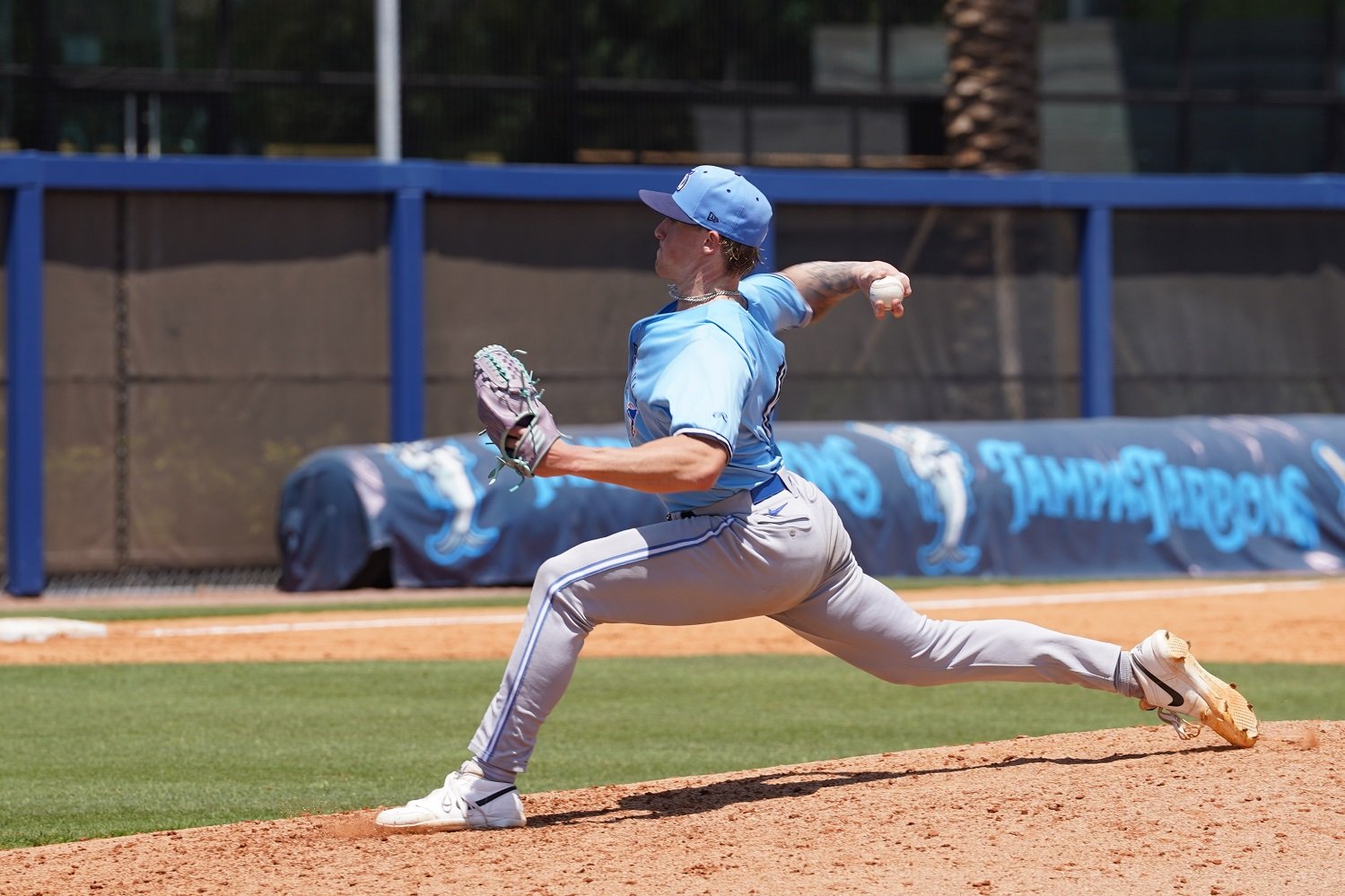
The Toronto Blue Jays have struggled to develop starting pitching in the minors, with the entirety of their major league rotation having been signed through free agency or acquired through trades. After a strong performance by starters in the farm system in the month of April, with Trey Yesavage earning the top pitcher crown, the starters in the system continued to show out, bringing hope that the Jays have finally figured out how to develop some starters that could quickly contribute to the major league roster. With the advent of the Florida Complex League this month, we get to take a look at a few more starters than we were able to last month. Honourable Mentions CJ Van Eyk - Double-A New Hampshire/Triple-A Buffalo - 4 GS, 23 IP, 3.52 ERA, 3.95 FIP, 20.7 K%, 8.7 BB%, 1.04 WHIP Van Eyk had a strong May, especially in Double-A New Hampshire, earning his way onto the Buffalo Bisons Triple-A roster for the first time in his career. The former top Jays prospect has had his ups and downs, including a rough injury history, but he’s finally slowly moving his way up and could make his way to the majors one day. The starts he made in Buffalo were not nearly as good, but his hot stretch in New Hampshire earned him an honourable mention. Fernando Perez - High-A Vancouver - 5 GS, 26 ⅓ IP, 3.76 ERA, 3.81 FIP, 18.7 K%, 2.8 BB%, 1.14 WHIP The 21-year-old Nicaraguan refused to walk anybody, walking only three batters on the month, although it also came with a below-average strikeout rate. Perez’s raw stuff doesn’t wow everyone, but he relies on great control and mixing up his pitches in order to prevent batters from teeing him up. He did a solid job of preventing that from happening, except for one poor start against the Giants' High-A team, in which he was tagged for three homers and gave up six earned runs. Still, Perez has finally found his footing in High A, and after his first start on May 2, in which he only went four innings, he’s gone five-plus innings in each start since. Austin Cates - Low-A Dunedin - 5 G, 4 GS, 16 ⅔ IP, 3.78 ERA, 5.49 FIP, 28.6 K%, 14.3 BB%, 1.44 WHIP Cates struggled to start the season, giving up 15 runs in April while only striking out 15 batters, including a game on April 30 where he gave up three homers. His first start in May didn’t go too well either, as the seventh-rounder from UNLV only struck out a single batter and left the game after giving up three earned runs in only two-thirds of an inning. Cates got a mental reset in the next game he appeared in, as he came out of the 'pen to accommodate Adam Kloffenstein’s rehab assignment. He struck out four batters in three innings of work while only allowing one run. That led to a three-start stretch in which he only let in one run each game. The walks were elevated for Cates during that stretch, as he walked three batters per start, but he limited damage and lowered his season ERA from 7.25 to 5.17. Complex Leaguers with Too Small a Sample Johnny King - 3 G, 2 GS, 8 IP, 0.00 ERA, 2.86 FIP, 38.7 K%, 9.8 K%, 0.75 WHIP King hasn’t pitched many innings in his pro career, but he’s been off to a roaring start, showing increased velocity and showcasing strong breaking balls that were highly-regarded coming out of high school. He’s earned rave reviews from prospect evaluators, with ESPN's Kiley McDaniel calling him one of the players to click in his midseason prospect ranking update and a definite top-100 prospect in a recent video with Lance Brozdowski. Samuel Colmenares - 4 GS, 15 IP, 1.80 ERA, 2.38 FIP, 25.4 K%, 3.4 BB%, 1.00 WHIP Colmenares was signed out of Venezuela in the 2023 international amateur class and had a strong debut in the Dominican Summer League the same year. Then, he struggled last season with a 6.86 ERA across 39 ⅓ innings in the Complex League and Low A as a 19-year-old. The Jays once again started him in the Complex League, and he’s taken to it well, keeping his walks in check and not allowing a single homer yet. Silvano Hechavarria - 4 G, 3 GS, 2.12 ERA, 5.22 FIP, 14.7 K%, 5.9 BB%, 1.06 WHIP Hechavarria was signed out of Cuba as a 21-year-old and dominated the Dominican Summer League as an overage flamethrower against teenagers. The Jays were not aggressive with him and started him off in the Florida Complex League this year, where he struggled to strike out batters despite reportedly sitting 96-97 mph on his fastball. Still, his performance earned him a promotion to Low-A Dunedin as reported by Francys Romero, where he's made one appearance in relief in June. Top Five Minor League Starting Pitchers of May 5. Lazaro Estrada - Triple-A Buffalo - 5 GS, 24 ⅓ IP, 1.85 ERA, 4.90 FIP, 23.4 K%, 7.4 BB%, 0.99 WHIP Estrada had a strong May after a shaky April, as he led Buffalo in innings pitched and strikeouts and only gave up an opponent’s batting average of .198. His FIP was a little elevated due to being homer-prone, but he was mostly able to limit those homers to solo shots. Estrada’s best pitch during this stretch was his slider, which generated a whiff rate near 40%. His other pitches struggled to get whiffs but limited hard contact, except for his fastball, which sits in the lower 90s. Although it has decent ride, hitters didn’t whiff on it, and when they made contact, it was loud. Estrada can most reliably command his four-seam fastball, which allows him to use the fastball at a 46.1% rate. He may benefit from mixing in more of his other pitches once he can rein in the control. 4. Juaron Watts-Brown - High-A Vancouver/Double-A New Hampshire - 5 GS, 25 ⅔ IP, 4.21 ERA, 3.18 FIP, 35.8 K%, 7.5 BB%, 0.97 WHIP Watts-Brown had his strikeout stuff in May, headlined by his strong breaking balls. He went five innings in four out of five starts, and struck out at least five batters in every one of them. Midway through the month, he earned a promotion to Double A after a contingent of starters came up from Dunedin to Vancouver. His first start in New Hampshire wasn’t his best, but he really showed out in his start against Colorado’s Double-A team, where he struck out eight batters in six innings, giving up only one earned run and one walk. If his command is on, he’s one of the most unhittable pitchers in the Jays system, just behind another Jays prospect, and possibly even the minor leagues. 3. Khal Stephen - 5 GP, 4 GS, 22 ⅔ IP, 2.78 ERA, 2.81 FIP, 26.9 K%, 4.3 BB%, 1.01 WHIP Second-rounder Khal Stephen dominated Low A alongside his teammates Trey Yesavage and Gage Stanifer and earned a promotion up to Vancouver. He’s continued to hum along in High A, although he’s still adjusting to the lack of ABS and more advanced hitters. Stephen has shown that his high fastball can still be very effective and now needs to learn how to sharpen his pitch sequencing, tunneling, and location in order to better utilize his improved secondary pitches. His control, however, was very good this month, as he walked only four batters and gave up only one home run. He's going to get challenged facing High-A hitters, but he's definitely up for the task. 2. Grant Rogers - High-A Vancouver/Double-A New Hampshire - 5 GS, 26 ⅓ IP, 1.71 ERA, 3.19 FIP, 20.2 K%, 8.8 BB%, 1.14 WHIP Rogers was the more consistent of the two starters who earned a promotion from Vancouver to New Hampshire, although he barely struck out half as many batters as Watts-Brown. Rogers was better at limiting the damage, as the most earned runs he gave up in any start in May was two, and he was able to keep batters off balance with his funky delivery and his deep pitch mix. He carried his momentum from High A into New Hampshire and had one of his best starts, taking a perfect game into the fifth. 1. Trey Yesavage - High-A Vancouver/Low-A Dunedin - 6 GS, 28 ⅓ IP, 1.59 ERA, 3.04 FIP, 46.8 K%, 9.2 BB%, 0.81 WHIP Trey Yesavage is once again your MiLB Starting Pitcher of the Month, and he’s lived up to almost all of the expectations coming off of a first-round selection. The 6-foot-4 righty dominated hitters in May, with a minor league-leading 46 strikeouts on the month, as he split his time between Low and High A. Yesavage’s arsenal is truly unique; he doesn’t have a single pitch that breaks to the glove side, and coming from his more unique over-the-top slot, that gives hitters a weird look that is extremely difficult to face. His fastball has strong velo and a ton of life, his cutter/slider and his splitter generate a ton of whiffs, and he’s nigh impossible to square up even when a batter does make contact. Hitters hit just .133 against him this past month. Even with this dominating performance, there were some blemishes, including ten walks in his past three starts and his inability to break the 4 ⅓-inning mark after getting promoted to Vancouver. Yet, that may just be an adjustment period to the cooler climates, lack of ABS challenge system, and facing more advanced hitters who are less prone to chase. No matter what, you cannot deny the absolute filth Yesavage throws, and he’s done more than enough to earn this top spot as the Jays Centre MiLB Starting Pitcher of the Month. View full article
-
- 2
-

-

-
- trey yesavage
- khal stephen
- (and 3 more)
-
 The Toronto Blue Jays have struggled to develop starting pitching in the minors, with the entirety of their major league rotation having been signed through free agency or acquired through trades. After a strong performance by starters in the farm system in the month of April, with Trey Yesavage earning the top pitcher crown, the starters in the system continued to show out, bringing hope that the Jays have finally figured out how to develop some starters that could quickly contribute to the major league roster. With the advent of the Florida Complex League this month, we get to take a look at a few more starters than we were able to last month. Honourable Mentions CJ Van Eyk - Double-A New Hampshire/Triple-A Buffalo - 4 GS, 23 IP, 3.52 ERA, 3.95 FIP, 20.7 K%, 8.7 BB%, 1.04 WHIP Van Eyk had a strong May, especially in Double-A New Hampshire, earning his way onto the Buffalo Bisons Triple-A roster for the first time in his career. The former top Jays prospect has had his ups and downs, including a rough injury history, but he’s finally slowly moving his way up and could make his way to the majors one day. The starts he made in Buffalo were not nearly as good, but his hot stretch in New Hampshire earned him an honourable mention. Fernando Perez - High-A Vancouver - 5 GS, 26 ⅓ IP, 3.76 ERA, 3.81 FIP, 18.7 K%, 2.8 BB%, 1.14 WHIP The 21-year-old Nicaraguan refused to walk anybody, walking only three batters on the month, although it also came with a below-average strikeout rate. Perez’s raw stuff doesn’t wow everyone, but he relies on great control and mixing up his pitches in order to prevent batters from teeing him up. He did a solid job of preventing that from happening, except for one poor start against the Giants' High-A team, in which he was tagged for three homers and gave up six earned runs. Still, Perez has finally found his footing in High A, and after his first start on May 2, in which he only went four innings, he’s gone five-plus innings in each start since. Austin Cates - Low-A Dunedin - 5 G, 4 GS, 16 ⅔ IP, 3.78 ERA, 5.49 FIP, 28.6 K%, 14.3 BB%, 1.44 WHIP Cates struggled to start the season, giving up 15 runs in April while only striking out 15 batters, including a game on April 30 where he gave up three homers. His first start in May didn’t go too well either, as the seventh-rounder from UNLV only struck out a single batter and left the game after giving up three earned runs in only two-thirds of an inning. Cates got a mental reset in the next game he appeared in, as he came out of the 'pen to accommodate Adam Kloffenstein’s rehab assignment. He struck out four batters in three innings of work while only allowing one run. That led to a three-start stretch in which he only let in one run each game. The walks were elevated for Cates during that stretch, as he walked three batters per start, but he limited damage and lowered his season ERA from 7.25 to 5.17. Complex Leaguers with Too Small a Sample Johnny King - 3 G, 2 GS, 8 IP, 0.00 ERA, 2.86 FIP, 38.7 K%, 9.8 K%, 0.75 WHIP King hasn’t pitched many innings in his pro career, but he’s been off to a roaring start, showing increased velocity and showcasing strong breaking balls that were highly-regarded coming out of high school. He’s earned rave reviews from prospect evaluators, with ESPN's Kiley McDaniel calling him one of the players to click in his midseason prospect ranking update and a definite top-100 prospect in a recent video with Lance Brozdowski. Samuel Colmenares - 4 GS, 15 IP, 1.80 ERA, 2.38 FIP, 25.4 K%, 3.4 BB%, 1.00 WHIP Colmenares was signed out of Venezuela in the 2023 international amateur class and had a strong debut in the Dominican Summer League the same year. Then, he struggled last season with a 6.86 ERA across 39 ⅓ innings in the Complex League and Low A as a 19-year-old. The Jays once again started him in the Complex League, and he’s taken to it well, keeping his walks in check and not allowing a single homer yet. Silvano Hechavarria - 4 G, 3 GS, 2.12 ERA, 5.22 FIP, 14.7 K%, 5.9 BB%, 1.06 WHIP Hechavarria was signed out of Cuba as a 21-year-old and dominated the Dominican Summer League as an overage flamethrower against teenagers. The Jays were not aggressive with him and started him off in the Florida Complex League this year, where he struggled to strike out batters despite reportedly sitting 96-97 mph on his fastball. Still, his performance earned him a promotion to Low-A Dunedin as reported by Francys Romero, where he's made one appearance in relief in June. Top Five Minor League Starting Pitchers of May 5. Lazaro Estrada - Triple-A Buffalo - 5 GS, 24 ⅓ IP, 1.85 ERA, 4.90 FIP, 23.4 K%, 7.4 BB%, 0.99 WHIP Estrada had a strong May after a shaky April, as he led Buffalo in innings pitched and strikeouts and only gave up an opponent’s batting average of .198. His FIP was a little elevated due to being homer-prone, but he was mostly able to limit those homers to solo shots. Estrada’s best pitch during this stretch was his slider, which generated a whiff rate near 40%. His other pitches struggled to get whiffs but limited hard contact, except for his fastball, which sits in the lower 90s. Although it has decent ride, hitters didn’t whiff on it, and when they made contact, it was loud. Estrada can most reliably command his four-seam fastball, which allows him to use the fastball at a 46.1% rate. He may benefit from mixing in more of his other pitches once he can rein in the control. 4. Juaron Watts-Brown - High-A Vancouver/Double-A New Hampshire - 5 GS, 25 ⅔ IP, 4.21 ERA, 3.18 FIP, 35.8 K%, 7.5 BB%, 0.97 WHIP Watts-Brown had his strikeout stuff in May, headlined by his strong breaking balls. He went five innings in four out of five starts, and struck out at least five batters in every one of them. Midway through the month, he earned a promotion to Double A after a contingent of starters came up from Dunedin to Vancouver. His first start in New Hampshire wasn’t his best, but he really showed out in his start against Colorado’s Double-A team, where he struck out eight batters in six innings, giving up only one earned run and one walk. If his command is on, he’s one of the most unhittable pitchers in the Jays system, just behind another Jays prospect, and possibly even the minor leagues. 3. Khal Stephen - 5 GP, 4 GS, 22 ⅔ IP, 2.78 ERA, 2.81 FIP, 26.9 K%, 4.3 BB%, 1.01 WHIP Second-rounder Khal Stephen dominated Low A alongside his teammates Trey Yesavage and Gage Stanifer and earned a promotion up to Vancouver. He’s continued to hum along in High A, although he’s still adjusting to the lack of ABS and more advanced hitters. Stephen has shown that his high fastball can still be very effective and now needs to learn how to sharpen his pitch sequencing, tunneling, and location in order to better utilize his improved secondary pitches. His control, however, was very good this month, as he walked only four batters and gave up only one home run. He's going to get challenged facing High-A hitters, but he's definitely up for the task. 2. Grant Rogers - High-A Vancouver/Double-A New Hampshire - 5 GS, 26 ⅓ IP, 1.71 ERA, 3.19 FIP, 20.2 K%, 8.8 BB%, 1.14 WHIP Rogers was the more consistent of the two starters who earned a promotion from Vancouver to New Hampshire, although he barely struck out half as many batters as Watts-Brown. Rogers was better at limiting the damage, as the most earned runs he gave up in any start in May was two, and he was able to keep batters off balance with his funky delivery and his deep pitch mix. He carried his momentum from High A into New Hampshire and had one of his best starts, taking a perfect game into the fifth. 1. Trey Yesavage - High-A Vancouver/Low-A Dunedin - 6 GS, 28 ⅓ IP, 1.59 ERA, 3.04 FIP, 46.8 K%, 9.2 BB%, 0.81 WHIP Trey Yesavage is once again your MiLB Starting Pitcher of the Month, and he’s lived up to almost all of the expectations coming off of a first-round selection. The 6-foot-4 righty dominated hitters in May, with a minor league-leading 46 strikeouts on the month, as he split his time between Low and High A. Yesavage’s arsenal is truly unique; he doesn’t have a single pitch that breaks to the glove side, and coming from his more unique over-the-top slot, that gives hitters a weird look that is extremely difficult to face. His fastball has strong velo and a ton of life, his cutter/slider and his splitter generate a ton of whiffs, and he’s nigh impossible to square up even when a batter does make contact. Hitters hit just .133 against him this past month. Even with this dominating performance, there were some blemishes, including ten walks in his past three starts and his inability to break the 4 ⅓-inning mark after getting promoted to Vancouver. Yet, that may just be an adjustment period to the cooler climates, lack of ABS challenge system, and facing more advanced hitters who are less prone to chase. No matter what, you cannot deny the absolute filth Yesavage throws, and he’s done more than enough to earn this top spot as the Jays Centre MiLB Starting Pitcher of the Month.
-
- 1
-
-
- trey yesavage
- khal stephen
- (and 3 more)
-
Article: Jays Centre Pitcher of the Month: May 2025
Simon Li replied to Mike LeSage's topic in Jays Centre Front Page News
He might just be finding his splitter again, the splitter stuff+ in his last four starts is 106, compared to 97 for all the starts prior. -
The month of May has been a great one for the Jays, if we can get Gimenez and Santander's bats going that would be even better.
- 7 replies
-
- 5
-
-
- bo bichette
- nathan lukes
- (and 4 more)
-
CURRENT W-L Records Buffalo Bisons: 19-31 New Hampshire Fisher Cats: 19-28 Vancouver Canadians: 21-26 Dunedin Blue Jays: 24-23 FCL Blue Jays: 12-6 DSL Blue Jays: 0-0 (Season not started) Transactions 05/28/25 - RHP Bobby Milacki assigned to Buffalo Bisons from New Hampshire Fisher Cats. 05/28/25 - Toronto Blue Jays sent 2B Andrés Giménez on a rehab assignment to Dunedin Blue Jays. 05/28/25 - New Hampshire Fisher Cats placed C Jacob Sharp on the temporarily inactive list. 05/28/25 - C Hayden Gilliland assigned to New Hampshire Fisher Cats from Vancouver Canadians. 05/27/25 - Toronto Blue Jays sent RHP Erik Swanson on a rehab assignment to Buffalo Bisons. 05/27/25 - Buffalo Bisons activated SS Leo Jiménez from the 7-day injured list. 05/27/25 - Dunedin Blue Jays activated RHP Silvano Hechavarria. 05/27/25 - RHP Silvano Hechavarria assigned to Dunedin Blue Jays from FCL Blue Jays. 05/27/25 - New Hampshire Fisher Cats activated 2B Charles McAdoo. Buffalo Bisons Buffalo (10), Charlotte (9) - 5/27 Box Score Buffalo kicked off their series with the White Sox's Triple-A affiliate, the Charlotte Knights, on Tuesday. It was one of many crazy games in the Blue Jays' minor league system over the last week. Charlotte took the early lead in the first inning by way of an RBI groundout from Andrew Vaughn. Buffalo was ready though, as they rattled off five straight hits in the bottom half of the first frame. Alan Roden, Davis Schneider, and Will Robertson took flight with doubles, and Buffalo would push across three runs in the inning. Down 3-1, Charlotte would take back the lead immediately with four hits and four runs of their own in the top of the second inning. In the bottom of the third inning, Robertson launched his fifth home run on the season for Buffalo and tied the game at five. In the bottom of the fourth, Robertson would add an RBI walk, but Orelvis Martinez flew out to center field to end the bases-loaded threat. With the score 7-5 in the eighth, things took off offensively. Three singles from Charlotte brought them within one run, and in the bottom of the eighth, Buffalo had four singles to add two runs to take a three-run lead. Charlotte wasn't done though, as Tristan Gray and Vaughn blasted home runs to tie the game at nine. In the bottom of the ninth, Martinez led off with a 104.4 mph line drive single, and Rainer Nunez added a groundball double at 106.2 mph. After a walk, Roden came to the plate with the bases loaded and took a pitch off his body for the game-winning walk-off hit by pitch. Will Robertson: 2-3, 1 R, 4 RBI, 2 BB, 0 K, 1 HR Justin Bruihl: 1 IP, 0 H, 0 ER, 0 BB, 3 K Buffalo/Charlotte - 5/28 PPD New Hampshire Fisher Cats New Hampshire (1), Hartford (4) - 5/27 Box Score New Hampshire started out a new week with a new opponent: the Hartford Yard Goats. Grant Rogers took the mound for the Fisher Cats, his second start at Double A. He struggled some in the first inning, walking Cole Carrigg, who would steal second base and score on a single from Benny Montgomery. From there, he settled down and kept Hartford off the scoreboard for the rest of his outing. New Hampshire evened things up at one in the top of the fourth inning on a Charles McAdoo home run. When Rogers left the game in the bottom of the seventh inning, the bullpen coughed up three more runs and Hartford coasted to a 4-1 victory. Charles McAdoo: 1-3, 1 R, 1 RBI, 1 BB, 1 K, 1 HR In his first game back after spending a week on the developmental list, McAdoo launched his second home run of the season. Hopefully, it was a sign of things to come and he's about to start a hot stretch. Grant Rogers: 6 IP, 7 H, 1 ER, 1 BB, 4 K The step up in competition from High A to Double A has not bothered Rogers much at all. He's now thrown 11 innings, only given up three earned runs, and struck out nine. New Hampshire (7), Hartford (6) F/7 - 5/28 - Game 1 Box Score In game one of another doubleheader for New Hampshire, the bats woke up and came alive for the Fisher Cats. Eddinson Paulino tripled in Devonte Brown, who had reached on a walk. Cade Doughty would cash in Paulino on a sacrifice fly, and New Hampshire left the top of the second inning up 2-0. Unfortunately, the lead was short-lived, with Braiden Ward doubling in two in the bottom half of the inning for Hartford. In the third and fourth innings, New Hampshire added three more runs, one from a Peyton Williams single and two on a Yohendrick Pinango single. Once again, Hartford tied it back up in the following half inning on a RBI double from Ward and a two-RBI single from Nic Kent. It would stay all squared up at five until the bottom of the seventh inning. Brown came up to the plate with two men on and promptly doubled to center field, scoring both runners and giving New Hampshire a two-run lead. Alex Amalfi almost blew the lead in the bottom of the seventh, as he gave up a double and an RBI single. It was all Hartford would get though, with the Fisher Cats taking game one 7-6. Eddinson Paulino: 3-4, 2 R, 1 RBI, 1 K, 1 3B Alex Amalfi: 2 IP, 2 H, 1 ER, 0 BB, 2 K New Hampshire (4), Hartford (0) F/7 - 5/28 - Game 2 Box Score In game two of the doubleheader, New Hampshire jumped out to an early lead, scoring one run on the backs of three singles from Pinango, RJ Schreck, and Jace Bohrofen. They would get another three runs in the bottom of the fourth inning from a three-run home run by Schreck. The Fisher Cats would not need any more runs, as the recently promoted Nate Garkow made his presence felt in a big way Wednesday night. He came on in relief and went three innings, only giving up one hit, no runs, and striking out eight of the 11 batters he faced. RJ Schreck: 2-3, 1 R, 3 RBI, 0 BB, 1 K, 1 HR Nate Garkow: 3 IP, 1 H, 0 ER, 2 BB, 8 K Vancouver Canadians Vancouver (15), Hillsboro (4) - 5/27 Box Score The Canadians laid a beating down in the series opener against Hillsboro, jumping off to a roaring start in the second inning, with a 10-run frame against Daniel Nunez and Liam Norris. Jackson Hornung and Eddie Micheletti Jr. led the charge, with each reaching base twice, including hitting RBI doubles. All nine batters got on base that inning. Fernando Perez had a quality start on the other end, allowing a couple of runs in the fifth inning but showing solid command and limiting hits throughout the game. Arjun Nimmala added another RBI double to make it 11-2 in the fifth, and the Canadians added two more in the sixth on a pair of bases-loaded walks from Carter Cunningham and Victor Arias. Edinson Batista replaced Perez and allowed two runs on a throwing error from Nimmala and a couple of hits. The Hops allowed two more bases-loaded walks in the seventh, making it seven total bases-loaded walks given up in the game, as the Canadians showed a ton of plate discipline. Arjun Nimmala: 3-6, 1 R, 1 RBI, 1 2B, 1 SB Nimmala had his fifth three-hit night of the season, raising his batting average to .293 and showing improved bat-to-ball skills; his contact rate is now above 75% on the season. He’s really been one of the best hitters in the Northwest League and is on pace to make enough noise to make it up to Double A this season. Fernando Perez: 6.0 IP, 3 H, 2 ER, 1 BB, 3 K Perez had his fourth straight outing of five innings or more, as he’s finally settling down in Vancouver. The strikeout stuff isn’t quite there, as he still needs to work on adding velo and making his secondaries sharper, but his strong pitchability and command have allowed him to be fairly effective in High A. Vancouver (9), Hillsboro (5) - 5/28 Box Score Khal Stephen made his second start for Vancouver, and it went well, although he struggled to generate whiffs with only seven on the night. He struck out only one. Stephen allowed two runs early with a sac fly in the first inning and an RBI double in the top of the third inning. However, the Canadians bounced back in the bottom half, with Sean Keys and Aaron Parker being run producers in the heart of the order: Keys hit a two-run single, while Parker hit an RBI double to score Keys. Hornung continued to be very productive for the Canadians, hitting an RBI double in the fourth, and then Micheletti added an RBI of his own. Arias joined in on the fun with an RBI triple to score Hornung, and Nimmala finished off the inning with an RBI fielder’s choice to make it 7-2 early for the Canadians. Stephen allowed a third run in the fifth on an RBI double from Anderson Rojas, to make it a bit closer for the Hops, but Bo Bonds came in for the Canadians in the sixth and pitched two scoreless innings to make up for some recent poor outings. Keys cashed his third RBI of the night with a sac fly to score Victor Arias, and Arjun Nimmala walked, stole second, and then took third on a wild pitch. He was then let home on another wild pitch, manufacturing himself a run to make it 9-3. Aaron Munson and Yondrei Rojas both allowed a run with the exact same pitching line, but the lead was insurmountable for the Hops, giving the Canadians an early 2-0 lead in the series. Although the Canadians are last in the league in the standings, they’re only five games back and have the best run differential by a long shot with a +39. Victor Arias: 1-3, 3 R, 1 RBI, 2 BB, 1 SB, 1 3B Arias got on base three times and scored three times, being a key part of the top of the lineup for the Canadians. His speed and power have been on full display. Khal Stephen: 5.0 IP, 5 H, 3 ER, 1 BB, 1 K Stephen’s stuff hasn’t played up as much as Gage Stanifer's or Trey Yesavage's, but he’s still been effective for the Canadians. Stephen earned his first win of the season, and he’s still refining his secondaries against stronger competition. His riding fastball has still been quite effective, though. Dunedin Blue Jays Dunedin (5), Clearwater (8) - 5/27 Box Score The D-Jays continue to slump recently after topping the standings a couple of series ago. Spencer Turnbull made his third rehab start, and he had to deal with some shaky defense behind him, as Sam Shaw had three errors on the night. Clearwater scored their first run after a throwing run from Shaw in the first. Yhoangel Aponte hit his sixth homer of the season in the top of the fourth to even it up, but the Threshers scored their second run after a bit of bad BABIP luck for Turnbull. Turnbull got another out after some poor defense and BABIP luck again in the fifth, and the Jays turned to Juanmi Vasquez. He got the two outs in the fifth, but in the sixth trouble started, with Vasquez giving up a two-run shot, and the third error from Shaw led to a two-RBI triple. Finally, Eduardo Tait hit a sac fly to score Dante Nori, making it a five-run inning against Vasquez. Edward Duran raised his hit streak to 19 with a two-run shot in the seventh to make it closer. Nate LaRue replaced Vasquez and let in a run of his own, to increase the lead again for the Threshers. Shaw made up for his three errors with his third hit of the night to score the fifth and final run for the Jays, but they could not overcome the rest of the deficit. Spencer Turnbull: 4.1 IP, 5 H, 2 R, 1 ER, 0 BB, 4 K Edward Duran: 2-4, 1 R, 2 RBI, 1 BB, 1 HR Duran raised his hit streak to 19, with a bomb this time. The last remaining player from the return for Anthony Bass, the 20-year-old catcher has been one of the best hitters for the D-Jays so far this season. Dunedin (1), Clearwater (7) - 5/28 Box Score The losing continued, as Dunedin has now lost seven of their last eight games. This one started out with three scoreless innings for both teams, as Ryan Degges and Colby Holcombe kept things close, but things took a turn in the fourth inning when Holcombe gave up three hits, including two doubles, to give the Threshers a three-run lead. Dunedin answered with their only run of the game on an RBI groundout from Shaw, but they could not piece anything else together. The bullpen gave up another four runs, with Eliander Alcalde and Johan Simon combining for four runs on five hits and five walks allowed. Duran did raise his hitting streak to a clean 20 games, but that was the remainder of the positives for the offense, as they sputtered to the finish line. Andrés Giménez: 1-3, 1 BB, 1 2B Gimenez participated in his first rehab game and kicked it off with a ground-rule double in the first. Colby Holcombe: 4.0, 6 H, 3 ER, 1 BB, 1 K FCL Blue Jays F-BLU (15), F-YAN (4) - 5/27 Box Score Adam Macko got the start in this one, as he continues to work his way back from injury. The FCL Yankees got to him early with a barrage of hits, and they scored three runs off of him in the first two innings. He did manage four strikeouts in his 3.1 innings pitched. In the bottom of the third, the Blue Jays had RBI singles from Drew Jemison and Raimundo De Los Santos. They also added a bases-loaded walk to take the lead 4-3. In the bottom of the fourth, Enmanuel Bonilla and Yorman Licourt had RBI triples, and David Beckles contributed with an RBI double. By the bottom of the eighth, the Blue Jays had run away with the game, up 11-4. They would add four more runs in the inning, the big hit being a Licourt home run at 107.5 mph. Of note, Andres Arias also had a single late in the game at 101 mph, which was noteworthy for the 18-year-old. Yorman Licourt: 2-5, 1 R, 2 R, 6 RBI, 1 BB, 2 K, 1 HR, 1 3B Franly Urena: 2 IP, 1 H, 0 ER, 1 BB, 1 K DSL Blue Jays No games Toronto Blue Jays Minor League Players of the Period Pitcher of the Period: RHP Grant Rogers (New Hampshire) - 6 IP, 7 H, 1 ER, 1 BB, 4 K Hitter of the Period: Yorman Licourt (FCL Jays) - 2-5, 1 R, 2 R, 6 RBI, 1 BB, 2 K, 1 HR, 1 3B Prospect Summary (Last 2 Days) 1. Arjun Nimmala (Vancouver) - 3-8, 2 R, 2 RBI, 2 BB, 1 K, 1 2B, 2 SB 2. Ricky Tiedemann (Buffalo) - DNP 3. Trey Yesavage (Vancouver) - DNP 4. Orelvis Martinez (Buffalo) - 1-5, 2 K 5. Khal Stephen (Vancouver) - 5 IP, 5 H, 3 ER, 1 BB, 1 K 6. Jake Bloss (Buffalo) - DNP 7. Alan Roden (Buffalo) - 3-4, 2 R, 1 RBI, 1 BB, 2 2B 8. Landen Maroudis (FCL Jays) - DNP 9. Jonatan Clase (Toronto) - DNP 10. Kendry Rojas (Vancouver) - DNP 11. Josh Kasevich (Dunedin) - 1-3, 1 BB 12. Johnny King (FCL Blue Jays) - DNP 13. Gage Stanifer (Vancouver) - DNP 14. Adam Macko (FCL Jays) - 3 IP, 5 H, 3 ER, 0 BB, 4 K 15. Charles McAdoo (New Hampshire) - 2-7, 1 R, 1 RBI, 1 BB, 1 K, 1 HR 16. Fernando Perez (Vancouver) - 6.0 IP, 3 H, 2 ER, 1 BB, 3 K 17. Brandon Barriera (Dunedin) - DNP 18. Emmanuel Bonilla (FCL Blue Jays) - 1-4, 1 R, 2 RBI, 1 BB, 1 K, 1 3B 19. Juaron Watts-Brown (New Hampshire) - DNP 20. Jace Bohrofen (New Hampshire) - 3-10, 1 R, 1 RBI, 1 BB, 5 K View full article
-
- 1
-
-
- arjun nimmala
- grant rogers
- (and 5 more)
-
.jpg.c12e7f67035acc52d35d08d5b9166adc.jpg) CURRENT W-L Records Buffalo Bisons: 19-31 New Hampshire Fisher Cats: 19-28 Vancouver Canadians: 21-26 Dunedin Blue Jays: 24-23 FCL Blue Jays: 12-6 DSL Blue Jays: 0-0 (Season not started) Transactions 05/28/25 - RHP Bobby Milacki assigned to Buffalo Bisons from New Hampshire Fisher Cats. 05/28/25 - Toronto Blue Jays sent 2B Andrés Giménez on a rehab assignment to Dunedin Blue Jays. 05/28/25 - New Hampshire Fisher Cats placed C Jacob Sharp on the temporarily inactive list. 05/28/25 - C Hayden Gilliland assigned to New Hampshire Fisher Cats from Vancouver Canadians. 05/27/25 - Toronto Blue Jays sent RHP Erik Swanson on a rehab assignment to Buffalo Bisons. 05/27/25 - Buffalo Bisons activated SS Leo Jiménez from the 7-day injured list. 05/27/25 - Dunedin Blue Jays activated RHP Silvano Hechavarria. 05/27/25 - RHP Silvano Hechavarria assigned to Dunedin Blue Jays from FCL Blue Jays. 05/27/25 - New Hampshire Fisher Cats activated 2B Charles McAdoo. Buffalo Bisons Buffalo (10), Charlotte (9) - 5/27 Box Score Buffalo kicked off their series with the White Sox's Triple-A affiliate, the Charlotte Knights, on Tuesday. It was one of many crazy games in the Blue Jays' minor league system over the last week. Charlotte took the early lead in the first inning by way of an RBI groundout from Andrew Vaughn. Buffalo was ready though, as they rattled off five straight hits in the bottom half of the first frame. Alan Roden, Davis Schneider, and Will Robertson took flight with doubles, and Buffalo would push across three runs in the inning. Down 3-1, Charlotte would take back the lead immediately with four hits and four runs of their own in the top of the second inning. In the bottom of the third inning, Robertson launched his fifth home run on the season for Buffalo and tied the game at five. In the bottom of the fourth, Robertson would add an RBI walk, but Orelvis Martinez flew out to center field to end the bases-loaded threat. With the score 7-5 in the eighth, things took off offensively. Three singles from Charlotte brought them within one run, and in the bottom of the eighth, Buffalo had four singles to add two runs to take a three-run lead. Charlotte wasn't done though, as Tristan Gray and Vaughn blasted home runs to tie the game at nine. In the bottom of the ninth, Martinez led off with a 104.4 mph line drive single, and Rainer Nunez added a groundball double at 106.2 mph. After a walk, Roden came to the plate with the bases loaded and took a pitch off his body for the game-winning walk-off hit by pitch. Will Robertson: 2-3, 1 R, 4 RBI, 2 BB, 0 K, 1 HR Justin Bruihl: 1 IP, 0 H, 0 ER, 0 BB, 3 K Buffalo/Charlotte - 5/28 PPD New Hampshire Fisher Cats New Hampshire (1), Hartford (4) - 5/27 Box Score New Hampshire started out a new week with a new opponent: the Hartford Yard Goats. Grant Rogers took the mound for the Fisher Cats, his second start at Double A. He struggled some in the first inning, walking Cole Carrigg, who would steal second base and score on a single from Benny Montgomery. From there, he settled down and kept Hartford off the scoreboard for the rest of his outing. New Hampshire evened things up at one in the top of the fourth inning on a Charles McAdoo home run. When Rogers left the game in the bottom of the seventh inning, the bullpen coughed up three more runs and Hartford coasted to a 4-1 victory. Charles McAdoo: 1-3, 1 R, 1 RBI, 1 BB, 1 K, 1 HR In his first game back after spending a week on the developmental list, McAdoo launched his second home run of the season. Hopefully, it was a sign of things to come and he's about to start a hot stretch. Grant Rogers: 6 IP, 7 H, 1 ER, 1 BB, 4 K The step up in competition from High A to Double A has not bothered Rogers much at all. He's now thrown 11 innings, only given up three earned runs, and struck out nine. New Hampshire (7), Hartford (6) F/7 - 5/28 - Game 1 Box Score In game one of another doubleheader for New Hampshire, the bats woke up and came alive for the Fisher Cats. Eddinson Paulino tripled in Devonte Brown, who had reached on a walk. Cade Doughty would cash in Paulino on a sacrifice fly, and New Hampshire left the top of the second inning up 2-0. Unfortunately, the lead was short-lived, with Braiden Ward doubling in two in the bottom half of the inning for Hartford. In the third and fourth innings, New Hampshire added three more runs, one from a Peyton Williams single and two on a Yohendrick Pinango single. Once again, Hartford tied it back up in the following half inning on a RBI double from Ward and a two-RBI single from Nic Kent. It would stay all squared up at five until the bottom of the seventh inning. Brown came up to the plate with two men on and promptly doubled to center field, scoring both runners and giving New Hampshire a two-run lead. Alex Amalfi almost blew the lead in the bottom of the seventh, as he gave up a double and an RBI single. It was all Hartford would get though, with the Fisher Cats taking game one 7-6. Eddinson Paulino: 3-4, 2 R, 1 RBI, 1 K, 1 3B Alex Amalfi: 2 IP, 2 H, 1 ER, 0 BB, 2 K New Hampshire (4), Hartford (0) F/7 - 5/28 - Game 2 Box Score In game two of the doubleheader, New Hampshire jumped out to an early lead, scoring one run on the backs of three singles from Pinango, RJ Schreck, and Jace Bohrofen. They would get another three runs in the bottom of the fourth inning from a three-run home run by Schreck. The Fisher Cats would not need any more runs, as the recently promoted Nate Garkow made his presence felt in a big way Wednesday night. He came on in relief and went three innings, only giving up one hit, no runs, and striking out eight of the 11 batters he faced. RJ Schreck: 2-3, 1 R, 3 RBI, 0 BB, 1 K, 1 HR Nate Garkow: 3 IP, 1 H, 0 ER, 2 BB, 8 K Vancouver Canadians Vancouver (15), Hillsboro (4) - 5/27 Box Score The Canadians laid a beating down in the series opener against Hillsboro, jumping off to a roaring start in the second inning, with a 10-run frame against Daniel Nunez and Liam Norris. Jackson Hornung and Eddie Micheletti Jr. led the charge, with each reaching base twice, including hitting RBI doubles. All nine batters got on base that inning. Fernando Perez had a quality start on the other end, allowing a couple of runs in the fifth inning but showing solid command and limiting hits throughout the game. Arjun Nimmala added another RBI double to make it 11-2 in the fifth, and the Canadians added two more in the sixth on a pair of bases-loaded walks from Carter Cunningham and Victor Arias. Edinson Batista replaced Perez and allowed two runs on a throwing error from Nimmala and a couple of hits. The Hops allowed two more bases-loaded walks in the seventh, making it seven total bases-loaded walks given up in the game, as the Canadians showed a ton of plate discipline. Arjun Nimmala: 3-6, 1 R, 1 RBI, 1 2B, 1 SB Nimmala had his fifth three-hit night of the season, raising his batting average to .293 and showing improved bat-to-ball skills; his contact rate is now above 75% on the season. He’s really been one of the best hitters in the Northwest League and is on pace to make enough noise to make it up to Double A this season. Fernando Perez: 6.0 IP, 3 H, 2 ER, 1 BB, 3 K Perez had his fourth straight outing of five innings or more, as he’s finally settling down in Vancouver. The strikeout stuff isn’t quite there, as he still needs to work on adding velo and making his secondaries sharper, but his strong pitchability and command have allowed him to be fairly effective in High A. Vancouver (9), Hillsboro (5) - 5/28 Box Score Khal Stephen made his second start for Vancouver, and it went well, although he struggled to generate whiffs with only seven on the night. He struck out only one. Stephen allowed two runs early with a sac fly in the first inning and an RBI double in the top of the third inning. However, the Canadians bounced back in the bottom half, with Sean Keys and Aaron Parker being run producers in the heart of the order: Keys hit a two-run single, while Parker hit an RBI double to score Keys. Hornung continued to be very productive for the Canadians, hitting an RBI double in the fourth, and then Micheletti added an RBI of his own. Arias joined in on the fun with an RBI triple to score Hornung, and Nimmala finished off the inning with an RBI fielder’s choice to make it 7-2 early for the Canadians. Stephen allowed a third run in the fifth on an RBI double from Anderson Rojas, to make it a bit closer for the Hops, but Bo Bonds came in for the Canadians in the sixth and pitched two scoreless innings to make up for some recent poor outings. Keys cashed his third RBI of the night with a sac fly to score Victor Arias, and Arjun Nimmala walked, stole second, and then took third on a wild pitch. He was then let home on another wild pitch, manufacturing himself a run to make it 9-3. Aaron Munson and Yondrei Rojas both allowed a run with the exact same pitching line, but the lead was insurmountable for the Hops, giving the Canadians an early 2-0 lead in the series. Although the Canadians are last in the league in the standings, they’re only five games back and have the best run differential by a long shot with a +39. Victor Arias: 1-3, 3 R, 1 RBI, 2 BB, 1 SB, 1 3B Arias got on base three times and scored three times, being a key part of the top of the lineup for the Canadians. His speed and power have been on full display. Khal Stephen: 5.0 IP, 5 H, 3 ER, 1 BB, 1 K Stephen’s stuff hasn’t played up as much as Gage Stanifer's or Trey Yesavage's, but he’s still been effective for the Canadians. Stephen earned his first win of the season, and he’s still refining his secondaries against stronger competition. His riding fastball has still been quite effective, though. Dunedin Blue Jays Dunedin (5), Clearwater (8) - 5/27 Box Score The D-Jays continue to slump recently after topping the standings a couple of series ago. Spencer Turnbull made his third rehab start, and he had to deal with some shaky defense behind him, as Sam Shaw had three errors on the night. Clearwater scored their first run after a throwing run from Shaw in the first. Yhoangel Aponte hit his sixth homer of the season in the top of the fourth to even it up, but the Threshers scored their second run after a bit of bad BABIP luck for Turnbull. Turnbull got another out after some poor defense and BABIP luck again in the fifth, and the Jays turned to Juanmi Vasquez. He got the two outs in the fifth, but in the sixth trouble started, with Vasquez giving up a two-run shot, and the third error from Shaw led to a two-RBI triple. Finally, Eduardo Tait hit a sac fly to score Dante Nori, making it a five-run inning against Vasquez. Edward Duran raised his hit streak to 19 with a two-run shot in the seventh to make it closer. Nate LaRue replaced Vasquez and let in a run of his own, to increase the lead again for the Threshers. Shaw made up for his three errors with his third hit of the night to score the fifth and final run for the Jays, but they could not overcome the rest of the deficit. Spencer Turnbull: 4.1 IP, 5 H, 2 R, 1 ER, 0 BB, 4 K Edward Duran: 2-4, 1 R, 2 RBI, 1 BB, 1 HR Duran raised his hit streak to 19, with a bomb this time. The last remaining player from the return for Anthony Bass, the 20-year-old catcher has been one of the best hitters for the D-Jays so far this season. Dunedin (1), Clearwater (7) - 5/28 Box Score The losing continued, as Dunedin has now lost seven of their last eight games. This one started out with three scoreless innings for both teams, as Ryan Degges and Colby Holcombe kept things close, but things took a turn in the fourth inning when Holcombe gave up three hits, including two doubles, to give the Threshers a three-run lead. Dunedin answered with their only run of the game on an RBI groundout from Shaw, but they could not piece anything else together. The bullpen gave up another four runs, with Eliander Alcalde and Johan Simon combining for four runs on five hits and five walks allowed. Duran did raise his hitting streak to a clean 20 games, but that was the remainder of the positives for the offense, as they sputtered to the finish line. Andrés Giménez: 1-3, 1 BB, 1 2B Gimenez participated in his first rehab game and kicked it off with a ground-rule double in the first. Colby Holcombe: 4.0, 6 H, 3 ER, 1 BB, 1 K FCL Blue Jays F-BLU (15), F-YAN (4) - 5/27 Box Score Adam Macko got the start in this one, as he continues to work his way back from injury. The FCL Yankees got to him early with a barrage of hits, and they scored three runs off of him in the first two innings. He did manage four strikeouts in his 3.1 innings pitched. In the bottom of the third, the Blue Jays had RBI singles from Drew Jemison and Raimundo De Los Santos. They also added a bases-loaded walk to take the lead 4-3. In the bottom of the fourth, Enmanuel Bonilla and Yorman Licourt had RBI triples, and David Beckles contributed with an RBI double. By the bottom of the eighth, the Blue Jays had run away with the game, up 11-4. They would add four more runs in the inning, the big hit being a Licourt home run at 107.5 mph. Of note, Andres Arias also had a single late in the game at 101 mph, which was noteworthy for the 18-year-old. Yorman Licourt: 2-5, 1 R, 2 R, 6 RBI, 1 BB, 2 K, 1 HR, 1 3B Franly Urena: 2 IP, 1 H, 0 ER, 1 BB, 1 K DSL Blue Jays No games Toronto Blue Jays Minor League Players of the Period Pitcher of the Period: RHP Grant Rogers (New Hampshire) - 6 IP, 7 H, 1 ER, 1 BB, 4 K Hitter of the Period: Yorman Licourt (FCL Jays) - 2-5, 1 R, 2 R, 6 RBI, 1 BB, 2 K, 1 HR, 1 3B Prospect Summary (Last 2 Days) 1. Arjun Nimmala (Vancouver) - 3-8, 2 R, 2 RBI, 2 BB, 1 K, 1 2B, 2 SB 2. Ricky Tiedemann (Buffalo) - DNP 3. Trey Yesavage (Vancouver) - DNP 4. Orelvis Martinez (Buffalo) - 1-5, 2 K 5. Khal Stephen (Vancouver) - 5 IP, 5 H, 3 ER, 1 BB, 1 K 6. Jake Bloss (Buffalo) - DNP 7. Alan Roden (Buffalo) - 3-4, 2 R, 1 RBI, 1 BB, 2 2B 8. Landen Maroudis (FCL Jays) - DNP 9. Jonatan Clase (Toronto) - DNP 10. Kendry Rojas (Vancouver) - DNP 11. Josh Kasevich (Dunedin) - 1-3, 1 BB 12. Johnny King (FCL Blue Jays) - DNP 13. Gage Stanifer (Vancouver) - DNP 14. Adam Macko (FCL Jays) - 3 IP, 5 H, 3 ER, 0 BB, 4 K 15. Charles McAdoo (New Hampshire) - 2-7, 1 R, 1 RBI, 1 BB, 1 K, 1 HR 16. Fernando Perez (Vancouver) - 6.0 IP, 3 H, 2 ER, 1 BB, 3 K 17. Brandon Barriera (Dunedin) - DNP 18. Emmanuel Bonilla (FCL Blue Jays) - 1-4, 1 R, 2 RBI, 1 BB, 1 K, 1 3B 19. Juaron Watts-Brown (New Hampshire) - DNP 20. Jace Bohrofen (New Hampshire) - 3-10, 1 R, 1 RBI, 1 BB, 5 K
CURRENT W-L Records Buffalo Bisons: 19-31 New Hampshire Fisher Cats: 19-28 Vancouver Canadians: 21-26 Dunedin Blue Jays: 24-23 FCL Blue Jays: 12-6 DSL Blue Jays: 0-0 (Season not started) Transactions 05/28/25 - RHP Bobby Milacki assigned to Buffalo Bisons from New Hampshire Fisher Cats. 05/28/25 - Toronto Blue Jays sent 2B Andrés Giménez on a rehab assignment to Dunedin Blue Jays. 05/28/25 - New Hampshire Fisher Cats placed C Jacob Sharp on the temporarily inactive list. 05/28/25 - C Hayden Gilliland assigned to New Hampshire Fisher Cats from Vancouver Canadians. 05/27/25 - Toronto Blue Jays sent RHP Erik Swanson on a rehab assignment to Buffalo Bisons. 05/27/25 - Buffalo Bisons activated SS Leo Jiménez from the 7-day injured list. 05/27/25 - Dunedin Blue Jays activated RHP Silvano Hechavarria. 05/27/25 - RHP Silvano Hechavarria assigned to Dunedin Blue Jays from FCL Blue Jays. 05/27/25 - New Hampshire Fisher Cats activated 2B Charles McAdoo. Buffalo Bisons Buffalo (10), Charlotte (9) - 5/27 Box Score Buffalo kicked off their series with the White Sox's Triple-A affiliate, the Charlotte Knights, on Tuesday. It was one of many crazy games in the Blue Jays' minor league system over the last week. Charlotte took the early lead in the first inning by way of an RBI groundout from Andrew Vaughn. Buffalo was ready though, as they rattled off five straight hits in the bottom half of the first frame. Alan Roden, Davis Schneider, and Will Robertson took flight with doubles, and Buffalo would push across three runs in the inning. Down 3-1, Charlotte would take back the lead immediately with four hits and four runs of their own in the top of the second inning. In the bottom of the third inning, Robertson launched his fifth home run on the season for Buffalo and tied the game at five. In the bottom of the fourth, Robertson would add an RBI walk, but Orelvis Martinez flew out to center field to end the bases-loaded threat. With the score 7-5 in the eighth, things took off offensively. Three singles from Charlotte brought them within one run, and in the bottom of the eighth, Buffalo had four singles to add two runs to take a three-run lead. Charlotte wasn't done though, as Tristan Gray and Vaughn blasted home runs to tie the game at nine. In the bottom of the ninth, Martinez led off with a 104.4 mph line drive single, and Rainer Nunez added a groundball double at 106.2 mph. After a walk, Roden came to the plate with the bases loaded and took a pitch off his body for the game-winning walk-off hit by pitch. Will Robertson: 2-3, 1 R, 4 RBI, 2 BB, 0 K, 1 HR Justin Bruihl: 1 IP, 0 H, 0 ER, 0 BB, 3 K Buffalo/Charlotte - 5/28 PPD New Hampshire Fisher Cats New Hampshire (1), Hartford (4) - 5/27 Box Score New Hampshire started out a new week with a new opponent: the Hartford Yard Goats. Grant Rogers took the mound for the Fisher Cats, his second start at Double A. He struggled some in the first inning, walking Cole Carrigg, who would steal second base and score on a single from Benny Montgomery. From there, he settled down and kept Hartford off the scoreboard for the rest of his outing. New Hampshire evened things up at one in the top of the fourth inning on a Charles McAdoo home run. When Rogers left the game in the bottom of the seventh inning, the bullpen coughed up three more runs and Hartford coasted to a 4-1 victory. Charles McAdoo: 1-3, 1 R, 1 RBI, 1 BB, 1 K, 1 HR In his first game back after spending a week on the developmental list, McAdoo launched his second home run of the season. Hopefully, it was a sign of things to come and he's about to start a hot stretch. Grant Rogers: 6 IP, 7 H, 1 ER, 1 BB, 4 K The step up in competition from High A to Double A has not bothered Rogers much at all. He's now thrown 11 innings, only given up three earned runs, and struck out nine. New Hampshire (7), Hartford (6) F/7 - 5/28 - Game 1 Box Score In game one of another doubleheader for New Hampshire, the bats woke up and came alive for the Fisher Cats. Eddinson Paulino tripled in Devonte Brown, who had reached on a walk. Cade Doughty would cash in Paulino on a sacrifice fly, and New Hampshire left the top of the second inning up 2-0. Unfortunately, the lead was short-lived, with Braiden Ward doubling in two in the bottom half of the inning for Hartford. In the third and fourth innings, New Hampshire added three more runs, one from a Peyton Williams single and two on a Yohendrick Pinango single. Once again, Hartford tied it back up in the following half inning on a RBI double from Ward and a two-RBI single from Nic Kent. It would stay all squared up at five until the bottom of the seventh inning. Brown came up to the plate with two men on and promptly doubled to center field, scoring both runners and giving New Hampshire a two-run lead. Alex Amalfi almost blew the lead in the bottom of the seventh, as he gave up a double and an RBI single. It was all Hartford would get though, with the Fisher Cats taking game one 7-6. Eddinson Paulino: 3-4, 2 R, 1 RBI, 1 K, 1 3B Alex Amalfi: 2 IP, 2 H, 1 ER, 0 BB, 2 K New Hampshire (4), Hartford (0) F/7 - 5/28 - Game 2 Box Score In game two of the doubleheader, New Hampshire jumped out to an early lead, scoring one run on the backs of three singles from Pinango, RJ Schreck, and Jace Bohrofen. They would get another three runs in the bottom of the fourth inning from a three-run home run by Schreck. The Fisher Cats would not need any more runs, as the recently promoted Nate Garkow made his presence felt in a big way Wednesday night. He came on in relief and went three innings, only giving up one hit, no runs, and striking out eight of the 11 batters he faced. RJ Schreck: 2-3, 1 R, 3 RBI, 0 BB, 1 K, 1 HR Nate Garkow: 3 IP, 1 H, 0 ER, 2 BB, 8 K Vancouver Canadians Vancouver (15), Hillsboro (4) - 5/27 Box Score The Canadians laid a beating down in the series opener against Hillsboro, jumping off to a roaring start in the second inning, with a 10-run frame against Daniel Nunez and Liam Norris. Jackson Hornung and Eddie Micheletti Jr. led the charge, with each reaching base twice, including hitting RBI doubles. All nine batters got on base that inning. Fernando Perez had a quality start on the other end, allowing a couple of runs in the fifth inning but showing solid command and limiting hits throughout the game. Arjun Nimmala added another RBI double to make it 11-2 in the fifth, and the Canadians added two more in the sixth on a pair of bases-loaded walks from Carter Cunningham and Victor Arias. Edinson Batista replaced Perez and allowed two runs on a throwing error from Nimmala and a couple of hits. The Hops allowed two more bases-loaded walks in the seventh, making it seven total bases-loaded walks given up in the game, as the Canadians showed a ton of plate discipline. Arjun Nimmala: 3-6, 1 R, 1 RBI, 1 2B, 1 SB Nimmala had his fifth three-hit night of the season, raising his batting average to .293 and showing improved bat-to-ball skills; his contact rate is now above 75% on the season. He’s really been one of the best hitters in the Northwest League and is on pace to make enough noise to make it up to Double A this season. Fernando Perez: 6.0 IP, 3 H, 2 ER, 1 BB, 3 K Perez had his fourth straight outing of five innings or more, as he’s finally settling down in Vancouver. The strikeout stuff isn’t quite there, as he still needs to work on adding velo and making his secondaries sharper, but his strong pitchability and command have allowed him to be fairly effective in High A. Vancouver (9), Hillsboro (5) - 5/28 Box Score Khal Stephen made his second start for Vancouver, and it went well, although he struggled to generate whiffs with only seven on the night. He struck out only one. Stephen allowed two runs early with a sac fly in the first inning and an RBI double in the top of the third inning. However, the Canadians bounced back in the bottom half, with Sean Keys and Aaron Parker being run producers in the heart of the order: Keys hit a two-run single, while Parker hit an RBI double to score Keys. Hornung continued to be very productive for the Canadians, hitting an RBI double in the fourth, and then Micheletti added an RBI of his own. Arias joined in on the fun with an RBI triple to score Hornung, and Nimmala finished off the inning with an RBI fielder’s choice to make it 7-2 early for the Canadians. Stephen allowed a third run in the fifth on an RBI double from Anderson Rojas, to make it a bit closer for the Hops, but Bo Bonds came in for the Canadians in the sixth and pitched two scoreless innings to make up for some recent poor outings. Keys cashed his third RBI of the night with a sac fly to score Victor Arias, and Arjun Nimmala walked, stole second, and then took third on a wild pitch. He was then let home on another wild pitch, manufacturing himself a run to make it 9-3. Aaron Munson and Yondrei Rojas both allowed a run with the exact same pitching line, but the lead was insurmountable for the Hops, giving the Canadians an early 2-0 lead in the series. Although the Canadians are last in the league in the standings, they’re only five games back and have the best run differential by a long shot with a +39. Victor Arias: 1-3, 3 R, 1 RBI, 2 BB, 1 SB, 1 3B Arias got on base three times and scored three times, being a key part of the top of the lineup for the Canadians. His speed and power have been on full display. Khal Stephen: 5.0 IP, 5 H, 3 ER, 1 BB, 1 K Stephen’s stuff hasn’t played up as much as Gage Stanifer's or Trey Yesavage's, but he’s still been effective for the Canadians. Stephen earned his first win of the season, and he’s still refining his secondaries against stronger competition. His riding fastball has still been quite effective, though. Dunedin Blue Jays Dunedin (5), Clearwater (8) - 5/27 Box Score The D-Jays continue to slump recently after topping the standings a couple of series ago. Spencer Turnbull made his third rehab start, and he had to deal with some shaky defense behind him, as Sam Shaw had three errors on the night. Clearwater scored their first run after a throwing run from Shaw in the first. Yhoangel Aponte hit his sixth homer of the season in the top of the fourth to even it up, but the Threshers scored their second run after a bit of bad BABIP luck for Turnbull. Turnbull got another out after some poor defense and BABIP luck again in the fifth, and the Jays turned to Juanmi Vasquez. He got the two outs in the fifth, but in the sixth trouble started, with Vasquez giving up a two-run shot, and the third error from Shaw led to a two-RBI triple. Finally, Eduardo Tait hit a sac fly to score Dante Nori, making it a five-run inning against Vasquez. Edward Duran raised his hit streak to 19 with a two-run shot in the seventh to make it closer. Nate LaRue replaced Vasquez and let in a run of his own, to increase the lead again for the Threshers. Shaw made up for his three errors with his third hit of the night to score the fifth and final run for the Jays, but they could not overcome the rest of the deficit. Spencer Turnbull: 4.1 IP, 5 H, 2 R, 1 ER, 0 BB, 4 K Edward Duran: 2-4, 1 R, 2 RBI, 1 BB, 1 HR Duran raised his hit streak to 19, with a bomb this time. The last remaining player from the return for Anthony Bass, the 20-year-old catcher has been one of the best hitters for the D-Jays so far this season. Dunedin (1), Clearwater (7) - 5/28 Box Score The losing continued, as Dunedin has now lost seven of their last eight games. This one started out with three scoreless innings for both teams, as Ryan Degges and Colby Holcombe kept things close, but things took a turn in the fourth inning when Holcombe gave up three hits, including two doubles, to give the Threshers a three-run lead. Dunedin answered with their only run of the game on an RBI groundout from Shaw, but they could not piece anything else together. The bullpen gave up another four runs, with Eliander Alcalde and Johan Simon combining for four runs on five hits and five walks allowed. Duran did raise his hitting streak to a clean 20 games, but that was the remainder of the positives for the offense, as they sputtered to the finish line. Andrés Giménez: 1-3, 1 BB, 1 2B Gimenez participated in his first rehab game and kicked it off with a ground-rule double in the first. Colby Holcombe: 4.0, 6 H, 3 ER, 1 BB, 1 K FCL Blue Jays F-BLU (15), F-YAN (4) - 5/27 Box Score Adam Macko got the start in this one, as he continues to work his way back from injury. The FCL Yankees got to him early with a barrage of hits, and they scored three runs off of him in the first two innings. He did manage four strikeouts in his 3.1 innings pitched. In the bottom of the third, the Blue Jays had RBI singles from Drew Jemison and Raimundo De Los Santos. They also added a bases-loaded walk to take the lead 4-3. In the bottom of the fourth, Enmanuel Bonilla and Yorman Licourt had RBI triples, and David Beckles contributed with an RBI double. By the bottom of the eighth, the Blue Jays had run away with the game, up 11-4. They would add four more runs in the inning, the big hit being a Licourt home run at 107.5 mph. Of note, Andres Arias also had a single late in the game at 101 mph, which was noteworthy for the 18-year-old. Yorman Licourt: 2-5, 1 R, 2 R, 6 RBI, 1 BB, 2 K, 1 HR, 1 3B Franly Urena: 2 IP, 1 H, 0 ER, 1 BB, 1 K DSL Blue Jays No games Toronto Blue Jays Minor League Players of the Period Pitcher of the Period: RHP Grant Rogers (New Hampshire) - 6 IP, 7 H, 1 ER, 1 BB, 4 K Hitter of the Period: Yorman Licourt (FCL Jays) - 2-5, 1 R, 2 R, 6 RBI, 1 BB, 2 K, 1 HR, 1 3B Prospect Summary (Last 2 Days) 1. Arjun Nimmala (Vancouver) - 3-8, 2 R, 2 RBI, 2 BB, 1 K, 1 2B, 2 SB 2. Ricky Tiedemann (Buffalo) - DNP 3. Trey Yesavage (Vancouver) - DNP 4. Orelvis Martinez (Buffalo) - 1-5, 2 K 5. Khal Stephen (Vancouver) - 5 IP, 5 H, 3 ER, 1 BB, 1 K 6. Jake Bloss (Buffalo) - DNP 7. Alan Roden (Buffalo) - 3-4, 2 R, 1 RBI, 1 BB, 2 2B 8. Landen Maroudis (FCL Jays) - DNP 9. Jonatan Clase (Toronto) - DNP 10. Kendry Rojas (Vancouver) - DNP 11. Josh Kasevich (Dunedin) - 1-3, 1 BB 12. Johnny King (FCL Blue Jays) - DNP 13. Gage Stanifer (Vancouver) - DNP 14. Adam Macko (FCL Jays) - 3 IP, 5 H, 3 ER, 0 BB, 4 K 15. Charles McAdoo (New Hampshire) - 2-7, 1 R, 1 RBI, 1 BB, 1 K, 1 HR 16. Fernando Perez (Vancouver) - 6.0 IP, 3 H, 2 ER, 1 BB, 3 K 17. Brandon Barriera (Dunedin) - DNP 18. Emmanuel Bonilla (FCL Blue Jays) - 1-4, 1 R, 2 RBI, 1 BB, 1 K, 1 3B 19. Juaron Watts-Brown (New Hampshire) - DNP 20. Jace Bohrofen (New Hampshire) - 3-10, 1 R, 1 RBI, 1 BB, 5 K-
- 2
-
-
- arjun nimmala
- grant rogers
- (and 5 more)
-
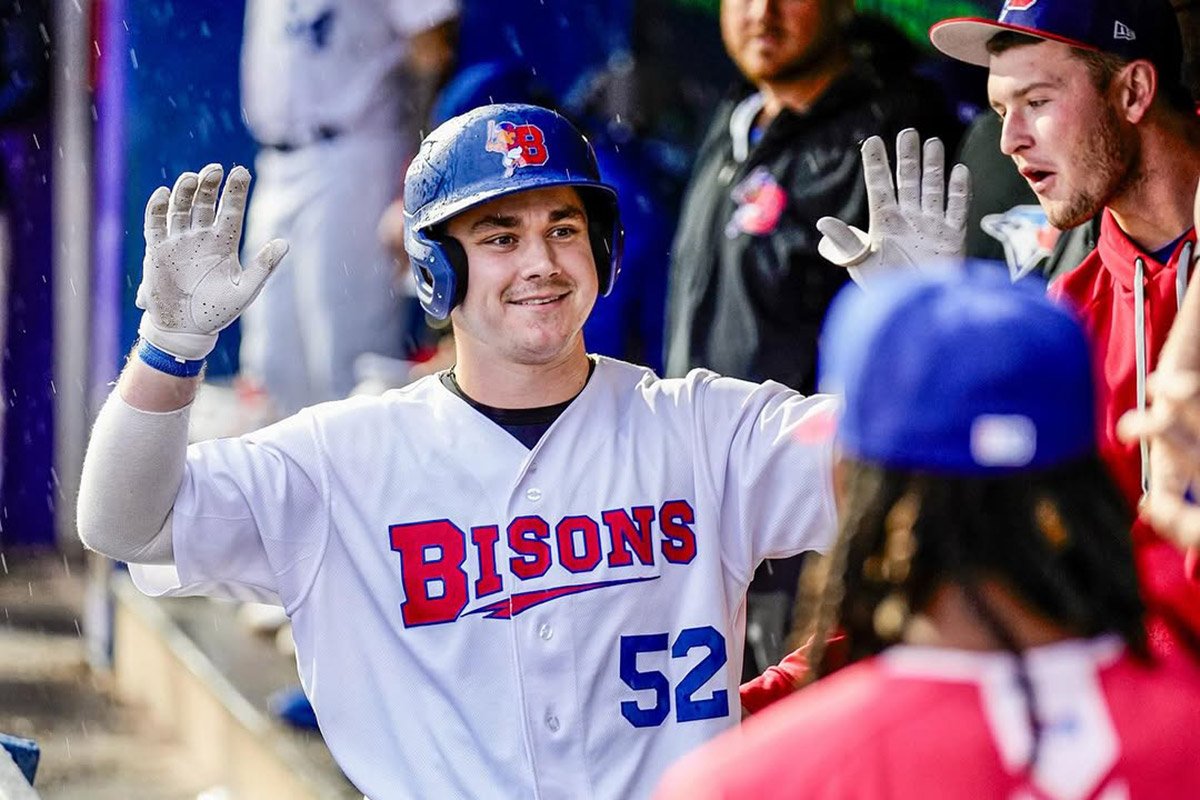 CURRENT W-L Records Buffalo Bisons: 17-28 New Hampshire Fisher Cats: 16-24 Vancouver Canadians: 17-24 Dunedin Blue Jays: 23-18 FCL Blue Jays: 7-6 DSL Blue Jays: 0-0 (Season not started) TRANSACTIONS 05/20/25: Buffalo Bisons sent SS Josh Kasevich on a rehab assignment to FCL Blue Jays. 05/20/25: Buffalo Bisons placed RHP Anders Tolhurst on the temporarily inactive list. 05/20/25: RHP CJ Van Eyk assigned to Buffalo Bisons from New Hampshire Fisher Cats. 05/20/25: New Hampshire Fisher Cats transferred 2B Charles McAdoo to the Development List. 05/20/25: RHP Juaron Watts-Brown assigned to New Hampshire Fisher Cats from Vancouver Canadians. 05/20/25: RHP Kevin Miranda assigned to New Hampshire Fisher Cats from Vancouver Canadians. 05/20/25: SS Ryan McCarty assigned to Buffalo Bisons from New Hampshire Fisher Cats. 05/20/25: RHP Nate Garkow assigned to New Hampshire Fisher Cats from Vancouver Canadians. 05/20/25: RHP CJ Van Eyk assigned to Buffalo Bisons from New Hampshire Fisher Cats. 05/20/25: RHP Grant Rogers assigned to New Hampshire Fisher Cats from Vancouver Canadians. Buffalo Bisons Buffalo (4), Lehigh (5) - 5/20 Box Score Buffalo began a series with the Lehigh Valley IronPigs this week. Buffalo got this game started right at the jump, when Alan Roden took a 3-1 high fastball over the fence for a home run. The lead was short-lived lived though, as Lehigh Valley second baseman Otto Kemp took the Buffalo starter CJ Van Eyk deep in their half of the first inning. Things were silent until the third, when Kemp again had a key hit that drove in Rodolfo Castro for the IronPigs. An RBI groundout would give Lehigh Valley the two-run lead after three innings. In the fifth inning, Josh Rivera launched his second home run at Triple A, a two-run shot to tie the game. In the bottom of the eighth, the IronPigs would take control and add to their lead on a run via a throwing error from the Buffalo catcher and an RBI single from Castro. Buffalo mounted a ninth-inning rally, but it fell short when Davis Schneider grounded out to end the game. Alan Roden: 2-3, 1 R, 1 RBI, 2 BB, 0 K, 1 HR, 1 2B CJ Van Eyk: 5 IP, 5 H, 3 ER, 3 BB, 3 K Buffalo (5), Lehigh (8) - 5/21- 8 Innings Box Score In the second game of the series, Buffalo was up against the tall test that would be Andrew Painter. Painter is the top prospect in the Phillies' minor league system, and he did not disappoint in this one. He made easy work of the Buffalo lineup, cruising through four innings pitched while allowing just three hits and one earned run. He baffled the Bisons’ hitters and was able to strike out seven of them. Lazaro Estrada was almost equally good, as he only surrendered two runs, both of which came in the third inning on a Cal Stevenson home run and an Otto Kemp RBI single. Once both starters left the game, the runs came in bunches. Buffalo hit the scoreboard first in the top of the fifth inning. They scored one run on a Davis Schneider single and two runs on a Rainer Nunez double to take a 4-2 lead. The lead was short-lived once again, as two Lehigh Valley runs scored on an error by Nunez at first base, and then two more scored on a Stevenson single. The IronPigs would add two more runs on singles in the sixth inning to take an 8-4 lead and were pulling away. Joey Loperfido drove in a run in the seventh inning to bring things closer, but after the eighth inning, the game was shut down by rain, and the game was called in a Lehigh Valley victory. Alan Roden: 2-4, 2 R, 0 RBI, 0 BB, 1 K Lazaro Estrada: 4 IP, 5 H, 2 ER, 1 BB, 4 K New Hampshire Fisher Cats New Hampshire (0) Reading (5) - 5/20 Box Score On Tuesday, New Hampshire opened a new series against the New York Yankees' Double-A affiliate, Somerset. This one was a stark contrast to some of the Fisher Cats’ more recent performances on the field. In the top of the first inning, Somerset got the scoring started with a two-run single by Tyler Hardman. They added to their lead in the third inning on a single from Grant Richardson that scored one. A sacrifice fly by George Lombard Jr. extended the Somerset lead to four in the fifth inning. As for the New Hampshire bats, they got a single to start their half of the first inning, and then their bats were blanked until the bottom of the ninth. They got back-to-back singles by Dasan Brown and RJ Schreck. Nothing would come of it, however, as Cade Doughty struck out to end the game. New Hampshire was shut out in this one, dropping it 5-0 and only getting three hits. Yohendrick Pinango: 1-4, 1 K, 2 SB The two stolen bases from Pinango nearly doubled his season total and are a pleasant addition to his profile. He only has five stolen bases on the year, but he can become vastly more dangerous if he can be a threat on the basepaths. It's something worth monitoring to see if he will steal more, or if he just happened to be more opportunistic in this game. Alex Amalfi: 2.2 IP, 2 H, 0 ER, 0 BB, 5 K New Hampshire (1), Reading (4) - 5/21 Box Score Grant Rogers took the mound on Wednesday for New Hampshire, after a recent promotion, for what would be his Double A debut. He was pretty pinpoint with his command, only walking one. Unfortunately for him and the Fisher Cats, he got into some trouble in the top of the fifth inning. After a single and a walk, Antonio Gomez got to him with a two-run double. Two batters later, Somerset cashed in another run on a single by the highly ranked George Lombard Jr. Gomez added another run to Somerset's lead with his single in the top of the seventh inning. Just like in Tuesday's game, New Hampshire was kept off the scoreboard until the bottom of the ninth when they started a mini rally. Dasan Brown singled, and Cade Doughty knocked him in with a double. Yohendrick Pinango would end the threat and the game by striking out. New Hampshire fell again to Somerset, this time by a score of 4-1. Cade Doughty: 2-4, 1 RBI, 1 2B Grant Rogers: 5 IP, 3 H, 2 ER, 1 BB, 5 K Rogers took a perfect game into the fifth inning and was really working his offspeed pitches this game. He has a six-pitch mix that includes a four-seam fastball, sinker, cutter, slider, changeup, and splitter. He is someone to watch closely over the next couple of months. Vancouver Canadians Vancouver (4), Eugene (6) - 5/20 Box Score It was a day of debuts for the Canadians, as a few highly touted prospects came up from Dunedin to make their first appearances with Vancouver. Despite going down early on a Charlie Szykowny two-run shot in the first, the Canadians rallied in the third inning, scoring three runs on an Arjun Nimmala homer. Trey Yesavage settled in after the second inning, and in the fifth, he was replaced with Gage Stanifer, who made his own debut for the Canadians. Stanifer got two quick outs, but the zone tightened a bit, and he walked three batters straight. Quinn McDaniel hit a bases-clearing double off of Stanifer, giving the Marauders the lead. Stanifer did settle down after that. Although he walked two more batters, he struck out six in the remaining innings and showcased why his stuff was too good for Low-A. He’ll have to adjust to more advanced hitters and the lack of ABS, but the stuff will play. Despite threatening every inning, Vancouver couldn’t score a run, resulting in the Marauders winning 6-4. Arjun Nimmala: 3-3. 1 R, 4 RBI, 1 BB, 1 3B, 1 HR Nimmala had himself a day, being responsible for all four runs that Vancouver scored and raising his homer total to take the Northwest League lead. The 19-year-old is continuing to turn heads, as he’s been excellent to start the season. Trey Yesavage: 4.0 IP, 2 H, 2 ER, 2 BB, 10 K Yesavage made his debut for the Canadians, and it started off a little shaky. He walked a batter and gave up a homer in the first inning, although he did strike out three in that frame. Then, in the second, he loaded the bases with no outs. After that, Yesavage was dominant, getting the next nine batters out, ending off a very strong debut. Vancouver (4), Eugene (8) - 5/21 Box Score Fernando Perez looked to continue his strong start stretch but got hit around, allowing seven hits, three homers, and six total earned runs in five innings of work. He did also strike out 5 batters, but he’s struggled to get whiffs so far this season. The Canadians scored a couple of runs on a Jackson Hornung single and a throwing error, but with the barrage of extra base hits, they got down early quickly. Aaron Parker hit a two-run homer to make it close in the sixth, but Edinson Batista and Pat Gallagher both gave up bases-loaded walks to make it 8-4 for Eugene, which ended up being the final score. Aaron Parker: 1-4, 1 R, 2 RBI, 2 K Parker hit his fourth homer of the year, again showing his strong bat speed. Jonathan Todd - 1.2 IP, 1 H, 0 ER, 1 BB, 5 K Dunedin Blue Jays Dunedin (4), Tampa (7) - 5/20 Box Score Chris McElvain wasn’t as sharp in his second rehab start in Dunedin, only going three innings and allowing six earned runs on seven hits and two walks. Peyton Powell and Leo Jimenez helped Dunedin take an early lead with a couple of RBI singles, but McElvain could not hold onto it, allowing five runs across the third and fourth innings. The bullpen was a huge relief, as Juanmi Vasquez, converted catcher Nate LaRue, and Jay Schueler only allowed one run in six innings of work, but the lead was just too much for the D-Jays to surmount, as they only scored one more run the rest of the game on a Bryce Arnold sacrifice fly. Bryce Arnold: 2-3, 1 R, 1 RBI, 1 BB, 1 K, 1 SB The Hamilton Native has been one of the better hitters for Dunedin and may be knocking on the door to return to Canada. He’s a bit old for the level and has repeated A-ball. Juanmi Vazquez: 3 IP, 1 H, 1 BB, 4 K Dunedin (5), Tampa (9) - 05/21 Box Score The D-Jays tried to bounce back from a loss as Spencer Turnbull made his second start, but it didn’t go too well. He gave up five earned runs in three innings as well, making it two straight games in which a pitcher who won't be in Dunedin for long put the team in a pretty significant hole early on. Ryan Burr and Erik Swanson both also made rehab appearances in Dunedin, with Burr allowing two earned runs himself and Swanson looking a bit sharper than that. Edward Duran raised his hitting streak to 15 games. Currently one of the hotter hitters in the Florida State League, the defensively skilled catcher has been a name to watch. Manuel Beltre was a threat on the basepaths, scoring two runs and wreaking havoc with two stolen bases as well. The hole was too big to overcome for the D-Jays, as although they were able to score five, they could not match the Tarpons' nine. Sam Shaw - 3-4, 1 R, 1 RBI, 1 BB, 1 2B Sam Shaw has really become an extra-base hit machine, especially compared to last season. He’s already up to 11 XBH on the season, and that ties his previous two seasons combined. Bennett Flynn - 2.1 IP, 2 H, 4 K FCL Blue Jays F-BLU (4), F-PHI (11) - 5/20 Box Score The Phillies' team got on the scoreboard first in this one, via a sacrifice fly in the second inning. Both teams remained quiet until the fourth inning. That was when the hits started pouring in. Manolfi Jimenez homered for the Phillies, and then they would add six more runs in the top of the fifth inning to take an 8-0 lead. The Blue Jays' squad answered back quickly though, scoring a run on an interference call and a double by Drew Jemison in the bottom of the fifth. In the sixth, the Blue Jays added a run on a wild pitch, but the Phillies' team added three more runs to run away with this game. The Blue Jays would lose 11-4. Drew Jemison: 2-2, 1 R, 1 RBI, 0 BB, 0 K, 1 3B Troy Guthrie: 3 IP, 1 H, 1 ER, 1 BB, 3 K DSL Blue Jays No games Toronto Blue Jays Minor League Players of the Day Pitcher of the Period: RHP Trey Yesavage (Vancouver) - 4 IP, 2 H, 2 ER, 3 BB, 10 K Hitter of the Period: SS Arjun Nimmala (Vancouver) - 3-7, 1 R, 4 RBI, 2 BB, 2 K, 1 HR, 1 3B, 1 SB Prospect Summary (Last 2 Days) 1. Arjun Nimmala (Vancouver) - 3-7, 1 R, 4 RBI, 2 BB, 2 K, 1 HR, 1 3B, 1 SB 2. Ricky Tiedemann (Buffalo) - DNP 3. Trey Yesavage (Vancouver) - 4 IP, 2 H, 2 ER, 3 BB, 10 K 4. Orelvis Martinez (Buffalo) - 2-8, 3 K 5. Khal Stephen (Vancouver) - DNP 6. Jake Bloss (Buffalo) - DNP 7. Alan Roden (Buffalo) - 4-7, 3 R, 1 RBI, 2 BB, 1 HR, 1 2B 8. Landen Maroudis (FCL Jays) - DNP 9. Jonatan Clase (Toronto) - 1-1, 1 R, 2 RBI, 1 BB, 1 2B 10. Kendry Rojas (Vancouver) - DNP 11. Josh Kasevich (Buffalo) - 1-2 12. Johnny King (FCL Blue Jays) - DNP 13. Gage Stanifer (Vancouver) - 3.2 IP, 1 H, 4 ER, 5 BB, 6 K 14. Adam Macko (FCL Jays) - DNP 15. Charles McAdoo (New Hampshire) - DNP 16. Fernando Perez (Vancouver) - 5 IP, 7 H, 6 ER, 1 BB, 5 K 17. Brandon Barriera (Dunedin) - DNP 18. Emmanuel Bonilla (FCL Blue Jays) - DNP 19. Juaron Watts-Brown (New Hampshire) - DNP 20. Jace Bohrofen (New Hampshire) - DNP
 -
CURRENT W-L Records Buffalo Bisons: 17-28 New Hampshire Fisher Cats: 16-24 Vancouver Canadians: 17-24 Dunedin Blue Jays: 23-18 FCL Blue Jays: 7-6 DSL Blue Jays: 0-0 (Season not started) TRANSACTIONS 05/20/25: Buffalo Bisons sent SS Josh Kasevich on a rehab assignment to FCL Blue Jays. 05/20/25: Buffalo Bisons placed RHP Anders Tolhurst on the temporarily inactive list. 05/20/25: RHP CJ Van Eyk assigned to Buffalo Bisons from New Hampshire Fisher Cats. 05/20/25: New Hampshire Fisher Cats transferred 2B Charles McAdoo to the Development List. 05/20/25: RHP Juaron Watts-Brown assigned to New Hampshire Fisher Cats from Vancouver Canadians. 05/20/25: RHP Kevin Miranda assigned to New Hampshire Fisher Cats from Vancouver Canadians. 05/20/25: SS Ryan McCarty assigned to Buffalo Bisons from New Hampshire Fisher Cats. 05/20/25: RHP Nate Garkow assigned to New Hampshire Fisher Cats from Vancouver Canadians. 05/20/25: RHP CJ Van Eyk assigned to Buffalo Bisons from New Hampshire Fisher Cats. 05/20/25: RHP Grant Rogers assigned to New Hampshire Fisher Cats from Vancouver Canadians. Buffalo Bisons Buffalo (4), Lehigh (5) - 5/20 Box Score Buffalo began a series with the Lehigh Valley IronPigs this week. Buffalo got this game started right at the jump, when Alan Roden took a 3-1 high fastball over the fence for a home run. The lead was short-lived lived though, as Lehigh Valley second baseman Otto Kemp took the Buffalo starter CJ Van Eyk deep in their half of the first inning. Things were silent until the third, when Kemp again had a key hit that drove in Rodolfo Castro for the IronPigs. An RBI groundout would give Lehigh Valley the two-run lead after three innings. In the fifth inning, Josh Rivera launched his second home run at Triple A, a two-run shot to tie the game. In the bottom of the eighth, the IronPigs would take control and add to their lead on a run via a throwing error from the Buffalo catcher and an RBI single from Castro. Buffalo mounted a ninth-inning rally, but it fell short when Davis Schneider grounded out to end the game. Alan Roden: 2-3, 1 R, 1 RBI, 2 BB, 0 K, 1 HR, 1 2B CJ Van Eyk: 5 IP, 5 H, 3 ER, 3 BB, 3 K Buffalo (5), Lehigh (8) - 5/21- 8 Innings Box Score In the second game of the series, Buffalo was up against the tall test that would be Andrew Painter. Painter is the top prospect in the Phillies' minor league system, and he did not disappoint in this one. He made easy work of the Buffalo lineup, cruising through four innings pitched while allowing just three hits and one earned run. He baffled the Bisons’ hitters and was able to strike out seven of them. Lazaro Estrada was almost equally good, as he only surrendered two runs, both of which came in the third inning on a Cal Stevenson home run and an Otto Kemp RBI single. Once both starters left the game, the runs came in bunches. Buffalo hit the scoreboard first in the top of the fifth inning. They scored one run on a Davis Schneider single and two runs on a Rainer Nunez double to take a 4-2 lead. The lead was short-lived once again, as two Lehigh Valley runs scored on an error by Nunez at first base, and then two more scored on a Stevenson single. The IronPigs would add two more runs on singles in the sixth inning to take an 8-4 lead and were pulling away. Joey Loperfido drove in a run in the seventh inning to bring things closer, but after the eighth inning, the game was shut down by rain, and the game was called in a Lehigh Valley victory. Alan Roden: 2-4, 2 R, 0 RBI, 0 BB, 1 K Lazaro Estrada: 4 IP, 5 H, 2 ER, 1 BB, 4 K New Hampshire Fisher Cats New Hampshire (0) Reading (5) - 5/20 Box Score On Tuesday, New Hampshire opened a new series against the New York Yankees' Double-A affiliate, Somerset. This one was a stark contrast to some of the Fisher Cats’ more recent performances on the field. In the top of the first inning, Somerset got the scoring started with a two-run single by Tyler Hardman. They added to their lead in the third inning on a single from Grant Richardson that scored one. A sacrifice fly by George Lombard Jr. extended the Somerset lead to four in the fifth inning. As for the New Hampshire bats, they got a single to start their half of the first inning, and then their bats were blanked until the bottom of the ninth. They got back-to-back singles by Dasan Brown and RJ Schreck. Nothing would come of it, however, as Cade Doughty struck out to end the game. New Hampshire was shut out in this one, dropping it 5-0 and only getting three hits. Yohendrick Pinango: 1-4, 1 K, 2 SB The two stolen bases from Pinango nearly doubled his season total and are a pleasant addition to his profile. He only has five stolen bases on the year, but he can become vastly more dangerous if he can be a threat on the basepaths. It's something worth monitoring to see if he will steal more, or if he just happened to be more opportunistic in this game. Alex Amalfi: 2.2 IP, 2 H, 0 ER, 0 BB, 5 K New Hampshire (1), Reading (4) - 5/21 Box Score Grant Rogers took the mound on Wednesday for New Hampshire, after a recent promotion, for what would be his Double A debut. He was pretty pinpoint with his command, only walking one. Unfortunately for him and the Fisher Cats, he got into some trouble in the top of the fifth inning. After a single and a walk, Antonio Gomez got to him with a two-run double. Two batters later, Somerset cashed in another run on a single by the highly ranked George Lombard Jr. Gomez added another run to Somerset's lead with his single in the top of the seventh inning. Just like in Tuesday's game, New Hampshire was kept off the scoreboard until the bottom of the ninth when they started a mini rally. Dasan Brown singled, and Cade Doughty knocked him in with a double. Yohendrick Pinango would end the threat and the game by striking out. New Hampshire fell again to Somerset, this time by a score of 4-1. Cade Doughty: 2-4, 1 RBI, 1 2B Grant Rogers: 5 IP, 3 H, 2 ER, 1 BB, 5 K Rogers took a perfect game into the fifth inning and was really working his offspeed pitches this game. He has a six-pitch mix that includes a four-seam fastball, sinker, cutter, slider, changeup, and splitter. He is someone to watch closely over the next couple of months. Vancouver Canadians Vancouver (4), Eugene (6) - 5/20 Box Score It was a day of debuts for the Canadians, as a few highly touted prospects came up from Dunedin to make their first appearances with Vancouver. Despite going down early on a Charlie Szykowny two-run shot in the first, the Canadians rallied in the third inning, scoring three runs on an Arjun Nimmala homer. Trey Yesavage settled in after the second inning, and in the fifth, he was replaced with Gage Stanifer, who made his own debut for the Canadians. Stanifer got two quick outs, but the zone tightened a bit, and he walked three batters straight. Quinn McDaniel hit a bases-clearing double off of Stanifer, giving the Marauders the lead. Stanifer did settle down after that. Although he walked two more batters, he struck out six in the remaining innings and showcased why his stuff was too good for Low-A. He’ll have to adjust to more advanced hitters and the lack of ABS, but the stuff will play. Despite threatening every inning, Vancouver couldn’t score a run, resulting in the Marauders winning 6-4. Arjun Nimmala: 3-3. 1 R, 4 RBI, 1 BB, 1 3B, 1 HR Nimmala had himself a day, being responsible for all four runs that Vancouver scored and raising his homer total to take the Northwest League lead. The 19-year-old is continuing to turn heads, as he’s been excellent to start the season. Trey Yesavage: 4.0 IP, 2 H, 2 ER, 2 BB, 10 K Yesavage made his debut for the Canadians, and it started off a little shaky. He walked a batter and gave up a homer in the first inning, although he did strike out three in that frame. Then, in the second, he loaded the bases with no outs. After that, Yesavage was dominant, getting the next nine batters out, ending off a very strong debut. Vancouver (4), Eugene (8) - 5/21 Box Score Fernando Perez looked to continue his strong start stretch but got hit around, allowing seven hits, three homers, and six total earned runs in five innings of work. He did also strike out 5 batters, but he’s struggled to get whiffs so far this season. The Canadians scored a couple of runs on a Jackson Hornung single and a throwing error, but with the barrage of extra base hits, they got down early quickly. Aaron Parker hit a two-run homer to make it close in the sixth, but Edinson Batista and Pat Gallagher both gave up bases-loaded walks to make it 8-4 for Eugene, which ended up being the final score. Aaron Parker: 1-4, 1 R, 2 RBI, 2 K Parker hit his fourth homer of the year, again showing his strong bat speed. Jonathan Todd - 1.2 IP, 1 H, 0 ER, 1 BB, 5 K Dunedin Blue Jays Dunedin (4), Tampa (7) - 5/20 Box Score Chris McElvain wasn’t as sharp in his second rehab start in Dunedin, only going three innings and allowing six earned runs on seven hits and two walks. Peyton Powell and Leo Jimenez helped Dunedin take an early lead with a couple of RBI singles, but McElvain could not hold onto it, allowing five runs across the third and fourth innings. The bullpen was a huge relief, as Juanmi Vasquez, converted catcher Nate LaRue, and Jay Schueler only allowed one run in six innings of work, but the lead was just too much for the D-Jays to surmount, as they only scored one more run the rest of the game on a Bryce Arnold sacrifice fly. Bryce Arnold: 2-3, 1 R, 1 RBI, 1 BB, 1 K, 1 SB The Hamilton Native has been one of the better hitters for Dunedin and may be knocking on the door to return to Canada. He’s a bit old for the level and has repeated A-ball. Juanmi Vazquez: 3 IP, 1 H, 1 BB, 4 K Dunedin (5), Tampa (9) - 05/21 Box Score The D-Jays tried to bounce back from a loss as Spencer Turnbull made his second start, but it didn’t go too well. He gave up five earned runs in three innings as well, making it two straight games in which a pitcher who won't be in Dunedin for long put the team in a pretty significant hole early on. Ryan Burr and Erik Swanson both also made rehab appearances in Dunedin, with Burr allowing two earned runs himself and Swanson looking a bit sharper than that. Edward Duran raised his hitting streak to 15 games. Currently one of the hotter hitters in the Florida State League, the defensively skilled catcher has been a name to watch. Manuel Beltre was a threat on the basepaths, scoring two runs and wreaking havoc with two stolen bases as well. The hole was too big to overcome for the D-Jays, as although they were able to score five, they could not match the Tarpons' nine. Sam Shaw - 3-4, 1 R, 1 RBI, 1 BB, 1 2B Sam Shaw has really become an extra-base hit machine, especially compared to last season. He’s already up to 11 XBH on the season, and that ties his previous two seasons combined. Bennett Flynn - 2.1 IP, 2 H, 4 K FCL Blue Jays F-BLU (4), F-PHI (11) - 5/20 Box Score The Phillies' team got on the scoreboard first in this one, via a sacrifice fly in the second inning. Both teams remained quiet until the fourth inning. That was when the hits started pouring in. Manolfi Jimenez homered for the Phillies, and then they would add six more runs in the top of the fifth inning to take an 8-0 lead. The Blue Jays' squad answered back quickly though, scoring a run on an interference call and a double by Drew Jemison in the bottom of the fifth. In the sixth, the Blue Jays added a run on a wild pitch, but the Phillies' team added three more runs to run away with this game. The Blue Jays would lose 11-4. Drew Jemison: 2-2, 1 R, 1 RBI, 0 BB, 0 K, 1 3B Troy Guthrie: 3 IP, 1 H, 1 ER, 1 BB, 3 K DSL Blue Jays No games Toronto Blue Jays Minor League Players of the Day Pitcher of the Period: RHP Trey Yesavage (Vancouver) - 4 IP, 2 H, 2 ER, 3 BB, 10 K Hitter of the Period: SS Arjun Nimmala (Vancouver) - 3-7, 1 R, 4 RBI, 2 BB, 2 K, 1 HR, 1 3B, 1 SB Prospect Summary (Last 2 Days) 1. Arjun Nimmala (Vancouver) - 3-7, 1 R, 4 RBI, 2 BB, 2 K, 1 HR, 1 3B, 1 SB 2. Ricky Tiedemann (Buffalo) - DNP 3. Trey Yesavage (Vancouver) - 4 IP, 2 H, 2 ER, 3 BB, 10 K 4. Orelvis Martinez (Buffalo) - 2-8, 3 K 5. Khal Stephen (Vancouver) - DNP 6. Jake Bloss (Buffalo) - DNP 7. Alan Roden (Buffalo) - 4-7, 3 R, 1 RBI, 2 BB, 1 HR, 1 2B 8. Landen Maroudis (FCL Jays) - DNP 9. Jonatan Clase (Toronto) - 1-1, 1 R, 2 RBI, 1 BB, 1 2B 10. Kendry Rojas (Vancouver) - DNP 11. Josh Kasevich (Buffalo) - 1-2 12. Johnny King (FCL Blue Jays) - DNP 13. Gage Stanifer (Vancouver) - 3.2 IP, 1 H, 4 ER, 5 BB, 6 K 14. Adam Macko (FCL Jays) - DNP 15. Charles McAdoo (New Hampshire) - DNP 16. Fernando Perez (Vancouver) - 5 IP, 7 H, 6 ER, 1 BB, 5 K 17. Brandon Barriera (Dunedin) - DNP 18. Emmanuel Bonilla (FCL Blue Jays) - DNP 19. Juaron Watts-Brown (New Hampshire) - DNP 20. Jace Bohrofen (New Hampshire) - DNP View full article
-
- 2
-
-
I'm most excited to see Kasevich back, he's been an afterthought, but he's had such an excellent end to his 2024 season, so I'm hoping he carries the success he had last season into this season, and hopefully he can lift the ball a little more to get into his power.
- 3 replies
-
- 2
-
-
- trey yesavage
- khal stephen
- (and 6 more)
-
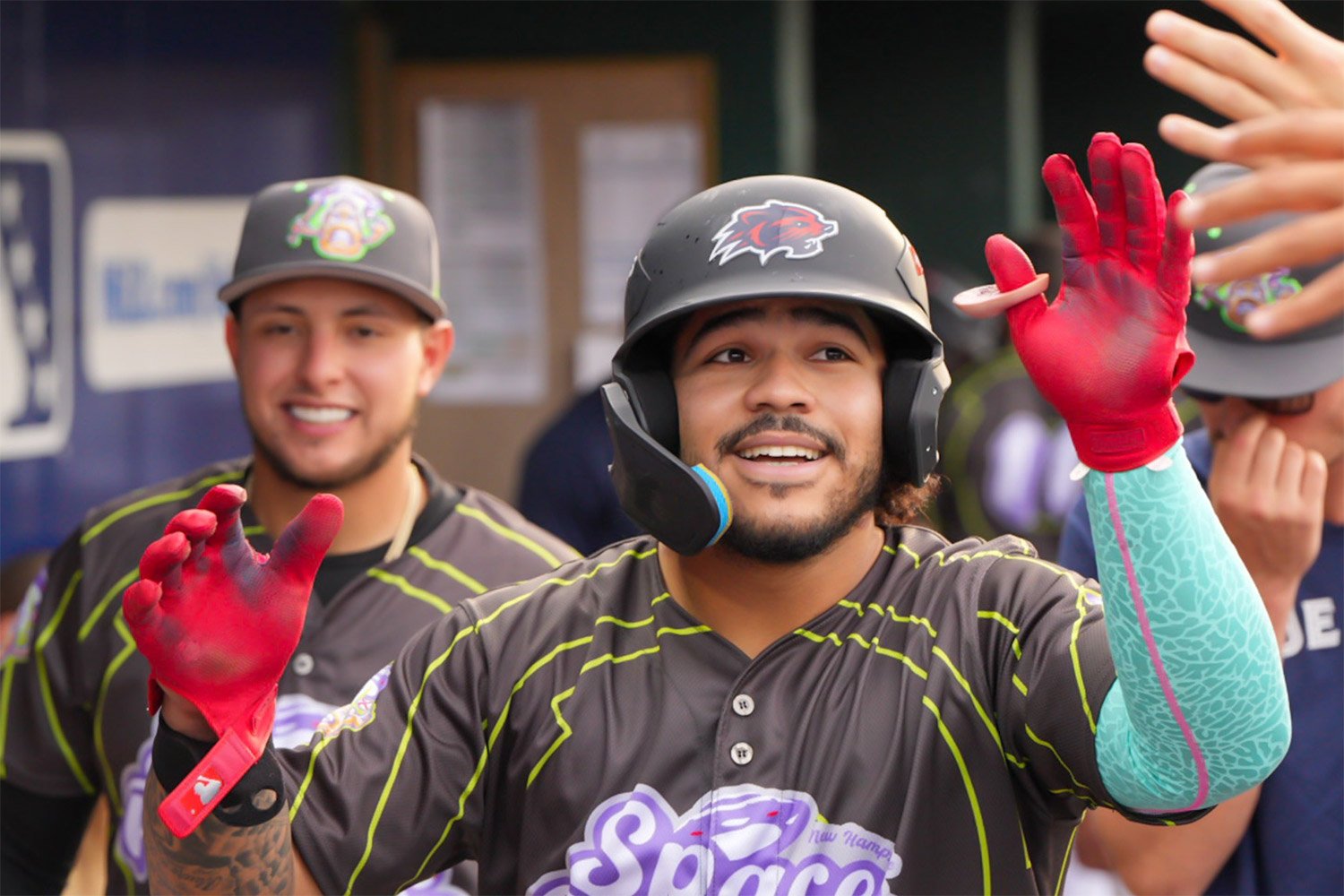 Yohendrick Pinango is the best qualified minor league hitter (non-Rookie ball) as of May 17, 2025. About one and a half months into the minor league season, and in this short sample of 135 plate appearances, Pinango has absolutely dominated Double-A New Hampshire, to a tune of a .357/.467/.607 triple slash line, walking 14.8% of the time, and striking out 20.7% of the time. That’s a 209 wRC+, which means that Pinango has been more than two times better than the average hitter in the Eastern League. A. 436 BABIP carries his line, so it’s unlikely that he’s a true talent. .350 hitter, or that he’ll continue to carry this success for the duration of the season. Still, even then, he’s been more than you could have asked from him. The 23-year-old Venezuelan came in a trade deadline deal with teammate Josh Rivera, in exchange for the enigmatic Nate Pearson, who had all the stuff in the world but could never put it all together. People did think that this trade was decent value, as the Blue Jays got two flier prospects for an inconsistent reliever, most publications did not think too highly of Pinango and Rivera when they got sent up north, with FanGraphs ranking Pinango as the 59th best prospect traded at the deadline, and Baseball America ranking him as the 31st best. Pinango’s stocky build and below-average athleticism put a limit on his ceiling, as many view him as only a left fielder or even needing to move to first base, which makes it extremely important for him to hit well to make the most of his value, and he’s done nothing but do that in 2025. Pinango has been described as a “data-darling”, displaying strong contact metrics as well as intriguing and improving power metrics this season. Although he struggled after joining the Jays organization, he still displayed those underlying metrics, and he also torched High-A in the Midwest League for a 196 wRC+ in 122 plate appearances, before coming down to earth in Double-A. This season, however, his metrics have matched his production, with Baseball America reporting that he had a 14.2% in-zone whiff rate, a 16.8% chase rate, and a 37.9% swing rate, showing that his plate discipline was also excellent, in addition to his contact ability. Pinango’s power is no slouch either, as he has six homers on the season, with exit velocities that impress. He has a 108.5 mph 90th percentile exit velocity, as well as a homer that he crushed at 113 mph off the bat, which went 390 feet on Friday, May 15. Pinango will most likely come down to earth a bit; it’s unreasonable to expect him to continue to be the best hitter in Minor League Baseball. Pinango also has a slightly longer swing and will need to face bigger challenges as he rises through the minors. He may struggle with higher velocities due to his swing, but his strong eye and discipline may help him overcome that. If Pinango continues to produce at the way his underlying data suggests he could produce, he’ll be a name to watch, and should easily find his way rising the prospect lists. Give the Jays’ front office a lot of credit for being able to get him and Rivera, who’s made his way up to Triple-A already. The talent identification and player development may have found a good one.
 -
Meet The New Best Hitter In The Minor Leagues
Simon Li posted a topic in Blue Jays Minor League Talk
Yohendrick Pinango is the best qualified minor league hitter (non-Rookie ball) as of May 17, 2025. About one and a half months into the minor league season, and in this short sample of 135 plate appearances, Pinango has absolutely dominated Double-A New Hampshire, to a tune of a .357/.467/.607 triple slash line, walking 14.8% of the time, and striking out 20.7% of the time. That’s a 209 wRC+, which means that Pinango has been more than two times better than the average hitter in the Eastern League. A. 436 BABIP carries his line, so it’s unlikely that he’s a true talent. .350 hitter, or that he’ll continue to carry this success for the duration of the season. Still, even then, he’s been more than you could have asked from him. The 23-year-old Venezuelan came in a trade deadline deal with teammate Josh Rivera, in exchange for the enigmatic Nate Pearson, who had all the stuff in the world but could never put it all together. People did think that this trade was decent value, as the Blue Jays got two flier prospects for an inconsistent reliever, most publications did not think too highly of Pinango and Rivera when they got sent up north, with FanGraphs ranking Pinango as the 59th best prospect traded at the deadline, and Baseball America ranking him as the 31st best. Pinango’s stocky build and below-average athleticism put a limit on his ceiling, as many view him as only a left fielder or even needing to move to first base, which makes it extremely important for him to hit well to make the most of his value, and he’s done nothing but do that in 2025. Pinango has been described as a “data-darling”, displaying strong contact metrics as well as intriguing and improving power metrics this season. Although he struggled after joining the Jays organization, he still displayed those underlying metrics, and he also torched High-A in the Midwest League for a 196 wRC+ in 122 plate appearances, before coming down to earth in Double-A. This season, however, his metrics have matched his production, with Baseball America reporting that he had a 14.2% in-zone whiff rate, a 16.8% chase rate, and a 37.9% swing rate, showing that his plate discipline was also excellent, in addition to his contact ability. Pinango’s power is no slouch either, as he has six homers on the season, with exit velocities that impress. He has a 108.5 mph 90th percentile exit velocity, as well as a homer that he crushed at 113 mph off the bat, which went 390 feet on Friday, May 15. Pinango will most likely come down to earth a bit; it’s unreasonable to expect him to continue to be the best hitter in Minor League Baseball. Pinango also has a slightly longer swing and will need to face bigger challenges as he rises through the minors. He may struggle with higher velocities due to his swing, but his strong eye and discipline may help him overcome that. If Pinango continues to produce at the way his underlying data suggests he could produce, he’ll be a name to watch, and should easily find his way rising the prospect lists. Give the Jays’ front office a lot of credit for being able to get him and Rivera, who’s made his way up to Triple-A already. The talent identification and player development may have found a good one. View full article -
.jpg.26573753f31dcc25e3a50e3e5d59ae34.jpg) CURRENT W-L Records Buffalo Bisons: 14-25 New Hampshire Fisher Cats: 14-19 Vancouver Canadians: 17-18 Dunedin Blue Jays: 21-14 FCL Blue Jays: 5-3 DSL Blue Jays: 0-0 (Season not started) TRANSACTIONS 05/14/25 - Toronto Blue Jays sent RHP Erik Swanson on a rehab assignment to Buffalo Bisons. 05/14/25 - Toronto Blue Jays sent RHP Ryan Burr on a rehab assignment to Buffalo Bisons. 05/14/25 - RHP Bobby Milacki assigned to New Hampshire Fisher Cats from Buffalo Bisons. 05/14/25 - Dunedin Blue Jays activated C Brock Tibbitts from the 7-day injured list. 05/14/25 - Vancouver Canadians sent RHP Chris McElvain on a rehab assignment to Dunedin Blue Jays. 05/14/25 - C Juan Rosas assigned to FCL Blue Jays from Dunedin Blue Jays. 05/13/25 - Buffalo Bisons sent SS Leo Jiménez on a rehab assignment to FCL Blue Jays. 05/13/25 - Buffalo Bisons activated C Phil Clarke from the 7-day injured list. 05/13/25 - RHP Deiker Pineda assigned to DSL Blue Jays Red. 05/13/25 - SS Dariel Ramon assigned to Dunedin Blue Jays from FCL Blue Jays. 05/13/25 - C Juan Rosas assigned to Dunedin Blue Jays from FCL Blue Jays. 05/13/25 - C Alex Stone assigned to New Hampshire Fisher Cats from Vancouver Canadians. 05/13/25- CF Gabriel Martinez assigned to Vancouver Canadians from New Hampshire Fisher Cats. 05/13/25 - C Nicolas Deschamps assigned to Vancouver Canadians from New Hampshire Fisher Cats. 05/13/25 - Vancouver Canadians placed OF Brennan Orf on the 7-day injured list. Buffalo Bisons Buffalo (7), Worcester (10) - 5/13 Box Score The Buffalo Bisons kicked off another series against the Worcester Red Sox on Tuesday night. The Bisons got things started in the bottom of the second inning when Orelvis Martinez continued his resurgent May by hitting his fourth home run of the season. The blast came off the bat at 106.5 MPH and went 382 feet. In the third inning, the Red Sox countered right back, as Alex Binelas took Buffalo starter Anders Tolhurst deep. That would be all the scoring either team could manage until the sixth inning. Tolhurst put together a good five innings, only allowing two hits and the one run while walking one batter and striking out two. In the sixth inning, Buffalo jumped out in front on the back of three separate RBI singles from Will Robertson, Martinez, and Damiano Palmegiani. In the seventh inning, Buffalo would add the thump with Alan Roden and Davis Schneider launching home runs of their own. Buffalo would take a 7-1 lead going into the eighth inning. From there, the Bisons' pitching would unravel, giving up four runs in the eighth inning (on two home runs) and five runs in the ninth inning. Down three in the last frame, Buffalo would get shut down by Nick Burdi, with Martinez striking out to end the game. Another late-game loss for Buffalo. Orelvis Martinez: 2-4, 1 R, 2 RBI, 1 BB, 1 K, 1 HR Martinez is now hitting .300 in May and is finding his swing again after a slow start to the season due to a viral illness. Another couple of good weeks with the bat, and he may find himself close to getting back to the big leagues. Anders Tolhurst: 5 IP, 2 H, 1 ER, 1 BB, 2 K Buffalo (4), Worcester (8) Box Score In the Wednesday night contest between Buffalo and Worcester, the bats for both teams continued hitting balls hard. Buffalo got things started again in the first inning, when Schneider took Brian Van Belle deep for a two-run home run. Worcester scored quickly to drop Buffalo's lead to just one. In the fifth inning, Worcester took control of the game after Roman Anthony, Vaughn Grissom, and Marcelo Mayer started the inning with singles. From there, Trayce Thompson had the big hit with a two-run double. Four of the runs in the fifth inning were charged to rehabbing Erik Swanson, who did not have a good outing. For the remainder of the game, Buffalo and Worcester traded two runs apiece. Joey Loperfido added a home run for the Bisons in that back-and-forth volley in the sixth inning. In the ninth inning, Buffalo started a rally with singles from Phil Clarke and Rainer Nunez. Isaiah Campbell would shut the door though, striking out Josh Rivera and getting Roden to fly out to end the game. Buffalo loses this one 8-4. Davis Schneider: 1-4, 1 R, 2 RBI, 0 BB, 1 K, 1 HR Trenton Wallace: 4 IP, 3 H, 0 ER, 2 BB, 5 K New Hampshire Fisher Cats New Hampshire/Reading - 5/13 PPD New Hampshire (1), Reading (2) - 5/14 Box Score After yet another rainout for New Hampshire, they kicked off a new series against Reading on Wednesday. CJ Van Eyk took to the mound, as the offense looked to build upon the games over the last weekend. Yohendrick Pinango started the game off with a bang, hitting a deep fly to right field for a home run and a New Hampshire lead, 1-0, after the first inning. The bats fell silent afterwards though, going the rest of the game without scoring a run. Van Eyk was left a tall task to complete, and he took it on and then some. He would face the minimum through five innings, thanks to the double-play ball. In the sixth inning, it was more of the same, outside of an errant hit batter. Then came the seventh inning, where once again errors in the field would cost New Hampshire. An error by shortstop Eddinson Paulino, a walk, and then a single given up to Keaton Anthony would end Van Eyk's day with the bases loaded. Ryan Jennings came in for Van Eyk and tried to hold things down, unfortunately, it went off the rails, and quickly. Jennings gave up a sacrifice fly, walked the next batter to load up the bases again, and then hit Cade Fergus to allow another run to score. Down 2-1, New Hampshire never got anything else going and fell to Reading. Yohendrick Pinango: 1-3, 1 R, 1 RBI, 1 BB, 1 HR CJ Van Eyk: 6 IP, 2 H, 0 ER, 1 BB, 5 K Van Eyk had one of his better games of the season on Wednesday. He racked up eight swings and misses on the way to his quality start. Vancouver Canadians Vancouver (9), Everett (4) - 5/13 Box Score In their second series against the Mariners’ High-A team, the Canadians got off to a hot start thanks to a solid showing by Kevin Miranda and some strong offensive performances. Vancouver started off down after a throwing error from Nicolas Deschamps, but Jackson Hornung homered for the second time this season to give the Canadians a 2-1 lead. In the third, Cutter Coffey knocked in an RBI single, and Carter Cunningham continued to show good discipline with a bases-loaded walk. Miranda let in another run in the fifth off of a sac fly, but in the seventh inning, the Canadians took the lead to greater heights with more heroics from Coffey and Hornung, with Je’Von Ward and Eddie Michelleti Jr. joining in on the fun. Arjun Nimmala capped off the five-run inning with an RBI double to make it 9-2 for the Canadians. The relievers did their jobs, with Aaron Munson tossing two scoreless innings, and although Nate Garkow gave up a two-run homer to Tai Peete in the eighth, JJ Sanchez shut the door with an inning and a third of work and two strikeouts. Cutter Coffey: 3-4, 2 R, 2 RBI, 1 BB Coffey got on base four times this game, and he’s raised his season OPS to .755. He is just turning 21 this season and has improved his on-base percentage and batting average despite a more aggressive approach with more whiffs and less overall contact, partly because he has been caught looking way less. The two younger prospects from the Danny Jansen trade have really taken to the Jays system, and Coffey's strong defense and strong power will hopefully let him advance steadily with the Jays. Kevin Miranda: 5 IP, 4 H, 2 R, 1 ER, 2 BB, 3 K Miranda has struggled heavily since being placed in the Vancouver rotation, but he had his first strong start of the season, earning a win with five innings of two-run ball. Vancouver (5), Everett (0) - 5/14 Box Score Fernando Perez led the way for the Canadians to their second straight win with his best start of the season. Both offenses couldn’t get it going early, with the first and only early run scored being on a Hornung RBI single in the bottom of the second. However, the Canadians got it together in the sixth. Tyler Cleveland lost his command and walked three, including two bases-loaded walks to Ward and Nick Goodwin, and Nimmala hit a two-RBI single to make it 5-0, a lead the Canadians held onto and won with. Vancouver’s bullpen continues to stay strong, with Pat Gallagher lowering his ERA to 0.95, Yondrei Rojas not allowing a single run since coming off the IL, and Bo Bonds continuing to be a key piece of the back of the 'pen. It was a day of complete domination by the Canadians' pitching. Gabriel Martinez: 1-1, 1 R, 2 BB Martinez struggled in Double-A New Hampshire, with only a .182 batting average and only one extra-base hit before his demotion to High-A Vancouver. However, he played well in his first game back, getting on base three times and recording an outfield assist at second. Hopefully, he can turn around his numbers. Despite having been around forever in the Jays organization, he’s still only 22 years old and will be 23 in July. Fernando Perez: 5.1 IP, 4 H, 0 BB, 7 K Perez has found his footing in Vancouver after a mediocre start. He’s now had his second straight great start, lowering his ERA to 3.76 on the year with a season high seven strikeouts in 5 1/3 innings. Dunedin Blue Jays Dunedin (11), Bradenton (3) - 5/13 Box Score It was Trey Yesavage and Gage Stanifer day. This duo has been excellent to start the season, flummoxing hitters and barely allowing runners to get on base while racking up the strikeout count. Yesavage started off slightly slowly, allowing a homer to top prospect Konnor Griffin in the first, but in the same inning, Edward Duran drove in Manuel Beltre to score the first run for the Jays. Yesavage allowed his second homer in the second inning off a cheapy to left field, but again the Jays answered with an RBI double from Jean Joseph, and Sam Shaw continued to rake with a two-run RBI double of his own. Yesavage bounced back from the early homers, striking out the side in the third, while the Jays added to their lead thanks to a wild pitch from Jonawel Valdez. Yesavage pitched two more strong innings, adding four strikeouts to his total, bringing him up to twelve on the night, continuing his dominance against Low-A hitters. Dunedin continued to tack on runs throughout the night, as shaky defense and a lot of runners on base continued the onslaught. Stanifer replaced Yesavage in the sixth and continued the pitching excellence with three straight scoreless innings, while the Jays kept on adding more and more, with an extra base hit from Jacob Lojewski, a couple of stolen bases from Beltre, including a steal of home, and Yhoangel Aponte hitting his third homer of the season to make it an 11-2 game. In the ninth, Stanifer let in a run due to some defensive indifference from his teammates after a walk, but earned the save for a dominant sixth win in a row. Trey Yesavage: 5 IP, 4 H, 2 ER, 12 K Gage Stanifer: 4 IP, 1 H, 1 ER, 1 BB, 7 K Sam Shaw: 3-3, 2 RBI, 2 BB, 1 SB, 1 2B Shaw hit his hardest ball of the season, a 106.8-mph double, and he’s been absolutely excellent for the D-Jays, as the Victoria, BC native is now in the 100th percentile in LA Sweet-Spot%, BB%, and Pull%. His approach is just to pull balls with optimal launch angles while rarely chasing, and it’s been extremely effective for him. Dunedin (3), Bradenton (6) - 05/14 Box Score After a dominant week, the Jays finally lost a game after seven wins in a row. Duran helped the Jays get on board early with a triple that resulted in a run, but Chris McElvain gave up three runs in the top of the fourth inning. Duran got his second extra-base hit on the night to bring it within one, and a wild pitch tied it up in the fifth. However, Colby Holcombe came on in relief in the 5fifthth and also gave up three runs, one being unearned, and the Jays couldn’t catch up, getting shut out for the remaining four innings. Edward Duran: 3-4, 2 R, 1 RBI, 1 2B, 1 3B Duran was one of the offensive bright spots in this loss against Bradenton, as he had a three-hit night and has been one of the most consistent hitters for the D-Jays. The young catcher pairs strong contact with excellent fielding, and he might be the best catching prospect within the system. Chris McElvain: 4 IP, 3 H, 3 ER, 1 BB, 6 K McElvain was the return from the Santiago Espinal trade, and he had a decent season last year before going on the IL with an elbow injury that resulted in Tommy John surgery. This was his second rehab start after a quick start in the Florida Complex League, and although he gave up three runs in his four innings of work, his stuff looked decent, as he struck out six and had a 50% whiff rate on the night. FCL Blue Jays F-Blu (5), F-Phi (2) - 5/13 Game 1 Box Score Francisco Loreto got things started in the top of the first inning od this one, driving in a run off of rehabbing Blue Jays starter Adam Macko. The Blue Jays came back quickly with two runs in the second inning on an RBI single from Enmanuel Bonilla and a sacrifice fly from Leo Jiménez. In the fourth inning, Yorman Licourt cleared the bases with a three-run double for the Blue Jays. The Blue Jays' pitching would hold the Phillies' team in check the rest of the way in the first seven-inning game of the doubleheader. The Blue Jays would win this one 5-2. Yorman Licourt: 1-4, 0 R, 3 RBI, 0 BB, 3 K, 1 2B Adam Macko: 4 IP, 2 H, 1 ER, 0 BB, 6 K F-Blu (6), F-Phi (2) - 5/13 Game 2 Box Score Game two of the doubleheader looked a lot like the first game. The Phillies' team took an early two-run lead off of Blue Jays starter Sann Omosako. The Blue Jays' bats would get rolling in the fourth inning though, and score one, two, one, and two runs in the remaining four innings, respectively. David Beckles started the barrage with an RBI double in the fourth inning. Dariel Ramon and Luis Meza added RBI singles, while Beckles and Aldo Gaxiola drove in runs during a seventh-inning rally to cap things off. The Blue Jays pulled this one off to win 6-2. David Beckles: 2-4, 1 R, 2 RBI, 0 BB, 1 K, 1 2B Troy Guthrie: 3 IP, 0 H, 0 ER, 0 BB, 2 K DSL Blue Jays No games Toronto Blue Jays Minor League Players of the Period Pitcher of the Period: RHP Gage Stanifer (Dunedin) - 4 IP, 1 H, 1 ER, 1 BB, 7 K Hitter of the Period: 3B Davis Schneider (Buffalo) - 3-8, 3 R, 4 RBI, 0 BB, 2 K, 2 HR Prospect Summary (Last 2 Days) 1. Arjun Nimmala (Vancouver) - 2-7, 1 R, 3 RBI, 2 BB, 2 K, 1 2B 2. Ricky Tiedemann (Buffalo) - DNP 3. Trey Yesavage (Dunedin) - 5 IP, 4 H, 2 ER, 0 BB, 12 K 4. Orelvis Martinez (Buffalo) - 2-8, 1 R, 2 RBI, 1 BB, 3 K, 1 HR 5. Khal Stephen (Dunedin) - DNP 6. Jake Bloss (Buffalo) - DNP 7. Alan Roden (Buffalo) - 2-10, 2 R, 1 RBI, 2 K, 1 HR 8. Landen Maroudis (FCL Jays) - DNP 9. Jonatan Clase (Toronto) - 0-3, 2 K 10. Kendry Rojas (Vancouver) - DNP 11. Josh Kasevich (Buffalo) - DNP 12. Johnny King (FCL Blue Jays) - DNP 13. Gage Stanifer (Dunedin) - 4 IP, 1 H, 1 ER, 1 BB, 7 K 14. Adam Macko (FCL Jays) - 4 IP, 2 H, 1 ER, 0 BB, 6 K 15. Charles McAdoo (New Hampshire) - 0-4, 1 K 16. Fernando Perez (Vancouver) - 5.1 IP, 4 H, 0 ER, 1 BB, 7 K 17. Brandon Barriera (Dunedin) - DNP 18. Emmanuel Bonilla (FCL Blue Jays) - 1-8, 1 RBI, 5 K 19. Juaron Watts-Brown (Vancouver) - 20. Jace Bohrofen (New Hampshire) - 0-3, 1 BB, 1 K
CURRENT W-L Records Buffalo Bisons: 14-25 New Hampshire Fisher Cats: 14-19 Vancouver Canadians: 17-18 Dunedin Blue Jays: 21-14 FCL Blue Jays: 5-3 DSL Blue Jays: 0-0 (Season not started) TRANSACTIONS 05/14/25 - Toronto Blue Jays sent RHP Erik Swanson on a rehab assignment to Buffalo Bisons. 05/14/25 - Toronto Blue Jays sent RHP Ryan Burr on a rehab assignment to Buffalo Bisons. 05/14/25 - RHP Bobby Milacki assigned to New Hampshire Fisher Cats from Buffalo Bisons. 05/14/25 - Dunedin Blue Jays activated C Brock Tibbitts from the 7-day injured list. 05/14/25 - Vancouver Canadians sent RHP Chris McElvain on a rehab assignment to Dunedin Blue Jays. 05/14/25 - C Juan Rosas assigned to FCL Blue Jays from Dunedin Blue Jays. 05/13/25 - Buffalo Bisons sent SS Leo Jiménez on a rehab assignment to FCL Blue Jays. 05/13/25 - Buffalo Bisons activated C Phil Clarke from the 7-day injured list. 05/13/25 - RHP Deiker Pineda assigned to DSL Blue Jays Red. 05/13/25 - SS Dariel Ramon assigned to Dunedin Blue Jays from FCL Blue Jays. 05/13/25 - C Juan Rosas assigned to Dunedin Blue Jays from FCL Blue Jays. 05/13/25 - C Alex Stone assigned to New Hampshire Fisher Cats from Vancouver Canadians. 05/13/25- CF Gabriel Martinez assigned to Vancouver Canadians from New Hampshire Fisher Cats. 05/13/25 - C Nicolas Deschamps assigned to Vancouver Canadians from New Hampshire Fisher Cats. 05/13/25 - Vancouver Canadians placed OF Brennan Orf on the 7-day injured list. Buffalo Bisons Buffalo (7), Worcester (10) - 5/13 Box Score The Buffalo Bisons kicked off another series against the Worcester Red Sox on Tuesday night. The Bisons got things started in the bottom of the second inning when Orelvis Martinez continued his resurgent May by hitting his fourth home run of the season. The blast came off the bat at 106.5 MPH and went 382 feet. In the third inning, the Red Sox countered right back, as Alex Binelas took Buffalo starter Anders Tolhurst deep. That would be all the scoring either team could manage until the sixth inning. Tolhurst put together a good five innings, only allowing two hits and the one run while walking one batter and striking out two. In the sixth inning, Buffalo jumped out in front on the back of three separate RBI singles from Will Robertson, Martinez, and Damiano Palmegiani. In the seventh inning, Buffalo would add the thump with Alan Roden and Davis Schneider launching home runs of their own. Buffalo would take a 7-1 lead going into the eighth inning. From there, the Bisons' pitching would unravel, giving up four runs in the eighth inning (on two home runs) and five runs in the ninth inning. Down three in the last frame, Buffalo would get shut down by Nick Burdi, with Martinez striking out to end the game. Another late-game loss for Buffalo. Orelvis Martinez: 2-4, 1 R, 2 RBI, 1 BB, 1 K, 1 HR Martinez is now hitting .300 in May and is finding his swing again after a slow start to the season due to a viral illness. Another couple of good weeks with the bat, and he may find himself close to getting back to the big leagues. Anders Tolhurst: 5 IP, 2 H, 1 ER, 1 BB, 2 K Buffalo (4), Worcester (8) Box Score In the Wednesday night contest between Buffalo and Worcester, the bats for both teams continued hitting balls hard. Buffalo got things started again in the first inning, when Schneider took Brian Van Belle deep for a two-run home run. Worcester scored quickly to drop Buffalo's lead to just one. In the fifth inning, Worcester took control of the game after Roman Anthony, Vaughn Grissom, and Marcelo Mayer started the inning with singles. From there, Trayce Thompson had the big hit with a two-run double. Four of the runs in the fifth inning were charged to rehabbing Erik Swanson, who did not have a good outing. For the remainder of the game, Buffalo and Worcester traded two runs apiece. Joey Loperfido added a home run for the Bisons in that back-and-forth volley in the sixth inning. In the ninth inning, Buffalo started a rally with singles from Phil Clarke and Rainer Nunez. Isaiah Campbell would shut the door though, striking out Josh Rivera and getting Roden to fly out to end the game. Buffalo loses this one 8-4. Davis Schneider: 1-4, 1 R, 2 RBI, 0 BB, 1 K, 1 HR Trenton Wallace: 4 IP, 3 H, 0 ER, 2 BB, 5 K New Hampshire Fisher Cats New Hampshire/Reading - 5/13 PPD New Hampshire (1), Reading (2) - 5/14 Box Score After yet another rainout for New Hampshire, they kicked off a new series against Reading on Wednesday. CJ Van Eyk took to the mound, as the offense looked to build upon the games over the last weekend. Yohendrick Pinango started the game off with a bang, hitting a deep fly to right field for a home run and a New Hampshire lead, 1-0, after the first inning. The bats fell silent afterwards though, going the rest of the game without scoring a run. Van Eyk was left a tall task to complete, and he took it on and then some. He would face the minimum through five innings, thanks to the double-play ball. In the sixth inning, it was more of the same, outside of an errant hit batter. Then came the seventh inning, where once again errors in the field would cost New Hampshire. An error by shortstop Eddinson Paulino, a walk, and then a single given up to Keaton Anthony would end Van Eyk's day with the bases loaded. Ryan Jennings came in for Van Eyk and tried to hold things down, unfortunately, it went off the rails, and quickly. Jennings gave up a sacrifice fly, walked the next batter to load up the bases again, and then hit Cade Fergus to allow another run to score. Down 2-1, New Hampshire never got anything else going and fell to Reading. Yohendrick Pinango: 1-3, 1 R, 1 RBI, 1 BB, 1 HR CJ Van Eyk: 6 IP, 2 H, 0 ER, 1 BB, 5 K Van Eyk had one of his better games of the season on Wednesday. He racked up eight swings and misses on the way to his quality start. Vancouver Canadians Vancouver (9), Everett (4) - 5/13 Box Score In their second series against the Mariners’ High-A team, the Canadians got off to a hot start thanks to a solid showing by Kevin Miranda and some strong offensive performances. Vancouver started off down after a throwing error from Nicolas Deschamps, but Jackson Hornung homered for the second time this season to give the Canadians a 2-1 lead. In the third, Cutter Coffey knocked in an RBI single, and Carter Cunningham continued to show good discipline with a bases-loaded walk. Miranda let in another run in the fifth off of a sac fly, but in the seventh inning, the Canadians took the lead to greater heights with more heroics from Coffey and Hornung, with Je’Von Ward and Eddie Michelleti Jr. joining in on the fun. Arjun Nimmala capped off the five-run inning with an RBI double to make it 9-2 for the Canadians. The relievers did their jobs, with Aaron Munson tossing two scoreless innings, and although Nate Garkow gave up a two-run homer to Tai Peete in the eighth, JJ Sanchez shut the door with an inning and a third of work and two strikeouts. Cutter Coffey: 3-4, 2 R, 2 RBI, 1 BB Coffey got on base four times this game, and he’s raised his season OPS to .755. He is just turning 21 this season and has improved his on-base percentage and batting average despite a more aggressive approach with more whiffs and less overall contact, partly because he has been caught looking way less. The two younger prospects from the Danny Jansen trade have really taken to the Jays system, and Coffey's strong defense and strong power will hopefully let him advance steadily with the Jays. Kevin Miranda: 5 IP, 4 H, 2 R, 1 ER, 2 BB, 3 K Miranda has struggled heavily since being placed in the Vancouver rotation, but he had his first strong start of the season, earning a win with five innings of two-run ball. Vancouver (5), Everett (0) - 5/14 Box Score Fernando Perez led the way for the Canadians to their second straight win with his best start of the season. Both offenses couldn’t get it going early, with the first and only early run scored being on a Hornung RBI single in the bottom of the second. However, the Canadians got it together in the sixth. Tyler Cleveland lost his command and walked three, including two bases-loaded walks to Ward and Nick Goodwin, and Nimmala hit a two-RBI single to make it 5-0, a lead the Canadians held onto and won with. Vancouver’s bullpen continues to stay strong, with Pat Gallagher lowering his ERA to 0.95, Yondrei Rojas not allowing a single run since coming off the IL, and Bo Bonds continuing to be a key piece of the back of the 'pen. It was a day of complete domination by the Canadians' pitching. Gabriel Martinez: 1-1, 1 R, 2 BB Martinez struggled in Double-A New Hampshire, with only a .182 batting average and only one extra-base hit before his demotion to High-A Vancouver. However, he played well in his first game back, getting on base three times and recording an outfield assist at second. Hopefully, he can turn around his numbers. Despite having been around forever in the Jays organization, he’s still only 22 years old and will be 23 in July. Fernando Perez: 5.1 IP, 4 H, 0 BB, 7 K Perez has found his footing in Vancouver after a mediocre start. He’s now had his second straight great start, lowering his ERA to 3.76 on the year with a season high seven strikeouts in 5 1/3 innings. Dunedin Blue Jays Dunedin (11), Bradenton (3) - 5/13 Box Score It was Trey Yesavage and Gage Stanifer day. This duo has been excellent to start the season, flummoxing hitters and barely allowing runners to get on base while racking up the strikeout count. Yesavage started off slightly slowly, allowing a homer to top prospect Konnor Griffin in the first, but in the same inning, Edward Duran drove in Manuel Beltre to score the first run for the Jays. Yesavage allowed his second homer in the second inning off a cheapy to left field, but again the Jays answered with an RBI double from Jean Joseph, and Sam Shaw continued to rake with a two-run RBI double of his own. Yesavage bounced back from the early homers, striking out the side in the third, while the Jays added to their lead thanks to a wild pitch from Jonawel Valdez. Yesavage pitched two more strong innings, adding four strikeouts to his total, bringing him up to twelve on the night, continuing his dominance against Low-A hitters. Dunedin continued to tack on runs throughout the night, as shaky defense and a lot of runners on base continued the onslaught. Stanifer replaced Yesavage in the sixth and continued the pitching excellence with three straight scoreless innings, while the Jays kept on adding more and more, with an extra base hit from Jacob Lojewski, a couple of stolen bases from Beltre, including a steal of home, and Yhoangel Aponte hitting his third homer of the season to make it an 11-2 game. In the ninth, Stanifer let in a run due to some defensive indifference from his teammates after a walk, but earned the save for a dominant sixth win in a row. Trey Yesavage: 5 IP, 4 H, 2 ER, 12 K Gage Stanifer: 4 IP, 1 H, 1 ER, 1 BB, 7 K Sam Shaw: 3-3, 2 RBI, 2 BB, 1 SB, 1 2B Shaw hit his hardest ball of the season, a 106.8-mph double, and he’s been absolutely excellent for the D-Jays, as the Victoria, BC native is now in the 100th percentile in LA Sweet-Spot%, BB%, and Pull%. His approach is just to pull balls with optimal launch angles while rarely chasing, and it’s been extremely effective for him. Dunedin (3), Bradenton (6) - 05/14 Box Score After a dominant week, the Jays finally lost a game after seven wins in a row. Duran helped the Jays get on board early with a triple that resulted in a run, but Chris McElvain gave up three runs in the top of the fourth inning. Duran got his second extra-base hit on the night to bring it within one, and a wild pitch tied it up in the fifth. However, Colby Holcombe came on in relief in the 5fifthth and also gave up three runs, one being unearned, and the Jays couldn’t catch up, getting shut out for the remaining four innings. Edward Duran: 3-4, 2 R, 1 RBI, 1 2B, 1 3B Duran was one of the offensive bright spots in this loss against Bradenton, as he had a three-hit night and has been one of the most consistent hitters for the D-Jays. The young catcher pairs strong contact with excellent fielding, and he might be the best catching prospect within the system. Chris McElvain: 4 IP, 3 H, 3 ER, 1 BB, 6 K McElvain was the return from the Santiago Espinal trade, and he had a decent season last year before going on the IL with an elbow injury that resulted in Tommy John surgery. This was his second rehab start after a quick start in the Florida Complex League, and although he gave up three runs in his four innings of work, his stuff looked decent, as he struck out six and had a 50% whiff rate on the night. FCL Blue Jays F-Blu (5), F-Phi (2) - 5/13 Game 1 Box Score Francisco Loreto got things started in the top of the first inning od this one, driving in a run off of rehabbing Blue Jays starter Adam Macko. The Blue Jays came back quickly with two runs in the second inning on an RBI single from Enmanuel Bonilla and a sacrifice fly from Leo Jiménez. In the fourth inning, Yorman Licourt cleared the bases with a three-run double for the Blue Jays. The Blue Jays' pitching would hold the Phillies' team in check the rest of the way in the first seven-inning game of the doubleheader. The Blue Jays would win this one 5-2. Yorman Licourt: 1-4, 0 R, 3 RBI, 0 BB, 3 K, 1 2B Adam Macko: 4 IP, 2 H, 1 ER, 0 BB, 6 K F-Blu (6), F-Phi (2) - 5/13 Game 2 Box Score Game two of the doubleheader looked a lot like the first game. The Phillies' team took an early two-run lead off of Blue Jays starter Sann Omosako. The Blue Jays' bats would get rolling in the fourth inning though, and score one, two, one, and two runs in the remaining four innings, respectively. David Beckles started the barrage with an RBI double in the fourth inning. Dariel Ramon and Luis Meza added RBI singles, while Beckles and Aldo Gaxiola drove in runs during a seventh-inning rally to cap things off. The Blue Jays pulled this one off to win 6-2. David Beckles: 2-4, 1 R, 2 RBI, 0 BB, 1 K, 1 2B Troy Guthrie: 3 IP, 0 H, 0 ER, 0 BB, 2 K DSL Blue Jays No games Toronto Blue Jays Minor League Players of the Period Pitcher of the Period: RHP Gage Stanifer (Dunedin) - 4 IP, 1 H, 1 ER, 1 BB, 7 K Hitter of the Period: 3B Davis Schneider (Buffalo) - 3-8, 3 R, 4 RBI, 0 BB, 2 K, 2 HR Prospect Summary (Last 2 Days) 1. Arjun Nimmala (Vancouver) - 2-7, 1 R, 3 RBI, 2 BB, 2 K, 1 2B 2. Ricky Tiedemann (Buffalo) - DNP 3. Trey Yesavage (Dunedin) - 5 IP, 4 H, 2 ER, 0 BB, 12 K 4. Orelvis Martinez (Buffalo) - 2-8, 1 R, 2 RBI, 1 BB, 3 K, 1 HR 5. Khal Stephen (Dunedin) - DNP 6. Jake Bloss (Buffalo) - DNP 7. Alan Roden (Buffalo) - 2-10, 2 R, 1 RBI, 2 K, 1 HR 8. Landen Maroudis (FCL Jays) - DNP 9. Jonatan Clase (Toronto) - 0-3, 2 K 10. Kendry Rojas (Vancouver) - DNP 11. Josh Kasevich (Buffalo) - DNP 12. Johnny King (FCL Blue Jays) - DNP 13. Gage Stanifer (Dunedin) - 4 IP, 1 H, 1 ER, 1 BB, 7 K 14. Adam Macko (FCL Jays) - 4 IP, 2 H, 1 ER, 0 BB, 6 K 15. Charles McAdoo (New Hampshire) - 0-4, 1 K 16. Fernando Perez (Vancouver) - 5.1 IP, 4 H, 0 ER, 1 BB, 7 K 17. Brandon Barriera (Dunedin) - DNP 18. Emmanuel Bonilla (FCL Blue Jays) - 1-8, 1 RBI, 5 K 19. Juaron Watts-Brown (Vancouver) - 20. Jace Bohrofen (New Hampshire) - 0-3, 1 BB, 1 K -
CURRENT W-L Records Buffalo Bisons: 14-25 New Hampshire Fisher Cats: 14-19 Vancouver Canadians: 17-18 Dunedin Blue Jays: 21-14 FCL Blue Jays: 5-3 DSL Blue Jays: 0-0 (Season not started) TRANSACTIONS 05/14/25 - Toronto Blue Jays sent RHP Erik Swanson on a rehab assignment to Buffalo Bisons. 05/14/25 - Toronto Blue Jays sent RHP Ryan Burr on a rehab assignment to Buffalo Bisons. 05/14/25 - RHP Bobby Milacki assigned to New Hampshire Fisher Cats from Buffalo Bisons. 05/14/25 - Dunedin Blue Jays activated C Brock Tibbitts from the 7-day injured list. 05/14/25 - Vancouver Canadians sent RHP Chris McElvain on a rehab assignment to Dunedin Blue Jays. 05/14/25 - C Juan Rosas assigned to FCL Blue Jays from Dunedin Blue Jays. 05/13/25 - Buffalo Bisons sent SS Leo Jiménez on a rehab assignment to FCL Blue Jays. 05/13/25 - Buffalo Bisons activated C Phil Clarke from the 7-day injured list. 05/13/25 - RHP Deiker Pineda assigned to DSL Blue Jays Red. 05/13/25 - SS Dariel Ramon assigned to Dunedin Blue Jays from FCL Blue Jays. 05/13/25 - C Juan Rosas assigned to Dunedin Blue Jays from FCL Blue Jays. 05/13/25 - C Alex Stone assigned to New Hampshire Fisher Cats from Vancouver Canadians. 05/13/25- CF Gabriel Martinez assigned to Vancouver Canadians from New Hampshire Fisher Cats. 05/13/25 - C Nicolas Deschamps assigned to Vancouver Canadians from New Hampshire Fisher Cats. 05/13/25 - Vancouver Canadians placed OF Brennan Orf on the 7-day injured list. Buffalo Bisons Buffalo (7), Worcester (10) - 5/13 Box Score The Buffalo Bisons kicked off another series against the Worcester Red Sox on Tuesday night. The Bisons got things started in the bottom of the second inning when Orelvis Martinez continued his resurgent May by hitting his fourth home run of the season. The blast came off the bat at 106.5 MPH and went 382 feet. In the third inning, the Red Sox countered right back, as Alex Binelas took Buffalo starter Anders Tolhurst deep. That would be all the scoring either team could manage until the sixth inning. Tolhurst put together a good five innings, only allowing two hits and the one run while walking one batter and striking out two. In the sixth inning, Buffalo jumped out in front on the back of three separate RBI singles from Will Robertson, Martinez, and Damiano Palmegiani. In the seventh inning, Buffalo would add the thump with Alan Roden and Davis Schneider launching home runs of their own. Buffalo would take a 7-1 lead going into the eighth inning. From there, the Bisons' pitching would unravel, giving up four runs in the eighth inning (on two home runs) and five runs in the ninth inning. Down three in the last frame, Buffalo would get shut down by Nick Burdi, with Martinez striking out to end the game. Another late-game loss for Buffalo. Orelvis Martinez: 2-4, 1 R, 2 RBI, 1 BB, 1 K, 1 HR Martinez is now hitting .300 in May and is finding his swing again after a slow start to the season due to a viral illness. Another couple of good weeks with the bat, and he may find himself close to getting back to the big leagues. Anders Tolhurst: 5 IP, 2 H, 1 ER, 1 BB, 2 K Buffalo (4), Worcester (8) Box Score In the Wednesday night contest between Buffalo and Worcester, the bats for both teams continued hitting balls hard. Buffalo got things started again in the first inning, when Schneider took Brian Van Belle deep for a two-run home run. Worcester scored quickly to drop Buffalo's lead to just one. In the fifth inning, Worcester took control of the game after Roman Anthony, Vaughn Grissom, and Marcelo Mayer started the inning with singles. From there, Trayce Thompson had the big hit with a two-run double. Four of the runs in the fifth inning were charged to rehabbing Erik Swanson, who did not have a good outing. For the remainder of the game, Buffalo and Worcester traded two runs apiece. Joey Loperfido added a home run for the Bisons in that back-and-forth volley in the sixth inning. In the ninth inning, Buffalo started a rally with singles from Phil Clarke and Rainer Nunez. Isaiah Campbell would shut the door though, striking out Josh Rivera and getting Roden to fly out to end the game. Buffalo loses this one 8-4. Davis Schneider: 1-4, 1 R, 2 RBI, 0 BB, 1 K, 1 HR Trenton Wallace: 4 IP, 3 H, 0 ER, 2 BB, 5 K New Hampshire Fisher Cats New Hampshire/Reading - 5/13 PPD New Hampshire (1), Reading (2) - 5/14 Box Score After yet another rainout for New Hampshire, they kicked off a new series against Reading on Wednesday. CJ Van Eyk took to the mound, as the offense looked to build upon the games over the last weekend. Yohendrick Pinango started the game off with a bang, hitting a deep fly to right field for a home run and a New Hampshire lead, 1-0, after the first inning. The bats fell silent afterwards though, going the rest of the game without scoring a run. Van Eyk was left a tall task to complete, and he took it on and then some. He would face the minimum through five innings, thanks to the double-play ball. In the sixth inning, it was more of the same, outside of an errant hit batter. Then came the seventh inning, where once again errors in the field would cost New Hampshire. An error by shortstop Eddinson Paulino, a walk, and then a single given up to Keaton Anthony would end Van Eyk's day with the bases loaded. Ryan Jennings came in for Van Eyk and tried to hold things down, unfortunately, it went off the rails, and quickly. Jennings gave up a sacrifice fly, walked the next batter to load up the bases again, and then hit Cade Fergus to allow another run to score. Down 2-1, New Hampshire never got anything else going and fell to Reading. Yohendrick Pinango: 1-3, 1 R, 1 RBI, 1 BB, 1 HR CJ Van Eyk: 6 IP, 2 H, 0 ER, 1 BB, 5 K Van Eyk had one of his better games of the season on Wednesday. He racked up eight swings and misses on the way to his quality start. Vancouver Canadians Vancouver (9), Everett (4) - 5/13 Box Score In their second series against the Mariners’ High-A team, the Canadians got off to a hot start thanks to a solid showing by Kevin Miranda and some strong offensive performances. Vancouver started off down after a throwing error from Nicolas Deschamps, but Jackson Hornung homered for the second time this season to give the Canadians a 2-1 lead. In the third, Cutter Coffey knocked in an RBI single, and Carter Cunningham continued to show good discipline with a bases-loaded walk. Miranda let in another run in the fifth off of a sac fly, but in the seventh inning, the Canadians took the lead to greater heights with more heroics from Coffey and Hornung, with Je’Von Ward and Eddie Michelleti Jr. joining in on the fun. Arjun Nimmala capped off the five-run inning with an RBI double to make it 9-2 for the Canadians. The relievers did their jobs, with Aaron Munson tossing two scoreless innings, and although Nate Garkow gave up a two-run homer to Tai Peete in the eighth, JJ Sanchez shut the door with an inning and a third of work and two strikeouts. Cutter Coffey: 3-4, 2 R, 2 RBI, 1 BB Coffey got on base four times this game, and he’s raised his season OPS to .755. He is just turning 21 this season and has improved his on-base percentage and batting average despite a more aggressive approach with more whiffs and less overall contact, partly because he has been caught looking way less. The two younger prospects from the Danny Jansen trade have really taken to the Jays system, and Coffey's strong defense and strong power will hopefully let him advance steadily with the Jays. Kevin Miranda: 5 IP, 4 H, 2 R, 1 ER, 2 BB, 3 K Miranda has struggled heavily since being placed in the Vancouver rotation, but he had his first strong start of the season, earning a win with five innings of two-run ball. Vancouver (5), Everett (0) - 5/14 Box Score Fernando Perez led the way for the Canadians to their second straight win with his best start of the season. Both offenses couldn’t get it going early, with the first and only early run scored being on a Hornung RBI single in the bottom of the second. However, the Canadians got it together in the sixth. Tyler Cleveland lost his command and walked three, including two bases-loaded walks to Ward and Nick Goodwin, and Nimmala hit a two-RBI single to make it 5-0, a lead the Canadians held onto and won with. Vancouver’s bullpen continues to stay strong, with Pat Gallagher lowering his ERA to 0.95, Yondrei Rojas not allowing a single run since coming off the IL, and Bo Bonds continuing to be a key piece of the back of the 'pen. It was a day of complete domination by the Canadians' pitching. Gabriel Martinez: 1-1, 1 R, 2 BB Martinez struggled in Double-A New Hampshire, with only a .182 batting average and only one extra-base hit before his demotion to High-A Vancouver. However, he played well in his first game back, getting on base three times and recording an outfield assist at second. Hopefully, he can turn around his numbers. Despite having been around forever in the Jays organization, he’s still only 22 years old and will be 23 in July. Fernando Perez: 5.1 IP, 4 H, 0 BB, 7 K Perez has found his footing in Vancouver after a mediocre start. He’s now had his second straight great start, lowering his ERA to 3.76 on the year with a season high seven strikeouts in 5 1/3 innings. Dunedin Blue Jays Dunedin (11), Bradenton (3) - 5/13 Box Score It was Trey Yesavage and Gage Stanifer day. This duo has been excellent to start the season, flummoxing hitters and barely allowing runners to get on base while racking up the strikeout count. Yesavage started off slightly slowly, allowing a homer to top prospect Konnor Griffin in the first, but in the same inning, Edward Duran drove in Manuel Beltre to score the first run for the Jays. Yesavage allowed his second homer in the second inning off a cheapy to left field, but again the Jays answered with an RBI double from Jean Joseph, and Sam Shaw continued to rake with a two-run RBI double of his own. Yesavage bounced back from the early homers, striking out the side in the third, while the Jays added to their lead thanks to a wild pitch from Jonawel Valdez. Yesavage pitched two more strong innings, adding four strikeouts to his total, bringing him up to twelve on the night, continuing his dominance against Low-A hitters. Dunedin continued to tack on runs throughout the night, as shaky defense and a lot of runners on base continued the onslaught. Stanifer replaced Yesavage in the sixth and continued the pitching excellence with three straight scoreless innings, while the Jays kept on adding more and more, with an extra base hit from Jacob Lojewski, a couple of stolen bases from Beltre, including a steal of home, and Yhoangel Aponte hitting his third homer of the season to make it an 11-2 game. In the ninth, Stanifer let in a run due to some defensive indifference from his teammates after a walk, but earned the save for a dominant sixth win in a row. Trey Yesavage: 5 IP, 4 H, 2 ER, 12 K Gage Stanifer: 4 IP, 1 H, 1 ER, 1 BB, 7 K Sam Shaw: 3-3, 2 RBI, 2 BB, 1 SB, 1 2B Shaw hit his hardest ball of the season, a 106.8-mph double, and he’s been absolutely excellent for the D-Jays, as the Victoria, BC native is now in the 100th percentile in LA Sweet-Spot%, BB%, and Pull%. His approach is just to pull balls with optimal launch angles while rarely chasing, and it’s been extremely effective for him. Dunedin (3), Bradenton (6) - 05/14 Box Score After a dominant week, the Jays finally lost a game after seven wins in a row. Duran helped the Jays get on board early with a triple that resulted in a run, but Chris McElvain gave up three runs in the top of the fourth inning. Duran got his second extra-base hit on the night to bring it within one, and a wild pitch tied it up in the fifth. However, Colby Holcombe came on in relief in the 5fifthth and also gave up three runs, one being unearned, and the Jays couldn’t catch up, getting shut out for the remaining four innings. Edward Duran: 3-4, 2 R, 1 RBI, 1 2B, 1 3B Duran was one of the offensive bright spots in this loss against Bradenton, as he had a three-hit night and has been one of the most consistent hitters for the D-Jays. The young catcher pairs strong contact with excellent fielding, and he might be the best catching prospect within the system. Chris McElvain: 4 IP, 3 H, 3 ER, 1 BB, 6 K McElvain was the return from the Santiago Espinal trade, and he had a decent season last year before going on the IL with an elbow injury that resulted in Tommy John surgery. This was his second rehab start after a quick start in the Florida Complex League, and although he gave up three runs in his four innings of work, his stuff looked decent, as he struck out six and had a 50% whiff rate on the night. FCL Blue Jays F-Blu (5), F-Phi (2) - 5/13 Game 1 Box Score Francisco Loreto got things started in the top of the first inning od this one, driving in a run off of rehabbing Blue Jays starter Adam Macko. The Blue Jays came back quickly with two runs in the second inning on an RBI single from Enmanuel Bonilla and a sacrifice fly from Leo Jiménez. In the fourth inning, Yorman Licourt cleared the bases with a three-run double for the Blue Jays. The Blue Jays' pitching would hold the Phillies' team in check the rest of the way in the first seven-inning game of the doubleheader. The Blue Jays would win this one 5-2. Yorman Licourt: 1-4, 0 R, 3 RBI, 0 BB, 3 K, 1 2B Adam Macko: 4 IP, 2 H, 1 ER, 0 BB, 6 K F-Blu (6), F-Phi (2) - 5/13 Game 2 Box Score Game two of the doubleheader looked a lot like the first game. The Phillies' team took an early two-run lead off of Blue Jays starter Sann Omosako. The Blue Jays' bats would get rolling in the fourth inning though, and score one, two, one, and two runs in the remaining four innings, respectively. David Beckles started the barrage with an RBI double in the fourth inning. Dariel Ramon and Luis Meza added RBI singles, while Beckles and Aldo Gaxiola drove in runs during a seventh-inning rally to cap things off. The Blue Jays pulled this one off to win 6-2. David Beckles: 2-4, 1 R, 2 RBI, 0 BB, 1 K, 1 2B Troy Guthrie: 3 IP, 0 H, 0 ER, 0 BB, 2 K DSL Blue Jays No games Toronto Blue Jays Minor League Players of the Period Pitcher of the Period: RHP Gage Stanifer (Dunedin) - 4 IP, 1 H, 1 ER, 1 BB, 7 K Hitter of the Period: 3B Davis Schneider (Buffalo) - 3-8, 3 R, 4 RBI, 0 BB, 2 K, 2 HR Prospect Summary (Last 2 Days) 1. Arjun Nimmala (Vancouver) - 2-7, 1 R, 3 RBI, 2 BB, 2 K, 1 2B 2. Ricky Tiedemann (Buffalo) - DNP 3. Trey Yesavage (Dunedin) - 5 IP, 4 H, 2 ER, 0 BB, 12 K 4. Orelvis Martinez (Buffalo) - 2-8, 1 R, 2 RBI, 1 BB, 3 K, 1 HR 5. Khal Stephen (Dunedin) - DNP 6. Jake Bloss (Buffalo) - DNP 7. Alan Roden (Buffalo) - 2-10, 2 R, 1 RBI, 2 K, 1 HR 8. Landen Maroudis (FCL Jays) - DNP 9. Jonatan Clase (Toronto) - 0-3, 2 K 10. Kendry Rojas (Vancouver) - DNP 11. Josh Kasevich (Buffalo) - DNP 12. Johnny King (FCL Blue Jays) - DNP 13. Gage Stanifer (Dunedin) - 4 IP, 1 H, 1 ER, 1 BB, 7 K 14. Adam Macko (FCL Jays) - 4 IP, 2 H, 1 ER, 0 BB, 6 K 15. Charles McAdoo (New Hampshire) - 0-4, 1 K 16. Fernando Perez (Vancouver) - 5.1 IP, 4 H, 0 ER, 1 BB, 7 K 17. Brandon Barriera (Dunedin) - DNP 18. Emmanuel Bonilla (FCL Blue Jays) - 1-8, 1 RBI, 5 K 19. Juaron Watts-Brown (Vancouver) - 20. Jace Bohrofen (New Hampshire) - 0-3, 1 BB, 1 K View full article
-
- 1
-
-
- fernando perez
- orelvis martinez
- (and 5 more)
-
Adrian Pinto - 2B/OF - 22 years old - High-A Vancouver You wouldn’t know it by looking at him, but Adrian Pinto leads the Northwest League in homers, tied with the Jays' no. 1 prospect Arjun Nimmala and Seattle Mariners top prospect Lazaro Montes, each with seven apiece. Acquired in the Raimel Tapia/Randal Grichuk deal as a throw-in prospect, Pinto has quietly been one of the most productive hitters in the Jays farm system since that trade, albeit only when healthy. With him standing just 5-foot-6 and 156 pounds, one wouldn't expect Pinto to have such power, but he generates a lot of it with a strong base and some strong hands, even having the ability to drive the ball to the opposite field for a homer. Even with the sneaky pop, Pinto’s best skill is his ability to get on base, with a career minor league OBP of .414. He pairs strong contact abilities (career .295 batting average), a strong ability to avoid strikeouts (career 14.0% strikeout rate), and strong plate discipline (career 13.5% walk rate). He is quite fast as well, at one point stealing 41 bases in the Dominican Summer League for the Rockies, but he hasn’t stolen as often as he has moved up the minor league ladder. Defensively, Pinto plays two main positions. In the infield, he’s a second baseman. He did play some short earlier in his career, but he’s only played on the right side of the middle infield since then. When he gets a break from playing second, he moves to center, where he can utilize his speed to cover distance, although he’s no more than an average defender at both positions. This season has arguably been the best of Pinto's career, with a career-high seven homers in only 19 games played as of May 13. His walk rate has rebounded to a more respectable 9.4%, compared to only a 16.4% strikeout rate. He's already stolen three bases, and at the top of the lineup for the Canadians, he's been a consistent run scorer. He leads Vancouver in wRC+ at 162 and is fourth in the Northwest League. The Jays have been careful with him, limiting his playing time relative to his peers, but when he has played, he's been one of the best in High A. Results-wise, Pinto has been one of the best prospects in the system, but that comes with a pretty significant caveat. He has rarely been able to stay on the field, as the most plate appearances he’s accumulated in a single year since being traded to the Jays was 194 in 2022. The talent and skill set are there for the 22-year-old utility man, but staying on the field and continuing this strong performance in the upper minors are the next steps if he's going to move his way up prospect top lists, or even get on any in the first place. This year, he was omitted from FanGraphs' top 40, Baseball America's top 30, Baseball Prospectus' top 20, as well as Jays Centre's top 20. Gilberto Batista - RHP - 20 years old - Low-A Dunedin Like Pinto, Gilberto Batista also earned Player of the Week honours last week after a career-best start in which he pitched five innings of scoreless baseball, only allowing four hits and one walk. He was acquired in the Danny Jansen trade along with Edinson Paulino and Cutter Coffey ahead of the 2024 trade deadline, but he has quickly established himself as the most productive prospect from that deal. In 47 2/3 innings in the Jays organization, Batista has pitched to a 2.10 ERA with a 23.2 K% and a measly 3.6% walk rate. He doesn’t overpower hitters or overwhelm them with strong stuff, and at only six feet and 165 lbs, he doesn’t blow anyone away physically either. However, Batista can really pound the zone, throwing strikes 68% of the time this season. Batista also has some projection to go; at only 20 years old, he is still filling out his frame. He has already begun to increase his velocity since last season, when he sat around 91-93 mph. He’s added a tick on his fastball since then, sitting 92-94 and topping out at 96 mph so far this season. The fastball shape isn’t outstanding, especially relative to more advanced college pitchers, but it still has 17 inches of ride and 10.6 inches of run. However, coming out of a higher three-quarters slot, that is more pedestrian than good. His cutter/slider that sits in the mid-80s has been his best pitch (or pitches?) this season. The cutter is slightly tighter with less break, and the slider is slightly slower and drops a few inches more. Both of these pitches are very similar, though, and although Statcast categorizes them differently, they feel like two versions of the same pitch. Combined, they have caused hitters to chase nearly 40% of the time, generated whiffs at a 41.2% rate, and only given up an opponent’s batting average of .111 this season. He also mixes in a higher-80s changeup that has 26 inches of drop and 11.6 inches of fade that gets hit pretty hard but generates a good amount of chase, as well as a 93-mph sinker that has yet to induce a single whiff. Still, it gives hitters another look that they must keep in mind. Batista is a little unique as a kitchen sink pitcher who relies on pitchability and command to get outs, but if he can add some more velocity, and maybe fine-tune his changeup and sinker, he could really turn some heads. View full article
-
.jpg.5261ad678a6d6333f16163070e69ff2f.jpg) Adrian Pinto - 2B/OF - 22 years old - High-A Vancouver You wouldn’t know it by looking at him, but Adrian Pinto leads the Northwest League in homers, tied with the Jays' no. 1 prospect Arjun Nimmala and Seattle Mariners top prospect Lazaro Montes, each with seven apiece. Acquired in the Raimel Tapia/Randal Grichuk deal as a throw-in prospect, Pinto has quietly been one of the most productive hitters in the Jays farm system since that trade, albeit only when healthy. With him standing just 5-foot-6 and 156 pounds, one wouldn't expect Pinto to have such power, but he generates a lot of it with a strong base and some strong hands, even having the ability to drive the ball to the opposite field for a homer. Even with the sneaky pop, Pinto’s best skill is his ability to get on base, with a career minor league OBP of .414. He pairs strong contact abilities (career .295 batting average), a strong ability to avoid strikeouts (career 14.0% strikeout rate), and strong plate discipline (career 13.5% walk rate). He is quite fast as well, at one point stealing 41 bases in the Dominican Summer League for the Rockies, but he hasn’t stolen as often as he has moved up the minor league ladder. Defensively, Pinto plays two main positions. In the infield, he’s a second baseman. He did play some short earlier in his career, but he’s only played on the right side of the middle infield since then. When he gets a break from playing second, he moves to center, where he can utilize his speed to cover distance, although he’s no more than an average defender at both positions. This season has arguably been the best of Pinto's career, with a career-high seven homers in only 19 games played as of May 13. His walk rate has rebounded to a more respectable 9.4%, compared to only a 16.4% strikeout rate. He's already stolen three bases, and at the top of the lineup for the Canadians, he's been a consistent run scorer. He leads Vancouver in wRC+ at 162 and is fourth in the Northwest League. The Jays have been careful with him, limiting his playing time relative to his peers, but when he has played, he's been one of the best in High A. Results-wise, Pinto has been one of the best prospects in the system, but that comes with a pretty significant caveat. He has rarely been able to stay on the field, as the most plate appearances he’s accumulated in a single year since being traded to the Jays was 194 in 2022. The talent and skill set are there for the 22-year-old utility man, but staying on the field and continuing this strong performance in the upper minors are the next steps if he's going to move his way up prospect top lists, or even get on any in the first place. This year, he was omitted from FanGraphs' top 40, Baseball America's top 30, Baseball Prospectus' top 20, as well as Jays Centre's top 20. Gilberto Batista - RHP - 20 years old - Low-A Dunedin Like Pinto, Gilberto Batista also earned Player of the Week honours last week after a career-best start in which he pitched five innings of scoreless baseball, only allowing four hits and one walk. He was acquired in the Danny Jansen trade along with Edinson Paulino and Cutter Coffey ahead of the 2024 trade deadline, but he has quickly established himself as the most productive prospect from that deal. In 47 2/3 innings in the Jays organization, Batista has pitched to a 2.10 ERA with a 23.2 K% and a measly 3.6% walk rate. He doesn’t overpower hitters or overwhelm them with strong stuff, and at only six feet and 165 lbs, he doesn’t blow anyone away physically either. However, Batista can really pound the zone, throwing strikes 68% of the time this season. Batista also has some projection to go; at only 20 years old, he is still filling out his frame. He has already begun to increase his velocity since last season, when he sat around 91-93 mph. He’s added a tick on his fastball since then, sitting 92-94 and topping out at 96 mph so far this season. The fastball shape isn’t outstanding, especially relative to more advanced college pitchers, but it still has 17 inches of ride and 10.6 inches of run. However, coming out of a higher three-quarters slot, that is more pedestrian than good. His cutter/slider that sits in the mid-80s has been his best pitch (or pitches?) this season. The cutter is slightly tighter with less break, and the slider is slightly slower and drops a few inches more. Both of these pitches are very similar, though, and although Statcast categorizes them differently, they feel like two versions of the same pitch. Combined, they have caused hitters to chase nearly 40% of the time, generated whiffs at a 41.2% rate, and only given up an opponent’s batting average of .111 this season. He also mixes in a higher-80s changeup that has 26 inches of drop and 11.6 inches of fade that gets hit pretty hard but generates a good amount of chase, as well as a 93-mph sinker that has yet to induce a single whiff. Still, it gives hitters another look that they must keep in mind. Batista is a little unique as a kitchen sink pitcher who relies on pitchability and command to get outs, but if he can add some more velocity, and maybe fine-tune his changeup and sinker, he could really turn some heads.
Adrian Pinto - 2B/OF - 22 years old - High-A Vancouver You wouldn’t know it by looking at him, but Adrian Pinto leads the Northwest League in homers, tied with the Jays' no. 1 prospect Arjun Nimmala and Seattle Mariners top prospect Lazaro Montes, each with seven apiece. Acquired in the Raimel Tapia/Randal Grichuk deal as a throw-in prospect, Pinto has quietly been one of the most productive hitters in the Jays farm system since that trade, albeit only when healthy. With him standing just 5-foot-6 and 156 pounds, one wouldn't expect Pinto to have such power, but he generates a lot of it with a strong base and some strong hands, even having the ability to drive the ball to the opposite field for a homer. Even with the sneaky pop, Pinto’s best skill is his ability to get on base, with a career minor league OBP of .414. He pairs strong contact abilities (career .295 batting average), a strong ability to avoid strikeouts (career 14.0% strikeout rate), and strong plate discipline (career 13.5% walk rate). He is quite fast as well, at one point stealing 41 bases in the Dominican Summer League for the Rockies, but he hasn’t stolen as often as he has moved up the minor league ladder. Defensively, Pinto plays two main positions. In the infield, he’s a second baseman. He did play some short earlier in his career, but he’s only played on the right side of the middle infield since then. When he gets a break from playing second, he moves to center, where he can utilize his speed to cover distance, although he’s no more than an average defender at both positions. This season has arguably been the best of Pinto's career, with a career-high seven homers in only 19 games played as of May 13. His walk rate has rebounded to a more respectable 9.4%, compared to only a 16.4% strikeout rate. He's already stolen three bases, and at the top of the lineup for the Canadians, he's been a consistent run scorer. He leads Vancouver in wRC+ at 162 and is fourth in the Northwest League. The Jays have been careful with him, limiting his playing time relative to his peers, but when he has played, he's been one of the best in High A. Results-wise, Pinto has been one of the best prospects in the system, but that comes with a pretty significant caveat. He has rarely been able to stay on the field, as the most plate appearances he’s accumulated in a single year since being traded to the Jays was 194 in 2022. The talent and skill set are there for the 22-year-old utility man, but staying on the field and continuing this strong performance in the upper minors are the next steps if he's going to move his way up prospect top lists, or even get on any in the first place. This year, he was omitted from FanGraphs' top 40, Baseball America's top 30, Baseball Prospectus' top 20, as well as Jays Centre's top 20. Gilberto Batista - RHP - 20 years old - Low-A Dunedin Like Pinto, Gilberto Batista also earned Player of the Week honours last week after a career-best start in which he pitched five innings of scoreless baseball, only allowing four hits and one walk. He was acquired in the Danny Jansen trade along with Edinson Paulino and Cutter Coffey ahead of the 2024 trade deadline, but he has quickly established himself as the most productive prospect from that deal. In 47 2/3 innings in the Jays organization, Batista has pitched to a 2.10 ERA with a 23.2 K% and a measly 3.6% walk rate. He doesn’t overpower hitters or overwhelm them with strong stuff, and at only six feet and 165 lbs, he doesn’t blow anyone away physically either. However, Batista can really pound the zone, throwing strikes 68% of the time this season. Batista also has some projection to go; at only 20 years old, he is still filling out his frame. He has already begun to increase his velocity since last season, when he sat around 91-93 mph. He’s added a tick on his fastball since then, sitting 92-94 and topping out at 96 mph so far this season. The fastball shape isn’t outstanding, especially relative to more advanced college pitchers, but it still has 17 inches of ride and 10.6 inches of run. However, coming out of a higher three-quarters slot, that is more pedestrian than good. His cutter/slider that sits in the mid-80s has been his best pitch (or pitches?) this season. The cutter is slightly tighter with less break, and the slider is slightly slower and drops a few inches more. Both of these pitches are very similar, though, and although Statcast categorizes them differently, they feel like two versions of the same pitch. Combined, they have caused hitters to chase nearly 40% of the time, generated whiffs at a 41.2% rate, and only given up an opponent’s batting average of .111 this season. He also mixes in a higher-80s changeup that has 26 inches of drop and 11.6 inches of fade that gets hit pretty hard but generates a good amount of chase, as well as a 93-mph sinker that has yet to induce a single whiff. Still, it gives hitters another look that they must keep in mind. Batista is a little unique as a kitchen sink pitcher who relies on pitchability and command to get outs, but if he can add some more velocity, and maybe fine-tune his changeup and sinker, he could really turn some heads. -
 CURRENT W-L Records -Buffalo Bisons: 14-21 -New Hampshire Fisher Cats: 12-17 -Vancouver Canadians: 15-16 -Dunedin Blue Jays: 18-13 -FCL Blue Jays: 3-2 -DSL Blue Jays: 0-0 (Season not started) TRANSACTIONS 05/09/25: Toronto Blue Jays selected the contract of 2B Michael Stefanic from Buffalo Bisons. 05/09/25: Toronto Blue Jays sent RHP Erik Swanson on a rehab assignment to FCL Blue Jays. 05/09/25: Dunedin Blue Jays sent RHP Eliander Alcalde on a rehab assignment to FCL Blue Jays. 05/08/25: SS Raimundo De Los Santos assigned to FCL Blue Jays. 05/08/25: Vancouver Canadians sent RHP Chris McElvain on a rehab assignment to FCL Blue Jays. 05/08/25: Toronto Blue Jays signed free agent SS Raimundo De Los Santos to a minor league contract. Buffalo Bisons Buffalo (10), St. Paul (13) - 5/8 Box Score In the Thursday game of the series, the bats for both teams were hot and doing damage. Buffalo got things started in the first inning, getting to knuckleballer Cory Lewis often. Interestingly, the knuckleball wasn't the pitch they keyed in on. Joey Loperfido doubled to get things started, followed by a Davis Schneider walk. Will Wagner would bring in Loperfido on an RBI single to center field. In the 2nd inning, Buffalo added to the lead on a Riley Tirotta double, which scored Will Robertson. In the bottom of the third, a Ryan Fitzgerald home run for the St. Paul Saints would tie things up. Joey Loperfido added an RBI single in the fourth inning, and Ali Sánchez would launch his fifth home run of the season in the 5th inning to put Buffalo up four runs. In the Saints' half of the fifth inning, a home run from Will Holland and an RBI single from Carson McCusker would put the score at 6-5 in favor of Buffalo. Things were just getting started, though. Buffalo would take a three-run lead after Schneider and Wagner brought in runs on singles. The Saints would score a run in the sixth and seventh innings. In the eighth inning, the Saints scored three runs on a wild pitch and a two-RBI single from Mike Ford. That set the stage for the ninth inning, where the Bisons entered it down two runs. Tirotta stepped up to bat and belted a cutter over the plate for a 448 FT home run to tie the game at 10 apiece. Once more, the Buffalo pitching came up short, though, as Mickey Gasper hit a 402-foot home run to walk-off the Bisons again. Ali Sánchez- 2-4, 2 R, 3 RBI, 1 BB, 0 K, 1 HR Jacob Barnes- 2 IP, 2 H, 1 ER, 0 BB, 3 K Buffalo (17), St. Paul (3) - 5/9 Box Score The Buffalo hitters didn't take this game off after the 10-run game from the night before. They hit the ground running in his one and didn't stop. After singles from Will Wagner and Joey Loperfido to start the game with two men on base, Orelvis Martinez hit a 101.9 MPH rope for a line drive home run to left field. Three more Buffalo singles, a walk, and a double from Josh Rivera would add three additional runs for six in the first inning. The Saints would hit two home runs in the game, but the stampede coming from the Buffalo hitters could not be stopped. Will Wagner homered in the third inning for Buffalo, and Will Robertson put one over the fence in the fourth. Up 12-1, Buffalo added five more runs before the game ended to take this one in a laugher, 17-3. Alan Roden: 4-5, 3 R, 5 RBI, 1 BB, 1 K, 1 HR Andrew Bash: 3.1 IP, 5 H, 1 ER, 1 BB, 3 K New Hampshire Fisher Cats New Hampshire/Hartford - 5/8 PPD New Hampshire/Hartford - 5/9 PPD Vancouver Canadians Vancouver (5), Spokane (1) - 5/8 Box Score A pair of 2024 draftees led the way for the Canadians, with Sean Keys and Trey Yesavage’s college teammate Carter Cunningham both with a bunch of extra base hits. The first four innings were quite uneventful, as barely runners got on base for both teams. Sean Keys started the scoring with his third homer of the season in the fifth, which was answered back by an RBI single from DH Jesus Ordonez off of Fernando Perez. Carter Cunningham came up in the sixth and hit his own solo homer to kick off that inning to give the Canadians the lead. In the seventh, Je’Von Ward scored Jackson Hornung on an RBI groundout, and in the eighth, Keys’ third hit a double to make it 4-1. Cunningham came up again in the ninth and hit his secnd solo homer on the night and his third on the season. Carter Cunningham: 3-4, 2 R, 2 RBI, 2 HR Sean Keys: 3-4, 1 R, 2 RBI, 2 2B, 1 HR The third baseman from Bucknell has power in spades, and he showcased that with a 3 extra base hit night, leading the charge for the Canadians. Keys has shown strong plate discipline on the year, but the power hasn’t really been on display until tonight. Fernando Perez: 6.0 IP, 5 H, 1 ER, 0 BB, 3 K This was his best outing of the season, as he finally broke the 4 inning mark by going six strong innings. Perez’s stuff won’t wow anybody, but his feel for pitching and command allows him to maintain success despite average offerings. Vancouver (10), Spokane (1) - 05/09 Box Score The 2024 draft class showed off for the secnd night in a row, as the position player core drafted last season went on a power surge. However, the first run scored for the Canadians was on a fielding error that allowed Cutter Coffey to score in the first. Grant Rogers was excellent, only allowing a single run off an errant pick off attempt in the fourth, and continues to be the best starter for Vancouver. Third rounder Sean Keys started off the bomb bonanza with a two-run homer in the fifth to score himself and 6th rounder Aaron Parker. Parker himself joined in on the fun with an RBI triple in the top of the sixth. Eighth rounder Eddie Micheletti Jr. got himself a two-run homer in the seventh to score Carter Cunningham. Adrian Pinto continued his series excellent with a two-hit night, and he knocked in a run in the seventh as well. Aaron Parker got his secnd big hit of the night with a three-RBI homer to make it double digits for the Canadians, who’ve had a remarkable turnaround offensively recently. Grant Rogers: 5.0 IP, 4 H, 1 R, 2 BB, 7 K Rogers just had command of the zone today, rarely getting behind in counts and preventing Spokane hitters from making good swings. Rogers now has a 1.54 ERA on the season. Aaron Parker: 3-5, 2 R, 4 RBI, 1 3B, 1 HR, 2 K Parker already surpassed his 2024 hit total in 13 less plate appearances as a professional. The young catching prospect has raised his OPS to .849 on the season. Dunedin Blue Jays Dunedin (5), Fort Myers (4) - 05/08 Box Score Dunedin once again faces off against the Mighty Mussels, looking to win their second game in a row to take the series lead, and they started off the gates roaring, with Devonte Brown hitting a three-run shot to give them and early lead in the top of the first, and in the top of the second, he drove in another run to give himself a four-RBI night. Colby Holcombe started off the game nicely with three scoreless innings, but the Mighty Mussels started to tee off on his fastball and brought the game within one. Jay Scheueler came in and stopped the bleeding, but Justin Kelly, who was in Dunedin from a rehab assignment, gave up a run due to a throwing error from third baseman Jacob Lojewski. Daniel Guerra came into the tied game and was excellent, allowing no hits in three innings of work, with 3 Ks. Jean Joseph came up in the top of the ninth and hit the go-ahead homer to win the game for the Jays. Devonte Brown: 2-4, 1 R, 4 RBI, 1 HR The 2022 undrafted free agent had a slow start to the season in Double-A, and after a short trip to the IL, he’s on a rehab assignment in Dunedin showing why he’s made it ot the upper minors in the first place. Daniel Guerra - 3.0 IP, 0 H, 0 ER, 1 BB, 3 K Guerra has been awesome since getting moved to the pen in favour of Gilberto Batista, as he’s pitched eight innings, striking out 10 and only giving up a single run. Dunedin (9), Fort Myers (1) - 05/09 Box Score After taking the series lead in the previous game, the Jays wanted to keep that momentum going at the top of the standings. With Khal Stephen taking the bump it was a prime opportunity for them to do so, as the big righty has been dominant to start his pro career. The game started off in a unique manner, as Bryce Arnold scored the first run of the game on a balk, and Edward Duran then made it 2-0 with a single to score Beltre. More shenanigans happened in the second as a wild pitch scored Peyton Powell to make it 3-0. Jacob Ljewski hit his first career RBI to make it 4-0 on a single in the 4th, before the Mussels scored their only run of the game on an RBI double. The Jays just ran away with it in the sixth with a three-run inning from a bunch of RBI singles from Powell, Brown and Duran, and in the ninth they tacked on a couple more on a sac fly from Kendry Chirinos and a another RBI-single from Yhoangel Aponte this time. The offense had 16 hits on the night, with only 1 being an extra base hit, essentially beating the Mighty Mussels with a thousand cuts. The pen was excellent to end the game with 6 Ks in 3 1/3 innings of work. Khal Stephen: 5.2 IP, 3 H, 1 ER, 0 BB, 5 K Khal Stephen was again excellent, relying on his fastball at the top of the zone he once again dominated Low-A hitters. https://x.com/DunedinBlueJays/status/1921022875818934406 Bryce Arnold: 3-5, 1 R, 0 BB, 0 K The Hamilton native continues to hit well for the Jays, and the 23 year old utility man has also lowered his K rate to 21.4% on the year while still showcasing strong power numbers. FCL Blue Jays F-Blu (9), F-Det (7) - 5/8 Box Score The Toronto Blue Jays FCL team shook off some of their early season struggles at the plate in a game against the Detroit Tigers on Thursday. They began the game with an Enmanuel Bonilla single, which was followed up by a walk from Luis Meza, and then a double by Yorman Licourt to left field scored both runners. The Tigers matched those two runs in the bottom of the fourth, when a double and a single scored two. From there, the bats from both teams disappeared until the ninth inning, which for this game happened to be extra innings. The Blue Jays would score two on a single from Edrick Felix and then added three more on a home run to left field from Andres Arias. Unfortunately, the Blue Jays could not close the game out and coughed up five runs themselves in the bottom half of the inning, in part from an Enrique Jimenez two-run homer. The game would head into its third extra inning, the tenth. David Beckles woud deliver what would be the game winning hit that scored two runs and gave the Blue Jays a 9-7 win. Andres Arias: 1-5, 1 R, 3 RBI, 3 K, 1 HR Arias hit his first professional home run on Thursday. Despite his 6-foot-4 size, he didn't hit any home runs in 2024 down in the Dominican Summer League. It's a welcome sight to see one of the more talented young players in the system start to connect with the long ball. Samuel Colmenares: 3 IP, 2 H, 0 ER, 0 BB, 4 K F-Blu (6), F-Yan (5) - 5/9 Box Score Landen Maroudis started this one for the Blue Jays FCL team. It was his second rehab start for the Rookie-ball team. Just like his first outing, Maroudis did well and got his pitches in. He went three innings, striking out three hitters, and didn't give up a run, while only walking one. Erik Swanson, who is also rehabbing in Florida, came in for Maroudis, but had a lot of trouble. He gave up four runs, two of which were earned runs. He also surrendered a home run and did not register an out. Offensively, Yorman Licourt had an RBI single and David Beckles hit a home run. In the eighth inning, a balk scored Enmanuel Bonilla and Licourt scored on a wild pitch for the walk-off win. David Beckles: 1-3, 1 R, 1 RBI, 1 BB, 1 K, 1 HR Landen Maroudis: 3 IP, 1 H, 0 ER, 1 BB, 3 K DSL Blue Jays No games Toronto Blue Jays Minor League Players of the Period Pitcher of the Period: RHP Grant Rogers (Vancouver) - 5.0 IP, 4 H, 1 R, 2 BB, 7 K Hitter of the Period: 3B Sean Keys (Vancouver) - 4-9, 2 R, 4 RBI, 0 BB, 2 K, 2 2B, 2 HR Prospect Summary (Last 2 Days) 1. Arjun Nimmala (Vancouver) - 1-6, 1 R, 2 K 2. Ricky Tiedemann (Buffalo) - DNP 3. Trey Yesavage (Dunedin) - DNP 4. Orelvis Martinez (Buffalo) - 1-5, 3 R, 3 RBI, 2 BB, 1 K, 1 HR 5. Khal Stephen (Dunedin) - 5.2 IP, 3 H, 1 ER, 0 BB, 5 K 6. Jake Bloss (Buffalo) - DNP 7. Alan Roden (Buffalo) - 5-10, 4 R, 5 RBI, 1 BB, 1 K, 1 HR, 1 SB 8. Landen Maroudis (FCL Jays) - 3 IP, 1 H, 0 ER, 1 BB, 3 K 9. Jonatan Clase (Toronto) - 0-3, 1 K 10. Kendry Rojas (Vancouver) - DNP 11. Josh Kasevich (Buffalo) - DNP 12. Johnny King (FCL Blue Jays) - DNP 13. Gage Stanifer (Dunedin) - DNP 14. Adam Macko (FCL Jays) - DNP 15. Charles McAdoo (New Hampshire) - DNP 16. Fernando Perez (Vancouver) - 6 IP, 5 H, 1 ER, 0 BB, 3 K 17. Brandon Barriera (Dunedin) - DNP 18. Emmanuel Bonilla (FCL Blue Jays) - 1-8, 3 R, 1 BB, 4 K 19. Juaron Watts-Brown (Vancouver) - DNP 20. Jace Bohrofen (New Hampshire) - DNP
 -
CURRENT W-L Records -Buffalo Bisons: 14-21 -New Hampshire Fisher Cats: 12-17 -Vancouver Canadians: 15-16 -Dunedin Blue Jays: 18-13 -FCL Blue Jays: 3-2 -DSL Blue Jays: 0-0 (Season not started) TRANSACTIONS 05/09/25: Toronto Blue Jays selected the contract of 2B Michael Stefanic from Buffalo Bisons. 05/09/25: Toronto Blue Jays sent RHP Erik Swanson on a rehab assignment to FCL Blue Jays. 05/09/25: Dunedin Blue Jays sent RHP Eliander Alcalde on a rehab assignment to FCL Blue Jays. 05/08/25: SS Raimundo De Los Santos assigned to FCL Blue Jays. 05/08/25: Vancouver Canadians sent RHP Chris McElvain on a rehab assignment to FCL Blue Jays. 05/08/25: Toronto Blue Jays signed free agent SS Raimundo De Los Santos to a minor league contract. Buffalo Bisons Buffalo (10), St. Paul (13) - 5/8 Box Score In the Thursday game of the series, the bats for both teams were hot and doing damage. Buffalo got things started in the first inning, getting to knuckleballer Cory Lewis often. Interestingly, the knuckleball wasn't the pitch they keyed in on. Joey Loperfido doubled to get things started, followed by a Davis Schneider walk. Will Wagner would bring in Loperfido on an RBI single to center field. In the 2nd inning, Buffalo added to the lead on a Riley Tirotta double, which scored Will Robertson. In the bottom of the third, a Ryan Fitzgerald home run for the St. Paul Saints would tie things up. Joey Loperfido added an RBI single in the fourth inning, and Ali Sánchez would launch his fifth home run of the season in the 5th inning to put Buffalo up four runs. In the Saints' half of the fifth inning, a home run from Will Holland and an RBI single from Carson McCusker would put the score at 6-5 in favor of Buffalo. Things were just getting started, though. Buffalo would take a three-run lead after Schneider and Wagner brought in runs on singles. The Saints would score a run in the sixth and seventh innings. In the eighth inning, the Saints scored three runs on a wild pitch and a two-RBI single from Mike Ford. That set the stage for the ninth inning, where the Bisons entered it down two runs. Tirotta stepped up to bat and belted a cutter over the plate for a 448 FT home run to tie the game at 10 apiece. Once more, the Buffalo pitching came up short, though, as Mickey Gasper hit a 402-foot home run to walk-off the Bisons again. Ali Sánchez- 2-4, 2 R, 3 RBI, 1 BB, 0 K, 1 HR Jacob Barnes- 2 IP, 2 H, 1 ER, 0 BB, 3 K Buffalo (17), St. Paul (3) - 5/9 Box Score The Buffalo hitters didn't take this game off after the 10-run game from the night before. They hit the ground running in his one and didn't stop. After singles from Will Wagner and Joey Loperfido to start the game with two men on base, Orelvis Martinez hit a 101.9 MPH rope for a line drive home run to left field. Three more Buffalo singles, a walk, and a double from Josh Rivera would add three additional runs for six in the first inning. The Saints would hit two home runs in the game, but the stampede coming from the Buffalo hitters could not be stopped. Will Wagner homered in the third inning for Buffalo, and Will Robertson put one over the fence in the fourth. Up 12-1, Buffalo added five more runs before the game ended to take this one in a laugher, 17-3. Alan Roden: 4-5, 3 R, 5 RBI, 1 BB, 1 K, 1 HR Andrew Bash: 3.1 IP, 5 H, 1 ER, 1 BB, 3 K New Hampshire Fisher Cats New Hampshire/Hartford - 5/8 PPD New Hampshire/Hartford - 5/9 PPD Vancouver Canadians Vancouver (5), Spokane (1) - 5/8 Box Score A pair of 2024 draftees led the way for the Canadians, with Sean Keys and Trey Yesavage’s college teammate Carter Cunningham both with a bunch of extra base hits. The first four innings were quite uneventful, as barely runners got on base for both teams. Sean Keys started the scoring with his third homer of the season in the fifth, which was answered back by an RBI single from DH Jesus Ordonez off of Fernando Perez. Carter Cunningham came up in the sixth and hit his own solo homer to kick off that inning to give the Canadians the lead. In the seventh, Je’Von Ward scored Jackson Hornung on an RBI groundout, and in the eighth, Keys’ third hit a double to make it 4-1. Cunningham came up again in the ninth and hit his secnd solo homer on the night and his third on the season. Carter Cunningham: 3-4, 2 R, 2 RBI, 2 HR Sean Keys: 3-4, 1 R, 2 RBI, 2 2B, 1 HR The third baseman from Bucknell has power in spades, and he showcased that with a 3 extra base hit night, leading the charge for the Canadians. Keys has shown strong plate discipline on the year, but the power hasn’t really been on display until tonight. Fernando Perez: 6.0 IP, 5 H, 1 ER, 0 BB, 3 K This was his best outing of the season, as he finally broke the 4 inning mark by going six strong innings. Perez’s stuff won’t wow anybody, but his feel for pitching and command allows him to maintain success despite average offerings. Vancouver (10), Spokane (1) - 05/09 Box Score The 2024 draft class showed off for the secnd night in a row, as the position player core drafted last season went on a power surge. However, the first run scored for the Canadians was on a fielding error that allowed Cutter Coffey to score in the first. Grant Rogers was excellent, only allowing a single run off an errant pick off attempt in the fourth, and continues to be the best starter for Vancouver. Fourth rounder Sean Keys started off the bomb bonanza with a two-run homer in the fifth to score himself and 6th rounder Aaron Parker. Parker himself joined in on the fun with an RBI triple in the top of the sixth. Eighth rounder Eddie Micheletti Jr. got himself a two-run homer in the seventh to score Carter Cunningham. Adrian Pinto continued his series excellent with a two-hit night, and he knocked in a run in the seventh as well. Aaron Parker got his secnd big hit of the night with a three-RBI homer to make it double digits for the Canadians, who’ve had a remarkable turnaround offensively recently. Grant Rogers: 5.0 IP, 4 H, 1 R, 2 BB, 7 K Rogers just had command of the zone today, rarely getting behind in counts and preventing Spokane hitters from making good swings. Rogers now has a 1.54 ERA on the season. Aaron Parker: 3-5, 2 R, 4 RBI, 1 3B, 1 HR, 2 K Parker already surpassed his 2024 hit total in 13 less plate appearances as a professional. The young catching prospect has raised his OPS to .849 on the season. Dunedin Blue Jays Dunedin (5), Fort Myers (4) - 05/08 Box Score Dunedin once again faces off against the Mighty Mussels, looking to win their second game in a row to take the series lead, and they started off the gates roaring, with Devonte Brown hitting a three-run shot to give them and early lead in the top of the first, and in the top of the second, he drove in another run to give himself a four-RBI night. Colby Holcombe started off the game nicely with three scoreless innings, but the Mighty Mussels started to tee off on his fastball and brought the game within one. Jay Scheueler came in and stopped the bleeding, but Justin Kelly, who was in Dunedin from a rehab assignment, gave up a run due to a throwing error from third baseman Jacob Lojewski. Daniel Guerra came into the tied game and was excellent, allowing no hits in three innings of work, with 3 Ks. Jean Joseph came up in the top of the ninth and hit the go-ahead homer to win the game for the Jays. Devonte Brown: 2-4, 1 R, 4 RBI, 1 HR The 2022 undrafted free agent had a slow start to the season in Double-A, and after a short trip to the IL, he’s on a rehab assignment in Dunedin showing why he’s made it ot the upper minors in the first place. Daniel Guerra - 3.0 IP, 0 H, 0 ER, 1 BB, 3 K Guerra has been awesome since getting moved to the pen in favour of Gilberto Batista, as he’s pitched eight innings, striking out 10 and only giving up a single run. Dunedin (9), Fort Myers (1) - 05/09 Box Score After taking the series lead in the previous game, the Jays wanted to keep that momentum going at the top of the standings. With Khal Stephen taking the bump it was a prime opportunity for them to do so, as the big righty has been dominant to start his pro career. The game started off in a unique manner, as Bryce Arnold scored the first run of the game on a balk, and Edward Duran then made it 2-0 with a single to score Beltre. More shenanigans happened in the second as a wild pitch scored Peyton Powell to make it 3-0. Jacob Ljewski hit his first career RBI to make it 4-0 on a single in the 4th, before the Mussels scored their only run of the game on an RBI double. The Jays just ran away with it in the sixth with a three-run inning from a bunch of RBI singles from Powell, Brown and Duran, and in the ninth they tacked on a couple more on a sac fly from Kendry Chirinos and a another RBI-single from Yhoangel Aponte this time. The offense had 16 hits on the night, with only 1 being an extra base hit, essentially beating the Mighty Mussels with a thousand cuts. The pen was excellent to end the game with 6 Ks in 3 1/3 innings of work. Khal Stephen: 5.2 IP, 3 H, 1 ER, 0 BB, 5 K Khal Stephen was again excellent, relying on his fastball at the top of the zone he once again dominated Low-A hitters. https://x.com/DunedinBlueJays/status/1921022875818934406 Bryce Arnold: 3-5, 1 R, 0 BB, 0 K The Hamilton native continues to hit well for the Jays, and the 23 year old utility man has also lowered his K rate to 21.4% on the year while still showcasing strong power numbers. FCL Blue Jays F-Blu (9), F-Det (7) - 5/8 Box Score The Toronto Blue Jays FCL team shook off some of their early season struggles at the plate in a game against the Detroit Tigers on Thursday. They began the game with an Enmanuel Bonilla single, which was followed up by a walk from Luis Meza, and then a double by Yorman Licourt to left field scored both runners. The Tigers matched those two runs in the bottom of the fourth, when a double and a single scored two. From there, the bats from both teams disappeared until the ninth inning, which for this game happened to be extra innings. The Blue Jays would score two on a single from Edrick Felix and then added three more on a home run to left field from Andres Arias. Unfortunately, the Blue Jays could not close the game out and coughed up five runs themselves in the bottom half of the inning, in part from an Enrique Jimenez two-run homer. The game would head into its third extra inning, the tenth. David Beckles woud deliver what would be the game winning hit that scored two runs and gave the Blue Jays a 9-7 win. Andres Arias: 1-5, 1 R, 3 RBI, 3 K, 1 HR Arias hit his first professional home run on Thursday. Despite his 6-foot-4 size, he didn't hit any home runs in 2024 down in the Dominican Summer League. It's a welcome sight to see one of the more talented young players in the system start to connect with the long ball. Samuel Colmenares: 3 IP, 2 H, 0 ER, 0 BB, 4 K F-Blu (6), F-Yan (5) - 5/9 Box Score Landen Maroudis started this one for the Blue Jays FCL team. It was his second rehab start for the Rookie-ball team. Just like his first outing, Maroudis did well and got his pitches in. He went three innings, striking out three hitters, and didn't give up a run, while only walking one. Erik Swanson, who is also rehabbing in Florida, came in for Maroudis, but had a lot of trouble. He gave up four runs, two of which were earned runs. He also surrendered a home run and did not register an out. Offensively, Yorman Licourt had an RBI single and David Beckles hit a home run. In the eighth inning, a balk scored Enmanuel Bonilla and Licourt scored on a wild pitch for the walk-off win. David Beckles: 1-3, 1 R, 1 RBI, 1 BB, 1 K, 1 HR Landen Maroudis: 3 IP, 1 H, 0 ER, 1 BB, 3 K DSL Blue Jays No games Toronto Blue Jays Minor League Players of the Period Pitcher of the Period: RHP Grant Rogers (Vancouver) - 5.0 IP, 4 H, 1 R, 2 BB, 7 K Hitter of the Period: 3B Sean Keys (Vancouver) - 4-9, 2 R, 4 RBI, 0 BB, 2 K, 2 2B, 2 HR Prospect Summary (Last 2 Days) 1. Arjun Nimmala (Vancouver) - 1-6, 1 R, 2 K 2. Ricky Tiedemann (Buffalo) - DNP 3. Trey Yesavage (Dunedin) - DNP 4. Orelvis Martinez (Buffalo) - 1-5, 3 R, 3 RBI, 2 BB, 1 K, 1 HR 5. Khal Stephen (Dunedin) - 5.2 IP, 3 H, 1 ER, 0 BB, 5 K 6. Jake Bloss (Buffalo) - DNP 7. Alan Roden (Buffalo) - 5-10, 4 R, 5 RBI, 1 BB, 1 K, 1 HR, 1 SB 8. Landen Maroudis (FCL Jays) - 3 IP, 1 H, 0 ER, 1 BB, 3 K 9. Jonatan Clase (Toronto) - 0-3, 1 K 10. Kendry Rojas (Vancouver) - DNP 11. Josh Kasevich (Buffalo) - DNP 12. Johnny King (FCL Blue Jays) - DNP 13. Gage Stanifer (Dunedin) - DNP 14. Adam Macko (FCL Jays) - DNP 15. Charles McAdoo (New Hampshire) - DNP 16. Fernando Perez (Vancouver) - 6 IP, 5 H, 1 ER, 0 BB, 3 K 17. Brandon Barriera (Dunedin) - DNP 18. Emmanuel Bonilla (FCL Blue Jays) - 1-8, 3 R, 1 BB, 4 K 19. Juaron Watts-Brown (Vancouver) - DNP 20. Jace Bohrofen (New Hampshire) - DNP View full article
-
- 1
-
-
- sean keys
- carter cunningham
- (and 7 more)
-
He's second in the team in EV50 as well, since average exit velocity is a bit noisier. For some reason the barrel rate isn't there, despite a solid launch angle and a good LA SweetSpot%. I'm hoping that he's primed for a breakout, because he really does have all the tools necessary to become a good hitter.

-
He's a type of guy to swing out of his shoes, but it's worked for him so far! I wonder if that's contributing to his injury proneness, as those big aggressive movements can be a bit much, especially for a guy his size. I really hope he can figure out how to reign it in enough to stay healthy, but also continue to hit for power.
-
.jpg.9db7d4b3dbb1c4d8083fd00a2e6c76a6.jpg) #9 - Jonatan Clase, OF Jonatan Clase initially signed with the Mariners as an international free agent in 2018, only earning $35,000 as a signing bonus, but he showcased he was worth much more than that. Clase started off his professional career hot, posting a 149 wRC+ with the Mariners' DSL team, before losing a year due to COVID. However, that didn't stop him from progressing, as he moved all the way to Double-A from Rookie ball in only three years. That included a 2023 season in which he stole 79 bases and hit 20 homers, showcasing his power-speed potential. He debuted in MLB last year after a solid performance in Triple-A, before getting sent back down after his first cup of coffee didn't go too well. The Jays then acquired Clase in a trade for setup man Yimi García, and he struggled in his short stint in Triple-A Buffalo before performing solidly in Toronto to end the year. Early in 2025, Clase has had a strong start to the year, getting on base at a high clip and showing off his elite speed while also cutting down his strikeout rate slightly. He hasn't shown as much power as he usually does, with only four extra base hits on the year (and no homers), but if he continues to get on base at this rate, his speed can turn singles into doubles. The switch-hitting outfielder has displayed strong contact skills on the season to pair with good plate discipline. He also has an 86.2% zone-contact rate while not chasing much. Defensively, he's still a work in progress, as although his speed can make up for some bad routes, he still does struggle a bit with his reads and jumps. Atkins has called him MLB-ready, and he is in his final option year, so he'll need to establish himself as a contributor to the major league team by the end of the season. Still, the tools and skill set are there for Clase, and despite a crowded outfield, he has a good chance to earn a role. #13 - Gage Stanifer, RHP Gage Stanifer has been the biggest breakout pitching prospect for the Jays this season, which is very impressive for a 19th-round selection out of high school in the 2022 draft. Stanifer is big-bodied and athletic, standing 6-foot-3 with a 200-pound frame. However, he did not make the most of his athletic gifts early in his career, as he struggled with walks and only sat around 92-94 mph on his fastball. Yet, late last season, Stanifer started to gain some velocity, getting up to 94-95 mph on his fastball, despite still not being able to control it. His ERA averaged 6.33 in his first two professional seasons, and he was very much an unknown within the system. This past offseason, Stanifer put in a lot of work, touching 100 mph in offseason workout videos. That carried over into the regular season, where he is sitting 95-97 mph with his sinker, which has a solid amount of ride and nearly 13 inches of arm side run. Stanifer has been very reliant on that pitch, for good reason, as it has been virtually unhittable in Single-A, with a .171 BA against, a 31.6% chase rate and a 32.3% whiff rate. He also mixes in a mid-80s "death-ball" slider, which averages nearly 43 inches of drop and, as of May 6, hasn't given up a hit yet. He rounds off his starter's arsenal with a split-change that he throws in the high 80s, and although he doesn't get many whiffs on it, he gets a bunch of weak contact with the pitch. Stanifer has a 0.50 ERA in 18 innings of work, with a 32.9% strikeout rate and an 11.0% walk rate. Stanifer has been used only in relief so far and hasn't gone much farther than four innings in a game this season, so there's still a need to see how his stuff holds up over five innings or more. Once Trey Yesavage and Khal Stephen get the promotion to Vancouver, Stanifer should get the opportunity to do so. At only 21 years old, his stuff, arsenal, and build give a lot of hope that he can develop into a strong mid-rotation starter, but his command and more aggressive delivery may hold him back from reaching that ceiling. #20 - Jace Bohrofen, OF Jace Bohrofen is a big slugging lefty outfielder, signed out of Arkansas in the sixth round of the 2023 draft. He's shown a lot of power throughout his minor league career and just snuck onto the Jays Centre Top 20. Bohrofen has done nothing but hit since he joined the Jays organization, with a career .816 OPS and 26 home runs. Bohrofen does pair that power ability with some strikeout concerns, though. He ran a worse-than-average strikeout rate of around 24% during his first two years in the minors, and that has increased to 35.0% in Double-A. His contact rate has dropped from 71.3% in High-A last season to a worrying 57.5% to start the year, but Bohrofen improved his contact rate year-over-year from his first season to his second, and the cold weather in New Hampshire could be a reason behind his lessened ability to make contact early in 2025. Bohrofen leads New Hampshire in homers, so when he does make contact, it leads to good results for the most part. He also has strong plate discipline, walking over 10% of the time in all of the seasons that he's played, and he rarely chases. Defensively, Bohrofen can play center field adequately, as he came up as a center fielder out of college, but he is more suited to the corners. He's split time at all three outfield spots for New Hampshire. Bohrofen also had a slow start in Vancouver last season but ended up turning it around, so his power ability, a history of making more contact than he has shown so far, and his ability to adjust as a season progresses should allow for him to work as a strong-side platoon bat in the future, with a lower average but some extra-base hits. Stats in article updated prior to games on May 6.
#9 - Jonatan Clase, OF Jonatan Clase initially signed with the Mariners as an international free agent in 2018, only earning $35,000 as a signing bonus, but he showcased he was worth much more than that. Clase started off his professional career hot, posting a 149 wRC+ with the Mariners' DSL team, before losing a year due to COVID. However, that didn't stop him from progressing, as he moved all the way to Double-A from Rookie ball in only three years. That included a 2023 season in which he stole 79 bases and hit 20 homers, showcasing his power-speed potential. He debuted in MLB last year after a solid performance in Triple-A, before getting sent back down after his first cup of coffee didn't go too well. The Jays then acquired Clase in a trade for setup man Yimi García, and he struggled in his short stint in Triple-A Buffalo before performing solidly in Toronto to end the year. Early in 2025, Clase has had a strong start to the year, getting on base at a high clip and showing off his elite speed while also cutting down his strikeout rate slightly. He hasn't shown as much power as he usually does, with only four extra base hits on the year (and no homers), but if he continues to get on base at this rate, his speed can turn singles into doubles. The switch-hitting outfielder has displayed strong contact skills on the season to pair with good plate discipline. He also has an 86.2% zone-contact rate while not chasing much. Defensively, he's still a work in progress, as although his speed can make up for some bad routes, he still does struggle a bit with his reads and jumps. Atkins has called him MLB-ready, and he is in his final option year, so he'll need to establish himself as a contributor to the major league team by the end of the season. Still, the tools and skill set are there for Clase, and despite a crowded outfield, he has a good chance to earn a role. #13 - Gage Stanifer, RHP Gage Stanifer has been the biggest breakout pitching prospect for the Jays this season, which is very impressive for a 19th-round selection out of high school in the 2022 draft. Stanifer is big-bodied and athletic, standing 6-foot-3 with a 200-pound frame. However, he did not make the most of his athletic gifts early in his career, as he struggled with walks and only sat around 92-94 mph on his fastball. Yet, late last season, Stanifer started to gain some velocity, getting up to 94-95 mph on his fastball, despite still not being able to control it. His ERA averaged 6.33 in his first two professional seasons, and he was very much an unknown within the system. This past offseason, Stanifer put in a lot of work, touching 100 mph in offseason workout videos. That carried over into the regular season, where he is sitting 95-97 mph with his sinker, which has a solid amount of ride and nearly 13 inches of arm side run. Stanifer has been very reliant on that pitch, for good reason, as it has been virtually unhittable in Single-A, with a .171 BA against, a 31.6% chase rate and a 32.3% whiff rate. He also mixes in a mid-80s "death-ball" slider, which averages nearly 43 inches of drop and, as of May 6, hasn't given up a hit yet. He rounds off his starter's arsenal with a split-change that he throws in the high 80s, and although he doesn't get many whiffs on it, he gets a bunch of weak contact with the pitch. Stanifer has a 0.50 ERA in 18 innings of work, with a 32.9% strikeout rate and an 11.0% walk rate. Stanifer has been used only in relief so far and hasn't gone much farther than four innings in a game this season, so there's still a need to see how his stuff holds up over five innings or more. Once Trey Yesavage and Khal Stephen get the promotion to Vancouver, Stanifer should get the opportunity to do so. At only 21 years old, his stuff, arsenal, and build give a lot of hope that he can develop into a strong mid-rotation starter, but his command and more aggressive delivery may hold him back from reaching that ceiling. #20 - Jace Bohrofen, OF Jace Bohrofen is a big slugging lefty outfielder, signed out of Arkansas in the sixth round of the 2023 draft. He's shown a lot of power throughout his minor league career and just snuck onto the Jays Centre Top 20. Bohrofen has done nothing but hit since he joined the Jays organization, with a career .816 OPS and 26 home runs. Bohrofen does pair that power ability with some strikeout concerns, though. He ran a worse-than-average strikeout rate of around 24% during his first two years in the minors, and that has increased to 35.0% in Double-A. His contact rate has dropped from 71.3% in High-A last season to a worrying 57.5% to start the year, but Bohrofen improved his contact rate year-over-year from his first season to his second, and the cold weather in New Hampshire could be a reason behind his lessened ability to make contact early in 2025. Bohrofen leads New Hampshire in homers, so when he does make contact, it leads to good results for the most part. He also has strong plate discipline, walking over 10% of the time in all of the seasons that he's played, and he rarely chases. Defensively, Bohrofen can play center field adequately, as he came up as a center fielder out of college, but he is more suited to the corners. He's split time at all three outfield spots for New Hampshire. Bohrofen also had a slow start in Vancouver last season but ended up turning it around, so his power ability, a history of making more contact than he has shown so far, and his ability to adjust as a season progresses should allow for him to work as a strong-side platoon bat in the future, with a lower average but some extra-base hits. Stats in article updated prior to games on May 6.- 1 comment
-
- 1
-
-
- jonatan clase
- gage stanifer
- (and 1 more)
-
With some graduations and some breakouts, three new players have made their way onto the Jays Centre Top Prospects list. #9 - Jonatan Clase, OF Jonatan Clase initially signed with the Mariners as an international free agent in 2018, only earning $35,000 as a signing bonus, but he showcased he was worth much more than that. Clase started off his professional career hot, posting a 149 wRC+ with the Mariners' DSL team, before losing a year due to COVID. However, that didn't stop him from progressing, as he moved all the way to Double-A from Rookie ball in only three years. That included a 2023 season in which he stole 79 bases and hit 20 homers, showcasing his power-speed potential. He debuted in MLB last year after a solid performance in Triple-A, before getting sent back down after his first cup of coffee didn't go too well. The Jays then acquired Clase in a trade for setup man Yimi García, and he struggled in his short stint in Triple-A Buffalo before performing solidly in Toronto to end the year. Early in 2025, Clase has had a strong start to the year, getting on base at a high clip and showing off his elite speed while also cutting down his strikeout rate slightly. He hasn't shown as much power as he usually does, with only four extra base hits on the year (and no homers), but if he continues to get on base at this rate, his speed can turn singles into doubles. The switch-hitting outfielder has displayed strong contact skills on the season to pair with good plate discipline. He also has an 86.2% zone-contact rate while not chasing much. Defensively, he's still a work in progress, as although his speed can make up for some bad routes, he still does struggle a bit with his reads and jumps. Atkins has called him MLB-ready, and he is in his final option year, so he'll need to establish himself as a contributor to the major league team by the end of the season. Still, the tools and skill set are there for Clase, and despite a crowded outfield, he has a good chance to earn a role. #13 - Gage Stanifer, RHP Gage Stanifer has been the biggest breakout pitching prospect for the Jays this season, which is very impressive for a 19th-round selection out of high school in the 2022 draft. Stanifer is big-bodied and athletic, standing 6-foot-3 with a 200-pound frame. However, he did not make the most of his athletic gifts early in his career, as he struggled with walks and only sat around 92-94 mph on his fastball. Yet, late last season, Stanifer started to gain some velocity, getting up to 94-95 mph on his fastball, despite still not being able to control it. His ERA averaged 6.33 in his first two professional seasons, and he was very much an unknown within the system. This past offseason, Stanifer put in a lot of work, touching 100 mph in offseason workout videos. That carried over into the regular season, where he is sitting 95-97 mph with his sinker, which has a solid amount of ride and nearly 13 inches of arm side run. Stanifer has been very reliant on that pitch, for good reason, as it has been virtually unhittable in Single-A, with a .171 BA against, a 31.6% chase rate and a 32.3% whiff rate. He also mixes in a mid-80s "death-ball" slider, which averages nearly 43 inches of drop and, as of May 6, hasn't given up a hit yet. He rounds off his starter's arsenal with a split-change that he throws in the high 80s, and although he doesn't get many whiffs on it, he gets a bunch of weak contact with the pitch. Stanifer has a 0.50 ERA in 18 innings of work, with a 32.9% strikeout rate and an 11.0% walk rate. Stanifer has been used only in relief so far and hasn't gone much farther than four innings in a game this season, so there's still a need to see how his stuff holds up over five innings or more. Once Trey Yesavage and Khal Stephen get the promotion to Vancouver, Stanifer should get the opportunity to do so. At only 21 years old, his stuff, arsenal, and build give a lot of hope that he can develop into a strong mid-rotation starter, but his command and more aggressive delivery may hold him back from reaching that ceiling. #20 - Jace Bohrofen, OF Jace Bohrofen is a big slugging lefty outfielder, signed out of Arkansas in the sixth round of the 2023 draft. He's shown a lot of power throughout his minor league career and just snuck onto the Jays Centre Top 20. Bohrofen has done nothing but hit since he joined the Jays organization, with a career .816 OPS and 26 home runs. Bohrofen does pair that power ability with some strikeout concerns, though. He ran a worse-than-average strikeout rate of around 24% during his first two years in the minors, and that has increased to 35.0% in Double-A. His contact rate has dropped from 71.3% in High-A last season to a worrying 57.5% to start the year, but Bohrofen improved his contact rate year-over-year from his first season to his second, and the cold weather in New Hampshire could be a reason behind his lessened ability to make contact early in 2025. Bohrofen leads New Hampshire in homers, so when he does make contact, it leads to good results for the most part. He also has strong plate discipline, walking over 10% of the time in all of the seasons that he's played, and he rarely chases. Defensively, Bohrofen can play center field adequately, as he came up as a center fielder out of college, but he is more suited to the corners. He's split time at all three outfield spots for New Hampshire. Bohrofen also had a slow start in Vancouver last season but ended up turning it around, so his power ability, a history of making more contact than he has shown so far, and his ability to adjust as a season progresses should allow for him to work as a strong-side platoon bat in the future, with a lower average but some extra-base hits. Stats in article updated prior to games on May 6. View full article
- 1 reply
-
- 1
-
-
- jonatan clase
- gage stanifer
- (and 1 more)
.jpeg.4ac00466a806857b95f7b7868a54e7a3.jpeg)
.jpg.c12e7f67035acc52d35d08d5b9166adc.jpg)
.jpg.26573753f31dcc25e3a50e3e5d59ae34.jpg)
.jpg.5261ad678a6d6333f16163070e69ff2f.jpg)

.jpg.9db7d4b3dbb1c4d8083fd00a2e6c76a6.jpg)