Simon Li
-
Posts
269 -
Joined
-
Last visited
Content Type
Profiles
Toronto Blue Jays Videos
2026 Toronto Blue Jays Top Prospects Ranking
Toronto Blue Jays Free Agent & Trade Rumors, Notes, & Tidbits
Guides & Resources
2025 Toronto Blue Jays Draft Pick Tracker
News
2026 Toronto Blue Jays Draft Tracker: Picks & Bonuses
Forums
Blogs
Events
Store
Downloads
Gallery
Everything posted by Simon Li
-
It felt like just yesterday Davis Schneider was launching balls over the Green Monster, one of the hottest hitters in baseball who earned the nickname “The Babe” from Brandon Belt. How quickly things change in the major leagues. Davis Schneider had an excellent spring training for the Blue Jays, slashing .333/.487/.633 in 39 plate appearances and earning his spot on the roster as a platoon bat against lefties. There was reason for optimism that he’d found himself and could contribute in a limited role. Projections were high even after a down 2024 season, with all of them, including FanGraphs' OOPSY (which incorporates bat speed) expecting Schneider to have an above-average offensive season. Unfortunately, that has not come to fruition. Davis's offensive production consists of one bloop single in the early going. He's running a .067/.333/.067 slash line, good for a 57 wRC+ over 21 plate appearances. The underlying metrics are similarly ugly, with only a .099 xBA and .110 xSLG, as well as a 33.3% whiff rate. He also has not had a single hard-hit ball. Davis is walking at a career-high 23.8% clip, but that also comes with a strikeout rate near 40%. The Jays felt it was better for Davis to reset in Triple-A. He was optioned to Triple-A on Thursday and even started for the Bisons. Addison Barger will most likely be replacing Schneider. Barger was called up when Nathan Lukes went on the paternity list, and Lukes will most likely come back and claim Schneider’s spot. Barger hasn’t been at his best in Buffalo, putting up a 98 wRC+. However, his batted ball metrics have been excellent. At the time of his promotion, he was leading all Triple-A hitters in 90th percentile exit velocity, and ranked fourth in expected slugging, fifth in average exit velocity, and 15th in hard-hit rate. Barger will add some power potential to the Blue Jays lineup, and although he’s a lefty hitter instead of a righty like Schneider, he has more defensive versatility. He's able to third and right, which Davis has not covered. Myles Straw’s emergence also made it harder for Davis to find playing time in the outfield. Davis still has a penchant for getting on base, and in his previous two seasons had a knack for getting barrels on pulled fly balls. That hasn’t happened early on this season, and since Davis has below-average bat speed and doesn’t actually hit the ball that hard, he relies heavily on those pulled fly balls to do damage. According to Baseball Savant's new metric that tracks pulled balls in the air, Schnedier has dropped from 37% in 2023, to 24.4% in 2024, to only 14.3% in 2025. Davis has become much more selective as well, potentially to a fault, dropping his swing rate down to only 30%. Pitchers have avoided giving him pitches that he could turn on, and as a result, Schneider hasn’t swung much. Schneider could go down to Triple-A and find the magic that made Blue Jays fall in love with him and his mustache again, but he’ll have to figure out how to adjust back in a more effective way. Getting full-time reps in Buffalo should help him more than a few scattered at-bats against lefties in Toronto. View full article
-
It looks like he's still swinging hard at the hard stuff, but he's trying to square up the soft stuff:
-
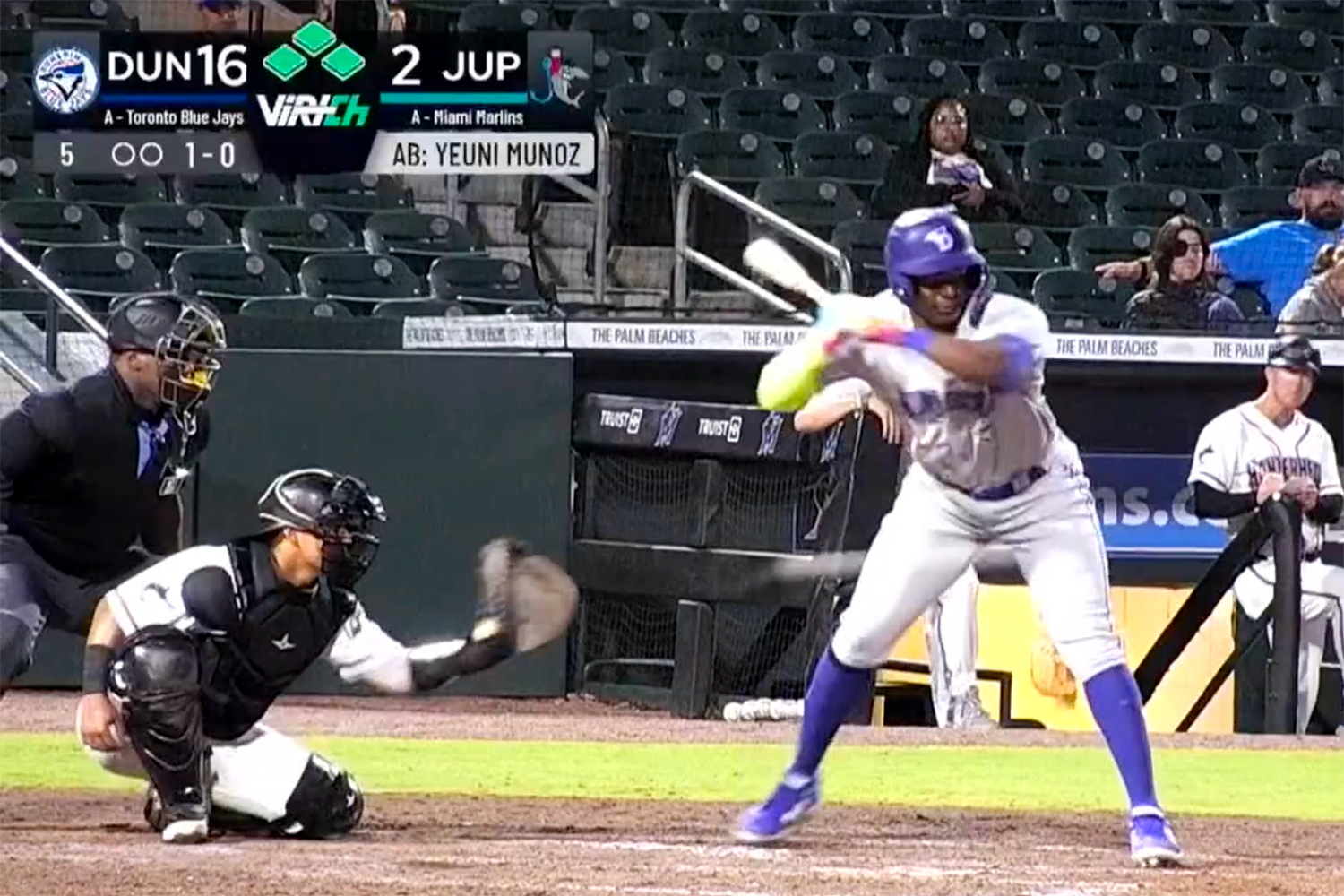 It is 6:30 pm, in Jupiter, Florida. Trey Yesavage will pitch in his first minor league start against the Miami Marlins Low-A affiliate. The temperature is cool for South Florida at 21 degrees Celsius, with winds of 7 mph. Things are about to get out of control. Top of the First Outfielder J.R. Freethy comes up to the plate to lead off the game against Jupiter's starter Juan De La Cruz, he stays patient and gets on base. Walk #1. Canadian Sam Shaw gets to the plate, 7 pitches later, Walk #2. After a double steal attempt from Freethy and Shaw in which Freethy gets picked off, Yeuni Munoz strikes out. Seems like Yesavage will get up to pitch sooner rather than later. Brock Tibbits gives the Jays the lead with a single to score Shaw, giving Yesavage a small cushion before his first pitch. Catcher Edward Duran, facing his old organization, comes in and takes four straight balls. Walk #3. Switch-Hitting third baseman Tucker Toman grounds out to second and the top of the inning ends. The first-rounder will pitch the bottom of the inning. Bottom of the First Yesavage comes in and faces Marlins' #2 prospect Starlyn Caba and walks him. Yesavage also walks Andres Valor. Former Padres top prospect Dillon Head, acquired in the Tanner Scott trade, pops out. Carter Johnson pops out. Julio Henriquez walks. Staryln Cabra and Valor score after first baseman Brock Tibbitts commits an error, giving the Hammerheads the lead. This will be their only lead of the ballgame. Edward Duran picks off Ian Lewis trying to steal third. Top of the Second Manuel Beltre grounds out. Yhoangel Aponte comes up to the plate and takes a 6 pitch walk. Walk #4. De La Cruz walks the next batter, Braden Berry. On MiLB Gameday, three of the four balls are so far outside the strike zone that you can barely even see them. Walk #5. J.R. Freethy gives the Dunedin Jays the lead with a double. Juan De La Cruz's day come to an end, as Riskiel Tineo comes in the game. This will be one of many pitching changes for Jupiter. Immediately, Tineo throws two balls, then a wild pitch that moves Freethy over to third. Sam Shaw walks. Walk # 6. Yeuni Munoz doubles to break the game open. 5-2 Dunedin. Tibbitts and Duran then both fly out. Bottom of the Second Yesavage makes quick work of the bottom of the Hammerheads lineup with a perfect inning. He will not get up to pitch for a while. Top of the Third Tucker Toman reaches on an error from the pitcher. He makes it all the way to third. Tineo then throws another wild pitch, allowing Toman to score. Another walk is issued, this time to Manuel Beltre. Walk #7. Yhoangel Aponte doubles to left field, then Braden Berry is called out on strikes. J.R. Freethy comes up for his second plate appearance of the night and is immediately walked on four pitches. Bases loaded. Walk #8. Sam Shaw back up to the dish with the bases loaded, and Tineo has to throw strikes to him to get out of the jam. Walk #9. The Jupiter Manager Nelson Prada has had enough and takes Tineo out, bringing in reliever Elian Serrata to replace him. Serrata gets the count to 2-2, showing some semblance of ability to throw strikes. Pitch number 5 does not come, as he does not get set in time. Automatic ball due to pitch timer violation is awarded. Serrata winds up and throws a fastball right at the bottom of the zone, and the ump calls a strike. Yeuni Munoz then taps his head. Strike overturned. Ball 4. Walk #10. Brock Tibbitts strikes out swinging. Then Edward Duran comes to the plate and gets plunked. 9-2 Dunedin. The second time up this inning, Tucker Toman then triples to clear the bases. 12-2 Dunedin. Beltre comes up again and flies out, finally ending the inning for Jupiter. Bottom of the Third Yesavage walks Caba a second time and allows a single to Andres Valor, but he strikes out Dillon head and induces a double play immediately after. Back to Jupiter. Top of the Fourth Serrata stays in the game and immediately strikes out Aponte. He allows a single to Braden Barry. J.R. Freethy is up for the third time now and again draws four straight balls. Walk #11. Shaw is back up and gets rung up. One more out can get Serrata out of the inning. Plunk. He hits Munoz. The shaky control continues as Tibbitts joins in the fun and gets walked. Walk #12. Prada has to come up for the third time in four innings to make another pitching change. Out comes Serrata, in comes Jose Fernandez (no relation to the late prodigy). The first batter he faces is former Marlin Edward Duran. And after five pitches, the count is 4-1, and Duran heads to first. Walk #13. Toman comes up to the plate. 4 pitches later, he too walks to first. Walk #14. That brings up Beltre who Walk #15. Finally, Fernandez finds the zone and strikes out Aponte. The score is 16-2 in Dunedin's favour. Bottom of the Fourth Yesavage gets another two quick outs, but then he walks the next two batters. Gil Kim replaces him with Christian Mracna, who strikes out Carlos Sanchez. Top of the Fifth This time, a new pitcher starts off the inning instead of arriving via a mid-inning pitching change. Julio Mendez replaces Fernandez. Walk #16. Walk #17. As a reprieve, we bring you a wild pitch and Sam Shaw getting beaned. Back to our regularly scheduled walking. Walk #18. Brock Tibbitts hits a sac fly and Duran strikes out. New pitcher has arrived: Jean Reyes comes in for Mendez Walk #19. One more would break the Florida State League record for most walks given up in a game. Beltre flies out to center field. Bottom of the Fifth Gil Kim turns to power pitcher Gage Stanifer, who catches the giving-up walks bug and lets Caba go to first for free. Stanifer then strikes out the next three batters swinging. Top of the Sixth Mendez stays in the game and gets three quick groundouts. Bottom of the Sixth Stanifer also gets two quick groundouts, striking out Ian Lewis swinging in between. It is the first inning of the whole game with no runners on base and no walks. Top of the Seventh Walk #20. The Florida State League record has been broken. The Florida State League has been around for 106 years. Munoz flies out. Walk #21. Duran flies out. Walk #22. This time the record is not just the Florida State League record but the Minor League Baseball record (in the stat keeping era). Beltre strikes out swinging. Bottom of the Seventh Stanifer continues his dominance, but Staryln Caba somehow finds his way to a walk in between. Top of the Eighth Juan Reynoso replaces Jean Reyes and immediately throws four straight balls to Yhoangel Aponte. Walk #23 Aponte had called time before ball four. The ump gives it to him. Reynoso makes another pitch. Strike one. Reynoso throws another. Strike two. Reynoso throws a third. Strike three. Aponte just struck out after taking four straight balls in an at-bat. The Dunedin announcers are incredulous. The baseball gods have considered that a farce. No other walks will be issued by the Hammerheads for the rest of the game. The historic pitching underperformance will come to a close. Braden Berry singles, but Freethy grounds into a double play, ending the inning. Bottom of the Eighth Stanifer ends with three more quick outs, including a strikeout. Top of the Ninth Reynoso stays in the game, and despite giving up a homer to Munoz and a double to Duran, he does not walk a batter. The pitching line for the Hammerheads, as such: 9.0 IP, 9 H, 19 R, 14 ER, 22 (23*) BB, 11 K, 1 HR, 3 HBP, 3 WP Bottom of the Ninth Recently acquired Edinson Batista, from the Robertson deal, makes his Jays organization debut. He strikes out a batter, but then a drone flies over the field. The umps pause the game for a drone delay. After the game resumes, Batista gives up a double to Abrahan Ramirez. He catches the walk bug and walks Carlos Sanchez. Caba walks for the fifth time on the night, more than any Dunedin Blue Jay. Valor gets hit by a pitch. Dillon hits a sac fly. Batista gives up a double. Gil Kim has seen enough and replaces him with Eminen Flores. Flores strikes out Julio Henriquez. Ball game. It is now 10:15 pm EDT. This 3-hour, 39-minute game had a plethora of ups and downs, lefts and rights. It also had a few walks.
 -
What was supposed to be just a first-round pick's minor league debut became something much, much more than that. It is 6:30 pm, in Jupiter, Florida. Trey Yesavage will pitch in his first minor league start against the Miami Marlins Low-A affiliate. The temperature is cool for South Florida at 21 degrees Celsius, with winds of 7 mph. Things are about to get out of control. Top of the First Outfielder J.R. Freethy comes up to the plate to lead off the game against Jupiter's starter Juan De La Cruz, he stays patient and gets on base. Walk #1. Canadian Sam Shaw gets to the plate, 7 pitches later, Walk #2. After a double steal attempt from Freethy and Shaw in which Freethy gets picked off, Yeuni Munoz strikes out. Seems like Yesavage will get up to pitch sooner rather than later. Brock Tibbits gives the Jays the lead with a single to score Shaw, giving Yesavage a small cushion before his first pitch. Catcher Edward Duran, facing his old organization, comes in and takes four straight balls. Walk #3. Switch-Hitting third baseman Tucker Toman grounds out to second and the top of the inning ends. The first-rounder will pitch the bottom of the inning. Bottom of the First Yesavage comes in and faces Marlins' #2 prospect Starlyn Caba and walks him. Yesavage also walks Andres Valor. Former Padres top prospect Dillon Head, acquired in the Tanner Scott trade, pops out. Carter Johnson pops out. Julio Henriquez walks. Staryln Cabra and Valor score after first baseman Brock Tibbitts commits an error, giving the Hammerheads the lead. This will be their only lead of the ballgame. Edward Duran picks off Ian Lewis trying to steal third. Top of the Second Manuel Beltre grounds out. Yhoangel Aponte comes up to the plate and takes a 6 pitch walk. Walk #4. De La Cruz walks the next batter, Braden Berry. On MiLB Gameday, three of the four balls are so far outside the strike zone that you can barely even see them. Walk #5. J.R. Freethy gives the Dunedin Jays the lead with a double. Juan De La Cruz's day come to an end, as Riskiel Tineo comes in the game. This will be one of many pitching changes for Jupiter. Immediately, Tineo throws two balls, then a wild pitch that moves Freethy over to third. Sam Shaw walks. Walk # 6. Yeuni Munoz doubles to break the game open. 5-2 Dunedin. Tibbitts and Duran then both fly out. Bottom of the Second Yesavage makes quick work of the bottom of the Hammerheads lineup with a perfect inning. He will not get up to pitch for a while. Top of the Third Tucker Toman reaches on an error from the pitcher. He makes it all the way to third. Tineo then throws another wild pitch, allowing Toman to score. Another walk is issued, this time to Manuel Beltre. Walk #7. Yhoangel Aponte doubles to left field, then Braden Berry is called out on strikes. J.R. Freethy comes up for his second plate appearance of the night and is immediately walked on four pitches. Bases loaded. Walk #8. Sam Shaw back up to the dish with the bases loaded, and Tineo has to throw strikes to him to get out of the jam. Walk #9. The Jupiter Manager Nelson Prada has had enough and takes Tineo out, bringing in reliever Elian Serrata to replace him. Serrata gets the count to 2-2, showing some semblance of ability to throw strikes. Pitch number 5 does not come, as he does not get set in time. Automatic ball due to pitch timer violation is awarded. Serrata winds up and throws a fastball right at the bottom of the zone, and the ump calls a strike. Yeuni Munoz then taps his head. Strike overturned. Ball 4. Walk #10. Brock Tibbitts strikes out swinging. Then Edward Duran comes to the plate and gets plunked. 9-2 Dunedin. The second time up this inning, Tucker Toman then triples to clear the bases. 12-2 Dunedin. Beltre comes up again and flies out, finally ending the inning for Jupiter. Bottom of the Third Yesavage walks Caba a second time and allows a single to Andres Valor, but he strikes out Dillon head and induces a double play immediately after. Back to Jupiter. Top of the Fourth Serrata stays in the game and immediately strikes out Aponte. He allows a single to Braden Barry. J.R. Freethy is up for the third time now and again draws four straight balls. Walk #11. Shaw is back up and gets rung up. One more out can get Serrata out of the inning. Plunk. He hits Munoz. The shaky control continues as Tibbitts joins in the fun and gets walked. Walk #12. Prada has to come up for the third time in four innings to make another pitching change. Out comes Serrata, in comes Jose Fernandez (no relation to the late prodigy). The first batter he faces is former Marlin Edward Duran. And after five pitches, the count is 4-1, and Duran heads to first. Walk #13. Toman comes up to the plate. 4 pitches later, he too walks to first. Walk #14. That brings up Beltre who Walk #15. Finally, Fernandez finds the zone and strikes out Aponte. The score is 16-2 in Dunedin's favour. Bottom of the Fourth Yesavage gets another two quick outs, but then he walks the next two batters. Gil Kim replaces him with Christian Mracna, who strikes out Carlos Sanchez. Top of the Fifth This time, a new pitcher starts off the inning instead of arriving via a mid-inning pitching change. Julio Mendez replaces Fernandez. Walk #16. Walk #17. As a reprieve, we bring you a wild pitch and Sam Shaw getting beaned. Back to our regularly scheduled walking. Walk #18. Brock Tibbitts hits a sac fly and Duran strikes out. New pitcher has arrived: Jean Reyes comes in for Mendez Walk #19. One more would break the Florida State League record for most walks given up in a game. Beltre flies out to center field. Bottom of the Fifth Gil Kim turns to power pitcher Gage Stanifer, who catches the giving-up walks bug and lets Caba go to first for free. Stanifer then strikes out the next three batters swinging. Top of the Sixth Mendez stays in the game and gets three quick groundouts. Bottom of the Sixth Stanifer also gets two quick groundouts, striking out Ian Lewis swinging in between. It is the first inning of the whole game with no runners on base and no walks. Top of the Seventh Walk #20. The Florida State League record has been broken. The Florida State League has been around for 106 years. Munoz flies out. Walk #21. Duran flies out. Walk #22. This time the record is not just the Florida State League record but the Minor League Baseball record (in the stat keeping era). Beltre strikes out swinging. Bottom of the Seventh Stanifer continues his dominance, but Staryln Caba somehow finds his way to a walk in between. Top of the Eighth Juan Reynoso replaces Jean Reyes and immediately throws four straight balls to Yhoangel Aponte. Walk #23 Aponte had called time before ball four. The ump gives it to him. Reynoso makes another pitch. Strike one. Reynoso throws another. Strike two. Reynoso throws a third. Strike three. Aponte just struck out after taking four straight balls in an at-bat. The Dunedin announcers are incredulous. The baseball gods have considered that a farce. No other walks will be issued by the Hammerheads for the rest of the game. The historic pitching underperformance will come to a close. Braden Berry singles, but Freethy grounds into a double play, ending the inning. Bottom of the Eighth Stanifer ends with three more quick outs, including a strikeout. Top of the Ninth Reynoso stays in the game, and despite giving up a homer to Munoz and a double to Duran, he does not walk a batter. The pitching line for the Hammerheads, as such: 9.0 IP, 9 H, 19 R, 14 ER, 22 (23*) BB, 11 K, 1 HR, 3 HBP, 3 WP Bottom of the Ninth Recently acquired Edinson Batista, from the Robertson deal, makes his Jays organization debut. He strikes out a batter, but then a drone flies over the field. The umps pause the game for a drone delay. After the game resumes, Batista gives up a double to Abrahan Ramirez. He catches the walk bug and walks Carlos Sanchez. Caba walks for the fifth time on the night, more than any Dunedin Blue Jay. Valor gets hit by a pitch. Dillon hits a sac fly. Batista gives up a double. Gil Kim has seen enough and replaces him with Eminen Flores. Flores strikes out Julio Henriquez. Ball game. It is now 10:15 pm EDT. This 3-hour, 39-minute game had a plethora of ups and downs, lefts and rights. It also had a few walks. View full article
-
Article: Alan Roden, Newly-Crowned Top 100 Prospect
Simon Li replied to Simon Li's topic in Jays Centre Front Page News
Unfortunately not, it has to be 2 of MLB Pipeline, ESPN and Baseball America. -
Alan Roden had an excellent spring training, slashing .407/.541/.704 for a 220 wRC+.That performance not only guaranteed Roden a spot on the Opening Day roster, but finally convinced FanGraphs that he's one of the 100 best prospects in the game. Alan Roden is Jays Centre's sixth-ranked prospect, and we might have undersold how good he is. Roden was the team's round pick in 2022, a senior sign with "only" a $497,500 signing bonus out of Creighton. Roden is possibly the culmination of the Jays drafting strategy for hitters, with a seemingly model-heavy approach that targets hitters with strong bat-to-ball skills, solid plate approaches, and the possibility that they could grow into some power with a swing change. This approach has had more moderate success with Davis Schneider, Spencer Horwitz, and Josh Kasevich. Roden, on the other hand, has exceeded almost every expectation, showing very strong contact metrics, great strikeout-to-walk ratios, and showing flashes of decent power. He hit career-high of 16 home runs in 2024 after implementing a stance change. Roden also displayed his strong athleticism, easily handling the corner outfield spots and stealing double-digit bases. Ross Atkins also singled him out as a guy to watch prior to the start of spring training, and Roden did not disappoint. Eric Logenhagen, the lead prospect analyst at FanGraphs, had been itching to add Roden to previous top 100 lists. He put Roden on the BOARD with a full scouting report, but saw flaws that prevented him from getting on the list: a weakness handling low, well-spotted breaking balls, a tendency to chase with two strikes, and lastly, a body type that he felt would not age too well. Another slight concern was that Roden would not make the major league roster until 2026, thanks to a crowded outfield and not being on the 40-man roster. However, those concerns were mostly assuaged by Roden's stellar spring training. Some people reasonably tend to discount spring training numbers, but Roden was able to show some signs that he's improved on some of his weaknesses. Logenhagen wrote that Roden's new approach against low breaking balls potentially allowed for more power, and rave reviews from multiple scouts to guarantee him a spot on Fangraphs' updated top 100. Roden came in at 82, with a 50-grade Future Value. Still Roden is not the highest-ranked Jay on the list, with Jake Bloss and his improved velocity at 59th, and wunderkind Arjun Nimmala at 70th. Ricky Tiedemann is still an honourable mention, but has been pushed down to 114th due to some healthier prospects being able to leapfrog him. This is a welcome sign for the Blue Jays, who haven't drafted and developed a solid starting outfielder in a long while. While Roden has been added to one top 100 list, I am not expecting him to be added to any other. Not because he won't deserve it, but because when midseason prospect rankings get published, Roden will have hopefully graduated from prospect status and excelled as a key piece to the Jays offense. Here's Longenhagen's whole blurb on Roden: View full article
-
 Alan Roden is Jays Centre's sixth-ranked prospect, and we might have undersold how good he is. Roden was the team's round pick in 2022, a senior sign with "only" a $497,500 signing bonus out of Creighton. Roden is possibly the culmination of the Jays drafting strategy for hitters, with a seemingly model-heavy approach that targets hitters with strong bat-to-ball skills, solid plate approaches, and the possibility that they could grow into some power with a swing change. This approach has had more moderate success with Davis Schneider, Spencer Horwitz, and Josh Kasevich. Roden, on the other hand, has exceeded almost every expectation, showing very strong contact metrics, great strikeout-to-walk ratios, and showing flashes of decent power. He hit career-high of 16 home runs in 2024 after implementing a stance change. Roden also displayed his strong athleticism, easily handling the corner outfield spots and stealing double-digit bases. Ross Atkins also singled him out as a guy to watch prior to the start of spring training, and Roden did not disappoint. Eric Logenhagen, the lead prospect analyst at FanGraphs, had been itching to add Roden to previous top 100 lists. He put Roden on the BOARD with a full scouting report, but saw flaws that prevented him from getting on the list: a weakness handling low, well-spotted breaking balls, a tendency to chase with two strikes, and lastly, a body type that he felt would not age too well. Another slight concern was that Roden would not make the major league roster until 2026, thanks to a crowded outfield and not being on the 40-man roster. However, those concerns were mostly assuaged by Roden's stellar spring training. Some people reasonably tend to discount spring training numbers, but Roden was able to show some signs that he's improved on some of his weaknesses. Logenhagen wrote that Roden's new approach against low breaking balls potentially allowed for more power, and rave reviews from multiple scouts to guarantee him a spot on Fangraphs' updated top 100. Roden came in at 82, with a 50-grade Future Value. Still Roden is not the highest-ranked Jay on the list, with Jake Bloss and his improved velocity at 59th, and wunderkind Arjun Nimmala at 70th. Ricky Tiedemann is still an honourable mention, but has been pushed down to 114th due to some healthier prospects being able to leapfrog him. This is a welcome sign for the Blue Jays, who haven't drafted and developed a solid starting outfielder in a long while. While Roden has been added to one top 100 list, I am not expecting him to be added to any other. Not because he won't deserve it, but because when midseason prospect rankings get published, Roden will have hopefully graduated from prospect status and excelled as a key piece to the Jays offense. Here's Longenhagen's whole blurb on Roden:
 -
A disappointing start to Lovelady and Scherezer's tenure with the Blue Jays led to one getting DFA'd and the other heading to the IL due to lat soreness caused by a chronic thumb issue. As a result, the Jays have called up LHP Easton Lucas and selected LHP Mason Fluharty from Triple-A Buffalo. Richard Lovelady making the team over veteran swingman and innings eater Ryan Yarbrough has been a controversial decision by the Jays front office. Lovelady performed poorly enough to get designated for assignment. However, Easton Lucas, a 28-year-old unheralded arm claimed from the Detroit Tigers in the waiver claim spree after the trade deadline, may, in fact, be a solid alternative to what Yarbrough could bring. Although Lucas had an 8.64 ERA in spring training and has not performed well at the major league level in limited innings pitched in his career, he has respectable stuff, and there's room to believe that he could do well as a long reliever or swingman whilst Max Scherzer is on the injured list. Lucas has a mid-90s fastball with 17 inches of induced vertical break and decent run, as well as a high-80s cutter that he throws as his main secondary that has 4.6 inches of induced vertical break and around 3 inches of cut, which graded out decently in Eno Sarris' Stuff+ in 2024 with a 101. He also throws a slider with more depth and break that graded out well at a 119 stuff+ and a below-average changeup that he struggles to command. Lucas excelled in Triple-A across three organizations and pitched to a 2.75 ERA/3.61 FIP with a solid 26.2% K rate and a 10,0% BB rate. Projections like him more than Yarbrough, with Steamer projecting him to pitch to a 4.21 ERA/4,48 FIP and ZiPS to a 4.57 ERA/4.50 FIP, whereas Yarbrough was projected to have a 4.43 ERA/4.71 FIP from Steamer, and a 4.70 ERA and a 4.63 FIP from ZiPS. The Jays hope that Lucas can pitch to anywhere near projections and be a serviceable innings eater when the bullpen depth is hurting. Mason Fluharty, on the other hand, is a young lefty reliever that the Jays drafted in the 5th round of the 2022 draft, and he's a soft-tossing, cross-firing reliever that excels at inducing weak contact and striking batters out despite a sub 90 mph cutter that he mainly relies on. Ranked as the 19th best prospect on MLB Pipeline's Jays top 30, Fluharty has excelled throughout his professional career, striking out hitters at over a 27% clip while only walking batters around 9% of the time. Fluharty also had an excellent spring training, striking out 40.7% of batters he faced while only walking 3.7% in 7.0 innings pitched. His main pitch is that high-80s cutter that he throws with 8.9 inches of induced vertical break and 3.5 inches of cut, which helped generate both chases and whiffs while limiting hard contact. His sweeper was also dominant, with 19 inches of horizontal break and 1.9 inches of induced vertical break, leading to a 71.4% whiff rate and limiting hard contact in spring. tjStuff+ loves his arsenal with a 107 tjStuff+ on the cutter and a 117 on his sweeper. The Jays will most likely look towards him as the second lefty out of the pen after Brendon Little, and hopefully, he will be one of the few homegrown relievers in recent memory to have success as a Toronto Blue Jay. View full article
-
- 3
-

-
- mason fluharty
- easton lucas
- (and 2 more)
-
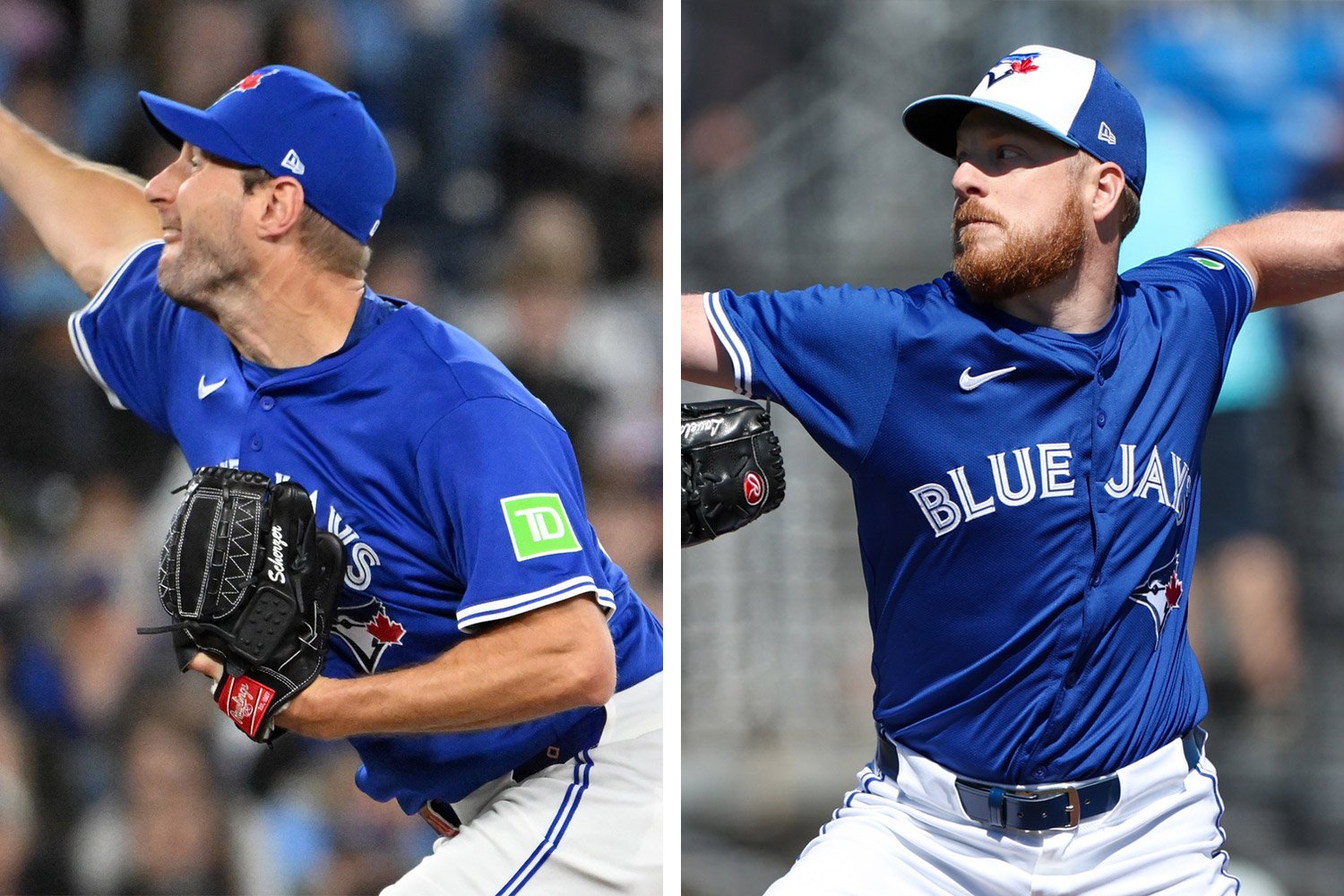 Richard Lovelady making the team over veteran swingman and innings eater Ryan Yarbrough has been a controversial decision by the Jays front office. Lovelady performed poorly enough to get designated for assignment. However, Easton Lucas, a 28-year-old unheralded arm claimed from the Detroit Tigers in the waiver claim spree after the trade deadline, may, in fact, be a solid alternative to what Yarbrough could bring. Although Lucas had an 8.64 ERA in spring training and has not performed well at the major league level in limited innings pitched in his career, he has respectable stuff, and there's room to believe that he could do well as a long reliever or swingman whilst Max Scherzer is on the injured list. Lucas has a mid-90s fastball with 17 inches of induced vertical break and decent run, as well as a high-80s cutter that he throws as his main secondary that has 4.6 inches of induced vertical break and around 3 inches of cut, which graded out decently in Eno Sarris' Stuff+ in 2024 with a 101. He also throws a slider with more depth and break that graded out well at a 119 stuff+ and a below-average changeup that he struggles to command. Lucas excelled in Triple-A across three organizations and pitched to a 2.75 ERA/3.61 FIP with a solid 26.2% K rate and a 10,0% BB rate. Projections like him more than Yarbrough, with Steamer projecting him to pitch to a 4.21 ERA/4,48 FIP and ZiPS to a 4.57 ERA/4.50 FIP, whereas Yarbrough was projected to have a 4.43 ERA/4.71 FIP from Steamer, and a 4.70 ERA and a 4.63 FIP from ZiPS. The Jays hope that Lucas can pitch to anywhere near projections and be a serviceable innings eater when the bullpen depth is hurting. Mason Fluharty, on the other hand, is a young lefty reliever that the Jays drafted in the 5th round of the 2022 draft, and he's a soft-tossing, cross-firing reliever that excels at inducing weak contact and striking batters out despite a sub 90 mph cutter that he mainly relies on. Ranked as the 19th best prospect on MLB Pipeline's Jays top 30, Fluharty has excelled throughout his professional career, striking out hitters at over a 27% clip while only walking batters around 9% of the time. Fluharty also had an excellent spring training, striking out 40.7% of batters he faced while only walking 3.7% in 7.0 innings pitched. His main pitch is that high-80s cutter that he throws with 8.9 inches of induced vertical break and 3.5 inches of cut, which helped generate both chases and whiffs while limiting hard contact. His sweeper was also dominant, with 19 inches of horizontal break and 1.9 inches of induced vertical break, leading to a 71.4% whiff rate and limiting hard contact in spring. tjStuff+ loves his arsenal with a 107 tjStuff+ on the cutter and a 117 on his sweeper. The Jays will most likely look towards him as the second lefty out of the pen after Brendon Little, and hopefully, he will be one of the few homegrown relievers in recent memory to have success as a Toronto Blue Jay.
 -
The Jays have had their fair share of disappointing prospects and picks, sometimes due to poor injury luck, sometimes due to poor drafting and development. At some point, these prospects had some hype, with bright futures and high rankings. Let's take a look at a couple of the hitters who haven’t really panned out yet. 3B/SS - Tucker Toman - 21 Years Old - (Single-A Dunedin) Tucker Toman was a highly touted high school prospect coming out of Hammond High School, and the Jays decided to spend $2 million, the second-highest bonus of their draft class, on him to convince him against going to Louisiana. They drafted him using one of the compensation picks that came from losing Robbie Ray and Marcus Semien in free agency. Toman was praised for having a good hit tool and approach pre-draft while also being able to hit for power. There were some concerns about some inconsistency and swing-and-miss, but all in all, the Jays were widely praised for making the pick on a young switch-hitting infielder who could hit for power. Shortly after being drafted as an 18-year-old, he even had a short run in the Florida Complex League with a .289/.391/.368 slash line and a 119 wRC+, providing some hope on Toman’s ability to hit as a professional. Unfortunately for Toman and the Blue Jays, nothing much has gone right for him since 2023. He had a mediocre year in Single-A Dunedin, his first full season of professional baseball, slashing only .208/.320/.313 for an 81 wRC+. He walked 12.5% of the time and struck out 26.8% of the time, which led to him sliding down all prospects list. In 2024, he showed more of the same while repeating Single-A in Dunedin, slashing .221/.301/.318 for a 82 wRC+ as his walk and strikeout rates went in the wrong directions. He required a month break on the developmental list to attempt to reset halfway through the season. Toman’s hit tool seems to be a massive issue at this point in his career. He ran a 69.1% contact rate in 2023 and slid down to a 65.9% in 2024. Add in the fact that when he does make contact, he doesn’t do much damage. It’s hard to see a path forward for Toman, even if his defense has been slightly better than advertised on draft day, thanks to a stronger arm that should allow him to stick at third base. Toman is still just 21, and he may still have a path forward. His right-handed swing is much less impressive than his righthanded swing, with a differential of 100 points of OPS in both 2023 and 2024. Toman may need to consolidate his efforts into his more effective lefty swing and try to figure out the power potential and hitting feel that led him to get him drafted so highly in the first place. He may have to do so in Single-A Dunedin for a third time. 2B/3B/SS - Manuel Beltre - 20 Years Old - (Single-A Dunedin) Beltre was the Blue Jays' key signing in the 2021 international free agent class. He signed for $2.35 million out of the Dominican Republic and generated a lot of buzz with his makeup and skills, despite lacking some standout raw tools. He showed solid athleticism and skills that had people believing that he could stick at shortstop. Scouts hoped his strong contact abilities would lead to greater power as he aged up and gained strength. Beltre showed promise as a 17-year-old in the Dominican Summer League in 2021, walking more than he struck out, and his .225 batting average was largely chalked up to bad batted ball luck. He still ran a 119 wRC+ in 238 PAs, showing flashes of promising exit velocities. His first season stateside also showed some promise. Although he hadn’t shown much power still in the Florida Complex League, he demonstrated strong plate discipline and was a slightly above-average hitter as an 18-year-old. Unfortunately, Beltre would not progress much offensively after moving up to Single-A Dunedin in 2023 as a 19-year-old. He showed decent plate discipline again, but failed to hit for much power at all. He hit six home runs in 431 PAs and ran a 91 wRC+, sowing doubts that his potential was limited to that of a light-hitting utility infielder. In 2024, Beltre showed more of the same, running a 96 wRC+ and showing even less power. Despite getting praise for his contact ability as a teenager, Beltre’s contact rates now are more average than good and his offensive profile has begun to look very limited. He has also moved down the defensive spectrum thanks to the arrival of top-ranked prospect Arjun Nimmala, moving off shortstop and splitting time at third and second. Although Beltre avoids strikeouts and takes his share of walks, the fact that he has no carrying tool makes it hard to project him as a viable major leaguer in the future. Beltre will still only be 21 years old for the 2025 season, but at 5-foot-10 and 155 pounds, it's unclear how much more strength he could add to his frame and whether that would slow him down enough to hurt his basestealing, at this point possibly his best tool. The fact that his contact skills are just average instead of good also makes it much harder for him as he advances and faces tougher competition. Beltre will most likely need to add to his defensive versatility and to improve his hitting to keep moving up the ladder. The praise about his work ethic and makeup give him a chance to get there, but he’ll need to have a strong showing in High-A Vancouver to really prove himself as more than organizational depth. View full article
-
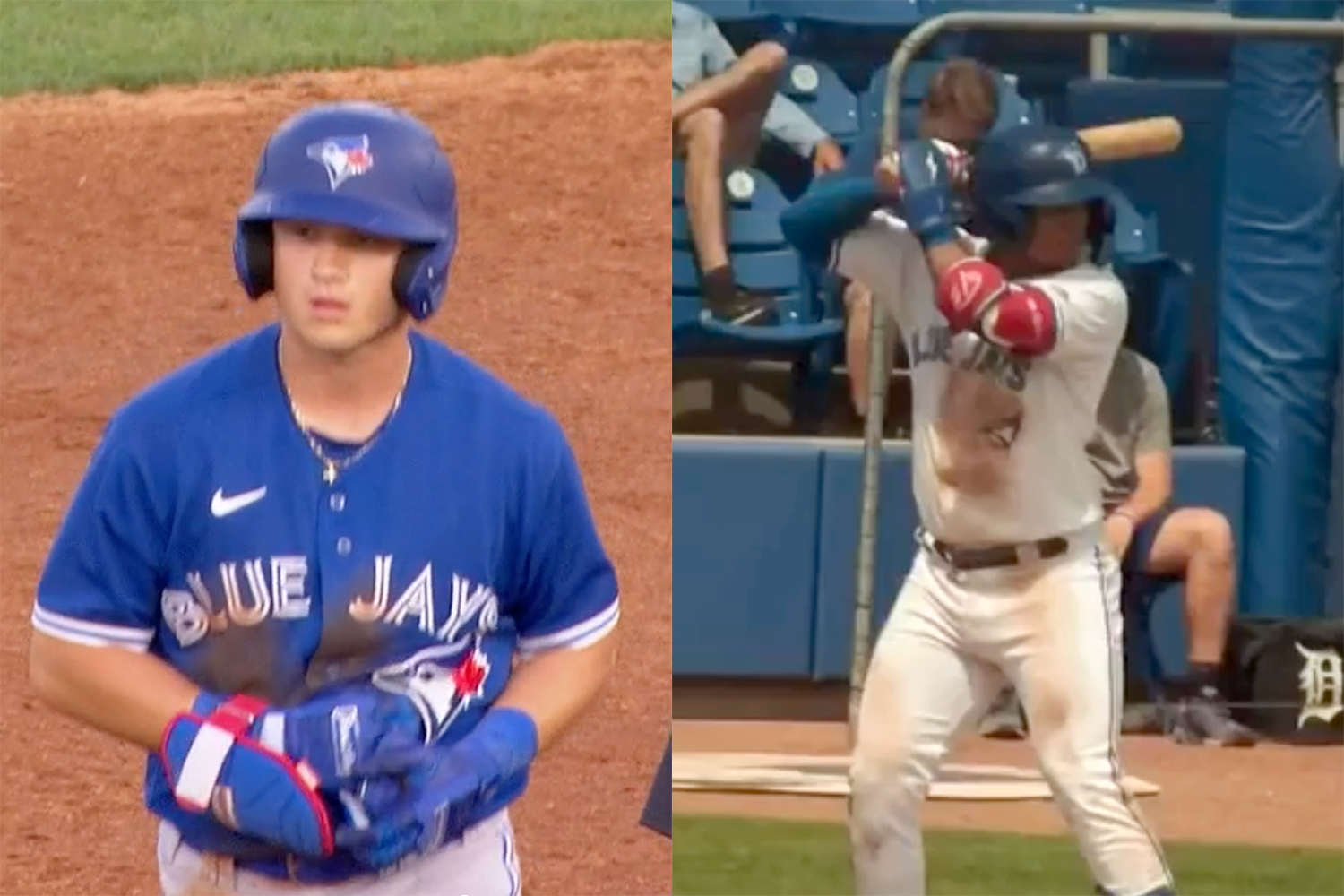 3B/SS - Tucker Toman - 21 Years Old - (Single-A Dunedin) Tucker Toman was a highly touted high school prospect coming out of Hammond High School, and the Jays decided to spend $2 million, the second-highest bonus of their draft class, on him to convince him against going to Louisiana. They drafted him using one of the compensation picks that came from losing Robbie Ray and Marcus Semien in free agency. Toman was praised for having a good hit tool and approach pre-draft while also being able to hit for power. There were some concerns about some inconsistency and swing-and-miss, but all in all, the Jays were widely praised for making the pick on a young switch-hitting infielder who could hit for power. Shortly after being drafted as an 18-year-old, he even had a short run in the Florida Complex League with a .289/.391/.368 slash line and a 119 wRC+, providing some hope on Toman’s ability to hit as a professional. Unfortunately for Toman and the Blue Jays, nothing much has gone right for him since 2023. He had a mediocre year in Single-A Dunedin, his first full season of professional baseball, slashing only .208/.320/.313 for an 81 wRC+. He walked 12.5% of the time and struck out 26.8% of the time, which led to him sliding down all prospects list. In 2024, he showed more of the same while repeating Single-A in Dunedin, slashing .221/.301/.318 for a 82 wRC+ as his walk and strikeout rates went in the wrong directions. He required a month break on the developmental list to attempt to reset halfway through the season. Toman’s hit tool seems to be a massive issue at this point in his career. He ran a 69.1% contact rate in 2023 and slid down to a 65.9% in 2024. Add in the fact that when he does make contact, he doesn’t do much damage. It’s hard to see a path forward for Toman, even if his defense has been slightly better than advertised on draft day, thanks to a stronger arm that should allow him to stick at third base. Toman is still just 21, and he may still have a path forward. His right-handed swing is much less impressive than his righthanded swing, with a differential of 100 points of OPS in both 2023 and 2024. Toman may need to consolidate his efforts into his more effective lefty swing and try to figure out the power potential and hitting feel that led him to get him drafted so highly in the first place. He may have to do so in Single-A Dunedin for a third time. 2B/3B/SS - Manuel Beltre - 20 Years Old - (Single-A Dunedin) Beltre was the Blue Jays' key signing in the 2021 international free agent class. He signed for $2.35 million out of the Dominican Republic and generated a lot of buzz with his makeup and skills, despite lacking some standout raw tools. He showed solid athleticism and skills that had people believing that he could stick at shortstop. Scouts hoped his strong contact abilities would lead to greater power as he aged up and gained strength. Beltre showed promise as a 17-year-old in the Dominican Summer League in 2021, walking more than he struck out, and his .225 batting average was largely chalked up to bad batted ball luck. He still ran a 119 wRC+ in 238 PAs, showing flashes of promising exit velocities. His first season stateside also showed some promise. Although he hadn’t shown much power still in the Florida Complex League, he demonstrated strong plate discipline and was a slightly above-average hitter as an 18-year-old. Unfortunately, Beltre would not progress much offensively after moving up to Single-A Dunedin in 2023 as a 19-year-old. He showed decent plate discipline again, but failed to hit for much power at all. He hit six home runs in 431 PAs and ran a 91 wRC+, sowing doubts that his potential was limited to that of a light-hitting utility infielder. In 2024, Beltre showed more of the same, running a 96 wRC+ and showing even less power. Despite getting praise for his contact ability as a teenager, Beltre’s contact rates now are more average than good and his offensive profile has begun to look very limited. He has also moved down the defensive spectrum thanks to the arrival of top-ranked prospect Arjun Nimmala, moving off shortstop and splitting time at third and second. Although Beltre avoids strikeouts and takes his share of walks, the fact that he has no carrying tool makes it hard to project him as a viable major leaguer in the future. Beltre will still only be 21 years old for the 2025 season, but at 5-foot-10 and 155 pounds, it's unclear how much more strength he could add to his frame and whether that would slow him down enough to hurt his basestealing, at this point possibly his best tool. The fact that his contact skills are just average instead of good also makes it much harder for him as he advances and faces tougher competition. Beltre will most likely need to add to his defensive versatility and to improve his hitting to keep moving up the ladder. The praise about his work ethic and makeup give him a chance to get there, but he’ll need to have a strong showing in High-A Vancouver to really prove himself as more than organizational depth.
 -
Regarding Heineman, I think the Jays seem to just love what he has to offer. The fact that we acquired him 3 separate times speaks a lot to what the Front Office thinks of him. Speaking of DRC+, it seems to like Heineman a lot more than his actual production has looked like, maybe there's something about his bat that could be tapped into?
-
Yeah unfortunately, the Twins didn't send in many of their most talented prospects, I would have loved to see them go head to head. I tried to make note of that in the takeaways at least, but obviously am not so well-versed in their farm as you would be.
-
Although the Twins have a much higher-ranked farm system, the Blue Jays prospects beat them down in the Spring Breakout. Over the weekend, prospects of the Blue Jays and Twins faced each other in the second year of the Spring Breakout games. The Spring Breakout was designed to get fans excited about notable prospects and introduce them to other, lesser-known prospects. Although MLB Pipeline recently ranked the Twins the 10th-best farm system and the Jays the 27th, the baby Jays lit up the Twins, 10-0. Let's see if we can take anything from that performance and what we can look forward to! The Professional Debuts of Trey Yesavage and Khal Stephen Yesavage immediately showed why he was a first-round pick, coming out the gates with a first-pitch fastball at 97 mph. Although he seemed a bit anxious in the first inning, he settled in after giving up two hits, ending up with three strikeouts in two innings pitched. He flashed three plus pitches: a good fastball with good life, an excellent cutter with a 100% whiff rate, and a splitter with a 100% chase rate. Expect to see him start off in Dunedin with a good chance of progressing through the system quickly. Khal Stephen also came as advertised, leading with his four-seamer, which averaged around 18 inches of induced vertical break. He generated three whiffs on it, including a 94.6 mph to strike out Twins 20th-ranked prospect Yasser Mercedes. Stephen also flashed a few of his secondaries and his good command, running a 58% zone rate. He ended the outing with two innings pitched, one strikeout, and one hit. Jake Bloss Looked Excellent Despite shaky results, Bloss’s stuff has been stellar all spring, and the Spring Breakout was no exception. His fastball averaged almost 96 mph with 17 inches of induced vertical break, and he showed a promising slider and changeup. Bloss dominated the Twins prospect hitters, striking out four in two innings pitched while generating seven whiffs. An interesting thing to note is that Bloss hadn’t really been throwing his sinker all spring, and he didn’t throw one at all in this game. It will be interesting to see how the Jays adjust his pitch mix throughout the season. Kendry Rojas Found Another Gear Kendry Rojas stunned in his two innings, averaging 96.2 mph on his fastball and topping out at 96.9 mph. This velocity was a significant jump from his appearances in the Arizona Fall League, where the fastball averaged 94.0 mph, and it follows a velocity jump in the 2024 season as well. If this velocity holds throughout the rest of the season, expect to see some helium behind his prospect stock. Rojas also showed his plus slider, zoning it 90% of the time and generating a bunch of soft contact. Walks Are for Suckers The Jays paired their good stuff with good command, throwing a no-walker (the less prestigious cousin of the no-hitter). On the other hand, the Jays hitters showed excellent plate discipline, walking eight times, which holds with the organization’s love for prospects with great approaches. To be fair to the Twins’ arms, the pitchers they used were not on their top 30 prospects lists, but the Jays hitters were able to get 11 hits in addition to the eight walks. Both Bloss and Yesavage made the MLB Pipeline All-Spring Breakout Teams. Big Hits From Big Hitters Arjun Nimmala was able to drive two singles over 100 mph, while driving in a run. Despite not lifting the ball, the power potential is still tantalizing for Jays Centre’s top prospect. Alan Roden hit a two-run double the opposite way to start off the scoring for the Jays. He’ll be one of the most exciting guys to watch this upcoming season, as he’ll very likely see some major league time given how he’s been hitting this spring. Despite not getting a hit, Minor League Gold Glover hailing from Oakville, Ontario Dasan Brown showed some impressive exit velocities, blasting a 106.0-mph grounder that led to an error and a 97.4-mph lineout to center. For a guy whose main calling card is his defense and speed, showing any ability to hit will boost his chances of being a true big leaguer. Recent acquisitions from the Boston Red Sox in the Danny Jansen trade also had great games. The two infielders Cutter Coffey and Eddinson Paulino combined for three hits, one walk, and one RBI. Other trade acquisitions like Yohendrick Pinango and Jacob Sharp also got on base and scored a run each, and Jay Harry had this excellent defensive play against his former club. Lastly, Peyton Williams, the massive slugging first baseman also known as the Iowa Meat Truck, had a pair of hits, including a line drive single to drive in Yohendrick Pinango smoked at 103.0 mph. Although injuries prevented him from progressing up to double-A New Hampshire last season, if Williams stays healthy, he could definitely bring the Meat to the upper minors. View full article
- 3 replies
-
- 4
-
-

-
- arjun nimmala
- trey yesavage
- (and 4 more)
-
Quick Takeaways From the Blue Jays' Spring Breakout Game
Simon Li posted an article in Minor Leagues
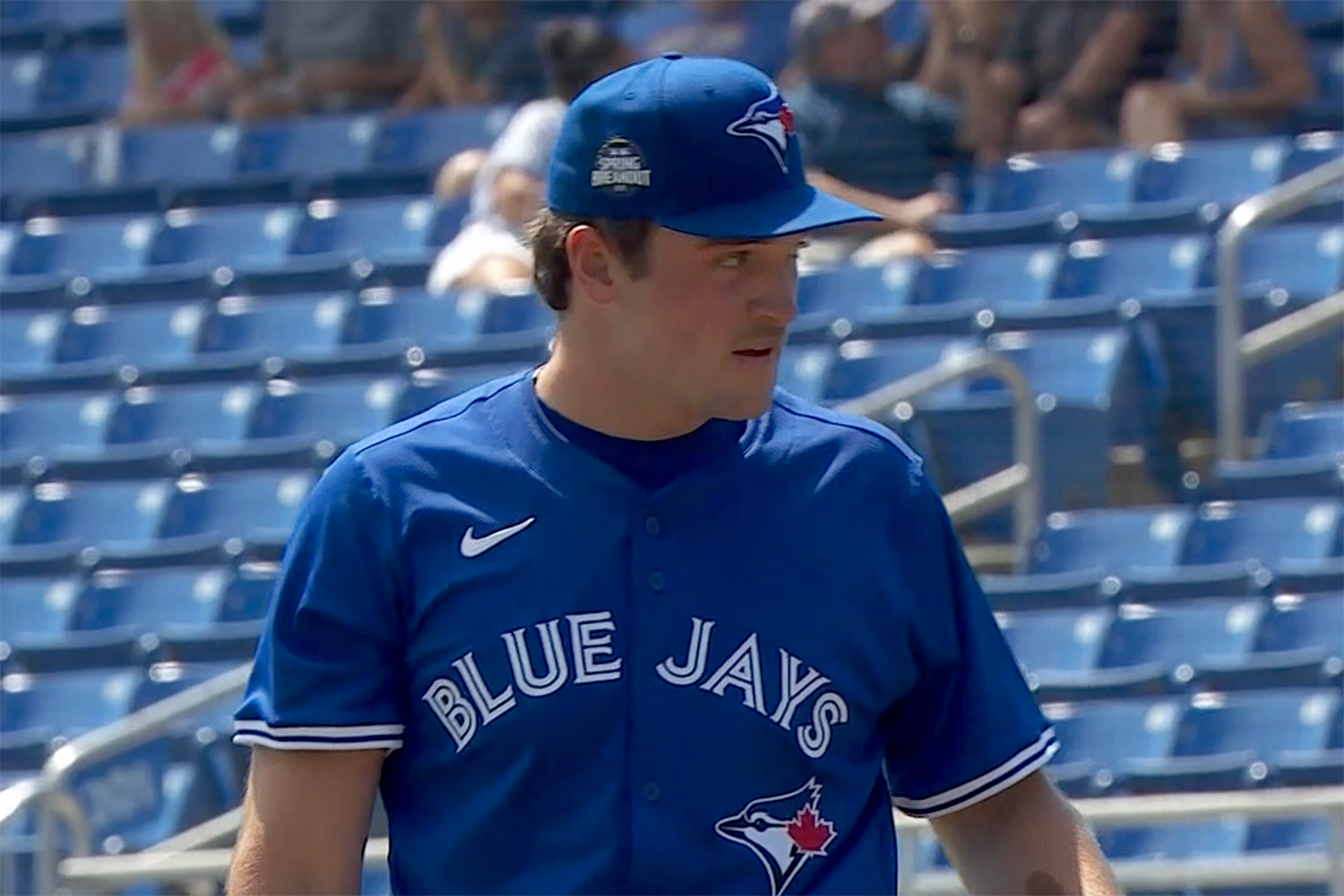 Over the weekend, prospects of the Blue Jays and Twins faced each other in the second year of the Spring Breakout games. The Spring Breakout was designed to get fans excited about notable prospects and introduce them to other, lesser-known prospects. Although MLB Pipeline recently ranked the Twins the 10th-best farm system and the Jays the 27th, the baby Jays lit up the Twins, 10-0. Let's see if we can take anything from that performance and what we can look forward to! The Professional Debuts of Trey Yesavage and Khal Stephen Yesavage immediately showed why he was a first-round pick, coming out the gates with a first-pitch fastball at 97 mph. Although he seemed a bit anxious in the first inning, he settled in after giving up two hits, ending up with three strikeouts in two innings pitched. He flashed three plus pitches: a good fastball with good life, an excellent cutter with a 100% whiff rate, and a splitter with a 100% chase rate. Expect to see him start off in Dunedin with a good chance of progressing through the system quickly. Khal Stephen also came as advertised, leading with his four-seamer, which averaged around 18 inches of induced vertical break. He generated three whiffs on it, including a 94.6 mph to strike out Twins 20th-ranked prospect Yasser Mercedes. Stephen also flashed a few of his secondaries and his good command, running a 58% zone rate. He ended the outing with two innings pitched, one strikeout, and one hit. Jake Bloss Looked Excellent Despite shaky results, Bloss’s stuff has been stellar all spring, and the Spring Breakout was no exception. His fastball averaged almost 96 mph with 17 inches of induced vertical break, and he showed a promising slider and changeup. Bloss dominated the Twins prospect hitters, striking out four in two innings pitched while generating seven whiffs. An interesting thing to note is that Bloss hadn’t really been throwing his sinker all spring, and he didn’t throw one at all in this game. It will be interesting to see how the Jays adjust his pitch mix throughout the season. Kendry Rojas Found Another Gear Kendry Rojas stunned in his two innings, averaging 96.2 mph on his fastball and topping out at 96.9 mph. This velocity was a significant jump from his appearances in the Arizona Fall League, where the fastball averaged 94.0 mph, and it follows a velocity jump in the 2024 season as well. If this velocity holds throughout the rest of the season, expect to see some helium behind his prospect stock. Rojas also showed his plus slider, zoning it 90% of the time and generating a bunch of soft contact. Walks Are for Suckers The Jays paired their good stuff with good command, throwing a no-walker (the less prestigious cousin of the no-hitter). On the other hand, the Jays hitters showed excellent plate discipline, walking eight times, which holds with the organization’s love for prospects with great approaches. To be fair to the Twins’ arms, the pitchers they used were not on their top 30 prospects lists, but the Jays hitters were able to get 11 hits in addition to the eight walks. Both Bloss and Yesavage made the MLB Pipeline All-Spring Breakout Teams. Big Hits From Big Hitters Arjun Nimmala was able to drive two singles over 100 mph, while driving in a run. Despite not lifting the ball, the power potential is still tantalizing for Jays Centre’s top prospect. Alan Roden hit a two-run double the opposite way to start off the scoring for the Jays. He’ll be one of the most exciting guys to watch this upcoming season, as he’ll very likely see some major league time given how he’s been hitting this spring. Despite not getting a hit, Minor League Gold Glover hailing from Oakville, Ontario Dasan Brown showed some impressive exit velocities, blasting a 106.0-mph grounder that led to an error and a 97.4-mph lineout to center. For a guy whose main calling card is his defense and speed, showing any ability to hit will boost his chances of being a true big leaguer. Recent acquisitions from the Boston Red Sox in the Danny Jansen trade also had great games. The two infielders Cutter Coffey and Eddinson Paulino combined for three hits, one walk, and one RBI. Other trade acquisitions like Yohendrick Pinango and Jacob Sharp also got on base and scored a run each, and Jay Harry had this excellent defensive play against his former club. Lastly, Peyton Williams, the massive slugging first baseman also known as the Iowa Meat Truck, had a pair of hits, including a line drive single to drive in Yohendrick Pinango smoked at 103.0 mph. Although injuries prevented him from progressing up to double-A New Hampshire last season, if Williams stays healthy, he could definitely bring the Meat to the upper minors.
- 3 comments
-
- 1
-
-
- arjun nimmala
- trey yesavage
- (and 4 more)
-
Embarrassingly, forgot to include roster depth in where Schreck/Clase would end up, you're 100% right that something has to give regarding our OF depth, and some guys may have to stay in AA just to get regular ABs.
-
After the conclusion of Jays Centre's top 20 prospects, we want to highlight a few guys that just missed the cut or, with some good development, could break out and move their way onto the list. This time, we’ll look at some of the other guys who were acquired at the last trade deadline and see how close they are to potentially being impact players for the major league team in the future. OF - RJ Schreck - 24 yrs old - (Double A - New Hampshire Fisher Cats) RJ Schreck is one of my favourite prospects in the system, partly due to his name being a homophone of the hit Dreamworks movie but also because of his excellent plate approach and feel for the barrel. Schreck was acquired in a 1-for-1 trade from the Mariners in exchange for the aging first baseman and designated hitter Justin Turner and was mainly an afterthought among the more big-name deadline trades. Schreck was a late bloomer, only receiving $75,000 as a signing bonus in the 2023 draft from the Mariners. He was merely an average hitter in his 110 plate appearances in his first stint in professional baseball. In 2024, Schreck was incredible for the Everett AquaSox, the Mariners’ High-A team, as he walked more than he struck out and hit for an .865 OPS, good for a 146 wRC+. He took a trip up to Double-A Arkansas, where he struggled a bit in a short sample before getting traded to the Jays. From there, he returned right back where he left from High-A ball, slashing .255/.371/.521 in 114 plate appearances for a 153 wRC+. Schreck reached the 85th percentile in wOBA, 75th percentile in wOBAcon, 93rd percentile in ISO, 69th percentile in whiff rate, 90th percentile in chase rate, and 84th percentile during his entire Double-A season with both organizations. He also pulled the ball over 50 percent of the time and lifted the ball over 50% of the time, leading to a heavy pulled fly ball approach. Defensively, Schreck isn’t the most athletic, and although he has played center field, he is more suited for the corners. Schreck was able to see some action in spring, and although his results have not been very good, he’s still showing very good walk-to-strikeout numbers with a 21.1% BB rate to a miniscule 10.5% K rate as of March 13th, 2025. He’ll be expected to start the season in Triple-A Buffalo and hopefully have as much success as Shrek 2 did at the box office. I’m not sure it will happen, but I’m a believer. OF - Jonatan Clase - 22 years old - (Triple-A Buffalo Bisons) Jonatan Clase was the headliner in the return for Yimi Garcia, who eventually re-signed with the Jays following the 2024 season. The speedy switch-hitting outfielder has all the raw tools to succeed in the big leagues but hasn’t yet put it all together. Clase turned heads in 2023 for the Mariners organization, swiping 79 bags across High-A and Double-A while also hitting 20 homers. That outlier speed is his main calling card, and although he stole “only” 41 bases in 2024, he’s a threat on the basepaths whenever he can get on base. Clase paired his elite speed with a knack for getting on base, running an 11.5% BB rate, and an advanced ability to control the barrel with a 75th percentile in barrel rate and a 90th percentile sweet spot rate. That leads to a .384 xwOBACON, which is the 81st percentile. Clase also pulls the ball at a decent rate, at around 40% in the minors, allowing his power to play up. However, Clase’s main weakness offensively is his strikeout rate. His contact skills aren’t bad, but he can be prone to chase, as shown in his 28.9% chase rate, below average. Defensively, he’s still a work in progress; despite his speed, he’s a below-average defender in center with below-average reactions and jumps. Clase is on the 40-man roster and even got 66 PAs between the Mariners and the Jays with mixed success, but his stint with the Jays went much better, including his first homer of his major league career off of former Jays farmhand Josh Wincowski. He has struggled so far in spring training, so it’s more likely than not that he starts off the season in Triple-A again, but given his tools, if he can figure out how to strikeout less and improve his defense, he’ll be an exciting fourth outfielder for the Jays in the near future, and even if he cannot, his speed could be a game changer in a playoff series or as a pinch runner when the rosters expand. View full article
-
Two Recently-Acquired Prospects That Might Help The Blue Jays In 2025
Simon Li posted an article in Minor Leagues
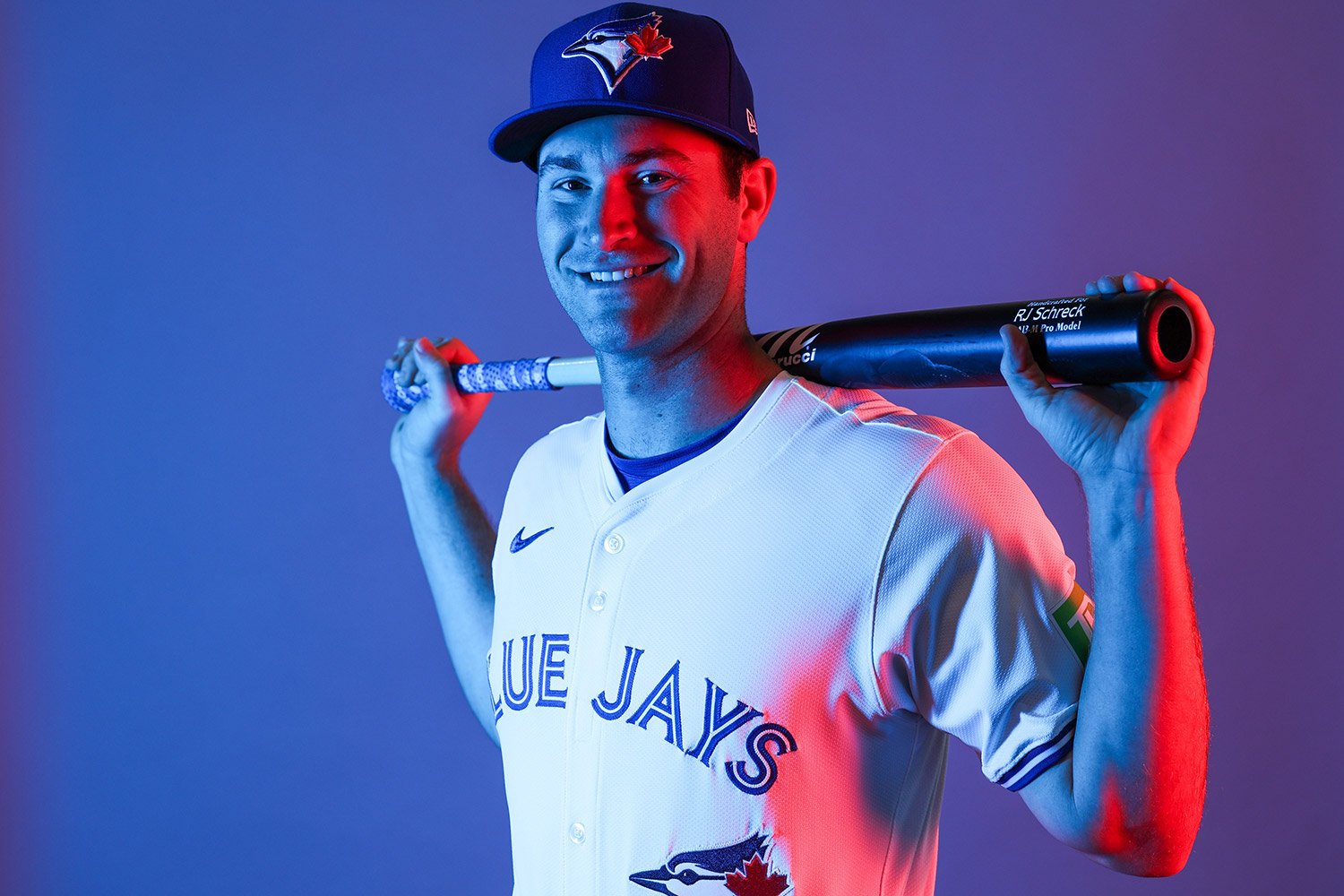 OF - RJ Schreck - 24 yrs old - (Double A - New Hampshire Fisher Cats) RJ Schreck is one of my favourite prospects in the system, partly due to his name being a homophone of the hit Dreamworks movie but also because of his excellent plate approach and feel for the barrel. Schreck was acquired in a 1-for-1 trade from the Mariners in exchange for the aging first baseman and designated hitter Justin Turner and was mainly an afterthought among the more big-name deadline trades. Schreck was a late bloomer, only receiving $75,000 as a signing bonus in the 2023 draft from the Mariners. He was merely an average hitter in his 110 plate appearances in his first stint in professional baseball. In 2024, Schreck was incredible for the Everett AquaSox, the Mariners’ High-A team, as he walked more than he struck out and hit for an .865 OPS, good for a 146 wRC+. He took a trip up to Double-A Arkansas, where he struggled a bit in a short sample before getting traded to the Jays. From there, he returned right back where he left from High-A ball, slashing .255/.371/.521 in 114 plate appearances for a 153 wRC+. Schreck reached the 85th percentile in wOBA, 75th percentile in wOBAcon, 93rd percentile in ISO, 69th percentile in whiff rate, 90th percentile in chase rate, and 84th percentile during his entire Double-A season with both organizations. He also pulled the ball over 50 percent of the time and lifted the ball over 50% of the time, leading to a heavy pulled fly ball approach. Defensively, Schreck isn’t the most athletic, and although he has played center field, he is more suited for the corners. Schreck was able to see some action in spring, and although his results have not been very good, he’s still showing very good walk-to-strikeout numbers with a 21.1% BB rate to a miniscule 10.5% K rate as of March 13th, 2025. He’ll be expected to start the season in Triple-A Buffalo and hopefully have as much success as Shrek 2 did at the box office. I’m not sure it will happen, but I’m a believer. OF - Jonatan Clase - 22 years old - (Triple-A Buffalo Bisons) Jonatan Clase was the headliner in the return for Yimi Garcia, who eventually re-signed with the Jays following the 2024 season. The speedy switch-hitting outfielder has all the raw tools to succeed in the big leagues but hasn’t yet put it all together. Clase turned heads in 2023 for the Mariners organization, swiping 79 bags across High-A and Double-A while also hitting 20 homers. That outlier speed is his main calling card, and although he stole “only” 41 bases in 2024, he’s a threat on the basepaths whenever he can get on base. Clase paired his elite speed with a knack for getting on base, running an 11.5% BB rate, and an advanced ability to control the barrel with a 75th percentile in barrel rate and a 90th percentile sweet spot rate. That leads to a .384 xwOBACON, which is the 81st percentile. Clase also pulls the ball at a decent rate, at around 40% in the minors, allowing his power to play up. However, Clase’s main weakness offensively is his strikeout rate. His contact skills aren’t bad, but he can be prone to chase, as shown in his 28.9% chase rate, below average. Defensively, he’s still a work in progress; despite his speed, he’s a below-average defender in center with below-average reactions and jumps. Clase is on the 40-man roster and even got 66 PAs between the Mariners and the Jays with mixed success, but his stint with the Jays went much better, including his first homer of his major league career off of former Jays farmhand Josh Wincowski. He has struggled so far in spring training, so it’s more likely than not that he starts off the season in Triple-A again, but given his tools, if he can figure out how to strikeout less and improve his defense, he’ll be an exciting fourth outfielder for the Jays in the near future, and even if he cannot, his speed could be a game changer in a playoff series or as a pinch runner when the rosters expand.
 -
I've seen mixed reports, it's more the way he throws the ball is a little bit awkward, but I can definitely see him end up with a plus arm once he's fully developed.
-
From what I've seen, the top end of this class isn't very spectacular, but it does have decent depth. I've been encouraged by the Jays more recent draft strategy compared to to late 2010s, but you're right that they haven't had much success.
-
I do think that the upcoming top 10 pick for the Jays should help add another top end guy to improve the outlook of our farm, but if Nimmala truly breaks out it would indeed be a difference maker for our farm.
-
Welcome back to the Blue Jays Top 20 prospect breakdown. Guess what: We've made it. We're at number one! It's Arjun Nimmala time. You can find all the previous entries here: 20-15, 15-11, 10, 9, 8, 7, 6, 5, 4, 3, 2. #1: Arjun Nimmala, SS, Single A, Dunedin Blue Jays Arjun Nimmala was the Blue Jays’ big first-round pick in the 2023 draft. His under-slot signing bonus of $3 million was a surprise, both because he was one of the youngest players in the class at 17 and because he was committed to Florida State University. Nimmala also made history by being the first first-generation Indian-American to go in the first round in any of the big four professional sports leagues. The teenage shortstop got into nine Florida Complex League games immediately after being drafted, walking in 35% of his 40 plate appearances. Fast forward to 2024, and the Jays had a decision on their hands. They could have Nimmala repeat the year in the FCL or let him have a full year of development in single-A Dunedin, an aggressive promotion. The Jays decided on the latter and Nimmala struggled hard in his first 125 PAs, slashing just .167/.280/.306 for a 74 wRC+ and striking out 34% of the time. The Jays then decided to give Nimmala some time off at the Florida Development Complex, letting him reset mentally while also working on some mechanical changes. Once Nimmala returned from the developmental list, he started to show why he was a highly-touted first-round pick, with a .238/.467/.571 slash line for a 172 wRC+ in 8 games in the Florida Complex League, and then carried that success forward after a promotion back to single-A Dunedin, where he ran a 146 wRC+ in 236 PAs. What to Like Nimmala was a boy playing among men in his first full season as a professional baseball player, 3.1 years younger than the average single-A player. He was the only 18-year-old to even qualify as a hitter in the FSL. This combination of youth and production makes it easy to project future success, and if he progresses well, the sky could be the limit. Nimmala excels at lifting the ball, with an average launch angle of 21 degrees. He also hits the ball extremely hard. He ran an average exit velocity of 88.7 mph, a 90th percentile exit velocity of 102.6 mph, and a barrel rate of 21%. All are solidly above average for the Florida State League, and the 88.7-mph average exit velocity isn’t far from the major-league average. Nimmala is also exceptional at pulling fly balls, running 48% pull rate in Single A. He pairs that ability for loud, optimized contact with a decent approach, not chasing too much and looking for pitches to swing at in the zone. Nimmala as a teenager is still not physically mature yet. He was listed at 6-foot-1, 170 pounds in 2024. He has a lot of room to grow into a big frame, which make it easier to project that he’ll grow into more power. As Keegan Matheson reported just over a week ago, Nimmala has already added 10 pounds. Here he is taking Yohan Ramirez deep last week: That was Nimmala’s second extra-base hit in the early goings of spring training. The first was this double off journeyman Brandon Leibrandt. Both pitchers were 10 years Nimmala’s senior. Nimmala is still raw defensively, but there are encouraging signs suggesting that he has a chance to stick at shortstop in the majors. He’s not the best runner, stealing nine bases last season, but still has shown flashes of above-average range. His agility and ability to get to balls and a plus arm projection gives him a good chance to be a solid shortstop at the next level. What to Work On Although Nimmala’s bat is his carrying tool, he does have a significant weakness that may prevent him from reaching his full potential. His game features some serious swing-and-miss, and he ran a roughly 70% contact rate in 2024, but Nimmala’s contact rates were solidly below average, just at around 70%. Some really good hitters have successful with contact rates that low, but it will the margin of error is simply lower when you whiff that often. The lack of contact ability showed up in his worrisome 31% strikeout rate. If Nimmala can cut out some whiffs without sacrificing his ability to hit for power, the sky is really the limit. His strikeout rate did drop slightly after coming back from the developmental list, but there’s still room for improvement. Nimmala did start playing organized baseball at a later age, and there’s hope that his below-average contact skills might improve through more experience. He also tends to struggle to pick up spin, so as he progresses through the majors, just getting reps in should help shore up some of those issues. Defensively, Nimmala needs to continue to put in the work to maintain at shortstop. With his frame not fully filled out yet, he may end up slowing down as he ages up, which would move him down the defensive spectrum to either second or third base. If he manages to bulk up while maintaining his agility and range it would make his outlook in the future much less variable. His arm strength has also been called into question, and he’s still raw defensively. He sometimes looks awkward, which led to 15 errors last season. If he’s able to iron out those kinks, it would also do wonders for his defensive outlook. What’s Next Nimmala is expected to start in high-A Vancouver, where he’ll try to prove that his second half wasn’t a fluke, but something that he could build upon. He’ll still be a teenager throughout the duration of the 2025 season, so he’ll be playing against more advanced competition in terms of age, and Nat Bailey Park is much more of a pitcher’s park. The good news is that Nimmala has already shown that he’ll adjust and work his way past setbacks. View full article
-
Blue Jays 2025 Top 20 Prospect Rankings: No. 1, Arjun Nimmala
Simon Li posted an article in Minor Leagues
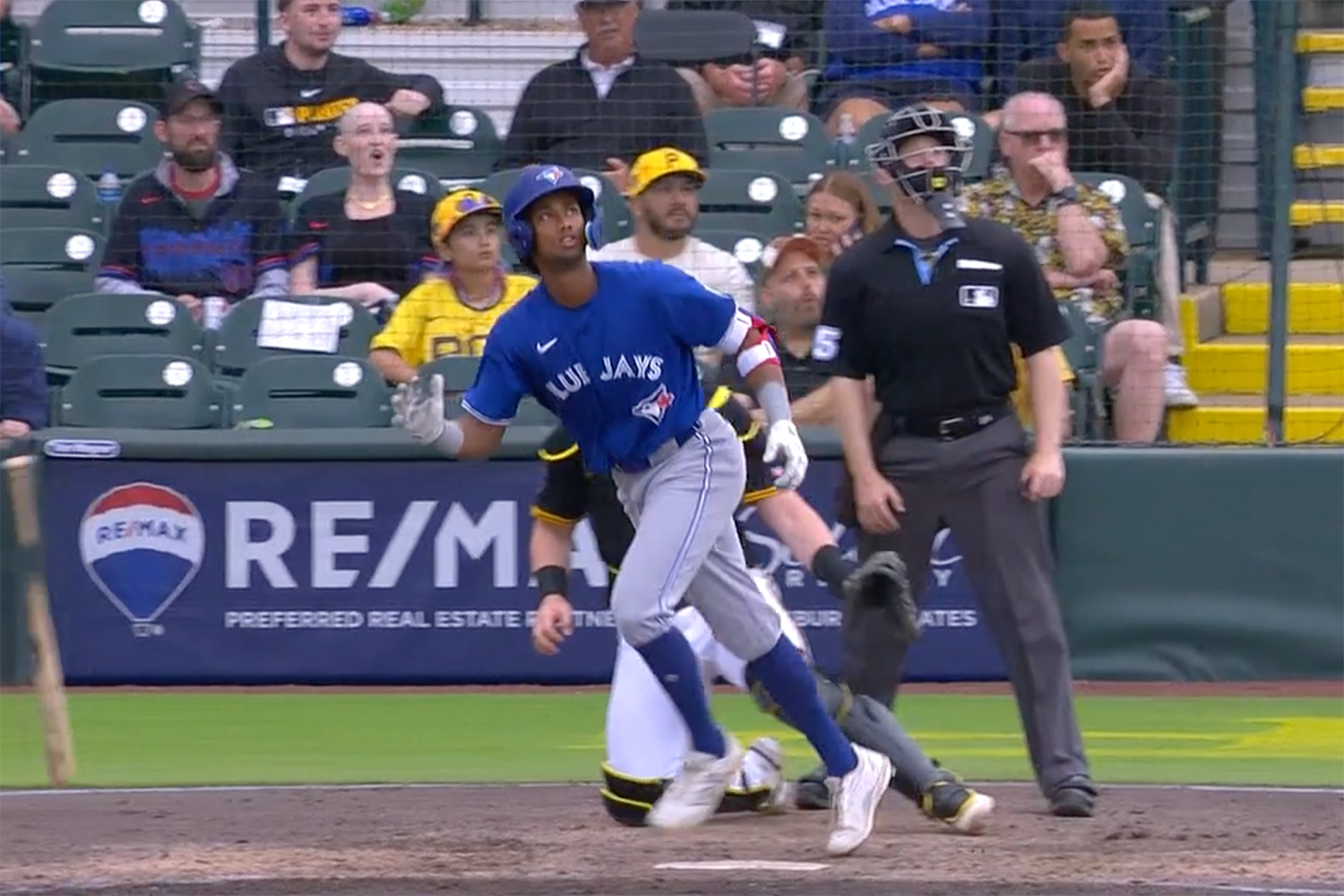 You can find all the previous entries here: 20-15, 15-11, 10, 9, 8, 7, 6, 5, 4, 3, 2. #1: Arjun Nimmala, SS, Single A, Dunedin Blue Jays Arjun Nimmala was the Blue Jays’ big first-round pick in the 2023 draft. His under-slot signing bonus of $3 million was a surprise, both because he was one of the youngest players in the class at 17 and because he was committed to Florida State University. Nimmala also made history by being the first first-generation Indian-American to go in the first round in any of the big four professional sports leagues. The teenage shortstop got into nine Florida Complex League games immediately after being drafted, walking in 35% of his 40 plate appearances. Fast forward to 2024, and the Jays had a decision on their hands. They could have Nimmala repeat the year in the FCL or let him have a full year of development in single-A Dunedin, an aggressive promotion. The Jays decided on the latter and Nimmala struggled hard in his first 125 PAs, slashing just .167/.280/.306 for a 74 wRC+ and striking out 34% of the time. The Jays then decided to give Nimmala some time off at the Florida Development Complex, letting him reset mentally while also working on some mechanical changes. Once Nimmala returned from the developmental list, he started to show why he was a highly-touted first-round pick, with a .238/.467/.571 slash line for a 172 wRC+ in 8 games in the Florida Complex League, and then carried that success forward after a promotion back to single-A Dunedin, where he ran a 146 wRC+ in 236 PAs. What to Like Nimmala was a boy playing among men in his first full season as a professional baseball player, 3.1 years younger than the average single-A player. He was the only 18-year-old to even qualify as a hitter in the FSL. This combination of youth and production makes it easy to project future success, and if he progresses well, the sky could be the limit. Nimmala excels at lifting the ball, with an average launch angle of 21 degrees. He also hits the ball extremely hard. He ran an average exit velocity of 88.7 mph, a 90th percentile exit velocity of 102.6 mph, and a barrel rate of 21%. All are solidly above average for the Florida State League, and the 88.7-mph average exit velocity isn’t far from the major-league average. Nimmala is also exceptional at pulling fly balls, running 48% pull rate in Single A. He pairs that ability for loud, optimized contact with a decent approach, not chasing too much and looking for pitches to swing at in the zone. Nimmala as a teenager is still not physically mature yet. He was listed at 6-foot-1, 170 pounds in 2024. He has a lot of room to grow into a big frame, which make it easier to project that he’ll grow into more power. As Keegan Matheson reported just over a week ago, Nimmala has already added 10 pounds. Here he is taking Yohan Ramirez deep last week: That was Nimmala’s second extra-base hit in the early goings of spring training. The first was this double off journeyman Brandon Leibrandt. Both pitchers were 10 years Nimmala’s senior. Nimmala is still raw defensively, but there are encouraging signs suggesting that he has a chance to stick at shortstop in the majors. He’s not the best runner, stealing nine bases last season, but still has shown flashes of above-average range. His agility and ability to get to balls and a plus arm projection gives him a good chance to be a solid shortstop at the next level. What to Work On Although Nimmala’s bat is his carrying tool, he does have a significant weakness that may prevent him from reaching his full potential. His game features some serious swing-and-miss, and he ran a roughly 70% contact rate in 2024, but Nimmala’s contact rates were solidly below average, just at around 70%. Some really good hitters have successful with contact rates that low, but it will the margin of error is simply lower when you whiff that often. The lack of contact ability showed up in his worrisome 31% strikeout rate. If Nimmala can cut out some whiffs without sacrificing his ability to hit for power, the sky is really the limit. His strikeout rate did drop slightly after coming back from the developmental list, but there’s still room for improvement. Nimmala did start playing organized baseball at a later age, and there’s hope that his below-average contact skills might improve through more experience. He also tends to struggle to pick up spin, so as he progresses through the majors, just getting reps in should help shore up some of those issues. Defensively, Nimmala needs to continue to put in the work to maintain at shortstop. With his frame not fully filled out yet, he may end up slowing down as he ages up, which would move him down the defensive spectrum to either second or third base. If he manages to bulk up while maintaining his agility and range it would make his outlook in the future much less variable. His arm strength has also been called into question, and he’s still raw defensively. He sometimes looks awkward, which led to 15 errors last season. If he’s able to iron out those kinks, it would also do wonders for his defensive outlook. What’s Next Nimmala is expected to start in high-A Vancouver, where he’ll try to prove that his second half wasn’t a fluke, but something that he could build upon. He’ll still be a teenager throughout the duration of the 2025 season, so he’ll be playing against more advanced competition in terms of age, and Nat Bailey Park is much more of a pitcher’s park. The good news is that Nimmala has already shown that he’ll adjust and work his way past setbacks.
 -
I think for an abbreviated start it's possible that he can have that in the tank, but I don't think he'd be able to handle that over a starter's workload. If he ever needs to be converted to a reliever that's an encouraging sign. Last season he had one tracked pitch at 96 mph, so even being able to top out at 97-98 would be pretty big for him. I am a little skeptical of Boston's radar gun from yesterday, they don't have Statcast so it may just be a mis calibrated radar gun. IIRC they had Corey Kluber hitting 95 mph in 2023 and that couldn't possibly have been right.
-
Welcome back to the Blue Jays Top 20 prospect breakdown. This deep dive will focus on the number five prospect in the Toronto Blue Jays farm system, as the Jays Centre community voted on. Today, we talk about right-handed pitcher Jake Bloss. Top 20 Prospects: #16-20 Top 20 Prospects: #11-15 #10: Charles McAdoo #9: Khal Stephen #8: Kendry Rojas #7: John Kasevich #6: Alan Roden #5 - Jake Bloss - RHP - (Triple-A Buffalo Bisons) Although Joey Loperfido and Will Wagner both were able to make it to the Toronto Blue Jays major league roster, Jake Bloss was the prized possession coming from the Yusei Kikuchi trade. Bloss was the 3rd round pick for the Astros in the 2023 MLB draft, receiving a $497,500 signing bonus, but immediately balled out by pitching to a 2.89 ERA and 3.36 FIP in 18.2 innings pitched in 2023 while running a 29.1% K rate. In 2024, he started out of the gates running, dominating High-A to a 2.08 ERA and 2.81 FIP in 17.1 innings pitched, with a whopping 36.8% K rate. He earned a promotion to Double-A Corpus Christi, where he continued his success with a 1.61 ERA and 3.30 FIP in 44.2 innings pitched. The Astros, during that time, had their major league starting pitching get decimated by injuries, so less than one year after being drafted, Jake Bloss was promoted to the Big Leagues directly from Double-A. Although he struggled in his three starts, his progression was one of the more surprising stories in the minors. Bloss was put on the injured list with right shoulder discomfort but returned to the Astros Triple-A team, the Sugar Land Space Cowboys, for a single scoreless outing before he was traded to the Jays. Bloss struggled with the Blue Jays in Triple-A Buffalo, as he was dealing with fatigue from his first full professional season and tinkering with his arsenal, but it was an impressive year for the 23-year-old. What's to Like? Bloss sits 92-95 mph on his fastball, but he has very good extension on his pitches at around 6.9 feet, as he stands at 6 foot 3 inches with long arms, which helps his velocity be perceived as faster than it actually is. In addition to the extension that he has on his pitches, Bloss’s fastball comes at a very flat vertical approach angle at -4.5 degrees, which results in his fastball playing up at the top of the zone, as the pitch gives off a rising or jumping effect which doesn’t move in the way that hitters are expecting or are used to. The righty's fastball also has above-average induced vertical break, averaging 18 inches, making his fastball play up as it also helps it simulate rising action on the fastball. His fastball also has some form of cutting action with a 4.8-inch horizontal break to the arm side. These traits on the fastball give it a 64 grade on Thomas Nestico’s pitch model and a 107 tjStuff+, and he had induced over a 28% chase rate and a 24% whiff rate in his 31 1/3 innings in Triple-A. Bloss also has a deep arsenal, with five distinct movement profiles, which makes it difficult for hitters to time up their swing when he’s sequencing and locating well. His best secondary is his slider, which he uses 24.8% of the time and behaves more like a gyro slider, with 5.3 inches of vertical break and 5.1 inches of horizontal break, sitting 87 mph. Bloss graded out well with a 103 tjStuff+ in Triple-A, with a 127 stuff+ using Eno Sarris’ model in his short stint in the majors. Bloss also throws another slider variant in his sweeper, which has a 12.4-inch glove side break and sits in the low 80s; it generates whiffs at a 36.4% clip. He also has a curveball with good depth and break that he mixes in, which he used more as a weapon to lefties than he threw in the upper 70s. Bloss’ sinker is an interesting pitch, as the Jays had him throw the pitch more after trading for him, and Eno Sarris’ model thought it was a good pitch in the majors, with a 112 stuff+. Bloss had trouble commanding it in Buffalo, with a 36.7% zone rate, but it got batters to chase 38.7% of the time, and when it got hit, he managed to induce weak contact. Lastly, he throws a changeup (also called a splitter), which provides him another option against lefties but lacks the movement and velocity separation to be a strong weapon in his arsenal. What to Work On? Bloss struggled with his command in his first professional season, so his walk rates improved from a 15.2% walk rate to a much better 9.5% walk rate in 2024. That, however, came at the expense of his strikeout rate dropping around 6% compared to 2023. Astros GM Dana Brown noted that Bloss may have been pounding the zone a little too hard, which explained the reduced K rate. This suggests that his command isn’t as polished as it needs to be to be an effective MLB starter, as after he was promoted from Double-A, he couldn’t zone his pitches as effectively. Since Bloss was rushed through the minors, he’s still figuring out how to effectively land his breaking balls for strikes, especially his sweeper and curveball, with below-average strike rates at the higher levels. In addition to his command not being fully up to par yet, Bloss’ sequencing isn’t fully seasoned yet, either. He’s still figuring out the optimal ways to set a hitter up to strike him out with two strikes, and with his large arsenal, he’s still figuring out how to keep hitters off-balanced without getting too predictable. The Jays have been tinkering with his pitch usage after the trade, which explains some of the poorer results in Triple-A Buffalo. Lastly, Bloss has been more of a five-and-dive pitcher throughout the minors, rarely going past five innings, and his stuff starts to degrade after 50 or so pitches. It seems like he was also getting tired at the end of the season with his fastball tjStuff+ tailing off as he threw more pitches. He hasn’t pitched this kind of workload before this and did have a shoulder issue, but he may still need to build up to handle heavier workloads. What’s Next? Bloss will likely start the season in Triple-A Buffalo, being one of the first starters if any of the Jays’ more established starters end up on the IL. He’s hoping to repeat the success he’s found rocketing up the minors in 2023 and 2024, and with some added polish, he could be a key contributor to the Jays' success in 2025 as the 6th or 7th starter behind Yariel Rodriguez. Most of his key competitors, Adam Macko and Kloffenstein, dealt with some injuries at the start of spring training so that Bloss could set himself apart from the rest of camp with solid performances. Turning just 24 years old in June, he still has a lot of time ahead of him to make contributions to the Jays, and if all goes well, he could slot into a mid-rotation slot in the near future with Bassitt and Scherzer becoming free agents after the season. View full article