


Owen Hill
-
Posts
176 -
Joined
-
Last visited
-
Days Won
1
Content Type
Profiles
Toronto Blue Jays Videos
2026 Toronto Blue Jays Top Prospects Ranking
Toronto Blue Jays Free Agent & Trade Rumors, Notes, & Tidbits
Guides & Resources
2025 Toronto Blue Jays Draft Pick Tracker
News
2026 Toronto Blue Jays Draft Tracker: Picks & Bonuses
Forums
Blogs
Events
Store
Downloads
Gallery
Everything posted by Owen Hill
-
 In October of 2025, Bo Bichette said that his goal was to play his entire career with Vladimir Guerrero Jr. and win championships with the Blue Jays, but the Jays prioritized other offseason moves ahead of bringing him back. In January, Bo signed a massive three-year, $126 million deal with the New York Mets, ending his career with the Blue Jays. Bichette and the Mets will come to the Rogers Centre for a three-game series on June 29 through July 1, and he will surely receive a touching tribute video and a standing ovation from the fan base that he grew up in front of. But how is he going to be remembered in Toronto? Heading into 2019, there wasn’t much for Blue Jays fans to be excited about other than prospect rankings. The core from the 2015 and ‘16 playoff runs had moved on, and the hype around the team had died back down to pre-2015 levels. The Jays were coming off back-to-back fourth-place finishes in the AL East and were destined for a similar season in 2019 with Justin Smoak as the face of their lineup, and a soon-to-be-traded Marcus Stroman as their best pitcher. But there was light at the end of the tunnel for fans. At the top of just about any prospect list you could find was Vladimir Guerrero Jr. The son-of-a-Hall-of-Famer, blue-chip third base prospect with generational power and an elite approach that hit .381 across Double and Triple A as a teenager was due to come up and make his debut at some point in 2019. But throughout Guerrero's journey to the big leagues, a shortstop prospect just as important to the future of the Blue Jays was making a name for himself as Vladdy’s partner in crime. While Vlad Jr. was headlining all of the prospect lists and generating all of the excitement, Bo Bichette was quietly developing into a star. Bichette was a second-round draft pick of the Jays in 2016, and he opened up 2019 as the game's 11th-ranked prospect, according to MLB Pipeline. But, at just 21 years old, he wasn’t expected to be ready for a big league debut until at least 2020. That’s why it was so exciting when the trade deadline rolled around, the Jays traded away Eric Sogard to the Tampa Bay Rays, and they decided it was time to let their shortstop of the future take the big league job for a spin. Bo met the Blue Jays in Kansas City on July 29, 2019, and picked up his first major league hit on the second pitch he saw. From the moment he stepped into the box for the first time as a Blue Jay, all he did was hit. It didn’t take long for Bichette to figure out he belonged in the big leagues. That first hit started an 11-game hit streak to open his MLB career, which included eight multi-hit games and his first four big league homers. Despite the blazing start to his Blue Jays tenure, the lasting memory of Bo Bichette’s rookie season, and the moment that many baseball fans recognize as when he truly arrived, took place in Dodger Stadium, late on an August night. The matchup was highly anticipated: the veteran superstar Clayton Kershaw against a young, up-and-coming Blue Jays team. Bo appeared in 748 regular season games as a Blue Jay. It’s easy to forget about so many of those, even ones where he had great performances. But there aren’t a lot of Jays fans that don’t remember a rookie Bichette taking a future Hall of Famer deep twice in the same game. It was moments like that one that propelled Bo Bichette to stardom so early in his career. He always seemed to have his most impressive performances when the lights were brightest. (Even if he looked really silly on a couple of Cooperstown curveballs in between homers.) Bichette finished his rookie season hitting .311 with a .930 OPS across 212 plate appearances at just 21 years old, but didn’t garner any attention for Rookie of the Year because he debuted so late in the season. The important thing was that it looked like with Bichette and Guerrero, as well as Cavan Biggio, Lourdes Gurriel Jr., Danny Jansen and Teoscar Hernández, in place for years to come, the Blue Jays had the start of a promising position player core. On the back of that position player core, and with the big free agent addition of Hyun Jin Ryu leading the rotation, the Jays snapped a three-year playoff drought as a Wild Card team in 2020. Bichette wound up missing about a month of the shortened season, which meant he only appeared in 29 games, but in those games, he continued to be productive at the top of the lineup, finishing with a .301 average and 120 wRC+. The Jays would end up losing in two straight games to the eventual American League champion Tampa Bay Rays, but a new era of winning Blue Jays baseball was officially underway, with Bichette and Guerrero as the faces of it. The 2021 Blue Jays were one of the most exciting teams in baseball. They supplemented that exciting young core with big free agent signings like George Springer and Marcus Semien, and Robbie Ray dominated en route to winning the AL Cy Young. Those 2021 Jays had the second best offense in MLB according to wRC+. Most fans probably remember Vlad hitting 48 homers and finishing second for AL MVP behind Shohei Ohtani, or Semien setting the single-season home run record for a second baseman with 45 bombs of his own, finishing one spot behind Vlad in MVP voting. At the time, it was the best season of Blue Jays baseball in more than half a decade. But for the first four months of that season, the Jays had one of the biggest disadvantages in baseball. Due to COVID-related travel restrictions, the Jays were forced to use their minor league facilities as their home ballparks. They played their first two months of home games on their Single-A field in Dunedin before moving to their Triple-A field in Buffalo until the end of July. From their final home game in 2019 to July 30, 2021, the Toronto Blue Jays did not play a game in Toronto. It was 670 excruciating days that a baseball team was taken away from its fans. So, you can imagine the emotion from both the fans and the players when the Jays were finally able to get back to where they belonged. Throughout his career, the fans and the media have always had a hard time reading Bichette. He never had the same “wear your heart on your sleeve” disposition as his co-star Vladdy, and a lot of breath was wasted debating whether or not he truly enjoyed being a Toronto Blue Jay. That’s why it meant so much when Bo went to The Players' Tribune to post an article titled “Toronto!!!!! We’re HOME.” He wrote about how much he missed the city and playing for the fans during the team’s time away and how excited he was to bring playoff moments like José Bautista’s iconic bat flip back to the Rogers Centre. His words were an emotional read at the time, and looking back on them after his departure hits just as hard. Bichette backed up his words with a two-run bomb in the Jays' first game back, propelling them to a 6-4 win in their first game on home turf in nearly two full years. Aside from his heart-warming tribute to Toronto, 2021 was also the year that Bo Bichette proved he was a true star. It’s not really fair to call his third major league season a breakout, because he was so good in the first two, but if the baseball world hadn't bought into his game before, it definitely had after 2021. Over 690 plate appearances, Bichette hit .298 with an .828 OPS, which was good for a 122 wRC+. He led the American League in hits with 191, mashed a career high 29 homers, cashed 102 RBI and even added 25 stolen bases, earning his first career All-Star appearance. The Blue Jays won 91 games, and the move back home helped them finish the season as the hottest team in the sport, going 22-9 in September. Their season ended up coming down to the final day, and they missed the playoffs by a single game after the Boston Red Sox and New York Yankees both won their final contests, giving them 92 wins apiece. The way that season ended was heartbreaking, but at just 23 years old, Bichette was already one of the league’s best offensive shortstops, and the Jays were poised to be a playoff threat for years to come. Heading into 2022, the excitement around Blue Jays baseball was as high as it had been for an Opening Day since 2016. Fans were finally allowed back in the ballpark at full force, and the Jays were viewed as a lock to make the playoffs and contend for the World Series. But the road was a little bit rockier than expected. Semien had departed for Texas in free agency, Guerrero didn't quite follow up his near-MVP caliber season from the year before, and Bichette himself was very disappointing. After a full five months of baseball, heading into September, the Jays found themselves in the third Wild Card spot, just 1.5 games up on the Baltimore Orioles. Far short of their expectations at the start of the season. Bichette was hitting just .260 with a .725 OPS and had a wRC+ of only 107. Not bad numbers, but his 2.3 fWAR was 13th among primary shortstops through August 31. He was behind guys like Jorge Mateo and Amed Rosario. There were serious questions about whether or not Bo was actually the player we thought he’d proven himself to be the year before, because without above-average defense at shortstop and the ability to be a well-above-league-average hitter, his value to the team wasn’t very high. But then the calendar flipped, and the month Blue Jays fans refer to as “Septem-Bo” rolled around. It was one of the most impressive sustained offensive performances I can remember, and it came right when his team needed it the most. Bichette was a man on fire in September and October of 2022, picking up 54 hits in 133 at-bats, good for a .406 average. His 1.105 OPS led shortstops that month, and his 218 wRC+ was the second best mark in the majors behind only the eventual AL MVP Aaron Judge. He set the Blue Jays franchise record for hits in a month, and they all seemed to come in the biggest moments of games. Bichette more than doubled his fWAR in the last month of the season, as it skyrocketed from that mediocre 2.3 to 4.8 in just 32 games. That blazing month got his wRC+ up to 129 by the end of the season, seven points higher than it was the year before, and Bichette led the American League in hits for the second season in a row. Toronto went 22-11 over that span and was able to clinch the top Wild Card spot in the American League, returning to the playoffs in a full season for the first time since 2016. However, an eventual collapse in the Wild Card round against the Seattle Mariners would lead to some big organizational decisions heading into 2023. It was a busy offseason for Ross Atkins and the Blue Jays. It started with Teoscar Hernández and the last year of his contract getting shipped to Seattle for Erik Swanson and eventually saw Daulton Varsho come over in exchange for Gabriel Moreno and Lourdes Gurriel Jr. It was the start of the Blue Jays emphasizing defense and the details of the game rather than pure offensive upside. But, a sneaky important part of the offseason was that the Blue Jays bought out Bichette’s arbitration years with a three-year extension. See, as much as 2019 through 2025 will be remembered as the “Vladdy and Bo era” to Blue Jays fans, so much of it was spent debating which of the two was actually the better player, and if the Jays would be able to keep one or both past their rookie contracts. At the time, this deal looked like a major indication that the Jays might prefer Bichette to Guerrero long-term. Bichette made good on that new contract early on. In 2023, he continued to do exactly what he had the two previous seasons. Although it ended as another disappointing season overall for his team, Bo hit .306 with an .814 OPS, putting together his third straight 20-homer season and earning his second All-Star appearance. Yet, some adversity was right around the corner for Bo and the Blue Jays. After back-to-back playoff appearances without a win, and a total of three playoff appearances without a win in the Vladdy and Bo era, the fanbase was getting restless for some postseason success. Pressure was on for the Jays heading into 2024. By now, you know how this story ends, and that the playoff victories were just around the corner, but based on how 2024 went, you can’t blame the people who were calling for the removal of the front office or for a full-scale teardown and rebuild. There were a lot of sources to blame for that 74-win, last-place season, and Bo Bichette’s inability to stay on the field, and his poor performance when he did play was definitely a big one. That 74-88 record was the worst record for a Blue Jays team since before Bichette's rookie season, and it was by far Bo’s worst season as an individual. He suited up for just 81 games, hit just .225, and only managed four homers. When it was all said and done, he had put up just 0.3 fWAR and a 70 wRC+, 30% below league average. The season was a complete write-off for both Bichette and the Jays on the field. When the shortstop responded to a question from a San Francisco reporter about what he liked about the California city and if he’d be willing to play there, Bichette seemed eager to emphasize how much he wanted to play for a winner, and that the Giants would be a fit if he were choosing his team. Some saw this as him “flirting” with the idea of being traded at the deadline, as he was only under contract for one more season. I don’t think this episode taints his legacy with the Jays, but at a time when a lot of fans were upset with the direction of the team, and with Bichette himself, it seemed more likely than not that Bichette would play the final year of his contract somewhere other than Toronto. As we know, Bichette was not traded, and his bounce-back season was essential to the Jays winning their first division title in a decade – and their first pennant in more than three decades. I could have written this whole article about Bichette’s 2025. His 134 wRC+ was his best in a qualified season as a Blue Jay. He hit .311 with just a 14.5% strikeout rate, which was the lowest of his career by more than five points. There’s a serious case to be made that 2025 was the best offensive season of Bo’s career, and that’s without even getting into some of his biggest moments. The Jays were just 26-28 before play on May 28, and the offense was limping through the start of the season. They’d hit the fifth fewest homers in the sport and had just a 94 team wRC+. The whole lineup needed a spark, and after being held scoreless through eight innings by Tyler Mahle and the Texas Rangers, it looked like they were en route to falling three games below .500. That is, until Bichette came off the bench to pinch hit for Michael Stefanic in the top of the ninth inning with two outs and Ernie Clement on second base. Bo swung and hit a wall-scraping homer over the left field fence, lifting the Jays to a much-needed win, which many claim as the moment the 2025 Blue Jays hit their stride. The win sparked a five-game win streak and a 12-2 stretch that the Jays never looked back from. From Bichette's clutch homer on May 28 through the end of the season, the Blue Jays had the best offense in baseball by wRC+, fWAR, and, most importantly, runs scored. They’d finish the season on a 67-40 run; that's a .626 winning percentage, or a 101-win pace. I can’t honestly tell you that the Jays’ magical 2025 season came because of that moment in Texas. But I also can’t tell you that it would have happened without it. The question in the title of this article is a tough one to answer because, for as beloved as he was in Toronto, Bichette was far from a perfect player. The obvious things to point at are that his shortstop defense always left something to be desired, he wasn’t always a good baserunner, and when he wasn’t hitting, he didn’t bring much else to the table. Yet, when the Jays needed him, he was always there to answer the call. FanGraphs’ definition of high-leverage situations is complicated, but I can tell you that throughout his career, in those high-leverage situations, that is when Bo has been at his best. You can argue all you want that clutch isn’t a repeatable skill, but I’ll just keep pointing at Bichette’s career 143 wRC+ and .888 OPS in those situations. There’s no better example to point to than his performance in the 2025 World Series, which he played in after missing more than a month of games due to a knee injury. On one knee, and on the biggest stage baseball has to offer, Bo Bichette went 8-for-23 with six RBI. But the lasting memory of Bo Bichette in a Blue Jays uniform will always be him hitting a go-ahead, three-run home run off of Shohei Ohtani in Game 7. A swing that was painfully close to being the swing that clinched the Blue Jays their third World Series championship. You’ll be seeing fans wearing #11 jerseys at the Rogers Centre for years to come, and when the New York Mets visit Toronto in June this season, the standing ovation Bichette receives will be deafening. View full article
 -
.jpg.ba65ef1944a1ebac2ff8391643de04ea.jpg) In October of 2025, Bo Bichette said that his goal was to play his entire career with Vladimir Guerrero Jr. and win championships with the Blue Jays, but the Jays prioritized other offseason moves ahead of bringing him back. In January, Bo signed a massive three-year, $126 million deal with the New York Mets, ending his career with the Blue Jays. Bichette and the Mets will come to the Rogers Centre for a three-game series on June 29 through July 1, and he will surely receive a touching tribute video and a standing ovation from the fan base that he grew up in front of. But how is he going to be remembered in Toronto? Heading into 2019, there wasn’t much for Blue Jays fans to be excited about other than prospect rankings. The core from the 2015 and ‘16 playoff runs had moved on, and the hype around the team had died back down to pre-2015 levels. The Jays were coming off back-to-back fourth-place finishes in the AL East and were destined for a similar season in 2019 with Justin Smoak as the face of their lineup, and a soon-to-be-traded Marcus Stroman as their best pitcher. But there was light at the end of the tunnel for fans. At the top of just about any prospect list you could find was Vladimir Guerrero Jr. The son-of-a-Hall-of-Famer, blue-chip third base prospect with generational power and an elite approach that hit .381 across Double and Triple A as a teenager was due to come up and make his debut at some point in 2019. But throughout Guerrero's journey to the big leagues, a shortstop prospect just as important to the future of the Blue Jays was making a name for himself as Vladdy’s partner in crime. While Vlad Jr. was headlining all of the prospect lists and generating all of the excitement, Bo Bichette was quietly developing into a star. Bichette was a second-round draft pick of the Jays in 2016, and he opened up 2019 as the game's 11th-ranked prospect, according to MLB Pipeline. But, at just 21 years old, he wasn’t expected to be ready for a big league debut until at least 2020. That’s why it was so exciting when the trade deadline rolled around, the Jays traded away Eric Sogard to the Tampa Bay Rays, and they decided it was time to let their shortstop of the future take the big league job for a spin. Bo met the Blue Jays in Kansas City on July 29, 2019, and picked up his first major league hit on the second pitch he saw. From the moment he stepped into the box for the first time as a Blue Jay, all he did was hit. It didn’t take long for Bichette to figure out he belonged in the big leagues. That first hit started an 11-game hit streak to open his MLB career, which included eight multi-hit games and his first four big league homers. Despite the blazing start to his Blue Jays tenure, the lasting memory of Bo Bichette’s rookie season, and the moment that many baseball fans recognize as when he truly arrived, took place in Dodger Stadium, late on an August night. The matchup was highly anticipated: the veteran superstar Clayton Kershaw against a young, up-and-coming Blue Jays team. Bo appeared in 748 regular season games as a Blue Jay. It’s easy to forget about so many of those, even ones where he had great performances. But there aren’t a lot of Jays fans that don’t remember a rookie Bichette taking a future Hall of Famer deep twice in the same game. It was moments like that one that propelled Bo Bichette to stardom so early in his career. He always seemed to have his most impressive performances when the lights were brightest. (Even if he looked really silly on a couple of Cooperstown curveballs in between homers.) Bichette finished his rookie season hitting .311 with a .930 OPS across 212 plate appearances at just 21 years old, but didn’t garner any attention for Rookie of the Year because he debuted so late in the season. The important thing was that it looked like with Bichette and Guerrero, as well as Cavan Biggio, Lourdes Gurriel Jr., Danny Jansen and Teoscar Hernández, in place for years to come, the Blue Jays had the start of a promising position player core. On the back of that position player core, and with the big free agent addition of Hyun Jin Ryu leading the rotation, the Jays snapped a three-year playoff drought as a Wild Card team in 2020. Bichette wound up missing about a month of the shortened season, which meant he only appeared in 29 games, but in those games, he continued to be productive at the top of the lineup, finishing with a .301 average and 120 wRC+. The Jays would end up losing in two straight games to the eventual American League champion Tampa Bay Rays, but a new era of winning Blue Jays baseball was officially underway, with Bichette and Guerrero as the faces of it. The 2021 Blue Jays were one of the most exciting teams in baseball. They supplemented that exciting young core with big free agent signings like George Springer and Marcus Semien, and Robbie Ray dominated en route to winning the AL Cy Young. Those 2021 Jays had the second best offense in MLB according to wRC+. Most fans probably remember Vlad hitting 48 homers and finishing second for AL MVP behind Shohei Ohtani, or Semien setting the single-season home run record for a second baseman with 45 bombs of his own, finishing one spot behind Vlad in MVP voting. At the time, it was the best season of Blue Jays baseball in more than half a decade. But for the first four months of that season, the Jays had one of the biggest disadvantages in baseball. Due to COVID-related travel restrictions, the Jays were forced to use their minor league facilities as their home ballparks. They played their first two months of home games on their Single-A field in Dunedin before moving to their Triple-A field in Buffalo until the end of July. From their final home game in 2019 to July 30, 2021, the Toronto Blue Jays did not play a game in Toronto. It was 670 excruciating days that a baseball team was taken away from its fans. So, you can imagine the emotion from both the fans and the players when the Jays were finally able to get back to where they belonged. Throughout his career, the fans and the media have always had a hard time reading Bichette. He never had the same “wear your heart on your sleeve” disposition as his co-star Vladdy, and a lot of breath was wasted debating whether or not he truly enjoyed being a Toronto Blue Jay. That’s why it meant so much when Bo went to The Players' Tribune to post an article titled “Toronto!!!!! We’re HOME.” He wrote about how much he missed the city and playing for the fans during the team’s time away and how excited he was to bring playoff moments like José Bautista’s iconic bat flip back to the Rogers Centre. His words were an emotional read at the time, and looking back on them after his departure hits just as hard. Bichette backed up his words with a two-run bomb in the Jays' first game back, propelling them to a 6-4 win in their first game on home turf in nearly two full years. Aside from his heart-warming tribute to Toronto, 2021 was also the year that Bo Bichette proved he was a true star. It’s not really fair to call his third major league season a breakout, because he was so good in the first two, but if the baseball world hadn't bought into his game before, it definitely had after 2021. Over 690 plate appearances, Bichette hit .298 with an .828 OPS, which was good for a 122 wRC+. He led the American League in hits with 191, mashed a career high 29 homers, cashed 102 RBI and even added 25 stolen bases, earning his first career All-Star appearance. The Blue Jays won 91 games, and the move back home helped them finish the season as the hottest team in the sport, going 22-9 in September. Their season ended up coming down to the final day, and they missed the playoffs by a single game after the Boston Red Sox and New York Yankees both won their final contests, giving them 92 wins apiece. The way that season ended was heartbreaking, but at just 23 years old, Bichette was already one of the league’s best offensive shortstops, and the Jays were poised to be a playoff threat for years to come. Heading into 2022, the excitement around Blue Jays baseball was as high as it had been for an Opening Day since 2016. Fans were finally allowed back in the ballpark at full force, and the Jays were viewed as a lock to make the playoffs and contend for the World Series. But the road was a little bit rockier than expected. Semien had departed for Texas in free agency, Guerrero didn't quite follow up his near-MVP caliber season from the year before, and Bichette himself was very disappointing. After a full five months of baseball, heading into September, the Jays found themselves in the third Wild Card spot, just 1.5 games up on the Baltimore Orioles. Far short of their expectations at the start of the season. Bichette was hitting just .260 with a .725 OPS and had a wRC+ of only 107. Not bad numbers, but his 2.3 fWAR was 13th among primary shortstops through August 31. He was behind guys like Jorge Mateo and Amed Rosario. There were serious questions about whether or not Bo was actually the player we thought he’d proven himself to be the year before, because without above-average defense at shortstop and the ability to be a well-above-league-average hitter, his value to the team wasn’t very high. But then the calendar flipped, and the month Blue Jays fans refer to as “Septem-Bo” rolled around. It was one of the most impressive sustained offensive performances I can remember, and it came right when his team needed it the most. Bichette was a man on fire in September and October of 2022, picking up 54 hits in 133 at-bats, good for a .406 average. His 1.105 OPS led shortstops that month, and his 218 wRC+ was the second best mark in the majors behind only the eventual AL MVP Aaron Judge. He set the Blue Jays franchise record for hits in a month, and they all seemed to come in the biggest moments of games. Bichette more than doubled his fWAR in the last month of the season, as it skyrocketed from that mediocre 2.3 to 4.8 in just 32 games. That blazing month got his wRC+ up to 129 by the end of the season, seven points higher than it was the year before, and Bichette led the American League in hits for the second season in a row. Toronto went 22-11 over that span and was able to clinch the top Wild Card spot in the American League, returning to the playoffs in a full season for the first time since 2016. However, an eventual collapse in the Wild Card round against the Seattle Mariners would lead to some big organizational decisions heading into 2023. It was a busy offseason for Ross Atkins and the Blue Jays. It started with Teoscar Hernández and the last year of his contract getting shipped to Seattle for Erik Swanson and eventually saw Daulton Varsho come over in exchange for Gabriel Moreno and Lourdes Gurriel Jr. It was the start of the Blue Jays emphasizing defense and the details of the game rather than pure offensive upside. But, a sneaky important part of the offseason was that the Blue Jays bought out Bichette’s arbitration years with a three-year extension. See, as much as 2019 through 2025 will be remembered as the “Vladdy and Bo era” to Blue Jays fans, so much of it was spent debating which of the two was actually the better player, and if the Jays would be able to keep one or both past their rookie contracts. At the time, this deal looked like a major indication that the Jays might prefer Bichette to Guerrero long-term. Bichette made good on that new contract early on. In 2023, he continued to do exactly what he had the two previous seasons. Although it ended as another disappointing season overall for his team, Bo hit .306 with an .814 OPS, putting together his third straight 20-homer season and earning his second All-Star appearance. Yet, some adversity was right around the corner for Bo and the Blue Jays. After back-to-back playoff appearances without a win, and a total of three playoff appearances without a win in the Vladdy and Bo era, the fanbase was getting restless for some postseason success. Pressure was on for the Jays heading into 2024. By now, you know how this story ends, and that the playoff victories were just around the corner, but based on how 2024 went, you can’t blame the people who were calling for the removal of the front office or for a full-scale teardown and rebuild. There were a lot of sources to blame for that 74-win, last-place season, and Bo Bichette’s inability to stay on the field, and his poor performance when he did play was definitely a big one. That 74-88 record was the worst record for a Blue Jays team since before Bichette's rookie season, and it was by far Bo’s worst season as an individual. He suited up for just 81 games, hit just .225, and only managed four homers. When it was all said and done, he had put up just 0.3 fWAR and a 70 wRC+, 30% below league average. The season was a complete write-off for both Bichette and the Jays on the field. When the shortstop responded to a question from a San Francisco reporter about what he liked about the California city and if he’d be willing to play there, Bichette seemed eager to emphasize how much he wanted to play for a winner, and that the Giants would be a fit if he were choosing his team. Some saw this as him “flirting” with the idea of being traded at the deadline, as he was only under contract for one more season. I don’t think this episode taints his legacy with the Jays, but at a time when a lot of fans were upset with the direction of the team, and with Bichette himself, it seemed more likely than not that Bichette would play the final year of his contract somewhere other than Toronto. As we know, Bichette was not traded, and his bounce-back season was essential to the Jays winning their first division title in a decade – and their first pennant in more than three decades. I could have written this whole article about Bichette’s 2025. His 134 wRC+ was his best in a qualified season as a Blue Jay. He hit .311 with just a 14.5% strikeout rate, which was the lowest of his career by more than five points. There’s a serious case to be made that 2025 was the best offensive season of Bo’s career, and that’s without even getting into some of his biggest moments. The Jays were just 26-28 before play on May 28, and the offense was limping through the start of the season. They’d hit the fifth fewest homers in the sport and had just a 94 team wRC+. The whole lineup needed a spark, and after being held scoreless through eight innings by Tyler Mahle and the Texas Rangers, it looked like they were en route to falling three games below .500. That is, until Bichette came off the bench to pinch hit for Michael Stefanic in the top of the ninth inning with two outs and Ernie Clement on second base. Bo swung and hit a wall-scraping homer over the left field fence, lifting the Jays to a much-needed win, which many claim as the moment the 2025 Blue Jays hit their stride. The win sparked a five-game win streak and a 12-2 stretch that the Jays never looked back from. From Bichette's clutch homer on May 28 through the end of the season, the Blue Jays had the best offense in baseball by wRC+, fWAR, and, most importantly, runs scored. They’d finish the season on a 67-40 run; that's a .626 winning percentage, or a 101-win pace. I can’t honestly tell you that the Jays’ magical 2025 season came because of that moment in Texas. But I also can’t tell you that it would have happened without it. The question in the title of this article is a tough one to answer because, for as beloved as he was in Toronto, Bichette was far from a perfect player. The obvious things to point at are that his shortstop defense always left something to be desired, he wasn’t always a good baserunner, and when he wasn’t hitting, he didn’t bring much else to the table. Yet, when the Jays needed him, he was always there to answer the call. FanGraphs’ definition of high-leverage situations is complicated, but I can tell you that throughout his career, in those high-leverage situations, that is when Bo has been at his best. You can argue all you want that clutch isn’t a repeatable skill, but I’ll just keep pointing at Bichette’s career 143 wRC+ and .888 OPS in those situations. There’s no better example to point to than his performance in the 2025 World Series, which he played in after missing more than a month of games due to a knee injury. On one knee, and on the biggest stage baseball has to offer, Bo Bichette went 8-for-23 with six RBI. But the lasting memory of Bo Bichette in a Blue Jays uniform will always be him hitting a go-ahead, three-run home run off of Shohei Ohtani in Game 7. A swing that was painfully close to being the swing that clinched the Blue Jays their third World Series championship. You’ll be seeing fans wearing #11 jerseys at the Rogers Centre for years to come, and when the New York Mets visit Toronto in June this season, the standing ovation Bichette receives will be deafening.
In October of 2025, Bo Bichette said that his goal was to play his entire career with Vladimir Guerrero Jr. and win championships with the Blue Jays, but the Jays prioritized other offseason moves ahead of bringing him back. In January, Bo signed a massive three-year, $126 million deal with the New York Mets, ending his career with the Blue Jays. Bichette and the Mets will come to the Rogers Centre for a three-game series on June 29 through July 1, and he will surely receive a touching tribute video and a standing ovation from the fan base that he grew up in front of. But how is he going to be remembered in Toronto? Heading into 2019, there wasn’t much for Blue Jays fans to be excited about other than prospect rankings. The core from the 2015 and ‘16 playoff runs had moved on, and the hype around the team had died back down to pre-2015 levels. The Jays were coming off back-to-back fourth-place finishes in the AL East and were destined for a similar season in 2019 with Justin Smoak as the face of their lineup, and a soon-to-be-traded Marcus Stroman as their best pitcher. But there was light at the end of the tunnel for fans. At the top of just about any prospect list you could find was Vladimir Guerrero Jr. The son-of-a-Hall-of-Famer, blue-chip third base prospect with generational power and an elite approach that hit .381 across Double and Triple A as a teenager was due to come up and make his debut at some point in 2019. But throughout Guerrero's journey to the big leagues, a shortstop prospect just as important to the future of the Blue Jays was making a name for himself as Vladdy’s partner in crime. While Vlad Jr. was headlining all of the prospect lists and generating all of the excitement, Bo Bichette was quietly developing into a star. Bichette was a second-round draft pick of the Jays in 2016, and he opened up 2019 as the game's 11th-ranked prospect, according to MLB Pipeline. But, at just 21 years old, he wasn’t expected to be ready for a big league debut until at least 2020. That’s why it was so exciting when the trade deadline rolled around, the Jays traded away Eric Sogard to the Tampa Bay Rays, and they decided it was time to let their shortstop of the future take the big league job for a spin. Bo met the Blue Jays in Kansas City on July 29, 2019, and picked up his first major league hit on the second pitch he saw. From the moment he stepped into the box for the first time as a Blue Jay, all he did was hit. It didn’t take long for Bichette to figure out he belonged in the big leagues. That first hit started an 11-game hit streak to open his MLB career, which included eight multi-hit games and his first four big league homers. Despite the blazing start to his Blue Jays tenure, the lasting memory of Bo Bichette’s rookie season, and the moment that many baseball fans recognize as when he truly arrived, took place in Dodger Stadium, late on an August night. The matchup was highly anticipated: the veteran superstar Clayton Kershaw against a young, up-and-coming Blue Jays team. Bo appeared in 748 regular season games as a Blue Jay. It’s easy to forget about so many of those, even ones where he had great performances. But there aren’t a lot of Jays fans that don’t remember a rookie Bichette taking a future Hall of Famer deep twice in the same game. It was moments like that one that propelled Bo Bichette to stardom so early in his career. He always seemed to have his most impressive performances when the lights were brightest. (Even if he looked really silly on a couple of Cooperstown curveballs in between homers.) Bichette finished his rookie season hitting .311 with a .930 OPS across 212 plate appearances at just 21 years old, but didn’t garner any attention for Rookie of the Year because he debuted so late in the season. The important thing was that it looked like with Bichette and Guerrero, as well as Cavan Biggio, Lourdes Gurriel Jr., Danny Jansen and Teoscar Hernández, in place for years to come, the Blue Jays had the start of a promising position player core. On the back of that position player core, and with the big free agent addition of Hyun Jin Ryu leading the rotation, the Jays snapped a three-year playoff drought as a Wild Card team in 2020. Bichette wound up missing about a month of the shortened season, which meant he only appeared in 29 games, but in those games, he continued to be productive at the top of the lineup, finishing with a .301 average and 120 wRC+. The Jays would end up losing in two straight games to the eventual American League champion Tampa Bay Rays, but a new era of winning Blue Jays baseball was officially underway, with Bichette and Guerrero as the faces of it. The 2021 Blue Jays were one of the most exciting teams in baseball. They supplemented that exciting young core with big free agent signings like George Springer and Marcus Semien, and Robbie Ray dominated en route to winning the AL Cy Young. Those 2021 Jays had the second best offense in MLB according to wRC+. Most fans probably remember Vlad hitting 48 homers and finishing second for AL MVP behind Shohei Ohtani, or Semien setting the single-season home run record for a second baseman with 45 bombs of his own, finishing one spot behind Vlad in MVP voting. At the time, it was the best season of Blue Jays baseball in more than half a decade. But for the first four months of that season, the Jays had one of the biggest disadvantages in baseball. Due to COVID-related travel restrictions, the Jays were forced to use their minor league facilities as their home ballparks. They played their first two months of home games on their Single-A field in Dunedin before moving to their Triple-A field in Buffalo until the end of July. From their final home game in 2019 to July 30, 2021, the Toronto Blue Jays did not play a game in Toronto. It was 670 excruciating days that a baseball team was taken away from its fans. So, you can imagine the emotion from both the fans and the players when the Jays were finally able to get back to where they belonged. Throughout his career, the fans and the media have always had a hard time reading Bichette. He never had the same “wear your heart on your sleeve” disposition as his co-star Vladdy, and a lot of breath was wasted debating whether or not he truly enjoyed being a Toronto Blue Jay. That’s why it meant so much when Bo went to The Players' Tribune to post an article titled “Toronto!!!!! We’re HOME.” He wrote about how much he missed the city and playing for the fans during the team’s time away and how excited he was to bring playoff moments like José Bautista’s iconic bat flip back to the Rogers Centre. His words were an emotional read at the time, and looking back on them after his departure hits just as hard. Bichette backed up his words with a two-run bomb in the Jays' first game back, propelling them to a 6-4 win in their first game on home turf in nearly two full years. Aside from his heart-warming tribute to Toronto, 2021 was also the year that Bo Bichette proved he was a true star. It’s not really fair to call his third major league season a breakout, because he was so good in the first two, but if the baseball world hadn't bought into his game before, it definitely had after 2021. Over 690 plate appearances, Bichette hit .298 with an .828 OPS, which was good for a 122 wRC+. He led the American League in hits with 191, mashed a career high 29 homers, cashed 102 RBI and even added 25 stolen bases, earning his first career All-Star appearance. The Blue Jays won 91 games, and the move back home helped them finish the season as the hottest team in the sport, going 22-9 in September. Their season ended up coming down to the final day, and they missed the playoffs by a single game after the Boston Red Sox and New York Yankees both won their final contests, giving them 92 wins apiece. The way that season ended was heartbreaking, but at just 23 years old, Bichette was already one of the league’s best offensive shortstops, and the Jays were poised to be a playoff threat for years to come. Heading into 2022, the excitement around Blue Jays baseball was as high as it had been for an Opening Day since 2016. Fans were finally allowed back in the ballpark at full force, and the Jays were viewed as a lock to make the playoffs and contend for the World Series. But the road was a little bit rockier than expected. Semien had departed for Texas in free agency, Guerrero didn't quite follow up his near-MVP caliber season from the year before, and Bichette himself was very disappointing. After a full five months of baseball, heading into September, the Jays found themselves in the third Wild Card spot, just 1.5 games up on the Baltimore Orioles. Far short of their expectations at the start of the season. Bichette was hitting just .260 with a .725 OPS and had a wRC+ of only 107. Not bad numbers, but his 2.3 fWAR was 13th among primary shortstops through August 31. He was behind guys like Jorge Mateo and Amed Rosario. There were serious questions about whether or not Bo was actually the player we thought he’d proven himself to be the year before, because without above-average defense at shortstop and the ability to be a well-above-league-average hitter, his value to the team wasn’t very high. But then the calendar flipped, and the month Blue Jays fans refer to as “Septem-Bo” rolled around. It was one of the most impressive sustained offensive performances I can remember, and it came right when his team needed it the most. Bichette was a man on fire in September and October of 2022, picking up 54 hits in 133 at-bats, good for a .406 average. His 1.105 OPS led shortstops that month, and his 218 wRC+ was the second best mark in the majors behind only the eventual AL MVP Aaron Judge. He set the Blue Jays franchise record for hits in a month, and they all seemed to come in the biggest moments of games. Bichette more than doubled his fWAR in the last month of the season, as it skyrocketed from that mediocre 2.3 to 4.8 in just 32 games. That blazing month got his wRC+ up to 129 by the end of the season, seven points higher than it was the year before, and Bichette led the American League in hits for the second season in a row. Toronto went 22-11 over that span and was able to clinch the top Wild Card spot in the American League, returning to the playoffs in a full season for the first time since 2016. However, an eventual collapse in the Wild Card round against the Seattle Mariners would lead to some big organizational decisions heading into 2023. It was a busy offseason for Ross Atkins and the Blue Jays. It started with Teoscar Hernández and the last year of his contract getting shipped to Seattle for Erik Swanson and eventually saw Daulton Varsho come over in exchange for Gabriel Moreno and Lourdes Gurriel Jr. It was the start of the Blue Jays emphasizing defense and the details of the game rather than pure offensive upside. But, a sneaky important part of the offseason was that the Blue Jays bought out Bichette’s arbitration years with a three-year extension. See, as much as 2019 through 2025 will be remembered as the “Vladdy and Bo era” to Blue Jays fans, so much of it was spent debating which of the two was actually the better player, and if the Jays would be able to keep one or both past their rookie contracts. At the time, this deal looked like a major indication that the Jays might prefer Bichette to Guerrero long-term. Bichette made good on that new contract early on. In 2023, he continued to do exactly what he had the two previous seasons. Although it ended as another disappointing season overall for his team, Bo hit .306 with an .814 OPS, putting together his third straight 20-homer season and earning his second All-Star appearance. Yet, some adversity was right around the corner for Bo and the Blue Jays. After back-to-back playoff appearances without a win, and a total of three playoff appearances without a win in the Vladdy and Bo era, the fanbase was getting restless for some postseason success. Pressure was on for the Jays heading into 2024. By now, you know how this story ends, and that the playoff victories were just around the corner, but based on how 2024 went, you can’t blame the people who were calling for the removal of the front office or for a full-scale teardown and rebuild. There were a lot of sources to blame for that 74-win, last-place season, and Bo Bichette’s inability to stay on the field, and his poor performance when he did play was definitely a big one. That 74-88 record was the worst record for a Blue Jays team since before Bichette's rookie season, and it was by far Bo’s worst season as an individual. He suited up for just 81 games, hit just .225, and only managed four homers. When it was all said and done, he had put up just 0.3 fWAR and a 70 wRC+, 30% below league average. The season was a complete write-off for both Bichette and the Jays on the field. When the shortstop responded to a question from a San Francisco reporter about what he liked about the California city and if he’d be willing to play there, Bichette seemed eager to emphasize how much he wanted to play for a winner, and that the Giants would be a fit if he were choosing his team. Some saw this as him “flirting” with the idea of being traded at the deadline, as he was only under contract for one more season. I don’t think this episode taints his legacy with the Jays, but at a time when a lot of fans were upset with the direction of the team, and with Bichette himself, it seemed more likely than not that Bichette would play the final year of his contract somewhere other than Toronto. As we know, Bichette was not traded, and his bounce-back season was essential to the Jays winning their first division title in a decade – and their first pennant in more than three decades. I could have written this whole article about Bichette’s 2025. His 134 wRC+ was his best in a qualified season as a Blue Jay. He hit .311 with just a 14.5% strikeout rate, which was the lowest of his career by more than five points. There’s a serious case to be made that 2025 was the best offensive season of Bo’s career, and that’s without even getting into some of his biggest moments. The Jays were just 26-28 before play on May 28, and the offense was limping through the start of the season. They’d hit the fifth fewest homers in the sport and had just a 94 team wRC+. The whole lineup needed a spark, and after being held scoreless through eight innings by Tyler Mahle and the Texas Rangers, it looked like they were en route to falling three games below .500. That is, until Bichette came off the bench to pinch hit for Michael Stefanic in the top of the ninth inning with two outs and Ernie Clement on second base. Bo swung and hit a wall-scraping homer over the left field fence, lifting the Jays to a much-needed win, which many claim as the moment the 2025 Blue Jays hit their stride. The win sparked a five-game win streak and a 12-2 stretch that the Jays never looked back from. From Bichette's clutch homer on May 28 through the end of the season, the Blue Jays had the best offense in baseball by wRC+, fWAR, and, most importantly, runs scored. They’d finish the season on a 67-40 run; that's a .626 winning percentage, or a 101-win pace. I can’t honestly tell you that the Jays’ magical 2025 season came because of that moment in Texas. But I also can’t tell you that it would have happened without it. The question in the title of this article is a tough one to answer because, for as beloved as he was in Toronto, Bichette was far from a perfect player. The obvious things to point at are that his shortstop defense always left something to be desired, he wasn’t always a good baserunner, and when he wasn’t hitting, he didn’t bring much else to the table. Yet, when the Jays needed him, he was always there to answer the call. FanGraphs’ definition of high-leverage situations is complicated, but I can tell you that throughout his career, in those high-leverage situations, that is when Bo has been at his best. You can argue all you want that clutch isn’t a repeatable skill, but I’ll just keep pointing at Bichette’s career 143 wRC+ and .888 OPS in those situations. There’s no better example to point to than his performance in the 2025 World Series, which he played in after missing more than a month of games due to a knee injury. On one knee, and on the biggest stage baseball has to offer, Bo Bichette went 8-for-23 with six RBI. But the lasting memory of Bo Bichette in a Blue Jays uniform will always be him hitting a go-ahead, three-run home run off of Shohei Ohtani in Game 7. A swing that was painfully close to being the swing that clinched the Blue Jays their third World Series championship. You’ll be seeing fans wearing #11 jerseys at the Rogers Centre for years to come, and when the New York Mets visit Toronto in June this season, the standing ovation Bichette receives will be deafening. -
After his deal with the New York Mets, let's take a look at the legacy that Bo Bichette is leaving behind in Toronto, from his relationship with Vladimir Guerrero Jr., to growing up alongside Cavan Biggio and Teoscar Hernández, to playing with Marcus Semien and George Springer. How is Bo going to be remembered in Toronto? View full video
-
After his deal with the New York Mets, let's take a look at the legacy that Bo Bichette is leaving behind in Toronto, from his relationship with Vladimir Guerrero Jr., to growing up alongside Cavan Biggio and Teoscar Hernández, to playing with Marcus Semien and George Springer. How is Bo going to be remembered in Toronto?
-
It’s hard to believe we’re closer to the first pitch of 2026 spring training than the end of the 2025 World Series. Thankfully for Blue Jays fans, it means it’s officially time to focus on the future instead of the past, because I’m not sure many of us have had a very easy time coming to grips with the painful end of that series against the Dodgers. That Game 7 loss brought the most exciting run of Blue Jays baseball in 30 years to a screeching halt on the one-yard line. It was devastating for a fanbase that wants nothing more than to celebrate its team. But if those same fans have been keeping up with the offseason that Ross Atkins is putting together, their excitement will only be greater in 2026. The Jays seem to be determined to get over that one-yard line and burst into the endzone in 2026, because they’ve outspent the circuit this winter. They’ve committed $337 million worth of salary, and of the 15 players that have signed for at least $30 million, four of them have done so with the Jays. The offseason started with the Jays addressing the starting rotation by bringing in Dylan Cease on a seven-year deal and Cody Ponce on a three-year contract. Next in the order of operations was bringing in some bullpen help. Tyler Rogers is bringing his funky delivery to Toronto on a three-year deal. Most recently, the Blue Jays dipped their toes in the position player market, bringing Kazuma Okamoto over from Japan on a four-year deal. It’s hard to deny that the roster is ready to start the season as-is, and the offseason has already been a success. The craziest thing is, there still seems to be a real chance that the Jays sign the top free agent on the market, Kyle Tucker, or bring back Bo Bichette. There will almost certainly be changes to the roster between now and Opening Day on March 27, but if the offseason ended today, here are the 26 I’d expect the Jays to bring north from Dunedin. Editor's Note: In December, Jays Centre's Sam Charles took a stab at predicting Toronto's Opening Day roster for 2026. Just over a month later, things already look quite different. Today, Owen Hill makes his best guess as to what the 26-man roster will look like on March 27 in version 2.0 of our roster projection series. PITCHERS STARTING ROTATION (5) Kevin Gausman Dylan Cease Shane Beiber Trey Yesavage Cody Ponce Should the Jays get a clean bill of health, this will be one of the best rotations in baseball in 2026. On the outside looking in here is José Berríos, who’s been a mainstay of the rotation since the 2021 trade deadline. It’s really hard to know what kind of role the Jays have in mind for him, because the five listed above are all projected to have better seasons than Berríos, but it’s also extremely hard to envision him pitching out of the bullpen. There’s no such thing as too much pitching depth, but is a trade imminent? Some other depth options will include Eric Lauer, Bowden Francis, Adam Macko and potentially Ricky Tiedemann. BULLPEN (8) We know that bullpens are always volatile, and one guy not showing up to spring training healthy or underperforming in spring training can throw this whole prediction out of whack. Assuming health, this is the bullpen I expect to see on Opening Day: Jeff Hoffman Yimi García Louis Varland Tyler Rogers Brendon Little Tommy Nance Mason Fluharty Eric Lauer If you thought the starting rotation had a logjam of talent, feast your eyes on the bullpen. Between Hoffman, García, Varland and Rogers, the back-end is more than solid, even if it lacks the star closer the Jays were rumoured to be chasing at the start of the winter. Little and Fluharty both had very solid seasons, especially against opposing teams’ lefties. Nance probably slips under the radar in this group, but he was awesome in his 31.2 big league innings last year, is out of options, and has too much arm talent to let go. Lauer slides in as the long man. If this is the bullpen that opens the season, Berríos will have either been traded, placed on the injured list, or sent to start the season in Triple A (it's unlikely but possible). This scenario also would mean both Angel Bastardo and Spencer Miles – Rule 5 picks from each of the last two seasons – would be sent back to their previous teams. It’s very feasible that one of them wins a job, but it’s tough to see who they'd beat out for that roster spot right now. Lastly, this group doesn’t include Braydon Fisher, who was great for the Jays across 50 innings in ‘25, and will certainly see a lot of time in the big leagues again in ‘26. He simply falls victim to the asset management game: Fisher has options, whereas not many other guys in the ‘pen do. HITTERS CATCHERS (2): Alejandro Kirk Tyler Heineman Cal Raleigh is a safe bet to be the most valuable catcher in baseball, but Kirk is a solid bet to be second or third. If Heineman can recreate some of the magic (pun intended) that helped him to put up a 120 wRC+ and 2.1 fWAR in 2025, the Jays should have one of the best catching tandems in baseball. INFIELDERS (3): Vladimir Guerrero Jr. (1B) Ernie Clement (2B, 3B, SS) Andrés Giménez (SS) If a Bichette reunion isn’t in the cards, the infield is in safe hands, anchored by Vladdy at first and Giménez at short. Clement will play elite defense at any of the three positions he’s listed at, but he'll likely open the season as the everyday second baseman. If Bichette re-signs, he’ll more than likely be the second baseman. Clement would shift into a utility role and probably get the bulk of his playing time against lefties. UTILITY (3): Addison Barger (3B, Corner OF) Kazuma Okamoto (3B, 1B, Corner OF) Davis Schneider (LF, 2B) The addition of Okamoto likely means Barger gets a heavier dose of his playing time in the outfield, but he should still see some time at third. Okamoto is listed as a utility player here because there have been some whispers that he may see some time in left field, but the starting third base job is likely his to lose. Schneider will get at-bats against lefties, either in left field or at second base, although Okamoto definitely steps on the toes of his role. OUTFIELDERS (5): George Springer (DH, Corner OF) Anthony Santander (Corner OF, DH) Daulton Varsho (CF) Nathan Lukes (Corner OF) Myles Straw (CF) After posting a career year in his age-35 season playing primarily out of the DH spot, Springer will be the regular DH again in ‘26. Santander is likely to fill in when Springer gets a day off and spend the rest of his time in left or right field. Varsho will look to put together a healthy contract season and continue to display his elite centre field defense, with Straw backing him up. Lukes’ role will likely shrink, despite a very productive 2025 and playoff run. Right now, he’s slated to come off the bench but will have a role against right-handed pitchers. A Tucker signing is still on the table, but it’s hard to see where he would fit without one of these other outfielders being sent away. In that scenario, I’d suspect that that guy is Santander, but it could also be Lukes, who would have at least some value in a potential trade. OPENING DAY LINEUP Just for fun, here’s how I’d line up the current roster on Opening Day: George Springer (DH) Addison Barger (RF) Vladimir Guerrero Jr. (1B) Anthony Santander (LF) Alejandro Kirk (C) Daulton Varsho (CF) Kazuma Okamoto (3B) Andrés Giménez (SS) Ernie Clement (2B) SP. Kevin Gausman It’s still early January, so this is all subject to change, and hopefully, soon, we’re in for a Bichette or Tucker signing that will make v. 3.0 of this roster look unbeatable. Still, as constructed, this team should be a favourite to repeat as AL East and American League champs. View full article
-
.jpg.7fb9bf84fdd71c4c4a3a799114129c11.jpg) It’s hard to believe we’re closer to the first pitch of 2026 spring training than the end of the 2025 World Series. Thankfully for Blue Jays fans, it means it’s officially time to focus on the future instead of the past, because I’m not sure many of us have had a very easy time coming to grips with the painful end of that series against the Dodgers. That Game 7 loss brought the most exciting run of Blue Jays baseball in 30 years to a screeching halt on the one-yard line. It was devastating for a fanbase that wants nothing more than to celebrate its team. But if those same fans have been keeping up with the offseason that Ross Atkins is putting together, their excitement will only be greater in 2026. The Jays seem to be determined to get over that one-yard line and burst into the endzone in 2026, because they’ve outspent the circuit this winter. They’ve committed $337 million worth of salary, and of the 15 players that have signed for at least $30 million, four of them have done so with the Jays. The offseason started with the Jays addressing the starting rotation by bringing in Dylan Cease on a seven-year deal and Cody Ponce on a three-year contract. Next in the order of operations was bringing in some bullpen help. Tyler Rogers is bringing his funky delivery to Toronto on a three-year deal. Most recently, the Blue Jays dipped their toes in the position player market, bringing Kazuma Okamoto over from Japan on a four-year deal. It’s hard to deny that the roster is ready to start the season as-is, and the offseason has already been a success. The craziest thing is, there still seems to be a real chance that the Jays sign the top free agent on the market, Kyle Tucker, or bring back Bo Bichette. There will almost certainly be changes to the roster between now and Opening Day on March 27, but if the offseason ended today, here are the 26 I’d expect the Jays to bring north from Dunedin. Editor's Note: In December, Jays Centre's Sam Charles took a stab at predicting Toronto's Opening Day roster for 2026. Just over a month later, things already look quite different. Today, Owen Hill makes his best guess as to what the 26-man roster will look like on March 27 in version 2.0 of our roster projection series. PITCHERS STARTING ROTATION (5) Kevin Gausman Dylan Cease Shane Beiber Trey Yesavage Cody Ponce Should the Jays get a clean bill of health, this will be one of the best rotations in baseball in 2026. On the outside looking in here is José Berríos, who’s been a mainstay of the rotation since the 2021 trade deadline. It’s really hard to know what kind of role the Jays have in mind for him, because the five listed above are all projected to have better seasons than Berríos, but it’s also extremely hard to envision him pitching out of the bullpen. There’s no such thing as too much pitching depth, but is a trade imminent? Some other depth options will include Eric Lauer, Bowden Francis, Adam Macko and potentially Ricky Tiedemann. BULLPEN (8) We know that bullpens are always volatile, and one guy not showing up to spring training healthy or underperforming in spring training can throw this whole prediction out of whack. Assuming health, this is the bullpen I expect to see on Opening Day: Jeff Hoffman Yimi García Louis Varland Tyler Rogers Brendon Little Tommy Nance Mason Fluharty Eric Lauer If you thought the starting rotation had a logjam of talent, feast your eyes on the bullpen. Between Hoffman, García, Varland and Rogers, the back-end is more than solid, even if it lacks the star closer the Jays were rumoured to be chasing at the start of the winter. Little and Fluharty both had very solid seasons, especially against opposing teams’ lefties. Nance probably slips under the radar in this group, but he was awesome in his 31.2 big league innings last year, is out of options, and has too much arm talent to let go. Lauer slides in as the long man. If this is the bullpen that opens the season, Berríos will have either been traded, placed on the injured list, or sent to start the season in Triple A (it's unlikely but possible). This scenario also would mean both Angel Bastardo and Spencer Miles – Rule 5 picks from each of the last two seasons – would be sent back to their previous teams. It’s very feasible that one of them wins a job, but it’s tough to see who they'd beat out for that roster spot right now. Lastly, this group doesn’t include Braydon Fisher, who was great for the Jays across 50 innings in ‘25, and will certainly see a lot of time in the big leagues again in ‘26. He simply falls victim to the asset management game: Fisher has options, whereas not many other guys in the ‘pen do. HITTERS CATCHERS (2): Alejandro Kirk Tyler Heineman Cal Raleigh is a safe bet to be the most valuable catcher in baseball, but Kirk is a solid bet to be second or third. If Heineman can recreate some of the magic (pun intended) that helped him to put up a 120 wRC+ and 2.1 fWAR in 2025, the Jays should have one of the best catching tandems in baseball. INFIELDERS (3): Vladimir Guerrero Jr. (1B) Ernie Clement (2B, 3B, SS) Andrés Giménez (SS) If a Bichette reunion isn’t in the cards, the infield is in safe hands, anchored by Vladdy at first and Giménez at short. Clement will play elite defense at any of the three positions he’s listed at, but he'll likely open the season as the everyday second baseman. If Bichette re-signs, he’ll more than likely be the second baseman. Clement would shift into a utility role and probably get the bulk of his playing time against lefties. UTILITY (3): Addison Barger (3B, Corner OF) Kazuma Okamoto (3B, 1B, Corner OF) Davis Schneider (LF, 2B) The addition of Okamoto likely means Barger gets a heavier dose of his playing time in the outfield, but he should still see some time at third. Okamoto is listed as a utility player here because there have been some whispers that he may see some time in left field, but the starting third base job is likely his to lose. Schneider will get at-bats against lefties, either in left field or at second base, although Okamoto definitely steps on the toes of his role. OUTFIELDERS (5): George Springer (DH, Corner OF) Anthony Santander (Corner OF, DH) Daulton Varsho (CF) Nathan Lukes (Corner OF) Myles Straw (CF) After posting a career year in his age-35 season playing primarily out of the DH spot, Springer will be the regular DH again in ‘26. Santander is likely to fill in when Springer gets a day off and spend the rest of his time in left or right field. Varsho will look to put together a healthy contract season and continue to display his elite centre field defense, with Straw backing him up. Lukes’ role will likely shrink, despite a very productive 2025 and playoff run. Right now, he’s slated to come off the bench but will have a role against right-handed pitchers. A Tucker signing is still on the table, but it’s hard to see where he would fit without one of these other outfielders being sent away. In that scenario, I’d suspect that that guy is Santander, but it could also be Lukes, who would have at least some value in a potential trade. OPENING DAY LINEUP Just for fun, here’s how I’d line up the current roster on Opening Day: George Springer (DH) Addison Barger (RF) Vladimir Guerrero Jr. (1B) Anthony Santander (LF) Alejandro Kirk (C) Daulton Varsho (CF) Kazuma Okamoto (3B) Andrés Giménez (SS) Ernie Clement (2B) SP. Kevin Gausman It’s still early January, so this is all subject to change, and hopefully, soon, we’re in for a Bichette or Tucker signing that will make v. 3.0 of this roster look unbeatable. Still, as constructed, this team should be a favourite to repeat as AL East and American League champs.
It’s hard to believe we’re closer to the first pitch of 2026 spring training than the end of the 2025 World Series. Thankfully for Blue Jays fans, it means it’s officially time to focus on the future instead of the past, because I’m not sure many of us have had a very easy time coming to grips with the painful end of that series against the Dodgers. That Game 7 loss brought the most exciting run of Blue Jays baseball in 30 years to a screeching halt on the one-yard line. It was devastating for a fanbase that wants nothing more than to celebrate its team. But if those same fans have been keeping up with the offseason that Ross Atkins is putting together, their excitement will only be greater in 2026. The Jays seem to be determined to get over that one-yard line and burst into the endzone in 2026, because they’ve outspent the circuit this winter. They’ve committed $337 million worth of salary, and of the 15 players that have signed for at least $30 million, four of them have done so with the Jays. The offseason started with the Jays addressing the starting rotation by bringing in Dylan Cease on a seven-year deal and Cody Ponce on a three-year contract. Next in the order of operations was bringing in some bullpen help. Tyler Rogers is bringing his funky delivery to Toronto on a three-year deal. Most recently, the Blue Jays dipped their toes in the position player market, bringing Kazuma Okamoto over from Japan on a four-year deal. It’s hard to deny that the roster is ready to start the season as-is, and the offseason has already been a success. The craziest thing is, there still seems to be a real chance that the Jays sign the top free agent on the market, Kyle Tucker, or bring back Bo Bichette. There will almost certainly be changes to the roster between now and Opening Day on March 27, but if the offseason ended today, here are the 26 I’d expect the Jays to bring north from Dunedin. Editor's Note: In December, Jays Centre's Sam Charles took a stab at predicting Toronto's Opening Day roster for 2026. Just over a month later, things already look quite different. Today, Owen Hill makes his best guess as to what the 26-man roster will look like on March 27 in version 2.0 of our roster projection series. PITCHERS STARTING ROTATION (5) Kevin Gausman Dylan Cease Shane Beiber Trey Yesavage Cody Ponce Should the Jays get a clean bill of health, this will be one of the best rotations in baseball in 2026. On the outside looking in here is José Berríos, who’s been a mainstay of the rotation since the 2021 trade deadline. It’s really hard to know what kind of role the Jays have in mind for him, because the five listed above are all projected to have better seasons than Berríos, but it’s also extremely hard to envision him pitching out of the bullpen. There’s no such thing as too much pitching depth, but is a trade imminent? Some other depth options will include Eric Lauer, Bowden Francis, Adam Macko and potentially Ricky Tiedemann. BULLPEN (8) We know that bullpens are always volatile, and one guy not showing up to spring training healthy or underperforming in spring training can throw this whole prediction out of whack. Assuming health, this is the bullpen I expect to see on Opening Day: Jeff Hoffman Yimi García Louis Varland Tyler Rogers Brendon Little Tommy Nance Mason Fluharty Eric Lauer If you thought the starting rotation had a logjam of talent, feast your eyes on the bullpen. Between Hoffman, García, Varland and Rogers, the back-end is more than solid, even if it lacks the star closer the Jays were rumoured to be chasing at the start of the winter. Little and Fluharty both had very solid seasons, especially against opposing teams’ lefties. Nance probably slips under the radar in this group, but he was awesome in his 31.2 big league innings last year, is out of options, and has too much arm talent to let go. Lauer slides in as the long man. If this is the bullpen that opens the season, Berríos will have either been traded, placed on the injured list, or sent to start the season in Triple A (it's unlikely but possible). This scenario also would mean both Angel Bastardo and Spencer Miles – Rule 5 picks from each of the last two seasons – would be sent back to their previous teams. It’s very feasible that one of them wins a job, but it’s tough to see who they'd beat out for that roster spot right now. Lastly, this group doesn’t include Braydon Fisher, who was great for the Jays across 50 innings in ‘25, and will certainly see a lot of time in the big leagues again in ‘26. He simply falls victim to the asset management game: Fisher has options, whereas not many other guys in the ‘pen do. HITTERS CATCHERS (2): Alejandro Kirk Tyler Heineman Cal Raleigh is a safe bet to be the most valuable catcher in baseball, but Kirk is a solid bet to be second or third. If Heineman can recreate some of the magic (pun intended) that helped him to put up a 120 wRC+ and 2.1 fWAR in 2025, the Jays should have one of the best catching tandems in baseball. INFIELDERS (3): Vladimir Guerrero Jr. (1B) Ernie Clement (2B, 3B, SS) Andrés Giménez (SS) If a Bichette reunion isn’t in the cards, the infield is in safe hands, anchored by Vladdy at first and Giménez at short. Clement will play elite defense at any of the three positions he’s listed at, but he'll likely open the season as the everyday second baseman. If Bichette re-signs, he’ll more than likely be the second baseman. Clement would shift into a utility role and probably get the bulk of his playing time against lefties. UTILITY (3): Addison Barger (3B, Corner OF) Kazuma Okamoto (3B, 1B, Corner OF) Davis Schneider (LF, 2B) The addition of Okamoto likely means Barger gets a heavier dose of his playing time in the outfield, but he should still see some time at third. Okamoto is listed as a utility player here because there have been some whispers that he may see some time in left field, but the starting third base job is likely his to lose. Schneider will get at-bats against lefties, either in left field or at second base, although Okamoto definitely steps on the toes of his role. OUTFIELDERS (5): George Springer (DH, Corner OF) Anthony Santander (Corner OF, DH) Daulton Varsho (CF) Nathan Lukes (Corner OF) Myles Straw (CF) After posting a career year in his age-35 season playing primarily out of the DH spot, Springer will be the regular DH again in ‘26. Santander is likely to fill in when Springer gets a day off and spend the rest of his time in left or right field. Varsho will look to put together a healthy contract season and continue to display his elite centre field defense, with Straw backing him up. Lukes’ role will likely shrink, despite a very productive 2025 and playoff run. Right now, he’s slated to come off the bench but will have a role against right-handed pitchers. A Tucker signing is still on the table, but it’s hard to see where he would fit without one of these other outfielders being sent away. In that scenario, I’d suspect that that guy is Santander, but it could also be Lukes, who would have at least some value in a potential trade. OPENING DAY LINEUP Just for fun, here’s how I’d line up the current roster on Opening Day: George Springer (DH) Addison Barger (RF) Vladimir Guerrero Jr. (1B) Anthony Santander (LF) Alejandro Kirk (C) Daulton Varsho (CF) Kazuma Okamoto (3B) Andrés Giménez (SS) Ernie Clement (2B) SP. Kevin Gausman It’s still early January, so this is all subject to change, and hopefully, soon, we’re in for a Bichette or Tucker signing that will make v. 3.0 of this roster look unbeatable. Still, as constructed, this team should be a favourite to repeat as AL East and American League champs. -
The Toronto Blue Jays have made another high-profile acquisition in an already busy offseason, this time addressing the lineup by signing Kazuma Okamoto to a four-year contract. It’s an exciting deal, but it’s not quite the position player signing Jays fans were expecting or hoping for when this offseason started. It’s been impossible to look into the markets of consensus top free agent Kyle Tucker or Bo Bichette without acknowledging the Blue Jays as an obvious fit. While Jays fans should be well practiced at avoiding falling victim to the rumour mill by now, there has been somewhat of an assumption that the Jays will be signing at least one of those guys, even from some industry insiders. Whenever a team makes a big addition – and Okamoto’s four-year, $60 million deal is a big addition – there’s always discourse as to how the move will impact the team's approach to the rest of the market. This signing puts the Blue Jays at an estimated luxury tax payroll of just over $308 million, which is currently the second highest mark in MLB, following only the L.A. Dodgers. It’s impossible to have a take other than that being awesome for Blue Jays fans, but it could very well make it financially impossible for the club to add another nine-figure contract like the ones that Bichette and Tucker seem destined to sign. Or maybe it’s still possible, but it would take a subtraction from the current roster via trade. In that case, Anthony Santander and José Berríos are the obvious names to point at. There’s also a chance that the Blue Jays continue acting like a behemoth organization and are able to sign one of Tucker or Bichette without major money going out the door. Before we predict which route the Jays are going to take when approaching their pursuits of Tucker and Bichette, it’s important to know what they’re getting in Okamoto. He’s put up some eye-popping numbers throughout his 11 seasons in Japan’s NPB, including a stretch of six straight seasons from 2018-23 where he hit at least 30 homers, and he hasn’t posted an OPS below .800 since his age-21 season in 2017. Aside from the obvious fact that Okamoto has been consistently one of Japan’s best hitters throughout his career, it’s not hard to assume that one of the things the Blue Jays liked most about his game is the way he combines that pop with an ability to avoid swing and miss and put the ball in play. It’s an identity shared by so many Blue Jays hitters, and we just watched the Jays ride that identity to a top-five offense in 2025, and to a World Series berth. There aren’t very many questions about Okamoto’s bat. He’s expected to bring a high floor and fit right into an already dynamic lineup with his strong approach. Defensively, the hope is that Okamoto can be an average defensive third baseman and a well-above-average first baseman. There are also a few whispers that he could fit in a corner outfield spot. Looking at the way the Jays roster is currently built, it wouldn’t be hard to assume they’re pretty happy with where it’s at heading into 2026. They will likely be one of the favourites to win the American League again. To be clear, the Blue Jays almost definitely feel like their roster is close to complete and would feel good about their chances of repeating as American League champions without another big-name acquisition. But if they want to get greedy, there’s still space for the Jays to fit either Bichette or Tucker and push the ceiling of this team as high as it’s ever been. As far as Bichette, the likely scenario, if he were to return, is that it would be as a second baseman, with Andrés Giménez sliding over to shortstop, just as we saw in the World Series. Okamoto will likely be the everyday third baseman, which is going to push Addison Barger into a regular role in right field, with Santander getting the majority of the playing time in left. The Tucker fit is maybe a little bit less clear at first glance. Adding Tucker would leave one of Santander or Barger on the outside looking in when it comes to playing time, unless the rumours of Okamoto’s viability in the outfield are true, and the three of them split two positions, as well as the odd appearance as the designated hitter. In this scenario, Ernie Clement is the everyday second baseman. If I had to bet, a Tucker signing doesn’t come without a Santander trade, but a Bichette reunion could allow the Jays to keep the current roster intact. The good news for Jays fans is that early reporting around the topic is that the team isn't being ruled out of either the Tucker or Bichette market despite the Okamoto signing. To tie a bow on this for now, I don’t think that signing Okamoto necessarily helps the Jays’ chances of signing either Bichette or Tucker, but that’s not to say that either scenario outlined above is impossible. All 30 teams in baseball can make room on their roster for either Bichette or Tucker, including the Blue Jays after signing Okamoto. It’s simply going to come down to which teams make the best offers, as well as the choices of the players. If there’s money still available, it’s hard to make a case against Toronto being one of the most attractive destinations in MLB, with a World Series-ready roster already in place. If you’ve read through this whole article and are still feeling like you have no idea if the Jays are still going to be in the Bichette and Tucker markets, welcome to the MLB offseason! Nobody knows anything until a deal is done. View full article
-
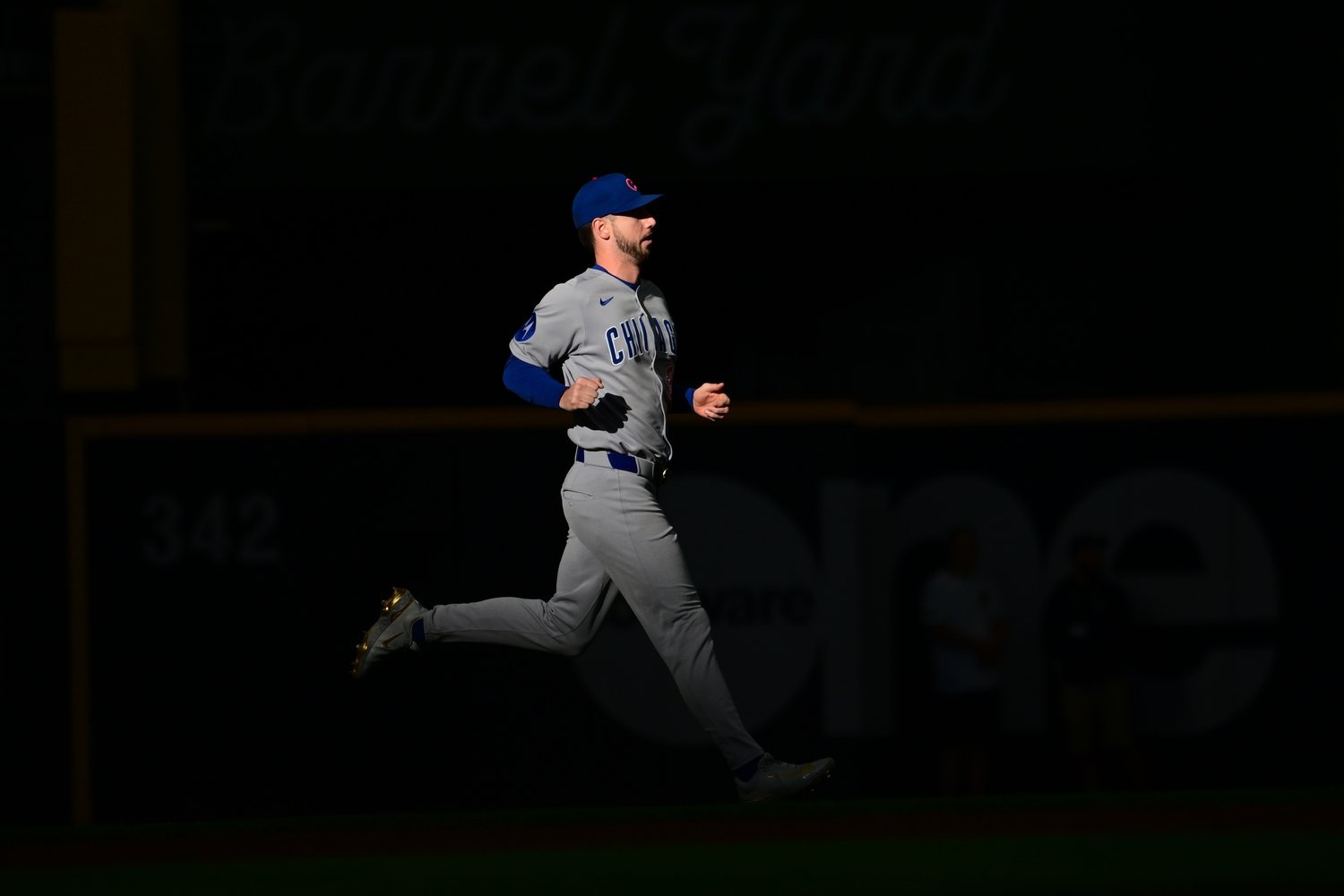 The Toronto Blue Jays have made another high-profile acquisition in an already busy offseason, this time addressing the lineup by signing Kazuma Okamoto to a four-year contract. It’s an exciting deal, but it’s not quite the position player signing Jays fans were expecting or hoping for when this offseason started. It’s been impossible to look into the markets of consensus top free agent Kyle Tucker or Bo Bichette without acknowledging the Blue Jays as an obvious fit. While Jays fans should be well practiced at avoiding falling victim to the rumour mill by now, there has been somewhat of an assumption that the Jays will be signing at least one of those guys, even from some industry insiders. Whenever a team makes a big addition – and Okamoto’s four-year, $60 million deal is a big addition – there’s always discourse as to how the move will impact the team's approach to the rest of the market. This signing puts the Blue Jays at an estimated luxury tax payroll of just over $308 million, which is currently the second highest mark in MLB, following only the L.A. Dodgers. It’s impossible to have a take other than that being awesome for Blue Jays fans, but it could very well make it financially impossible for the club to add another nine-figure contract like the ones that Bichette and Tucker seem destined to sign. Or maybe it’s still possible, but it would take a subtraction from the current roster via trade. In that case, Anthony Santander and José Berríos are the obvious names to point at. There’s also a chance that the Blue Jays continue acting like a behemoth organization and are able to sign one of Tucker or Bichette without major money going out the door. Before we predict which route the Jays are going to take when approaching their pursuits of Tucker and Bichette, it’s important to know what they’re getting in Okamoto. He’s put up some eye-popping numbers throughout his 11 seasons in Japan’s NPB, including a stretch of six straight seasons from 2018-23 where he hit at least 30 homers, and he hasn’t posted an OPS below .800 since his age-21 season in 2017. Aside from the obvious fact that Okamoto has been consistently one of Japan’s best hitters throughout his career, it’s not hard to assume that one of the things the Blue Jays liked most about his game is the way he combines that pop with an ability to avoid swing and miss and put the ball in play. It’s an identity shared by so many Blue Jays hitters, and we just watched the Jays ride that identity to a top-five offense in 2025, and to a World Series berth. There aren’t very many questions about Okamoto’s bat. He’s expected to bring a high floor and fit right into an already dynamic lineup with his strong approach. Defensively, the hope is that Okamoto can be an average defensive third baseman and a well-above-average first baseman. There are also a few whispers that he could fit in a corner outfield spot. Looking at the way the Jays roster is currently built, it wouldn’t be hard to assume they’re pretty happy with where it’s at heading into 2026. They will likely be one of the favourites to win the American League again. To be clear, the Blue Jays almost definitely feel like their roster is close to complete and would feel good about their chances of repeating as American League champions without another big-name acquisition. But if they want to get greedy, there’s still space for the Jays to fit either Bichette or Tucker and push the ceiling of this team as high as it’s ever been. As far as Bichette, the likely scenario, if he were to return, is that it would be as a second baseman, with Andrés Giménez sliding over to shortstop, just as we saw in the World Series. Okamoto will likely be the everyday third baseman, which is going to push Addison Barger into a regular role in right field, with Santander getting the majority of the playing time in left. The Tucker fit is maybe a little bit less clear at first glance. Adding Tucker would leave one of Santander or Barger on the outside looking in when it comes to playing time, unless the rumours of Okamoto’s viability in the outfield are true, and the three of them split two positions, as well as the odd appearance as the designated hitter. In this scenario, Ernie Clement is the everyday second baseman. If I had to bet, a Tucker signing doesn’t come without a Santander trade, but a Bichette reunion could allow the Jays to keep the current roster intact. The good news for Jays fans is that early reporting around the topic is that the team isn't being ruled out of either the Tucker or Bichette market despite the Okamoto signing. To tie a bow on this for now, I don’t think that signing Okamoto necessarily helps the Jays’ chances of signing either Bichette or Tucker, but that’s not to say that either scenario outlined above is impossible. All 30 teams in baseball can make room on their roster for either Bichette or Tucker, including the Blue Jays after signing Okamoto. It’s simply going to come down to which teams make the best offers, as well as the choices of the players. If there’s money still available, it’s hard to make a case against Toronto being one of the most attractive destinations in MLB, with a World Series-ready roster already in place. If you’ve read through this whole article and are still feeling like you have no idea if the Jays are still going to be in the Bichette and Tucker markets, welcome to the MLB offseason! Nobody knows anything until a deal is done.
-
- 2
-

-

-
- kazuma okamoto
- bo bichette
- (and 1 more)
-
In this video, we break down six hitters, including Kyle Tucker and Bo Bichette, that the Blue Jays could sign in MLB free agency. Will Toronto go big with a Tucker or Bichette signing, or will they pursue some of the lesser names listed, like Cody Bellinger or Jorge Polanco? View full video
-
In this video, we break down six hitters, including Kyle Tucker and Bo Bichette, that the Blue Jays could sign in MLB free agency. Will Toronto go big with a Tucker or Bichette signing, or will they pursue some of the lesser names listed, like Cody Bellinger or Jorge Polanco?
-
- 1
-
-
- kyle tucker
- cody bellinger
- (and 3 more)
-
On the same day the Jays announced the signing of Dylan Cease to a $210 million deal, GM Ross Atkins was back at it, making another splash in the free agent pitching market, this time signing right-hander Cody Ponce to a three-year, $30 million deal. At first glance, guaranteeing that type of term and money to a 31-year-old that hasn’t pitched in the big leagues since 2021 is a bit of an eyebrow raiser, but when you take a peek at what Ponce was doing to hitters in the KBO last season, it starts to make some sense. Over 180.2 innings pitched for the Hanwha Eagles, Ponce absolutely dominated. He worked a 1.89 ERA with a strikeout rate of 36.2%. He only gave up 0.5 HR/9 and allowed a hard-hit rate of just 16.7% Those numbers translated to a 17-1 record and led him to win the KBO’s MVP award. Ponce left Major League Baseball for Japan’s NPB after struggling through a pair of seasons in Pittsburgh in 2020 and 2021, but he didn’t immediately flourish overseas. He worked his way through two solid, but not exactly eye-catching, seasons for the NPB’s Hokkaido Nippon-Ham Fighters with an ERA in the mid-3.00s before signing with the Tohoku Rakuten Golden Eagles for the 2024 season. The 2024 season had to have been pretty disappointing for Ponce. Despite his strikeout and walk rates, hard-hit rate, and FIP remaining similar to those from his two previous NPB seasons, his ERA ballooned to 6.72 over 15 appearances and 12 starts. That’s part of what makes his dominant MVP campaign, at 30 years old, in a new league, so surprising. Ponce must have discovered something in his transition between NPB and the KBO. I have to credit Lance Brozdowski and his article dedicated to Ponce for just about all of the data I can provide in this Ponce breakdown, and if you’re interested in in-depth pitching breakdowns, his Substack is a must-read. Now, back to Ponce. The first thing to look at is his fastball velocity. He averaged 95.5 mph on his four-seamer while maxing out at 98.5 in 2025, up over two miles per hour from the previous season. That jump in velo, paired with Ponce’s impressive extension (he’s 6-foot-6), has to make him a pretty uncomfortable at-bat, and immediately makes it more believable that he can be successful in MLB. The other big change Ponce made was adding a change-up. That’s different from a splitter, but it is still the style of pitch we know the Jays have been enamoured with when targeting and developing pitchers. The change-up averaged about 87.5 mph and produced silly whiff and zone whiff rates of 46% and 39%, respectively. Just think about that for just one more second: 39% of the time that KBO hitters swung at Ponce’s change-up in the strike zone, they missed it. Aside from the fastball/change-up combination, Ponce also throws a cutter and a bigger, slower curveball, as well as flashing a sinker. The ridiculous whiff rates are obviously not going to translate directly against MLB hitters, but they don’t have to be quite that big for Ponce to remain effective, especially if he can keep the contact that he does give up on the softer side. It’s still too early to say how the Jays plan to utilize Ponce. He’s been a starter his whole career, and I’d expect that’s what the Jays have in mind for him, but the starting rotation is starting to look pretty full. As it lined up before the Ponce addition, the Jays could have run out a rotation of Cease, Kevin Gausman, Shane Bieber, Trey Yesavage, and José Berríos, with Eric Lauer in a swing-man role. Throwing Ponce into the mix certainly looks like it causes a logjam in that fifth spot in the rotation. Just for fun, here are FanGraphs's 2026 Steamer projections for Ponce, Berríos, and Lauer, the three guys in the mix for that fifth rotation spot: Pitcher 2026 Projected Starts/IP 2026 Projected ERA 2026 Projected WAR Cody Ponce 26/148 4.08 2.2 José Berríos 28/159 4.52 1.5 Eric Lauer 5/65 (38 relief appearances) 4.27 0.3 Interestingly enough, Ponce outperforms Berríos, if only marginally. These things tend to work themselves out, and there’s never been a team that has had too much starting pitching. Even still, it looks like another move may be on the horizon. Could the Jays try to eat some of the approximately $67 million left on the three years of Berríos’s contract, trade him away, and slide Ponce right into that fifth spot? Or do the Jays foresee Ponce playing a similar role to that which Lauer played in 2025? They could use him as a bullpen piece until they inevitably need an extended stretch of starts due to an injury to one of their other starters. Regardless of the role the Jays end up carving out for Ponce in 2026, this move also shores up the team's rotation depth for 2027 and '28. Gausman and Bieber are both free agents after this season, and Berríos has an opt-out – although he’d need to drastically outperform those projections to even consider taking it. Regardless, it’s so much fun to see the Jays moving so quickly and aggressively early in the offseason, addressing what was clearly their number one priority. View full article
-
.jpg.3931b1746bc4d99a2e2b7388b4a54f69.jpg) On the same day the Jays announced the signing of Dylan Cease to a $210 million deal, GM Ross Atkins was back at it, making another splash in the free agent pitching market, this time signing right-hander Cody Ponce to a three-year, $30 million deal. At first glance, guaranteeing that type of term and money to a 31-year-old that hasn’t pitched in the big leagues since 2021 is a bit of an eyebrow raiser, but when you take a peek at what Ponce was doing to hitters in the KBO last season, it starts to make some sense. Over 180.2 innings pitched for the Hanwha Eagles, Ponce absolutely dominated. He worked a 1.89 ERA with a strikeout rate of 36.2%. He only gave up 0.5 HR/9 and allowed a hard-hit rate of just 16.7% Those numbers translated to a 17-1 record and led him to win the KBO’s MVP award. Ponce left Major League Baseball for Japan’s NPB after struggling through a pair of seasons in Pittsburgh in 2020 and 2021, but he didn’t immediately flourish overseas. He worked his way through two solid, but not exactly eye-catching, seasons for the NPB’s Hokkaido Nippon-Ham Fighters with an ERA in the mid-3.00s before signing with the Tohoku Rakuten Golden Eagles for the 2024 season. The 2024 season had to have been pretty disappointing for Ponce. Despite his strikeout and walk rates, hard-hit rate, and FIP remaining similar to those from his two previous NPB seasons, his ERA ballooned to 6.72 over 15 appearances and 12 starts. That’s part of what makes his dominant MVP campaign, at 30 years old, in a new league, so surprising. Ponce must have discovered something in his transition between NPB and the KBO. I have to credit Lance Brozdowski and his article dedicated to Ponce for just about all of the data I can provide in this Ponce breakdown, and if you’re interested in in-depth pitching breakdowns, his Substack is a must-read. Now, back to Ponce. The first thing to look at is his fastball velocity. He averaged 95.5 mph on his four-seamer while maxing out at 98.5 in 2025, up over two miles per hour from the previous season. That jump in velo, paired with Ponce’s impressive extension (he’s 6-foot-6), has to make him a pretty uncomfortable at-bat, and immediately makes it more believable that he can be successful in MLB. The other big change Ponce made was adding a change-up. That’s different from a splitter, but it is still the style of pitch we know the Jays have been enamoured with when targeting and developing pitchers. The change-up averaged about 87.5 mph and produced silly whiff and zone whiff rates of 46% and 39%, respectively. Just think about that for just one more second: 39% of the time that KBO hitters swung at Ponce’s change-up in the strike zone, they missed it. Aside from the fastball/change-up combination, Ponce also throws a cutter and a bigger, slower curveball, as well as flashing a sinker. The ridiculous whiff rates are obviously not going to translate directly against MLB hitters, but they don’t have to be quite that big for Ponce to remain effective, especially if he can keep the contact that he does give up on the softer side. It’s still too early to say how the Jays plan to utilize Ponce. He’s been a starter his whole career, and I’d expect that’s what the Jays have in mind for him, but the starting rotation is starting to look pretty full. As it lined up before the Ponce addition, the Jays could have run out a rotation of Cease, Kevin Gausman, Shane Bieber, Trey Yesavage, and José Berríos, with Eric Lauer in a swing-man role. Throwing Ponce into the mix certainly looks like it causes a logjam in that fifth spot in the rotation. Just for fun, here are FanGraphs's 2026 Steamer projections for Ponce, Berríos, and Lauer, the three guys in the mix for that fifth rotation spot: Pitcher 2026 Projected Starts/IP 2026 Projected ERA 2026 Projected WAR Cody Ponce 26/148 4.08 2.2 José Berríos 28/159 4.52 1.5 Eric Lauer 5/65 (38 relief appearances) 4.27 0.3 Interestingly enough, Ponce outperforms Berríos, if only marginally. These things tend to work themselves out, and there’s never been a team that has had too much starting pitching. Even still, it looks like another move may be on the horizon. Could the Jays try to eat some of the approximately $67 million left on the three years of Berríos’s contract, trade him away, and slide Ponce right into that fifth spot? Or do the Jays foresee Ponce playing a similar role to that which Lauer played in 2025? They could use him as a bullpen piece until they inevitably need an extended stretch of starts due to an injury to one of their other starters. Regardless of the role the Jays end up carving out for Ponce in 2026, this move also shores up the team's rotation depth for 2027 and '28. Gausman and Bieber are both free agents after this season, and Berríos has an opt-out – although he’d need to drastically outperform those projections to even consider taking it. Regardless, it’s so much fun to see the Jays moving so quickly and aggressively early in the offseason, addressing what was clearly their number one priority.
On the same day the Jays announced the signing of Dylan Cease to a $210 million deal, GM Ross Atkins was back at it, making another splash in the free agent pitching market, this time signing right-hander Cody Ponce to a three-year, $30 million deal. At first glance, guaranteeing that type of term and money to a 31-year-old that hasn’t pitched in the big leagues since 2021 is a bit of an eyebrow raiser, but when you take a peek at what Ponce was doing to hitters in the KBO last season, it starts to make some sense. Over 180.2 innings pitched for the Hanwha Eagles, Ponce absolutely dominated. He worked a 1.89 ERA with a strikeout rate of 36.2%. He only gave up 0.5 HR/9 and allowed a hard-hit rate of just 16.7% Those numbers translated to a 17-1 record and led him to win the KBO’s MVP award. Ponce left Major League Baseball for Japan’s NPB after struggling through a pair of seasons in Pittsburgh in 2020 and 2021, but he didn’t immediately flourish overseas. He worked his way through two solid, but not exactly eye-catching, seasons for the NPB’s Hokkaido Nippon-Ham Fighters with an ERA in the mid-3.00s before signing with the Tohoku Rakuten Golden Eagles for the 2024 season. The 2024 season had to have been pretty disappointing for Ponce. Despite his strikeout and walk rates, hard-hit rate, and FIP remaining similar to those from his two previous NPB seasons, his ERA ballooned to 6.72 over 15 appearances and 12 starts. That’s part of what makes his dominant MVP campaign, at 30 years old, in a new league, so surprising. Ponce must have discovered something in his transition between NPB and the KBO. I have to credit Lance Brozdowski and his article dedicated to Ponce for just about all of the data I can provide in this Ponce breakdown, and if you’re interested in in-depth pitching breakdowns, his Substack is a must-read. Now, back to Ponce. The first thing to look at is his fastball velocity. He averaged 95.5 mph on his four-seamer while maxing out at 98.5 in 2025, up over two miles per hour from the previous season. That jump in velo, paired with Ponce’s impressive extension (he’s 6-foot-6), has to make him a pretty uncomfortable at-bat, and immediately makes it more believable that he can be successful in MLB. The other big change Ponce made was adding a change-up. That’s different from a splitter, but it is still the style of pitch we know the Jays have been enamoured with when targeting and developing pitchers. The change-up averaged about 87.5 mph and produced silly whiff and zone whiff rates of 46% and 39%, respectively. Just think about that for just one more second: 39% of the time that KBO hitters swung at Ponce’s change-up in the strike zone, they missed it. Aside from the fastball/change-up combination, Ponce also throws a cutter and a bigger, slower curveball, as well as flashing a sinker. The ridiculous whiff rates are obviously not going to translate directly against MLB hitters, but they don’t have to be quite that big for Ponce to remain effective, especially if he can keep the contact that he does give up on the softer side. It’s still too early to say how the Jays plan to utilize Ponce. He’s been a starter his whole career, and I’d expect that’s what the Jays have in mind for him, but the starting rotation is starting to look pretty full. As it lined up before the Ponce addition, the Jays could have run out a rotation of Cease, Kevin Gausman, Shane Bieber, Trey Yesavage, and José Berríos, with Eric Lauer in a swing-man role. Throwing Ponce into the mix certainly looks like it causes a logjam in that fifth spot in the rotation. Just for fun, here are FanGraphs's 2026 Steamer projections for Ponce, Berríos, and Lauer, the three guys in the mix for that fifth rotation spot: Pitcher 2026 Projected Starts/IP 2026 Projected ERA 2026 Projected WAR Cody Ponce 26/148 4.08 2.2 José Berríos 28/159 4.52 1.5 Eric Lauer 5/65 (38 relief appearances) 4.27 0.3 Interestingly enough, Ponce outperforms Berríos, if only marginally. These things tend to work themselves out, and there’s never been a team that has had too much starting pitching. Even still, it looks like another move may be on the horizon. Could the Jays try to eat some of the approximately $67 million left on the three years of Berríos’s contract, trade him away, and slide Ponce right into that fifth spot? Or do the Jays foresee Ponce playing a similar role to that which Lauer played in 2025? They could use him as a bullpen piece until they inevitably need an extended stretch of starts due to an injury to one of their other starters. Regardless of the role the Jays end up carving out for Ponce in 2026, this move also shores up the team's rotation depth for 2027 and '28. Gausman and Bieber are both free agents after this season, and Berríos has an opt-out – although he’d need to drastically outperform those projections to even consider taking it. Regardless, it’s so much fun to see the Jays moving so quickly and aggressively early in the offseason, addressing what was clearly their number one priority. -
The Blue Jays kicked off their offseason with a bang, agreeing to terms with Dylan Cease last week. So, obviously, it’s about time that I get greedy and start looking at the next way I want them to improve the roster heading into 2026. In light of this recent Jon Morosi tweet suggesting the Jays at least checked in, I think it’s only fitting that I dive into the Diamondbacks’ All-Star second baseman, Ketel Marte. Broadly, in terms of fit, it’s pretty easy to picture Marte as the everyday second baseman for the Jays in 2026. With the starting rotation already addressed, and with Bo Bichette currently out testing the free agent market, one of the two middle infield spots looks to me like the most glaring hole on the roster. Andrés Giménez will factor in on an everyday basis, and there’s no doubt that should Bo walk (and even if he were to re-sign), the Jays would be more than comfortable having Giménez start about 150 games at shortstop. Ernie Clement is essentially the only other name in the middle infield mix at the moment, and he’s a guy whose value comes from his utility and being able to bounce around the infield, not to mention that he was actually a below-average hitter in 2025, finishing the regular season with a 98 wRC+ overall, and just a 75 wRC+ against righties. I would say it’s pretty likely that plan A for the Jays is to just bring back Bichette, but it’s far from a guarantee that that’s what ends up happening. With $210 million committed to Cease already this offseason, the fact that the Jays will be bidding against other teams for Bichette's services, and the uncertainty around where Bo sees himself playing on the diamond, it’s not a bad idea to start formulating backup plans, and it makes sense that the Jays have checked in on Marte. Aside from the obvious positional fit, Marte is as pure a hitter as they come. Since 2023, he has led qualified second basemen in OPS, wRC+, home runs, and fWAR. It’s not very hard to come up with an argument calling him the best offensive second baseman in baseball so far in the 2020s, without even mentioning that he’s a switch-hitter with fairly even splits. It’s almost not worth mentioning the defense when it comes to a hitter this talented, but in Marte’s case, he’s considered about an average defender at second base. I almost feel guilty comparing Marte to Bichette, but looking at results over the past four seasons, it’s pretty easy to see Marte has been the better player. I provide this Stathead player comparison graphic since 2022 understanding the risk it causes to my reputation as a baseball analyst and general ball-knower: Marte has been worth over 4.0 FanGraphs WAR in each of the last three seasons, including 2024, when he was worth 6.4 and finished third in NL MVP voting. Bichette has only finished with more than 4.0 fWAR twice in his career, and not since 2022. There aren’t a ton of directions the Jays could go this offseason that would upgrade their middle infield over what Bichette has provided, but bringing in Marte is probably one of those directions. If you want to talk money, DiamondCentric projects Bichette to make $175 million over seven years this offseason – that's $25 million per season – while Marte has $102.5 million left on his deal (including some deferred money), which runs through 2031, his age-37 campaign. It’s important not to forget that Bichette is a full five years younger than Marte, and re-signing him just about guarantees four or five solid seasons should he stay healthy. Already 32, Marte’s immediate future is a little bit less certain. This article is not meant to be a comparison between Bichette and his potential replacement, but I think it’s important to recognize that Ross Atkins’ goal is to make the 2026 Jays better than the 2025 Jays. Given the term and team-friendly nature of Marte's current deal, the acquisition cost for the Diamondbacks star could get ugly, and we know that the Jays’ system isn’t exactly stacked with blue chip prospects, so it’s hard to say if a trade would even be possible. Still, it’s a lot of fun to imagine Ketel Marte’s bat hitting in front of Vladimir Guerrero Jr. in the Blue Jays’ lineup. View full article
-
.jpg.ab1d369df794967cde19d6d3e86d6ddf.jpg) The Blue Jays kicked off their offseason with a bang, agreeing to terms with Dylan Cease last week. So, obviously, it’s about time that I get greedy and start looking at the next way I want them to improve the roster heading into 2026. In light of this recent Jon Morosi tweet suggesting the Jays at least checked in, I think it’s only fitting that I dive into the Diamondbacks’ All-Star second baseman, Ketel Marte. Broadly, in terms of fit, it’s pretty easy to picture Marte as the everyday second baseman for the Jays in 2026. With the starting rotation already addressed, and with Bo Bichette currently out testing the free agent market, one of the two middle infield spots looks to me like the most glaring hole on the roster. Andrés Giménez will factor in on an everyday basis, and there’s no doubt that should Bo walk (and even if he were to re-sign), the Jays would be more than comfortable having Giménez start about 150 games at shortstop. Ernie Clement is essentially the only other name in the middle infield mix at the moment, and he’s a guy whose value comes from his utility and being able to bounce around the infield, not to mention that he was actually a below-average hitter in 2025, finishing the regular season with a 98 wRC+ overall, and just a 75 wRC+ against righties. I would say it’s pretty likely that plan A for the Jays is to just bring back Bichette, but it’s far from a guarantee that that’s what ends up happening. With $210 million committed to Cease already this offseason, the fact that the Jays will be bidding against other teams for Bichette's services, and the uncertainty around where Bo sees himself playing on the diamond, it’s not a bad idea to start formulating backup plans, and it makes sense that the Jays have checked in on Marte. Aside from the obvious positional fit, Marte is as pure a hitter as they come. Since 2023, he has led qualified second basemen in OPS, wRC+, home runs, and fWAR. It’s not very hard to come up with an argument calling him the best offensive second baseman in baseball so far in the 2020s, without even mentioning that he’s a switch-hitter with fairly even splits. It’s almost not worth mentioning the defense when it comes to a hitter this talented, but in Marte’s case, he’s considered about an average defender at second base. I almost feel guilty comparing Marte to Bichette, but looking at results over the past four seasons, it’s pretty easy to see Marte has been the better player. I provide this Stathead player comparison graphic since 2022 understanding the risk it causes to my reputation as a baseball analyst and general ball-knower: Marte has been worth over 4.0 FanGraphs WAR in each of the last three seasons, including 2024, when he was worth 6.4 and finished third in NL MVP voting. Bichette has only finished with more than 4.0 fWAR twice in his career, and not since 2022. There aren’t a ton of directions the Jays could go this offseason that would upgrade their middle infield over what Bichette has provided, but bringing in Marte is probably one of those directions. If you want to talk money, DiamondCentric projects Bichette to make $175 million over seven years this offseason – that's $25 million per season – while Marte has $102.5 million left on his deal (including some deferred money), which runs through 2031, his age-37 campaign. It’s important not to forget that Bichette is a full five years younger than Marte, and re-signing him just about guarantees four or five solid seasons should he stay healthy. Already 32, Marte’s immediate future is a little bit less certain. This article is not meant to be a comparison between Bichette and his potential replacement, but I think it’s important to recognize that Ross Atkins’ goal is to make the 2026 Jays better than the 2025 Jays. Given the term and team-friendly nature of Marte's current deal, the acquisition cost for the Diamondbacks star could get ugly, and we know that the Jays’ system isn’t exactly stacked with blue chip prospects, so it’s hard to say if a trade would even be possible. Still, it’s a lot of fun to imagine Ketel Marte’s bat hitting in front of Vladimir Guerrero Jr. in the Blue Jays’ lineup.
The Blue Jays kicked off their offseason with a bang, agreeing to terms with Dylan Cease last week. So, obviously, it’s about time that I get greedy and start looking at the next way I want them to improve the roster heading into 2026. In light of this recent Jon Morosi tweet suggesting the Jays at least checked in, I think it’s only fitting that I dive into the Diamondbacks’ All-Star second baseman, Ketel Marte. Broadly, in terms of fit, it’s pretty easy to picture Marte as the everyday second baseman for the Jays in 2026. With the starting rotation already addressed, and with Bo Bichette currently out testing the free agent market, one of the two middle infield spots looks to me like the most glaring hole on the roster. Andrés Giménez will factor in on an everyday basis, and there’s no doubt that should Bo walk (and even if he were to re-sign), the Jays would be more than comfortable having Giménez start about 150 games at shortstop. Ernie Clement is essentially the only other name in the middle infield mix at the moment, and he’s a guy whose value comes from his utility and being able to bounce around the infield, not to mention that he was actually a below-average hitter in 2025, finishing the regular season with a 98 wRC+ overall, and just a 75 wRC+ against righties. I would say it’s pretty likely that plan A for the Jays is to just bring back Bichette, but it’s far from a guarantee that that’s what ends up happening. With $210 million committed to Cease already this offseason, the fact that the Jays will be bidding against other teams for Bichette's services, and the uncertainty around where Bo sees himself playing on the diamond, it’s not a bad idea to start formulating backup plans, and it makes sense that the Jays have checked in on Marte. Aside from the obvious positional fit, Marte is as pure a hitter as they come. Since 2023, he has led qualified second basemen in OPS, wRC+, home runs, and fWAR. It’s not very hard to come up with an argument calling him the best offensive second baseman in baseball so far in the 2020s, without even mentioning that he’s a switch-hitter with fairly even splits. It’s almost not worth mentioning the defense when it comes to a hitter this talented, but in Marte’s case, he’s considered about an average defender at second base. I almost feel guilty comparing Marte to Bichette, but looking at results over the past four seasons, it’s pretty easy to see Marte has been the better player. I provide this Stathead player comparison graphic since 2022 understanding the risk it causes to my reputation as a baseball analyst and general ball-knower: Marte has been worth over 4.0 FanGraphs WAR in each of the last three seasons, including 2024, when he was worth 6.4 and finished third in NL MVP voting. Bichette has only finished with more than 4.0 fWAR twice in his career, and not since 2022. There aren’t a ton of directions the Jays could go this offseason that would upgrade their middle infield over what Bichette has provided, but bringing in Marte is probably one of those directions. If you want to talk money, DiamondCentric projects Bichette to make $175 million over seven years this offseason – that's $25 million per season – while Marte has $102.5 million left on his deal (including some deferred money), which runs through 2031, his age-37 campaign. It’s important not to forget that Bichette is a full five years younger than Marte, and re-signing him just about guarantees four or five solid seasons should he stay healthy. Already 32, Marte’s immediate future is a little bit less certain. This article is not meant to be a comparison between Bichette and his potential replacement, but I think it’s important to recognize that Ross Atkins’ goal is to make the 2026 Jays better than the 2025 Jays. Given the term and team-friendly nature of Marte's current deal, the acquisition cost for the Diamondbacks star could get ugly, and we know that the Jays’ system isn’t exactly stacked with blue chip prospects, so it’s hard to say if a trade would even be possible. Still, it’s a lot of fun to imagine Ketel Marte’s bat hitting in front of Vladimir Guerrero Jr. in the Blue Jays’ lineup. -
The Toronto Blue Jays are signing right-handed pitcher Dylan Cease for $210 million over seven years. That’s right, the first big splash of the offseason belongs to the Blue Jays. You don’t have to squint to see what made the Jays so eager to jump the gun on Cease’s market. The 29-year-old has some of the best stuff amongst starting pitchers in the game. His four-seam fastball averaged 97.1 miles per hour in 2025, the sixth-best mark among qualified starters, which factored into his 29.8 strikeout percentage, the third-best among starters. Cease induced a 31 chase percentage and an even more impressive 33.4 whiff percentage. He’ll throw that big heater at the top of and above the zone, while pairing it with a nasty slider down and away to righties, and down-and-in to lefties. Cease is usually looked at as one of the rare two-pitch starting pitchers, as he throws the heater and slider 41% of the time each, but he also mixes in a slower, more 12-6-style curveball, a sinker, a sweeper, and the very occasional change-up. This article is led with talk about stuff for a reason, because it’s hard to believe a starter coming off a season with a 4.55 ERA, just earned a seven-year contract worth over $200 million. The concern for the ERA is somewhat validated by the fact that it was also 4.58 in 2023. The inflated ERA is a little tricky to diagnose, although Cease did walk a pretty high 9.8 percent, and his 1.13 HR/9 allowed were his highest since the shortened 2020 season. It’s also worth noting that the xERA and FIP were in much healthier places last season at 3.46 and 3.56, respectively. None of that scared the Blue Jays, though, as they’ll slide Cease into the Jays’ rotation as the number one starter ahead of a rotation that already includes Kevin Gausman, Shane Bieber, Trey Yesavage, and José Berríos, which should shape up as one of the more exciting starting fives in baseball. It’s still early to say how getting this deal done will impact the rest of the Blue Jays’ offseason plans, and whether or not the hefty price tag will take them out of or limit them in their pursuit of free agent hitters like Kyle Tucker or Bo Bichette. Still, the Blue Jays are making a statement early in the offseason, acquiring a premier starting pitcher. The $210 million over seven years is a fair bit above the $145 million over 5 years Cease was projected to make, according to ESPN, although Cease is clearly in the top three or four free-agent starters. Ken Rosenthal is also reporting that the deal does include deferrals. Coming off of their best season in 32 years, the Blue Jays look like their eager to build on the success of 2025. View full article
-
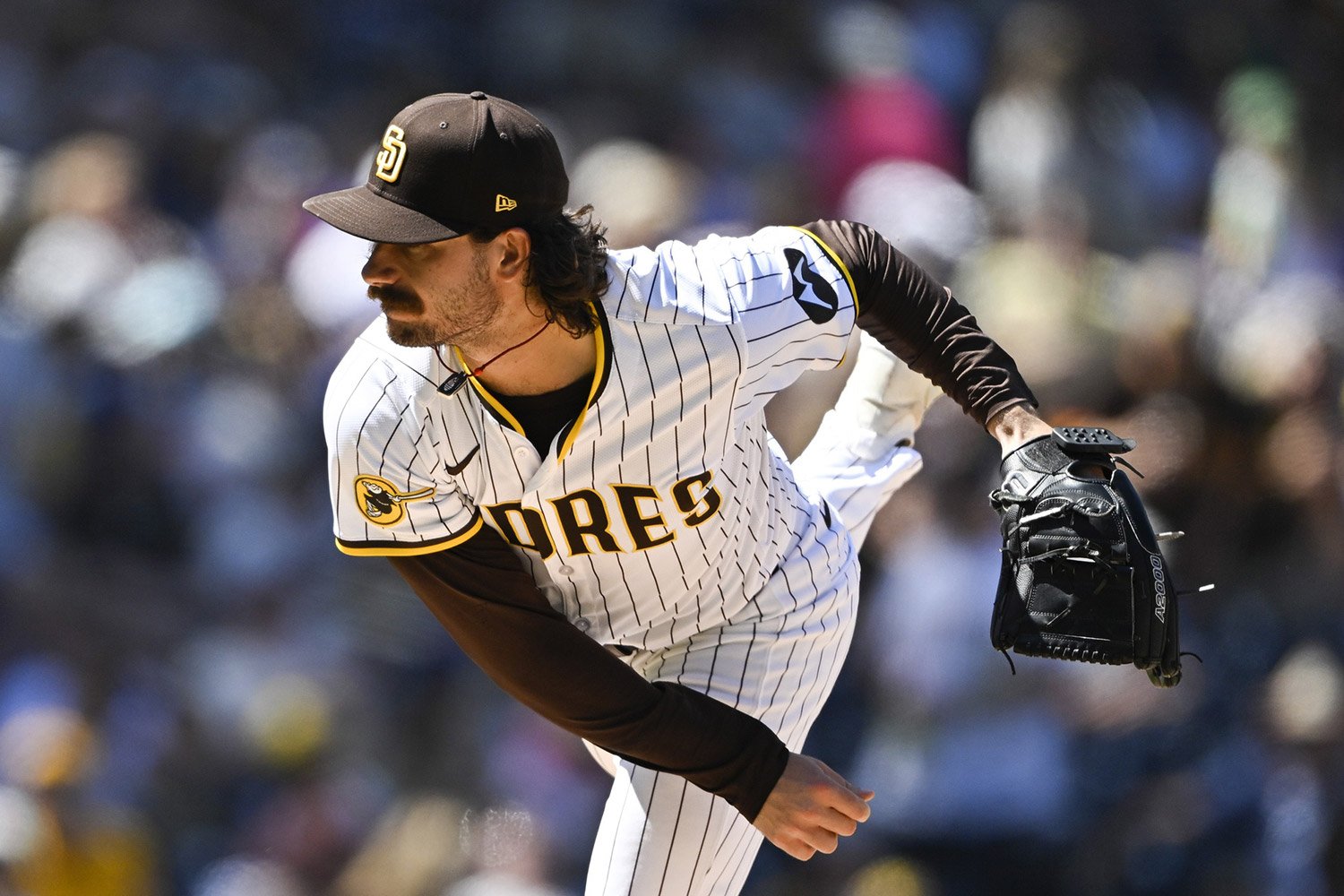 The Toronto Blue Jays are signing right-handed pitcher Dylan Cease for $210 million over seven years. That’s right, the first big splash of the offseason belongs to the Blue Jays. You don’t have to squint to see what made the Jays so eager to jump the gun on Cease’s market. The 29-year-old has some of the best stuff amongst starting pitchers in the game. His four-seam fastball averaged 97.1 miles per hour in 2025, the sixth-best mark among qualified starters, which factored into his 29.8 strikeout percentage, the third-best among starters. Cease induced a 31 chase percentage and an even more impressive 33.4 whiff percentage. He’ll throw that big heater at the top of and above the zone, while pairing it with a nasty slider down and away to righties, and down-and-in to lefties. Cease is usually looked at as one of the rare two-pitch starting pitchers, as he throws the heater and slider 41% of the time each, but he also mixes in a slower, more 12-6-style curveball, a sinker, a sweeper, and the very occasional change-up. This article is led with talk about stuff for a reason, because it’s hard to believe a starter coming off a season with a 4.55 ERA, just earned a seven-year contract worth over $200 million. The concern for the ERA is somewhat validated by the fact that it was also 4.58 in 2023. The inflated ERA is a little tricky to diagnose, although Cease did walk a pretty high 9.8 percent, and his 1.13 HR/9 allowed were his highest since the shortened 2020 season. It’s also worth noting that the xERA and FIP were in much healthier places last season at 3.46 and 3.56, respectively. None of that scared the Blue Jays, though, as they’ll slide Cease into the Jays’ rotation as the number one starter ahead of a rotation that already includes Kevin Gausman, Shane Bieber, Trey Yesavage, and José Berríos, which should shape up as one of the more exciting starting fives in baseball. It’s still early to say how getting this deal done will impact the rest of the Blue Jays’ offseason plans, and whether or not the hefty price tag will take them out of or limit them in their pursuit of free agent hitters like Kyle Tucker or Bo Bichette. Still, the Blue Jays are making a statement early in the offseason, acquiring a premier starting pitcher. The $210 million over seven years is a fair bit above the $145 million over 5 years Cease was projected to make, according to ESPN, although Cease is clearly in the top three or four free-agent starters. Ken Rosenthal is also reporting that the deal does include deferrals. Coming off of their best season in 32 years, the Blue Jays look like their eager to build on the success of 2025.
 -
On the morning of January 17, the Toronto Blue Jays acquired $2 million in international bonus pool money and Myles Straw from the Cleveland Guardians in exchange for a player to be named later or cash considerations. As this news broke, Blue Jays fans exploded with excitement, but none of that excitement was directed towards Straw. See, at the time, the week leading up to this trade was filled with talk of 23-year-old Japanese phenom Roki Sasaki, who was in the process of coming stateside to sign with a major league team as an international amateur. The sweepstakes were long and tedious, but as a decision drew near, it was reported that the Blue Jays were a finalist to sign Sasaki, along with the San Diego Padres and the Los Angeles Dodgers. When the news of the Straw deal broke, many fans pointed to the $2 million in bonus pool money that could be handed directly to Sasaki if he were to sign with Toronto and jumped to the conclusion that the Jays knew Sasaki was going to choose them, or at least had a strong belief that the additional $2 million would set them apart from the other finalists. However, Cleveland wasn’t just going to give away bonus pool money to Toronto as a good deed. In return for the bonus pool money, the Blue Jays had to take on Straw and $11 million of his remaining salary for 2025 and 2026. That’s not an insignificant chunk of change, and it was pretty close to being considered dead money, because in 2024, Straw only got into seven major league games. He spent almost the entirety of his age-29 season playing for Cleveland’s Triple-A affiliate. In nearly 500 plate appearances, his .651 OPS was well below the Triple-A average, and he hit just three homers. It’s not often you see players on major league contracts spend entire healthy seasons in the minors; this contract looked like it was completely underwater. Cleveland was no doubt elated to get out of the contract, and it’s safe to presume the Jays didn’t love taking it on, but it would easily be worth the price if it helped them acquire a cost-controlled, future superstar starting pitcher in Sasaki. Of course, as we now know, on the evening of the same day that the Blue Jays traded for Straw, disaster struck, and Sasaki announced on his personal social media that he had agreed to sign with the Los Angeles Dodgers. The baseball world once again cracked jokes at the expense of the Blue Jays and their inability to push a high-profile free agent acquisition over the line. Blue Jays fans descended into anger and frustration, having gotten their hopes up for Sasaki and instead being left with Straw. When the dust settled and we evaluated the Blue Jays’ roster outlook heading into spring training, it was hard to even find a spot on the roster for Straw. If it weren't for Daulton Varsho’s delayed start to the season due to a long recovery from shoulder surgery, Straw may have been relegated to starting another season in the minors. The rest of the baseball world didn’t respect it yet, but coming into 2025, the Blue Jays planned on being a serious contender. Not a lot of people saw the vision that included Myles Straw playing a role on a contending team. Well, in 2025, both Straw and the Jays have proved everyone wrong. The Blue Jays have had a stranglehold on the top spot in the American League East for more than a month and look to be cruising back into October, despite so many people counting them out after their disappointing 2024. And Straw is a big reason why. Ask John Schneider how his team has produced some of the best offensive numbers in the game, and how his position player group has come together to lead baseball in FanGraphs WAR, and he’ll talk about the importance, not of one through nine, but one through 13. He’d tell you that every player on the roster has a role to play every day, whether that’s starting at shortstop, laying down a bunt in a key situation, or coming in as a defensive replacement to protect a late lead. Myles Straw has bought into that philosophy and played his role perfectly. He’s top 10 among outfielders with 12 defensive runs saved despite playing an average of about 400 fewer innings than every player above him on the list. His defence has been nothing short of elite this year. It's been the main factor helping him to a 1.6 WAR according to FanGraphs and a 2.3 WAR according to Baseball Reference. That’s a very valuable player! And don’t let the emphasis on his glove let you forget his contributions with the bat. Straw has played an important role for the Jays’ elite offense this year. The overall numbers don’t exactly jump off the page, but his 10 successful sacrifice bunts are the third most in baseball, his baserunning is elite, and his .673 OPS in the majors this season is actually better than his OPS at Triple-A last season. He recently registered his first career multi-homer game against the Texas Rangers, and his four homers this season have tied his career high set in 2021. The overall picture won't blow you away, but Straw has been well worth the $6.4 million (of which Toronto is paying $5 million) he’s making this season. FanGraphs values one WAR at about $8 million, so his 1.6 fWAR this year would already make Straw’s season worth about $12.5 million on the open market. If we use bWAR instead, his 2.3 wins above replacement would have Straw worth more than $18 million. Not only have the Jays broken even on what was expected to be a negative value contract, but Straw has actually provided excess value. To turn the trade from an A to an A+, the Blue Jays recently agreed to sign an exciting 18-year-old Korean pitcher, Seo-jun Moon, to an amateur free agent contract with $1.5 million of their extra $2 million in bonus pool money. Moon was considered one of the top pitching prospects for this year's KBO draft, but he chose to sign with the Blue Jays rather than begin his career in the KBO. There’s still a lot of season left to play, and Myles Straw is still under contract for 2026, but it’s been really fun to watch him turn one of the worst stories of the 2025 Blue Jays into one of the best. View full article
-
.jpg.21b1dc609831c5727effc980775b5cff.jpg) On the morning of January 17, the Toronto Blue Jays acquired $2 million in international bonus pool money and Myles Straw from the Cleveland Guardians in exchange for a player to be named later or cash considerations. As this news broke, Blue Jays fans exploded with excitement, but none of that excitement was directed towards Straw. See, at the time, the week leading up to this trade was filled with talk of 23-year-old Japanese phenom Roki Sasaki, who was in the process of coming stateside to sign with a major league team as an international amateur. The sweepstakes were long and tedious, but as a decision drew near, it was reported that the Blue Jays were a finalist to sign Sasaki, along with the San Diego Padres and the Los Angeles Dodgers. When the news of the Straw deal broke, many fans pointed to the $2 million in bonus pool money that could be handed directly to Sasaki if he were to sign with Toronto and jumped to the conclusion that the Jays knew Sasaki was going to choose them, or at least had a strong belief that the additional $2 million would set them apart from the other finalists. However, Cleveland wasn’t just going to give away bonus pool money to Toronto as a good deed. In return for the bonus pool money, the Blue Jays had to take on Straw and $11 million of his remaining salary for 2025 and 2026. That’s not an insignificant chunk of change, and it was pretty close to being considered dead money, because in 2024, Straw only got into seven major league games. He spent almost the entirety of his age-29 season playing for Cleveland’s Triple-A affiliate. In nearly 500 plate appearances, his .651 OPS was well below the Triple-A average, and he hit just three homers. It’s not often you see players on major league contracts spend entire healthy seasons in the minors; this contract looked like it was completely underwater. Cleveland was no doubt elated to get out of the contract, and it’s safe to presume the Jays didn’t love taking it on, but it would easily be worth the price if it helped them acquire a cost-controlled, future superstar starting pitcher in Sasaki. Of course, as we now know, on the evening of the same day that the Blue Jays traded for Straw, disaster struck, and Sasaki announced on his personal social media that he had agreed to sign with the Los Angeles Dodgers. The baseball world once again cracked jokes at the expense of the Blue Jays and their inability to push a high-profile free agent acquisition over the line. Blue Jays fans descended into anger and frustration, having gotten their hopes up for Sasaki and instead being left with Straw. When the dust settled and we evaluated the Blue Jays’ roster outlook heading into spring training, it was hard to even find a spot on the roster for Straw. If it weren't for Daulton Varsho’s delayed start to the season due to a long recovery from shoulder surgery, Straw may have been relegated to starting another season in the minors. The rest of the baseball world didn’t respect it yet, but coming into 2025, the Blue Jays planned on being a serious contender. Not a lot of people saw the vision that included Myles Straw playing a role on a contending team. Well, in 2025, both Straw and the Jays have proved everyone wrong. The Blue Jays have had a stranglehold on the top spot in the American League East for more than a month and look to be cruising back into October, despite so many people counting them out after their disappointing 2024. And Straw is a big reason why. Ask John Schneider how his team has produced some of the best offensive numbers in the game, and how his position player group has come together to lead baseball in FanGraphs WAR, and he’ll talk about the importance, not of one through nine, but one through 13. He’d tell you that every player on the roster has a role to play every day, whether that’s starting at shortstop, laying down a bunt in a key situation, or coming in as a defensive replacement to protect a late lead. Myles Straw has bought into that philosophy and played his role perfectly. He’s top 10 among outfielders with 12 defensive runs saved despite playing an average of about 400 fewer innings than every player above him on the list. His defence has been nothing short of elite this year. It's been the main factor helping him to a 1.6 WAR according to FanGraphs and a 2.3 WAR according to Baseball Reference. That’s a very valuable player! And don’t let the emphasis on his glove let you forget his contributions with the bat. Straw has played an important role for the Jays’ elite offense this year. The overall numbers don’t exactly jump off the page, but his 10 successful sacrifice bunts are the third most in baseball, his baserunning is elite, and his .673 OPS in the majors this season is actually better than his OPS at Triple-A last season. He recently registered his first career multi-homer game against the Texas Rangers, and his four homers this season have tied his career high set in 2021. The overall picture won't blow you away, but Straw has been well worth the $6.4 million (of which Toronto is paying $5 million) he’s making this season. FanGraphs values one WAR at about $8 million, so his 1.6 fWAR this year would already make Straw’s season worth about $12.5 million on the open market. If we use bWAR instead, his 2.3 wins above replacement would have Straw worth more than $18 million. Not only have the Jays broken even on what was expected to be a negative value contract, but Straw has actually provided excess value. To turn the trade from an A to an A+, the Blue Jays recently agreed to sign an exciting 18-year-old Korean pitcher, Seo-jun Moon, to an amateur free agent contract with $1.5 million of their extra $2 million in bonus pool money. Moon was considered one of the top pitching prospects for this year's KBO draft, but he chose to sign with the Blue Jays rather than begin his career in the KBO. There’s still a lot of season left to play, and Myles Straw is still under contract for 2026, but it’s been really fun to watch him turn one of the worst stories of the 2025 Blue Jays into one of the best.
On the morning of January 17, the Toronto Blue Jays acquired $2 million in international bonus pool money and Myles Straw from the Cleveland Guardians in exchange for a player to be named later or cash considerations. As this news broke, Blue Jays fans exploded with excitement, but none of that excitement was directed towards Straw. See, at the time, the week leading up to this trade was filled with talk of 23-year-old Japanese phenom Roki Sasaki, who was in the process of coming stateside to sign with a major league team as an international amateur. The sweepstakes were long and tedious, but as a decision drew near, it was reported that the Blue Jays were a finalist to sign Sasaki, along with the San Diego Padres and the Los Angeles Dodgers. When the news of the Straw deal broke, many fans pointed to the $2 million in bonus pool money that could be handed directly to Sasaki if he were to sign with Toronto and jumped to the conclusion that the Jays knew Sasaki was going to choose them, or at least had a strong belief that the additional $2 million would set them apart from the other finalists. However, Cleveland wasn’t just going to give away bonus pool money to Toronto as a good deed. In return for the bonus pool money, the Blue Jays had to take on Straw and $11 million of his remaining salary for 2025 and 2026. That’s not an insignificant chunk of change, and it was pretty close to being considered dead money, because in 2024, Straw only got into seven major league games. He spent almost the entirety of his age-29 season playing for Cleveland’s Triple-A affiliate. In nearly 500 plate appearances, his .651 OPS was well below the Triple-A average, and he hit just three homers. It’s not often you see players on major league contracts spend entire healthy seasons in the minors; this contract looked like it was completely underwater. Cleveland was no doubt elated to get out of the contract, and it’s safe to presume the Jays didn’t love taking it on, but it would easily be worth the price if it helped them acquire a cost-controlled, future superstar starting pitcher in Sasaki. Of course, as we now know, on the evening of the same day that the Blue Jays traded for Straw, disaster struck, and Sasaki announced on his personal social media that he had agreed to sign with the Los Angeles Dodgers. The baseball world once again cracked jokes at the expense of the Blue Jays and their inability to push a high-profile free agent acquisition over the line. Blue Jays fans descended into anger and frustration, having gotten their hopes up for Sasaki and instead being left with Straw. When the dust settled and we evaluated the Blue Jays’ roster outlook heading into spring training, it was hard to even find a spot on the roster for Straw. If it weren't for Daulton Varsho’s delayed start to the season due to a long recovery from shoulder surgery, Straw may have been relegated to starting another season in the minors. The rest of the baseball world didn’t respect it yet, but coming into 2025, the Blue Jays planned on being a serious contender. Not a lot of people saw the vision that included Myles Straw playing a role on a contending team. Well, in 2025, both Straw and the Jays have proved everyone wrong. The Blue Jays have had a stranglehold on the top spot in the American League East for more than a month and look to be cruising back into October, despite so many people counting them out after their disappointing 2024. And Straw is a big reason why. Ask John Schneider how his team has produced some of the best offensive numbers in the game, and how his position player group has come together to lead baseball in FanGraphs WAR, and he’ll talk about the importance, not of one through nine, but one through 13. He’d tell you that every player on the roster has a role to play every day, whether that’s starting at shortstop, laying down a bunt in a key situation, or coming in as a defensive replacement to protect a late lead. Myles Straw has bought into that philosophy and played his role perfectly. He’s top 10 among outfielders with 12 defensive runs saved despite playing an average of about 400 fewer innings than every player above him on the list. His defence has been nothing short of elite this year. It's been the main factor helping him to a 1.6 WAR according to FanGraphs and a 2.3 WAR according to Baseball Reference. That’s a very valuable player! And don’t let the emphasis on his glove let you forget his contributions with the bat. Straw has played an important role for the Jays’ elite offense this year. The overall numbers don’t exactly jump off the page, but his 10 successful sacrifice bunts are the third most in baseball, his baserunning is elite, and his .673 OPS in the majors this season is actually better than his OPS at Triple-A last season. He recently registered his first career multi-homer game against the Texas Rangers, and his four homers this season have tied his career high set in 2021. The overall picture won't blow you away, but Straw has been well worth the $6.4 million (of which Toronto is paying $5 million) he’s making this season. FanGraphs values one WAR at about $8 million, so his 1.6 fWAR this year would already make Straw’s season worth about $12.5 million on the open market. If we use bWAR instead, his 2.3 wins above replacement would have Straw worth more than $18 million. Not only have the Jays broken even on what was expected to be a negative value contract, but Straw has actually provided excess value. To turn the trade from an A to an A+, the Blue Jays recently agreed to sign an exciting 18-year-old Korean pitcher, Seo-jun Moon, to an amateur free agent contract with $1.5 million of their extra $2 million in bonus pool money. Moon was considered one of the top pitching prospects for this year's KBO draft, but he chose to sign with the Blue Jays rather than begin his career in the KBO. There’s still a lot of season left to play, and Myles Straw is still under contract for 2026, but it’s been really fun to watch him turn one of the worst stories of the 2025 Blue Jays into one of the best. -
Myles Straw has been one of the most underrated contributors for the Blue Jays all season. Let's take a look at how we felt about his acquisition back in January, and give him some credit for his role on this year's Blue Jays.
-
Myles Straw has been one of the most underrated contributors for the Blue Jays all season. Let's take a look at how we felt about his acquisition back in January, and give him some credit for his role on this year's Blue Jays. View full video
-
In the series opener on Monday night against the Chicago Cubs, the Jays picked up a 5-1 victory, highlighted by a three-run homer off the bat of Ernie Clement in the bottom of the sixth inning. Clement’s three-run bomb ended up bringing in the game-winning run, and was the key play in an otherwise fairly low-scoring affair. The curious thing about the homer, though, is that after the game, John Schneider told the media that Ernie Clement had missed a bunt sign prior to hitting the home run. Now, without even thinking about it, if given the choice, you, me, and the Jays would take the three run homer over a successful sacrifice bunt in every single baseball situation in the history of the sport, so why was Schneider willing to give up a chance for a three run homer – or any other run scoring hit – to willingly give the other team an out? It’s something we’ve seen the Jays do a lot this season, and to their credit, when they do it, it generally goes pretty well. The Jays are 18-6 this season when successfully completing a sacrifice bunt, with nine of those wins coming in games they won by two or less. The choice to attempt a sacrifice bunt is almost always made in close games where a single run will drastically swing the situation in your favour. Hence, the importance of execution always seems to be magnified when it comes to actually getting the bunt down and advancing the runner(s). A failed sacrifice bunt often turns into a disaster; a double play could completely take the pressure off the pitcher, or the runners could be stuck where they started while the defence gets to collect a free out. So, it’s a good thing that the Blue Jays, who have attempted the second-most sacrifice bunts in baseball, are also operating at a 75% success rate, over 10% better than league average. If you feel like the Blue Jays bunt a lot, you’d be correct. Their 40 sac bunt attempts are second only to the San Diego Padres at 48, and nearly twice as many compared to the league average of 22 so far this year. There are so many different ways to win in baseball, and there doesn’t seem to be a lot of correlation between how good a team is and how much they bunt. The Jays and Milwaukee Brewers have the two best records in baseball, and are two of the top four teams in attempted sac bunts. On the other hand, the Detroit Tigers and Philadelphia Phillies are the next two teams in the standings by record, and both are in the bottom five in attempted sacrifice bunts. Bringing it back to the Jays, I think a big part of the reason they’re so eager to sacrifice to get runners in scoring position is because of how effective they are at scoring those runners. Unfortunately, as far as I can tell, there’s no way for me to tell you which percentage of runners the Jays advance via sacrifice end up coming in to score, at least not without going through game logs and counting them individually. Still, I’ve dug up something similar that’s likely very indicative of our missing stat. The Jays are elite at both cashing runners from third base with less than two outs and from second base with zero outs. With a runner on third and less than two out, the Jays are scoring 55.9% of the time, the second-best mark in baseball, and nearly five percent better than league average. They’re even more efficient when there’s a runner on second base and none out, scoring that runner 60% of the time, which is the best mark in baseball and more than nine percent better than league average. Obviously, a sacrifice bunt cannot lead to a situation with a runner on second and none out, but the overall point that the Jays do an excellent job of executing in run-scoring situations stands. The other key factor in all of this is personnel. The way the bottom of the Blue Jays' lineup is built, they depend a lot on not striking out, putting the ball in play, executing when runners are on, and turning the lineup over for the bigger bats. Myles Straw (despite his recent power outburst against the Rangers) represents this concept perfectly and leads the team with 10 sacrifice bunts. Nathan Lukes and Ernie Clement both have six, Tyler Heineman has three, and five players have one. While all of those guys are exceeding expectations with the bat this season, late in close games against high-leverage relievers, they’re more likely to be overmatched, so a productive out, setting the table for a guy like Vladimir Guerrero Jr., George Springer, or Bo Bichette, might be the most attainable positive outcome. Ordinarily, I tend to lean towards the side of baseball enthusiasts who dislike the sacrifice bunt. Still, I’m not going to disagree with many of the decisions of the third-best offense in baseball by wRC+. View full article
-
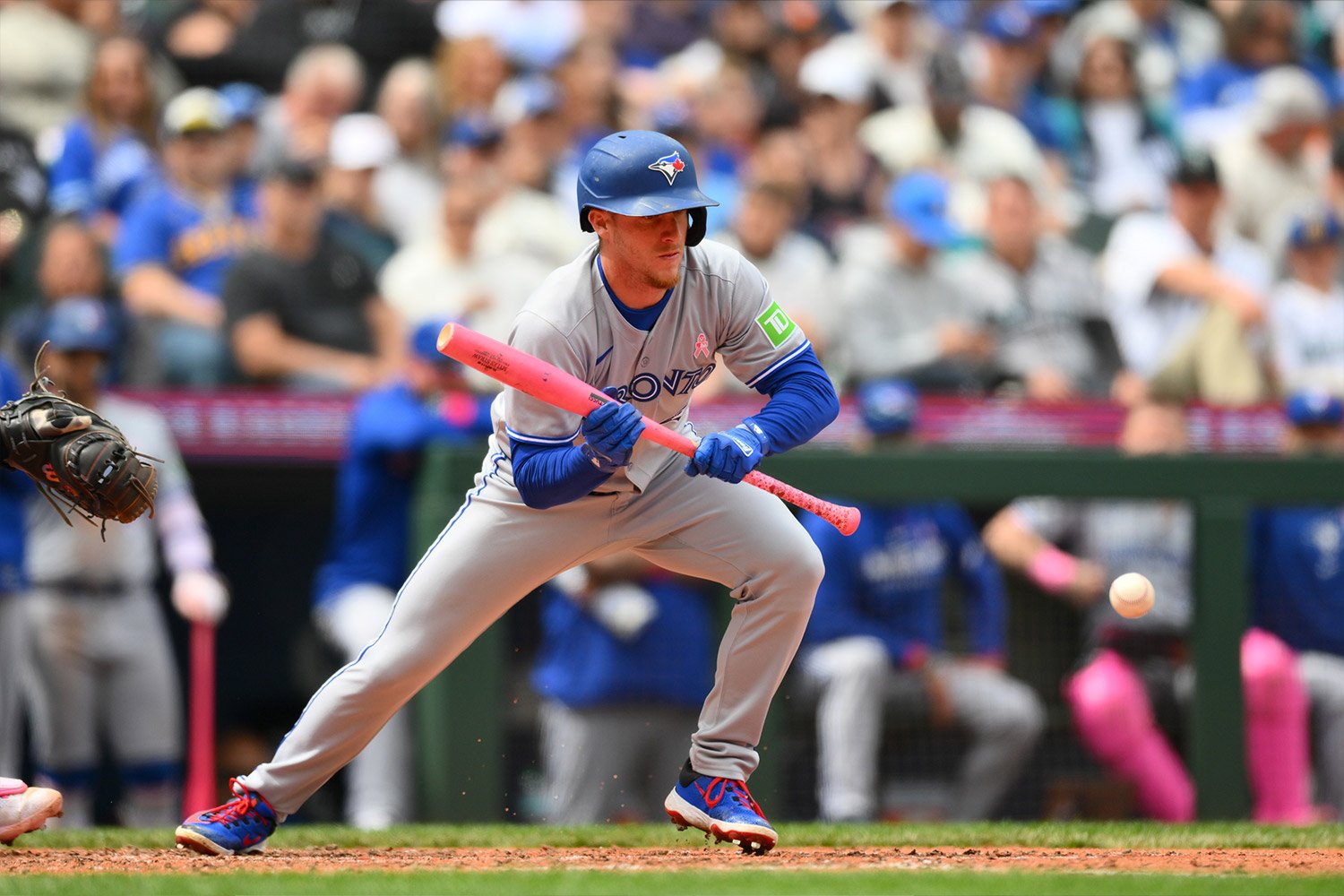 In the series opener on Monday night against the Chicago Cubs, the Jays picked up a 5-1 victory, highlighted by a three-run homer off the bat of Ernie Clement in the bottom of the sixth inning. Clement’s three-run bomb ended up bringing in the game-winning run, and was the key play in an otherwise fairly low-scoring affair. The curious thing about the homer, though, is that after the game, John Schneider told the media that Ernie Clement had missed a bunt sign prior to hitting the home run. Now, without even thinking about it, if given the choice, you, me, and the Jays would take the three run homer over a successful sacrifice bunt in every single baseball situation in the history of the sport, so why was Schneider willing to give up a chance for a three run homer – or any other run scoring hit – to willingly give the other team an out? It’s something we’ve seen the Jays do a lot this season, and to their credit, when they do it, it generally goes pretty well. The Jays are 18-6 this season when successfully completing a sacrifice bunt, with nine of those wins coming in games they won by two or less. The choice to attempt a sacrifice bunt is almost always made in close games where a single run will drastically swing the situation in your favour. Hence, the importance of execution always seems to be magnified when it comes to actually getting the bunt down and advancing the runner(s). A failed sacrifice bunt often turns into a disaster; a double play could completely take the pressure off the pitcher, or the runners could be stuck where they started while the defence gets to collect a free out. So, it’s a good thing that the Blue Jays, who have attempted the second-most sacrifice bunts in baseball, are also operating at a 75% success rate, over 10% better than league average. If you feel like the Blue Jays bunt a lot, you’d be correct. Their 40 sac bunt attempts are second only to the San Diego Padres at 48, and nearly twice as many compared to the league average of 22 so far this year. There are so many different ways to win in baseball, and there doesn’t seem to be a lot of correlation between how good a team is and how much they bunt. The Jays and Milwaukee Brewers have the two best records in baseball, and are two of the top four teams in attempted sac bunts. On the other hand, the Detroit Tigers and Philadelphia Phillies are the next two teams in the standings by record, and both are in the bottom five in attempted sacrifice bunts. Bringing it back to the Jays, I think a big part of the reason they’re so eager to sacrifice to get runners in scoring position is because of how effective they are at scoring those runners. Unfortunately, as far as I can tell, there’s no way for me to tell you which percentage of runners the Jays advance via sacrifice end up coming in to score, at least not without going through game logs and counting them individually. Still, I’ve dug up something similar that’s likely very indicative of our missing stat. The Jays are elite at both cashing runners from third base with less than two outs and from second base with zero outs. With a runner on third and less than two out, the Jays are scoring 55.9% of the time, the second-best mark in baseball, and nearly five percent better than league average. They’re even more efficient when there’s a runner on second base and none out, scoring that runner 60% of the time, which is the best mark in baseball and more than nine percent better than league average. Obviously, a sacrifice bunt cannot lead to a situation with a runner on second and none out, but the overall point that the Jays do an excellent job of executing in run-scoring situations stands. The other key factor in all of this is personnel. The way the bottom of the Blue Jays' lineup is built, they depend a lot on not striking out, putting the ball in play, executing when runners are on, and turning the lineup over for the bigger bats. Myles Straw (despite his recent power outburst against the Rangers) represents this concept perfectly and leads the team with 10 sacrifice bunts. Nathan Lukes and Ernie Clement both have six, Tyler Heineman has three, and five players have one. While all of those guys are exceeding expectations with the bat this season, late in close games against high-leverage relievers, they’re more likely to be overmatched, so a productive out, setting the table for a guy like Vladimir Guerrero Jr., George Springer, or Bo Bichette, might be the most attainable positive outcome. Ordinarily, I tend to lean towards the side of baseball enthusiasts who dislike the sacrifice bunt. Still, I’m not going to disagree with many of the decisions of the third-best offense in baseball by wRC+.
- 2 comments
-
- 1
-
-
- ernie clement
- myles straw
- (and 2 more)
-
Article: What’s Going on With Yariel Rodríguez?
Owen Hill replied to Owen Hill's topic in Jays Centre Front Page News
You're kind of right, he's only made 3 appearances since the trade deadline. But to be fair, his stuff was slipping heading into the deadline as well. -
Towards the end of May, I wrote an article advocating for Yariel Rodríguez to see more high-leverage innings out of the bullpen. Since then, he’s been a key fixture of the Blue Jays’ bullpen, getting some of the biggest outs before the ninth inning in a lot of games, and even picking up a couple of saves when Jeff Hoffman has been unavailable. On the whole, Rodríguez has had an awesome season, especially considering how limited the expectations for him were coming into the year after he struggled as a starter in his first big league campaign. He has a 2.95 ERA in 48 appearances out of the bullpen, with many of those outings longer than the standard one inning for a reliever. Still, the most difficult part of putting together a complete season, like the one Rodríguez has going on, is making it through the grind of 162 games, and the grind seems to be getting to him these days. He’s got just two strikeouts to seven walks in his last nine appearances and has given up runs in three of his last four, including in both of his outings against the Dodgers. The most obvious symptom of Rodríguez’s wavering stuff is that his fastball velocity is down. Over his most recent seven outings, he’s averaging 95.3 mph on his fastball, down from 96.1 mph in his 42 appearances before that. He’s also only touched 97 mph once since July 20, a number we saw from him pretty regularly early on in the season. The dip in fastball velocity is concerning in and of itself, and when you add that to the fact that it correlates perfectly with his walk rate spiking to above 20%, it looks an awful lot like we’re on a fast track towards disaster. As electric as we've seen Rodríguez’s stuff look at times, so much of his success has actually come from inducing soft contact. On the season, his opponents have an average exit velocity of just 86 mph, which is elite and has led to a very solid .187 opponents batting average. Combining that with a strikeout rate of 26.1% over his first 40 appearances made him one of the more effective relievers in the game. Somewhat surprisingly, his ability to limit hard contact has remained despite the rest of his profile taking a stumble. It’s a small sample, and I’d be willing to bet that if he doesn’t get his fastball velocity back and return to limiting walks, these numbers aren’t going to last long, but in his nine most recent outings, his opponents have a hard-hit rate of 33% and an average exit velocity of just 83.1 mph. Those numbers have certainly helped to keep Rodriguez’s head above water as he’s gone through a rough patch. Still, we’re starting to see the results slip, as opposing teams have taken advantage of his lack of command to score seven earned runs in his last four appearances. When a player goes through a slump, it’s easy to say what’s happening, but a lot more difficult to say why it’s happening. As I alluded to earlier, Rodríguez could be feeling the grind of a 162-game season, and his body’s not quite recovering after appearances as well as it was earlier in the season. There’s also a chance he’s dealing with a minor injury that’s impacting his mechanics. Even with the uncertainty around Rodríguez these days, the Jays bullpen is in a really good spot with the additions of Louis Varland and Seranthony Domínguez, as well as Jeff Hoffman, Brendon Little, Mason Fluharty, Tommy Nance, and Braydon Fisher playing some of their best baseball of the season. Since he’s had such a great year, and the rest of the bullpen looks like it’s in good shape, I’m not ready to push the panic button on Yariel Rodríguez yet. But, as crazy as it is to say, the Jays are entering the home stretch of the season, and if they’re going to peak at the right time, they’re going to need to identify and fix whatever’s causing this recent adversity for Rodríguez. View full article
-
.jpg.5c3dbc49c67d575dc5990fb2519853fb.jpg) Towards the end of May, I wrote an article advocating for Yariel Rodríguez to see more high-leverage innings out of the bullpen. Since then, he’s been a key fixture of the Blue Jays’ bullpen, getting some of the biggest outs before the ninth inning in a lot of games, and even picking up a couple of saves when Jeff Hoffman has been unavailable. On the whole, Rodríguez has had an awesome season, especially considering how limited the expectations for him were coming into the year after he struggled as a starter in his first big league campaign. He has a 2.95 ERA in 48 appearances out of the bullpen, with many of those outings longer than the standard one inning for a reliever. Still, the most difficult part of putting together a complete season, like the one Rodríguez has going on, is making it through the grind of 162 games, and the grind seems to be getting to him these days. He’s got just two strikeouts to seven walks in his last nine appearances and has given up runs in three of his last four, including in both of his outings against the Dodgers. The most obvious symptom of Rodríguez’s wavering stuff is that his fastball velocity is down. Over his most recent seven outings, he’s averaging 95.3 mph on his fastball, down from 96.1 mph in his 42 appearances before that. He’s also only touched 97 mph once since July 20, a number we saw from him pretty regularly early on in the season. The dip in fastball velocity is concerning in and of itself, and when you add that to the fact that it correlates perfectly with his walk rate spiking to above 20%, it looks an awful lot like we’re on a fast track towards disaster. As electric as we've seen Rodríguez’s stuff look at times, so much of his success has actually come from inducing soft contact. On the season, his opponents have an average exit velocity of just 86 mph, which is elite and has led to a very solid .187 opponents batting average. Combining that with a strikeout rate of 26.1% over his first 40 appearances made him one of the more effective relievers in the game. Somewhat surprisingly, his ability to limit hard contact has remained despite the rest of his profile taking a stumble. It’s a small sample, and I’d be willing to bet that if he doesn’t get his fastball velocity back and return to limiting walks, these numbers aren’t going to last long, but in his nine most recent outings, his opponents have a hard-hit rate of 33% and an average exit velocity of just 83.1 mph. Those numbers have certainly helped to keep Rodriguez’s head above water as he’s gone through a rough patch. Still, we’re starting to see the results slip, as opposing teams have taken advantage of his lack of command to score seven earned runs in his last four appearances. When a player goes through a slump, it’s easy to say what’s happening, but a lot more difficult to say why it’s happening. As I alluded to earlier, Rodríguez could be feeling the grind of a 162-game season, and his body’s not quite recovering after appearances as well as it was earlier in the season. There’s also a chance he’s dealing with a minor injury that’s impacting his mechanics. Even with the uncertainty around Rodríguez these days, the Jays bullpen is in a really good spot with the additions of Louis Varland and Seranthony Domínguez, as well as Jeff Hoffman, Brendon Little, Mason Fluharty, Tommy Nance, and Braydon Fisher playing some of their best baseball of the season. Since he’s had such a great year, and the rest of the bullpen looks like it’s in good shape, I’m not ready to push the panic button on Yariel Rodríguez yet. But, as crazy as it is to say, the Jays are entering the home stretch of the season, and if they’re going to peak at the right time, they’re going to need to identify and fix whatever’s causing this recent adversity for Rodríguez.
Towards the end of May, I wrote an article advocating for Yariel Rodríguez to see more high-leverage innings out of the bullpen. Since then, he’s been a key fixture of the Blue Jays’ bullpen, getting some of the biggest outs before the ninth inning in a lot of games, and even picking up a couple of saves when Jeff Hoffman has been unavailable. On the whole, Rodríguez has had an awesome season, especially considering how limited the expectations for him were coming into the year after he struggled as a starter in his first big league campaign. He has a 2.95 ERA in 48 appearances out of the bullpen, with many of those outings longer than the standard one inning for a reliever. Still, the most difficult part of putting together a complete season, like the one Rodríguez has going on, is making it through the grind of 162 games, and the grind seems to be getting to him these days. He’s got just two strikeouts to seven walks in his last nine appearances and has given up runs in three of his last four, including in both of his outings against the Dodgers. The most obvious symptom of Rodríguez’s wavering stuff is that his fastball velocity is down. Over his most recent seven outings, he’s averaging 95.3 mph on his fastball, down from 96.1 mph in his 42 appearances before that. He’s also only touched 97 mph once since July 20, a number we saw from him pretty regularly early on in the season. The dip in fastball velocity is concerning in and of itself, and when you add that to the fact that it correlates perfectly with his walk rate spiking to above 20%, it looks an awful lot like we’re on a fast track towards disaster. As electric as we've seen Rodríguez’s stuff look at times, so much of his success has actually come from inducing soft contact. On the season, his opponents have an average exit velocity of just 86 mph, which is elite and has led to a very solid .187 opponents batting average. Combining that with a strikeout rate of 26.1% over his first 40 appearances made him one of the more effective relievers in the game. Somewhat surprisingly, his ability to limit hard contact has remained despite the rest of his profile taking a stumble. It’s a small sample, and I’d be willing to bet that if he doesn’t get his fastball velocity back and return to limiting walks, these numbers aren’t going to last long, but in his nine most recent outings, his opponents have a hard-hit rate of 33% and an average exit velocity of just 83.1 mph. Those numbers have certainly helped to keep Rodriguez’s head above water as he’s gone through a rough patch. Still, we’re starting to see the results slip, as opposing teams have taken advantage of his lack of command to score seven earned runs in his last four appearances. When a player goes through a slump, it’s easy to say what’s happening, but a lot more difficult to say why it’s happening. As I alluded to earlier, Rodríguez could be feeling the grind of a 162-game season, and his body’s not quite recovering after appearances as well as it was earlier in the season. There’s also a chance he’s dealing with a minor injury that’s impacting his mechanics. Even with the uncertainty around Rodríguez these days, the Jays bullpen is in a really good spot with the additions of Louis Varland and Seranthony Domínguez, as well as Jeff Hoffman, Brendon Little, Mason Fluharty, Tommy Nance, and Braydon Fisher playing some of their best baseball of the season. Since he’s had such a great year, and the rest of the bullpen looks like it’s in good shape, I’m not ready to push the panic button on Yariel Rodríguez yet. But, as crazy as it is to say, the Jays are entering the home stretch of the season, and if they’re going to peak at the right time, they’re going to need to identify and fix whatever’s causing this recent adversity for Rodríguez.
.jpg.ba65ef1944a1ebac2ff8391643de04ea.jpg)
.jpg.7fb9bf84fdd71c4c4a3a799114129c11.jpg)
.jpg.3931b1746bc4d99a2e2b7388b4a54f69.jpg)
.jpg.ab1d369df794967cde19d6d3e86d6ddf.jpg)
.jpg.21b1dc609831c5727effc980775b5cff.jpg)
.jpg.5c3dbc49c67d575dc5990fb2519853fb.jpg)