


Daniel Labude
-
Posts
17,755 -
Joined
-
Last visited
Content Type
Profiles
Toronto Blue Jays Videos
2026 Toronto Blue Jays Top Prospects Ranking
Toronto Blue Jays Free Agent & Trade Rumors, Notes, & Tidbits
Guides & Resources
2025 Toronto Blue Jays Draft Pick Tracker
News
2026 Toronto Blue Jays Draft Tracker: Picks & Bonuses
Forums
Blogs
Events
Store
Downloads
Gallery
Everything posted by Daniel Labude
-

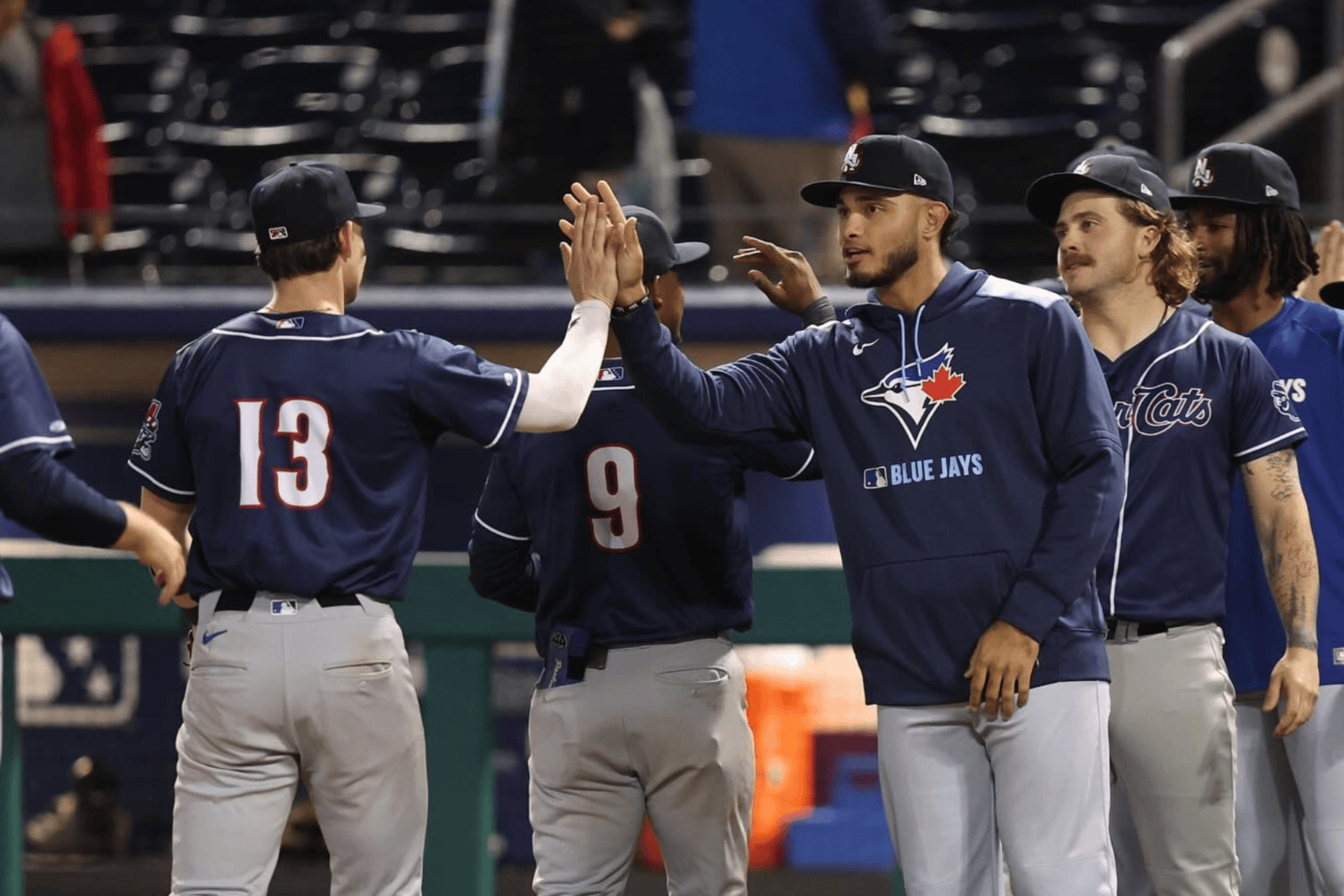 CURRENT W-L Records Buffalo Bisons: 22-33 New Hampshire Fisher Cats: 21-30 Vancouver Canadians: 24-27 Dunedin Blue Jays: 25-26 FCL Blue Jays: 15-7 DSL Blue Jays Blue: 0-1 DSL Blue Jays Red: 0-1 Transactions 06/01/25 - RHP Spencer Turnbull assigned to Buffalo Bisons from Dunedin Blue Jays. 06/01/25 - LF Yohendrick Pinango assigned to Buffalo Bisons from New Hampshire Fisher Cats. 06/01/25 - Toronto Blue Jays recalled LF Davis Schneider from Buffalo Bisons. 06/01/25 - Toronto Blue Jays optioned LHP Easton Lucas to Buffalo Bisons. 06/01/25 - Vancouver Canadians sent RHP Chris McElvain on a rehab assignment to Dunedin Blue Jays. 06/01/25 - New Hampshire Fisher Cats activated C Jacob Sharp from the temporarily inactive list. Buffalo Bisons Buffalo (5), Charlotte (4) - 5/31 Box Score Buffalo started to get things going in the first inning of this one. Following walks for Tyler Heineman and Davis Schneider, Orelvis Martinez hit a groundball back up the middle for an RBI single. The Knights immediately turned the score to 1-1, via a home run from Nick Maton. From there, Charlotte would be slowed down to a crawl by Buffalo starting pitcher Anders Tolhurst. He would go five full innings in this one and only gave up the one run on five hits while striking out four. Unfortunately, the Buffalo bats were also quiet for a large part of the game. In the sixth inning, however, Buffalo would come alive. A walk to Will Robertson and another Martinez single set up Rainer Nunez, who drove in Robertson on a single to right field. Damiano Palmegiani would double in Martinez and Nunez to give Buffalo a three-run lead. In the eighth, three singles, a double, and a Riley Tirotta error would allow the Knights to tie the game at four. In the bottom of the ninth with two outs, Ryan McCarty launched his first Triple-A home run to give Buffalo the walk-off win. Ryan McCarty: 1-4, 1 R, 1 RBI, 0 BB, 1 K, 1 HR Anders Tolhurst: 5 IP, 5 H, 1 ER, 0 BB, 5 K Buffalo (4), Charlotte (8) - 6/1 Box Score In the series finale with the Knights, Spencer Turnbull took the mound for the Bisons. It was a short outing for him, as he only managed to pitch 1.2 innings before the Knights got on the scoreboard for two runs. His command was an issue in this one, resulting in three walks and a hit by pitch. In the fifth inning, the game turned even further south for Buffalo. The Knights scored six runs in the inning, and the Buffalo pitchers could not find the strike zone again. Two runs scored on bases-loaded walks, with four more coming on a wild pitch, a two-run RBI triple, and an RBI single. Buffalo would answer with two runs in the fifth and two runs in the seventh. Heineman and Robertson led the rallies with RBI singles. With the score 8-4, Penn Murfee came on for the Knights to close the game. Buffalo would get two men on in the ninth, but Martinez hit a rocket line drive to the shortstop at 100 mph that ended the game via a double play. Josh Rivera: 1-2, 2 R, 1 RBI, 2 BB, 1 K, Andrew Bash: 2.1 IP, 0 H, 0 ER, 1 BB, 0 K New Hampshire Fisher Cats New Hampshire (5), Hartford (14) - 5/31 Box Score Saturday presented a tough matchup for New Hampshire, with Sean Sullivan on the mound for Hartford. The Fisher Cats started strong, with a leadoff double by Yohendrick Pinango. That is where the day would end for him, as he was pulled from the game with a promotion to Triple A. Peyton Williams replaced him on the basepaths and came around to score on an Eddinson Paulino single. The Fisher Cats would add two more runs off of Sullivan in the top of the fifth on a two-run home run by Devonte Brown. Unfortunately for New Hampshire, Hartford put a beating on Rafael Sanchez. It started in the bottom of the first inning when they put up five runs on five hits and even had a double steal (second base and home). After adding a run in the second inning, Hartford exploded again in the fourth inning for six more runs (highlighted by two doubles and two home runs). Sanchez ended the day giving up 10 runs, eight of which were earned runs. A Paulino solo home run in the eighth and a Williams RBI single in the ninth was all the scoring New Hampshire would add, as they fell to Hartford 14-5. Devonte Brown: 2-4, 2 R, 2 RBI. 1 K, 1 HR, 1 2B Nate Garkow: 1 IP, 0 H, 0 ER, 0 BB, 3 K New Hampshire (9), Hartford (4) - 6/1 Box Score In the Sunday finale of the series with Hartford, New Hampshire sent Grant Rogers to the mound in hopes he would have better luck than Sanchez did the game before. Rogers was remarkably better, holding the Hartford bats to only three runs (two earned) over four innings. In the first inning, he allowed a walk to come around and score on a single. In the second, he got touched up for two runs on a GJ Hill home run. On the flip side, New Hampshire got their scoring started in the first inning on a Paulino double. Another Paulino double scored a run in the third inning, as did another run on a Charles McAdoo single. McAdoo himself came around to score on a Williams single. In the fifth inning, the fireworks show began with a bang. Williams hit his fifth home run of the season, a two-run shot that scored McAdoo. Cade Doughty sent one out, his first of the year, to go back-to-back with Williams. New Hampshire took a 7-3 lead into the sixth inning, where Hartford added a run on a Bryant Betancourt home run. Williams got that run back in the top of the seventh on a double to left field, scoring Jace Bohrofen. New Hampshire would add a final run on a bases-loaded walk, winning by a score of 9-4. Peyton Williams: 3-4, 2 R, 4 RBI, 1 BB, 1 K, 1 HR, 1 2B Grant Rogers: 4 IP, 2 H, 2 ER, 2 BB, 2 K Vancouver Canadians Vancouver (1), Hillsboro (0) - 5/31 Box Score Trey Yesavage’s start was delayed by an hour, but it didn’t really faze him, as he started a shutout for the Canadians against the Hops. Yesavage pitched 4 ⅓ no-hit innings with five strikeouts, but the walks continued to be an issue for him as he walked three. Bo Bonds got the next two outs before Gage Stanifer came in to piggyback off of Yesavage once again. He gave up just one hit, with two walks and seven strikeouts to complete the shutout, with all three pitchers combining to allow one hit. Offensively, the Canadians threatened often, with the top and middle of the order combining for eight hits and three walks, and Arjun Nimmala, Victor Arias, and Jackson Hornung each reaching base multiple times. However, the team went 2-for-7 with RISP and a LOB of 9, but Sean Keys came up clutch in the bottom of the sixth inning, knocking in Arias for the only run of the ball game. Jackson Hornung: 3-4, 1 2B, 1 K The converted catcher now has an OPS of .906, which leads the team, although he still is not a qualified hitter. Hornung has split time between left field, first base, and designated hitter, and he’s been hitting really well. Gage Stanifer: 4 IP, 1 H, 2 BB, 7 K After a rough first appearance with the Canadians where he walked five batters, Stanifer has settled down against High-A hitters, with 14 strikeouts in his last two appearances, while only allowing three walks, three hits, and a lone run. Stanifer has struck out six or more batters in all but two of his games pitched. Vancouver (7), Hillsboro (6) - 6/1 Box Score It was a back-and-forth game between the Hops and the Canadians, as the Canadians tried to win five out of six. The game started off slowly until Nicolas Deschamps gave the Canadians an early lead, which was promptly answered the inning after. Hornung took the lead back in the fifth, and the Hops once again answered back the inning after, this time with a three-run inning that knocked Perez out of the game and made Kai Peterson blow his second save of the season. The Hops scored another two runs in the sixth, and it looked like the Canadians were going to lose the last game of the series, but in the eighth inning, Nick Goodwin hit a three-run homer to bring the game within one. After Cunningham and Parker singled and Nimmala loaded the bases with a walk, Carlos Rey threw a wild pitch that tied the game up at six apiece heading into the ninth inning. JJ Sanchez and Chay Yeager were strong in relief for the Canadians and prevented the Hops from scoring, while Arias walked off the game for the Canadians with an RBI double to score the ghost runner, Aaron Parker. Nick Goodwin: 2-5, 1 R, 3 RBI, 1 HR, 1 K This was Goodwin’s third homer in a week, as the 2023 seventh-round pick finally raised his OPS above .700. His wRC+ is now above average. Fernando Perez - 5.1 IP, 4 H, 2 ER, 1 BB, 4 K, 1 HR Perez seems to have really gotten his feet under him in Vancouver, with another five-inning start. He’s carried over a strong May into June, and although his strikeout rate is still below average, he’s been very good at limiting walks, as he’s done throughout his career. Dunedin Blue Jays Dunedin (5), Clearwater (3) - 5/31 Box Score Dunedin finally got a win in a close match against Clearwater, with every single Dunedin Jay getting a hit except for Tucker Toman. The Jays put on a big fifth inning, where Jean Joseph’s double and Andrés Giménez’s clutch two-RBI single led the way to a five-run frame. Edward Duran continued his hitting streak, and Juanmi Vasquez was great after Austin Cates was taken out, striking out three batters in 2 ⅔ innings of work. Jay Schueler made it interesting in the ninth inning, allowing one earned run and one unearned run after a Duran throwing error, but Jack Eshleman earned the save after Schueler was taken out of the game. The Jays didn’t score after the fifth inning, but that was all they really needed. Jean Joseph: 1-3, 1 R, 2 RBI, 1 K, 1 2B Joseph has been a doubles machine recently, with his fifth in eight games. Austin Cates: 4.1 IP, 3 H, 1 ER, 3 BB, 6 K Cates has had a strong four-game stretch, striking out 19 batters in 16 innings with an ERA of 2.25. He’s been very solid since Yesavage, Stephen and Stanifer left and has filled their roles well enough. Dunedin (3), Clearwater (5) - 6/1 Box Score Chris McElvain continues to work his way back on rehab assignment, and he had a decent start, allowing two runs in the fourth inning and striking out four batters. He did walk three batters, but it was one of his better starts this season. Cuban pitcher Silvano Hechavarria made his season debut with the Dunedin Blue Jays after starting off in the Florida Complex League. He did give up a two-run homer in the sixth inning, but he struck out two batters and only gave up one walk. Bryce Arnold led the way for the Jays, as he drove in two out of their three runs, but they continued to slide down the standings, reversing the score that they had the night prior when they won. Bryce Arnold: 2-4, 1 R, 2 RBI, 1 HR, 1 K It’s a little surprising that Arnold is still down in Low A, but the core group of position players in High A is already stacked enough as is, and he may not be able to find playing time if he were to move up. It’d be nice for the Canadian prospect to be able to play in Vancouver again, although his hometown of Hamilton is pretty far away. Colby Martin - 1 IP, 0 ER, 0 BB, 2 K FCL Blue Jays F-BLU (2), F-TIG (1) - 6/2- Game 1 Box Score In game one of the Monday doubleheader, Adam Macko, who is still rehabbing, got the start for the Blue Jays' squad. He surrendered one run in the bottom of the first on two singles and a sacrifice fly. After that, he shut down the Tigers' team. On the day, Macko went five innings, gave up four hits, a walk, and an earned run, and struck out seven. In the fourth inning, Enmanuel Bonilla drove in the tying run on an RBI double. In the sixth inning, David Beckles continued his superb play with a home run to left field. Franly Urena came on in the seventh to secure the save and a victory for the Blue Jays. David Beckles: 2-3, 1 R, 1 RBI, 0 BB, 1 K, 1 HR Adam Macko: 5 IP, 4 H, 1 ER, 0 BB, 7 K F-BLU (1), F-TIG (3) - 6/2- Game 2 Box Score In the second game of the day, Johnny King took the mound for the Blue Jays, and he continued his magnificent start to his pro career. He pitched 3.2 innings, only allowed four hits, didn't give up a run or a walk, and continued to make easy work of FCL hitters by striking out seven more. He has now thrown 11.2 innings without giving up a run while striking out 19 on the season. In the second inning, Bonilla got the Blue Jays on the board with his second home run of the season. Following a long lull for both offenses, Clayton Campbell of the Tigers tied the game on a home run to right field. Both teams put up zeros until the eighth, when the Tigers' team used two singles, a walk, and a hit by pitch to score two runs. The Blue Jays' team would be shut out in their half of the eighth, losing this one 3-1. Enmanuel Bonilla: 1-3, 1 R, 1 RBI, 0 BB, 2 K, 1 HR Johnny King: 3.2 IP, 4 H, 0 ER, 0 BB, 7 K DSL Blue Jays Blue D-BJB (6), D-ARB (7) - 6/2 Box Score The DSL Blue Jays Blue (BJB) team kicked off their season on Monday morning, taking on one of the teams from the Arizona Diamondbacks organization. The BJB team got their scoring started in the bottom of the first inning with a double from Cristopher Polanco, who would come around to score on Juarlin Soto's single. In the bottom of the second inning, they added a run on a Darwin Núñez single. The Arizona DSL team managed to have a couple of big innings, scoring two in the fifth inning and four in the seventh inning. They would hold a 7-2 lead headed into the bottom of the ninth inning when BJB got a rally going. Rafael Flores doubled in J.T. Bain and Angel Guzman. Soto followed that up by doubling in Elian De La Cruz and Flores. After a pitching change, Elian Reyes struck out to end the game, with BJB losing 7-6. Juarlin Soto: 3-5, 2 RBI, 1 2B Rafael Flores: 2-3, 1 R, 2 RBI, 1 BB, 1 2B, 1 SB Cristhian Duarte: 4.2 IP, 2 H, 3 ER, 4 BB, 1 K DSL Blue Jays Red D-BJR (4), D-PIB (5) F/7 - 6/2 Box Score This season, the Blue Jays added a second DSL team, Blue Jays Red (BJR). On Monday, BJR took on one of the DSL teams from the Pittsburgh Pirates organization (PIB) to open their season. In the top of the second inning, Endry Reyes doubled home Keegan Pieternella on a shot to left field. In the third inning, BJR got two more runs on an RBI single from Pieternella and a double from Nestor Urbina. They added another run from Juan Sanchez's single in the fifth, scoring Reyes. After PIB tied the game up at four in the bottom of the sixth inning, they walked it off in the bottom of the seventh. BJR fell in their first game of the season, 5-4. Endry Reyes: 1-2, 1 R, 1 RBI, 1 BB, 1 2B Luis Fonseca: 4 IP, 3 H, 0 ER, 2 BB, 5 K Toronto Blue Jays Minor League Players of the Period Pitcher of the Period: RHP Gage Stanifer (Vancouver) - 4 IP, 1 H, 0 ER, 2 BB, 7 K Hitter of the Period: SS Eddinson Paulino (New Hampshire) - 4-9, 2 R, 4 RBI, 2 BB, 2 K, 1 HR, 2 2B Prospect Summary (Last 3 Days) 1. Arjun Nimmala (Vancouver) - 2-5, 4 BB, 1 K, 2. Ricky Tiedemann (Buffalo) - DNP 3. Trey Yesavage (Vancouver) - 4.1 IP, 0 H, 0 ER, 4 BB, 5 K 4. Orelvis Martinez (Buffalo) - 2-8, 1 R, 2 RBI, 5. Khal Stephen (Vancouver) - DNP 6. Jake Bloss (Buffalo) - DNP 7. Alan Roden (Buffalo) - 0-0, 1 R 8. Landen Maroudis (FCL Jays) - DNP 9. Jonatan Clase (Toronto) - 2-7, 1 K 10. Kendry Rojas (Vancouver) - DNP 11. Josh Kasevich (Dunedin) - DNP 12. Johnny King (FCL Blue Jays) - 3.2 IP, 4 H, 0 ER, 0 BB, 7 K 13. Gage Stanifer (Vancouver) - 4 IP, 1 H, 0 ER, 2 BB, 7 K 14. Adam Macko (FCL Jays) - 5 IP, 4 H, 1 ER, 0 BB, 7 K 15. Charles McAdoo (New Hampshire) - 1-9, 1 R, 1 RBI, 4 K, 1 SB 16. Fernando Perez (Vancouver) - 5.1 IP, 4 H, 2 ER, 1 BB, 4 K 17. Brandon Barriera (Dunedin) - DNP 18. Enmanuel Bonilla (FCL Blue Jays) - 2-6, 1 R, 2 RBI, 2 K, 1 HR, 1 2B 19. Juaron Watts-Brown (New Hampshire) - DNP 20. Jace Bohrofen (New Hampshire) - 0-6, 1 R, 2 BB, 4 K,
 -
CURRENT W-L Records Buffalo Bisons: 22-33 New Hampshire Fisher Cats: 21-30 Vancouver Canadians: 24-27 Dunedin Blue Jays: 25-26 FCL Blue Jays: 15-7 DSL Blue Jays Blue: 0-1 DSL Blue Jays Red: 0-1 Transactions 06/01/25 - RHP Spencer Turnbull assigned to Buffalo Bisons from Dunedin Blue Jays. 06/01/25 - LF Yohendrick Pinango assigned to Buffalo Bisons from New Hampshire Fisher Cats. 06/01/25 - Toronto Blue Jays recalled LF Davis Schneider from Buffalo Bisons. 06/01/25 - Toronto Blue Jays optioned LHP Easton Lucas to Buffalo Bisons. 06/01/25 - Vancouver Canadians sent RHP Chris McElvain on a rehab assignment to Dunedin Blue Jays. 06/01/25 - New Hampshire Fisher Cats activated C Jacob Sharp from the temporarily inactive list. Buffalo Bisons Buffalo (5), Charlotte (4) - 5/31 Box Score Buffalo started to get things going in the first inning of this one. Following walks for Tyler Heineman and Davis Schneider, Orelvis Martinez hit a groundball back up the middle for an RBI single. The Knights immediately turned the score to 1-1, via a home run from Nick Maton. From there, Charlotte would be slowed down to a crawl by Buffalo starting pitcher Anders Tolhurst. He would go five full innings in this one and only gave up the one run on five hits while striking out four. Unfortunately, the Buffalo bats were also quiet for a large part of the game. In the sixth inning, however, Buffalo would come alive. A walk to Will Robertson and another Martinez single set up Rainer Nunez, who drove in Robertson on a single to right field. Damiano Palmegiani would double in Martinez and Nunez to give Buffalo a three-run lead. In the eighth, three singles, a double, and a Riley Tirotta error would allow the Knights to tie the game at four. In the bottom of the ninth with two outs, Ryan McCarty launched his first Triple-A home run to give Buffalo the walk-off win. Ryan McCarty: 1-4, 1 R, 1 RBI, 0 BB, 1 K, 1 HR Anders Tolhurst: 5 IP, 5 H, 1 ER, 0 BB, 5 K Buffalo (4), Charlotte (8) - 6/1 Box Score In the series finale with the Knights, Spencer Turnbull took the mound for the Bisons. It was a short outing for him, as he only managed to pitch 1.2 innings before the Knights got on the scoreboard for two runs. His command was an issue in this one, resulting in three walks and a hit by pitch. In the fifth inning, the game turned even further south for Buffalo. The Knights scored six runs in the inning, and the Buffalo pitchers could not find the strike zone again. Two runs scored on bases-loaded walks, with four more coming on a wild pitch, a two-run RBI triple, and an RBI single. Buffalo would answer with two runs in the fifth and two runs in the seventh. Heineman and Robertson led the rallies with RBI singles. With the score 8-4, Penn Murfee came on for the Knights to close the game. Buffalo would get two men on in the ninth, but Martinez hit a rocket line drive to the shortstop at 100 mph that ended the game via a double play. Josh Rivera: 1-2, 2 R, 1 RBI, 2 BB, 1 K, Andrew Bash: 2.1 IP, 0 H, 0 ER, 1 BB, 0 K New Hampshire Fisher Cats New Hampshire (5), Hartford (14) - 5/31 Box Score Saturday presented a tough matchup for New Hampshire, with Sean Sullivan on the mound for Hartford. The Fisher Cats started strong, with a leadoff double by Yohendrick Pinango. That is where the day would end for him, as he was pulled from the game with a promotion to Triple A. Peyton Williams replaced him on the basepaths and came around to score on an Eddinson Paulino single. The Fisher Cats would add two more runs off of Sullivan in the top of the fifth on a two-run home run by Devonte Brown. Unfortunately for New Hampshire, Hartford put a beating on Rafael Sanchez. It started in the bottom of the first inning when they put up five runs on five hits and even had a double steal (second base and home). After adding a run in the second inning, Hartford exploded again in the fourth inning for six more runs (highlighted by two doubles and two home runs). Sanchez ended the day giving up 10 runs, eight of which were earned runs. A Paulino solo home run in the eighth and a Williams RBI single in the ninth was all the scoring New Hampshire would add, as they fell to Hartford 14-5. Devonte Brown: 2-4, 2 R, 2 RBI. 1 K, 1 HR, 1 2B Nate Garkow: 1 IP, 0 H, 0 ER, 0 BB, 3 K New Hampshire (9), Hartford (4) - 6/1 Box Score In the Sunday finale of the series with Hartford, New Hampshire sent Grant Rogers to the mound in hopes he would have better luck than Sanchez did the game before. Rogers was remarkably better, holding the Hartford bats to only three runs (two earned) over four innings. In the first inning, he allowed a walk to come around and score on a single. In the second, he got touched up for two runs on a GJ Hill home run. On the flip side, New Hampshire got their scoring started in the first inning on a Paulino double. Another Paulino double scored a run in the third inning, as did another run on a Charles McAdoo single. McAdoo himself came around to score on a Williams single. In the fifth inning, the fireworks show began with a bang. Williams hit his fifth home run of the season, a two-run shot that scored McAdoo. Cade Doughty sent one out, his first of the year, to go back-to-back with Williams. New Hampshire took a 7-3 lead into the sixth inning, where Hartford added a run on a Bryant Betancourt home run. Williams got that run back in the top of the seventh on a double to left field, scoring Jace Bohrofen. New Hampshire would add a final run on a bases-loaded walk, winning by a score of 9-4. Peyton Williams: 3-4, 2 R, 4 RBI, 1 BB, 1 K, 1 HR, 1 2B Grant Rogers: 4 IP, 2 H, 2 ER, 2 BB, 2 K Vancouver Canadians Vancouver (1), Hillsboro (0) - 5/31 Box Score Trey Yesavage’s start was delayed by an hour, but it didn’t really faze him, as he started a shutout for the Canadians against the Hops. Yesavage pitched 4 ⅓ no-hit innings with five strikeouts, but the walks continued to be an issue for him as he walked three. Bo Bonds got the next two outs before Gage Stanifer came in to piggyback off of Yesavage once again. He gave up just one hit, with two walks and seven strikeouts to complete the shutout, with all three pitchers combining to allow one hit. Offensively, the Canadians threatened often, with the top and middle of the order combining for eight hits and three walks, and Arjun Nimmala, Victor Arias, and Jackson Hornung each reaching base multiple times. However, the team went 2-for-7 with RISP and a LOB of 9, but Sean Keys came up clutch in the bottom of the sixth inning, knocking in Arias for the only run of the ball game. Jackson Hornung: 3-4, 1 2B, 1 K The converted catcher now has an OPS of .906, which leads the team, although he still is not a qualified hitter. Hornung has split time between left field, first base, and designated hitter, and he’s been hitting really well. Gage Stanifer: 4 IP, 1 H, 2 BB, 7 K After a rough first appearance with the Canadians where he walked five batters, Stanifer has settled down against High-A hitters, with 14 strikeouts in his last two appearances, while only allowing three walks, three hits, and a lone run. Stanifer has struck out six or more batters in all but two of his games pitched. Vancouver (7), Hillsboro (6) - 6/1 Box Score It was a back-and-forth game between the Hops and the Canadians, as the Canadians tried to win five out of six. The game started off slowly until Nicolas Deschamps gave the Canadians an early lead, which was promptly answered the inning after. Hornung took the lead back in the fifth, and the Hops once again answered back the inning after, this time with a three-run inning that knocked Perez out of the game and made Kai Peterson blow his second save of the season. The Hops scored another two runs in the sixth, and it looked like the Canadians were going to lose the last game of the series, but in the eighth inning, Nick Goodwin hit a three-run homer to bring the game within one. After Cunningham and Parker singled and Nimmala loaded the bases with a walk, Carlos Rey threw a wild pitch that tied the game up at six apiece heading into the ninth inning. JJ Sanchez and Chay Yeager were strong in relief for the Canadians and prevented the Hops from scoring, while Arias walked off the game for the Canadians with an RBI double to score the ghost runner, Aaron Parker. Nick Goodwin: 2-5, 1 R, 3 RBI, 1 HR, 1 K This was Goodwin’s third homer in a week, as the 2023 seventh-round pick finally raised his OPS above .700. His wRC+ is now above average. Fernando Perez - 5.1 IP, 4 H, 2 ER, 1 BB, 4 K, 1 HR Perez seems to have really gotten his feet under him in Vancouver, with another five-inning start. He’s carried over a strong May into June, and although his strikeout rate is still below average, he’s been very good at limiting walks, as he’s done throughout his career. Dunedin Blue Jays Dunedin (5), Clearwater (3) - 5/31 Box Score Dunedin finally got a win in a close match against Clearwater, with every single Dunedin Jay getting a hit except for Tucker Toman. The Jays put on a big fifth inning, where Jean Joseph’s double and Andrés Giménez’s clutch two-RBI single led the way to a five-run frame. Edward Duran continued his hitting streak, and Juanmi Vasquez was great after Austin Cates was taken out, striking out three batters in 2 ⅔ innings of work. Jay Schueler made it interesting in the ninth inning, allowing one earned run and one unearned run after a Duran throwing error, but Jack Eshleman earned the save after Schueler was taken out of the game. The Jays didn’t score after the fifth inning, but that was all they really needed. Jean Joseph: 1-3, 1 R, 2 RBI, 1 K, 1 2B Joseph has been a doubles machine recently, with his fifth in eight games. Austin Cates: 4.1 IP, 3 H, 1 ER, 3 BB, 6 K Cates has had a strong four-game stretch, striking out 19 batters in 16 innings with an ERA of 2.25. He’s been very solid since Yesavage, Stephen and Stanifer left and has filled their roles well enough. Dunedin (3), Clearwater (5) - 6/1 Box Score Chris McElvain continues to work his way back on rehab assignment, and he had a decent start, allowing two runs in the fourth inning and striking out four batters. He did walk three batters, but it was one of his better starts this season. Cuban pitcher Silvano Hechavarria made his season debut with the Dunedin Blue Jays after starting off in the Florida Complex League. He did give up a two-run homer in the sixth inning, but he struck out two batters and only gave up one walk. Bryce Arnold led the way for the Jays, as he drove in two out of their three runs, but they continued to slide down the standings, reversing the score that they had the night prior when they won. Bryce Arnold: 2-4, 1 R, 2 RBI, 1 HR, 1 K It’s a little surprising that Arnold is still down in Low A, but the core group of position players in High A is already stacked enough as is, and he may not be able to find playing time if he were to move up. It’d be nice for the Canadian prospect to be able to play in Vancouver again, although his hometown of Hamilton is pretty far away. Colby Martin - 1 IP, 0 ER, 0 BB, 2 K FCL Blue Jays F-BLU (2), F-TIG (1) - 6/2- Game 1 Box Score In game one of the Monday doubleheader, Adam Macko, who is still rehabbing, got the start for the Blue Jays' squad. He surrendered one run in the bottom of the first on two singles and a sacrifice fly. After that, he shut down the Tigers' team. On the day, Macko went five innings, gave up four hits, a walk, and an earned run, and struck out seven. In the fourth inning, Enmanuel Bonilla drove in the tying run on an RBI double. In the sixth inning, David Beckles continued his superb play with a home run to left field. Franly Urena came on in the seventh to secure the save and a victory for the Blue Jays. David Beckles: 2-3, 1 R, 1 RBI, 0 BB, 1 K, 1 HR Adam Macko: 5 IP, 4 H, 1 ER, 0 BB, 7 K F-BLU (1), F-TIG (3) - 6/2- Game 2 Box Score In the second game of the day, Johnny King took the mound for the Blue Jays, and he continued his magnificent start to his pro career. He pitched 3.2 innings, only allowed four hits, didn't give up a run or a walk, and continued to make easy work of FCL hitters by striking out seven more. He has now thrown 11.2 innings without giving up a run while striking out 19 on the season. In the second inning, Bonilla got the Blue Jays on the board with his second home run of the season. Following a long lull for both offenses, Clayton Campbell of the Tigers tied the game on a home run to right field. Both teams put up zeros until the eighth, when the Tigers' team used two singles, a walk, and a hit by pitch to score two runs. The Blue Jays' team would be shut out in their half of the eighth, losing this one 3-1. Enmanuel Bonilla: 1-3, 1 R, 1 RBI, 0 BB, 2 K, 1 HR Johnny King: 3.2 IP, 4 H, 0 ER, 0 BB, 7 K DSL Blue Jays Blue D-BJB (6), D-ARB (7) - 6/2 Box Score The DSL Blue Jays Blue (BJB) team kicked off their season on Monday morning, taking on one of the teams from the Arizona Diamondbacks organization. The BJB team got their scoring started in the bottom of the first inning with a double from Cristopher Polanco, who would come around to score on Juarlin Soto's single. In the bottom of the second inning, they added a run on a Darwin Núñez single. The Arizona DSL team managed to have a couple of big innings, scoring two in the fifth inning and four in the seventh inning. They would hold a 7-2 lead headed into the bottom of the ninth inning when BJB got a rally going. Rafael Flores doubled in J.T. Bain and Angel Guzman. Soto followed that up by doubling in Elian De La Cruz and Flores. After a pitching change, Elian Reyes struck out to end the game, with BJB losing 7-6. Juarlin Soto: 3-5, 2 RBI, 1 2B Rafael Flores: 2-3, 1 R, 2 RBI, 1 BB, 1 2B, 1 SB Cristhian Duarte: 4.2 IP, 2 H, 3 ER, 4 BB, 1 K DSL Blue Jays Red D-BJR (4), D-PIB (5) F/7 - 6/2 Box Score This season, the Blue Jays added a second DSL team, Blue Jays Red (BJR). On Monday, BJR took on one of the DSL teams from the Pittsburgh Pirates organization (PIB) to open their season. In the top of the second inning, Endry Reyes doubled home Keegan Pieternella on a shot to left field. In the third inning, BJR got two more runs on an RBI single from Pieternella and a double from Nestor Urbina. They added another run from Juan Sanchez's single in the fifth, scoring Reyes. After PIB tied the game up at four in the bottom of the sixth inning, they walked it off in the bottom of the seventh. BJR fell in their first game of the season, 5-4. Endry Reyes: 1-2, 1 R, 1 RBI, 1 BB, 1 2B Luis Fonseca: 4 IP, 3 H, 0 ER, 2 BB, 5 K Toronto Blue Jays Minor League Players of the Period Pitcher of the Period: RHP Gage Stanifer (Vancouver) - 4 IP, 1 H, 0 ER, 2 BB, 7 K Hitter of the Period: SS Eddinson Paulino (New Hampshire) - 4-9, 2 R, 4 RBI, 2 BB, 2 K, 1 HR, 2 2B Prospect Summary (Last 3 Days) 1. Arjun Nimmala (Vancouver) - 2-5, 4 BB, 1 K, 2. Ricky Tiedemann (Buffalo) - DNP 3. Trey Yesavage (Vancouver) - 4.1 IP, 0 H, 0 ER, 4 BB, 5 K 4. Orelvis Martinez (Buffalo) - 2-8, 1 R, 2 RBI, 5. Khal Stephen (Vancouver) - DNP 6. Jake Bloss (Buffalo) - DNP 7. Alan Roden (Buffalo) - 0-0, 1 R 8. Landen Maroudis (FCL Jays) - DNP 9. Jonatan Clase (Toronto) - 2-7, 1 K 10. Kendry Rojas (Vancouver) - DNP 11. Josh Kasevich (Dunedin) - DNP 12. Johnny King (FCL Blue Jays) - 3.2 IP, 4 H, 0 ER, 0 BB, 7 K 13. Gage Stanifer (Vancouver) - 4 IP, 1 H, 0 ER, 2 BB, 7 K 14. Adam Macko (FCL Jays) - 5 IP, 4 H, 1 ER, 0 BB, 7 K 15. Charles McAdoo (New Hampshire) - 1-9, 1 R, 1 RBI, 4 K, 1 SB 16. Fernando Perez (Vancouver) - 5.1 IP, 4 H, 2 ER, 1 BB, 4 K 17. Brandon Barriera (Dunedin) - DNP 18. Enmanuel Bonilla (FCL Blue Jays) - 2-6, 1 R, 2 RBI, 2 K, 1 HR, 1 2B 19. Juaron Watts-Brown (New Hampshire) - DNP 20. Jace Bohrofen (New Hampshire) - 0-6, 1 R, 2 BB, 4 K, View full article
-
- 1
-

-
- gage stanifer
- eddinson paulino
- (and 5 more)
-
.jpg.c5209278e70ad14d440449aef66f8de7.jpg) CURRENT W-L Records Buffalo Bisons: 18-31 New Hampshire Fisher Cats: 17-27 Vancouver Canadians: 19-26 Dunedin Blue Jays: 24-21 FCL Blue Jays: 11-6 DSL Blue Jays: 0-0 (Season not started) Transactions 05/26/25 - Vancouver Canadians sent RHP Chris McElvain on a rehab assignment to FCL Blue Jays. 05/25/25 - Buffalo Bisons sent SS Josh Kasevich on a rehab assignment to Dunedin Blue Jays. 05/25/25 - Toronto Blue Jays sent RHP Ryan Burr on a rehab assignment to Buffalo Bisons. 05/25/25 - Buffalo Bisons activated RHP Anders Tolhurst from the temporarily inactive list. 05/25/25 - Toronto Blue Jays selected the contract of C Ali Sánchez from Buffalo Bisons. 05/25/25 - C Robert Brooks assigned to Buffalo Bisons from New Hampshire Fisher Cats. 05/24/25 - Buffalo Bisons placed RHP Eric Pardinho on the 7-day injured list retroactive to May 23, 2025.05/24/25 - Toronto Blue Jays recalled RHP Paxton Schultz from Buffalo Bisons. 05/24/25 - Dunedin Blue Jays activated RHP Eliander Alcalde from the 7-day injured list. 05/24/25 - RHP Jack Eshleman assigned to Dunedin Blue Jays from FCL Blue Jays. Buffalo Bisons Buffalo (1), Lehigh(4) - 5/24 - Game 1 Box Score Buffalo started the Saturday doubleheader the right way in the top of the first inning against another tough Lehigh Valley starting pitcher. Davis Schneider singled, Alan Roden walked, and Joey Loperfido also took a walk to load the bases. Orelvis Martinez then brought home the first run of the game with a sacrifice fly. Unfortunately, the lack of hits with runners on base was a sign of things to come. Mick Abel, who was the Lehigh Valley starting pitcher in the first game, took charge after the first inning and shut down the Buffalo hitters the rest of the way. He pitched six innings, striking out eight, and only allowed two hits after the first inning. The Buffalo starter did not have the same success, as Adam Kloffenstein surrendered four earned runs over the first two innings. After the second inning, though, even the Lehigh offense couldn't manage any runs. Buffalo would lose this one by a score of 4-1. Davis Schneider: 1-2, 1 R, 0 RBI, 2 BB, 0 K Ryan Jennings: 1 IP, 1 H, 0 ER, 0 BB, 1 K Buffalo (2), Lehigh(4) - 5/24 - Game 2 Box Score In game two of the Saturday doubleheader, Buffalo and Lehigh Valley played a similar game to the first contest. Lehigh Valley took a commanding lead in the second inning, scoring four runs on an error, two singles, and a home run. The Buffalo offense was completely shut down in the seven-inning game. They only managed two hits, and the big one was a two-run double by Josh Rivera in the top of the sixth inning to cut the Lehigh Valley lead to just two. In the seventh, Buffalo mounted a late rally trying to tie the game. Two batters were hit by pitches and Phil Clarke had a single. With the bases loaded, Rivera could not come through this time, as he popped out to end the game. Josh Rivera: 1-3, 0 R, 2 RBI, 0 BB, 0 K, 1 2B Tommy Nance: 2 IP, 0 H, 0 ER, 0 BB, 5 K Buffalo (2), Lehigh (7) - 5/25 Box Score In the Sunday series finale with Lehigh Valley, the Buffalo Bisons could not get over their offensive and pitching slumps. In the first inning, Buddy Kennedy gave Lehigh Valley the lead on an RBI single to center field. Will Robertson answered right back with a home run to right field. It was all downhill from there for Buffalo, as Lehigh Valley would score four more in the bottom of the second inning. Defense was an issue for Buffalo in this game, as catcher Clarke committed three errors. A fielding error in the second allowed a run to score, and a throwing error in the third on a steal attempt did the same. Later in the fourth inning, a wild pitch by Buffalo allowed another run. In the seventh inning, Buffalo managed to load the bases, but again could not find that big hit. They only managed one run on a Roden groundout. Buffalo would lose this one 7-2. Will Robertson: 1-4, 1 R, 1 RBI, 0 BB, 2 K, 1 HR Justin Bruihl: 1 IP, 0 H, 0 ER, 1 BB, 2 K New Hampshire Fisher Cats New Hampshire (1), Somerset (7) F/7 - 5/24 - Game 1 Box Score New Hampshire and Somerset kicked off the weekend set of games with a doubleheader on Saturday. In game one, the Fisher Cats had Devereaux Harrison on the mound, but it would not be a fine day for him. In the top of the first inning, Somerset pounced on Harrison and chased him from the game with two-run singles from Tyler Hardman and Antonio Gomez. Bobby Milacki, who came in for Harrison, did not fare any better. In the top of the second inning, he gave up RBI singles to Hardman, Alexander Vargas, and Grant Richardson. By the time the second inning was over, New Hampshire was in a 7-0 hole. The Fisher Cats got rallies started in the fourth and fifth innings, but groundouts ended both efforts. In the bottom of the seventh, Cade Doughty scored a run for New Hampshire on a wild pitch, but nothing else would come across home plate. They would fall 7-1 in game one of the doubleheader. Cade Doughty: 1-2, 1 R, 1 2B Doughty has been heating up with the bat lately. Over the last seven days, he has slashed .353/.389/.471 and added two doubles. Justin Kelly: 2.1 IP, 0 H, 0 ER, 0 BB, 3 K New Hampshire (3), Somerset (6) F/7 - 5/24 - Game 2 Box Score Game two of the doubleheader was an exciting one, as Juaron Watts-Brown made his Double A debut. He was only slightly better than Harrison from the first game of the day. He walked the first batter he faced and then gave up a two-run home run to Rafael Flores. From there, the next 10 batters failed to get a hit, with only one of them getting on base via a walk. During that stretch, Watts-Brown would strike out four and looked really good. Then in the fourth, he would give up a lead-off single and another two-run home run two batters later. An RBI single in the fifth inning would add to the lead and put New Hampshire in a 5-0 bind. Somerset would tack on a sixth run in the sixth inning, and New Hampshire would go into the bottom of the seventh down big. They would not be shut out, though, as Jace Bohrofen singled in a run and Peyton Williams took a ball deep to right field for a two-run homer. Still, New Hampshire was swept in the doubleheader, losing game two 6-3. Peyton Williams: 1-4, 1 R, 2 RBI, 1 HR Williams extended his hitting streak to four games with his home run in this one. He has struggled mightily this season, but a nice hitting streak could turn his season around. Juaron Watts-Brown: 5 IP, 5 H, 5 ER, 3 BB, 5 K New Hampshire (7), Somerset (5) - 5/25 Box Score It was another down day for the pitchers on Sunday, as New Hampshire just could not keep the Somerset bats in check during the series. Fortunately for them, their own bats had some timely hits and were able to match Somerset long enough to take control of the game. In the bottom of the fourth inning, three straight singles by Bohrofen, Williams, and Doughty scored a run for New Hampshire. They would get a second run on a sacrifice fly by Alex De Jesus. Somerset immediately responded with a three-run home run by Dylan Jasso in the fifth. In the top of the seventh inning, a throwing error by catcher Jacob Sharp would allow another run to score for Somerset. In the bottom half of the inning, Williams would answer that with a home run of his own, scoring two and tying the game up at four. They wouldn't stop there, adding three more runs on a Sharp double. Somerset would get a run back in the ninth inning, but they would not get any closer, as New Hampshire won the finale of the series 7-5. Peyton Williams: 2-5, 2 R, 2 RBI, 1 HR Williams’ hitting streak is now at five games, and he has hit home runs in back-to-back games. Conor Larkin: 1.2 IP, 0 H, 0 ER, 0 BB, 2 K Vancouver Canadians Vancouver (9), Eugene (0) - 5/24 Box Score Vancouver was dominant in this one, as they performed strongly in every aspect on the baseball diamond. Catcher Aaron Parker had a good night, going 2-for-5 and scoring the first run of the game with an RBI single to score Gabriel Martinez in the first inning with two outs. Nick Goodwin joined in on the fun with an RBI single of his own in the second, and the Canadians scored three more with Martinez hitting one of his own. Then, some good baserunning from Goodwin and Martinez after a passed ball resulted in two more runs scoring, which became an early 5-0 lead. Gallagher pitched well in four no-hit innings, and the bullpen was almost as good, as Edinson Batista, Julio Ortiz, and Chay Yeager combined for only two hits allowed in their five innings of work. The game was quiet until the seventh inning, when Jackson Hornung started off the scoring again with another RBI-single, and Goodwin capped off the night with a three-run shot that same inning. Nick Goodwin: 2-5, 2 R, 4 RBI, 1 HR The infielder was a run producer, knocking in a team-high four runs and hitting his second homer of the season. Pat Gallagher: 4.0 IP, 0 H, 0 ER, 1 BB, 4 K Gallagher returned to the rotation after starting the year in the bullpen, as many teammates of his recently moved up to New Hampshire. Gallagher did not disappoint, carrying his success as a reliever this season into this start, lowering his ERA to 0.68. Vancouver (9), Eugene (2) - 5/25 Box Score After a dominant pitching performance from the pitchers the day before, Vancouver once again performed very well, with Trey Yesavage taking the mound. Parker once again started off the scoring for the Canadians with an RBI single in the first, and a wild pitch scored Arjun Nimmala, giving them an early 2-0 lead. Yesavage struck out nine batters, only allowing one hit and walking three batters in four innings of work. Gage Stanifer came on in relief for Yesavage as per usual, and he bounced back from a poor first showing for Vancouver, striking out seven batters in 3.1 innings of work and allowing just one run on an RBI double to Jonah Cox in the bottom of the eighth. Jonathan Todd, who had a few strong relief outings prior to this one, gave up a solo shot in the bottom of the ninth that sent this game to extra innings. However, things took a massive turn in extras with Parker hitting a three-RBI double after the right fielder collided with the fence, which may have rattled Nicolas Herold, as Eddie Micheletti Jr. homered immediately after to score Parker. Goodwin added another two-run shot of his own, making it 9-2 for the final score, as Kai Peterson finished off the game in the bottom of the 10th. Aaron Parker: 3-5, 1 R, 4 RBI, 2B, SB Trey Yesavage: 4.0 IP, 1 H, 0 ER, 3 BB, 9 K Yesavage again had a strong start for the Canadians, going another four innings with gaudy strikeout totals. His command has been a little shaky in Vancouver, as Edward Duran is a better framer than Parker, and Yesavage may still be adjusting, but his stuff is for sure there. He might not need to nibble as much to be as effective as he’s been. Dunedin Blue Jays Dunedin (3), Tampa (4) - 5/24 Box Score The Jays hoped to gain momentum after winning their first game of the series against the Tarpons the day before, but struggled early. Gilberto Batista went five innings but gave up four runs, including two homers. Jean Joseph knocked in the first run for the Jays in the second, but the Jays were down 4-1 through four innings. Manuel Beltre made it a bit closer with an RBI base knock in the fifth, but the Jays couldn’t capitalize on that. In the ninth, catcher Jacob Lojewski had an opportunity to give the Jays the lead but could only settle for an RBI groundout, and the Jays could not get that last run to tie it up, losing to the Tarpons 4-3. Jean Joseph: 2-3, 1 R, 1 RBI, 1 2B Joseph had the only extra-base hit of the night for the Jays. He’s been a very solid contributor to the Jays' offense, with a .778 OPS on the season. Eliander Alcalde: 4.0 IP, 2 H, 0 ER, 2 BB, 5 K Alcalde returned to Dunedin after a few rehab starts in the Florida Complex League and had his best outing to date, with four scoreless innings in relief with five strikeouts. He kept the Jays in the game to give them a shot to win, to no avail. Dunedin (5), Tampa (9) - 5/24 Box Score The Jays struggled in this matchup against the Tarpons, and they tried to at least win the last one of the series to make it a respectable one. They got off to an early lead with Tucker Toman knocking two RBI doubles after Lizandro Rodriguez scored on a wild pitch, making it 4-1 early for the Jays. Cates was taken out after five good innings, and Bennett Flynn struggled, allowing four runs, two hits and two walks without getting out of the inning, which brought in Eminen Flores. Flores had his first blown save of the year, giving up a grand slam to Austin Green. He did strike out three batters, but then Javen Coleman came in and struggled as well with his command, giving up two walks and three hits, which led to three runs scored on him. Colby Martin came in to pitch the ninth and continued not to give up any runs on the season, extending his 15.1-inning scoreless streak, but the Jays could not score after the Toman doubles, leading to a 9-5 loss and the Jays losing 5 out of 6 to the Tarpons. Tucker Toman: 2-5, 3 RBI, 2 K, 2 2B Toman has struggled so far this season. After getting off to a decent start, he’s been going on and off the temporary inactive list, and his OPS has been dropping. In this game, he put something together, with two RBI doubles on the night. Toman is still young at 20 years old, so hopefully he can build off of this game. Austin Cates: 5.0 IP, 2 H, 1 ER, 3 BB, 4 K Cates had his third straight outing of only allowing one run with four strikeouts. The 6-foot-1 righty has been a little inconsistent after allowing no runs in his professional debut, so it’s nice to see him have a nice stretch he could build on. He relied on his low-90s fastball with near 21 inches of induced vertical break and finished batters off with his splitter-slider combination, which resulted in nine whiffs on the night. FCL Blue Jays F-BLU (11), F-TIG (8) - 5/24 Box Score In the early Saturday Complex League game, the Toronto Blue Jays' squad took on the Detroit Tigers' team in a game that didn't lack excitement. The Tigers' team got the scoring started in the bottom of the third inning with an RBI groundout. The Blue Jays wouldn't be down for long though, as Enmanuel Bonilla finally got a hold of a pitch for his first home run of the season to put the Blue Jays up 2-1. An RBI groundout would add a third run in the fourth inning for the Blue Jays. In the fifth inning, Andres Arias shone when he crushed his third homer of the season and second in as many games. With the Blue Jays' team up 6-1 in the sixth inning, the Tigers would push across run after run for the next two innings. Going into the eighth inning, the Blue Jays were down 8-6. In the eighth, the Blue Jays saw their patience at the plate pay off. They walked four times and added a run on a wild pitch and a David Beckles single. The Blue Jays' team would shut the door and win this wild one 11-8. Andres Arias: 2-2, 4 R, 3 RBI, 3 BB, 0 K, 1 HR, 2 SB Silvano Hechavarria: 5 IP, 5 H, 0 ER, 1 BB, 2 K F-BLU (3), F-YAN (1) - 5/26 Box Score In this matchup between the Blue Jays' and Yankees' teams, hits were at a premium. Sann Omosako came on in relief in this one for the Blue Jays and shut down the Yankees. He pitched four innings, giving up only four hits and one unearned run, walking no one and striking out six batters. On the offensive side, Bonilla continued his good stretch this weekend by hitting an RBI double in the sixth inning. The big hit came in the seventh, when Yorman Licourt launched his first home run of the season, a two-run blast to put the Jays up three. The Yankees would add a late sacrifice fly to bring the game within two, but it wasn't enough as the Blue Jays won 3-1. Yorman Licourt: 1-3, 1 R, 2 RBI, 2 BB, 2 K, 1 HR Sann Omosako: 4 IP, 4 H, 0 ER, 0 BB, 6 K DSL Blue Jays No games Toronto Blue Jays Minor League Players of the Period Pitcher of the Period: RHP Trey Yesavage (Vancouver) - 4.0 IP, 1 H, 0 ER, 3 BB, 9 K Hitter of the Period: 1B Peyton Williams (New Hampshire) - 4-12, 3 R, 4 RBI, 1 K, 2 HR Prospect Summary (Last 3 Days) 1. Arjun Nimmala (Vancouver) - 2-9, 2 R, 2 BB, 1 K 2. Ricky Tiedemann (Buffalo) - DNP 3. Trey Yesavage (Vancouver) - 4.0 IP, 1 H, 0 ER, 3 BB, 9 K 4. Orelvis Martinez (Buffalo) - 0-4, 1 RBI. 1 BB, 4 K 5. Khal Stephen (Vancouver) - DNP 6. Jake Bloss (Buffalo) - DNP 7. Alan Roden (Buffalo) - 1-7, 1 RBI, 1 BB 8. Landen Maroudis (FCL Jays) - DNP 9. Jonatan Clase (Toronto) - 1-3, 1 K 10. Kendry Rojas (Vancouver) - DNP 11. Josh Kasevich (Buffalo) - 1-5, 1 R, 1 K 12. Johnny King (FCL Blue Jays) - DNP 13. Gage Stanifer (Vancouver) - 3.1 IP, 2 H, 1 ER, 1 BB, 7 K 14. Adam Macko (FCL Jays) - DNP 15. Charles McAdoo (New Hampshire) - DNP 16. Fernando Perez (Vancouver) - DNP 17. Brandon Barriera (Dunedin) - DNP 18. Emmanuel Bonilla (FCL Blue Jays) - 2-6, 2 R, 3 RBI, 2 BB, 2 K, 1 HR, 1 2B, 2 SB 19. Juaron Watts-Brown (New Hampshire) - 5 IP, 5 H, 5 ER, 3 BB, 5 K 20. Jace Bohrofen (New Hampshire) - 2-8, 2 R, 1 RBI, 1 BB, 4 K
CURRENT W-L Records Buffalo Bisons: 18-31 New Hampshire Fisher Cats: 17-27 Vancouver Canadians: 19-26 Dunedin Blue Jays: 24-21 FCL Blue Jays: 11-6 DSL Blue Jays: 0-0 (Season not started) Transactions 05/26/25 - Vancouver Canadians sent RHP Chris McElvain on a rehab assignment to FCL Blue Jays. 05/25/25 - Buffalo Bisons sent SS Josh Kasevich on a rehab assignment to Dunedin Blue Jays. 05/25/25 - Toronto Blue Jays sent RHP Ryan Burr on a rehab assignment to Buffalo Bisons. 05/25/25 - Buffalo Bisons activated RHP Anders Tolhurst from the temporarily inactive list. 05/25/25 - Toronto Blue Jays selected the contract of C Ali Sánchez from Buffalo Bisons. 05/25/25 - C Robert Brooks assigned to Buffalo Bisons from New Hampshire Fisher Cats. 05/24/25 - Buffalo Bisons placed RHP Eric Pardinho on the 7-day injured list retroactive to May 23, 2025.05/24/25 - Toronto Blue Jays recalled RHP Paxton Schultz from Buffalo Bisons. 05/24/25 - Dunedin Blue Jays activated RHP Eliander Alcalde from the 7-day injured list. 05/24/25 - RHP Jack Eshleman assigned to Dunedin Blue Jays from FCL Blue Jays. Buffalo Bisons Buffalo (1), Lehigh(4) - 5/24 - Game 1 Box Score Buffalo started the Saturday doubleheader the right way in the top of the first inning against another tough Lehigh Valley starting pitcher. Davis Schneider singled, Alan Roden walked, and Joey Loperfido also took a walk to load the bases. Orelvis Martinez then brought home the first run of the game with a sacrifice fly. Unfortunately, the lack of hits with runners on base was a sign of things to come. Mick Abel, who was the Lehigh Valley starting pitcher in the first game, took charge after the first inning and shut down the Buffalo hitters the rest of the way. He pitched six innings, striking out eight, and only allowed two hits after the first inning. The Buffalo starter did not have the same success, as Adam Kloffenstein surrendered four earned runs over the first two innings. After the second inning, though, even the Lehigh offense couldn't manage any runs. Buffalo would lose this one by a score of 4-1. Davis Schneider: 1-2, 1 R, 0 RBI, 2 BB, 0 K Ryan Jennings: 1 IP, 1 H, 0 ER, 0 BB, 1 K Buffalo (2), Lehigh(4) - 5/24 - Game 2 Box Score In game two of the Saturday doubleheader, Buffalo and Lehigh Valley played a similar game to the first contest. Lehigh Valley took a commanding lead in the second inning, scoring four runs on an error, two singles, and a home run. The Buffalo offense was completely shut down in the seven-inning game. They only managed two hits, and the big one was a two-run double by Josh Rivera in the top of the sixth inning to cut the Lehigh Valley lead to just two. In the seventh, Buffalo mounted a late rally trying to tie the game. Two batters were hit by pitches and Phil Clarke had a single. With the bases loaded, Rivera could not come through this time, as he popped out to end the game. Josh Rivera: 1-3, 0 R, 2 RBI, 0 BB, 0 K, 1 2B Tommy Nance: 2 IP, 0 H, 0 ER, 0 BB, 5 K Buffalo (2), Lehigh (7) - 5/25 Box Score In the Sunday series finale with Lehigh Valley, the Buffalo Bisons could not get over their offensive and pitching slumps. In the first inning, Buddy Kennedy gave Lehigh Valley the lead on an RBI single to center field. Will Robertson answered right back with a home run to right field. It was all downhill from there for Buffalo, as Lehigh Valley would score four more in the bottom of the second inning. Defense was an issue for Buffalo in this game, as catcher Clarke committed three errors. A fielding error in the second allowed a run to score, and a throwing error in the third on a steal attempt did the same. Later in the fourth inning, a wild pitch by Buffalo allowed another run. In the seventh inning, Buffalo managed to load the bases, but again could not find that big hit. They only managed one run on a Roden groundout. Buffalo would lose this one 7-2. Will Robertson: 1-4, 1 R, 1 RBI, 0 BB, 2 K, 1 HR Justin Bruihl: 1 IP, 0 H, 0 ER, 1 BB, 2 K New Hampshire Fisher Cats New Hampshire (1), Somerset (7) F/7 - 5/24 - Game 1 Box Score New Hampshire and Somerset kicked off the weekend set of games with a doubleheader on Saturday. In game one, the Fisher Cats had Devereaux Harrison on the mound, but it would not be a fine day for him. In the top of the first inning, Somerset pounced on Harrison and chased him from the game with two-run singles from Tyler Hardman and Antonio Gomez. Bobby Milacki, who came in for Harrison, did not fare any better. In the top of the second inning, he gave up RBI singles to Hardman, Alexander Vargas, and Grant Richardson. By the time the second inning was over, New Hampshire was in a 7-0 hole. The Fisher Cats got rallies started in the fourth and fifth innings, but groundouts ended both efforts. In the bottom of the seventh, Cade Doughty scored a run for New Hampshire on a wild pitch, but nothing else would come across home plate. They would fall 7-1 in game one of the doubleheader. Cade Doughty: 1-2, 1 R, 1 2B Doughty has been heating up with the bat lately. Over the last seven days, he has slashed .353/.389/.471 and added two doubles. Justin Kelly: 2.1 IP, 0 H, 0 ER, 0 BB, 3 K New Hampshire (3), Somerset (6) F/7 - 5/24 - Game 2 Box Score Game two of the doubleheader was an exciting one, as Juaron Watts-Brown made his Double A debut. He was only slightly better than Harrison from the first game of the day. He walked the first batter he faced and then gave up a two-run home run to Rafael Flores. From there, the next 10 batters failed to get a hit, with only one of them getting on base via a walk. During that stretch, Watts-Brown would strike out four and looked really good. Then in the fourth, he would give up a lead-off single and another two-run home run two batters later. An RBI single in the fifth inning would add to the lead and put New Hampshire in a 5-0 bind. Somerset would tack on a sixth run in the sixth inning, and New Hampshire would go into the bottom of the seventh down big. They would not be shut out, though, as Jace Bohrofen singled in a run and Peyton Williams took a ball deep to right field for a two-run homer. Still, New Hampshire was swept in the doubleheader, losing game two 6-3. Peyton Williams: 1-4, 1 R, 2 RBI, 1 HR Williams extended his hitting streak to four games with his home run in this one. He has struggled mightily this season, but a nice hitting streak could turn his season around. Juaron Watts-Brown: 5 IP, 5 H, 5 ER, 3 BB, 5 K New Hampshire (7), Somerset (5) - 5/25 Box Score It was another down day for the pitchers on Sunday, as New Hampshire just could not keep the Somerset bats in check during the series. Fortunately for them, their own bats had some timely hits and were able to match Somerset long enough to take control of the game. In the bottom of the fourth inning, three straight singles by Bohrofen, Williams, and Doughty scored a run for New Hampshire. They would get a second run on a sacrifice fly by Alex De Jesus. Somerset immediately responded with a three-run home run by Dylan Jasso in the fifth. In the top of the seventh inning, a throwing error by catcher Jacob Sharp would allow another run to score for Somerset. In the bottom half of the inning, Williams would answer that with a home run of his own, scoring two and tying the game up at four. They wouldn't stop there, adding three more runs on a Sharp double. Somerset would get a run back in the ninth inning, but they would not get any closer, as New Hampshire won the finale of the series 7-5. Peyton Williams: 2-5, 2 R, 2 RBI, 1 HR Williams’ hitting streak is now at five games, and he has hit home runs in back-to-back games. Conor Larkin: 1.2 IP, 0 H, 0 ER, 0 BB, 2 K Vancouver Canadians Vancouver (9), Eugene (0) - 5/24 Box Score Vancouver was dominant in this one, as they performed strongly in every aspect on the baseball diamond. Catcher Aaron Parker had a good night, going 2-for-5 and scoring the first run of the game with an RBI single to score Gabriel Martinez in the first inning with two outs. Nick Goodwin joined in on the fun with an RBI single of his own in the second, and the Canadians scored three more with Martinez hitting one of his own. Then, some good baserunning from Goodwin and Martinez after a passed ball resulted in two more runs scoring, which became an early 5-0 lead. Gallagher pitched well in four no-hit innings, and the bullpen was almost as good, as Edinson Batista, Julio Ortiz, and Chay Yeager combined for only two hits allowed in their five innings of work. The game was quiet until the seventh inning, when Jackson Hornung started off the scoring again with another RBI-single, and Goodwin capped off the night with a three-run shot that same inning. Nick Goodwin: 2-5, 2 R, 4 RBI, 1 HR The infielder was a run producer, knocking in a team-high four runs and hitting his second homer of the season. Pat Gallagher: 4.0 IP, 0 H, 0 ER, 1 BB, 4 K Gallagher returned to the rotation after starting the year in the bullpen, as many teammates of his recently moved up to New Hampshire. Gallagher did not disappoint, carrying his success as a reliever this season into this start, lowering his ERA to 0.68. Vancouver (9), Eugene (2) - 5/25 Box Score After a dominant pitching performance from the pitchers the day before, Vancouver once again performed very well, with Trey Yesavage taking the mound. Parker once again started off the scoring for the Canadians with an RBI single in the first, and a wild pitch scored Arjun Nimmala, giving them an early 2-0 lead. Yesavage struck out nine batters, only allowing one hit and walking three batters in four innings of work. Gage Stanifer came on in relief for Yesavage as per usual, and he bounced back from a poor first showing for Vancouver, striking out seven batters in 3.1 innings of work and allowing just one run on an RBI double to Jonah Cox in the bottom of the eighth. Jonathan Todd, who had a few strong relief outings prior to this one, gave up a solo shot in the bottom of the ninth that sent this game to extra innings. However, things took a massive turn in extras with Parker hitting a three-RBI double after the right fielder collided with the fence, which may have rattled Nicolas Herold, as Eddie Micheletti Jr. homered immediately after to score Parker. Goodwin added another two-run shot of his own, making it 9-2 for the final score, as Kai Peterson finished off the game in the bottom of the 10th. Aaron Parker: 3-5, 1 R, 4 RBI, 2B, SB Trey Yesavage: 4.0 IP, 1 H, 0 ER, 3 BB, 9 K Yesavage again had a strong start for the Canadians, going another four innings with gaudy strikeout totals. His command has been a little shaky in Vancouver, as Edward Duran is a better framer than Parker, and Yesavage may still be adjusting, but his stuff is for sure there. He might not need to nibble as much to be as effective as he’s been. Dunedin Blue Jays Dunedin (3), Tampa (4) - 5/24 Box Score The Jays hoped to gain momentum after winning their first game of the series against the Tarpons the day before, but struggled early. Gilberto Batista went five innings but gave up four runs, including two homers. Jean Joseph knocked in the first run for the Jays in the second, but the Jays were down 4-1 through four innings. Manuel Beltre made it a bit closer with an RBI base knock in the fifth, but the Jays couldn’t capitalize on that. In the ninth, catcher Jacob Lojewski had an opportunity to give the Jays the lead but could only settle for an RBI groundout, and the Jays could not get that last run to tie it up, losing to the Tarpons 4-3. Jean Joseph: 2-3, 1 R, 1 RBI, 1 2B Joseph had the only extra-base hit of the night for the Jays. He’s been a very solid contributor to the Jays' offense, with a .778 OPS on the season. Eliander Alcalde: 4.0 IP, 2 H, 0 ER, 2 BB, 5 K Alcalde returned to Dunedin after a few rehab starts in the Florida Complex League and had his best outing to date, with four scoreless innings in relief with five strikeouts. He kept the Jays in the game to give them a shot to win, to no avail. Dunedin (5), Tampa (9) - 5/24 Box Score The Jays struggled in this matchup against the Tarpons, and they tried to at least win the last one of the series to make it a respectable one. They got off to an early lead with Tucker Toman knocking two RBI doubles after Lizandro Rodriguez scored on a wild pitch, making it 4-1 early for the Jays. Cates was taken out after five good innings, and Bennett Flynn struggled, allowing four runs, two hits and two walks without getting out of the inning, which brought in Eminen Flores. Flores had his first blown save of the year, giving up a grand slam to Austin Green. He did strike out three batters, but then Javen Coleman came in and struggled as well with his command, giving up two walks and three hits, which led to three runs scored on him. Colby Martin came in to pitch the ninth and continued not to give up any runs on the season, extending his 15.1-inning scoreless streak, but the Jays could not score after the Toman doubles, leading to a 9-5 loss and the Jays losing 5 out of 6 to the Tarpons. Tucker Toman: 2-5, 3 RBI, 2 K, 2 2B Toman has struggled so far this season. After getting off to a decent start, he’s been going on and off the temporary inactive list, and his OPS has been dropping. In this game, he put something together, with two RBI doubles on the night. Toman is still young at 20 years old, so hopefully he can build off of this game. Austin Cates: 5.0 IP, 2 H, 1 ER, 3 BB, 4 K Cates had his third straight outing of only allowing one run with four strikeouts. The 6-foot-1 righty has been a little inconsistent after allowing no runs in his professional debut, so it’s nice to see him have a nice stretch he could build on. He relied on his low-90s fastball with near 21 inches of induced vertical break and finished batters off with his splitter-slider combination, which resulted in nine whiffs on the night. FCL Blue Jays F-BLU (11), F-TIG (8) - 5/24 Box Score In the early Saturday Complex League game, the Toronto Blue Jays' squad took on the Detroit Tigers' team in a game that didn't lack excitement. The Tigers' team got the scoring started in the bottom of the third inning with an RBI groundout. The Blue Jays wouldn't be down for long though, as Enmanuel Bonilla finally got a hold of a pitch for his first home run of the season to put the Blue Jays up 2-1. An RBI groundout would add a third run in the fourth inning for the Blue Jays. In the fifth inning, Andres Arias shone when he crushed his third homer of the season and second in as many games. With the Blue Jays' team up 6-1 in the sixth inning, the Tigers would push across run after run for the next two innings. Going into the eighth inning, the Blue Jays were down 8-6. In the eighth, the Blue Jays saw their patience at the plate pay off. They walked four times and added a run on a wild pitch and a David Beckles single. The Blue Jays' team would shut the door and win this wild one 11-8. Andres Arias: 2-2, 4 R, 3 RBI, 3 BB, 0 K, 1 HR, 2 SB Silvano Hechavarria: 5 IP, 5 H, 0 ER, 1 BB, 2 K F-BLU (3), F-YAN (1) - 5/26 Box Score In this matchup between the Blue Jays' and Yankees' teams, hits were at a premium. Sann Omosako came on in relief in this one for the Blue Jays and shut down the Yankees. He pitched four innings, giving up only four hits and one unearned run, walking no one and striking out six batters. On the offensive side, Bonilla continued his good stretch this weekend by hitting an RBI double in the sixth inning. The big hit came in the seventh, when Yorman Licourt launched his first home run of the season, a two-run blast to put the Jays up three. The Yankees would add a late sacrifice fly to bring the game within two, but it wasn't enough as the Blue Jays won 3-1. Yorman Licourt: 1-3, 1 R, 2 RBI, 2 BB, 2 K, 1 HR Sann Omosako: 4 IP, 4 H, 0 ER, 0 BB, 6 K DSL Blue Jays No games Toronto Blue Jays Minor League Players of the Period Pitcher of the Period: RHP Trey Yesavage (Vancouver) - 4.0 IP, 1 H, 0 ER, 3 BB, 9 K Hitter of the Period: 1B Peyton Williams (New Hampshire) - 4-12, 3 R, 4 RBI, 1 K, 2 HR Prospect Summary (Last 3 Days) 1. Arjun Nimmala (Vancouver) - 2-9, 2 R, 2 BB, 1 K 2. Ricky Tiedemann (Buffalo) - DNP 3. Trey Yesavage (Vancouver) - 4.0 IP, 1 H, 0 ER, 3 BB, 9 K 4. Orelvis Martinez (Buffalo) - 0-4, 1 RBI. 1 BB, 4 K 5. Khal Stephen (Vancouver) - DNP 6. Jake Bloss (Buffalo) - DNP 7. Alan Roden (Buffalo) - 1-7, 1 RBI, 1 BB 8. Landen Maroudis (FCL Jays) - DNP 9. Jonatan Clase (Toronto) - 1-3, 1 K 10. Kendry Rojas (Vancouver) - DNP 11. Josh Kasevich (Buffalo) - 1-5, 1 R, 1 K 12. Johnny King (FCL Blue Jays) - DNP 13. Gage Stanifer (Vancouver) - 3.1 IP, 2 H, 1 ER, 1 BB, 7 K 14. Adam Macko (FCL Jays) - DNP 15. Charles McAdoo (New Hampshire) - DNP 16. Fernando Perez (Vancouver) - DNP 17. Brandon Barriera (Dunedin) - DNP 18. Emmanuel Bonilla (FCL Blue Jays) - 2-6, 2 R, 3 RBI, 2 BB, 2 K, 1 HR, 1 2B, 2 SB 19. Juaron Watts-Brown (New Hampshire) - 5 IP, 5 H, 5 ER, 3 BB, 5 K 20. Jace Bohrofen (New Hampshire) - 2-8, 2 R, 1 RBI, 1 BB, 4 K -
CURRENT W-L Records Buffalo Bisons: 18-31 New Hampshire Fisher Cats: 17-27 Vancouver Canadians: 19-26 Dunedin Blue Jays: 24-21 FCL Blue Jays: 11-6 DSL Blue Jays: 0-0 (Season not started) Transactions 05/26/25 - Vancouver Canadians sent RHP Chris McElvain on a rehab assignment to FCL Blue Jays. 05/25/25 - Buffalo Bisons sent SS Josh Kasevich on a rehab assignment to Dunedin Blue Jays. 05/25/25 - Toronto Blue Jays sent RHP Ryan Burr on a rehab assignment to Buffalo Bisons. 05/25/25 - Buffalo Bisons activated RHP Anders Tolhurst from the temporarily inactive list. 05/25/25 - Toronto Blue Jays selected the contract of C Ali Sánchez from Buffalo Bisons. 05/25/25 - C Robert Brooks assigned to Buffalo Bisons from New Hampshire Fisher Cats. 05/24/25 - Buffalo Bisons placed RHP Eric Pardinho on the 7-day injured list retroactive to May 23, 2025.05/24/25 - Toronto Blue Jays recalled RHP Paxton Schultz from Buffalo Bisons. 05/24/25 - Dunedin Blue Jays activated RHP Eliander Alcalde from the 7-day injured list. 05/24/25 - RHP Jack Eshleman assigned to Dunedin Blue Jays from FCL Blue Jays. Buffalo Bisons Buffalo (1), Lehigh(4) - 5/24 - Game 1 Box Score Buffalo started the Saturday doubleheader the right way in the top of the first inning against another tough Lehigh Valley starting pitcher. Davis Schneider singled, Alan Roden walked, and Joey Loperfido also took a walk to load the bases. Orelvis Martinez then brought home the first run of the game with a sacrifice fly. Unfortunately, the lack of hits with runners on base was a sign of things to come. Mick Abel, who was the Lehigh Valley starting pitcher in the first game, took charge after the first inning and shut down the Buffalo hitters the rest of the way. He pitched six innings, striking out eight, and only allowed two hits after the first inning. The Buffalo starter did not have the same success, as Adam Kloffenstein surrendered four earned runs over the first two innings. After the second inning, though, even the Lehigh offense couldn't manage any runs. Buffalo would lose this one by a score of 4-1. Davis Schneider: 1-2, 1 R, 0 RBI, 2 BB, 0 K Ryan Jennings: 1 IP, 1 H, 0 ER, 0 BB, 1 K Buffalo (2), Lehigh(4) - 5/24 - Game 2 Box Score In game two of the Saturday doubleheader, Buffalo and Lehigh Valley played a similar game to the first contest. Lehigh Valley took a commanding lead in the second inning, scoring four runs on an error, two singles, and a home run. The Buffalo offense was completely shut down in the seven-inning game. They only managed two hits, and the big one was a two-run double by Josh Rivera in the top of the sixth inning to cut the Lehigh Valley lead to just two. In the seventh, Buffalo mounted a late rally trying to tie the game. Two batters were hit by pitches and Phil Clarke had a single. With the bases loaded, Rivera could not come through this time, as he popped out to end the game. Josh Rivera: 1-3, 0 R, 2 RBI, 0 BB, 0 K, 1 2B Tommy Nance: 2 IP, 0 H, 0 ER, 0 BB, 5 K Buffalo (2), Lehigh (7) - 5/25 Box Score In the Sunday series finale with Lehigh Valley, the Buffalo Bisons could not get over their offensive and pitching slumps. In the first inning, Buddy Kennedy gave Lehigh Valley the lead on an RBI single to center field. Will Robertson answered right back with a home run to right field. It was all downhill from there for Buffalo, as Lehigh Valley would score four more in the bottom of the second inning. Defense was an issue for Buffalo in this game, as catcher Clarke committed three errors. A fielding error in the second allowed a run to score, and a throwing error in the third on a steal attempt did the same. Later in the fourth inning, a wild pitch by Buffalo allowed another run. In the seventh inning, Buffalo managed to load the bases, but again could not find that big hit. They only managed one run on a Roden groundout. Buffalo would lose this one 7-2. Will Robertson: 1-4, 1 R, 1 RBI, 0 BB, 2 K, 1 HR Justin Bruihl: 1 IP, 0 H, 0 ER, 1 BB, 2 K New Hampshire Fisher Cats New Hampshire (1), Somerset (7) F/7 - 5/24 - Game 1 Box Score New Hampshire and Somerset kicked off the weekend set of games with a doubleheader on Saturday. In game one, the Fisher Cats had Devereaux Harrison on the mound, but it would not be a fine day for him. In the top of the first inning, Somerset pounced on Harrison and chased him from the game with two-run singles from Tyler Hardman and Antonio Gomez. Bobby Milacki, who came in for Harrison, did not fare any better. In the top of the second inning, he gave up RBI singles to Hardman, Alexander Vargas, and Grant Richardson. By the time the second inning was over, New Hampshire was in a 7-0 hole. The Fisher Cats got rallies started in the fourth and fifth innings, but groundouts ended both efforts. In the bottom of the seventh, Cade Doughty scored a run for New Hampshire on a wild pitch, but nothing else would come across home plate. They would fall 7-1 in game one of the doubleheader. Cade Doughty: 1-2, 1 R, 1 2B Doughty has been heating up with the bat lately. Over the last seven days, he has slashed .353/.389/.471 and added two doubles. Justin Kelly: 2.1 IP, 0 H, 0 ER, 0 BB, 3 K New Hampshire (3), Somerset (6) F/7 - 5/24 - Game 2 Box Score Game two of the doubleheader was an exciting one, as Juaron Watts-Brown made his Double A debut. He was only slightly better than Harrison from the first game of the day. He walked the first batter he faced and then gave up a two-run home run to Rafael Flores. From there, the next 10 batters failed to get a hit, with only one of them getting on base via a walk. During that stretch, Watts-Brown would strike out four and looked really good. Then in the fourth, he would give up a lead-off single and another two-run home run two batters later. An RBI single in the fifth inning would add to the lead and put New Hampshire in a 5-0 bind. Somerset would tack on a sixth run in the sixth inning, and New Hampshire would go into the bottom of the seventh down big. They would not be shut out, though, as Jace Bohrofen singled in a run and Peyton Williams took a ball deep to right field for a two-run homer. Still, New Hampshire was swept in the doubleheader, losing game two 6-3. Peyton Williams: 1-4, 1 R, 2 RBI, 1 HR Williams extended his hitting streak to four games with his home run in this one. He has struggled mightily this season, but a nice hitting streak could turn his season around. Juaron Watts-Brown: 5 IP, 5 H, 5 ER, 3 BB, 5 K New Hampshire (7), Somerset (5) - 5/25 Box Score It was another down day for the pitchers on Sunday, as New Hampshire just could not keep the Somerset bats in check during the series. Fortunately for them, their own bats had some timely hits and were able to match Somerset long enough to take control of the game. In the bottom of the fourth inning, three straight singles by Bohrofen, Williams, and Doughty scored a run for New Hampshire. They would get a second run on a sacrifice fly by Alex De Jesus. Somerset immediately responded with a three-run home run by Dylan Jasso in the fifth. In the top of the seventh inning, a throwing error by catcher Jacob Sharp would allow another run to score for Somerset. In the bottom half of the inning, Williams would answer that with a home run of his own, scoring two and tying the game up at four. They wouldn't stop there, adding three more runs on a Sharp double. Somerset would get a run back in the ninth inning, but they would not get any closer, as New Hampshire won the finale of the series 7-5. Peyton Williams: 2-5, 2 R, 2 RBI, 1 HR Williams’ hitting streak is now at five games, and he has hit home runs in back-to-back games. Conor Larkin: 1.2 IP, 0 H, 0 ER, 0 BB, 2 K Vancouver Canadians Vancouver (9), Eugene (0) - 5/24 Box Score Vancouver was dominant in this one, as they performed strongly in every aspect on the baseball diamond. Catcher Aaron Parker had a good night, going 2-for-5 and scoring the first run of the game with an RBI single to score Gabriel Martinez in the first inning with two outs. Nick Goodwin joined in on the fun with an RBI single of his own in the second, and the Canadians scored three more with Martinez hitting one of his own. Then, some good baserunning from Goodwin and Martinez after a passed ball resulted in two more runs scoring, which became an early 5-0 lead. Gallagher pitched well in four no-hit innings, and the bullpen was almost as good, as Edinson Batista, Julio Ortiz, and Chay Yeager combined for only two hits allowed in their five innings of work. The game was quiet until the seventh inning, when Jackson Hornung started off the scoring again with another RBI-single, and Goodwin capped off the night with a three-run shot that same inning. Nick Goodwin: 2-5, 2 R, 4 RBI, 1 HR The infielder was a run producer, knocking in a team-high four runs and hitting his second homer of the season. Pat Gallagher: 4.0 IP, 0 H, 0 ER, 1 BB, 4 K Gallagher returned to the rotation after starting the year in the bullpen, as many teammates of his recently moved up to New Hampshire. Gallagher did not disappoint, carrying his success as a reliever this season into this start, lowering his ERA to 0.68. Vancouver (9), Eugene (2) - 5/25 Box Score After a dominant pitching performance from the pitchers the day before, Vancouver once again performed very well, with Trey Yesavage taking the mound. Parker once again started off the scoring for the Canadians with an RBI single in the first, and a wild pitch scored Arjun Nimmala, giving them an early 2-0 lead. Yesavage struck out nine batters, only allowing one hit and walking three batters in four innings of work. Gage Stanifer came on in relief for Yesavage as per usual, and he bounced back from a poor first showing for Vancouver, striking out seven batters in 3.1 innings of work and allowing just one run on an RBI double to Jonah Cox in the bottom of the eighth. Jonathan Todd, who had a few strong relief outings prior to this one, gave up a solo shot in the bottom of the ninth that sent this game to extra innings. However, things took a massive turn in extras with Parker hitting a three-RBI double after the right fielder collided with the fence, which may have rattled Nicolas Herold, as Eddie Micheletti Jr. homered immediately after to score Parker. Goodwin added another two-run shot of his own, making it 9-2 for the final score, as Kai Peterson finished off the game in the bottom of the 10th. Aaron Parker: 3-5, 1 R, 4 RBI, 2B, SB Trey Yesavage: 4.0 IP, 1 H, 0 ER, 3 BB, 9 K Yesavage again had a strong start for the Canadians, going another four innings with gaudy strikeout totals. His command has been a little shaky in Vancouver, as Edward Duran is a better framer than Parker, and Yesavage may still be adjusting, but his stuff is for sure there. He might not need to nibble as much to be as effective as he’s been. Dunedin Blue Jays Dunedin (3), Tampa (4) - 5/24 Box Score The Jays hoped to gain momentum after winning their first game of the series against the Tarpons the day before, but struggled early. Gilberto Batista went five innings but gave up four runs, including two homers. Jean Joseph knocked in the first run for the Jays in the second, but the Jays were down 4-1 through four innings. Manuel Beltre made it a bit closer with an RBI base knock in the fifth, but the Jays couldn’t capitalize on that. In the ninth, catcher Jacob Lojewski had an opportunity to give the Jays the lead but could only settle for an RBI groundout, and the Jays could not get that last run to tie it up, losing to the Tarpons 4-3. Jean Joseph: 2-3, 1 R, 1 RBI, 1 2B Joseph had the only extra-base hit of the night for the Jays. He’s been a very solid contributor to the Jays' offense, with a .778 OPS on the season. Eliander Alcalde: 4.0 IP, 2 H, 0 ER, 2 BB, 5 K Alcalde returned to Dunedin after a few rehab starts in the Florida Complex League and had his best outing to date, with four scoreless innings in relief with five strikeouts. He kept the Jays in the game to give them a shot to win, to no avail. Dunedin (5), Tampa (9) - 5/24 Box Score The Jays struggled in this matchup against the Tarpons, and they tried to at least win the last one of the series to make it a respectable one. They got off to an early lead with Tucker Toman knocking two RBI doubles after Lizandro Rodriguez scored on a wild pitch, making it 4-1 early for the Jays. Cates was taken out after five good innings, and Bennett Flynn struggled, allowing four runs, two hits and two walks without getting out of the inning, which brought in Eminen Flores. Flores had his first blown save of the year, giving up a grand slam to Austin Green. He did strike out three batters, but then Javen Coleman came in and struggled as well with his command, giving up two walks and three hits, which led to three runs scored on him. Colby Martin came in to pitch the ninth and continued not to give up any runs on the season, extending his 15.1-inning scoreless streak, but the Jays could not score after the Toman doubles, leading to a 9-5 loss and the Jays losing 5 out of 6 to the Tarpons. Tucker Toman: 2-5, 3 RBI, 2 K, 2 2B Toman has struggled so far this season. After getting off to a decent start, he’s been going on and off the temporary inactive list, and his OPS has been dropping. In this game, he put something together, with two RBI doubles on the night. Toman is still young at 20 years old, so hopefully he can build off of this game. Austin Cates: 5.0 IP, 2 H, 1 ER, 3 BB, 4 K Cates had his third straight outing of only allowing one run with four strikeouts. The 6-foot-1 righty has been a little inconsistent after allowing no runs in his professional debut, so it’s nice to see him have a nice stretch he could build on. He relied on his low-90s fastball with near 21 inches of induced vertical break and finished batters off with his splitter-slider combination, which resulted in nine whiffs on the night. FCL Blue Jays F-BLU (11), F-TIG (8) - 5/24 Box Score In the early Saturday Complex League game, the Toronto Blue Jays' squad took on the Detroit Tigers' team in a game that didn't lack excitement. The Tigers' team got the scoring started in the bottom of the third inning with an RBI groundout. The Blue Jays wouldn't be down for long though, as Enmanuel Bonilla finally got a hold of a pitch for his first home run of the season to put the Blue Jays up 2-1. An RBI groundout would add a third run in the fourth inning for the Blue Jays. In the fifth inning, Andres Arias shone when he crushed his third homer of the season and second in as many games. With the Blue Jays' team up 6-1 in the sixth inning, the Tigers would push across run after run for the next two innings. Going into the eighth inning, the Blue Jays were down 8-6. In the eighth, the Blue Jays saw their patience at the plate pay off. They walked four times and added a run on a wild pitch and a David Beckles single. The Blue Jays' team would shut the door and win this wild one 11-8. Andres Arias: 2-2, 4 R, 3 RBI, 3 BB, 0 K, 1 HR, 2 SB Silvano Hechavarria: 5 IP, 5 H, 0 ER, 1 BB, 2 K F-BLU (3), F-YAN (1) - 5/26 Box Score In this matchup between the Blue Jays' and Yankees' teams, hits were at a premium. Sann Omosako came on in relief in this one for the Blue Jays and shut down the Yankees. He pitched four innings, giving up only four hits and one unearned run, walking no one and striking out six batters. On the offensive side, Bonilla continued his good stretch this weekend by hitting an RBI double in the sixth inning. The big hit came in the seventh, when Yorman Licourt launched his first home run of the season, a two-run blast to put the Jays up three. The Yankees would add a late sacrifice fly to bring the game within two, but it wasn't enough as the Blue Jays won 3-1. Yorman Licourt: 1-3, 1 R, 2 RBI, 2 BB, 2 K, 1 HR Sann Omosako: 4 IP, 4 H, 0 ER, 0 BB, 6 K DSL Blue Jays No games Toronto Blue Jays Minor League Players of the Period Pitcher of the Period: RHP Trey Yesavage (Vancouver) - 4.0 IP, 1 H, 0 ER, 3 BB, 9 K Hitter of the Period: 1B Peyton Williams (New Hampshire) - 4-12, 3 R, 4 RBI, 1 K, 2 HR Prospect Summary (Last 3 Days) 1. Arjun Nimmala (Vancouver) - 2-9, 2 R, 2 BB, 1 K 2. Ricky Tiedemann (Buffalo) - DNP 3. Trey Yesavage (Vancouver) - 4.0 IP, 1 H, 0 ER, 3 BB, 9 K 4. Orelvis Martinez (Buffalo) - 0-4, 1 RBI. 1 BB, 4 K 5. Khal Stephen (Vancouver) - DNP 6. Jake Bloss (Buffalo) - DNP 7. Alan Roden (Buffalo) - 1-7, 1 RBI, 1 BB 8. Landen Maroudis (FCL Jays) - DNP 9. Jonatan Clase (Toronto) - 1-3, 1 K 10. Kendry Rojas (Vancouver) - DNP 11. Josh Kasevich (Buffalo) - 1-5, 1 R, 1 K 12. Johnny King (FCL Blue Jays) - DNP 13. Gage Stanifer (Vancouver) - 3.1 IP, 2 H, 1 ER, 1 BB, 7 K 14. Adam Macko (FCL Jays) - DNP 15. Charles McAdoo (New Hampshire) - DNP 16. Fernando Perez (Vancouver) - DNP 17. Brandon Barriera (Dunedin) - DNP 18. Emmanuel Bonilla (FCL Blue Jays) - 2-6, 2 R, 3 RBI, 2 BB, 2 K, 1 HR, 1 2B, 2 SB 19. Juaron Watts-Brown (New Hampshire) - 5 IP, 5 H, 5 ER, 3 BB, 5 K 20. Jace Bohrofen (New Hampshire) - 2-8, 2 R, 1 RBI, 1 BB, 4 K View full article
-
- 1
-
-
- trey yesavage
- gage stanifer
- (and 5 more)
-
Biggest thing here is Scout the Statline and formulated rankings, awesome!
- 3 replies
-
- 1
-
-
- trey yesavage
- khal stephen
- (and 6 more)
-
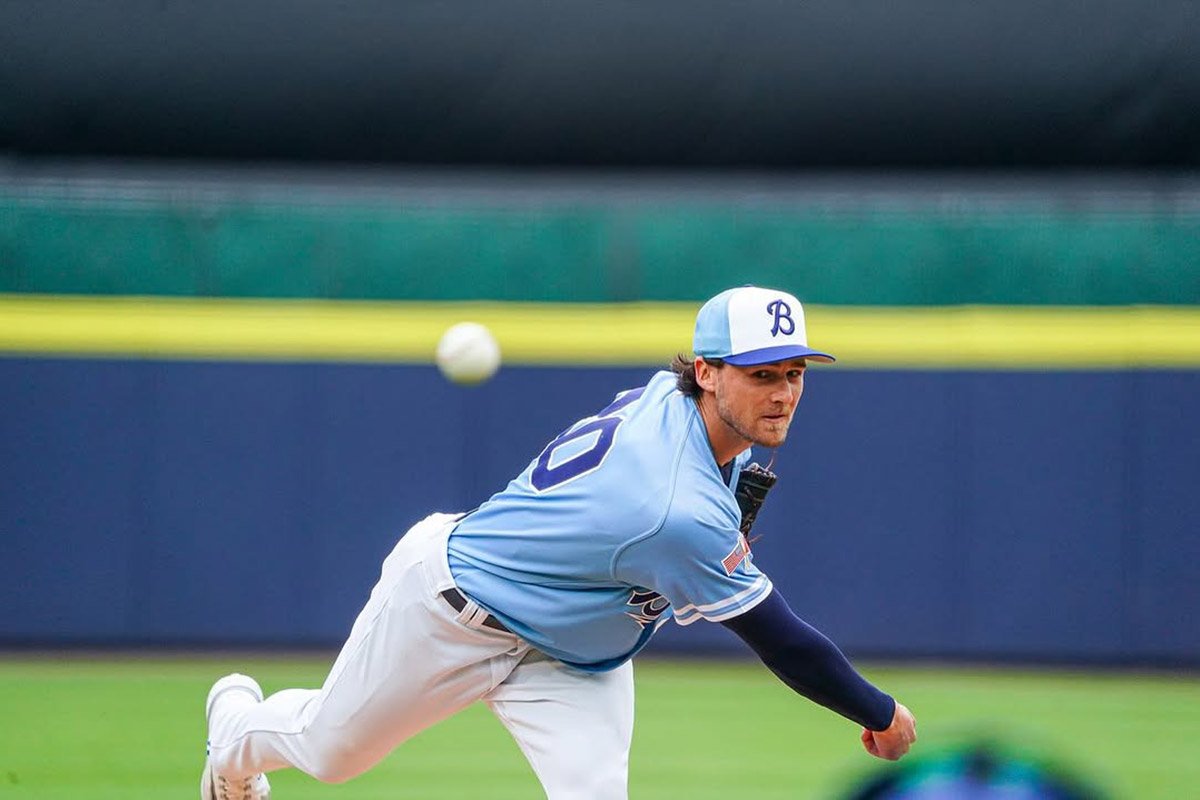 CURRENT W-L Records Buffalo Bisons: 17-26 New Hampshire Fisher Cats: 16-21 Vancouver Canadians: 17-22 Dunedin Blue Jays: 23-16 FCL Blue Jays: 7-5 DSL Blue Jays: 0-0 (Season not started) TRANSACTIONS 05/18/25 - Buffalo Bisons placed C Christian Bethancourt on the 7-day injured list. 05/17/25 - Buffalo Bisons placed 3B Will Wagner on the 7-day injured list. 05/17/25 - Buffalo Bisons activated RHP Adam Kloffenstein from the 7-day injured list. Buffalo Bisons Buffalo (6), Worcester (5) - 5/17 Box Score In Saturday's game, Buffalo was first to get on the scoreboard in the bottom of the first inning. Davis Schneider got all of a hanging slider from Worcester starter Tyler Uberstine. The ball left the bat at 107.5 MPH and with a 32° launch angle and was long gone by the time it landed 432 feet away. Worcester answered with a run in the top half of the second inning on a wild pitch, before Josh Rivera doubled on a line drive in the bottom half to give Buffalo a 2-1 lead. Davis Schneider drove in the third run for Buffalo, also in the second inning on a sacrifice fly. Immediately in the top of the third, Worcester returned the favor by scoring two more runs of their own on a single and a groundout. From there, the Bisons bullpen started to shut down the Worcester offense and the Buffalo hitters added a run to take the lead in the bottom of the seventh. In the eighth inning, Marcelo Mayer drove a hard hit line drive to left field to tie it up at five. Later in the inning, Nate Eaton would take the lead for Worcester with a sacrifice fly. In the bottom of the eighth, Josh Rivera came up to bat and launched a hanging slider for his first home run for Buffalo. The 378-foot blast would be the game-winning hit, as Ryan Jennings shut down Worcester in the ninth to secure a 6-5 win. Josh Rivera- 2-3, 1 R, 3 RBI, 1 BB, 1 K, 1 2B, 1 HR Ryan Jennings- 1 IP, 0 H, 0 ER, 1 BB, 3 K Buffalo (8), Worcester (4) - 5/18 Box Score In the series finale with Worcester on Sunday, the Bisons continued their hot stretch with the bats. Riley Tirotta would start the day with an RBI single to right field, driving in Joey Loperfido. In the top of the third, Trayce Thompson would answer, blasting a home run off of Buffalo starter Anders Tolhurst to tie the game. In the bottom of the third, Tirotta again drove in Loperfido, this time with a rocket double to left field. Orelvis Martinez would reach base immediately after, on an error by the Worcester third baseman, scoring the third run for Buffalo. In the fourth inning, Worcester would chase Tolhurst from the game, scoring two more runs to take the lead 4-3, on double and a single. In the bottom of the fourth, Rainer Nunez would tie the game again, by hitting a curveball almost off his shoes for a home run, that would just clear the fence. In the fifth inning, Martinez hit a missile 107.4 MPH over the left field wall for a 404-foot two-run home run. In the next inning, Tirotta would mash another double, bringing in two more runs for Buffalo. Eric Pardinho and Tommy Nance would help shut the door by dominating the Worcester offense the rest of the way, ending the game with a Buffalo win. Riley Tirotta- 3-5, 1 R, 4 RBI, 0 BB, 0 K, 2 2B Paxton Schultz- 3 IP 1 H, 0 ER, 0 BB, 5 K New Hampshire Fisher Cats New Hampshire (8) Reading (7) F/7 - 5/17 - Game 1 Box Score Weekend baseball kicked off with another double header for New Hampshire. In game one, the Fisher Cats sent Ryan Watson to the mound against Reading's bats. RJ Schreck was quick to give the lead to the Fisher Cats, on a first-pitch home run to center field. A couple of doubles and a single in the bottom of the second inning scored two, giving Reading the lead, 2-1. Yohendrick Pinango led off the top of the third inning and launched his seventh home run of the season, squaring things back up at two. After scoring a run on a double play ball in the bottom half of the inning, Reading added a two-run homer by Felix Reyes in the fourth. New Hampshire quickly answered, tying things back up at five in the fifth inning, on a solo shot by Ryan McCarty and a two-run single by Peyton Williams. Not stopping there, they scored a run on a balk and two more on bases loaded walks to leave the fifth up 8-5. Reading would add two more runs to cut the lead to one, but Conor Larkin shut the door for a New Hampshire win. Ryan McCarty: 2-3, 1 R, 2 RBI, 1 BB, 1K, 1 HR McCarty is swinging a hot bat in the month of May, raising his slash line up to .423/.500/.654 over nine games. Conor Larkin: 1.2 IP, 1 H, 0 ER, 0 BB, 2 K New Hampshire (4), Reading (3) F/7 - 5/17 - Game 2 Box Score In game two of the double header, Devereaux Harrison led the way by allowing just one run through the first five innings. He was far from efficient, walking three while racking up 96 pitches (59 strikes), but he stranded five of the base runners he gave up. As for the offense, they continued their roll from game one, scoring a run in the first on a Devonte Brown single that scored Yohendrick Pinango. In the fourth, Jace Bohrofen homered, giving New Hampshire a 2-1 lead. An RJ Schreck two-run home run extended the lead to 4-2 after the fifth inning. Hunter Gregory would give up a couple of late runs, but was strong enough to wrap the game up, as New Hampshire swept the double header, winning game two 4-3. Jace Bohrofen: 3-3, 1 R, 1 RBI, 1 HR After a decent April, hitting five home runs, Bohrofen has been in a big slump during May. With this three hit game, his batting average for the month is still south of .200. He could use it to propel him to a hot second half of the month. Devereaux Harrison: 5.2 IP, 3 H, 1 ER, 3 BB, 6 K Harrison was missing just off the barrel of the bats of Reading. He got seven outs via the ground ball, to go with the six strikeouts. He was one out shy of his second straight quality start and is really improving with the warmer weather of May. New Hampshire (5), Reading (6) - 5/18 Box Score New Hampshire went with a bullpen day to wrap up the week-long series with Reading and it did not produce the expected results. Geison Urbaez made his first start of the season and was the lone bright spot among the arms who pitched on the day. He stifled Reading for three innings and left the game with a 4-0 lead for New Hampshire. The Fisher Cats scored on Jace Bohrofen’s second homer in as many days, a Jay Harry two-run shot, and a single by Charles McAdoo. Reading tied the game up in the fifth inning on runs from a bases-loaded walk, a passed ball, and a wild pitch. After a sacrifice fly gave Reading the lead, an RJ Schreck home run tied it all up at five in the top of the seventh inning. Unfortunately for New Hampshire, a Seth Beer home run in the bottom half of the inning would prove to be the game winning hit, as the Fisher Cats fell 6-5. Jay Harry: 1-4, 1 R, 2 RBI, 0 BB, 2 K, 1 HR Harry now has two home runs since his promotion to Double-A, but he has not been nearly as strong with the bat as he was at High-A (hitting .226 with New Hampshire). Geison Urbaez: 3 IP, 2 H, 0 ER, 2 BB, 4 K Urbaez has been spectacular in all of the roles New Hampshire has given him. He lowers his ERA down to 0.63 on the season. Vancouver Canadians Vancouver, Everett - 5/17 PPD Vancouver (0), Everett (1) - 5/18 - Game 1 Box Score Due to the day before’s game getting postponed, the Canadians and AquaSox had a double header. The first game was a quiet performance from both offenses, as each team struggled to muster anything with the bats, combining for just five hits between the two teams. Juaron Watts-Brown and switch pitcher Jurrangelo Cijntje had a pitching duel, with Cijntje getting the better of Watts-Brown. The switch pitcher didn’t give up a run, whereas Watts-Brown gave up an RBI double in the third to Michael Arroyo for the only run scored of the game. With only seven innings to play due to the doubleheader, the Canadians couldn’t do anything even after Cijntje was taken out in the seventh, even after admiral performances from JJ Sanchez and Aaron Munson in the pen to keep the game within one. Juaron Watts-Brown - 5.0 IP, 2 H, 1 ER, 2 BB, 8 K Watts-Brown had yet another high strikeout start, K’ing eight batters, raising his K% to almost 40%. He did walk two, but his walk rate stayed under eight%, giving him a 32.1 K%-BB % rate. Watts-Brown earned a promotion to Double-A after this performance, along with Grant Rogers, as Trey Yesavage, Khal Stephen and Gage Stanifer all moved up to Vancouver to replace those two. Vancouver (2), Everett (10) - 5/18 - Game 2 Box Score Vancouver ran a bullpen day after the first loss of the day, with Kevin Miranda starting again and getting two runs scored on him in only two and a third innings, while walking four. The offense again struggled out the gate, only scoring one run on AquaSox starter Evan Truitt on a Je’Von Ward triple. After Miranda was taken out, Pat Gallagher continued his excellent season, going longer than Miranda did by a third of an inning and only allowing a single run. However, after he came out of the game, the bullpen collapsed, as Nate Garkow gave up three runs in less than an inning, and Julio Ortiz raised his ERA to 17.10, by giving up four runs in two-thirds of an inning as well. The Canadians scored again in the sixth on another Je’Von Ward extra base hit, but after the poor pitching from the bullpen, they could not recover. Je’Von Ward - 2-3, 2 RBI, 1 2B, 1 3B Pat Gallagher - 2.2 IP, 1 H, 1 ER, 1 BB, 1 K Dunedin Blue Jays Dunedin (5), Bradenton (13) - 5/17 Box Score Gilberto Batista took the mound for the D-Jays, and had his worst start of the season, giving up five runs in the first three innings on three homers. The Jays also struggled to get things going against Victor Cabreja, only scoring two runs on a pair of groundouts against the Marauders’ starter. Batista gave up another run in the fifth, before getting taken out of the game, although he did strike out seven batters to go along with 10 hits allowed. The bullpen fared even worse than Batista, as they gave up seven earned runs themselves, and despite a homer from Yhoangel Aponte, and some RBIs from Duran and Chirinos, the deficit was far too great for them to overcome, as the Jays suffered their worst loss of the season, 13-5. Yhoangel Aponte - 2-4, 1 R, 1 RBI, 1 HR, 1 2B Aponte had six total bases on the night, and has been showing a lot more power recently, as he hit his third homer of the series. Juanmi Vazquez - 2.1 IP, 1 ER Dunedin (6), Bradenton (1) - 05/18 Box Score The D-Jays bounced back from a rough game against the Marauders the previous night, with Austin Cates returning to the rotation after being bumped for a rehab start the previous outing. Kendry Chirinos has been one of the more consistent hitters for Dunedin, hitting his third bomb of the season in the second inning. Axiel Plaz tied it up for the Marauders in the fourth on a homer of his own, which was the only run given up by Cates before he was taken out of the game. The bullpen really locked it down for the Jays, as Eminen Flores, Javen Coleman, and Colby Martin combined for 12 strikeouts in only five and a third innings of work, without allowing a run, and only allowing two hits and two walks combined. Meanwhile, the offense was able to get to the Marauders ‘pen, as Edward Duran hit his fourth triple on the season to give Dunedin a 3-1 lead in the fifth. The Jays poured it on in the eighth, as Bryce Arnold hit into a fielder’s choice that resulted in a run after an error, and then Yhoangel Aponte hit his seventh extra base hit of the series with an RBI rouble to finish off the scoring for the Jays. Yhoangel Aponte - 3-5, 1 R, 1 RBI, 2 2B Aponte had an amazing series, hitting .385 with an .885 slugging percentage in these six games against Bradenton. He raised his wRC+ to 128 on the season, as he may be figuring out Low-A in his second year there. Eminen Flores - 2.0 IP, 2 H, 0 ER, 1 BB, 5 K Flores was electric, striking out five batters while generating 13 whiffs. Flores relied on his high-80s slider to get most of his whiffs, and also sat 97 mph on his fastball. He has won his third game of the season from the ‘pen. FCL Blue Jays F-BLU (5), F-YAN (1) - 5/17 Box Score Silvano Hechavarria got the start in this one for the Toronto Blue Jays squad, but the New York Yankees team got to him quickly. Brando Mayea hit a home run in the top of the first inning to give the Yankees an early lead. It was all they would get though, as Hechavarria settled in quite well. He pitched four innings, while giving up just two hits, one earned run, surrendered only one walk, and struck out three. The Blue Jays answered the home run quickly in their half of the first inning, as Alexis Hernandez drove in a run on a single and then he scored on a passed ball. Later in the inning, Luis Meza would drive in the third Blue Jays run on a sacrifice fly. In the third, a run would score on a throwing error by the Yankees’ catcher trying to throw out a runner stealing and Luis Meza would drive in the fifth run for the Blue Jays in the fifth. After Hechavarria left the game, the Blue Jays relievers pitched five nearly perfect innings, allowing zero hits and only two walks to finish the game with a Blue Jays win. Alexis Hernandez- 1-3, 2 R, 1 RBI, 0 BB, 0 K, 1 SB Silvano Hechavarria- 4 IP, 2 H, 1 ER, 1 BB, 3 K F-BLU (2), F-YAN (7) - 5/19 Box Score In the rematch of the Saturday game, the Yankees team jumped on the Blue Jays starting pitcher Sann Omosako. Brando Mayea homered again in the first inning for the Yankees to take the lead at the start the game. They also added a run-scoring double play to take a 2-0 lead. David Beckles would drive in the two Blue Jays runs on the day via a ball in play with an error on the shortstop for the Yankees. In the third inning, a Yankees home run scored two more and in the fourth inning they would add three additional runs on two singles. From there, both teams went silent, with only the Blue Jays having two hits the rest of the game and the Yankees having none. Unfortunately, the Yankees would win this one 7-2. David Beckles- 2-4, 0 R, 0 RBI, 0 BB, 0 K Lluveres Severino- 3.2 IP, 1 H, 0 ER, 1 BB, 1 K DSL Blue Jays No games Toronto Blue Jays Minor League Players of the Day Pitcher of the Period: RHP Juaron Watts-Brown (New Hampshire) - 5.0 IP, 2 H, 1 ER, 2 BB, 8 K Hitter of the Period: OF RJ Schreck (New Hampshire) - 4-12, 4 R, 4 RBI, 1 BB, 2 K, 3 HR Prospect Summary (Last 3 Days) 1. Arjun Nimmala (Vancouver) - 1-6, 1 BB, 2 K, 1 2B 2. Ricky Tiedemann (Buffalo) - DNP 3. Trey Yesavage (Dunedin) - DNP 4. Orelvis Martinez (Buffalo) - 1-8, 1 R, 2 RBI, 1 BB, 1 K, 1 HR 5. Khal Stephen (Dunedin) - DNP 6. Jake Bloss (Buffalo) - DNP 7. Alan Roden (Buffalo) - 1-4, 1 R, 1 BB, 1 SB 8. Landen Maroudis (FCL Jays) - DNP 9. Jonatan Clase (Toronto) - 1-3, 1 K, 1 SB 10. Kendry Rojas (Vancouver) - DNP 11. Josh Kasevich (Buffalo) - DNP 12. Johnny King (FCL Blue Jays) - DNP 13. Gage Stanifer (Dunedin) - DNP 14. Adam Macko (FCL Jays) - DNP 15. Charles McAdoo (New Hampshire) - 3-9, 1 R, 2 K, 1 SB 16. Fernando Perez (Vancouver) - DNP 17. Brandon Barriera (Dunedin) - DNP 18. Emmanuel Bonilla (FCL Blue Jays) - 0-8, 4 K 19. Juaron Watts-Brown (Vancouver) - 5.0 IP, 2 H, 1 ER, 2 BB, 8 K 20. Jace Bohrofen (New Hampshire) - 4-11, 3 R, 2 RBI, 1 BB, 1 K, 2 HR, 1 SB
-
- 1
-
-
- yohendrick pinango
- davis schneider
- (and 5 more)
-
CURRENT W-L Records Buffalo Bisons: 17-26 New Hampshire Fisher Cats: 16-21 Vancouver Canadians: 17-22 Dunedin Blue Jays: 23-16 FCL Blue Jays: 7-5 DSL Blue Jays: 0-0 (Season not started) TRANSACTIONS 05/18/25 - Buffalo Bisons placed C Christian Bethancourt on the 7-day injured list. 05/17/25 - Buffalo Bisons placed 3B Will Wagner on the 7-day injured list. 05/17/25 - Buffalo Bisons activated RHP Adam Kloffenstein from the 7-day injured list. Buffalo Bisons Buffalo (6), Worcester (5) - 5/17 Box Score In Saturday's game, Buffalo was first to get on the scoreboard in the bottom of the first inning. Davis Schneider got all of a hanging slider from Worcester starter Tyler Uberstine. The ball left the bat at 107.5 MPH and with a 32° launch angle. It was long gone by the time it landed 432 FT away. Worcester answered with a run in the top half of the second inning on a wild pitch, before Josh Rivera doubled on a line drive in the bottom half to give Buffalo a 2-1 lead. Davis Schneider drove in the third run for Buffalo, also in the second inning on a sacrifice fly. Immediately in the top of the third, Worcester returned the favor by scoring two more runs of their own on a single and a groundout. From there, the Bisons bullpen started to shut down the Worcester offense and the Buffalo hitters added a run to take the lead in the bottom of the seventh. In the eighth inning, Marcelo Mayer drove a hard hit line drive to left field to tie it up at five. Later in the inning, Nate Eaton would take the lead for Worcester with a sacrifice fly. In the bottom of the eighth, Josh Rivera came up to bat and launched a hanging slider for his first home run for Buffalo. The 378 FT blast would be the game winning hit, as Ryan Jennings shut down Worcester in the ninth to secure a 6-5 win. Josh Rivera- 2-3, 1 R, 3 RBI, 1 BB, 1 K, 1 2B, 1 HR Ryan Jennings- 1 IP, 0 H, 0 ER, 1 BB, 3 K Buffalo (8), Worcester (4) - 5/18 Box Score In the series finale with Worcester on Sunday, the Bisons continued their hot stretch with the bats. Riley Tirotta would start the day with an RBI single to right field, driving in Joey Loperfido. In the top of the third, Trayce Thompson would answer, blasting a home run off of Buffalo starter Anders Tolhurst to tie the game. In the bottom of the third, Tirotta again drove in Loperfido, this time with a rocket double to left field. Orelvis Martinez would reach base immediately after, on an error by the Worcester third baseman, scoring the third run for Buffalo. In the fourth inning, Worcester would chase Tolhurst from the game, scoring two more runs to take the lead 4-3, on double and a single. In the bottom of the fourth, Rainer Nunez would tie the game again, by hitting a curveball almost off his shoes for a home run, that would just clear the fence. In the fifth inning, Martinez hit a missile 107.4 MPH over the left field wall for a 404 FT two-run home run. In the next inning, Tirotta would mash another double, bringing in two more runs for Buffalo. Eric Pardinho and Tommy Nance would help shut the door by dominating the Worcester offense the rest of the way, ending the game with a 8-4 Buffalo win. Riley Tirotta- 3-5, 1 R, 4 RBI, 0 BB, 0 K, 2 2B Paxton Schultz- 3 IP 1 H, 0 ER, 0 BB, 5 K New Hampshire Fisher Cats New Hampshire (8) Reading (7) F/7 - 5/17 - Game 1 Box Score Weekend baseball kicked off with another double header for New Hampshire. In game one, the Fisher Cats sent Ryan Watson to the mound against Reading's bats. RJ Schreck was quick to give the lead to the Fisher Cats, on a first-pitch home run to center field. A couple of doubles and a single in the bottom of the second inning scored two, giving Reading the lead, 2-1. Yohendrick Pinango led off the top of the third inning and launched his seventh home run of the season, squaring things back up at two. After scoring a run on a double play ball in the bottom half of the inning, Reading added a two-run homer by Felix Reyes in the fourth. New Hampshire quickly answered, tying things back up at five in the fifth inning, on a solo shot by Ryan McCarty and a two-run single by Peyton Williams. Not stopping there, they scored a run on a balk and two more on bases loaded walks to leave the fifth up 8-5. Reading would add two more runs to cut the lead to one, but Conor Larkin shut the door for a New Hampshire win. Ryan McCarty: 2-3, 1 R, 2 RBI, 1 BB, 1K, 1 HR McCarty is swinging a hot bat in the month of May, raising his slash line up to .423/.500/.654 over nine games. Conor Larkin: 1.2 IP, 1 H, 0 ER, 0 BB, 2 K New Hampshire (4), Reading (3) F/7 - 5/17 - Game 2 Box Score In game two of the double header, Devereaux Harrison led the way by allowing just one run through the first five innings. He was far from efficient, walking three while racking up 96 pitches (59 strikes), but he stranded five of the base runners he gave up. As for the offense, they continued their roll from game one, scoring a run in the first on a Devonte Brown single that scored Yohendrick Pinango. In the fourth, Jace Bohrofen homered, giving New Hampshire a 2-1 lead. An RJ Schreck two-run home run extended the lead to 4-2 after the fifth inning. Hunter Gregory would give up a couple of late runs, but was strong enough to wrap the game up, as New Hampshire swept the double header, winning game two 4-3. Jace Bohrofen: 3-3, 1 R, 1 RBI, 1 HR After a decent April, hitting five home runs, Bohrofen has been in a big slump during May. With this three hit game, his batting average for the month is still south of .200. He could use it to propel him to a hot second half of the month. Devereaux Harrison: 5.2 IP, 3 H, 1 ER, 3 BB, 6 K Harrison was missing just off the barrel of the bats of Reading. He got seven outs via the ground ball, to go with the six strikeouts. He was one out shy of his second straight quality start and is really improving with the warmer weather of May. New Hampshire (5), Reading (6) - 5/18 Box Score New Hampshire went with a bullpen day to wrap up the week-long series with Reading and it did not produce the expected results. Geison Urbaez made his first start of the season and was the lone bright spot among the arms who pitched on the day. He stifled Reading for three innings and left the game with a 4-0 lead for New Hampshire. The Fisher Cats scored on Jace Bohrofen’s second homer in as many days, a Jay Harry two-run shot, and a single by Charles McAdoo. Reading tied the game up in the fifth inning on runs from a bases-loaded walk, a passed ball, and a wild pitch. After a sacrifice fly gave Reading the lead, an RJ Schreck home run tied it all up at five in the top of the seventh inning. Unfortunately for New Hampshire, a Seth Beer home run in the bottom half of the inning would prove to be the game winning hit, as the Fisher Cats fell 6-5. Jay Harry: 1-4, 1 R, 2 RBI, 0 BB, 2 K, 1 HR Harry now has two home runs since his promotion to Double-A, but he has not been nearly as strong with the bat as he was at High-A (hitting .226 with New Hampshire). Geison Urbaez: 3 IP, 2 H, 0 ER, 2 BB, 4 K Urbaez has been spectacular in all of the roles New Hampshire has given him. He lowers his ERA down to 0.63 on the season. Vancouver Canadians Vancouver, Everett - 5/17 PPD Vancouver (0), Everett (1) - 5/18 - Game 1 Box Score Due to the day before’s game getting postponed, the Canadians and AquaSox had a double header. The first game was a quiet performance from both offenses, as each team struggled to muster anything with the bats, combining for just five hits between the two teams. Juaron Watts-Brown and switch pitcher Jurrangelo Cijntje had a pitching duel, with Cijntje getting the better of Watts-Brown. The switch pitcher didn’t give up a run, whereas Watts-Brown gave up an RBI double in the third to Michael Arroyo for the only run scored of the game. With only seven innings to play due to the doubleheader, the Canadians couldn’t do anything even after Cijntje was taken out in the seventh, even after admiral performances from JJ Sanchez and Aaron Munson in the pen to keep the game within one. Juaron Watts-Brown - 5.0 IP, 2 H, 1 ER, 2 BB, 8 K Watts-Brown had yet another high strikeout start, K’ing eight batters, raising his K% to almost 40%. He did walk two, but his walk rate stayed under eight%, giving him a 32.1 K%-BB % rate. Watts-Brown earned a promotion to Double-A after this performance, along with Grant Rogers, as Trey Yesavage, Khal Stephen and Gage Stanifer all moved up to Vancouver to replace those two. Vancouver (2), Everett (10) - 5/18 - Game 2 Box Score Vancouver ran a bullpen day after the first loss of the day, with Kevin Miranda starting again and getting two runs scored on him in only two and a third innings, while walking four. The offense again struggled out the gate, only scoring one run on AquaSox starter Evan Truitt on a Je’Von Ward triple. After Miranda was taken out, Pat Gallagher continued his excellent season, going longer than Miranda did by a third of an inning and only allowing a single run. However, after he came out of the game, the bullpen collapsed, as Nate Garkow gave up three runs in less than an inning, and Julio Ortiz raised his ERA to 17.10, by giving up four runs in two-thirds of an inning as well. The Canadians scored again in the 6th on another Je’Von Ward extra base hit, but after the poor pitching from the bullpen, they could not recover. Je’Von Ward - 2-3, 2 RBI, 1 2B, 1 3B Pat Gallagher - 2.2 IP, 1 H, 1 ER, 1 BB, 1 K Dunedin Blue Jays Dunedin (5), Bradenton (13) - 5/17 Box Score Gilberto Batista took the mound for the D-Jays, and had his worst start of the season, giving up five runs in the first three innings on three homers. The Jays also struggled to get things going against Victor Cabreja, only scoring two runs on a pair of groundouts against the Marauders’ starter. Batista gave up another run in the 5th, before getting taken out of the game, although he did strike out 7 batters to go along with 10 hits allowed. The bullpen fared even worse than Batista, as they gave up seven earned runs themselves, and despite a homer from Yhoangel Aponte, and some RBIs from Duran and Chirinos, the deficit was far too great for them to overcome, as the Jays suffered their worst loss of the season, 13-5. Yhoangel Aponte - 2-4, 1 R, 1 RBI, 1 HR, 1 2B Aponte had six total bases on the night, and has been showing a lot more power recently, as he hit his third homer of the series. Juanmi Vazquez - 2.1 IP, 1 ER Dunedin (6), Bradenton (1) - 05/18 Box Score The D-Jays bounced back from a rough game against the Marauders the previous night, with Austin Cates returning to the rotation after being bumped for a rehab start the previous outing. Kendry Chirinos has been one of the more consistent hitters for Dunedin, hitting his third bomb of the season in the second inning. Axiel Plaz tied it up for the Marauders in the fourth on a homer of his own, which was the only run given up by Cates before he was taken out of the game. The bullpen really locked it down for the Jays, as Eminen Flores, Javen Coleman, and Colby Martin combined for 12 strikeouts in only five and a third innings of work, without allowing a run, and only allowing two hits and two walks combined. Meanwhile, the offense was able to get to the Marauders ‘pen, as Edward Duran hit his fourth triple on the season to give Dunedin a 3-1 lead in the fifth. The Jays poured it on in the eighth, as Bryce Arnold hit into a fielder’s choice that resulted in a run after an error, and then Yhoangel Aponte hit his seventh extra base hit of the series with an RBI rouble to finish off the scoring for the Jays. Yhoangel Aponte - 3-5, 1 R, 1 RBI, 2 2B Aponte had an amazing series, hitting .385 with an .885 slugging percentage in these six games against Bradenton. He raised his wRC+ to 128 on the season, as he may be figuring out Low-A in his second year there. Eminen Flores - 2.0 IP, 2 H, 0 ER, 1 BB, 5 K Flores was electric, striking out five batters while generating 13 whiffs. Flores relied on his high 80s slider to get most of his whiffs, and also sat 97 mph on his fastball. He has won his third game of the season from the ‘pen. FCL Blue Jays F-BLU (5), F-YAN (1) - 5/17 Box Score Silvano Hechavarria got the start in this one for the Toronto Blue Jays squad, but the New York Yankees team got to him quickly. Brando Mayea hit a home run in the top of the first inning to give the Yankees an early lead. It was all they would get though, as Hechavarria settled in quite well. He pitched four innings, while giving up just two hits, one earned run, surrendered only one walk, and struck out three. The Blue Jays answered the home run quickly in their half of the first inning, as Alexis Hernandez drove in a run on a single and then he scored on a passed ball. Later in the inning, Luis Meza would drive in the third Blue Jays run on a sacrifice fly. In the third, a run would score on a throwing error by the Yankees’ catcher trying to throw out a runner stealing and Luis Meza would drive in the fifth run for the Blue Jays in the fifth. After Hechavarria left the game, the Blue Jays relievers pitched five nearly perfect innings, allowing zero hits and only two walks to finish the game with a Blue Jays win. Alexis Hernandez- 1-3, 2 R, 1 RBI, 0 BB, 0 K, 1 SB Silvano Hechavarria- 4 IP, 2 H, 1 ER, 1 BB, 3 K F-BLU (2), F-YAN (7) - 5/19 Box Score In the rematch of the Saturday game, the Yankees team jumped on the Blue Jays starting pitcher Sann Omosako. Brando Mayea homered again in the first inning for the Yankees to take the lead at the start the game. They also added a run-scoring double play to take a 2-0 lead. David Beckles would drive in the two Blue Jays runs on the day via a ball in play with an error on the shortstop for the Yankees. In the third inning, a Yankees home run scored two more and in the fourth inning they would add three additional runs on two singles. From there, both teams went silent, with only the Blue Jays having two hits the rest of the game and the Yankees having none. Unfortunately, the Yankees would win this one 7-2. David Beckles- 2-4, 0 R, 0 RBI, 0 BB, 0 K Lluveres Severino- 3.2 IP, 1 H, 0 ER, 1 BB, 1 K DSL Blue Jays No games Toronto Blue Jays Minor League Players of the Day Pitcher of the Period: RHP Juaron Watts-Brown (New Hampshire) - 5.0 IP, 2 H, 1 ER, 2 BB, 8 K Hitter of the Period: OF RJ Schreck (New Hampshire) - 4-12, 4 R, 4 RBI, 1 BB, 2 K, 3 HR Prospect Summary (Last 3 Days) 1. Arjun Nimmala (Vancouver) - 1-6, 1 BB, 2 K, 1 2B 2. Ricky Tiedemann (Buffalo) - DNP 3. Trey Yesavage (Dunedin) - DNP 4. Orelvis Martinez (Buffalo) - 1-8, 1 R, 2 RBI, 1 BB, 1 K, 1 HR 5. Khal Stephen (Dunedin) - DNP 6. Jake Bloss (Buffalo) - DNP 7. Alan Roden (Buffalo) - 1-4, 1 R, 1 BB, 1 SB 8. Landen Maroudis (FCL Jays) - DNP 9. Jonatan Clase (Toronto) - 1-3, 1 K, 1 SB 10. Kendry Rojas (Vancouver) - DNP 11. Josh Kasevich (Buffalo) - DNP 12. Johnny King (FCL Blue Jays) - DNP 13. Gage Stanifer (Dunedin) - DNP 14. Adam Macko (FCL Jays) - DNP 15. Charles McAdoo (New Hampshire) - 3-9, 1 R, 2 K, 1 SB 16. Fernando Perez (Vancouver) - DNP 17. Brandon Barriera (Dunedin) - DNP 18. Emmanuel Bonilla (FCL Blue Jays) - 0-8, 4 K 19. Juaron Watts-Brown (Vancouver) - 5.0 IP, 2 H, 1 ER, 2 BB, 8 K 20. Jace Bohrofen (New Hampshire) - 4-11, 3 R, 2 RBI, 1 BB, 1 K, 2 HR, 1 SB View full article
-
- 1
-
-
- yohendrick pinango
- davis schneider
- (and 5 more)
-
.jpg.cfe10a4ea6e252b3d8bdd8e954dceb31.jpg) CURRENT W-L Records Buffalo Bisons: 14-23 New Hampshire Fisher Cats: 14-18 Vancouver Canadians: 15-18 Dunedin Blue Jays: 20-13 FCL Blue Jays: 3-3 DSL Blue Jays: 0-0 (Season not started) TRANSACTIONS 05/11/25: Buffalo Bisons sent RHP Adam Kloffenstein on a rehab assignment to Dunedin Blue Jays. 05/10/25: RHP Bobby Milacki assigned to Buffalo Bisons from New Hampshire Fisher Cats. 05/10/25: New Hampshire Fisher Cats activated SS Eddinson Paulino from the 7-day injured list. 05/10/25: RHP Bobby Milacki assigned to Buffalo Bisons from New Hampshire Fisher Cats. 05/10/25: Vancouver Canadians placed CF Victor Arias on the 7-day injured list retroactive to May 8, 2025. Buffalo Bisons Buffalo (1), St. Paul (2) - 5/10 Box Score Lazaro Estrada got the start for the Buffalo Bisons in this one, and he went toe-to-toe with the star pitcher for the St. Paul Saints, Zebby Matthews. Over the first four innings of the game, Estrada held the Saints to just one hit, though he surrendered three walks. He was masterful, allowing no earned runs over those four innings and striking out five hitters. Unfortunately for the Bisons, Matthews was just as good, going 5.1 innings and not allowing a run while striking out four hitters. Buffalo got on the board once Matthews left the game, scoring on an error by the Saints’ shortstop. In the next inning, Emmanuel Rodriguez would homer for the Saints, putting them up 2-1. From there, both teams put up zeros, and Tyler Beede would come on to close the game out for the Buffalo defeat. Alan Roden: 3-4, 3B Lazaro Estrada: 4 IP, 1 H, 0 ER, 3 BB, 5 K Buffalo (1), St. Paul (2) - 5/11 Box Score In the Mother's Day game to close out the series with the St. Paul Saints, the Buffalo Bisons did not fare any better. It was another pitcher's duel, but this time dominated by each team's bullpen. St. Paul got things started in the bottom of the first inning with two home runs from Mickey Gasper and Carson McCusker. The Bisons would punch back in the top of the fourth inning, as Damiano Palmegiani would single in both of the Bisons’ runs on the day. The tie game was short-lived, as Jair Camargo singled in a run for the Saints in the bottom of the fourth inning. From there, both bullpens shut down the hitters. The Saints would finish this game off, as Buffalo fell 3-2. Damiano Palmegiani: 2-3, 2 RBI Eric Pardinho: 1 IP, 0 H, 0 ER, 0 BB, 1 K Pardinho has been a bright spot at times in the Buffalo bullpen; 10 out of his 12 appearances have been scoreless. He could be the next in line to get a call-up to Toronto if he keeps putting up zeros and continues striking out batters at a solid rate. New Hampshire Fisher Cats New Hampshire (1), Hartford (7) F/7 - 5/10 - Game 1 Box Score Due to bad weather yet again for New Hampshire, they played a doubleheader against Hartford on Saturday. Hartford got the scoring started against Ryan Watson in the top of the second inning with a triple, an error, and a home run. The home run came off the bat of Cole Carrigg, as he continued his hot hitting for the week. Hartford would score more runs in the third, fourth, fifth, and sixth innings. The scoring was highlighted by home runs off the bats of Zach Kokoska and Bryant Betancourt. New Hampshire got their late-inning rally going with a home run by RJ Schreck in the bottom of the sixth inning. It was followed up by a Jace Bohrofen double and stolen base, but a Dasan Brown fly out ended the hopes of a comeback, as the Fisher Cats fell 7-1. RJ Schreck: 1-4, 1 R, 1 RBI, 1 K, 1 HR Schreck launched his third home run of the season and brought his batting average up to .226 on the year. He hasn't done much to write home about, but his OPS has been a bright spot, now sitting at .819 in 2025. Alex Amalfi: 2 IP, 2 H, 1 ER, 3 BB, 3 K New Hampshire (5), Hartford (1) F/7 - 5/10 Game 2 Box Score In game two of the doubleheader, the bats came alive for New Hampshire, and more than half of their hitters enjoyed multi-hit games. It started in the bottom of the first inning with the second Schreck home run of the day, scoring Yohendrick Pinango from first. Pinango would add another run in the second inning on an RBI single, scoring Jay Harry. New Hampshire would add another two runs in the bottom of the fourth inning from a two-run double by the player of the game, Pinango. Michael Dominguez, Hunter Gregory, and Johnathan Lavallee would combine to only give up one unearned run in the game and strike out seven, giving New Hampshire the win 5-1. Yohendrick Pinango: 3-4, 1 R, 2 RBI, 1 2B Pinango raised his batting average for the season up to .333 and his OPS to .946. If Buffalo needs an influx of offense, Pinango might be the first hitter from Double A to get the call-up to Triple A. Michael Dominguez: 3 IP, 1 H, 0 ER, 1 BB, 4 K Dominguez continues to pitch in short spurts, but he keeps performing well. This game dropped his ERA down to 0.56 on the season. New Hampshire (7), Hartford (2) - 5/11 Box Score In a season in which New Hampshire has struggled mightily to score runs and win games, they put together their second straight great performance on the field. After falling behind from the start, Devereaux Harrison gave up another home run to Carrigg. The Fisher Cats erupted for a crooked number in the bottom of the second inning on a Gabriel Martinez two-run double, scoring Peyton Williams and Eddinson Paulino. After another run scored on an error by Hartford, Pinango belted his fourth home run of the season, which scored Jacob Sharp as well. Brown added to the lead with a solo shot of his own in the bottom of the fifth inning. That was soon answered by Hartford, when Carrigg hit his second home run of the game in the sixth. Williams would cap off the scoring in the game by way of his seventh-inning double that scored Charles McAdoo. Harrison's quality start and the bullpen really kept things in check throughout the game, with the exception of Carrigg's home runs. New Hampshire rolled to a 7-2 win. Yohendrick Pinango: 2-4, 1 R, 2 RBI, 1 BB, 1 HR, 1 SB Pinango just keeps on raking for New Hampshire. His average on the season is now a hot .340 and his OPS is nearing 1.000, at .982. Devereaux Harrison: 6 IP, 3 H, 2 ER, 1 BB, 5 K There haven't been too many good games for Harrison in the early going this year, but this quality start was one of them. Outside of his two mistakes to Carrigg, he steamrolled Hartford's lineup. Vancouver Canadians Vancouver (4), Spokane (5) - 5/10 Box Score After some solid offensive performances from Vancouver hitters early in the game, they didn’t quite hit as well. Spokane struck first against Jackson Wentworth, who let in two runs in the first, before the Canadians came back. Carter Cunningham continued to hit, knocking an RBI single, and Jackson Hornung followed suit with another. Wentworth continued to get hit around but was able to stave off runs until the bottom of the fourth, when Jean Perez hit a sac fly to get the lead for Spokane. In the bottom of the sixth, Skyler Messinger hit a bomb off of Wentworth to make it 2-4 Spokane. Arjun Nimmala came back with a solo shot of his own in the seventh to bring it within one, but Cole Messina had an RBI single in the bottom of that inning to give Spokane the lead for good, even with the Canadians threatening in the eighth and scoring a run. Jackson Wentworth: 5.2 IP, 10 H, 4 ER, 1 BB, 1 K It wasn’t Wentworth’s sharpest start as he struggled to strike batters out and generate whiffs, but he still went 5.2 IP, allowing four earned runs. Ultimately, he was able to power through it, almost earning a quality start. Arjun Nimmala: 1-5, 1 R, 1 RBI, 2 K, 1 HR Nimmala hit his seventh homer of the year in the seventh inning, tying Adrian Pinto for the team homer lead. Vancouver (3), Spokane (4) - 5/11 Box Score After losing a close game against Spokane, Vancouver's offense sputtered. This time, it was against Konner Eaton, the Rockies’ 2024 sixth-round pick, who pitched six scoreless innings against the Canadians. Not to be outdone, Juaron Watts-Brown had an even better outing, also going six scoreless while striking out 10, which he accomplished for the third time this season. The Canadians did strike first in the seventh, with a pair of sac flies from Hayden Gilliland and Nimmala, but immediately after, JJ Sanchez gave up a two-run bomb to Andy Perez to even it up. The Jays scored their third run on another sac fly from Alex Stone, which was again answered in the same inning by Aidan Longwell. The game eventually went to extras, and Spokane walked off Kai Peterson to beat the Canadians. Arjun Nimmala: 2-4, 1 RBI, 0 K Juaron Watts-Brown: 6.0 IP, 2 H, 0 ER, 2 BB, 10 K Watts-Brown has been ridiculous for the Canadians. He raised his strikeout rate to 39.4%, and he's only walked 7.3% of the batters he has faced on the season. His K%-BB% is higher than the second highest K% in the Northwest League, and he’s been a victim of poor BABIP, which means that he’s been much better than his ERA suggests. He relies heavily on his breaking ball, which he dominates batters with, but he will need to develop some more pitches to improve his stock as a starting prospect. Still, he’s been excellent for the Canadians, and he’s a name to watch going forward. Dunedin Blue Jays Dunedin (3), Fort Myers (0) - 5/10 Box Score After losing the first game to the Mighty Mussels in a nail-biter, Dunedin has continued to stay on top, coming into this game looking to win a fourth in a row. Leading the charge for the Jays was Devonte Brown, who knocked in all three runs for the Jays, while the pitching blanked the Mighty Mussels off the backs of Gilberto Batista, Nate LaRue, Johan Simon and Javen Coleman, the last of whom pitched another three-strikeout inning to earn his second save. Manuel Beltre got on a few times, notching two steals and two runs scored. Gilberto Batista: 5.0 IP, 4 H, 0 ER, 1 BB, 9 K Batista had his best start in the Jays org and has looked like the main prize from the Danny Jansen trade. His velocity was up, which may explain his elevated strikeout count. Devonte Brown: 2-3, 3 RBI, 0 K Dunedin (7), Fort Myers (4) - 5/11 Box Score The Jays aimed to win five in a row, and they did so with help from Adam Kloffenstein, a former top prospect for the Jays, who has finally been put on a rehab assignment in Dunedin. Kloff went four innings, allowing three unearned runs after Beltre committed his fifth error of the season, but still struck out five. Justin Kelly and Austin Cates were excellent in relief, only allowing one run and striking out five between them. Despite Dunedin going down 3-0 after the unearned runs on Kloffenstein, Jean Joseph kicked off the comeback with his fourth homer on the season and third in his last four games. In the sixth, the Jays had a big inning, with Bryce Arnold, Peyton Powell, and Kendry Chirinos contributing to a four-run frame. Cates did allow a run on a wild pitch in the seventh, but Beltre and Brown both knocked in runs in the bottom of the ninth to give them a 7-4 win and to take the season series 5-1. Jean Joseph: 2-4, 2 R, 1 RBI Joseph has raised his OPS near .800 after starting the year off slowly. Austin Cates: 3.0 IP, 2 H, 1 ER, 0 BB, 4 K, 1 SV Cates was moved to the 'pen to accommodate Kloff, but he had struggled in his past few starts. Glad to see a strong bounceback outing. FCL Blue Jays F-Blu (5), F-Yan (6) - 5/10 Box Score The New York Yankees' team got on the scoreboard first in this one. They scored two runs in the first inning off of Silvano Hechavarria. Yet, Hechavarria would go four innings and only give up those two runs. On the offensive side, the Blue Jays would tie it up on an Edrick Felix single and an Andres Arias ground out. In the fifth inning, David Beckles added an RBI single to take the lead for the Blue Jays. Johnny King made his professional debut for the Jays in the fifth inning and pitched almost two clean frames. His line ended up as: 2 IP, 1 H, 0 ER, 2 BB, 3 K. The Yankees' team would score on an RBI single to tie the game in the seventh inning and then end the game on a walk-off steal of home by Isael Arias. David Beckles: 3-3, 1 R, 1 RBI, 1 BB, 1 2B Johnny King: 2 IP, 1 H, 0 ER, 2 BB, 3 K 5/12 Game Postponed DSL Blue Jays No games Toronto Blue Jays Minor League Players of the Period Pitcher of the Period: RHP Juaron Watts-Brown (Vancouver) - 6 IP, 2 H, 0 ER, 2 BB, 10 K Hitter of the Period: OF Yohendrick Pinango (New Hampshire) - 6-12, 2 R, 4 RBI, 1 BB, 2 K, 1 HR, 1 2B Prospect Summary (Last 3 Days) 1. Arjun Nimmala (Vancouver) - 3-9, 1 R, 2 RBI, 2 K, 1 HR, 1 2B 2. Ricky Tiedemann (Buffalo) - DNP 3. Trey Yesavage (Dunedin) - DNP 4. Orelvis Martinez (Buffalo) - 1-6, 1 R, 2 BB, 0 K 5. Khal Stephen (Dunedin) - DNP 6. Jake Bloss (Buffalo) - DNP 7. Alan Roden (Buffalo) - 5-9, 2 K, 1 3B 8. Landen Maroudis (FCL Jays) - DNP 9. Jonatan Clase (Toronto) - 1-4, 2 RBI, 1 K, 1 2B 10. Kendry Rojas (Vancouver) - DNP 11. Josh Kasevich (Buffalo) - DNP 12. Johnny King (FCL Blue Jays) - 2 IP, 1 H, 0 ER, 2 BB, 3 K 13. Gage Stanifer (Dunedin) - DNP 14. Adam Macko (FCL Jays) - DNP 15. Charles McAdoo (New Hampshire) - 1-7, 1 R, 4 K 16. Fernando Perez (Vancouver) - DNP 17. Brandon Barriera (Dunedin) - DNP 18. Emmanuel Bonilla (FCL Blue Jays) - 0-4, 2 K 19. Juaron Watts-Brown (Vancouver) - 6.0 IP, 2 H, 0 ER, 2 BB, 10 K 20. Jace Bohrofen (New Hampshire) - 1-7, 1 K, 1 2B
CURRENT W-L Records Buffalo Bisons: 14-23 New Hampshire Fisher Cats: 14-18 Vancouver Canadians: 15-18 Dunedin Blue Jays: 20-13 FCL Blue Jays: 3-3 DSL Blue Jays: 0-0 (Season not started) TRANSACTIONS 05/11/25: Buffalo Bisons sent RHP Adam Kloffenstein on a rehab assignment to Dunedin Blue Jays. 05/10/25: RHP Bobby Milacki assigned to Buffalo Bisons from New Hampshire Fisher Cats. 05/10/25: New Hampshire Fisher Cats activated SS Eddinson Paulino from the 7-day injured list. 05/10/25: RHP Bobby Milacki assigned to Buffalo Bisons from New Hampshire Fisher Cats. 05/10/25: Vancouver Canadians placed CF Victor Arias on the 7-day injured list retroactive to May 8, 2025. Buffalo Bisons Buffalo (1), St. Paul (2) - 5/10 Box Score Lazaro Estrada got the start for the Buffalo Bisons in this one, and he went toe-to-toe with the star pitcher for the St. Paul Saints, Zebby Matthews. Over the first four innings of the game, Estrada held the Saints to just one hit, though he surrendered three walks. He was masterful, allowing no earned runs over those four innings and striking out five hitters. Unfortunately for the Bisons, Matthews was just as good, going 5.1 innings and not allowing a run while striking out four hitters. Buffalo got on the board once Matthews left the game, scoring on an error by the Saints’ shortstop. In the next inning, Emmanuel Rodriguez would homer for the Saints, putting them up 2-1. From there, both teams put up zeros, and Tyler Beede would come on to close the game out for the Buffalo defeat. Alan Roden: 3-4, 3B Lazaro Estrada: 4 IP, 1 H, 0 ER, 3 BB, 5 K Buffalo (1), St. Paul (2) - 5/11 Box Score In the Mother's Day game to close out the series with the St. Paul Saints, the Buffalo Bisons did not fare any better. It was another pitcher's duel, but this time dominated by each team's bullpen. St. Paul got things started in the bottom of the first inning with two home runs from Mickey Gasper and Carson McCusker. The Bisons would punch back in the top of the fourth inning, as Damiano Palmegiani would single in both of the Bisons’ runs on the day. The tie game was short-lived, as Jair Camargo singled in a run for the Saints in the bottom of the fourth inning. From there, both bullpens shut down the hitters. The Saints would finish this game off, as Buffalo fell 3-2. Damiano Palmegiani: 2-3, 2 RBI Eric Pardinho: 1 IP, 0 H, 0 ER, 0 BB, 1 K Pardinho has been a bright spot at times in the Buffalo bullpen; 10 out of his 12 appearances have been scoreless. He could be the next in line to get a call-up to Toronto if he keeps putting up zeros and continues striking out batters at a solid rate. New Hampshire Fisher Cats New Hampshire (1), Hartford (7) F/7 - 5/10 - Game 1 Box Score Due to bad weather yet again for New Hampshire, they played a doubleheader against Hartford on Saturday. Hartford got the scoring started against Ryan Watson in the top of the second inning with a triple, an error, and a home run. The home run came off the bat of Cole Carrigg, as he continued his hot hitting for the week. Hartford would score more runs in the third, fourth, fifth, and sixth innings. The scoring was highlighted by home runs off the bats of Zach Kokoska and Bryant Betancourt. New Hampshire got their late-inning rally going with a home run by RJ Schreck in the bottom of the sixth inning. It was followed up by a Jace Bohrofen double and stolen base, but a Dasan Brown fly out ended the hopes of a comeback, as the Fisher Cats fell 7-1. RJ Schreck: 1-4, 1 R, 1 RBI, 1 K, 1 HR Schreck launched his third home run of the season and brought his batting average up to .226 on the year. He hasn't done much to write home about, but his OPS has been a bright spot, now sitting at .819 in 2025. Alex Amalfi: 2 IP, 2 H, 1 ER, 3 BB, 3 K New Hampshire (5), Hartford (1) F/7 - 5/10 Game 2 Box Score In game two of the doubleheader, the bats came alive for New Hampshire, and more than half of their hitters enjoyed multi-hit games. It started in the bottom of the first inning with the second Schreck home run of the day, scoring Yohendrick Pinango from first. Pinango would add another run in the second inning on an RBI single, scoring Jay Harry. New Hampshire would add another two runs in the bottom of the fourth inning from a two-run double by the player of the game, Pinango. Michael Dominguez, Hunter Gregory, and Johnathan Lavallee would combine to only give up one unearned run in the game and strike out seven, giving New Hampshire the win 5-1. Yohendrick Pinango: 3-4, 1 R, 2 RBI, 1 2B Pinango raised his batting average for the season up to .333 and his OPS to .946. If Buffalo needs an influx of offense, Pinango might be the first hitter from Double A to get the call-up to Triple A. Michael Dominguez: 3 IP, 1 H, 0 ER, 1 BB, 4 K Dominguez continues to pitch in short spurts, but he keeps performing well. This game dropped his ERA down to 0.56 on the season. New Hampshire (7), Hartford (2) - 5/11 Box Score In a season in which New Hampshire has struggled mightily to score runs and win games, they put together their second straight great performance on the field. After falling behind from the start, Devereaux Harrison gave up another home run to Carrigg. The Fisher Cats erupted for a crooked number in the bottom of the second inning on a Gabriel Martinez two-run double, scoring Peyton Williams and Eddinson Paulino. After another run scored on an error by Hartford, Pinango belted his fourth home run of the season, which scored Jacob Sharp as well. Brown added to the lead with a solo shot of his own in the bottom of the fifth inning. That was soon answered by Hartford, when Carrigg hit his second home run of the game in the sixth. Williams would cap off the scoring in the game by way of his seventh-inning double that scored Charles McAdoo. Harrison's quality start and the bullpen really kept things in check throughout the game, with the exception of Carrigg's home runs. New Hampshire rolled to a 7-2 win. Yohendrick Pinango: 2-4, 1 R, 2 RBI, 1 BB, 1 HR, 1 SB Pinango just keeps on raking for New Hampshire. His average on the season is now a hot .340 and his OPS is nearing 1.000, at .982. Devereaux Harrison: 6 IP, 3 H, 2 ER, 1 BB, 5 K There haven't been too many good games for Harrison in the early going this year, but this quality start was one of them. Outside of his two mistakes to Carrigg, he steamrolled Hartford's lineup. Vancouver Canadians Vancouver (4), Spokane (5) - 5/10 Box Score After some solid offensive performances from Vancouver hitters early in the game, they didn’t quite hit as well. Spokane struck first against Jackson Wentworth, who let in two runs in the first, before the Canadians came back. Carter Cunningham continued to hit, knocking an RBI single, and Jackson Hornung followed suit with another. Wentworth continued to get hit around but was able to stave off runs until the bottom of the fourth, when Jean Perez hit a sac fly to get the lead for Spokane. In the bottom of the sixth, Skyler Messinger hit a bomb off of Wentworth to make it 2-4 Spokane. Arjun Nimmala came back with a solo shot of his own in the seventh to bring it within one, but Cole Messina had an RBI single in the bottom of that inning to give Spokane the lead for good, even with the Canadians threatening in the eighth and scoring a run. Jackson Wentworth: 5.2 IP, 10 H, 4 ER, 1 BB, 1 K It wasn’t Wentworth’s sharpest start as he struggled to strike batters out and generate whiffs, but he still went 5.2 IP, allowing four earned runs. Ultimately, he was able to power through it, almost earning a quality start. Arjun Nimmala: 1-5, 1 R, 1 RBI, 2 K, 1 HR Nimmala hit his seventh homer of the year in the seventh inning, tying Adrian Pinto for the team homer lead. Vancouver (3), Spokane (4) - 5/11 Box Score After losing a close game against Spokane, Vancouver's offense sputtered. This time, it was against Konner Eaton, the Rockies’ 2024 sixth-round pick, who pitched six scoreless innings against the Canadians. Not to be outdone, Juaron Watts-Brown had an even better outing, also going six scoreless while striking out 10, which he accomplished for the third time this season. The Canadians did strike first in the seventh, with a pair of sac flies from Hayden Gilliland and Nimmala, but immediately after, JJ Sanchez gave up a two-run bomb to Andy Perez to even it up. The Jays scored their third run on another sac fly from Alex Stone, which was again answered in the same inning by Aidan Longwell. The game eventually went to extras, and Spokane walked off Kai Peterson to beat the Canadians. Arjun Nimmala: 2-4, 1 RBI, 0 K Juaron Watts-Brown: 6.0 IP, 2 H, 0 ER, 2 BB, 10 K Watts-Brown has been ridiculous for the Canadians. He raised his strikeout rate to 39.4%, and he's only walked 7.3% of the batters he has faced on the season. His K%-BB% is higher than the second highest K% in the Northwest League, and he’s been a victim of poor BABIP, which means that he’s been much better than his ERA suggests. He relies heavily on his breaking ball, which he dominates batters with, but he will need to develop some more pitches to improve his stock as a starting prospect. Still, he’s been excellent for the Canadians, and he’s a name to watch going forward. Dunedin Blue Jays Dunedin (3), Fort Myers (0) - 5/10 Box Score After losing the first game to the Mighty Mussels in a nail-biter, Dunedin has continued to stay on top, coming into this game looking to win a fourth in a row. Leading the charge for the Jays was Devonte Brown, who knocked in all three runs for the Jays, while the pitching blanked the Mighty Mussels off the backs of Gilberto Batista, Nate LaRue, Johan Simon and Javen Coleman, the last of whom pitched another three-strikeout inning to earn his second save. Manuel Beltre got on a few times, notching two steals and two runs scored. Gilberto Batista: 5.0 IP, 4 H, 0 ER, 1 BB, 9 K Batista had his best start in the Jays org and has looked like the main prize from the Danny Jansen trade. His velocity was up, which may explain his elevated strikeout count. Devonte Brown: 2-3, 3 RBI, 0 K Dunedin (7), Fort Myers (4) - 5/11 Box Score The Jays aimed to win five in a row, and they did so with help from Adam Kloffenstein, a former top prospect for the Jays, who has finally been put on a rehab assignment in Dunedin. Kloff went four innings, allowing three unearned runs after Beltre committed his fifth error of the season, but still struck out five. Justin Kelly and Austin Cates were excellent in relief, only allowing one run and striking out five between them. Despite Dunedin going down 3-0 after the unearned runs on Kloffenstein, Jean Joseph kicked off the comeback with his fourth homer on the season and third in his last four games. In the sixth, the Jays had a big inning, with Bryce Arnold, Peyton Powell, and Kendry Chirinos contributing to a four-run frame. Cates did allow a run on a wild pitch in the seventh, but Beltre and Brown both knocked in runs in the bottom of the ninth to give them a 7-4 win and to take the season series 5-1. Jean Joseph: 2-4, 2 R, 1 RBI Joseph has raised his OPS near .800 after starting the year off slowly. Austin Cates: 3.0 IP, 2 H, 1 ER, 0 BB, 4 K, 1 SV Cates was moved to the 'pen to accommodate Kloff, but he had struggled in his past few starts. Glad to see a strong bounceback outing. FCL Blue Jays F-Blu (5), F-Yan (6) - 5/10 Box Score The New York Yankees' team got on the scoreboard first in this one. They scored two runs in the first inning off of Silvano Hechavarria. Yet, Hechavarria would go four innings and only give up those two runs. On the offensive side, the Blue Jays would tie it up on an Edrick Felix single and an Andres Arias ground out. In the fifth inning, David Beckles added an RBI single to take the lead for the Blue Jays. Johnny King made his professional debut for the Jays in the fifth inning and pitched almost two clean frames. His line ended up as: 2 IP, 1 H, 0 ER, 2 BB, 3 K. The Yankees' team would score on an RBI single to tie the game in the seventh inning and then end the game on a walk-off steal of home by Isael Arias. David Beckles: 3-3, 1 R, 1 RBI, 1 BB, 1 2B Johnny King: 2 IP, 1 H, 0 ER, 2 BB, 3 K 5/12 Game Postponed DSL Blue Jays No games Toronto Blue Jays Minor League Players of the Period Pitcher of the Period: RHP Juaron Watts-Brown (Vancouver) - 6 IP, 2 H, 0 ER, 2 BB, 10 K Hitter of the Period: OF Yohendrick Pinango (New Hampshire) - 6-12, 2 R, 4 RBI, 1 BB, 2 K, 1 HR, 1 2B Prospect Summary (Last 3 Days) 1. Arjun Nimmala (Vancouver) - 3-9, 1 R, 2 RBI, 2 K, 1 HR, 1 2B 2. Ricky Tiedemann (Buffalo) - DNP 3. Trey Yesavage (Dunedin) - DNP 4. Orelvis Martinez (Buffalo) - 1-6, 1 R, 2 BB, 0 K 5. Khal Stephen (Dunedin) - DNP 6. Jake Bloss (Buffalo) - DNP 7. Alan Roden (Buffalo) - 5-9, 2 K, 1 3B 8. Landen Maroudis (FCL Jays) - DNP 9. Jonatan Clase (Toronto) - 1-4, 2 RBI, 1 K, 1 2B 10. Kendry Rojas (Vancouver) - DNP 11. Josh Kasevich (Buffalo) - DNP 12. Johnny King (FCL Blue Jays) - 2 IP, 1 H, 0 ER, 2 BB, 3 K 13. Gage Stanifer (Dunedin) - DNP 14. Adam Macko (FCL Jays) - DNP 15. Charles McAdoo (New Hampshire) - 1-7, 1 R, 4 K 16. Fernando Perez (Vancouver) - DNP 17. Brandon Barriera (Dunedin) - DNP 18. Emmanuel Bonilla (FCL Blue Jays) - 0-4, 2 K 19. Juaron Watts-Brown (Vancouver) - 6.0 IP, 2 H, 0 ER, 2 BB, 10 K 20. Jace Bohrofen (New Hampshire) - 1-7, 1 K, 1 2B -
CURRENT W-L Records Buffalo Bisons: 14-23 New Hampshire Fisher Cats: 14-18 Vancouver Canadians: 15-18 Dunedin Blue Jays: 20-13 FCL Blue Jays: 3-3 DSL Blue Jays: 0-0 (Season not started) TRANSACTIONS 05/11/25: Buffalo Bisons sent RHP Adam Kloffenstein on a rehab assignment to Dunedin Blue Jays. 05/10/25: RHP Bobby Milacki assigned to Buffalo Bisons from New Hampshire Fisher Cats. 05/10/25: New Hampshire Fisher Cats activated SS Eddinson Paulino from the 7-day injured list. 05/10/25: RHP Bobby Milacki assigned to Buffalo Bisons from New Hampshire Fisher Cats. 05/10/25: Vancouver Canadians placed CF Victor Arias on the 7-day injured list retroactive to May 8, 2025. Buffalo Bisons Buffalo (1), St. Paul (2) - 5/10 Box Score Lazaro Estrada got the start for the Buffalo Bisons in this one, and he went toe-to-toe with the star pitcher for the St. Paul Saints, Zebby Matthews. Over the first four innings of the game, Estrada held the Saints to just one hit, though he surrendered three walks. He was masterful, allowing no earned runs over those four innings and striking out five hitters. Unfortunately for the Bisons, Matthews was just as good, going 5.1 innings and not allowing a run while striking out four hitters. Buffalo got on the board once Matthews left the game, scoring on an error by the Saints’ shortstop. In the next inning, Emmanuel Rodriguez would homer for the Saints, putting them up 2-1. From there, both teams put up zeros, and Tyler Beede would come on to close the game out for the Buffalo defeat. Alan Roden: 3-4, 3B Lazaro Estrada: 4 IP, 1 H, 0 ER, 3 BB, 5 K Buffalo (1), St. Paul (2) - 5/11 Box Score In the Mother's Day game to close out the series with the St. Paul Saints, the Buffalo Bisons did not fare any better. It was another pitcher's duel, but this time dominated by each team's bullpen. St. Paul got things started in the bottom of the first inning with two home runs from Mickey Gasper and Carson McCusker. The Bisons would punch back in the top of the fourth inning, as Damiano Palmegiani would single in both of the Bisons’ runs on the day. The tie game was short-lived, as Jair Camargo singled in a run for the Saints in the bottom of the fourth inning. From there, both bullpens shut down the hitters. The Saints would finish this game off, as Buffalo fell 3-2. Damiano Palmegiani: 2-3, 2 RBI Eric Pardinho: 1 IP, 0 H, 0 ER, 0 BB, 1 K Pardinho has been a bright spot at times in the Buffalo bullpen; 10 out of his 12 appearances have been scoreless. He could be the next in line to get a call-up to Toronto if he keeps putting up zeros and continues striking out batters at a solid rate. New Hampshire Fisher Cats New Hampshire (1), Hartford (7) F/7 - 5/10 - Game 1 Box Score Due to bad weather yet again for New Hampshire, they played a doubleheader against Hartford on Saturday. Hartford got the scoring started against Ryan Watson in the top of the second inning with a triple, an error, and a home run. The home run came off the bat of Cole Carrigg, as he continued his hot hitting for the week. Hartford would score more runs in the third, fourth, fifth, and sixth innings. The scoring was highlighted by home runs off the bats of Zach Kokoska and Bryant Betancourt. New Hampshire got their late-inning rally going with a home run by RJ Schreck in the bottom of the sixth inning. It was followed up by a Jace Bohrofen double and stolen base, but a Dasan Brown fly out ended the hopes of a comeback, as the Fisher Cats fell 7-1. RJ Schreck: 1-4, 1 R, 1 RBI, 1 K, 1 HR Schreck launched his third home run of the season and brought his batting average up to .226 on the year. He hasn't done much to write home about, but his OPS has been a bright spot, now sitting at .819 in 2025. Alex Amalfi: 2 IP, 2 H, 1 ER, 3 BB, 3 K New Hampshire (5), Hartford (1) F/7 - 5/10 Game 2 Box Score In game two of the doubleheader, the bats came alive for New Hampshire, and more than half of their hitters enjoyed multi-hit games. It started in the bottom of the first inning with the second Schreck home run of the day, scoring Yohendrick Pinango from first. Pinango would add another run in the second inning on an RBI single, scoring Jay Harry. New Hampshire would add another two runs in the bottom of the fourth inning from a two-run double by the player of the game, Pinango. Michael Dominguez, Hunter Gregory, and Johnathan Lavallee would combine to only give up one unearned run in the game and strike out seven, giving New Hampshire the win 5-1. Yohendrick Pinango: 3-4, 1 R, 2 RBI, 1 2B Pinango raised his batting average for the season up to .333 and his OPS to .946. If Buffalo needs an influx of offense, Pinango might be the first hitter from Double A to get the call-up to Triple A. Michael Dominguez: 3 IP, 1 H, 0 ER, 1 BB, 4 K Dominguez continues to pitch in short spurts, but he keeps performing well. This game dropped his ERA down to 0.56 on the season. New Hampshire (7), Hartford (2) - 5/11 Box Score In a season in which New Hampshire has struggled mightily to score runs and win games, they put together their second straight great performance on the field. After falling behind from the start, Devereaux Harrison gave up another home run to Carrigg. The Fisher Cats erupted for a crooked number in the bottom of the second inning on a Gabriel Martinez two-run double, scoring Peyton Williams and Eddinson Paulino. After another run scored on an error by Hartford, Pinango belted his fourth home run of the season, which scored Jacob Sharp as well. Brown added to the lead with a solo shot of his own in the bottom of the fifth inning. That was soon answered by Hartford, when Carrigg hit his second home run of the game in the sixth. Williams would cap off the scoring in the game by way of his seventh-inning double that scored Charles McAdoo. Harrison's quality start and the bullpen really kept things in check throughout the game, with the exception of Carrigg's home runs. New Hampshire rolled to a 7-2 win. Yohendrick Pinango: 2-4, 1 R, 2 RBI, 1 BB, 1 HR, 1 SB Pinango just keeps on raking for New Hampshire. His average on the season is now a hot .340 and his OPS is nearing 1.000, at .982. Devereaux Harrison: 6 IP, 3 H, 2 ER, 1 BB, 5 K There haven't been too many good games for Harrison in the early going this year, but this quality start was one of them. Outside of his two mistakes to Carrigg, he steamrolled Hartford's lineup. Vancouver Canadians Vancouver (4), Spokane (5) - 5/10 Box Score After some solid offensive performances from Vancouver hitters early in the game, they didn’t quite hit as well. Spokane struck first against Jackson Wentworth, who let in two runs in the first, before the Canadians came back. Carter Cunningham continued to hit, knocking an RBI single, and Jackson Hornung followed suit with another. Wentworth continued to get hit around but was able to stave off runs until the bottom of the fourth, when Jean Perez hit a sac fly to get the lead for Spokane. In the bottom of the sixth, Skyler Messinger hit a bomb off of Wentworth to make it 2-4 Spokane. Arjun Nimmala came back with a solo shot of his own in the seventh to bring it within one, but Cole Messina had an RBI single in the bottom of that inning to give Spokane the lead for good, even with the Canadians threatening in the eighth and scoring a run. Jackson Wentworth: 5.2 IP, 10 H, 4 ER, 1 BB, 1 K It wasn’t Wentworth’s sharpest start as he struggled to strike batters out and generate whiffs, but he still went 5.2 IP, allowing four earned runs. Ultimately, he was able to power through it, almost earning a quality start. Arjun Nimmala: 1-5, 1 R, 1 RBI, 2 K, 1 HR Nimmala hit his seventh homer of the year in the seventh inning, tying Adrian Pinto for the team homer lead. Vancouver (3), Spokane (4) - 5/11 Box Score After losing a close game against Spokane, Vancouver's offense sputtered. This time, it was against Konner Eaton, the Rockies’ 2024 sixth-round pick, who pitched six scoreless innings against the Canadians. Not to be outdone, Juaron Watts-Brown had an even better outing, also going six scoreless while striking out 10, which he accomplished for the third time this season. The Canadians did strike first in the seventh, with a pair of sac flies from Hayden Gilliland and Nimmala, but immediately after, JJ Sanchez gave up a two-run bomb to Andy Perez to even it up. The Jays scored their third run on another sac fly from Alex Stone, which was again answered in the same inning by Aidan Longwell. The game eventually went to extras, and Spokane walked off Kai Peterson to beat the Canadians. Arjun Nimmala: 2-4, 1 RBI, 0 K Juaron Watts-Brown: 6.0 IP, 2 H, 0 ER, 2 BB, 10 K Watts-Brown has been ridiculous for the Canadians. He raised his strikeout rate to 39.4%, and he's only walked 7.3% of the batters he has faced on the season. His K%-BB% is higher than the second highest K% in the Northwest League, and he’s been a victim of poor BABIP, which means that he’s been much better than his ERA suggests. He relies heavily on his breaking ball, which he dominates batters with, but he will need to develop some more pitches to improve his stock as a starting prospect. Still, he’s been excellent for the Canadians, and he’s a name to watch going forward. Dunedin Blue Jays Dunedin (3), Fort Myers (0) - 5/10 Box Score After losing the first game to the Mighty Mussels in a nail-biter, Dunedin has continued to stay on top, coming into this game looking to win a fourth in a row. Leading the charge for the Jays was Devonte Brown, who knocked in all three runs for the Jays, while the pitching blanked the Mighty Mussels off the backs of Gilberto Batista, Nate LaRue, Johan Simon and Javen Coleman, the last of whom pitched another three-strikeout inning to earn his second save. Manuel Beltre got on a few times, notching two steals and two runs scored. Gilberto Batista: 5.0 IP, 4 H, 0 ER, 1 BB, 9 K Batista had his best start in the Jays org and has looked like the main prize from the Danny Jansen trade. His velocity was up, which may explain his elevated strikeout count. Devonte Brown: 2-3, 3 RBI, 0 K Dunedin (7), Fort Myers (4) - 5/11 Box Score The Jays aimed to win five in a row, and they did so with help from Adam Kloffenstein, a former top prospect for the Jays, who has finally been put on a rehab assignment in Dunedin. Kloff went four innings, allowing three unearned runs after Beltre committed his fifth error of the season, but still struck out five. Justin Kelly and Austin Cates were excellent in relief, only allowing one run and striking out five between them. Despite Dunedin going down 3-0 after the unearned runs on Kloffenstein, Jean Joseph kicked off the comeback with his fourth homer on the season and third in his last four games. In the sixth, the Jays had a big inning, with Bryce Arnold, Peyton Powell, and Kendry Chirinos contributing to a four-run frame. Cates did allow a run on a wild pitch in the seventh, but Beltre and Brown both knocked in runs in the bottom of the ninth to give them a 7-4 win and to take the season series 5-1. Jean Joseph: 2-4, 2 R, 1 RBI Joseph has raised his OPS near .800 after starting the year off slowly. Austin Cates: 3.0 IP, 2 H, 1 ER, 0 BB, 4 K, 1 SV Cates was moved to the 'pen to accommodate Kloff, but he had struggled in his past few starts. Glad to see a strong bounceback outing. FCL Blue Jays F-Blu (5), F-Yan (6) - 5/10 Box Score The New York Yankees' team got on the scoreboard first in this one. They scored two runs in the first inning off of Silvano Hechavarria. Yet, Hechavarria would go four innings and only give up those two runs. On the offensive side, the Blue Jays would tie it up on an Edrick Felix single and an Andres Arias ground out. In the fifth inning, David Beckles added an RBI single to take the lead for the Blue Jays. Johnny King made his professional debut for the Jays in the fifth inning and pitched almost two clean frames. His line ended up as: 2 IP, 1 H, 0 ER, 2 BB, 3 K. The Yankees' team would score on an RBI single to tie the game in the seventh inning and then end the game on a walk-off steal of home by Isael Arias. David Beckles: 3-3, 1 R, 1 RBI, 1 BB, 1 2B Johnny King: 2 IP, 1 H, 0 ER, 2 BB, 3 K 5/12 Game Postponed DSL Blue Jays No games Toronto Blue Jays Minor League Players of the Period Pitcher of the Period: RHP Juaron Watts-Brown (Vancouver) - 6 IP, 2 H, 0 ER, 2 BB, 10 K Hitter of the Period: OF Yohendrick Pinango (New Hampshire) - 6-12, 2 R, 4 RBI, 1 BB, 2 K, 1 HR, 1 2B Prospect Summary (Last 3 Days) 1. Arjun Nimmala (Vancouver) - 3-9, 1 R, 2 RBI, 2 K, 1 HR, 1 2B 2. Ricky Tiedemann (Buffalo) - DNP 3. Trey Yesavage (Dunedin) - DNP 4. Orelvis Martinez (Buffalo) - 1-6, 1 R, 2 BB, 0 K 5. Khal Stephen (Dunedin) - DNP 6. Jake Bloss (Buffalo) - DNP 7. Alan Roden (Buffalo) - 5-9, 2 K, 1 3B 8. Landen Maroudis (FCL Jays) - DNP 9. Jonatan Clase (Toronto) - 1-4, 2 RBI, 1 K, 1 2B 10. Kendry Rojas (Vancouver) - DNP 11. Josh Kasevich (Buffalo) - DNP 12. Johnny King (FCL Blue Jays) - 2 IP, 1 H, 0 ER, 2 BB, 3 K 13. Gage Stanifer (Dunedin) - DNP 14. Adam Macko (FCL Jays) - DNP 15. Charles McAdoo (New Hampshire) - 1-7, 1 R, 4 K 16. Fernando Perez (Vancouver) - DNP 17. Brandon Barriera (Dunedin) - DNP 18. Emmanuel Bonilla (FCL Blue Jays) - 0-4, 2 K 19. Juaron Watts-Brown (Vancouver) - 6.0 IP, 2 H, 0 ER, 2 BB, 10 K 20. Jace Bohrofen (New Hampshire) - 1-7, 1 K, 1 2B View full article
- 1 reply
-
- 1
-
-
- juaron watts brown
- yohendrick pinango
- (and 5 more)
-
Thankfully Vlad won't listen to him, cause he knows nothing lmao
-
Never going anywhere with Kirk the breaking ball catcher behind the plate. Never wants to see a fastball, no matter how good it is
-
The FCL Blue Jays' season is underway, which means there's even more action to catch up on in today's minor league recap. CURRENT W-L Records Buffalo Bisons: 13-18 New Hampshire Fisher Cats: 11-16 Vancouver Canadians: 13-14 Dunedin Blue Jays: 15-12 FCL Blue Jays: 1-1 DSL Blue Jays: 0-0 (Season not started) TRANSACTIONS 05/05/25: Buffalo Bisons sent RHP Adam Kloffenstein on a rehab assignment to FCL Blue Jays. 05/05/25: Toronto Blue Jays optioned LHP Josh Walker to Buffalo Bisons. 05/05/25: Buffalo Bisons sent RHP Adam Kloffenstein on a rehab assignment to FCL Blue Jays. 05/05/25: RHP Spencer Turnbull assigned to FCL Blue Jays. 05/03/25: Dunedin Blue Jays sent RHP Landen Maroudis on a rehab assignment to FCL Blue Jays. 05/03/25: RHP Jack Eshleman assigned to FCL Blue Jays from Dunedin Blue Jays. 05/03/25: LHP Juanmi Vasquez assigned to Dunedin Blue Jays from FCL Blue Jays. 05/03/25: FCL Blue Jays placed RHP Holden Wilkerson on the 7-day injured list. 05/03/25: FCL Blue Jays placed OF David Guzman on the 7-day injured list. 05/03/25: FCL Blue Jays placed RHP Logan Hewitt on the 7-day injured list. 05/03/25: FCL Blue Jays placed LHP Ramon Suarez on the 7-day injured list. 05/03/25: FCL Blue Jays placed SS Gavin Smith on the 7-day injured list. 05/03/25: Dunedin Blue Jays sent RHP Landen Maroudis on a rehab assignment to FCL Blue Jays. 05/03/25: RHP Jack Eshleman assigned to FCL Blue Jays from Dunedin Blue Jays. 05/03/25: LHP Juanmi Vasquez assigned to Dunedin Blue Jays from FCL Blue Jays. Buffalo Bisons Buffalo (2), Iowa (10) - 5/3 Box Score Buffalo started an early rally in the first inning of this one. Michael Stefanic singled, and Joey Loperfido hit a slider over the middle of the plate for an RBI double. Davis Schneider would then walk, but Will Wagner would ground into a double play to end the first-inning scoring chance. In the bottom of the first, Iowa would quickly get to the Bisons' starting pitcher, Jake Bloss. Bloss would surrender three runs on three walks and three singles before striking out two hitters to end the inning. In the third inning, Bloss would give up an RBI double to Ben Cowles, putting Buffalo down three. Connor Overton would replace Bloss in the fourth inning, but things just got worse for the Bisons. Iowa would tack on six more runs between the fourth and sixth innings. The Bisons could only add one more run the rest of the game on Wagner's 413-foot home run in the eighth inning. Iowa would close the door, handing Buffalo a 10-2 lopsided defeat. Orelvis Martinez: 3-4, 0 R, 0 RBI, 0 BB, 0 K, 1 2B Martinez was looking good in this game, as he had three hits with an exit velocity over 101 mph. It looks like he is making a lot more hard contact, possibly signifying his timing is getting better. A power barrage of home runs could be getting close. Kevin Gowdy: 1 IP, 0 H, 0 ER, 0 BB, 2 K Buffalo (3), Iowa (1) - 5/4 Box Score Iowa took the lead in this one in the third inning. Carlos Pérez would homer to center field off of Buffalo's starting pitcher Lazaro Estrada. That would be all Iowa could get off of him though, as he pitched one of his best games at Triple-A. He threw 4.2 innings, while giving up five hits, a walk, and the one run, while managing to strike out three Iowa hitters. Buffalo would tie the game up in the fifth inning on a Steward Berroa sacrifice fly. Both teams would put up zeros the rest of the way until the ninth inning. Will Robertson came to the plate and cracked an RBI triple to take the lead, 2-1. Ali Sánchez added a sacrifice fly, and Andrew Bash would pitch the ninth inning to close the game and seal the victory, 3-1 for the Bisons. Will Robertson: 1-1, 1 R, 1 RBI, 0 BB, 0 K, 1 3B Lazaro Estrada: 4.2 IP, 5 H, 1 ER, 1 BB, 3 K New Hampshire Fisher Cats New Hampshire (1), Portland (0) F/7 - 5/3 Game 1 Box Score Saturday saw New Hampshire scheduled to take on Portland in a doubleheader, with Michael Dominguez slated to take the mound for the Fisher Cats. The action in this one was quick, with neither team allowing a walk and only seven hits combined between them. Portland looked to score first after Blaze Jordan was hit by a pitch and stole second base. Dominguez would end the rally by inducing a strikeout and a fly out from Portland batters. The Sea Dogs made another attempt to score in the top of the fourth inning. Ahbram Liendo would single and steal second base as well, but New Hampshire's Dominguez and Ryan Jennings (out of the bullpen) recorded three straight outs to end the threat. It was the Fisher Cats' turn in the bottom half of the inning, and they would not be denied. Yohendrick Pinango led off the inning with a single and moved to third on a single from RJ Schreck. From there, Pinango would score on a balk before Jace Bohrofen and Peyton Williams struck out to end the frame. In the bottom of the fifth inning, they almost scored again, but Ryan McCarty was thrown out on a play at the plate. Jennings would keep Portland in check the rest of the way, and New Hampshire took game one of the doubleheader 1-0. Yohendrick Pinango: 1-3, 1 R, 1 K Michael Dominguez: 3.2 IP, 1 H, 0 ER, 0 BB, 4 K New Hampshire/Portland - 5/3 Game 2 PPD New Hampshire (5), Portland (6) F/7 - 5/4 - Game 1 Box Score Devereaux Harrison took the mound in game one of the doubleheader on Sunday afternoon. He started the game off well by striking out two of the first three batters. New Hampshire would shrug off their offensive woes from the day before almost immediately in this game. Pinango singled to start things off and would move to third base on Schreck's double before both players scored via a Bohrofen double. In the second inning, Harrison again looked great on the mound, striking out two of the four batters he faced. Unfortunately for New Hampshire, Harrison lost his stuff in the third inning, in which he gave up five singles and three runs. Charles McAdoo would tie things up when he scored on a Dasan Brown single, after he walked and stole second base. A Blaze Jordan home run in the fifth gave Portland the lead back. The Sea Dogs scored two more insurance runs in the top of the seventh inning before things got heated in the bottom half. Pinango took a pitch off the hip and did not care for it, spiking his bat and having something to say to the Portland pitcher. Benches cleared, and things looked like they were going to escalate, but the umpires kept everyone cool and calmed the players down. Pinango was ejected and would miss the rally New Hampshire put together, scoring two runs on a Schreck home run. They would not be able to complete the rally, though, and fell to Portland 6-5. RJ Schreck: 2-4, 2 R, 2 RBI, 1 2B, 1 HR Devereaux Harrison: 5.2 IP, 6 H, 4 ER, 2 BB, 7 K New Hampshire (1), Portland (5) F/7 - 5/4 Game 2 Box Score Game two of the doubleheader was one to forget for New Hampshire. It was a bullpen day for the pitchers, and they gave up a run in every inning except the fifth. The bats were just as bad, as they headed to the seventh inning with just two base runners in the game: a single from Jacob Sharp in the third inning and a walk from Bohrofen in the first inning. In the top of the seventh, McAdoo led it off with a single and would come around to score on a ground out three batters later. That was all they could muster, falling to Portland 5-1. Charles McAdoo: 1-3, 1 R Grayson Thurman: 1 IP, 0 H, 0 ER, 0 BB, 0 K Thurman keeps his ERA at zero for the season, through seven games pitched. He has been one of the better pitchers in the bullpen for New Hampshire this year. Vancouver Canadians Vancouver (6), Hillsboro (0) - 05/03 Box Score Vancouver dominated Hillsboro, shutting them out, only allowing two hits and two walks. Grant Rogers led the way with 5.2 scoreless innings, and then Pat Gallagher continued his dominance with 2.1 hitless innings with three strikeouts. Chay Yeager bounced back from his last appearance and pitched a scoreless frame to complete the shutout. On the offensive end, the top and the middle of the order did a great job to put the Canadians ahead, with the top five in the lineup scoring all six of the runs. Both Sean Keys and Cutter Coffey had multi-hit games, and each had two RBIs. Arjun Nimmala reached base three times to push his OPS to .953. Grant Rogers: 5.2 IP, 2 H, 0 ER, 2 BB, 4 K Rogers bounced back from a rough start in his last game. He almost recorded a quality start, but his command uncharacteristically fell apart in the sixth; he threw a wild pitch and hit two batters. Still, Rogers didn’t allow a run, and he’s been the best starter for Vancouver early in this season. His ERA is now 1.80 on the year. Cutter Coffey: 3-4, 2 R, 2 RBI, 1 2B The 20-year-old infielder is still 1.2 years younger than the average in the Northwest League, but he’s put together a nice little season, hitting just above league average with a 103 wRC+ and solid power. The right-handed hitter is still striking out over 30% of the time, but he’s gotten on base at a decent clip, and he’s gotten some really nice swings off early on. The early returns for the Danny Jansen trade are looking solid so far. Vancouver (1), Hillsboro (2) - 05/04 Box Score It was a strong pitching performance from both teams as the Hops and Canadians faced off. The Canadians were only able to muster up three hits on the night, but the Hops only managed to get one. Vancouver was able to score first off of Hillsboro’s starter Ricardo Yan thanks to a Victor Arias RBI groundout, but once Vancouver's Jackson Wentworth came out in the sixth, Edinson Batista and the defense stumbled, allowing two runs to score. Bo Bonds came on in relief after Batista and continued his early-season run of dominance. He didn’t allow a run after that, but neither did the Hops’ bullpen, leading to a close 2-1 loss for the Canadians. Jackson Wentworth: 5 IP, 0 H, 0 ER, 3 BB, 2 K Wentworth pitched five no-hit innings, carrying on his early success on the season. He wasn’t missing bats like he normally does, only striking out two batters and only generating seven swings and misses on the night, but he did not allow any hard contact at all. He only let three runners reach base, all on walks. The 2024 fifth-rounder reduced his season ERA to 3.38. Aaron Parker: 2-3, 1 BB, 1 K Parker hasn’t shown as much power as he did in his short sample in Dunedin last season, but he’s also cut his strikeout rate from 27% to around 19%. If he can tap into a bit more of his power, it could do a lot for him. Dunedin Blue Jays Dunedin (14), Daytona (1) - 05/03 Box Score Dunedin thrashed Daytona again, thanks to strong pitching from Khal Stephen and an overall strong performance from the lineup, including Phil Clarke’s rehab assignment. At first, the Jays started off a bit slowly, only scoring three runs against starter David Lorduy, from an RBI fielder's choice by Edward Duran and Clarke’s first homer of the season. However, once Lorduy was taken out of the game in favour of the bullpen, the floodgates burst open. The Jays dropped a seven-run sixth inning on the Tortugas, with Manuel Beltre, Yhoangel Aponte, J.R. Freethy, Clarke and Duran all contributing to driving in runs. The runs continued to pile on, with Peyton Powell grabbing an RBI on a sac fly and Sam Shaw hitting a run-scoring double in the seventh. Aponte hit a run-scoring single in the eighth to score the 14th and final run for the Jays, and the pitching only allowed one run in the ninth, with Christian Mracna giving up an RBI single. In total, the Jays had 12 hits and six walks, with three doubles and a homer. Khal Stephen: 5.0 IP, 4 H, 0 ER, 0 BB, 8 K Stephen continues to dominate Single-A hitters, and he relied mostly on his fastball-slider combo this time. His fastball continues to have elite ride, averaging 20.5 inches of induced vertical break, and hitters cannot time it up well. The slider was also very solid, with a 52.9% whiff rate, but Stephen did not zone it as much as he would like, despite the strong results. He really needs to move up a level (or maybe 2) to get some real challenges and face more advanced hitters. Phil Clarke: 3-5, 2 R, 4 RBI, 0 K, 1 HR, 1 2B Clarke was the third player to come down to Dunedin to rehab, but unlike Varsho and Cade Doughty, who struggled a bit, Clarke came out of the gate roaring. He has five hits in two rehab games, with a 335 wRC+ between those two contests. The 26-year-old faces competition from Ali Sanchez and Christian Bethancourt to be the next catcher up in case of injury, but he’s still important catching depth for the Jays. Dunedin (2), Daytona (6) - 05/04 Box Score Dunedin was looking to sweep Daytona in this three-game set, but the Tortugas had other plans. It started off very unfortunate for the Jays, with Gilberto Batista giving up a solo shot to Sammy Stafura to start the game, and a couple of at-bats later, Freethy was taken out of the game due to injury after committing an error with two outs. This led to three more runs scoring with an RBI single after the error, and a two-run homer given up to Esmith Pineda. That early 4-0 lead was too much for the Jays to handle, as although Batista settled in and went the next three innings without letting another batter score, Bennett Flynn relieved Batista in the fifth and gave up another two runs in the bottom of the sixth with a wild pitch and giving up another RBI single. Duran put the Jays on the board in the bottom of the same inning, but it was too little, too late at that point. Gilberto Batista: 4.0 IP, 7 H, 4 R, 1 ER, 1 BB, 1 K Batista had a really rough first inning but settled in afterwards. His fastball was much more hittable than usual, but he mixed his pitches well enough to keep more runners from getting on base and scoring. Edward Duran: 2-4, 1 R, 2 RBI, 1 HR The 20-year-old catcher, who’s turning 21 this month, has been very solid for the D-Jays, hitting his third homer of the year and raising his season wRC+ to 119. FCL Blue Jays F-BLU (7), F-PHI (4) - 5/3 Box Score In the season opener for the FCL Blue Jays, there was a surprise right out of the gate, runs scored, and a prominent name took the mound. The Blue Jays' squad scored seven runs, all in the top of the first inning. The big hit came from David Beckles, who drove in two runs with a single aided by an error. Landen Maroudis would begin his season on his way back from an arm injury in 2024. He pitched 2.1 innings while giving up just one earned run, with the run scoring after he left the game. He held the opposing team to just one hit, and he struck out four batters. After the Phillies' club scored two runs in the sixth inning, things were quiet until the end, when they added one run. The FCL Blue Jays took this one 7-4. Luis Meza: 2-4, 1 R, 1 RBI, 0 BB, 0 K, 1 2B Landen Maroudis: 2.1 IP, 1 H, 1 ER, 2 BB, 4 K F-BLU (2), F-PHI (4) - 5/5 Box Score In a rematch of the first game of the season, the FCL Blue Jays took on the Phillies' club again. This time on the mound for the Blue Jays' club was Adam Kloffenstein, who was rehabbing as well. He went 4.2 innings, gave up five hits, one unearned run, one walk, and struck out eight hitters. Down four in the eighth inning, the Blue Jays' club scored their two runs of the ballgame on a Yorman Licourt single and a Beckles double. They would not threaten again, as they lost this one 4-2. Yorman Licourt: 1-4, 1 R, 1 RBI, 0 BB, 0 K Adam Kloffenstein: 4.2 IP, 5 H, 0 ER, 1 BB, 8 K DSL Blue Jays No games Toronto Blue Jays Minor League Players of the Period Pitcher of the Period: Khal Stephen (Dunedin) - 5.0 IP, 4 H, 0 ER, 0 BB, 8 K Hitter of the Period: 2B Orelvis Martinez (Buffalo) - 3-8, 2 K, 1 2B Prospect Summary (Last 3 Days) 1. Arjun Nimmala (Vancouver) - 1-6, 1 R, 2 BB 2. Ricky Tiedemann (Buffalo) - DNP 3. Trey Yesavage (Dunedin) - DNP 4. Orelvis Martinez (Buffalo) - 3-8, 2 K, 1 2B 5. Khal Stephen (Dunedin) - 5.0 IP, 4 H, 0 ER, 0 BB, 8 K 6. Jake Bloss (Buffalo) - 3.1 IP, 5 H, 4 ER, 3 BB, 5 K 7. Alan Roden (Toronto) - 0-1, 1 R, 1 K 8. Landen Maroudis (Dunedin) - 2.1 IP, 1 H, 1 ER, 2 BB, 4 K 9. Jonatan Clase - 0-5, 1 R, 2 K, 1 SB 10. Kendry Rojas (Vancouver) - DNP 11. Josh Kasevich (Buffalo) - DNP 12. Johnny King (FCL Blue Jays) - DNP 13. Gage Stanifer - DNP 14. Adam Macko (Buffalo) - DNP 15. Charles McAdoo (New Hampshire) - 2-9, 2 R, 1 BB, 1 K, 1 2B, 1 SB 16. Fernando Perez (Vancouver) - 17. Brandon Barriera (Dunedin) - DNP 18. Emmanuel Bonilla (FCL Blue Jays) - 1-8, 1 RBI, 1 BB, 2 K, 1 2B 19. Juaron Watts-Brown (Vancouver) - DNP 20. Jace Bohrofen - 1-8, 2 RBI, 1 BB, 3 K, 1 2B, 1 SB View full article
-
.jpg.008516c08212d7c5c2af9421f144ec1d.jpg) CURRENT W-L Records Buffalo Bisons: 13-18 New Hampshire Fisher Cats: 11-16 Vancouver Canadians: 13-14 Dunedin Blue Jays: 15-12 FCL Blue Jays: 1-1 DSL Blue Jays: 0-0 (Season not started) TRANSACTIONS 05/05/25: Buffalo Bisons sent RHP Adam Kloffenstein on a rehab assignment to FCL Blue Jays. 05/05/25: Toronto Blue Jays optioned LHP Josh Walker to Buffalo Bisons. 05/05/25: Buffalo Bisons sent RHP Adam Kloffenstein on a rehab assignment to FCL Blue Jays. 05/05/25: RHP Spencer Turnbull assigned to FCL Blue Jays. 05/03/25: Dunedin Blue Jays sent RHP Landen Maroudis on a rehab assignment to FCL Blue Jays. 05/03/25: RHP Jack Eshleman assigned to FCL Blue Jays from Dunedin Blue Jays. 05/03/25: LHP Juanmi Vasquez assigned to Dunedin Blue Jays from FCL Blue Jays. 05/03/25: FCL Blue Jays placed RHP Holden Wilkerson on the 7-day injured list. 05/03/25: FCL Blue Jays placed OF David Guzman on the 7-day injured list. 05/03/25: FCL Blue Jays placed RHP Logan Hewitt on the 7-day injured list. 05/03/25: FCL Blue Jays placed LHP Ramon Suarez on the 7-day injured list. 05/03/25: FCL Blue Jays placed SS Gavin Smith on the 7-day injured list. 05/03/25: Dunedin Blue Jays sent RHP Landen Maroudis on a rehab assignment to FCL Blue Jays. 05/03/25: RHP Jack Eshleman assigned to FCL Blue Jays from Dunedin Blue Jays. 05/03/25: LHP Juanmi Vasquez assigned to Dunedin Blue Jays from FCL Blue Jays. Buffalo Bisons Buffalo (2), Iowa (10) - 5/3 Box Score Buffalo started an early rally in the first inning of this one. Michael Stefanic singled, and Joey Loperfido hit a slider over the middle of the plate for an RBI double. Davis Schneider would then walk, but Will Wagner would ground into a double play to end the first-inning scoring chance. In the bottom of the first, Iowa would quickly get to the Bisons' starting pitcher, Jake Bloss. Bloss would surrender three runs on three walks and three singles before striking out two hitters to end the inning. In the third inning, Bloss would give up an RBI double to Ben Cowles, putting Buffalo down three. Connor Overton would replace Bloss in the fourth inning, but things just got worse for the Bisons. Iowa would tack on six more runs between the fourth and sixth innings. The Bisons could only add one more run the rest of the game on Wagner's 413-foot home run in the eighth inning. Iowa would close the door, handing Buffalo a 10-2 lopsided defeat. Orelvis Martinez: 3-4, 0 R, 0 RBI, 0 BB, 0 K, 1 2B Martinez was looking good in this game, as he had three hits with an exit velocity over 101 mph. It looks like he is making a lot more hard contact, possibly signifying his timing is getting better. A power barrage of home runs could be getting close. Kevin Gowdy: 1 IP, 0 H, 0 ER, 0 BB, 2 K Buffalo (3), Iowa (1) - 5/4 Box Score Iowa took the lead in this one in the third inning. Carlos Pérez would homer to center field off of Buffalo's starting pitcher Lazaro Estrada. That would be all Iowa could get off of him though, as he pitched one of his best games at Triple-A. He threw 4.2 innings, while giving up five hits, a walk, and the one run, while managing to strike out three Iowa hitters. Buffalo would tie the game up in the fifth inning on a Steward Berroa sacrifice fly. Both teams would put up zeros the rest of the way until the ninth inning. Will Robertson came to the plate and cracked an RBI triple to take the lead, 2-1. Ali Sánchez added a sacrifice fly, and Andrew Bash would pitch the ninth inning to close the game and seal the victory, 3-1 for the Bisons. Will Robertson: 1-1, 1 R, 1 RBI, 0 BB, 0 K, 1 3B Lazaro Estrada: 4.2 IP, 5 H, 1 ER, 1 BB, 3 K New Hampshire Fisher Cats New Hampshire (1), Portland (0) F/7 - 5/3 Game 1 Box Score Saturday saw New Hampshire scheduled to take on Portland in a doubleheader, with Michael Dominguez slated to take the mound for the Fisher Cats. The action in this one was quick, with neither team allowing a walk and only seven hits combined between them. Portland looked to score first after Blaze Jordan was hit by a pitch and stole second base. Dominguez would end the rally by inducing a strikeout and a fly out from Portland batters. The Sea Dogs made another attempt to score in the top of the fourth inning. Ahbram Liendo would single and steal second base as well, but New Hampshire's Dominguez and Ryan Jennings (out of the bullpen) recorded three straight outs to end the threat. It was the Fisher Cats' turn in the bottom half of the inning, and they would not be denied. Yohendrick Pinango led off the inning with a single and moved to third on a single from RJ Schreck. From there, Pinango would score on a balk before Jace Bohrofen and Peyton Williams struck out to end the frame. In the bottom of the fifth inning, they almost scored again, but Ryan McCarty was thrown out on a play at the plate. Jennings would keep Portland in check the rest of the way, and New Hampshire took game one of the doubleheader 1-0. Yohendrick Pinango: 1-3, 1 R, 1 K Michael Dominguez: 3.2 IP, 1 H, 0 ER, 0 BB, 4 K New Hampshire/Portland - 5/3 Game 2 PPD New Hampshire (5), Portland (6) F/7 - 5/4 - Game 1 Box Score Devereaux Harrison took the mound in game one of the doubleheader on Sunday afternoon. He started the game off well by striking out two of the first three batters. New Hampshire would shrug off their offensive woes from the day before almost immediately in this game. Pinango singled to start things off and would move to third base on Schreck's double before both players scored via a Bohrofen double. In the second inning, Harrison again looked great on the mound, striking out two of the four batters he faced. Unfortunately for New Hampshire, Harrison lost his stuff in the third inning, in which he gave up five singles and three runs. Charles McAdoo would tie things up when he scored on a Dasan Brown single, after he walked and stole second base. A Blaze Jordan home run in the fifth gave Portland the lead back. The Sea Dogs scored two more insurance runs in the top of the seventh inning before things got heated in the bottom half. Pinango took a pitch off the hip and did not care for it, spiking his bat and having something to say to the Portland pitcher. Benches cleared, and things looked like they were going to escalate, but the umpires kept everyone cool and calmed the players down. Pinango was ejected and would miss the rally New Hampshire put together, scoring two runs on a Schreck home run. They would not be able to complete the rally, though, and fell to Portland 6-5. RJ Schreck: 2-4, 2 R, 2 RBI, 1 2B, 1 HR Devereaux Harrison: 5.2 IP, 6 H, 4 ER, 2 BB, 7 K New Hampshire (1), Portland (5) F/7 - 5/4 Game 2 Box Score Game two of the doubleheader was one to forget for New Hampshire. It was a bullpen day for the pitchers, and they gave up a run in every inning except the fifth. The bats were just as bad, as they headed to the seventh inning with just two base runners in the game: a single from Jacob Sharp in the third inning and a walk from Bohrofen in the first inning. In the top of the seventh, McAdoo led it off with a single and would come around to score on a ground out three batters later. That was all they could muster, falling to Portland 5-1. Charles McAdoo: 1-3, 1 R Grayson Thurman: 1 IP, 0 H, 0 ER, 0 BB, 0 K Thurman keeps his ERA at zero for the season, through seven games pitched. He has been one of the better pitchers in the bullpen for New Hampshire this year. Vancouver Canadians Vancouver (6), Hillsboro (0) - 05/03 Box Score Vancouver dominated Hillsboro, shutting them out, only allowing two hits and two walks. Grant Rogers led the way with 5.2 scoreless innings, and then Pat Gallagher continued his dominance with 2.1 hitless innings with three strikeouts. Chay Yeager bounced back from his last appearance and pitched a scoreless frame to complete the shutout. On the offensive end, the top and the middle of the order did a great job to put the Canadians ahead, with the top five in the lineup scoring all six of the runs. Both Sean Keys and Cutter Coffey had multi-hit games, and each had two RBIs. Arjun Nimmala reached base three times to push his OPS to .953. Grant Rogers: 5.2 IP, 2 H, 0 ER, 2 BB, 4 K Rogers bounced back from a rough start in his last game. He almost recorded a quality start, but his command uncharacteristically fell apart in the sixth; he threw a wild pitch and hit two batters. Still, Rogers didn’t allow a run, and he’s been the best starter for Vancouver early in this season. His ERA is now 1.80 on the year. Cutter Coffey: 3-4, 2 R, 2 RBI, 1 2B The 20-year-old infielder is still 1.2 years younger than the average in the Northwest League, but he’s put together a nice little season, hitting just above league average with a 103 wRC+ and solid power. The right-handed hitter is still striking out over 30% of the time, but he’s gotten on base at a decent clip, and he’s gotten some really nice swings off early on. The early returns for the Danny Jansen trade are looking solid so far. Vancouver (1), Hillsboro (2) - 05/04 Box Score It was a strong pitching performance from both teams as the Hops and Canadians faced off. The Canadians were only able to muster up three hits on the night, but the Hops only managed to get one. Vancouver was able to score first off of Hillsboro’s starter Ricardo Yan thanks to a Victor Arias RBI groundout, but once Vancouver's Jackson Wentworth came out in the sixth, Edinson Batista and the defense stumbled, allowing two runs to score. Bo Bonds came on in relief after Batista and continued his early-season run of dominance. He didn’t allow a run after that, but neither did the Hops’ bullpen, leading to a close 2-1 loss for the Canadians. Jackson Wentworth: 5 IP, 0 H, 0 ER, 3 BB, 2 K Wentworth pitched five no-hit innings, carrying on his early success on the season. He wasn’t missing bats like he normally does, only striking out two batters and only generating seven swings and misses on the night, but he did not allow any hard contact at all. He only let three runners reach base, all on walks. The 2024 fifth-rounder reduced his season ERA to 3.38. Aaron Parker: 2-3, 1 BB, 1 K Parker hasn’t shown as much power as he did in his short sample in Dunedin last season, but he’s also cut his strikeout rate from 27% to around 19%. If he can tap into a bit more of his power, it could do a lot for him. Dunedin Blue Jays Dunedin (14), Daytona (1) - 05/03 Box Score Dunedin thrashed Daytona again, thanks to strong pitching from Khal Stephen and an overall strong performance from the lineup, including Phil Clarke’s rehab assignment. At first, the Jays started off a bit slowly, only scoring three runs against starter David Lorduy, from an RBI fielder's choice by Edward Duran and Clarke’s first homer of the season. However, once Lorduy was taken out of the game in favour of the bullpen, the floodgates burst open. The Jays dropped a seven-run sixth inning on the Tortugas, with Manuel Beltre, Yhoangel Aponte, J.R. Freethy, Clarke and Duran all contributing to driving in runs. The runs continued to pile on, with Peyton Powell grabbing an RBI on a sac fly and Sam Shaw hitting a run-scoring double in the seventh. Aponte hit a run-scoring single in the eighth to score the 14th and final run for the Jays, and the pitching only allowed one run in the ninth, with Christian Mracna giving up an RBI single. In total, the Jays had 12 hits and six walks, with three doubles and a homer. Khal Stephen: 5.0 IP, 4 H, 0 ER, 0 BB, 8 K Stephen continues to dominate Single-A hitters, and he relied mostly on his fastball-slider combo this time. His fastball continues to have elite ride, averaging 20.5 inches of induced vertical break, and hitters cannot time it up well. The slider was also very solid, with a 52.9% whiff rate, but Stephen did not zone it as much as he would like, despite the strong results. He really needs to move up a level (or maybe 2) to get some real challenges and face more advanced hitters. Phil Clarke: 3-5, 2 R, 4 RBI, 0 K, 1 HR, 1 2B Clarke was the third player to come down to Dunedin to rehab, but unlike Varsho and Cade Doughty, who struggled a bit, Clarke came out of the gate roaring. He has five hits in two rehab games, with a 335 wRC+ between those two contests. The 26-year-old faces competition from Ali Sanchez and Christian Bethancourt to be the next catcher up in case of injury, but he’s still important catching depth for the Jays. Dunedin (2), Daytona (6) - 05/04 Box Score Dunedin was looking to sweep Daytona in this three-game set, but the Tortugas had other plans. It started off very unfortunate for the Jays, with Gilberto Batista giving up a solo shot to Sammy Stafura to start the game, and a couple of at-bats later, Freethy was taken out of the game due to injury after committing an error with two outs. This led to three more runs scoring with an RBI single after the error, and a two-run homer given up to Esmith Pineda. That early 4-0 lead was too much for the Jays to handle, as although Batista settled in and went the next three innings without letting another batter score, Bennett Flynn relieved Batista in the fifth and gave up another two runs in the bottom of the sixth with a wild pitch and giving up another RBI single. Duran put the Jays on the board in the bottom of the same inning, but it was too little, too late at that point. Gilberto Batista: 4.0 IP, 7 H, 4 R, 1 ER, 1 BB, 1 K Batista had a really rough first inning but settled in afterwards. His fastball was much more hittable than usual, but he mixed his pitches well enough to keep more runners from getting on base and scoring. Edward Duran: 2-4, 1 R, 2 RBI, 1 HR The 20-year-old catcher, who’s turning 21 this month, has been very solid for the D-Jays, hitting his third homer of the year and raising his season wRC+ to 119. FCL Blue Jays F-BLU (7), F-PHI (4) - 5/3 Box Score In the season opener for the FCL Blue Jays, there was a surprise right out of the gate, runs scored, and a prominent name took the mound. The Blue Jays' squad scored seven runs, all in the top of the first inning. The big hit came from David Beckles, who drove in two runs with a single aided by an error. Landen Maroudis would begin his season on his way back from an arm injury in 2024. He pitched 2.1 innings while giving up just one earned run, with the run scoring after he left the game. He held the opposing team to just one hit, and he struck out four batters. After the Phillies' club scored two runs in the sixth inning, things were quiet until the end, when they added one run. The FCL Blue Jays took this one 7-4. Luis Meza: 2-4, 1 R, 1 RBI, 0 BB, 0 K, 1 2B Landen Maroudis: 2.1 IP, 1 H, 1 ER, 2 BB, 4 K F-BLU (2), F-PHI (4) - 5/5 Box Score In a rematch of the first game of the season, the FCL Blue Jays took on the Phillies' club again. This time on the mound for the Blue Jays' club was Adam Kloffenstein, who was rehabbing as well. He went 4.2 innings, gave up five hits, one unearned run, one walk, and struck out eight hitters. Down four in the eighth inning, the Blue Jays' club scored their two runs of the ballgame on a Yorman Licourt single and a Beckles double. They would not threaten again, as they lost this one 4-2. Yorman Licourt: 1-4, 1 R, 1 RBI, 0 BB, 0 K Adam Kloffenstein: 4.2 IP, 5 H, 0 ER, 1 BB, 8 K DSL Blue Jays No games Toronto Blue Jays Minor League Players of the Period Pitcher of the Period: Khal Stephen (Dunedin) - 5.0 IP, 4 H, 0 ER, 0 BB, 8 K Hitter of the Period: 2B Orelvis Martinez (Buffalo) - 3-8, 2 K, 1 2B Prospect Summary (Last 3 Days) 1. Arjun Nimmala (Vancouver) - 1-6, 1 R, 2 BB 2. Ricky Tiedemann (Buffalo) - DNP 3. Trey Yesavage (Dunedin) - DNP 4. Orelvis Martinez (Buffalo) - 3-8, 2 K, 1 2B 5. Khal Stephen (Dunedin) - 5.0 IP, 4 H, 0 ER, 0 BB, 8 K 6. Jake Bloss (Buffalo) - 3.1 IP, 5 H, 4 ER, 3 BB, 5 K 7. Alan Roden (Toronto) - 0-1, 1 R, 1 K 8. Landen Maroudis (Dunedin) - 2.1 IP, 1 H, 1 ER, 2 BB, 4 K 9. Jonatan Clase - 0-5, 1 R, 2 K, 1 SB 10. Kendry Rojas (Vancouver) - DNP 11. Josh Kasevich (Buffalo) - DNP 12. Johnny King (FCL Blue Jays) - DNP 13. Gage Stanifer - DNP 14. Adam Macko (Buffalo) - DNP 15. Charles McAdoo (New Hampshire) - 2-9, 2 R, 1 BB, 1 K, 1 2B, 1 SB 16. Fernando Perez (Vancouver) - 17. Brandon Barriera (Dunedin) - DNP 18. Emmanuel Bonilla (FCL Blue Jays) - 1-8, 1 RBI, 1 BB, 2 K, 1 2B 19. Juaron Watts-Brown (Vancouver) - DNP 20. Jace Bohrofen - 1-8, 2 RBI, 1 BB, 3 K, 1 2B, 1 SB
CURRENT W-L Records Buffalo Bisons: 13-18 New Hampshire Fisher Cats: 11-16 Vancouver Canadians: 13-14 Dunedin Blue Jays: 15-12 FCL Blue Jays: 1-1 DSL Blue Jays: 0-0 (Season not started) TRANSACTIONS 05/05/25: Buffalo Bisons sent RHP Adam Kloffenstein on a rehab assignment to FCL Blue Jays. 05/05/25: Toronto Blue Jays optioned LHP Josh Walker to Buffalo Bisons. 05/05/25: Buffalo Bisons sent RHP Adam Kloffenstein on a rehab assignment to FCL Blue Jays. 05/05/25: RHP Spencer Turnbull assigned to FCL Blue Jays. 05/03/25: Dunedin Blue Jays sent RHP Landen Maroudis on a rehab assignment to FCL Blue Jays. 05/03/25: RHP Jack Eshleman assigned to FCL Blue Jays from Dunedin Blue Jays. 05/03/25: LHP Juanmi Vasquez assigned to Dunedin Blue Jays from FCL Blue Jays. 05/03/25: FCL Blue Jays placed RHP Holden Wilkerson on the 7-day injured list. 05/03/25: FCL Blue Jays placed OF David Guzman on the 7-day injured list. 05/03/25: FCL Blue Jays placed RHP Logan Hewitt on the 7-day injured list. 05/03/25: FCL Blue Jays placed LHP Ramon Suarez on the 7-day injured list. 05/03/25: FCL Blue Jays placed SS Gavin Smith on the 7-day injured list. 05/03/25: Dunedin Blue Jays sent RHP Landen Maroudis on a rehab assignment to FCL Blue Jays. 05/03/25: RHP Jack Eshleman assigned to FCL Blue Jays from Dunedin Blue Jays. 05/03/25: LHP Juanmi Vasquez assigned to Dunedin Blue Jays from FCL Blue Jays. Buffalo Bisons Buffalo (2), Iowa (10) - 5/3 Box Score Buffalo started an early rally in the first inning of this one. Michael Stefanic singled, and Joey Loperfido hit a slider over the middle of the plate for an RBI double. Davis Schneider would then walk, but Will Wagner would ground into a double play to end the first-inning scoring chance. In the bottom of the first, Iowa would quickly get to the Bisons' starting pitcher, Jake Bloss. Bloss would surrender three runs on three walks and three singles before striking out two hitters to end the inning. In the third inning, Bloss would give up an RBI double to Ben Cowles, putting Buffalo down three. Connor Overton would replace Bloss in the fourth inning, but things just got worse for the Bisons. Iowa would tack on six more runs between the fourth and sixth innings. The Bisons could only add one more run the rest of the game on Wagner's 413-foot home run in the eighth inning. Iowa would close the door, handing Buffalo a 10-2 lopsided defeat. Orelvis Martinez: 3-4, 0 R, 0 RBI, 0 BB, 0 K, 1 2B Martinez was looking good in this game, as he had three hits with an exit velocity over 101 mph. It looks like he is making a lot more hard contact, possibly signifying his timing is getting better. A power barrage of home runs could be getting close. Kevin Gowdy: 1 IP, 0 H, 0 ER, 0 BB, 2 K Buffalo (3), Iowa (1) - 5/4 Box Score Iowa took the lead in this one in the third inning. Carlos Pérez would homer to center field off of Buffalo's starting pitcher Lazaro Estrada. That would be all Iowa could get off of him though, as he pitched one of his best games at Triple-A. He threw 4.2 innings, while giving up five hits, a walk, and the one run, while managing to strike out three Iowa hitters. Buffalo would tie the game up in the fifth inning on a Steward Berroa sacrifice fly. Both teams would put up zeros the rest of the way until the ninth inning. Will Robertson came to the plate and cracked an RBI triple to take the lead, 2-1. Ali Sánchez added a sacrifice fly, and Andrew Bash would pitch the ninth inning to close the game and seal the victory, 3-1 for the Bisons. Will Robertson: 1-1, 1 R, 1 RBI, 0 BB, 0 K, 1 3B Lazaro Estrada: 4.2 IP, 5 H, 1 ER, 1 BB, 3 K New Hampshire Fisher Cats New Hampshire (1), Portland (0) F/7 - 5/3 Game 1 Box Score Saturday saw New Hampshire scheduled to take on Portland in a doubleheader, with Michael Dominguez slated to take the mound for the Fisher Cats. The action in this one was quick, with neither team allowing a walk and only seven hits combined between them. Portland looked to score first after Blaze Jordan was hit by a pitch and stole second base. Dominguez would end the rally by inducing a strikeout and a fly out from Portland batters. The Sea Dogs made another attempt to score in the top of the fourth inning. Ahbram Liendo would single and steal second base as well, but New Hampshire's Dominguez and Ryan Jennings (out of the bullpen) recorded three straight outs to end the threat. It was the Fisher Cats' turn in the bottom half of the inning, and they would not be denied. Yohendrick Pinango led off the inning with a single and moved to third on a single from RJ Schreck. From there, Pinango would score on a balk before Jace Bohrofen and Peyton Williams struck out to end the frame. In the bottom of the fifth inning, they almost scored again, but Ryan McCarty was thrown out on a play at the plate. Jennings would keep Portland in check the rest of the way, and New Hampshire took game one of the doubleheader 1-0. Yohendrick Pinango: 1-3, 1 R, 1 K Michael Dominguez: 3.2 IP, 1 H, 0 ER, 0 BB, 4 K New Hampshire/Portland - 5/3 Game 2 PPD New Hampshire (5), Portland (6) F/7 - 5/4 - Game 1 Box Score Devereaux Harrison took the mound in game one of the doubleheader on Sunday afternoon. He started the game off well by striking out two of the first three batters. New Hampshire would shrug off their offensive woes from the day before almost immediately in this game. Pinango singled to start things off and would move to third base on Schreck's double before both players scored via a Bohrofen double. In the second inning, Harrison again looked great on the mound, striking out two of the four batters he faced. Unfortunately for New Hampshire, Harrison lost his stuff in the third inning, in which he gave up five singles and three runs. Charles McAdoo would tie things up when he scored on a Dasan Brown single, after he walked and stole second base. A Blaze Jordan home run in the fifth gave Portland the lead back. The Sea Dogs scored two more insurance runs in the top of the seventh inning before things got heated in the bottom half. Pinango took a pitch off the hip and did not care for it, spiking his bat and having something to say to the Portland pitcher. Benches cleared, and things looked like they were going to escalate, but the umpires kept everyone cool and calmed the players down. Pinango was ejected and would miss the rally New Hampshire put together, scoring two runs on a Schreck home run. They would not be able to complete the rally, though, and fell to Portland 6-5. RJ Schreck: 2-4, 2 R, 2 RBI, 1 2B, 1 HR Devereaux Harrison: 5.2 IP, 6 H, 4 ER, 2 BB, 7 K New Hampshire (1), Portland (5) F/7 - 5/4 Game 2 Box Score Game two of the doubleheader was one to forget for New Hampshire. It was a bullpen day for the pitchers, and they gave up a run in every inning except the fifth. The bats were just as bad, as they headed to the seventh inning with just two base runners in the game: a single from Jacob Sharp in the third inning and a walk from Bohrofen in the first inning. In the top of the seventh, McAdoo led it off with a single and would come around to score on a ground out three batters later. That was all they could muster, falling to Portland 5-1. Charles McAdoo: 1-3, 1 R Grayson Thurman: 1 IP, 0 H, 0 ER, 0 BB, 0 K Thurman keeps his ERA at zero for the season, through seven games pitched. He has been one of the better pitchers in the bullpen for New Hampshire this year. Vancouver Canadians Vancouver (6), Hillsboro (0) - 05/03 Box Score Vancouver dominated Hillsboro, shutting them out, only allowing two hits and two walks. Grant Rogers led the way with 5.2 scoreless innings, and then Pat Gallagher continued his dominance with 2.1 hitless innings with three strikeouts. Chay Yeager bounced back from his last appearance and pitched a scoreless frame to complete the shutout. On the offensive end, the top and the middle of the order did a great job to put the Canadians ahead, with the top five in the lineup scoring all six of the runs. Both Sean Keys and Cutter Coffey had multi-hit games, and each had two RBIs. Arjun Nimmala reached base three times to push his OPS to .953. Grant Rogers: 5.2 IP, 2 H, 0 ER, 2 BB, 4 K Rogers bounced back from a rough start in his last game. He almost recorded a quality start, but his command uncharacteristically fell apart in the sixth; he threw a wild pitch and hit two batters. Still, Rogers didn’t allow a run, and he’s been the best starter for Vancouver early in this season. His ERA is now 1.80 on the year. Cutter Coffey: 3-4, 2 R, 2 RBI, 1 2B The 20-year-old infielder is still 1.2 years younger than the average in the Northwest League, but he’s put together a nice little season, hitting just above league average with a 103 wRC+ and solid power. The right-handed hitter is still striking out over 30% of the time, but he’s gotten on base at a decent clip, and he’s gotten some really nice swings off early on. The early returns for the Danny Jansen trade are looking solid so far. Vancouver (1), Hillsboro (2) - 05/04 Box Score It was a strong pitching performance from both teams as the Hops and Canadians faced off. The Canadians were only able to muster up three hits on the night, but the Hops only managed to get one. Vancouver was able to score first off of Hillsboro’s starter Ricardo Yan thanks to a Victor Arias RBI groundout, but once Vancouver's Jackson Wentworth came out in the sixth, Edinson Batista and the defense stumbled, allowing two runs to score. Bo Bonds came on in relief after Batista and continued his early-season run of dominance. He didn’t allow a run after that, but neither did the Hops’ bullpen, leading to a close 2-1 loss for the Canadians. Jackson Wentworth: 5 IP, 0 H, 0 ER, 3 BB, 2 K Wentworth pitched five no-hit innings, carrying on his early success on the season. He wasn’t missing bats like he normally does, only striking out two batters and only generating seven swings and misses on the night, but he did not allow any hard contact at all. He only let three runners reach base, all on walks. The 2024 fifth-rounder reduced his season ERA to 3.38. Aaron Parker: 2-3, 1 BB, 1 K Parker hasn’t shown as much power as he did in his short sample in Dunedin last season, but he’s also cut his strikeout rate from 27% to around 19%. If he can tap into a bit more of his power, it could do a lot for him. Dunedin Blue Jays Dunedin (14), Daytona (1) - 05/03 Box Score Dunedin thrashed Daytona again, thanks to strong pitching from Khal Stephen and an overall strong performance from the lineup, including Phil Clarke’s rehab assignment. At first, the Jays started off a bit slowly, only scoring three runs against starter David Lorduy, from an RBI fielder's choice by Edward Duran and Clarke’s first homer of the season. However, once Lorduy was taken out of the game in favour of the bullpen, the floodgates burst open. The Jays dropped a seven-run sixth inning on the Tortugas, with Manuel Beltre, Yhoangel Aponte, J.R. Freethy, Clarke and Duran all contributing to driving in runs. The runs continued to pile on, with Peyton Powell grabbing an RBI on a sac fly and Sam Shaw hitting a run-scoring double in the seventh. Aponte hit a run-scoring single in the eighth to score the 14th and final run for the Jays, and the pitching only allowed one run in the ninth, with Christian Mracna giving up an RBI single. In total, the Jays had 12 hits and six walks, with three doubles and a homer. Khal Stephen: 5.0 IP, 4 H, 0 ER, 0 BB, 8 K Stephen continues to dominate Single-A hitters, and he relied mostly on his fastball-slider combo this time. His fastball continues to have elite ride, averaging 20.5 inches of induced vertical break, and hitters cannot time it up well. The slider was also very solid, with a 52.9% whiff rate, but Stephen did not zone it as much as he would like, despite the strong results. He really needs to move up a level (or maybe 2) to get some real challenges and face more advanced hitters. Phil Clarke: 3-5, 2 R, 4 RBI, 0 K, 1 HR, 1 2B Clarke was the third player to come down to Dunedin to rehab, but unlike Varsho and Cade Doughty, who struggled a bit, Clarke came out of the gate roaring. He has five hits in two rehab games, with a 335 wRC+ between those two contests. The 26-year-old faces competition from Ali Sanchez and Christian Bethancourt to be the next catcher up in case of injury, but he’s still important catching depth for the Jays. Dunedin (2), Daytona (6) - 05/04 Box Score Dunedin was looking to sweep Daytona in this three-game set, but the Tortugas had other plans. It started off very unfortunate for the Jays, with Gilberto Batista giving up a solo shot to Sammy Stafura to start the game, and a couple of at-bats later, Freethy was taken out of the game due to injury after committing an error with two outs. This led to three more runs scoring with an RBI single after the error, and a two-run homer given up to Esmith Pineda. That early 4-0 lead was too much for the Jays to handle, as although Batista settled in and went the next three innings without letting another batter score, Bennett Flynn relieved Batista in the fifth and gave up another two runs in the bottom of the sixth with a wild pitch and giving up another RBI single. Duran put the Jays on the board in the bottom of the same inning, but it was too little, too late at that point. Gilberto Batista: 4.0 IP, 7 H, 4 R, 1 ER, 1 BB, 1 K Batista had a really rough first inning but settled in afterwards. His fastball was much more hittable than usual, but he mixed his pitches well enough to keep more runners from getting on base and scoring. Edward Duran: 2-4, 1 R, 2 RBI, 1 HR The 20-year-old catcher, who’s turning 21 this month, has been very solid for the D-Jays, hitting his third homer of the year and raising his season wRC+ to 119. FCL Blue Jays F-BLU (7), F-PHI (4) - 5/3 Box Score In the season opener for the FCL Blue Jays, there was a surprise right out of the gate, runs scored, and a prominent name took the mound. The Blue Jays' squad scored seven runs, all in the top of the first inning. The big hit came from David Beckles, who drove in two runs with a single aided by an error. Landen Maroudis would begin his season on his way back from an arm injury in 2024. He pitched 2.1 innings while giving up just one earned run, with the run scoring after he left the game. He held the opposing team to just one hit, and he struck out four batters. After the Phillies' club scored two runs in the sixth inning, things were quiet until the end, when they added one run. The FCL Blue Jays took this one 7-4. Luis Meza: 2-4, 1 R, 1 RBI, 0 BB, 0 K, 1 2B Landen Maroudis: 2.1 IP, 1 H, 1 ER, 2 BB, 4 K F-BLU (2), F-PHI (4) - 5/5 Box Score In a rematch of the first game of the season, the FCL Blue Jays took on the Phillies' club again. This time on the mound for the Blue Jays' club was Adam Kloffenstein, who was rehabbing as well. He went 4.2 innings, gave up five hits, one unearned run, one walk, and struck out eight hitters. Down four in the eighth inning, the Blue Jays' club scored their two runs of the ballgame on a Yorman Licourt single and a Beckles double. They would not threaten again, as they lost this one 4-2. Yorman Licourt: 1-4, 1 R, 1 RBI, 0 BB, 0 K Adam Kloffenstein: 4.2 IP, 5 H, 0 ER, 1 BB, 8 K DSL Blue Jays No games Toronto Blue Jays Minor League Players of the Period Pitcher of the Period: Khal Stephen (Dunedin) - 5.0 IP, 4 H, 0 ER, 0 BB, 8 K Hitter of the Period: 2B Orelvis Martinez (Buffalo) - 3-8, 2 K, 1 2B Prospect Summary (Last 3 Days) 1. Arjun Nimmala (Vancouver) - 1-6, 1 R, 2 BB 2. Ricky Tiedemann (Buffalo) - DNP 3. Trey Yesavage (Dunedin) - DNP 4. Orelvis Martinez (Buffalo) - 3-8, 2 K, 1 2B 5. Khal Stephen (Dunedin) - 5.0 IP, 4 H, 0 ER, 0 BB, 8 K 6. Jake Bloss (Buffalo) - 3.1 IP, 5 H, 4 ER, 3 BB, 5 K 7. Alan Roden (Toronto) - 0-1, 1 R, 1 K 8. Landen Maroudis (Dunedin) - 2.1 IP, 1 H, 1 ER, 2 BB, 4 K 9. Jonatan Clase - 0-5, 1 R, 2 K, 1 SB 10. Kendry Rojas (Vancouver) - DNP 11. Josh Kasevich (Buffalo) - DNP 12. Johnny King (FCL Blue Jays) - DNP 13. Gage Stanifer - DNP 14. Adam Macko (Buffalo) - DNP 15. Charles McAdoo (New Hampshire) - 2-9, 2 R, 1 BB, 1 K, 1 2B, 1 SB 16. Fernando Perez (Vancouver) - 17. Brandon Barriera (Dunedin) - DNP 18. Emmanuel Bonilla (FCL Blue Jays) - 1-8, 1 RBI, 1 BB, 2 K, 1 2B 19. Juaron Watts-Brown (Vancouver) - DNP 20. Jace Bohrofen - 1-8, 2 RBI, 1 BB, 3 K, 1 2B, 1 SB -
Jays Centre Minor League Hitter of the Month - March/April 2025
Daniel Labude posted an article in Blue Jays
.jpg.1cb407403222901956254be8c92abf51.jpg) It's the start of a new season, and the minor leagues are in full-go mode for Single-A through Triple-A. The Toronto Blue Jays' minor league system has been in a bit of a slump recently when it comes to producing meaningful hitters at the big league level. This year, a few hitting prospects have hit the ground running and are looking to change that in the future. After the first month of the season, it is time to take a deeper look at some of the top hitting prospects in the organization and crown one of them the Hitter of the Month for March/April. Honorable Mentions (in no particular order): Michael Stefanic, AAA, Buffalo Bisons - 24 G, .329/.461/.371, .832 OPS, 2 R, 12 RBI, 3 2B, 0 HR, 13 BB, 10 K Jace Bohrofen, AA, New Hampshire Fisher Cats - 21 G, .215/.271/.405, .676 OPS, 10 R, 11 RBI, 0 2B, 5 HR, 6 BB, 30 K Manuel Beltre, A, Dunedin Blue Jays - 19 G, .307/.409/.373, .782 OPS, 13 R, 12 RBI, 5 2B, 0 HR, 12 BB, 12 K Top Five Minor League Hitters in March/April 5. Jonatan Clase, AAA, Buffalo Bisons - 22 G, .352/.459/.408, .867 OPS, 8 R, 0 RBI, 4 2B, 0 HR, 13 BB, 20 K, 13 SB Clase has been masterful at getting on base this season over the first month. It starts with the bat for him, and he has made a big improvement so far compared to last season with Buffalo, where he hit .244 over 35 games. He had a hit in 17 of the 22 games he played this month. When he wasn't hitting, he got on base with a walk rate of 16%. All of the times on base let his natural speed shine, as he swiped 13 bases in the month. That stolen base total was good for the third-best mark in Triple-A across March and April. 4. Victor Arias, A+, Vancouver Canadians - 19 G, .304/.402/.443, .845 OPS, 15 R, 9 RBI, 6 2B, 1 HR, 1 3B, 12 BB, 21 K, 5 SB Arias isn't very big, listed at only 5-foot-9 and 150 pounds, but he swings as hard or harder than many prospects, and it shows with some of his hits. Over the first month of the season, he started slow with only two hits in his first four games. After that, he was on a tear and punishing baseballs. He was named the Northwest League Player of the Week on April 21, after he hit .400 the previous week with two doubles, one home run, and two stolen bases. He finished the month just as hot, as he raised his batting average from .269 to .304 in just two games. 3. Yohendrick Pinango, AA, New Hampshire Fisher Cats - 21 G, .320/.427/.520, .947 OPS, 6 R, 10 RBI, 4 2B, 3 HR, 1 3B, 12 BB, 21 K Pinango has had a resurgence this year at Double-A. Last season, he struggled in 33 games with New Hampshire, hitting just .179 with a .244 OBP. It has been a night-and-day difference over his 21 games there this year. He is hitting everything in sight and getting on base frequently. He has even started to show more in-game power with the three home runs, compared to just one at New Hampshire last season. Maybe the biggest marker for his progress at Double-A has been the improvement in his plate discipline. He increased his walk rate with the Blue Jays organization from only 7.1% last year up to 13.8% this year. Hopefully, he keeps looking like one of the best hitters at Double-A. 2. Arjun Nimmala, A+, Vancouver Canadians- 19 G, .275/.348/.513, .861 OPS, 16 R, 10 RBI, 4 2B, 5 HR, 8 BB, 19 K, 1 SB Nimmala has made the transition from Single-A to High-A and has improved in almost every area you would want a 19-year-old to get better in. He has cut down his strikeout rate to 21.3%, and it has let his power and raw talents shine. He has launched five home runs, which is the second highest total in High-A overall and leads the Northwest League, tied with Lazaro Montes. On top of his power, he has shown a good feel for hitting in general, racking up seven multi-hit games in the month. This is a continuation of his close to Single-A last year, but he has stopped striking out at a very high rate. With his early start, he is on a path to becoming a top-100 overall prospect and a very dynamic hitter, as long as the improvements stick over a longer period. Toronto Blue Jays Minor League Hitter of the Month 1. Yeuni Munoz, A, Dunedin Blue Jays - 16 G, .323/.408/.645, 1.053 OPS, 13 R, 18 RBI, 5 2B, 5 HR, 7 BB, 21 K, 1 SB Munoz began the month as a relative unknown in the Blue Jays system, and he ended it on the injured list, but the time in between was amazing. Munoz had a solid first seven games of the month, then he blasted out of a cannon. In the second half of the month, he hit .410 over nine games, crushed four home runs and three doubles, and had a 235 wRC+. This propelled his wRC+ for the month to 188, which was good for fourth in the Florida State League. He was also third in the league in runs batted in, third in home runs, third in doubles, and seventh in hits. Munoz did it all for Dunedin before he ended the month on the injured list. He also led the Florida State League in average exit velocity (94.9 MPH) for players who saw over 200 pitches and ranked seventh in hard-hit rate (51.6%). It was an amazing breakout month for Munoz.
It's the start of a new season, and the minor leagues are in full-go mode for Single-A through Triple-A. The Toronto Blue Jays' minor league system has been in a bit of a slump recently when it comes to producing meaningful hitters at the big league level. This year, a few hitting prospects have hit the ground running and are looking to change that in the future. After the first month of the season, it is time to take a deeper look at some of the top hitting prospects in the organization and crown one of them the Hitter of the Month for March/April. Honorable Mentions (in no particular order): Michael Stefanic, AAA, Buffalo Bisons - 24 G, .329/.461/.371, .832 OPS, 2 R, 12 RBI, 3 2B, 0 HR, 13 BB, 10 K Jace Bohrofen, AA, New Hampshire Fisher Cats - 21 G, .215/.271/.405, .676 OPS, 10 R, 11 RBI, 0 2B, 5 HR, 6 BB, 30 K Manuel Beltre, A, Dunedin Blue Jays - 19 G, .307/.409/.373, .782 OPS, 13 R, 12 RBI, 5 2B, 0 HR, 12 BB, 12 K Top Five Minor League Hitters in March/April 5. Jonatan Clase, AAA, Buffalo Bisons - 22 G, .352/.459/.408, .867 OPS, 8 R, 0 RBI, 4 2B, 0 HR, 13 BB, 20 K, 13 SB Clase has been masterful at getting on base this season over the first month. It starts with the bat for him, and he has made a big improvement so far compared to last season with Buffalo, where he hit .244 over 35 games. He had a hit in 17 of the 22 games he played this month. When he wasn't hitting, he got on base with a walk rate of 16%. All of the times on base let his natural speed shine, as he swiped 13 bases in the month. That stolen base total was good for the third-best mark in Triple-A across March and April. 4. Victor Arias, A+, Vancouver Canadians - 19 G, .304/.402/.443, .845 OPS, 15 R, 9 RBI, 6 2B, 1 HR, 1 3B, 12 BB, 21 K, 5 SB Arias isn't very big, listed at only 5-foot-9 and 150 pounds, but he swings as hard or harder than many prospects, and it shows with some of his hits. Over the first month of the season, he started slow with only two hits in his first four games. After that, he was on a tear and punishing baseballs. He was named the Northwest League Player of the Week on April 21, after he hit .400 the previous week with two doubles, one home run, and two stolen bases. He finished the month just as hot, as he raised his batting average from .269 to .304 in just two games. 3. Yohendrick Pinango, AA, New Hampshire Fisher Cats - 21 G, .320/.427/.520, .947 OPS, 6 R, 10 RBI, 4 2B, 3 HR, 1 3B, 12 BB, 21 K Pinango has had a resurgence this year at Double-A. Last season, he struggled in 33 games with New Hampshire, hitting just .179 with a .244 OBP. It has been a night-and-day difference over his 21 games there this year. He is hitting everything in sight and getting on base frequently. He has even started to show more in-game power with the three home runs, compared to just one at New Hampshire last season. Maybe the biggest marker for his progress at Double-A has been the improvement in his plate discipline. He increased his walk rate with the Blue Jays organization from only 7.1% last year up to 13.8% this year. Hopefully, he keeps looking like one of the best hitters at Double-A. 2. Arjun Nimmala, A+, Vancouver Canadians- 19 G, .275/.348/.513, .861 OPS, 16 R, 10 RBI, 4 2B, 5 HR, 8 BB, 19 K, 1 SB Nimmala has made the transition from Single-A to High-A and has improved in almost every area you would want a 19-year-old to get better in. He has cut down his strikeout rate to 21.3%, and it has let his power and raw talents shine. He has launched five home runs, which is the second highest total in High-A overall and leads the Northwest League, tied with Lazaro Montes. On top of his power, he has shown a good feel for hitting in general, racking up seven multi-hit games in the month. This is a continuation of his close to Single-A last year, but he has stopped striking out at a very high rate. With his early start, he is on a path to becoming a top-100 overall prospect and a very dynamic hitter, as long as the improvements stick over a longer period. Toronto Blue Jays Minor League Hitter of the Month 1. Yeuni Munoz, A, Dunedin Blue Jays - 16 G, .323/.408/.645, 1.053 OPS, 13 R, 18 RBI, 5 2B, 5 HR, 7 BB, 21 K, 1 SB Munoz began the month as a relative unknown in the Blue Jays system, and he ended it on the injured list, but the time in between was amazing. Munoz had a solid first seven games of the month, then he blasted out of a cannon. In the second half of the month, he hit .410 over nine games, crushed four home runs and three doubles, and had a 235 wRC+. This propelled his wRC+ for the month to 188, which was good for fourth in the Florida State League. He was also third in the league in runs batted in, third in home runs, third in doubles, and seventh in hits. Munoz did it all for Dunedin before he ended the month on the injured list. He also led the Florida State League in average exit velocity (94.9 MPH) for players who saw over 200 pitches and ranked seventh in hard-hit rate (51.6%). It was an amazing breakout month for Munoz.-
- 1
-
-
- yeuni munoz
- arjun nimmala
- (and 4 more)
-
It's the start of a new season, and the minor leagues are in full-go mode for Single-A through Triple-A. The Toronto Blue Jays' minor league system has been in a bit of a slump recently when it comes to producing meaningful hitters at the big league level. This year, a few hitting prospects have hit the ground running and are looking to change that in the future. After the first month of the season, it is time to take a deeper look at some of the top hitting prospects in the organization and crown one of them the Hitter of the Month for March/April. Honorable Mentions (in no particular order): Michael Stefanic, AAA, Buffalo Bisons - 24 G, .329/.461/.371, .832 OPS, 2 R, 12 RBI, 3 2B, 0 HR, 13 BB, 10 K Jace Bohrofen, AA, New Hampshire Fisher Cats - 21 G, .215/.271/.405, .676 OPS, 10 R, 11 RBI, 0 2B, 5 HR, 6 BB, 30 K Manuel Beltre, A, Dunedin Blue Jays - 19 G, .307/.409/.373, .782 OPS, 13 R, 12 RBI, 5 2B, 0 HR, 12 BB, 12 K Top Five Minor League Hitters in March/April 5. Jonatan Clase, AAA, Buffalo Bisons - 22 G, .352/.459/.408, .867 OPS, 8 R, 0 RBI, 4 2B, 0 HR, 13 BB, 20 K, 13 SB Clase has been masterful at getting on base this season over the first month. It starts with the bat for him, and he has made a big improvement so far compared to last season with Buffalo, where he hit .244 over 35 games. He had a hit in 17 of the 22 games he played this month. When he wasn't hitting, he got on base with a walk rate of 16%. All of the times on base let his natural speed shine, as he swiped 13 bases in the month. That stolen base total was good for the third-best mark in Triple-A across March and April. 4. Victor Arias, A+, Vancouver Canadians - 19 G, .304/.402/.443, .845 OPS, 15 R, 9 RBI, 6 2B, 1 HR, 1 3B, 12 BB, 21 K, 5 SB Arias isn't very big, listed at only 5-foot-9 and 150 pounds, but he swings as hard or harder than many prospects, and it shows with some of his hits. Over the first month of the season, he started slow with only two hits in his first four games. After that, he was on a tear and punishing baseballs. He was named the Northwest League Player of the Week on April 21, after he hit .400 the previous week with two doubles, one home run, and two stolen bases. He finished the month just as hot, as he raised his batting average from .269 to .304 in just two games. 3. Yohendrick Pinango, AA, New Hampshire Fisher Cats - 21 G, .320/.427/.520, .947 OPS, 6 R, 10 RBI, 4 2B, 3 HR, 1 3B, 12 BB, 21 K Pinango has had a resurgence this year at Double-A. Last season, he struggled in 33 games with New Hampshire, hitting just .179 with a .244 OBP. It has been a night-and-day difference over his 21 games there this year. He is hitting everything in sight and getting on base frequently. He has even started to show more in-game power with the three home runs, compared to just one at New Hampshire last season. Maybe the biggest marker for his progress at Double-A has been the improvement in his plate discipline. He increased his walk rate with the Blue Jays organization from only 7.1% last year up to 13.8% this year. Hopefully, he keeps looking like one of the best hitters at Double-A. 2. Arjun Nimmala, A+, Vancouver Canadians- 19 G, .275/.348/.513, .861 OPS, 16 R, 10 RBI, 4 2B, 5 HR, 8 BB, 19 K, 1 SB Nimmala has made the transition from Single-A to High-A and has improved in almost every area you would want a 19-year-old to get better in. He has cut down his strikeout rate to 21.3%, and it has let his power and raw talents shine. He has launched five home runs, which is the second highest total in High-A overall and leads the Northwest League, tied with Lazaro Montes. On top of his power, he has shown a good feel for hitting in general, racking up seven multi-hit games in the month. This is a continuation of his close to Single-A last year, but he has stopped striking out at a very high rate. With his early start, he is on a path to becoming a top-100 overall prospect and a very dynamic hitter, as long as the improvements stick over a longer period. Toronto Blue Jays Minor League Hitter of the Month 1. Yeuni Munoz, A, Dunedin Blue Jays - 16 G, .323/.408/.645, 1.053 OPS, 13 R, 18 RBI, 5 2B, 5 HR, 7 BB, 21 K, 1 SB Munoz began the month as a relative unknown in the Blue Jays system, and he ended it on the injured list, but the time in between was amazing. Munoz had a solid first seven games of the month, then he blasted out of a cannon. In the second half of the month, he hit .410 over nine games, crushed four home runs and three doubles, and had a 235 wRC+. This propelled his wRC+ for the month to 188, which was good for fourth in the Florida State League. He was also third in the league in runs batted in, third in home runs, third in doubles, and seventh in hits. Munoz did it all for Dunedin before he ended the month on the injured list. He also led the Florida State League in average exit velocity (94.9 MPH) for players who saw over 200 pitches and ranked seventh in hard-hit rate (51.6%). It was an amazing breakout month for Munoz. View full article
-
- 2
-
-
- yeuni munoz
- arjun nimmala
- (and 4 more)
-
Ricky TiedemannOrelvis MartinezArjun NimmalaTrey YesavageLanden MaroudisGage StaniferJohnny KingKendry RojasAlan RodenJonatan ClaseKhal StephenAndres AriasBrandon BarrieraYeuni MunozJake BlossVictor AriasSean KeysCristopher PolancoGrant RogersEnmanuel Bonilla
-
Ricky TiedemannOrelvis MartinezArjun NimmalaTrey YesavageLanden MaroudisGage StaniferJohnny KingKendry RojasAlan RodenJonatan ClaseKhal StephenAndres AriasBrandon BarrieraYeuni MunozJake BlossVictor AriasSean KeysCristopher PolancoGrant RogersEnmanuel Bonilla
-
.jpg.dc2aab0b1ad92e0ce6bb18fc19da87d4.jpg) The Blue Jays are currently in fourth place in the AL East and have the 11th-best record in the American League (prior to games on April 30). The difference between the Yankees in first place and the Blue Jays is four and a half games. Both teams have gone about the season in completely different fashions, though. The Yankees have smashed and bashed their way to the top, with their offense performing at a record pace. The Blue Jays have been more methodical and tedious in their push to victories this year, with pitching taking the podium and shining more often in the team's victories. The Blue Jays rank 29th in baseball in home runs with only 16 on the season. Meanwhile, the Yankees have 51 home runs and are tied in first place in the category. That is a big and substantial difference between the two offenses, and for the Blue Jays to keep pace with the top of the American League, they will need to find ways to hit more home runs. What options are out there to improve the team's home run prowess? Editor's note: This piece was written prior to the Blue Jays' power outburst against the Red Sox on April 30. Lineup Improvements The first place to look to find ways the Blue Jays can increase their home run total is the lineup. Currently, the main lineup for much of the year has consisted of: Bo Bichette - 0 HR Vladimir Guerrero Jr. - 3 HR Anthony Santander - 3 HR Andrés Giménez - 3 HR George Springer - 2 HR Alejandro Kirk - 1 HR Will Wagner - 0 HR Alan Roden - 1 HR Ernie Clement/Nathan Lukes - 1 HR *Addison Barger and Daulton Varsho have entered the lineup more recently, and both have 0 HR. The lineup will get longer and more powerful now that Daulton Varsho is back; the center fielder returned from the injured list on Tuesday, April 29. The 28-year-old has a powerful bat (79 career home runs), which will give the lineup roughly six hitters who consistently have a chance to hit a home run. Varsho made some changes to his swing over the offseason and launched four home runs across 33 at-bats in spring training. If that carries over into the regular season, it will be a beautiful sight for the power-strapped Blue Jays. Exit Velocities and Swing Speed The best way to hit a home run starts with exit velocity. The most important driving factor for high exit velocities is swing speed, and the Toronto Blue Jays are awful at that. We are talking about the absolute worst in the league right now (as of April 30). (Image via Baseball Savant) (Image via Baseball Savant) Only one Blue Jays hitter who has been in the lineup regularly is substantially better than league average (72 MPH) in swing speed: Vladimir Guerrero Jr. He is sitting at an average swing speed of 75.9 MPH. The team as a whole is at 70.4 MPH. To add to this, only four teams are worse than the Blue Jays in their fast swing rate: the San Francisco Giants, Cincinnati Reds, Chicago Cubs, and the Chicago White Sox. This has to change, and it could change with an influx of some hitters who have their own flaws, but swing speed and power potential aren't included in them. Addison Barger (75.1 MPH this year), Orelvis Martinez (76.2 MPH last year), and Joey Loperfido (72.7 MPH last year), as well as Varsho (73.7 MPH last year) can all help improve the home run power on the field for the Blue Jays. Barger is now back with the Blue Jays. However, Martinez and Loperfido are off to slow starts at Triple A and need a lot more time right now to get back to their best selves. Pull the Ball Another area that needs improvement for the Blue Jays to see a power surge is their pull rate on balls hit in the air. The Blue Jays rank 27th in baseball in pull rate at 37.3% (per FanGraphs). They rank 25th in flyball rate at a scary 35.2%. To cap it off, the Blue Jays have only hit 38.5% of their balls in play at what is considered a hard exit velocity (95+ mph). Add this all together with the low swing speeds, and it paints a troubling picture of the Blue Jays at the moment. Players Normalizing to their Career Averages Guerrero Jr., Bo Bichette, and Anthony Santander have combined for just six home runs on the season across 380 plate appearances. This isn't to be expected to continue over the course of the season for the trio, who the team was counting on to hit closer to 80 home runs as a group coming into the year. Last season, though, the trio hit just five home runs combined from April 1 to April 30. It could just be a slow start again this season. After April 30 last year, Guerrero Jr. and Santander alone combined for roughly 70 home runs. Hopefully, as the weather warms up, the bats will do so again as well. Change in Hitting Philosophy Different year, new hitting coach, same results. No power, but fewer strikeouts. It isn't working and must change. For one thing, the Blue Jays need to start swinging at more middle-middle offerings. As of April 30, they rank tied for last place in swing rate on such pitches, according to Joshua Rodrigues. Hitting mistake pitches is a thing of the past with this front office in charge, and the problem has remained across hitting coaches. The fact that the Jays have only swung at 69.1% of pitches over the middle of the plate is atrocious. They have to swing the bat and make pitchers pay for mistakes over the heart of the plate. What's Next? The Toronto Blue Jays have played well at times despite their lack of home runs. They are still only 2.5 games back in the AL Wild Card race. If they can finally start to improve in this area, they could take the leap to become a top-of-the-AL team. To do this, they need to think about making some lineup changes; Varsho will help, but he alone is not enough. Beyond that, the Blue Jays need to increase their swing speeds across much of the major league roster. This will be easier said than done with the season already in full swing, but given how low their swing speed is as a group, something needs to happen now and in the future. A center field and opposite field approach at the plate has led the Blue Jays to post a fine team batting average, but they need to pull the ball more to do damage on pitches and put more runs on the scoreboard. The stringing singles together approach hasn’t worked well for more than a season. They need to swing the bat on mistakes over the plate as well. Lastly, be patient with the big hitters. Guerrero Jr. and Santander started slow in the power department last season and then took off with a flurry of home runs. The same thing looks to be probable this season.
The Blue Jays are currently in fourth place in the AL East and have the 11th-best record in the American League (prior to games on April 30). The difference between the Yankees in first place and the Blue Jays is four and a half games. Both teams have gone about the season in completely different fashions, though. The Yankees have smashed and bashed their way to the top, with their offense performing at a record pace. The Blue Jays have been more methodical and tedious in their push to victories this year, with pitching taking the podium and shining more often in the team's victories. The Blue Jays rank 29th in baseball in home runs with only 16 on the season. Meanwhile, the Yankees have 51 home runs and are tied in first place in the category. That is a big and substantial difference between the two offenses, and for the Blue Jays to keep pace with the top of the American League, they will need to find ways to hit more home runs. What options are out there to improve the team's home run prowess? Editor's note: This piece was written prior to the Blue Jays' power outburst against the Red Sox on April 30. Lineup Improvements The first place to look to find ways the Blue Jays can increase their home run total is the lineup. Currently, the main lineup for much of the year has consisted of: Bo Bichette - 0 HR Vladimir Guerrero Jr. - 3 HR Anthony Santander - 3 HR Andrés Giménez - 3 HR George Springer - 2 HR Alejandro Kirk - 1 HR Will Wagner - 0 HR Alan Roden - 1 HR Ernie Clement/Nathan Lukes - 1 HR *Addison Barger and Daulton Varsho have entered the lineup more recently, and both have 0 HR. The lineup will get longer and more powerful now that Daulton Varsho is back; the center fielder returned from the injured list on Tuesday, April 29. The 28-year-old has a powerful bat (79 career home runs), which will give the lineup roughly six hitters who consistently have a chance to hit a home run. Varsho made some changes to his swing over the offseason and launched four home runs across 33 at-bats in spring training. If that carries over into the regular season, it will be a beautiful sight for the power-strapped Blue Jays. Exit Velocities and Swing Speed The best way to hit a home run starts with exit velocity. The most important driving factor for high exit velocities is swing speed, and the Toronto Blue Jays are awful at that. We are talking about the absolute worst in the league right now (as of April 30). (Image via Baseball Savant) (Image via Baseball Savant) Only one Blue Jays hitter who has been in the lineup regularly is substantially better than league average (72 MPH) in swing speed: Vladimir Guerrero Jr. He is sitting at an average swing speed of 75.9 MPH. The team as a whole is at 70.4 MPH. To add to this, only four teams are worse than the Blue Jays in their fast swing rate: the San Francisco Giants, Cincinnati Reds, Chicago Cubs, and the Chicago White Sox. This has to change, and it could change with an influx of some hitters who have their own flaws, but swing speed and power potential aren't included in them. Addison Barger (75.1 MPH this year), Orelvis Martinez (76.2 MPH last year), and Joey Loperfido (72.7 MPH last year), as well as Varsho (73.7 MPH last year) can all help improve the home run power on the field for the Blue Jays. Barger is now back with the Blue Jays. However, Martinez and Loperfido are off to slow starts at Triple A and need a lot more time right now to get back to their best selves. Pull the Ball Another area that needs improvement for the Blue Jays to see a power surge is their pull rate on balls hit in the air. The Blue Jays rank 27th in baseball in pull rate at 37.3% (per FanGraphs). They rank 25th in flyball rate at a scary 35.2%. To cap it off, the Blue Jays have only hit 38.5% of their balls in play at what is considered a hard exit velocity (95+ mph). Add this all together with the low swing speeds, and it paints a troubling picture of the Blue Jays at the moment. Players Normalizing to their Career Averages Guerrero Jr., Bo Bichette, and Anthony Santander have combined for just six home runs on the season across 380 plate appearances. This isn't to be expected to continue over the course of the season for the trio, who the team was counting on to hit closer to 80 home runs as a group coming into the year. Last season, though, the trio hit just five home runs combined from April 1 to April 30. It could just be a slow start again this season. After April 30 last year, Guerrero Jr. and Santander alone combined for roughly 70 home runs. Hopefully, as the weather warms up, the bats will do so again as well. Change in Hitting Philosophy Different year, new hitting coach, same results. No power, but fewer strikeouts. It isn't working and must change. For one thing, the Blue Jays need to start swinging at more middle-middle offerings. As of April 30, they rank tied for last place in swing rate on such pitches, according to Joshua Rodrigues. Hitting mistake pitches is a thing of the past with this front office in charge, and the problem has remained across hitting coaches. The fact that the Jays have only swung at 69.1% of pitches over the middle of the plate is atrocious. They have to swing the bat and make pitchers pay for mistakes over the heart of the plate. What's Next? The Toronto Blue Jays have played well at times despite their lack of home runs. They are still only 2.5 games back in the AL Wild Card race. If they can finally start to improve in this area, they could take the leap to become a top-of-the-AL team. To do this, they need to think about making some lineup changes; Varsho will help, but he alone is not enough. Beyond that, the Blue Jays need to increase their swing speeds across much of the major league roster. This will be easier said than done with the season already in full swing, but given how low their swing speed is as a group, something needs to happen now and in the future. A center field and opposite field approach at the plate has led the Blue Jays to post a fine team batting average, but they need to pull the ball more to do damage on pitches and put more runs on the scoreboard. The stringing singles together approach hasn’t worked well for more than a season. They need to swing the bat on mistakes over the plate as well. Lastly, be patient with the big hitters. Guerrero Jr. and Santander started slow in the power department last season and then took off with a flurry of home runs. The same thing looks to be probable this season. -
The Blue Jays are currently in fourth place in the AL East and have the 11th-best record in the American League (prior to games on April 30). The difference between the Yankees in first place and the Blue Jays is four and a half games. Both teams have gone about the season in completely different fashions, though. The Yankees have smashed and bashed their way to the top, with their offense performing at a record pace. The Blue Jays have been more methodical and tedious in their push to victories this year, with pitching taking the podium and shining more often in the team's victories. The Blue Jays rank 29th in baseball in home runs with only 16 on the season. Meanwhile, the Yankees have 51 home runs and are tied in first place in the category. That is a big and substantial difference between the two offenses, and for the Blue Jays to keep pace with the top of the American League, they will need to find ways to hit more home runs. What options are out there to improve the team's home run prowess? Editor's note: This piece was written prior to the Blue Jays' power outburst against the Red Sox on April 30. Lineup Improvements The first place to look to find ways the Blue Jays can increase their home run total is the lineup. Currently, the main lineup for much of the year has consisted of: Bo Bichette - 0 HR Vladimir Guerrero Jr. - 3 HR Anthony Santander - 3 HR Andrés Giménez - 3 HR George Springer - 2 HR Alejandro Kirk - 1 HR Will Wagner - 0 HR Alan Roden - 1 HR Ernie Clement/Nathan Lukes - 1 HR *Addison Barger and Daulton Varsho have entered the lineup more recently, and both have 0 HR. The lineup will get longer and more powerful now that Daulton Varsho is back; the center fielder returned from the injured list on Tuesday, April 29. The 28-year-old has a powerful bat (79 career home runs), which will give the lineup roughly six hitters who consistently have a chance to hit a home run. Varsho made some changes to his swing over the offseason and launched four home runs across 33 at-bats in spring training. If that carries over into the regular season, it will be a beautiful sight for the power-strapped Blue Jays. Exit Velocities and Swing Speed The best way to hit a home run starts with exit velocity. The most important driving factor for high exit velocities is swing speed, and the Toronto Blue Jays are awful at that. We are talking about the absolute worst in the league right now (as of April 30). (Image via Baseball Savant) (Image via Baseball Savant) Only one Blue Jays hitter who has been in the lineup regularly is substantially better than league average (72 MPH) in swing speed: Vladimir Guerrero Jr. He is sitting at an average swing speed of 75.9 MPH. The team as a whole is at 70.4 MPH. To add to this, only four teams are worse than the Blue Jays in their fast swing rate: the San Francisco Giants, Cincinnati Reds, Chicago Cubs, and the Chicago White Sox. This has to change, and it could change with an influx of some hitters who have their own flaws, but swing speed and power potential aren't included in them. Addison Barger (75.1 MPH this year), Orelvis Martinez (76.2 MPH last year), and Joey Loperfido (72.7 MPH last year), as well as Varsho (73.7 MPH last year) can all help improve the home run power on the field for the Blue Jays. Barger is now back with the Blue Jays. However, Martinez and Loperfido are off to slow starts at Triple A and need a lot more time right now to get back to their best selves. Pull the Ball Another area that needs improvement for the Blue Jays to see a power surge is their pull rate on balls hit in the air. The Blue Jays rank 27th in baseball in pull rate at 37.3% (per FanGraphs). They rank 25th in flyball rate at a scary 35.2%. To cap it off, the Blue Jays have only hit 38.5% of their balls in play at what is considered a hard exit velocity (95+ mph). Add this all together with the low swing speeds, and it paints a troubling picture of the Blue Jays at the moment. Players Normalizing to their Career Averages Guerrero Jr., Bo Bichette, and Anthony Santander have combined for just six home runs on the season across 380 plate appearances. This isn't to be expected to continue over the course of the season for the trio, who the team was counting on to hit closer to 80 home runs as a group coming into the year. Last season, though, the trio hit just five home runs combined from April 1 to April 30. It could just be a slow start again this season. After April 30 last year, Guerrero Jr. and Santander alone combined for roughly 70 home runs. Hopefully, as the weather warms up, the bats will do so again as well. Change in Hitting Philosophy Different year, new hitting coach, same results. No power, but fewer strikeouts. It isn't working and must change. For one thing, the Blue Jays need to start swinging at more middle-middle offerings. As of April 30, they rank tied for last place in swing rate on such pitches, according to Joshua Rodrigues. Hitting mistake pitches is a thing of the past with this front office in charge, and the problem has remained across hitting coaches. The fact that the Jays have only swung at 69.1% of pitches over the middle of the plate is atrocious. They have to swing the bat and make pitchers pay for mistakes over the heart of the plate. What's Next? The Toronto Blue Jays have played well at times despite their lack of home runs. They are still only 2.5 games back in the AL Wild Card race. If they can finally start to improve in this area, they could take the leap to become a top-of-the-AL team. To do this, they need to think about making some lineup changes; Varsho will help, but he alone is not enough. Beyond that, the Blue Jays need to increase their swing speeds across much of the major league roster. This will be easier said than done with the season already in full swing, but given how low their swing speed is as a group, something needs to happen now and in the future. A center field and opposite field approach at the plate has led the Blue Jays to post a fine team batting average, but they need to pull the ball more to do damage on pitches and put more runs on the scoreboard. The stringing singles together approach hasn’t worked well for more than a season. They need to swing the bat on mistakes over the plate as well. Lastly, be patient with the big hitters. Guerrero Jr. and Santander started slow in the power department last season and then took off with a flurry of home runs. The same thing looks to be probable this season. View full article
-
Prospect voting now open for 2025!
Daniel Labude replied to Brock Beauchamp's topic in Blue Jays Minor League Talk
@Brock Beauchamp Can you add Yeuni Munoz -
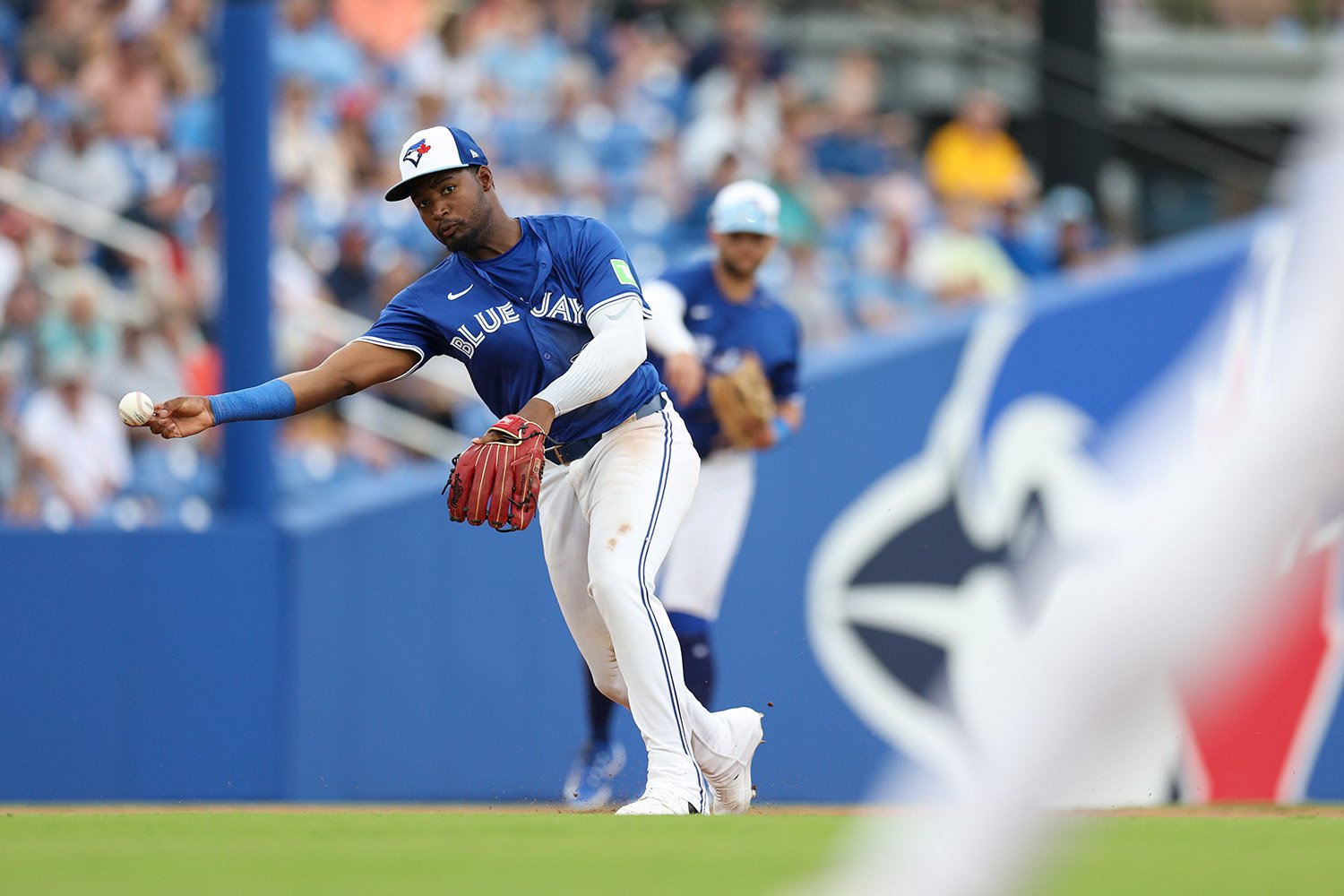 CURRENT W-L Records -Buffalo Bisons: 8-15 -New Hampshire Fisher Cats: 7-10 -Vancouver Canadians: 8-11 -Dunedin Blue Jays: 10-9 -FCL Blue Jays: 0-0 (Season not started) -DSL Blue Jays: 0-0 (Season not started) TRANSACTIONS 04/25/25 - Buffalo Bisons placed SS Michael Turconi on the 7-day injured list. 04/25/25 - SS Josh Rivera assigned to Buffalo Bisons from New Hampshire Fisher Cats. 04/25/25 - 2B Jay Harry assigned to New Hampshire Fisher Cats from Vancouver Canadians. 04/25/25 - Vancouver Canadians activated OF Carter Cunningham. 04/24/25 - SS Dariel Ramon assigned to Dunedin Blue Jays from DSL Blue Jays Blue. Buffalo Bisons Buffalo (8), Rochester (1) - 4/24 Box Score On Thursday, the Buffalo Bisons put together one of their most complete games of the season with an 8-1 drubbing of the Rochester Red Wings. On the mound, Eric Lauer started and spun five great innings. He gave up only five hits and didn't allow an earned run. To put a bow on his outing, he didn't give up a walk and struck out five hitters. In the bottom of the third inning, Michael Turconi got the Bisons started with a sacrifice fly. Michael Stefanic would drive in a second run with a line drive to center field. In the fourth inning, Buffalo would tack on four runs on the back of a mammoth 2-run home run from Orelvis Martinez. It was a rocket to center field that left the bat at 110.3 MPH, at a 32° launch angle, and traveled 413 FT. Michael Stefanic added another RBI single, and Daulton Varsho a sacrifice fly. In the seventh inning, Ali Sánchez and Steward Berroa also finished the scoring with RBI singles. It was a complete all-around game with everyone adding some contribution to the victory. Orelvis Martinez: 1-3, 2 R, 2 RBI, 1 BB, 0 K, 1 HR Martinez is finally getting some of his timing back at the plate. In his last five games, he has gone 5-12 with three runs, three runs batted in, two walks, four strikeouts, a double, and a home run. Hopefully, he is finally starting to get hotter as the temperature rises. Eric Lauer: 5 IP, 5 H, 0 ER, 0 BB, 5 K Buffalo (1), Rochester (8) - 4/25 Box Score In this Friday night game, it was an almost complete reversal of Thursday's game. The Bisons’ bats were ice cold, only managing three hits all night. Easton Lucas started for the Bisons on the mound and pitched well. He went 5 1/3 innings, while only giving up three hits and two runs. He was a bit wild on the night, walking four batters. He did miss some bats to the tune of four strikeouts. In the fourth inning, Davis Schneider tied the game at one, with a double down the line. That would be it though, as Rochester scored seven runs in the last four innings to run away with the game. Davis Schneider: 1-3, 0 R, 1 RBI, 2 BB, 2 K, 1 2B Easton Lucas: 5.1 IP, 3 H, 2 ER, 4 BB, 4 K New Hampshire Fisher Cats New Hampshire (0), Binghamton (5) - 4/24 - Game 1 Box Score On Thursday, New Hampshire played a double header against the Binghamton Rumble Ponies and sent CJ Van Eyk to the mound in game one. The first team to get on the scoreboard was the Rumble Ponies in the bottom of the third inning, when Van Eyk gave up back-to-back home runs to Nick Morabito and Ryan Clifford. New Hampshire threatened in the next half inning on a single from Yohendrick Pinango and a double from Charles McAdoo. Unfortunately, both runners would be stranded when Eddinson Paulino struck out to end the inning. A couple more errors in the bottom of the fifth would let Binghamton take some extra bases and led to a run. In the bottom of the sixth inning, Binghamton would add a couple more insurance runs via a two-run home run by Kevin Parada. Ryan McCarty would strike out to end the game in the seventh, as Binghamton would lose game one 5-0. Yohendrick Pinango: 2-3, 1 2B Pinango keeps hitting like he wants a promotion to Triple-A Buffalo. He raises his average up to .367 for the season and is really locked in at the plate. CJ Van Eyk: 5.2 IP, 8 H, 5 ER, 0 BB, 9 K Van Eyk struggled giving up hits this game, but managed to eat innings in the first game of the double header. He did strike out nine, despite only garnering eight swing and misses. New Hampshire (1), Binghamton (4) - 4/24 - Game 2 Box Score In the second game of the double header on Thursday, New Hampshire flipped to the home team and Binghamton was the away team. However, it was much of the same play on the field as the first game. New Hampshire stayed locked up at zero, until in the top of the third inning, when Matt O'Neill hit a three-run homer to cap off a four-run inning for Binghamton. New Hampshire would try and claw their way back in the bottom of the fifth inning, with a solo shot by Ryan McCarty, for his first home run of the season. The game would just flow, mostly three-up and three-down, until the bottom of the seventh inning. In New Hampshire's last chance to mount a comeback, all three hitters struck out swinging to end the game. Binghamton would take the second game of the double header 4-1. Ryan McCarty: 1-3, 1 R, 1 RBI, 1 K, 1 HR McCarty has been struggling most of the season, but his home run in the fifth inning brought his average up to the Mendoza Line (.200) for the season. Ryan Boyer: 3 IP, 2 H, 0 ER, 1 BB, 3 K Boyer came into the game in the fifth inning with New Hampshire already down four runs. He did a great job of keeping New Hampshire within reach for the bats to come alive, but alas they would not muster a comeback. New Hampshire (1), Binghamton (4) - 4/25 Box Score On a rainy Friday night, New Hampshire had a rough task, facing yet another difficult starting pitcher from Binghamton's rotation. This time they were up against Nolan McLean, a tough right-handed pitcher with an ERA below two for the season. The Fisher Cats started off slow, striking out three times in the top of the first inning, with a Peyton Williams walk breaking up the punch outs. The newly promoted Jay Harry started a mini rally in the top of the second inning, with a single in his first Double-A at-bat. It was followed by an Eddinson Paulino single, but a double play and ground out would snuff out the threat. In the top of the sixth inning, singles by Jace Bohrofen and Charles McAdoo would be followed up by an RBI single from Harry to take the lead 1-0. McLean would be chased from the game after the Harry single, but the damage would keep getting worse for Binghamton. Two walks, a hit by pitch, and an error would see New Hampshire score four more runs before they were through. After a couple more half innings, the game ended early after a rain delay, with New Hampshire winning 5-0. Jay Harry: 2-3, 1 R, 1 RBI Rafael Sanchez: 6 IP, 2 H, 0 ER, 1 BB, 5 K Sanchez ended up throwing a complete game with the game being called early due to rain. He used a nice looking changeup or splitter as his out pitch to garner swing and misses to end the at-bats. Vancouver Canadians Vancouver (3), Everett (4) - 04/24 Box Score Juaron Watts-Brown wasn’t as sharp as he was to start the season, but still pitched an effective start, going 4 and a third innings and striking out 6, while only allowing 2 runs. He did show shakier command than he did for most of the season, walking 3 batters and giving up 4 base hits. He was up to 80 pitches in the top of the 5th and was taken out for Pat Gallagher who was excellent. However, the normally very strong Canadians bullpen faltered slightly, with Kai Peterson giving up his first homer of the season in the top of the 8th. The Canadians answered back with a couple of homers from Jackson Hornung and Adrian Pinto in the 9th, bot in the bottom of the inning, Chay Yeager, who’s been excellent to start the season, gave up a leadoff homer to outfielder Michael Arroyo, who walked it off for the AquaSox. Pat Gallagher - 2.1 IP, 0 ER, 0 BB, 5 K Gallagher was solid in the minors as a starter, but the 25 year old has been exclusively used as a reliever so far this season. He had his best appearance on the season, striking out 5 in only 2 and a thirds of work without allowing a single run. Jackson Hornung - 1-3, 1 R, 1 RBI, 1 BB, 1 K Hornung hit his first homer on the season in the 9th, going oppo above the scoreboard. Hornung was drafted as a catcher, but he hasn’t caught yet this season and has split time at first base and now left field. Vancouver (3), Everett (12) - 04/25 Box Score Kevn Miranda got another start for the Canadians, but this time it did not go very well. He gave up 6 hits, 2 being homers and 1 a double and walked a batter, which resulted in 7 earned runs in only 2.2 IP. Edinson Batista, who was just recently moved up from Dunedin after some poor results also let in another 2 runs in 1.1 IP, struggling with command and walking 3 batters. Irv Carter came in to relieve Batista, but he too struggled, only getting 1 out, allowing 3 hits and a homer to give up 3 runs. Ortiz and Munson both had scoreless appearances, but it was too little and too late for the Canadians to come back from. The offense sputtered a bit, only scoring 1 run off of the starter Ryan Hawks from an RBI groundout by Arjun Nimmala, and then Nimmala hit a homer in the top of the 9th to score Jacob Wetzel as well for the only runs of the game. Arjun Nimmala - 2-5, 1 R, 3 RBI, 1 HR, 0 K Arjun’s hot start didn’t really carry over, as his offensive production tapered off slightly, but this was a nice return to form from him, where he drove in all 3 runs for the Canadians and hit his third homer of the season. Nimmala is now slashing .284/.342/.478 on the season for a solid .820 OPS. Julio Ortiz - 1.2 IP, 0 ER, 0 BB, 3 K Dunedin Blue Jays Dunedin (2), Tampa (7) - 04/24 Box Score The Dunedin Blue Jays were unable to get anything off of Tarpons starter Griffin Herring, who went 7 scoreless giving up only 2 hits and 3 walks, while striking out 6. Cates had a shaky start, despite going for 5.1 IP, and that put the Jays in a hole 4 - nil in the first 7 innings. Only after Herring was taken out did the Jays get on the board, with 2 runs scored off reliever Jack Sokol, with 2 RBI groundouts from Manuel Beltre and Yeuni Munoz to bring the Jays within 2. Johan Simon came in to the bottom of the 8th and immediately gave up 3 runs, stopping the Jays momentum and putting the game out of reach. Austin Cates - 5.1 IP, 6 H, 4 ER, 2 BB, 1 K This wasn’t the best start for Cates, as his fastball had less life than usual and he gave up 4 runs. Still Cates went 5 and a third innings, with 3 out of 4 runs scoring off of shaky defense or wild pitches. J.R. Freethy - 1-2, 1 R, 2 BB, 0 K Freethy led off for the Jays, and got on base multiple times for them but the hitters behind him were unable to drive him in. The 22 year old utility player is now up to a 116 wRC+ and a 17.3% walk rate. Dunedin (4), Tampa (2) - 04/25 Box Score This game revolved around 2 awesome pitching performances from 2 different pitching prospects in the Jays system. Trey Yesavage, the refined college pitcher, showed exactly why he was a first round pick and an elite major college pitcher going perfect in his first 4 innings and striking out 10. Gage Stanifer on the other hand was not a highly touted prospect out of high school, and was a raw pitching prospect drafted out of the 19th round in the 2022 draft. However, Gage Stanifer came in relief and pitched 4 scoreless innings, which led to him getting the W on the game. As pointed out by Sam Dykstra from MLB Pipeline, he’s been doing that very consistently over the course of the season. The offense was very balanced as they got on base 17 times in total with 10 hits and 7 walks. Cade Doughty got his first couple of RBIs on his rehab assignment and Duran, Joseph and Powell all had 2 hits on the night. That was enough to score 4 runs off of the Tarpons, and help overtake the Tarpons after Yesavage stumbled a bit in the 5th inning. Trey Yesavage - 4.2 IP, 1 H, 2 ER, 2 BB, 10 K Yesavage had his most dominant outing of the year, with 4 and a third perfect innings with 10 strikeouts before the wheels fell off a bit with a hit and a couple of walks led to 2 runners scoring. Still Yesavage is showing that there’s nothing else to prove in Dunedin, as he’ll look to get promoted along with his draft-class mate Stephen once the weather improves consistently. This is Yesavage’s second straight outing with 10 strikeouts, and he’s showing that he has some big league stuff. Peyton Powell - 2-2, 2 R, 2 BB Powell got on base all 4 times he made a plate appearance, and the 24 year old undrafted free agent has had a solid start to his pro career, with a batting average of .333, and an OBP of .484. He hasn’t had an extra base hit, but he’s been stellar at getting on base. FCL Blue Jays No games DSL Blue Jays No games Toronto Blue Jays Minor League Players of the Day Pitcher of the Period: RHP, Trey Yesavage (Dunedin) - 4.2 IP, 1 H, 2 ER, 2 BB, 10 K Hitter of the Period: SS Arjun Nimmala (Vancouver) - 3-9, 1 R, 3 RBI, 1 BB, 1 K, 1 HR Prospect Summary (Last 2 Days) 1. Arjun Nimmala (Vancouver) - 3-9, 1 R, 3 RBI, 1 BB, 1 K, 1 HR 2. Trey Yesavage (Dunedin) - 4.2 IP, 1 H, 2 ER, 2 BB, 10 K 3. Ricky Tiedemann (Buffalo) - DNP 4. Orelvis Martinez (Buffalo) - 1-7, 2 R, 2 RBI, 1, 3 K, 1 HR 5. Jake Bloss (Buffalo) - DNP 6. Alan Roden (Toronto) - DNP 7. Josh Kasevich (Buffalo) - DNP 8. Kendry Rojas (Vancouver) - DNP 9. Khal Stephen (Dunedin) - DNP 10. Charles McAdoo (New Hampshire) - 2-9. 1 R, 1 BB, 4 K. 1 2B 11. Adam Macko (Buffalo) - DNP 12. Landen Maroudis (Dunedin) - DNP 13. Fernando Perez (Vancouver) - DNP 14. Will Wagner (Toronto) - DNP 15. Johnny King (FCL Blue Jays) - DNP 16. Brandon Barriera (Dunedin) - DNP 17. Emmanuel Bonilla (FCL Blue Jays) - DNP 18. Juaron Watts-Brown (Vancouver) - 4.1 IP, 4 H, 2 ER, 3 BB, 6 K 19. Eddinson Paulino (New Hampshire) - 2-5, 1 R, 1 BB, 2 K, 1 2B 20. Dahian Santos (New Hampshire) - DNP
 -
As we approach the one-month mark in the 2025 minor-league season, the Blue Jays system is a mixed bag. CURRENT W-L Records -Buffalo Bisons: 8-15 -New Hampshire Fisher Cats: 7-10 -Vancouver Canadians: 8-11 -Dunedin Blue Jays: 10-9 -FCL Blue Jays: 0-0 (Season not started) -DSL Blue Jays: 0-0 (Season not started) TRANSACTIONS 04/25/25 - Buffalo Bisons placed SS Michael Turconi on the 7-day injured list. 04/25/25 - SS Josh Rivera assigned to Buffalo Bisons from New Hampshire Fisher Cats. 04/25/25 - 2B Jay Harry assigned to New Hampshire Fisher Cats from Vancouver Canadians. 04/25/25 - Vancouver Canadians activated OF Carter Cunningham. 04/24/25 - SS Dariel Ramon assigned to Dunedin Blue Jays from DSL Blue Jays Blue. Buffalo Bisons Buffalo (8), Rochester (1) - 4/24 Box Score On Thursday, the Buffalo Bisons put together one of their most complete games of the season with an 8-1 drubbing of the Rochester Red Wings. On the mound, Eric Lauer started and spun five great innings. He gave up only five hits and didn't allow an earned run. To put a bow on his outing, he didn't give up a walk and struck out five hitters. In the bottom of the third inning, Michael Turconi got the Bisons started with a sacrifice fly. Michael Stefanic would drive in a second run with a line drive to center field. In the fourth inning, Buffalo would tack on four runs on the back of a mammoth 2-run home run from Orelvis Martinez. It was a rocket to center field that left the bat at 110.3 MPH, at a 32° launch angle, and traveled 413 FT. Michael Stefanic added another RBI single, and Daulton Varsho a sacrifice fly. In the seventh inning, Ali Sánchez and Steward Berroa also finished the scoring with RBI singles. It was a complete all-around game with everyone adding some contribution to the victory. Orelvis Martinez: 1-3, 2 R, 2 RBI, 1 BB, 0 K, 1 HR Martinez is finally getting some of his timing back at the plate. In his last five games, he has gone 5-12 with three runs, three runs batted in, two walks, four strikeouts, a double, and a home run. Hopefully, he is finally starting to get hotter as the temperature rises. Eric Lauer: 5 IP, 5 H, 0 ER, 0 BB, 5 K Buffalo (1), Rochester (8) - 4/25 Box Score In this Friday night game, it was an almost complete reversal of Thursday's game. The Bisons’ bats were ice cold, only managing three hits all night. Easton Lucas started for the Bisons on the mound and pitched well. He went 5 1/3 innings, while only giving up three hits and two runs. He was a bit wild on the night, walking four batters. He did miss some bats to the tune of four strikeouts. In the fourth inning, Davis Schneider tied the game at one, with a double down the line. That would be it though, as Rochester scored seven runs in the last four innings to run away with the game. Davis Schneider: 1-3, 0 R, 1 RBI, 2 BB, 2 K, 1 2B Easton Lucas: 5.1 IP, 3 H, 2 ER, 4 BB, 4 K New Hampshire Fisher Cats New Hampshire (0), Binghamton (5) - 4/24 - Game 1 Box Score On Thursday, New Hampshire played a double header against the Binghamton Rumble Ponies and sent CJ Van Eyk to the mound in game one. The first team to get on the scoreboard was the Rumble Ponies in the bottom of the third inning, when Van Eyk gave up back-to-back home runs to Nick Morabito and Ryan Clifford. New Hampshire threatened in the next half inning on a single from Yohendrick Pinango and a double from Charles McAdoo. Unfortunately, both runners would be stranded when Eddinson Paulino struck out to end the inning. A couple more errors in the bottom of the fifth would let Binghamton take some extra bases and led to a run. In the bottom of the sixth inning, Binghamton would add a couple more insurance runs via a two-run home run by Kevin Parada. Ryan McCarty would strike out to end the game in the seventh, as Binghamton would lose game one 5-0. Yohendrick Pinango: 2-3, 1 2B Pinango keeps hitting like he wants a promotion to Triple-A Buffalo. He raises his average up to .367 for the season and is really locked in at the plate. CJ Van Eyk: 5.2 IP, 8 H, 5 ER, 0 BB, 9 K Van Eyk struggled giving up hits this game, but managed to eat innings in the first game of the double header. He did strike out nine, despite only garnering eight swing and misses. New Hampshire (1), Binghamton (4) - 4/24 - Game 2 Box Score In the second game of the double header on Thursday, New Hampshire flipped to the home team and Binghamton was the away team. However, it was much of the same play on the field as the first game. New Hampshire stayed locked up at zero, until in the top of the third inning, when Matt O'Neill hit a three-run homer to cap off a four-run inning for Binghamton. New Hampshire would try and claw their way back in the bottom of the fifth inning, with a solo shot by Ryan McCarty, for his first home run of the season. The game would just flow, mostly three-up and three-down, until the bottom of the seventh inning. In New Hampshire's last chance to mount a comeback, all three hitters struck out swinging to end the game. Binghamton would take the second game of the double header 4-1. Ryan McCarty: 1-3, 1 R, 1 RBI, 1 K, 1 HR McCarty has been struggling most of the season, but his home run in the fifth inning brought his average up to the Mendoza Line (.200) for the season. Ryan Boyer: 3 IP, 2 H, 0 ER, 1 BB, 3 K Boyer came into the game in the fifth inning with New Hampshire already down four runs. He did a great job of keeping New Hampshire within reach for the bats to come alive, but alas they would not muster a comeback. New Hampshire (1), Binghamton (4) - 4/25 Box Score On a rainy Friday night, New Hampshire had a rough task, facing yet another difficult starting pitcher from Binghamton's rotation. This time they were up against Nolan McLean, a tough right-handed pitcher with an ERA below two for the season. The Fisher Cats started off slow, striking out three times in the top of the first inning, with a Peyton Williams walk breaking up the punch outs. The newly promoted Jay Harry started a mini rally in the top of the second inning, with a single in his first Double-A at-bat. It was followed by an Eddinson Paulino single, but a double play and ground out would snuff out the threat. In the top of the sixth inning, singles by Jace Bohrofen and Charles McAdoo would be followed up by an RBI single from Harry to take the lead 1-0. McLean would be chased from the game after the Harry single, but the damage would keep getting worse for Binghamton. Two walks, a hit by pitch, and an error would see New Hampshire score four more runs before they were through. After a couple more half innings, the game ended early after a rain delay, with New Hampshire winning 5-0. Jay Harry: 2-3, 1 R, 1 RBI Rafael Sanchez: 6 IP, 2 H, 0 ER, 1 BB, 5 K Sanchez ended up throwing a complete game with the game being called early due to rain. He used a nice looking changeup or splitter as his out pitch to garner swing and misses to end the at-bats. Vancouver Canadians Vancouver (3), Everett (4) - 04/24 Box Score Juaron Watts-Brown wasn’t as sharp as he was to start the season, but still pitched an effective start, going 4 and a third innings and striking out 6, while only allowing 2 runs. He did show shakier command than he did for most of the season, walking 3 batters and giving up 4 base hits. He was up to 80 pitches in the top of the 5th and was taken out for Pat Gallagher who was excellent. However, the normally very strong Canadians bullpen faltered slightly, with Kai Peterson giving up his first homer of the season in the top of the 8th. The Canadians answered back with a couple of homers from Jackson Hornung and Adrian Pinto in the 9th, bot in the bottom of the inning, Chay Yeager, who’s been excellent to start the season, gave up a leadoff homer to outfielder Michael Arroyo, who walked it off for the AquaSox. Pat Gallagher - 2.1 IP, 0 ER, 0 BB, 5 K Gallagher was solid in the minors as a starter, but the 25 year old has been exclusively used as a reliever so far this season. He had his best appearance on the season, striking out 5 in only 2 and a thirds of work without allowing a single run. Jackson Hornung - 1-3, 1 R, 1 RBI, 1 BB, 1 K Hornung hit his first homer on the season in the 9th, going oppo above the scoreboard. Hornung was drafted as a catcher, but he hasn’t caught yet this season and has split time at first base and now left field. Vancouver (3), Everett (12) - 04/25 Box Score Kevn Miranda got another start for the Canadians, but this time it did not go very well. He gave up 6 hits, 2 being homers and 1 a double and walked a batter, which resulted in 7 earned runs in only 2.2 IP. Edinson Batista, who was just recently moved up from Dunedin after some poor results also let in another 2 runs in 1.1 IP, struggling with command and walking 3 batters. Irv Carter came in to relieve Batista, but he too struggled, only getting 1 out, allowing 3 hits and a homer to give up 3 runs. Ortiz and Munson both had scoreless appearances, but it was too little and too late for the Canadians to come back from. The offense sputtered a bit, only scoring 1 run off of the starter Ryan Hawks from an RBI groundout by Arjun Nimmala, and then Nimmala hit a homer in the top of the 9th to score Jacob Wetzel as well for the only runs of the game. Arjun Nimmala - 2-5, 1 R, 3 RBI, 1 HR, 0 K Arjun’s hot start didn’t really carry over, as his offensive production tapered off slightly, but this was a nice return to form from him, where he drove in all 3 runs for the Canadians and hit his third homer of the season. Nimmala is now slashing .284/.342/.478 on the season for a solid .820 OPS. Julio Ortiz - 1.2 IP, 0 ER, 0 BB, 3 K Dunedin Blue Jays Dunedin (2), Tampa (7) - 04/24 Box Score The Dunedin Blue Jays were unable to get anything off of Tarpons starter Griffin Herring, who went 7 scoreless giving up only 2 hits and 3 walks, while striking out 6. Cates had a shaky start, despite going for 5.1 IP, and that put the Jays in a hole 4 - nil in the first 7 innings. Only after Herring was taken out did the Jays get on the board, with 2 runs scored off reliever Jack Sokol, with 2 RBI groundouts from Manuel Beltre and Yeuni Munoz to bring the Jays within 2. Johan Simon came in to the bottom of the 8th and immediately gave up 3 runs, stopping the Jays momentum and putting the game out of reach. Austin Cates - 5.1 IP, 6 H, 4 ER, 2 BB, 1 K This wasn’t the best start for Cates, as his fastball had less life than usual and he gave up 4 runs. Still Cates went 5 and a third innings, with 3 out of 4 runs scoring off of shaky defense or wild pitches. J.R. Freethy - 1-2, 1 R, 2 BB, 0 K Freethy led off for the Jays, and got on base multiple times for them but the hitters behind him were unable to drive him in. The 22 year old utility player is now up to a 116 wRC+ and a 17.3% walk rate. Dunedin (4), Tampa (2) - 04/25 Box Score This game revolved around 2 awesome pitching performances from 2 different pitching prospects in the Jays system. Trey Yesavage, the refined college pitcher, showed exactly why he was a first round pick and an elite major college pitcher going perfect in his first 4 innings and striking out 10. Gage Stanifer on the other hand was not a highly touted prospect out of high school, and was a raw pitching prospect drafted out of the 19th round in the 2022 draft. However, Gage Stanifer came in relief and pitched 4 scoreless innings, which led to him getting the W on the game. As pointed out by Sam Dykstra from MLB Pipeline, he’s been doing that very consistently over the course of the season. The offense was very balanced as they got on base 17 times in total with 10 hits and 7 walks. Cade Doughty got his first couple of RBIs on his rehab assignment and Duran, Joseph and Powell all had 2 hits on the night. That was enough to score 4 runs off of the Tarpons, and help overtake the Tarpons after Yesavage stumbled a bit in the 5th inning. Trey Yesavage - 4.2 IP, 1 H, 2 ER, 2 BB, 10 K Yesavage had his most dominant outing of the year, with 4 and a third perfect innings with 10 strikeouts before the wheels fell off a bit with a hit and a couple of walks led to 2 runners scoring. Still Yesavage is showing that there’s nothing else to prove in Dunedin, as he’ll look to get promoted along with his draft-class mate Stephen once the weather improves consistently. This is Yesavage’s second straight outing with 10 strikeouts, and he’s showing that he has some big league stuff. Peyton Powell - 2-2, 2 R, 2 BB Powell got on base all 4 times he made a plate appearance, and the 24 year old undrafted free agent has had a solid start to his pro career, with a batting average of .333, and an OBP of .484. He hasn’t had an extra base hit, but he’s been stellar at getting on base. FCL Blue Jays No games DSL Blue Jays No games Toronto Blue Jays Minor League Players of the Day Pitcher of the Period: RHP, Trey Yesavage (Dunedin) - 4.2 IP, 1 H, 2 ER, 2 BB, 10 K Hitter of the Period: SS Arjun Nimmala (Vancouver) - 3-9, 1 R, 3 RBI, 1 BB, 1 K, 1 HR Prospect Summary (Last 2 Days) 1. Arjun Nimmala (Vancouver) - 3-9, 1 R, 3 RBI, 1 BB, 1 K, 1 HR 2. Trey Yesavage (Dunedin) - 4.2 IP, 1 H, 2 ER, 2 BB, 10 K 3. Ricky Tiedemann (Buffalo) - DNP 4. Orelvis Martinez (Buffalo) - 1-7, 2 R, 2 RBI, 1, 3 K, 1 HR 5. Jake Bloss (Buffalo) - DNP 6. Alan Roden (Toronto) - DNP 7. Josh Kasevich (Buffalo) - DNP 8. Kendry Rojas (Vancouver) - DNP 9. Khal Stephen (Dunedin) - DNP 10. Charles McAdoo (New Hampshire) - 2-9. 1 R, 1 BB, 4 K. 1 2B 11. Adam Macko (Buffalo) - DNP 12. Landen Maroudis (Dunedin) - DNP 13. Fernando Perez (Vancouver) - DNP 14. Will Wagner (Toronto) - DNP 15. Johnny King (FCL Blue Jays) - DNP 16. Brandon Barriera (Dunedin) - DNP 17. Emmanuel Bonilla (FCL Blue Jays) - DNP 18. Juaron Watts-Brown (Vancouver) - 4.1 IP, 4 H, 2 ER, 3 BB, 6 K 19. Eddinson Paulino (New Hampshire) - 2-5, 1 R, 1 BB, 2 K, 1 2B 20. Dahian Santos (New Hampshire) - DNP View full article
-
- 1
-
-
- trey yesavage
- arjun nimmala
- (and 8 more)
-
Hey, but the strikeouts are low. That's a win for putting weak easy ground balls into play lol
-
4 for last 59 as a team. Amazing analytical approach to hitting
-
Little league approach has to go. They try to not score runs almost lol

.jpg.c5209278e70ad14d440449aef66f8de7.jpg)
.jpg.cfe10a4ea6e252b3d8bdd8e954dceb31.jpg)
.jpg.008516c08212d7c5c2af9421f144ec1d.jpg)
.jpg.1cb407403222901956254be8c92abf51.jpg)
.jpg.dc2aab0b1ad92e0ce6bb18fc19da87d4.jpg)
