


Blue Jays Video
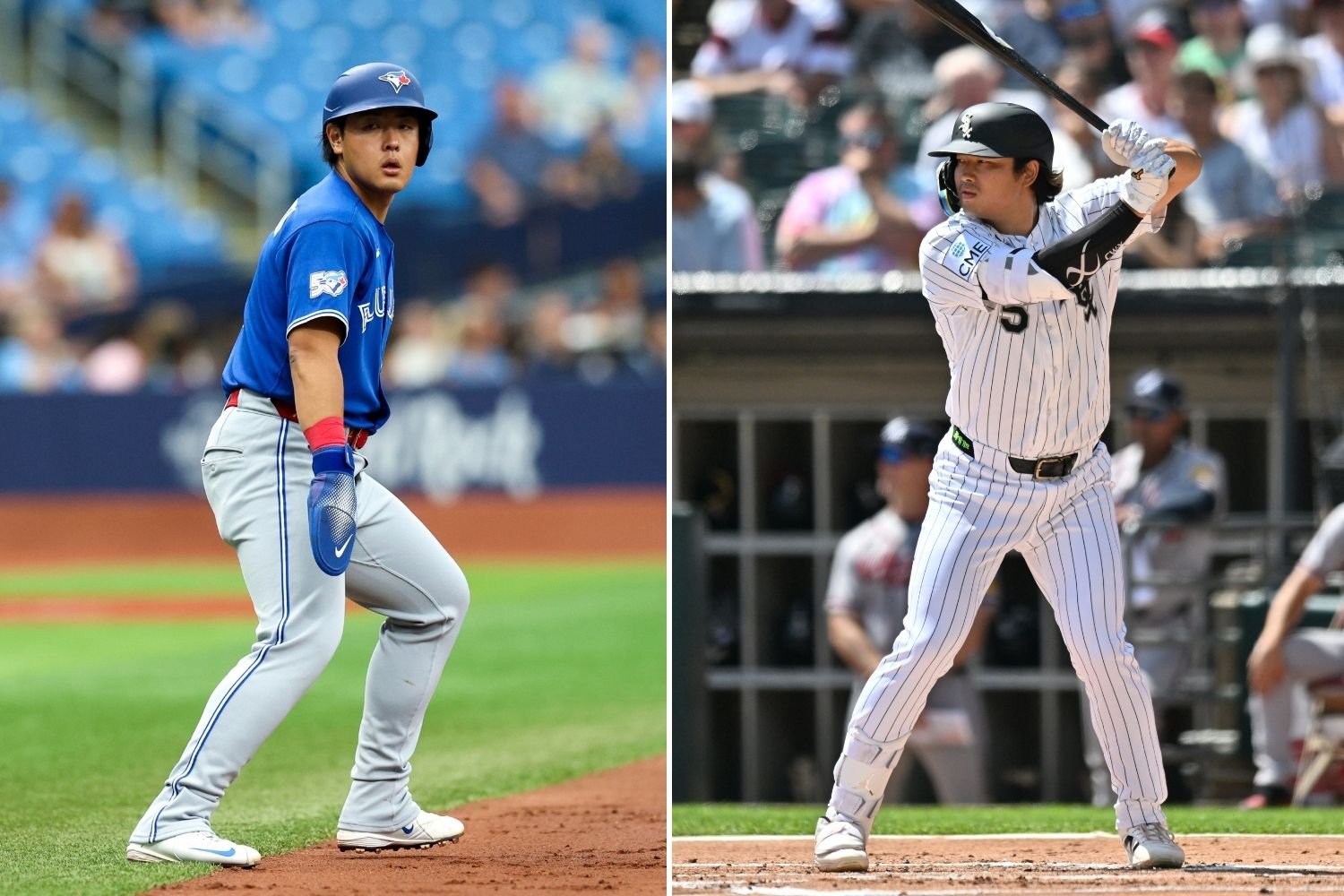
When Kazuma Okamoto and Munetaka Murakami arrived from Nippon Professional Baseball (NPB) ahead of the 2026 season, they represented two very different bets. Both have met expectations, but their overall value to their respective ballclubs after the first year of their contracts is an interesting debate.
Okamoto was viewed as the safer acquisition. The long-time Yomiuri Giants star had built a reputation as one of Japan's most consistent middle-of-the-order hitters. He offered power, defensive versatility, and a track record of durability. Toronto signed him to a four-year, $60 million contract.
Murakami, the former Triple Crown winner and owner of NPB's single-season home run record (for Japanese-born players), carried more upside but with risk. Scouts loved the power but questioned whether his swing-and-miss tendencies would become a major issue against elite MLB velocity. Chicago signed him to a two-year, $34 million contract with the expectation that he could become the centerpiece of its rebuild.
As the 2026 season has unfolded, the comparison has become an interesting storyline. Neither was ever expected to eclipse Shohei Ohtani, but they were expected to transition well. Both players are MLB rookies despite years of professional experience in Japan. Both have shown legitimate power. Both entered the year among the American League Rookie of the Year contenders. Yet the gap between their performances has become increasingly clear.
Looking strictly at value, production, and future outlook, Murakami has emerged as the superior deal based on his impact combined with his role in Chicago’s turnaround.
Murakami's offensive production has bettered Okamoto's. Through late August, he owns an .859 OPS with 29 home runs and a 2.2 WAR according to Baseball Reference.
His batting average of .219 does not look especially impressive on its own, but his contributions are all about production. Murakami's combination of power and on-base ability has produced elite run creation numbers. FanGraphs showed him carrying a 158 wRC+ through his first 57 games before injury interruptions, meaning he created runs 58 percent better than the league average hitter. That number has dropped since his return, but it remains an impressive 138.
Okamoto's numbers have been far more modest. He enters the final stretch of the season batting .228 with 26 home runs and 74 RBI. His OPS sits at .736, and his WAR is approximately 1.6 according to Baseball Reference. FanGraphs places him at a 106 wRC+, only slightly above league average.
A 106 wRC+ hitter is considered a useful major leaguer. A 138 wRC+ hitter is approaching, if not a legitimate superstar.
Okamoto debuted at age 29 and turned 30 in June. In sports, athletes don’t tend to age all that well. A player producing top-level offense at age 26, like Murakami, is entering what should be his peak seasons. A player producing league average offense at age 30 is much more likely at his ceiling and may already be approaching the back side of his prime.
Before signing these players, both organizations undoubtedly asked themselves: How much future value can this player provide relative to salary?
Murakami might be capable of outperforming his contract if he maintains even most of his current offensive level. Chicago is paying him an average annual salary of $17 million. Okamoto's annual value is $15 million.
The Jays signed a player who had a solid track record in Japan. During his NPB career, Okamoto ranked among Japan's most productive sluggers, finishing near the top of the league in home runs, RBI, doubles, and overall offensive value over multiple seasons.
Scouts expected solid defense and 25 to 30 home run power. And Okamoto has delivered that.
Already, he has set a Blue Jays franchise record for most home runs in a season. Eric Hinske set the previous mark of 24 in 2002. Okamoto has also bettered Ohtani’s rookie record for Japanese-born players of 22.
Statcast metrics show strong raw power from Okamoto, highlighted by a 90.4 mph average exit velocity, a 12.6 percent barrel rate, and a maximum exit velocity of 112.6 mph. Murakami’s average exit velocity is 94 mph with a barrel rate of 19.7 percent and a hard-hit percentage of 58.2.
Okamoto's strikeout rate has exceeded 30 percent, while his expected batting average has remained well below league average. Statcast data shows a whiff rate among the lowest percentiles in the sport.
Murakami has strikeout issues as well. His strikeout rate is 33.8%. In fact, swing and miss was the single biggest question surrounding him before he left Japan. Several evaluators wondered if elite MLB fastballs would expose weaknesses in his approach.
But the key difference between the two players is that Murakami's power has been able to overcome those strikeouts.
His offensive ceiling has always been much higher. In 2022, Murakami hit 56 home runs, won the NPB Triple Crown, and established himself as one of the biggest offensive talents Japan has produced in decades.
Despite missing time due to injury, Murakami has been among the most productive rookie hitters in baseball. He was selected as an All-Star and invited to the Home Run Derby.
From that standpoint, Chicago appears to have extracted greater value. Murakami has definitely played a role in the White Sox's 2026 success.
The Jays signed Okamoto to fill a power-hitting role in the lineup. He needed to produce at a reasonable level to force opponents to pitch to Vladimir Guerrero Jr. and others. He has produced but not consistently enough to scare opposition pitching.
Murakami has simply generated more value. FanGraphs projected Okamoto for approximately 2.5 WAR over a full season entering 2026. His actual performance has landed closer to the solid regular range than the star range.
Murakami was projected to be around a 120 wRC+ hitter before the season. Instead, when healthy, he has dramatically exceeded that pace.
According to some preseason analysis, Okamoto was actually projected to outperform Murakami. That just hasn’t happened.
By May, MLB.com's first Rookie of the Year poll placed Murakami among the clear leaders in the American League race. He later earned Rookie of the Month honours and established himself as one of the faces of the rookie class.
Recent odds still place Murakami behind Detroit's Kevin McGonigle, but the two are close.
Okamoto remains in the discussion, but unless he single-handedly propels the Jays into the postseason, his first season in the majors will go down as a success but not a groundbreaking one.
For years, MLB organizations have tried to project which Japanese players would thrive in the bigs. Some players arrive and produce immediately. Others struggle for a variety of reasons, from culture shock or the demanding travel schedule to going up against the best of the best.
Heading into the season, Okamoto was considered the safer bet because of his consistency. Murakami was considered the riskier player because of his strikeout tendencies.
The risk has paid off for the White Sox. The safer path hasn’t hurt the Jays, but it hasn’t been a difference-maker either.
Both signings can be considered successes because neither player has flopped. Each has delivered meaningful production as a rookie and demonstrated yet again that elite Japanese hitters can transition successfully to MLB.
In a league where winning is really all that matters, the White Sox took a gamble that has turned them into a contender in one season. The Jays, on the other hand, aren’t a sinking ship, but their safe bet has only been able to keep them afloat.





Recommended Comments
Create an account or sign in to comment
You need to be a member in order to leave a comment
Create an account
Sign up for a new account in our community. It's easy!
Register a new accountSign in
Already have an account? Sign in here.
Sign In Now