

Blue Jays Video
Jays Centre is counting down the top 50 Blue Jays in franchise history. Check out prior entries in the series here:
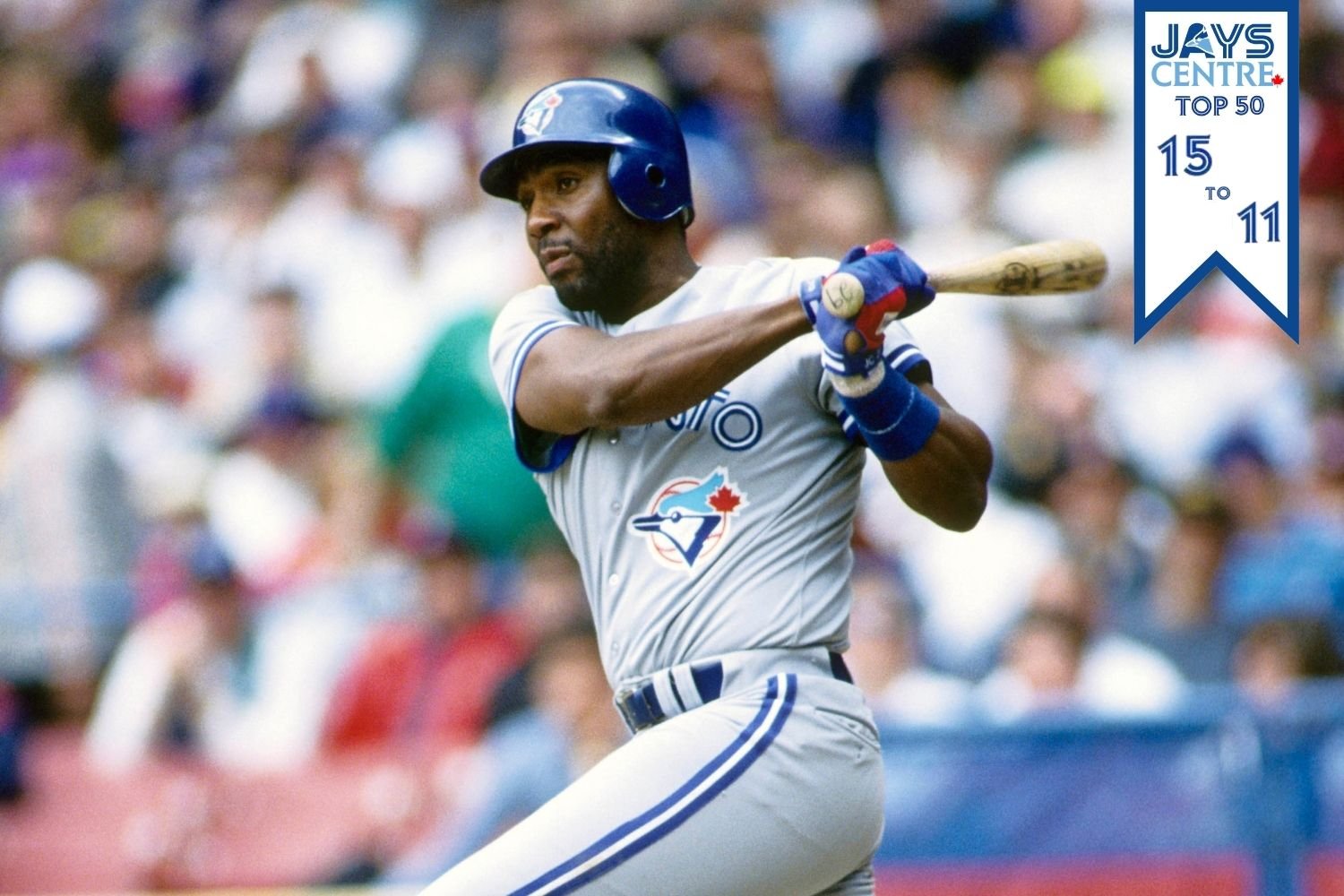
There is no shortage of opportunity in the postseason. Heroes can be born on the swing of a bat, and a pitcher's reputation is only as good as his work in October. Any World Series win is boosted by a collective stepping up, and Toronto's '92 and '93 victories were no different. As our countdown approaches the top 10 Blue Jays of all time, these players cemented their Toronto legacies with performances when they mattered most.
No. 15: Juan Guzmán
- Tied for sixth among Toronto pitchers in bWAR (21.0)
- Fourth most strikeouts in team history (1,030)
- 5-1 with a 2.44 ERA in eight postseason starts
Pat Gillick was pissed. The Blue Jays general manager thought Fred Claire had given him a choice between two prospects, but when Gillick called his Dodgers’ counterpart back to acquire teenage shortstop José Offerman, Claire responded that he would dictate the terms. Gillick would either take his other prospect, Juan Guzmán, or he could keep demoted second baseman Mike Sharperson. Those were the two choices, and the deal Gillick thought he had was not one of them.
To the delight of Epy Guerrero, Gillick went ahead and acquired Guzmán. A central part of Toronto's scouting efforts in the Dominican Republic, Guerrero had recommended George Bell, Tony Fernandez, Manny Lee, and others to Gillick in the past. Guerrero had watched Guzmán years ago at a tryout camp, but he was maybe 15, too young to consider signing. Now? Guzmán was still a kid as far as pitching prospects went, with a lively-in-all-ways arm. In 110 innings in Class A, Guzmán struck out 113, walked 84, and uncorked 19 wild pitches. Gillick's anger at Claire's switcharoo may have dissipated once Guerrero vouched for Guzmán.
Toronto wanted to convert Guzmán into a reliever, but he begged minor league managers to start and impressed when given the chance. When Dave Stieb got hurt in ‘91, Guzmán got the call, and after dropping his first two starts, it seemed like he would never lose again. Guzmán won 10 straight decisions, with five coming in September as Toronto fended off Boston for the AL East title. In the postseason, he earned the sole win in the Blue Jays’ five-game defeat to Minnesota in the ALCS. Putting the challenges of hitting against him into as few words as possible, Twins manager Tom Kelly said that Guzmán was "just wild enough to be real good."
It was no flash in the pan. Guzmán was similarly spectacular as an All-Star in ‘92, and he made Cy Young ballots in ‘93. He won all four starts he made in the ALCS those seasons, including eight strikeouts over seven innings in the ‘92 clincher against Oakland and seven frames of three-hit ball in a pivotal Game 5 against the White Sox in ‘93. Injuries would crush his reliability, save for 1996, when he led the American League in ERA (2.93), WHIP (1.124), and, unfathomably, strikeout-to-walk ratio (3.11). A Jheri-curled plaque of Guzmán alongside his sweet blue glove may one day enter the soon-to-be-opened Hall of Excellence.
No. 14: Pat Hentgen
- Fourth among Toronto pitchers in bWAR (26.8)
- Sixth most innings pitched in team history (1,636)
- 1996 American League Cy Young Award winner (20-10, 3.22 ERA)
Sitting in the dugout with his team down a run in Game 6 of the ’93 World Series, Pat Hentgen wondered what his manager had been thinking. Cito Gaston had big game pedigree on his pitching staff with the likes of Dave Stewart and Jack Morris, but if the series was pushed to a take-all Game 7, it would be Hentgen making the start for the Blue Jays. Gaston had the right to put trust in Hentgen. In his first full season as a starter, Hentgen went 19-9, was an All-Star, and received votes in the Cy Young race. In Game 3, Hentgen threw six solid innings in a road victory and was preparing for one more start before Joe Carter ended the series with one swing in the bottom of the ninth.
Hentgen had quickly become a dependable starter, and by the mid-90s, he established himself as one of the best in the American League. He won 20 and completed 10 games on his way to the 1996 Cy Young Award. No one logged more innings or faced more batters in the majors that year than Hentgen, feats he would repeat in ‘97. His ERA ballooned in his final two seasons before being traded to St. Louis, but in ‘99, Hentgen became the fourth pitcher in team history to reach 100 wins as a Blue Jay. It was a well-earned accolade for a pitcher who kept the tough post-World Series years afloat the best he could.
No. 13: Joe Carter
- Tied for 43rd among Toronto position players in bWAR (8.5)
- Five-time All-Star in seven seasons with Toronto
- Fifth most home runs in team history (203)
As he began the biggest call of his life, a worrying thought went through the mind of Tom Cheek. A jubilant Joe Carter had ended the World Series with a walk-off home run seconds ago and was using the SkyDome’s infield turf as a trampoline as he started around the bases. “Touch ‘em all, Joe,” has become one of baseball’s most legendary calls, but at the time, it served as part instruction to Carter.
“You were jumping up and down on the bases, and I was telling you to make sure you touched all the bases,” Carter said Cheek told him later.
The franchise’s most iconic moment almost never happened. Carter was a free agent after the ‘92 title, and while re-signing him was Gillick’s number one offseason priority, the general manager hesitated to go over three years in length on any contract. When Kansas City offered Carter four years, talk around the winter meetings was that a deal with the Royals was imminent. That week, Carter awoke to a vision of returning to play next to Devon Whyte. On the same day Toronto signed future World Series MVP Paul Molitor, the team agreed to a three-year deal with an option with Carter, whose forthcoming home run and continued charismatic stardom will forever keep him synonymous with the Blue Jays.
No. 12: Jimmy Key
- Third among Toronto pitchers in bWAR (29.7)
- Tied with Dave Stieb for best career ERA among Blue Jays starters (3.42)
- Fourth most games started in team history (250)
All Jimmy Key wanted to do was win. Key had again pitched well in ‘92 but found himself on the periphery of Toronto’s stellar rotation heading into October. The Blue Jays clinched the AL East on the second-to-last day of the ‘92 regular season behind eight innings of one-hit ball by Guzmán, who would now take the final spot in Toronto’s three-man rotation over Key in the upcoming ALCS. It bothered Key, but only in not being one of the guys who were counted on. Key had been one of those guys for Toronto since his breakout All-Star season in 1985 and pitched through late-season heartbreak in ‘85 and ‘87 and ‘89 and ‘91. Winning is what mattered. If Guzmán gave the Blue Jays the best shot to finally reach the top, it was fine by Key. “That’s all I want to do, be part of a team that beats Oakland,” said Key.
Key was part of such a team, and Toronto advanced to the World Series, where he would once again be counted on. The Blue Jays had a 2-1 series lead, and when Gaston came to take Key out of Game 4 with two outs in the 8th inning, a sold-out SkyDome rose to its feet. He allowed only one run and struck out six in the eventual 2-1 Toronto win. It was Key at his absolute best: in control of himself, the strike zone, the entire game. As the soon-to-be free agent walked off the field, he saluted the crowd back. “It was a special moment, and I wanted to remember it.”
When the Braves won Game 5 to extend the series, Atlanta manager Bobby Cox credited the victory to not having to face Key. Cox would have no such luck when the series shifted back to Atlanta. Key would get four crucial outs in the extra innings of Game 6, earning the series-deciding win in the franchise’s first-ever World Series title. Key was one of Toronto’s best starters for nearly a decade, and his World Series performance guaranteed his legacy as a champion.
No. 11: John Olerud
- Ninth among Toronto position players in bWAR (22.6)
- Best on-base percentage in team history (.395)
- Second highest bWAR season (7.8) in team history, only eclipsed in 2011 by José Bautista (8.3)
Ted Williams was impressed. Well into June of ‘93, John Olerud’s batting average hovered above .400. Olerud debuted straight from college to the majors with Toronto in ‘89 and showed a great ability to get on base. This season, it was all coming together at the plate, and he certainly had the attention of the legendary Williams.
“Ted and I agreed that, if any kid has the combination of ability and personality makeup to hit .400 nowadays, it’s John,” said Williams’ former teammate Bobby Doerr.
Like anyone who has attempted the feat since Williams, Olerud came up short, but it was certainly no blemish on one of the top years in team history. His .363 average topped the American League, and he led the majors with 54 doubles and an eye-popping .473 on-base percentage. His sixth-inning home run off Curt Schilling in Game 1 of the World Series put Toronto ahead for good in a game they were chasing all night. 1993 was a showcase for one of the best Blue Jays to ever step into the batter’s box, one the team never really seemed to know they had.
The fifth letter in WAMCO looks misplaced in Gaston’s old lineups, and Olerud’s lack of RBI production soured things with his manager and the rest of the organization. Despite slashing .274/.382/.472 in ‘96, Gaston only saw low RBI numbers (61), buoyed by a .245 average with RISP. He was unceremoniously dumped on the Mets in December for Robert Person, with Toronto eating most of Olerud’s $6.5 million ‘97 salary. The trade was one of the many tremendous missteps taken by Gord Ash, but Olerud’s ‘93 season will remain one of the greatest performances in Blue Jays’ history.




Recommended Comments
There are no comments to display.
Create an account or sign in to comment
You need to be a member in order to leave a comment
Create an account
Sign up for a new account in our community. It's easy!
Register a new accountSign in
Already have an account? Sign in here.
Sign In Now