


Cory Sparks
-
Posts
68 -
Joined
-
Last visited
Content Type
Profiles
Toronto Blue Jays Videos
2026 Toronto Blue Jays Top Prospects Ranking
Toronto Blue Jays Free Agent & Trade Rumors, Notes, & Tidbits
Guides & Resources
2025 Toronto Blue Jays Draft Pick Tracker
News
2026 Toronto Blue Jays Draft Tracker: Picks & Bonuses
Forums
Blogs
Events
Store
Downloads
Gallery
Everything posted by Cory Sparks
-
While the Toronto Blue Jays haven’t had the season they’d imagined after being a game away from a World Series title last year, Jays fans can take solace in knowing that one of their cornerstone players is catching fire down the home stretch. Toronto is still very much in the American League Wild Card race, and Alejandro Kirk is figuring it out as we hit the middle phase of August. Stats prior to games on August 16. Alejandro Kirk’s Background Kirk is one of the pillars of this Jays offense. The 27-year-old backstop is a career .269 hitter, drawing plenty of walks to earn an on-base percentage in the mid-.300s as well. The 5-foot-8, 245-pound catcher is in his seventh season in the major leagues, and he’s already stacked up a pair of All-Star selections and a Silver Slugger Award. In the past, he has shown an ability to hit for a respectable average and has proven to be extremely difficult to strike out. Toronto’s pitch-caller has 262 punchouts in over 2,200 plate appearances while earning 229 free passes. A Start To Forget Kirk played just a handful of games this season before taking a foul tip off his glove in a game against the Chicago White Sox. The deflection fractured Kirk’s thumb, sidelining him until his return on June 12. The veteran catcher struggled mightily in June as he worked his way back into the everyday starting spot, slashing just .205/.234/.295 and striking out nine times in 47 plate appearances for an uncharacteristic strikeout rate straddling the 20 percent mark. The Tijuana, Mexico native isn’t fleet of foot, falling in the first percentile for sprint speed (per Baseball Savant), so his high-average profile relies strictly on quality contact. For someone coming back from a thumb injury, that put a lot of pressure on Kirk to rifle his hands through the baseball. It’s possible that he just needed some time to settle in and regain confidence. Turning the Corner Time may be just what the doctor ordered, as Kirk had a much better run in July. The Blue Jays’ catcher slashed .281/.388/.368 (.756 OPS) with a home run, five RBI and three extra-base hits, this time earning 10 walks to seven strikeouts in 67 plate appearances. August has been the contact-hitter’s best month yet, slashing .381/.451/.548 so far. His elite plate discipline has been on display, showing that the catcher, like many backstops, has a great eye for discerning a ball from a strike. Kirk is also showcasing his elite bat-to-ball skills as we hit the home stretch of the season; his 32.5 percent squared-up percentage on the season is well above the league average. His 2026 strikeout rate (12.2%%), walk rate (11.2%) and whiff rate (17.8%) are all far superior to the league average as well. On the defensive side, Kirk is making a world of difference for the Jays’ rotation. For someone like Dylan Cease, who throws offspeed pitches over half of the time (some of which are buried in the dirt), Kirk’s 13 blocks above average (100th percentile) come in handy. He’s also one of the best framers in baseball, nestled in the 86th percentile among big league catchers by Statcast's metric. Leading a Late Surge It’ll take a group effort for Toronto to get back into the postseason, but the AL still looks wide open. Kirk has the ability to impact nearly every pitch from behind the plate, and his elite approach at the plate can have ripple effects on the rest of an offense still in search of its power stroke. If Kirk continues to progress, drawing out counts and ramping up opposing pitch counts, it can only spell positive change for the rest of the roster. View full article
-
.jpg.319245ea300f16eb194ed948ca5e5597.jpg) While the Toronto Blue Jays haven’t had the season they’d imagined after being a game away from a World Series title last year, Jays fans can take solace in knowing that one of their cornerstone players is catching fire down the home stretch. Toronto is still very much in the American League Wild Card race, and Alejandro Kirk is figuring it out as we hit the middle phase of August. Stats prior to games on August 16. Alejandro Kirk’s Background Kirk is one of the pillars of this Jays offense. The 27-year-old backstop is a career .269 hitter, drawing plenty of walks to earn an on-base percentage in the mid-.300s as well. The 5-foot-8, 245-pound catcher is in his seventh season in the major leagues, and he’s already stacked up a pair of All-Star selections and a Silver Slugger Award. In the past, he has shown an ability to hit for a respectable average and has proven to be extremely difficult to strike out. Toronto’s pitch-caller has 262 punchouts in over 2,200 plate appearances while earning 229 free passes. A Start To Forget Kirk played just a handful of games this season before taking a foul tip off his glove in a game against the Chicago White Sox. The deflection fractured Kirk’s thumb, sidelining him until his return on June 12. The veteran catcher struggled mightily in June as he worked his way back into the everyday starting spot, slashing just .205/.234/.295 and striking out nine times in 47 plate appearances for an uncharacteristic strikeout rate straddling the 20 percent mark. The Tijuana, Mexico native isn’t fleet of foot, falling in the first percentile for sprint speed (per Baseball Savant), so his high-average profile relies strictly on quality contact. For someone coming back from a thumb injury, that put a lot of pressure on Kirk to rifle his hands through the baseball. It’s possible that he just needed some time to settle in and regain confidence. Turning the Corner Time may be just what the doctor ordered, as Kirk had a much better run in July. The Blue Jays’ catcher slashed .281/.388/.368 (.756 OPS) with a home run, five RBI and three extra-base hits, this time earning 10 walks to seven strikeouts in 67 plate appearances. August has been the contact-hitter’s best month yet, slashing .381/.451/.548 so far. His elite plate discipline has been on display, showing that the catcher, like many backstops, has a great eye for discerning a ball from a strike. Kirk is also showcasing his elite bat-to-ball skills as we hit the home stretch of the season; his 32.5 percent squared-up percentage on the season is well above the league average. His 2026 strikeout rate (12.2%%), walk rate (11.2%) and whiff rate (17.8%) are all far superior to the league average as well. On the defensive side, Kirk is making a world of difference for the Jays’ rotation. For someone like Dylan Cease, who throws offspeed pitches over half of the time (some of which are buried in the dirt), Kirk’s 13 blocks above average (100th percentile) come in handy. He’s also one of the best framers in baseball, nestled in the 86th percentile among big league catchers by Statcast's metric. Leading a Late Surge It’ll take a group effort for Toronto to get back into the postseason, but the AL still looks wide open. Kirk has the ability to impact nearly every pitch from behind the plate, and his elite approach at the plate can have ripple effects on the rest of an offense still in search of its power stroke. If Kirk continues to progress, drawing out counts and ramping up opposing pitch counts, it can only spell positive change for the rest of the roster.
While the Toronto Blue Jays haven’t had the season they’d imagined after being a game away from a World Series title last year, Jays fans can take solace in knowing that one of their cornerstone players is catching fire down the home stretch. Toronto is still very much in the American League Wild Card race, and Alejandro Kirk is figuring it out as we hit the middle phase of August. Stats prior to games on August 16. Alejandro Kirk’s Background Kirk is one of the pillars of this Jays offense. The 27-year-old backstop is a career .269 hitter, drawing plenty of walks to earn an on-base percentage in the mid-.300s as well. The 5-foot-8, 245-pound catcher is in his seventh season in the major leagues, and he’s already stacked up a pair of All-Star selections and a Silver Slugger Award. In the past, he has shown an ability to hit for a respectable average and has proven to be extremely difficult to strike out. Toronto’s pitch-caller has 262 punchouts in over 2,200 plate appearances while earning 229 free passes. A Start To Forget Kirk played just a handful of games this season before taking a foul tip off his glove in a game against the Chicago White Sox. The deflection fractured Kirk’s thumb, sidelining him until his return on June 12. The veteran catcher struggled mightily in June as he worked his way back into the everyday starting spot, slashing just .205/.234/.295 and striking out nine times in 47 plate appearances for an uncharacteristic strikeout rate straddling the 20 percent mark. The Tijuana, Mexico native isn’t fleet of foot, falling in the first percentile for sprint speed (per Baseball Savant), so his high-average profile relies strictly on quality contact. For someone coming back from a thumb injury, that put a lot of pressure on Kirk to rifle his hands through the baseball. It’s possible that he just needed some time to settle in and regain confidence. Turning the Corner Time may be just what the doctor ordered, as Kirk had a much better run in July. The Blue Jays’ catcher slashed .281/.388/.368 (.756 OPS) with a home run, five RBI and three extra-base hits, this time earning 10 walks to seven strikeouts in 67 plate appearances. August has been the contact-hitter’s best month yet, slashing .381/.451/.548 so far. His elite plate discipline has been on display, showing that the catcher, like many backstops, has a great eye for discerning a ball from a strike. Kirk is also showcasing his elite bat-to-ball skills as we hit the home stretch of the season; his 32.5 percent squared-up percentage on the season is well above the league average. His 2026 strikeout rate (12.2%%), walk rate (11.2%) and whiff rate (17.8%) are all far superior to the league average as well. On the defensive side, Kirk is making a world of difference for the Jays’ rotation. For someone like Dylan Cease, who throws offspeed pitches over half of the time (some of which are buried in the dirt), Kirk’s 13 blocks above average (100th percentile) come in handy. He’s also one of the best framers in baseball, nestled in the 86th percentile among big league catchers by Statcast's metric. Leading a Late Surge It’ll take a group effort for Toronto to get back into the postseason, but the AL still looks wide open. Kirk has the ability to impact nearly every pitch from behind the plate, and his elite approach at the plate can have ripple effects on the rest of an offense still in search of its power stroke. If Kirk continues to progress, drawing out counts and ramping up opposing pitch counts, it can only spell positive change for the rest of the roster. -
Toronto Blue Jays outfielder Jesus Sanchez only has eight home runs this year, and on the surface, some may not see him as a power hitter. Look under the hood, and you'll see someone with a spectacular bat speed, barrel percentage, hard-hit rate, and more. In this video, we use the bat speed king, Junior Caminero, for a case study comparison to explain what Sanchez needs to do to unlock his true potential. View full video
-
Toronto Blue Jays outfielder Jesus Sanchez only has eight home runs this year, and on the surface, some may not see him as a power hitter. Look under the hood, and you'll see someone with a spectacular bat speed, barrel percentage, hard-hit rate, and more. In this video, we use the bat speed king, Junior Caminero, for a case study comparison to explain what Sanchez needs to do to unlock his true potential.
-
Jesús Sánchez is one of the most interesting players in baseball because he’s quietly one of the most violent hitters in the game. The Toronto Blue Jays’ outfielder checks off a lot of boxes, and with the right adjustments, he could turn from a promising talent into one of the best power hitters in MLB. Stats updated prior to first pitch on August 7. Jesús Sánchez’s Background Sánchez is a seven-year MLB veteran, and up until 2025, he spent every one of those seasons with the Miami Marlins. The 28-year-old outfielder has gained a reputation as a slugger, being someone who is willing to sacrifice his walk and strikeout numbers for more power. This is his first season with the Jays, and so far, the corner fielder is slashing .268/.310/.434 with eight homers and 32 runs batted in. Sánchez has only played in 78 games, yet he finds himself fourth on the team in long balls behind only Kazuma Okamoto (24), George Springer (12) and Ernie Clement (9). Toronto could desperately use a power surge from someone, and Sánchez has the profile to play that role. A Model of Consistency For one, he’s been consistent. Between 2021 and '25, Sánchez hit anywhere from 13 to 18 home runs each season. This includes a 13-homer season with the Marlins in which he played just 98 games; he was on pace for 21 long balls over 162 games that year (this would’ve been a career best). The real question is this: Does Sánchez have what it takes to take that next step? His advanced analytics certainly imply that he can be the bruiser in a lineup. Violent Underlying Metrics Looking under the hood at his 2026 stats, this is someone who can lay into a baseball. The veteran outfielder has a 46.3 percent hard-hit rate, putting him in the 79th percentile among all major leaguers. This is a remarkable sign for a team that is watching Vladimir Guerrero Jr. struggle mightily with just six homers in 108 contests. He’s also barrelling the ball up at an extremely high rate of 11.4 percent, good enough for the 74th percentile. His 73.7 mph bat speed is also well above the league average. Yet, through just about half a season’s worth of games, Sánchez has left the ballpark only eight times. Why is that? Let’s bring in one of the best bashers in the game, Junior Caminero, for a case study comparison. Caminero is the bat speed king, sending his barrel across the plate at a rapid 79.8 miles per hour (100th percentile). His 50.7 percent hard-hit rate (92nd percentile) is also one of the best in baseball. The Tampa Bay Rays’ third baseman has some marginal advantages on Sánchez, but are they enough to give him a 25 home run advantage over the Jays outfielder? Not on their own. What Needs To Change? What does Sánchez need to do to be closer to Caminero’s side of the home run spectrum? It’s not a launch angle issue, as Caminero is actually hitting the ball lower on average (9.4) than the Jays outfielder (10.7). The sea parts in the plate discipline category. Sánchez strikes out 22.2 percent of the time, while Caminero’s mark is just 18.3 percent. Sánchez only walks in 4.4 percent of plate appearances, while Caminero draws a free pass 12.2 percent of the time. While pitchers may respect Caminero’s power more, and therefore are more careful around the zone, it’s a symbiotic relationship. The Rays’ slugger simply gets into more hitter-friendly counts, meaning he’s more likely to see a ball over the plate. Sánchez is ultra aggressive, and with that being in his scouting report, opposing pitchers can stay away from his bat more. Even when he makes contact, it may not be on the quality of pitches that Caminero, the more patient between the two hitters, sees. Sánchez's out-of-zone swing percentage is 38.5 percent (9th percentile), so pitchers have no real incentive to lay a ball over the plate. If he can become more selective at the plate, he’ll have a better chance to put that violent swing to work. View full article
-
.jpg.1dc1ad9f1d83c9e173d84f1f2a588ba9.jpg) Jesús Sánchez is one of the most interesting players in baseball because he’s quietly one of the most violent hitters in the game. The Toronto Blue Jays’ outfielder checks off a lot of boxes, and with the right adjustments, he could turn from a promising talent into one of the best power hitters in MLB. Stats updated prior to first pitch on August 7. Jesús Sánchez’s Background Sánchez is a seven-year MLB veteran, and up until 2025, he spent every one of those seasons with the Miami Marlins. The 28-year-old outfielder has gained a reputation as a slugger, being someone who is willing to sacrifice his walk and strikeout numbers for more power. This is his first season with the Jays, and so far, the corner fielder is slashing .268/.310/.434 with eight homers and 32 runs batted in. Sánchez has only played in 78 games, yet he finds himself fourth on the team in long balls behind only Kazuma Okamoto (24), George Springer (12) and Ernie Clement (9). Toronto could desperately use a power surge from someone, and Sánchez has the profile to play that role. A Model of Consistency For one, he’s been consistent. Between 2021 and '25, Sánchez hit anywhere from 13 to 18 home runs each season. This includes a 13-homer season with the Marlins in which he played just 98 games; he was on pace for 21 long balls over 162 games that year (this would’ve been a career best). The real question is this: Does Sánchez have what it takes to take that next step? His advanced analytics certainly imply that he can be the bruiser in a lineup. Violent Underlying Metrics Looking under the hood at his 2026 stats, this is someone who can lay into a baseball. The veteran outfielder has a 46.3 percent hard-hit rate, putting him in the 79th percentile among all major leaguers. This is a remarkable sign for a team that is watching Vladimir Guerrero Jr. struggle mightily with just six homers in 108 contests. He’s also barrelling the ball up at an extremely high rate of 11.4 percent, good enough for the 74th percentile. His 73.7 mph bat speed is also well above the league average. Yet, through just about half a season’s worth of games, Sánchez has left the ballpark only eight times. Why is that? Let’s bring in one of the best bashers in the game, Junior Caminero, for a case study comparison. Caminero is the bat speed king, sending his barrel across the plate at a rapid 79.8 miles per hour (100th percentile). His 50.7 percent hard-hit rate (92nd percentile) is also one of the best in baseball. The Tampa Bay Rays’ third baseman has some marginal advantages on Sánchez, but are they enough to give him a 25 home run advantage over the Jays outfielder? Not on their own. What Needs To Change? What does Sánchez need to do to be closer to Caminero’s side of the home run spectrum? It’s not a launch angle issue, as Caminero is actually hitting the ball lower on average (9.4) than the Jays outfielder (10.7). The sea parts in the plate discipline category. Sánchez strikes out 22.2 percent of the time, while Caminero’s mark is just 18.3 percent. Sánchez only walks in 4.4 percent of plate appearances, while Caminero draws a free pass 12.2 percent of the time. While pitchers may respect Caminero’s power more, and therefore are more careful around the zone, it’s a symbiotic relationship. The Rays’ slugger simply gets into more hitter-friendly counts, meaning he’s more likely to see a ball over the plate. Sánchez is ultra aggressive, and with that being in his scouting report, opposing pitchers can stay away from his bat more. Even when he makes contact, it may not be on the quality of pitches that Caminero, the more patient between the two hitters, sees. Sánchez's out-of-zone swing percentage is 38.5 percent (9th percentile), so pitchers have no real incentive to lay a ball over the plate. If he can become more selective at the plate, he’ll have a better chance to put that violent swing to work.
Jesús Sánchez is one of the most interesting players in baseball because he’s quietly one of the most violent hitters in the game. The Toronto Blue Jays’ outfielder checks off a lot of boxes, and with the right adjustments, he could turn from a promising talent into one of the best power hitters in MLB. Stats updated prior to first pitch on August 7. Jesús Sánchez’s Background Sánchez is a seven-year MLB veteran, and up until 2025, he spent every one of those seasons with the Miami Marlins. The 28-year-old outfielder has gained a reputation as a slugger, being someone who is willing to sacrifice his walk and strikeout numbers for more power. This is his first season with the Jays, and so far, the corner fielder is slashing .268/.310/.434 with eight homers and 32 runs batted in. Sánchez has only played in 78 games, yet he finds himself fourth on the team in long balls behind only Kazuma Okamoto (24), George Springer (12) and Ernie Clement (9). Toronto could desperately use a power surge from someone, and Sánchez has the profile to play that role. A Model of Consistency For one, he’s been consistent. Between 2021 and '25, Sánchez hit anywhere from 13 to 18 home runs each season. This includes a 13-homer season with the Marlins in which he played just 98 games; he was on pace for 21 long balls over 162 games that year (this would’ve been a career best). The real question is this: Does Sánchez have what it takes to take that next step? His advanced analytics certainly imply that he can be the bruiser in a lineup. Violent Underlying Metrics Looking under the hood at his 2026 stats, this is someone who can lay into a baseball. The veteran outfielder has a 46.3 percent hard-hit rate, putting him in the 79th percentile among all major leaguers. This is a remarkable sign for a team that is watching Vladimir Guerrero Jr. struggle mightily with just six homers in 108 contests. He’s also barrelling the ball up at an extremely high rate of 11.4 percent, good enough for the 74th percentile. His 73.7 mph bat speed is also well above the league average. Yet, through just about half a season’s worth of games, Sánchez has left the ballpark only eight times. Why is that? Let’s bring in one of the best bashers in the game, Junior Caminero, for a case study comparison. Caminero is the bat speed king, sending his barrel across the plate at a rapid 79.8 miles per hour (100th percentile). His 50.7 percent hard-hit rate (92nd percentile) is also one of the best in baseball. The Tampa Bay Rays’ third baseman has some marginal advantages on Sánchez, but are they enough to give him a 25 home run advantage over the Jays outfielder? Not on their own. What Needs To Change? What does Sánchez need to do to be closer to Caminero’s side of the home run spectrum? It’s not a launch angle issue, as Caminero is actually hitting the ball lower on average (9.4) than the Jays outfielder (10.7). The sea parts in the plate discipline category. Sánchez strikes out 22.2 percent of the time, while Caminero’s mark is just 18.3 percent. Sánchez only walks in 4.4 percent of plate appearances, while Caminero draws a free pass 12.2 percent of the time. While pitchers may respect Caminero’s power more, and therefore are more careful around the zone, it’s a symbiotic relationship. The Rays’ slugger simply gets into more hitter-friendly counts, meaning he’s more likely to see a ball over the plate. Sánchez is ultra aggressive, and with that being in his scouting report, opposing pitchers can stay away from his bat more. Even when he makes contact, it may not be on the quality of pitches that Caminero, the more patient between the two hitters, sees. Sánchez's out-of-zone swing percentage is 38.5 percent (9th percentile), so pitchers have no real incentive to lay a ball over the plate. If he can become more selective at the plate, he’ll have a better chance to put that violent swing to work. -
.jpg.da452ef8f071dedf872fedd2a370c343.jpg) The Toronto Blue Jays were swinging deals at the deadline, and one of those was trading Kevin Gausman out of Canada in exchange for some Chicago Cubs farmhands. The Jays got prospects Ty Southisene (the Cubs' former No. 13 prospect, per MLB Pipeline) and Brett Bateman (No. 21) in the trade. Let’s take a closer look at what those two bring to the table and why the Jays wanted them in exchange for a 14-year MLB veteran like Gausman. Who Is Ty Southisene? Ty Southisene is arguably the headliner of the Jays’ return package, nestling in as their No. 17 prospect, per MLB Pipeline. The 21-year-old shortstop prospect is on the smaller side, holding a 5-foot-7, 170-pound frame. He was originally a fourth-round pick in the 2024 MLB Draft, as the Cubs selected him for his high baseball IQ and ability to flash a promising hit tool with plenty of speed. Southisene got to work in 2025, playing 90 of his 91 games with the Single-A Myrtle Beach Pelicans. For someone who has to make up for a 20-grade power tool, Southisene found ways to do just about everything else. He logged 36 runs batted in and managed to accumulate eight extra-base hits (six doubles, two triples) in his first year of professional baseball. A Closer Look Taking a closer look at Southisene, he simply possesses elite hand-eye coordination. The middle infielder’s 21.2 percent whiff rate at High-A with the Cubs this year was in the 86th percentile, and he was striking out only 12.7 percent of the time (97th percentile), per Prospect Savant. He’s more of a one- or two-tool player, but if those tools (hit, run) are elite, he could glide up the Jays’ minor league ladder. Maturity and Blistering Speed Southisene is starting with the High-A Vancouver Canadians, and he’ll bring a remarkable sense of plate discipline with him. The rising shortstop tallied 63 walks to 59 punchouts in 2025, and his 41 walks to 37 punchouts this year in the Cubs' system show that Southisene is one of the stingiest swingers in the lower levels of affiliate ball. Toronto’s newest prospect slashed .305/.425/.372 (.797 OPS) in 66 contests this year between Single and High A, and his speed has been on full display from day one. On one hand, his quickness allows him to be one of the more rangey prospects out there. On the other hand, he logged 12 errors and had just a .937 fielding percentage through 57 games at the shortstop position. His run tool, listed at a 55-grade, may be due for an upgrade soon. The speedy middle infielder had 72 stolen bases in 157 professional games with Chicago. Fellow speedsters like Chandler Simpson have shown that there’s still an everyday starting spot for someone who can rely on quickness, but Southisene has a long way to go before those big league conversations can formulate. Welcome, Brett Bateman! Brett Bateman is slightly below Southisene on MLB Pipeline's ranking, but he is the more polished of the two prospects. The 24-year-old outfielder is 5-foot-10 and weighs 170 pounds. The lefty was an eighth-round pick in the 2023 MLB Draft, as the Cubs selected him out of the University of Minnesota. Bateman is another speed-first prospect, earning a 70-grade run tool, but his power is a bit more prevalent than the aforementioned Southisene's. Bateman has 83 stolen bags in 315 games in the Cubs' org, but his career-high .851 OPS this season at Triple-A Iowa shows that he can be more than just a runner. The Gophers alum has developed “doubles power” this year, peppering the gaps with a career-best 18 doubles across 82 contests. He notched a pair of triples and had three home runs for the Iowa Cubs before this trade took place. Diving Deeper Above all else, this is someone who can also make for a stingy at-bat. Similar to Southisene, Bateman walks a ton (17.5%, 92nd percentile per Prospect Savant). He’s earned 60 walks to just 66 strikeouts this year, and his 218 free passes to 253 punchouts have held around that ratio for all four years of his professional career. Bateman also has a remarkable sense for the strike zone, with a zone contact percentage of 85.71 percent. He ranks below the league average in 90th percentile exit velocity, barrel percentage and hard-hit rate, but much like Southisene, the chase rate (20.8 percent, 86th percentile) and whiff rate (16.4 percent, 89th percentile) are impossible to ignore for someone who is on the doorstep of the major leagues this year. Speed for the Future The Blue Jays have landed two players with similar profiles, but they play different positions. Southisene is a minor league speedster who could break into the big leagues in a couple of years, while Bateman’s plate discipline and raw speed could get him into the show by the end of this year.
The Toronto Blue Jays were swinging deals at the deadline, and one of those was trading Kevin Gausman out of Canada in exchange for some Chicago Cubs farmhands. The Jays got prospects Ty Southisene (the Cubs' former No. 13 prospect, per MLB Pipeline) and Brett Bateman (No. 21) in the trade. Let’s take a closer look at what those two bring to the table and why the Jays wanted them in exchange for a 14-year MLB veteran like Gausman. Who Is Ty Southisene? Ty Southisene is arguably the headliner of the Jays’ return package, nestling in as their No. 17 prospect, per MLB Pipeline. The 21-year-old shortstop prospect is on the smaller side, holding a 5-foot-7, 170-pound frame. He was originally a fourth-round pick in the 2024 MLB Draft, as the Cubs selected him for his high baseball IQ and ability to flash a promising hit tool with plenty of speed. Southisene got to work in 2025, playing 90 of his 91 games with the Single-A Myrtle Beach Pelicans. For someone who has to make up for a 20-grade power tool, Southisene found ways to do just about everything else. He logged 36 runs batted in and managed to accumulate eight extra-base hits (six doubles, two triples) in his first year of professional baseball. A Closer Look Taking a closer look at Southisene, he simply possesses elite hand-eye coordination. The middle infielder’s 21.2 percent whiff rate at High-A with the Cubs this year was in the 86th percentile, and he was striking out only 12.7 percent of the time (97th percentile), per Prospect Savant. He’s more of a one- or two-tool player, but if those tools (hit, run) are elite, he could glide up the Jays’ minor league ladder. Maturity and Blistering Speed Southisene is starting with the High-A Vancouver Canadians, and he’ll bring a remarkable sense of plate discipline with him. The rising shortstop tallied 63 walks to 59 punchouts in 2025, and his 41 walks to 37 punchouts this year in the Cubs' system show that Southisene is one of the stingiest swingers in the lower levels of affiliate ball. Toronto’s newest prospect slashed .305/.425/.372 (.797 OPS) in 66 contests this year between Single and High A, and his speed has been on full display from day one. On one hand, his quickness allows him to be one of the more rangey prospects out there. On the other hand, he logged 12 errors and had just a .937 fielding percentage through 57 games at the shortstop position. His run tool, listed at a 55-grade, may be due for an upgrade soon. The speedy middle infielder had 72 stolen bases in 157 professional games with Chicago. Fellow speedsters like Chandler Simpson have shown that there’s still an everyday starting spot for someone who can rely on quickness, but Southisene has a long way to go before those big league conversations can formulate. Welcome, Brett Bateman! Brett Bateman is slightly below Southisene on MLB Pipeline's ranking, but he is the more polished of the two prospects. The 24-year-old outfielder is 5-foot-10 and weighs 170 pounds. The lefty was an eighth-round pick in the 2023 MLB Draft, as the Cubs selected him out of the University of Minnesota. Bateman is another speed-first prospect, earning a 70-grade run tool, but his power is a bit more prevalent than the aforementioned Southisene's. Bateman has 83 stolen bags in 315 games in the Cubs' org, but his career-high .851 OPS this season at Triple-A Iowa shows that he can be more than just a runner. The Gophers alum has developed “doubles power” this year, peppering the gaps with a career-best 18 doubles across 82 contests. He notched a pair of triples and had three home runs for the Iowa Cubs before this trade took place. Diving Deeper Above all else, this is someone who can also make for a stingy at-bat. Similar to Southisene, Bateman walks a ton (17.5%, 92nd percentile per Prospect Savant). He’s earned 60 walks to just 66 strikeouts this year, and his 218 free passes to 253 punchouts have held around that ratio for all four years of his professional career. Bateman also has a remarkable sense for the strike zone, with a zone contact percentage of 85.71 percent. He ranks below the league average in 90th percentile exit velocity, barrel percentage and hard-hit rate, but much like Southisene, the chase rate (20.8 percent, 86th percentile) and whiff rate (16.4 percent, 89th percentile) are impossible to ignore for someone who is on the doorstep of the major leagues this year. Speed for the Future The Blue Jays have landed two players with similar profiles, but they play different positions. Southisene is a minor league speedster who could break into the big leagues in a couple of years, while Bateman’s plate discipline and raw speed could get him into the show by the end of this year. -
.jpg.601af4c58a4240df3b21fc9875fdd5f9.jpg) The Los Angeles Angels traded José Soriano to the Toronto Blue Jays in exchange for prospects Arjun Nimmala, Eddie Micheletti Jr. and Angel Rivero. The news broke around the same time that the baseball community learned Kevin Gausman would be heading to the Chicago Cubs in exchange for a pair of the North Siders’ prospects. Let’s break down both sides of the Soriano deal and ultimately conclude with who came out on top. José Soriano’s Dominant Year Soriano was in a league of his own to start the year. The former Angels ace logged a 5-1 record with a minuscule 0.84 earned run average across six starts in March and April. The righty also managed to allow just one earned run over his first 37.2 innings of the season, immediately making him a trade candidate to watch, in the likely scenario that Kurt Suzuki’s squad failed to compete this year. His fastball played remarkably through the first two-thirds of the season, riding in at an average of 97 miles per hour with opposing batters hitting .242 against it. Soriano has used it to set up the rest of a five-pitch mix that includes a sinker, curveball, splitter and slider. The 27-year-old has excelled in two key categories: swing-and-miss stuff and groundball rate. Soriano’s whiff rate of 31.4 percent has been one of the best marks in the league, putting him in the 89th percentile. His 24.9 percent strikeout rate (67th percentile) and 52.3 percent groundball rate (90th percentile) have been excellent. The Jays will have a superb second option behind their ace, Dylan Cease. Money Talks Soriano has a couple years of arbitration left before becoming eligible for free agency ahead of the 2029 season. So, the Jays will now inherit the rest of a one-year, $2.9 million deal this year before negotiating again in 2027. The right-handed pitcher is on pace for a career year, currently operating with a 9-6 record, 3.29 earned run average and 127 strikeouts in 123 innings. Depending on how he rounds out this season, his desired number for 2027 should be substantially higher than what he earned this season. Arjun Nimmala’s Climb To Double A Arjun Nimmala headlines the return package for Soriano. Nimmala was the No. 3 prospect in Toronto’s pipeline (per Jays Centre) before the deal, and he was raking for Double-A New Hampshire. The 20-year-old shortstop was slashing .279/.355/.451 (.806 OPS) through his first 26 contests at the Double-A level, and he may get even better as he gains more experience. Nimmala’s 60-grade power tool and 60-grade arm are the highest of any of his attributes, and with a 2028 ETA, he could join the Angels' big league ball club in a year and a half, if not sooner. Toronto is struggling mightily on offense, and Nimmala wasn’t going to be able to help this year’s team put up a fight before a potential lockout in 2027. Micheletti’s Pop, Rivero’s Early Impression Eddie Micheletti Jr. isn’t a top-30 prospect, but there’s an argument he should be. The 24-year-old is a former eighth-round pick from the 2024 draft, and he slashed .251/.347/.454 (.801 OPS) across 93 Double-A ballgames in the Jays' organization this year. Micheletti has already tied his career-high of 14 homers in 13 fewer games, with 45 runs driven in and a walk rate north of 10%. Angel Rivero, on the other hand, is still very green. The 19-year-old Venezuela native has shown promise early, logging a 2.36 earned run average and earning 52 punchouts in 42 innings in rookie ball. Who Won the Trade? The grand question is this: Who won the trade? While Soriano has been extremely impressive for Los Angeles this year, he’s due for a steep arbitration raise and is playing above his mean. Nimmala playing a premium position like shortstop, and already hitting above average as a 20-year-old in Double-A, is valuable. Micheletti also has pop and could serve as a depth piece on a big league ball club. The combined value of those two alone, for what could be a couple of years of Jose Soriano, was a high price to pay. The Jays didn’t make enough supplementary moves to keep their window open in 2026. If anything, the team that represented the AL in the World Series last year was in sell mode, considering they dealt Gausman and Dalton Varsho, among others. The Angels get a B+ in this trade, while the Blue Jays get a C+.
The Los Angeles Angels traded José Soriano to the Toronto Blue Jays in exchange for prospects Arjun Nimmala, Eddie Micheletti Jr. and Angel Rivero. The news broke around the same time that the baseball community learned Kevin Gausman would be heading to the Chicago Cubs in exchange for a pair of the North Siders’ prospects. Let’s break down both sides of the Soriano deal and ultimately conclude with who came out on top. José Soriano’s Dominant Year Soriano was in a league of his own to start the year. The former Angels ace logged a 5-1 record with a minuscule 0.84 earned run average across six starts in March and April. The righty also managed to allow just one earned run over his first 37.2 innings of the season, immediately making him a trade candidate to watch, in the likely scenario that Kurt Suzuki’s squad failed to compete this year. His fastball played remarkably through the first two-thirds of the season, riding in at an average of 97 miles per hour with opposing batters hitting .242 against it. Soriano has used it to set up the rest of a five-pitch mix that includes a sinker, curveball, splitter and slider. The 27-year-old has excelled in two key categories: swing-and-miss stuff and groundball rate. Soriano’s whiff rate of 31.4 percent has been one of the best marks in the league, putting him in the 89th percentile. His 24.9 percent strikeout rate (67th percentile) and 52.3 percent groundball rate (90th percentile) have been excellent. The Jays will have a superb second option behind their ace, Dylan Cease. Money Talks Soriano has a couple years of arbitration left before becoming eligible for free agency ahead of the 2029 season. So, the Jays will now inherit the rest of a one-year, $2.9 million deal this year before negotiating again in 2027. The right-handed pitcher is on pace for a career year, currently operating with a 9-6 record, 3.29 earned run average and 127 strikeouts in 123 innings. Depending on how he rounds out this season, his desired number for 2027 should be substantially higher than what he earned this season. Arjun Nimmala’s Climb To Double A Arjun Nimmala headlines the return package for Soriano. Nimmala was the No. 3 prospect in Toronto’s pipeline (per Jays Centre) before the deal, and he was raking for Double-A New Hampshire. The 20-year-old shortstop was slashing .279/.355/.451 (.806 OPS) through his first 26 contests at the Double-A level, and he may get even better as he gains more experience. Nimmala’s 60-grade power tool and 60-grade arm are the highest of any of his attributes, and with a 2028 ETA, he could join the Angels' big league ball club in a year and a half, if not sooner. Toronto is struggling mightily on offense, and Nimmala wasn’t going to be able to help this year’s team put up a fight before a potential lockout in 2027. Micheletti’s Pop, Rivero’s Early Impression Eddie Micheletti Jr. isn’t a top-30 prospect, but there’s an argument he should be. The 24-year-old is a former eighth-round pick from the 2024 draft, and he slashed .251/.347/.454 (.801 OPS) across 93 Double-A ballgames in the Jays' organization this year. Micheletti has already tied his career-high of 14 homers in 13 fewer games, with 45 runs driven in and a walk rate north of 10%. Angel Rivero, on the other hand, is still very green. The 19-year-old Venezuela native has shown promise early, logging a 2.36 earned run average and earning 52 punchouts in 42 innings in rookie ball. Who Won the Trade? The grand question is this: Who won the trade? While Soriano has been extremely impressive for Los Angeles this year, he’s due for a steep arbitration raise and is playing above his mean. Nimmala playing a premium position like shortstop, and already hitting above average as a 20-year-old in Double-A, is valuable. Micheletti also has pop and could serve as a depth piece on a big league ball club. The combined value of those two alone, for what could be a couple of years of Jose Soriano, was a high price to pay. The Jays didn’t make enough supplementary moves to keep their window open in 2026. If anything, the team that represented the AL in the World Series last year was in sell mode, considering they dealt Gausman and Dalton Varsho, among others. The Angels get a B+ in this trade, while the Blue Jays get a C+. -
The Toronto Blue Jays are swinging deals, and one of those was trading Kevin Gausman out of Canada in exchange for some Chicago Cubs farmhands. The Jays got prospects Ty Southisene (the Cubs' former No. 13 prospect, per MLB Pipeline) and Brett Bateman (No. 21). Let’s take a closer look at what those two bring to the table in exchange for a 14-year MLB veteran in Gausman. Who Is Ty Southisene? Ty Southisene is the headliner of the Jays’ return package, nestling in as their No. 16 prospect, per MLB Pipeline. The 21-year-old shortstop prospect is on the smaller side, holding a 5-foot-7, 170-pound frame. He was originally a fourth-round pick in the 2024 MLB draft, as the Cubs selected him for his high baseball IQ and ability to flash a promising hit tool with plenty of speed. Southisene got to work in 2025, playing 90 of his 91 games with the Low-A Myrtle Beach Pelicans. For someone who has to make up for a 20-grade power tool, Southisene found ways to do just about everything else. He logged 36 runs batted in and managed to accumulate eight extra-base hits (six doubles, two triples) in his first year of professional baseball. A Closer Look Taking a closer look at Southisene, he simply possesses elite hand-eye coordination. The middle-infielder’s 21.2 percent whiff rate is in the 86th percentile, and he’s striking out only 12.7 percent of the time (97th percentile), per prospect savant. He’s more of a one- or two-tool player, but if those tools (hit, run) are elite, he could glide up the Jays’ minor league ladder. Maturity and Blistering Speed Southisene is expected to start with the High-A Vancouver Canadians, and he’ll bring a remarkable sense of plate discipline with him. The rising shortstop tallied 63 walks to 59 punchouts in 2025, and his 41 walks to 37 punchouts this year show that even as he rises up the minor league ladder, Southisene is one of the stingiest hitters in the lower levels of affiliate ball. Toronto’s newest prospect is slashing .305/.425/.372 (.797 OPS) in 66 contests this year, and his speed has been on full display from day one. On one hand, his quickness allows him to be one of the more rangey prospects out there. On the other hand, he’s logged 12 errors and had just a .937 fielding percentage through 57 games at the shortstop position. His run-tool, listed at a 55-grade, may be due for an upgrade soon. The speedy middle infielder has 72 stolen bases in 157 professional games. Fellow speedsters like Chandler Simpson have shown that there’s still an everyday starting spot for someone who can rely on quickness, but Southisene has a long way to go before those big league conversations can formulate. Welcome, Brett Bateman! Brett Bateman, while he’s ranked slightly below Southisene, is the more polished of the two prospects. The 24-year-old outfielder is 5-foot-10 and weighs 170 pounds. The lefty was an eighth-round pick in the 2023 MLB Draft, as the Cubs selected him out of the University of Minnesota. Bateman is another speed-first prospect, earning a 70-grade run tool, but his power is a bit more prevalent than the aforementioned Southisene. Bateman has 83 stolen bags in 315 games, but his career-high .851 OPS this season shows that he can be more than just a runner. The Gophers alum has developed “doubles power” this year, peppering the gaps with a career-best 18 doubles across 82 contests. He notched a pair of triples and had three home runs for the Triple-A Iowa Cubs before this trade took place. Diving Deeper Above all else, this is someone who can also make for a stingy at-bat. Similar to Southisene, Bateman walks a ton (17.5%, 92nd percentile per prospect savant). He’s earned 60 walks to just 66 strikeouts this year, and his 218 free passes to 253 punchouts have held around that ratio for all four years of his professional career. Batmena also has a remarkable sense for the strike zone, with a Z-Contract percentage of 85.71 percent. He ranks below the league average in 90th percentile exit velocity, barrel percentage and hard-hit rate, but much like Southisene, the chase rate (20.8 percent, 86th percentile) and whiff rate (16.4 percent, 89th percentile) are impossible to ignore for someone who was on the doorstep of the major leagues this year. Speed for the Future The Blue Jays have landed two players with similar profiles, but they play different positions. Southisene is a minor league speedster who could break into the big leagues in a couple of years, while Bateman’s plate discipline and raw speed could net him into the show by the end of this year. View full article
-
The Los Angeles Angels have traded José Soriano to the Toronto Blue Jays in exchange for Arjun Nimmala, Eddie Micheletti Jr. and right-hander Angel Rivero. The news broke around the same time that the baseball community learned Kevin Gausman would be heading to the Chicago Cubs in exchange for a pair of the Northsiders’ prospects. Let’s break down both sides of this deal and ultimately conclude with who came out on top. José Soriano’s Dominant Year Soriano was in a league of his own to start the year. The former Angels’ ace logged a 3-1 record with a minuscule 1.17 earned run average across four starts in the month of April. The righty also managed to allow just one earned run over the first 37.2 innings of the season, immediately putting him on the team’s radar, in case Kurt Suzuki’s squad failed to compete this year. His fastball played remarkably through the first two-thirds of the season, riding in at an average of 97 miles per hour with opposing batters hitting .242 against it. Soriano used it to set up the rest of a five-pitch mix that includes a sinker, curveball, splitter and slider. The 27-year-old excelled in two key categories: swing-and-miss stuff and ground ball rate. Soriano’s whiff rate of 31.4 percent has been one of the best marks in the league, putting him in the 89th percentile. His 24.9 percent strikeout rate (67th percentile) and 52.3 percent ground ball rate (90th percentile) have been spectacular, as the Jays will have a superb second option behind their ace in Dylan Cease. Money Talks Soriano has a couple years of arbitration left before becoming eligible for free agency in 2029, so the Jays will now inherit the rest of a one-year, $2.9 million deal this year before negotiating again in 2027. The right-handed pitcher is on pace for a career year, currently operating with a 9-6 record, 3.29 earned run average and 127 strikeouts in 123 innings. Depending on how he rounds out this season, the desired number for 2027 should be higher than what he earned this season. Arjun Nimmala’s Climb To Double A Arjun Nimmala headlines the return package for Soriano. Nimmala was the No. 3 prospect in Toronto’s pipeline (per Jays Centre) before the deal, and he was raking in Double-A New Hampshire. The 20-year-old shortstop was slashing .279/.355/.451 (.806 OPS) through his first 26 contests at the Double-A level, and he may get even better as he gains more experience. Nimmala’s 60-grade power tool and 60-grade arm tool are the highest of any of his attributes, and with a 2028 ETA, he could join the big league ball club in a year and a half, if not sooner. Toronto is struggling mightily on offense, and Nimmala wasn’t going to be able to help this year’s team put up a fight before a potential lockout. Micheletti’s Pop, Rivero’s Early Impression Eddie Micheletti Jr. isn’t a top 30 prospect, but there’s an argument he should be. The 24-year-old is a former eighth-round pick from the 2024 MLB Draft, and he’s slashing .251/.347/.454 (.801 OPS) across 93 Double-A ball games this year. Micheletti has already tied his career-high of 14 homers in 13 fewer games, has 45 runs driven in and is rocking a walk rate north of 10%. Angel Rivero, on the other hand, is still very green. The 19-year-old Venezuela native has shown promise early, logging an 0-1 record, 2.36 earned run average and earning 52 punchouts in 42 innings in rookie ball. Who Won the Trade? The grand question is this: Who won the trade? While Soriano has been extremely impressive for Los Angeles this year, he’s due for a steeper arbitration hit and is playing above his mean. Nimmala playing a premium position like shortstop, and already playing above average as a 20-year-old in Double-A, is valuable. Micheletti Jr. also has pop and could serve as a depth piece on a big league ball club. The value of those two alone, for what could be a couple of years of Jose Soriano, is steep. The Jays didn’t make enough supplementary moves to keep their window open. If anything, a team that made the World Series last year is in sell mode, considering they dealt right-handed pitcher Kevin Gausman and outfielder Dalton Varsho, among others. The Angels get a B+ in this trade, while the Blue Jays get a C+. View full article
-
The Toronto Blue Jays did some retooling at this year's MLB trade deadline, saying goodbye to names like right-handed pitcher Kevin Gausman and outfielder Daulton Varsho. Gausman's contract was expiring, so the Jays went out and traded their no. 2 prospect as part of a package for right-handed pitcher Jose Soriano. Who won the trade? We'll break it all down in this video. View full video
-
Did The Blue Jays Win The Jose Soriano Trade?
Cory Sparks posted a video in Toronto Blue Jays Videos
The Toronto Blue Jays did some retooling at this year's MLB trade deadline, saying goodbye to names like right-handed pitcher Kevin Gausman and outfielder Daulton Varsho. Gausman's contract was expiring, so the Jays went out and traded their no. 2 prospect as part of a package for right-handed pitcher Jose Soriano. Who won the trade? We'll break it all down in this video. -
The Toronto Blue Jays dealt Kevin Gausman to the Chicago Cubs ahead of this year's MLB Trade Deadline. In return, they got a pair of top-30 prospects in Ty Southisene and Brett Bateman. In this video, we break down the strengths, weaknesses, and overall projection of the two speedsters and newest members of Toronto's farm system. View full video
-
The Toronto Blue Jays dealt Kevin Gausman to the Chicago Cubs ahead of this year's MLB Trade Deadline. In return, they got a pair of top-30 prospects in Ty Southisene and Brett Bateman. In this video, we break down the strengths, weaknesses, and overall projection of the two speedsters and newest members of Toronto's farm system.
-
Kazuma Okamoto is the only Toronto Blue Jays hitter with 20 or more homers (or 10, for that matter). He's using a variety of components to generate this power and be the team's leader in long balls. In this video, we'll break down everything from his bat speed to an approach that opens up the chance for even better power numbers in future seasons. View full video
-
Kazuma Okamoto is the only Toronto Blue Jays hitter with 20 or more homers (or 10, for that matter). He's using a variety of components to generate this power and be the team's leader in long balls. In this video, we'll break down everything from his bat speed to an approach that opens up the chance for even better power numbers in future seasons.
-
Kazuma Okamoto is not only the lone Toronto Blue Jay with at least 10 homers this season, but he’s clear of 20 home runs, and he just ripped his first career grand slam in MLB. Let’s break down the science behind his power and how sustainable his pace is in Toronto. Kazuma Okamoto's Background and Skill Set Okamoto is a 30-year-old third baseman who is on pace for nearly 40 homers in his first taste of big league action. He leads the Blue Jays in a variety of slugging-related categories, and his 21 long balls are 12 clear of any other Jays player with a couple of months to go in the season. While having a 6-foot-1, 220-pound frame certainly helps with power generation, there’s plenty more to the Japanese superstar’s power surge. Quality of Contact Unless somebody plays in a very hitter-friendly ballpark, quality of contact is a prerequisite to putting up the stat line Okamoto has through his first 90 MLB games. In his case, everything starts with bat speed. Okamoto’s 73.2 mph average bat speed is well above the league average, slotting him in the 64th percentile among big league hitters (per Baseball Savant). That bat speed has helped Okamoto in a variety of categories, but essentially any stat implying that he’s piecing up a baseball is lighting up for the 30-year-old rookie. Okamoto is thriving partially thanks to a 14.3 percent barrel percentage (87th percentile), 47.5 percent hard-hit rate (82nd percentile) and 91.3 mph average exit velocity (83rd percentile). Exit velocity dictates a ton, and combining that with a 16.6 degree average launch angle has helped the Jays’ third baseman put on a remarkable power display in his first big league season. Pitch Type Tendencies Okamoto has primarily succeeded against the four-seam fastball, logging his best batting average (.298) against any pitch that he’s seen at least 50 times. The cutter, which he’s seen 150 times, has been his kryptonite, as the Japanese corner infielder has managed just one hit over 21 plate appearances ending in a cutter, with a 46.0 percent whiff rate. Changeups and curveballs have also given him fits, as he’s hitting just .182 and .167 against each of those offspeed offerings. Fluctuating Bat-to-Ball Skills While the Jays’ thrasher has had his fair share of extra-base hits (32 through 90 games, to be exact), his plate approach has its holes, to say the very least. His 8.9 percent walk rate (48th percentile) isn’t too poor, and he isn’t chasing very often, just 26.3 percent of the time (70th percentile), yet the 30-year-old has abysmal strikeout numbers. He is punching out 30.9 percent of the time (10th percentile), primarily due to a 33.6 percent whiff rate (8th percentile). The good news is that he isn’t chasing; now it’s just about hitting in-zone offspeed pitches at a higher clip. Is Kazuma Okamoto's Success Sustainable? This is year one, but as opposing teams get more domestic film on Okamoto, the question becomes whether or not he can keep performances like this up. If his plate discipline were poor, it’d be one argument against him, but Okamoto isn’t venturing out of the zone a ton. As he sees more breaking balls in the zone, and attacks them, the hand-eye coordination and muscle memory should soon join an already mature approach at the dish. The bat speed, hard-hit rate and correct habits are all in place for him to be an everyday masher for years to come. View full article
-
.jpg.a66bf0bfae837a0174cba2841012250c.jpg) Kazuma Okamoto is not only the lone Toronto Blue Jay with at least 10 homers this season, but he’s clear of 20 home runs, and he just ripped his first career grand slam in MLB. Let’s break down the science behind his power and how sustainable his pace is in Toronto. Kazuma Okamoto's Background and Skill Set Okamoto is a 30-year-old third baseman who is on pace for nearly 40 homers in his first taste of big league action. He leads the Blue Jays in a variety of slugging-related categories, and his 21 long balls are 12 clear of any other Jays player with a couple of months to go in the season. While having a 6-foot-1, 220-pound frame certainly helps with power generation, there’s plenty more to the Japanese superstar’s power surge. Quality of Contact Unless somebody plays in a very hitter-friendly ballpark, quality of contact is a prerequisite to putting up the stat line Okamoto has through his first 90 MLB games. In his case, everything starts with bat speed. Okamoto’s 73.2 mph average bat speed is well above the league average, slotting him in the 64th percentile among big league hitters (per Baseball Savant). That bat speed has helped Okamoto in a variety of categories, but essentially any stat implying that he’s piecing up a baseball is lighting up for the 30-year-old rookie. Okamoto is thriving partially thanks to a 14.3 percent barrel percentage (87th percentile), 47.5 percent hard-hit rate (82nd percentile) and 91.3 mph average exit velocity (83rd percentile). Exit velocity dictates a ton, and combining that with a 16.6 degree average launch angle has helped the Jays’ third baseman put on a remarkable power display in his first big league season. Pitch Type Tendencies Okamoto has primarily succeeded against the four-seam fastball, logging his best batting average (.298) against any pitch that he’s seen at least 50 times. The cutter, which he’s seen 150 times, has been his kryptonite, as the Japanese corner infielder has managed just one hit over 21 plate appearances ending in a cutter, with a 46.0 percent whiff rate. Changeups and curveballs have also given him fits, as he’s hitting just .182 and .167 against each of those offspeed offerings. Fluctuating Bat-to-Ball Skills While the Jays’ thrasher has had his fair share of extra-base hits (32 through 90 games, to be exact), his plate approach has its holes, to say the very least. His 8.9 percent walk rate (48th percentile) isn’t too poor, and he isn’t chasing very often, just 26.3 percent of the time (70th percentile), yet the 30-year-old has abysmal strikeout numbers. He is punching out 30.9 percent of the time (10th percentile), primarily due to a 33.6 percent whiff rate (8th percentile). The good news is that he isn’t chasing; now it’s just about hitting in-zone offspeed pitches at a higher clip. Is Kazuma Okamoto's Success Sustainable? This is year one, but as opposing teams get more domestic film on Okamoto, the question becomes whether or not he can keep performances like this up. If his plate discipline were poor, it’d be one argument against him, but Okamoto isn’t venturing out of the zone a ton. As he sees more breaking balls in the zone, and attacks them, the hand-eye coordination and muscle memory should soon join an already mature approach at the dish. The bat speed, hard-hit rate and correct habits are all in place for him to be an everyday masher for years to come.
Kazuma Okamoto is not only the lone Toronto Blue Jay with at least 10 homers this season, but he’s clear of 20 home runs, and he just ripped his first career grand slam in MLB. Let’s break down the science behind his power and how sustainable his pace is in Toronto. Kazuma Okamoto's Background and Skill Set Okamoto is a 30-year-old third baseman who is on pace for nearly 40 homers in his first taste of big league action. He leads the Blue Jays in a variety of slugging-related categories, and his 21 long balls are 12 clear of any other Jays player with a couple of months to go in the season. While having a 6-foot-1, 220-pound frame certainly helps with power generation, there’s plenty more to the Japanese superstar’s power surge. Quality of Contact Unless somebody plays in a very hitter-friendly ballpark, quality of contact is a prerequisite to putting up the stat line Okamoto has through his first 90 MLB games. In his case, everything starts with bat speed. Okamoto’s 73.2 mph average bat speed is well above the league average, slotting him in the 64th percentile among big league hitters (per Baseball Savant). That bat speed has helped Okamoto in a variety of categories, but essentially any stat implying that he’s piecing up a baseball is lighting up for the 30-year-old rookie. Okamoto is thriving partially thanks to a 14.3 percent barrel percentage (87th percentile), 47.5 percent hard-hit rate (82nd percentile) and 91.3 mph average exit velocity (83rd percentile). Exit velocity dictates a ton, and combining that with a 16.6 degree average launch angle has helped the Jays’ third baseman put on a remarkable power display in his first big league season. Pitch Type Tendencies Okamoto has primarily succeeded against the four-seam fastball, logging his best batting average (.298) against any pitch that he’s seen at least 50 times. The cutter, which he’s seen 150 times, has been his kryptonite, as the Japanese corner infielder has managed just one hit over 21 plate appearances ending in a cutter, with a 46.0 percent whiff rate. Changeups and curveballs have also given him fits, as he’s hitting just .182 and .167 against each of those offspeed offerings. Fluctuating Bat-to-Ball Skills While the Jays’ thrasher has had his fair share of extra-base hits (32 through 90 games, to be exact), his plate approach has its holes, to say the very least. His 8.9 percent walk rate (48th percentile) isn’t too poor, and he isn’t chasing very often, just 26.3 percent of the time (70th percentile), yet the 30-year-old has abysmal strikeout numbers. He is punching out 30.9 percent of the time (10th percentile), primarily due to a 33.6 percent whiff rate (8th percentile). The good news is that he isn’t chasing; now it’s just about hitting in-zone offspeed pitches at a higher clip. Is Kazuma Okamoto's Success Sustainable? This is year one, but as opposing teams get more domestic film on Okamoto, the question becomes whether or not he can keep performances like this up. If his plate discipline were poor, it’d be one argument against him, but Okamoto isn’t venturing out of the zone a ton. As he sees more breaking balls in the zone, and attacks them, the hand-eye coordination and muscle memory should soon join an already mature approach at the dish. The bat speed, hard-hit rate and correct habits are all in place for him to be an everyday masher for years to come. -
When you have an electric talent, it’s important to set them up for success. In the case of Jays Centre's No. 8 prospect, Nolan Perry, the blueprint for success is one of rapid progression. Perry is already pitching for the Double-A New Hampshire Fisher Cats after starting the season in Single-A, and he just logged a remarkable Double-A debut on June 30. As a broadcaster for the opposing team that day, the Reading Fightin Phils, I was blown away by his performance. Let’s dive into Perry’s journey, his arsenal and when to expect the Jays’ up-and-comer to debut. Nolan Perry’s Background Perry was a 12th-round pick in the 2022 MLB Draft, as Toronto selected the Texas Tech commit right out of high school and signed him for $200,000. The now 22-year-old right-handed pitcher features a well-rounded arsenal, and he would likely be further along in his professional journey if not for a torn UCL during the 2024 campaign. This sidelined Perry for all of last season, leaving questions pertaining to how quickly he could return to his original form. Rapid Ascension Fast forward to the 2026 season, and Perry is playing at his third level of affiliated ball just past the halfway point of the schedule. The righty appeared in five games, starting in four, for the Single-A Dunedin Blue Jays and logged a 1.71 earned run average with a ridiculous 0.67 WHIP over 21.0 innings of work. He produced more of the same with the High-A Vancouver Canadians, putting up a 3-3 record with a 3.23 earned run average and 46 punchouts in 30.2 frames. A Spectacular Double-A Debut That performance earned Perry his second promotion through just the first three months of the 2026 season, and I had the opportunity to broadcast his first Double-A start with the Fisher Cats. The first word that comes to mind after seeing him firsthand? He’s steady. A fastball that once lived in the 92-93 mph range was up a couple of ticks on the evening, and he finished his day with seven punchouts over three innings of shutout baseball. Perry peeled off a sharp, lateral-moving slider to supplement his mid-90s four-seamer, and it was arguably his best pitch. The 22-year-old was also effectively burying a splitter into the dirt, and after walking a pair of batters in the first inning, he looked in control against a lineup that featured three of the Phillies’ top 30 prospects (per MLB Pipeline). Perry utilized the curveball on occasion, but everything had intention. He consistently had opposing hitters guessing the wrong pitch, starting some at-bats off with breaking balls and even pitching backwards, with his firm fastball occasionally serving as the finisher. Controlling the New Weapons While the rising fastball velocity and ability to effectively mix the four-pitch arsenal are promising signs, the former Red Raiders commit did struggle with wavering command. He tossed 59 pitches in three innings and found himself in a cluster of three-ball counts, especially early on. It isn’t a groundbreaking discovery that someone with good stuff could occasionally struggle with locating it, but with fellow top pitching prospects like the Phillies' Gage Wood noting that the strike zone does shrink down in Double-A, it’s important for Perry to find the boundary. When Will Perry Reach the Majors? When will Perry rise up to the major leagues, and what will his role be? Considering he is still working back from a torn UCL, is on a pitch count and is a pair of levels away from the big leagues, I’d say 2027 is the right estimate for him to fill a starting role. Blue Jays No. 6 prospect Gage Stanifer is much further along in his development, generating a 4.29 ERA and 84 strikeouts over 65 innings in Double-A this year, so I’d assume he has promotional priority. If Perry were to convert to a reliever at any point, his timeline could be accelerated. View full article
-
Blue Jays Prospect Nolan Perry Looked Untouchable in Double-A Debut
Cory Sparks posted an article in Minor Leagues
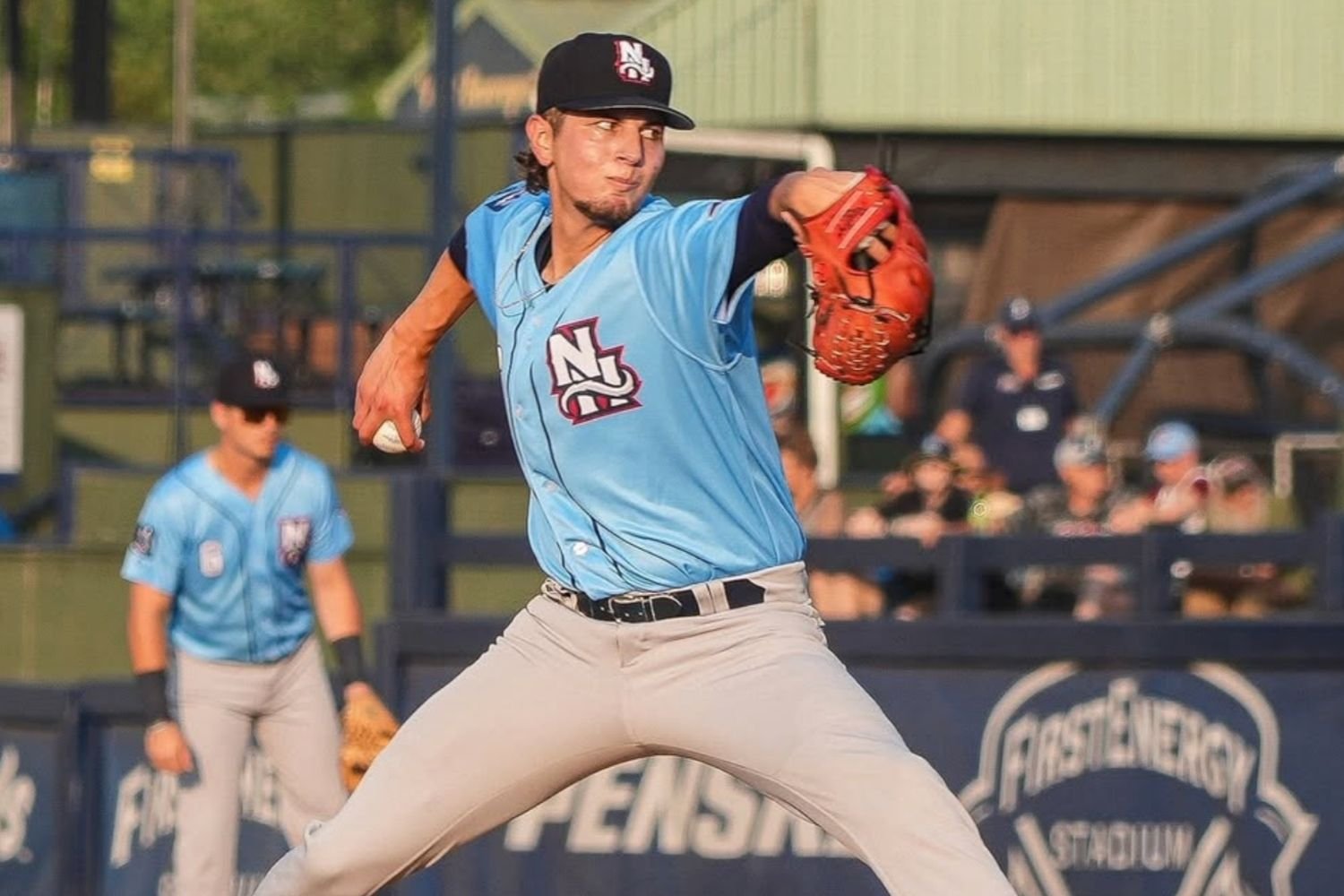 When you have an electric talent, it’s important to set them up for success. In the case of Jays Centre's No. 8 prospect, Nolan Perry, the blueprint for success is one of rapid progression. Perry is already pitching for the Double-A New Hampshire Fisher Cats after starting the season in Single-A, and he just logged a remarkable Double-A debut on June 30. As a broadcaster for the opposing team that day, the Reading Fightin Phils, I was blown away by his performance. Let’s dive into Perry’s journey, his arsenal and when to expect the Jays’ up-and-comer to debut. Nolan Perry’s Background Perry was a 12th-round pick in the 2022 MLB Draft, as Toronto selected the Texas Tech commit right out of high school and signed him for $200,000. The now 22-year-old right-handed pitcher features a well-rounded arsenal, and he would likely be further along in his professional journey if not for a torn UCL during the 2024 campaign. This sidelined Perry for all of last season, leaving questions pertaining to how quickly he could return to his original form. Rapid Ascension Fast forward to the 2026 season, and Perry is playing at his third level of affiliated ball just past the halfway point of the schedule. The righty appeared in five games, starting in four, for the Single-A Dunedin Blue Jays and logged a 1.71 earned run average with a ridiculous 0.67 WHIP over 21.0 innings of work. He produced more of the same with the High-A Vancouver Canadians, putting up a 3-3 record with a 3.23 earned run average and 46 punchouts in 30.2 frames. A Spectacular Double-A Debut That performance earned Perry his second promotion through just the first three months of the 2026 season, and I had the opportunity to broadcast his first Double-A start with the Fisher Cats. The first word that comes to mind after seeing him firsthand? He’s steady. A fastball that once lived in the 92-93 mph range was up a couple of ticks on the evening, and he finished his day with seven punchouts over three innings of shutout baseball. Perry peeled off a sharp, lateral-moving slider to supplement his mid-90s four-seamer, and it was arguably his best pitch. The 22-year-old was also effectively burying a splitter into the dirt, and after walking a pair of batters in the first inning, he looked in control against a lineup that featured three of the Phillies’ top 30 prospects (per MLB Pipeline). Perry utilized the curveball on occasion, but everything had intention. He consistently had opposing hitters guessing the wrong pitch, starting some at-bats off with breaking balls and even pitching backwards, with his firm fastball occasionally serving as the finisher. Controlling the New Weapons While the rising fastball velocity and ability to effectively mix the four-pitch arsenal are promising signs, the former Red Raiders commit did struggle with wavering command. He tossed 59 pitches in three innings and found himself in a cluster of three-ball counts, especially early on. It isn’t a groundbreaking discovery that someone with good stuff could occasionally struggle with locating it, but with fellow top pitching prospects like the Phillies' Gage Wood noting that the strike zone does shrink down in Double-A, it’s important for Perry to find the boundary. When Will Perry Reach the Majors? When will Perry rise up to the major leagues, and what will his role be? Considering he is still working back from a torn UCL, is on a pitch count and is a pair of levels away from the big leagues, I’d say 2027 is the right estimate for him to fill a starting role. Blue Jays No. 6 prospect Gage Stanifer is much further along in his development, generating a 4.29 ERA and 84 strikeouts over 65 innings in Double-A this year, so I’d assume he has promotional priority. If Perry were to convert to a reliever at any point, his timeline could be accelerated.
 -
Sean Keys made his major league debut with the Toronto Blue Jays on Saturday, and he wasted no time getting his first hit and scoring his first run in a big league uniform. What most people don’t know is how this powerhouse of a prospect got here in the first place. Let’s dive into his journey, his strengths, his weaknesses and overall outlook with the team. Background Sean Keys is the 14th-ranked prospect in the Blue Jays’ farm system, per MLB Pipeline. Here at Jays Centre, our latest prospect list update saw Keys rise from No. 9 to No. 7. He’s 23 years of age and has a dense frame at 6-foot-1, 232 pounds. The 2024 fourth-round draft pick played his college baseball at Bucknell University in Lewisburg, Pennsylvania, and he’s always had the potential to surge into the power-first talent he is today. This is someone who hit 13 home runs over a pair of sub-50-game collegiate seasons before having his name called in the draft. After spending all of the 2025 season with High-A Vancouver, and trading some average for power (he hit just .217), Keys got the promotion to Double-A New Hampshire to start this season. That’s when the breakout happened. Sean Keys Has Unbelievable Power Keys is listed as having a 55-grade power tool (per MLB Pipeline). I’m personally adjusting this to 70. It won’t matter soon, because if he stays in the major leagues, he’ll graduate from prospect status, but it needs to be done. This is someone who has had climbing exit velocities over the years, and in just 49 games with the Double-A New Hampshire Fisher Cats, he smacked 14 home runs and 34 RBI to break out as one of the premier power prospects in baseball. Possessing a physical profile that has led some to describe him as “barrel-chested,” he is an athlete whose power comes easy. He stuck to that reputation in his brief stint with Triple-A Buffalo. Keys proceeded to club seven home runs in just 18 games for the Bisons before the Blue Jays decided they had seen enough. In all, the 23-year-old throttled 21 home runs in just 67 MiLB games this season, after hitting 20 in the first 141 professional games of his career. This torrid pace, and an improved batting average (.284 across two levels) led to his ultimate debut. Improving With the Glove While Keys’ power is remarkable, and he’s improved his batting average a great deal, there’s still a lot to work on to make him into a polished big leaguer. Classified as an “infielder” by MLB Pipeline, he’s typically stuck to the corners. Keys’ fielding attribute has just a 45 on the 20-to-80 scouting scale, as he has some progress to make before he’s considered a reliable glove. There is such a thing as hitting one’s way to the show, but Keys will have to make his defense at least a solid attribute to be a constant in the Blue Jays’ clubhouse. Overall Outlook for Keys This Bucknell alum has recently taken baseball by storm and could legitimately become one of the better power hitters in all of the big leagues. Pacing for a 40+ home run season in the minors, it’s no secret that Keys possesses big league power. This could come in handy for a Blue Jays team that competed atop the leaderboards in a variety of offensive categories in 2025. This group could use the power right now, as only Kazuma Okamoto has over 10 home runs this season, with 19. George Springer has just eight long balls through 60 games, and Vladimir Guerrero Jr. has cleared the fence just four times at the halfway point of the season. If Keys ends up being a 20-25 home run per year player, he’ll have a home in Toronto for a while. View full article
-
.jpg.6a6040443ac8cc353b2737c56dcad9d3.jpg) Sean Keys made his major league debut with the Toronto Blue Jays on Saturday, and he wasted no time getting his first hit and scoring his first run in a big league uniform. What most people don’t know is how this powerhouse of a prospect got here in the first place. Let’s dive into his journey, his strengths, his weaknesses and overall outlook with the team. Background Sean Keys is the 14th-ranked prospect in the Blue Jays’ farm system, per MLB Pipeline. Here at Jays Centre, our latest prospect list update saw Keys rise from No. 9 to No. 7. He’s 23 years of age and has a dense frame at 6-foot-1, 232 pounds. The 2024 fourth-round draft pick played his college baseball at Bucknell University in Lewisburg, Pennsylvania, and he’s always had the potential to surge into the power-first talent he is today. This is someone who hit 13 home runs over a pair of sub-50-game collegiate seasons before having his name called in the draft. After spending all of the 2025 season with High-A Vancouver, and trading some average for power (he hit just .217), Keys got the promotion to Double-A New Hampshire to start this season. That’s when the breakout happened. Sean Keys Has Unbelievable Power Keys is listed as having a 55-grade power tool (per MLB Pipeline). I’m personally adjusting this to 70. It won’t matter soon, because if he stays in the major leagues, he’ll graduate from prospect status, but it needs to be done. This is someone who has had climbing exit velocities over the years, and in just 49 games with the Double-A New Hampshire Fisher Cats, he smacked 14 home runs and 34 RBI to break out as one of the premier power prospects in baseball. Possessing a physical profile that has led some to describe him as “barrel-chested,” he is an athlete whose power comes easy. He stuck to that reputation in his brief stint with Triple-A Buffalo. Keys proceeded to club seven home runs in just 18 games for the Bisons before the Blue Jays decided they had seen enough. In all, the 23-year-old throttled 21 home runs in just 67 MiLB games this season, after hitting 20 in the first 141 professional games of his career. This torrid pace, and an improved batting average (.284 across two levels) led to his ultimate debut. Improving With the Glove While Keys’ power is remarkable, and he’s improved his batting average a great deal, there’s still a lot to work on to make him into a polished big leaguer. Classified as an “infielder” by MLB Pipeline, he’s typically stuck to the corners. Keys’ fielding attribute has just a 45 on the 20-to-80 scouting scale, as he has some progress to make before he’s considered a reliable glove. There is such a thing as hitting one’s way to the show, but Keys will have to make his defense at least a solid attribute to be a constant in the Blue Jays’ clubhouse. Overall Outlook for Keys This Bucknell alum has recently taken baseball by storm and could legitimately become one of the better power hitters in all of the big leagues. Pacing for a 40+ home run season in the minors, it’s no secret that Keys possesses big league power. This could come in handy for a Blue Jays team that competed atop the leaderboards in a variety of offensive categories in 2025. This group could use the power right now, as only Kazuma Okamoto has over 10 home runs this season, with 19. George Springer has just eight long balls through 60 games, and Vladimir Guerrero Jr. has cleared the fence just four times at the halfway point of the season. If Keys ends up being a 20-25 home run per year player, he’ll have a home in Toronto for a while.
Sean Keys made his major league debut with the Toronto Blue Jays on Saturday, and he wasted no time getting his first hit and scoring his first run in a big league uniform. What most people don’t know is how this powerhouse of a prospect got here in the first place. Let’s dive into his journey, his strengths, his weaknesses and overall outlook with the team. Background Sean Keys is the 14th-ranked prospect in the Blue Jays’ farm system, per MLB Pipeline. Here at Jays Centre, our latest prospect list update saw Keys rise from No. 9 to No. 7. He’s 23 years of age and has a dense frame at 6-foot-1, 232 pounds. The 2024 fourth-round draft pick played his college baseball at Bucknell University in Lewisburg, Pennsylvania, and he’s always had the potential to surge into the power-first talent he is today. This is someone who hit 13 home runs over a pair of sub-50-game collegiate seasons before having his name called in the draft. After spending all of the 2025 season with High-A Vancouver, and trading some average for power (he hit just .217), Keys got the promotion to Double-A New Hampshire to start this season. That’s when the breakout happened. Sean Keys Has Unbelievable Power Keys is listed as having a 55-grade power tool (per MLB Pipeline). I’m personally adjusting this to 70. It won’t matter soon, because if he stays in the major leagues, he’ll graduate from prospect status, but it needs to be done. This is someone who has had climbing exit velocities over the years, and in just 49 games with the Double-A New Hampshire Fisher Cats, he smacked 14 home runs and 34 RBI to break out as one of the premier power prospects in baseball. Possessing a physical profile that has led some to describe him as “barrel-chested,” he is an athlete whose power comes easy. He stuck to that reputation in his brief stint with Triple-A Buffalo. Keys proceeded to club seven home runs in just 18 games for the Bisons before the Blue Jays decided they had seen enough. In all, the 23-year-old throttled 21 home runs in just 67 MiLB games this season, after hitting 20 in the first 141 professional games of his career. This torrid pace, and an improved batting average (.284 across two levels) led to his ultimate debut. Improving With the Glove While Keys’ power is remarkable, and he’s improved his batting average a great deal, there’s still a lot to work on to make him into a polished big leaguer. Classified as an “infielder” by MLB Pipeline, he’s typically stuck to the corners. Keys’ fielding attribute has just a 45 on the 20-to-80 scouting scale, as he has some progress to make before he’s considered a reliable glove. There is such a thing as hitting one’s way to the show, but Keys will have to make his defense at least a solid attribute to be a constant in the Blue Jays’ clubhouse. Overall Outlook for Keys This Bucknell alum has recently taken baseball by storm and could legitimately become one of the better power hitters in all of the big leagues. Pacing for a 40+ home run season in the minors, it’s no secret that Keys possesses big league power. This could come in handy for a Blue Jays team that competed atop the leaderboards in a variety of offensive categories in 2025. This group could use the power right now, as only Kazuma Okamoto has over 10 home runs this season, with 19. George Springer has just eight long balls through 60 games, and Vladimir Guerrero Jr. has cleared the fence just four times at the halfway point of the season. If Keys ends up being a 20-25 home run per year player, he’ll have a home in Toronto for a while. -
Sean Keys just recently made his major league debut, not even two full years removed from having his name called in the 2024 MLB Draft. What led to Keys' call-up, and how will he perform in Toronto? In this video, we'll dive into the Blue Jays' 14th-ranked prospect's potent power and where he needs to improve to round out his game. View full video
-
Sean Keys just recently made his major league debut, not even two full years removed from having his name called in the 2024 MLB Draft. What led to Keys' call-up, and how will he perform in Toronto? In this video, we'll dive into the Blue Jays' 14th-ranked prospect's potent power and where he needs to improve to round out his game.
-
Charles McAdoo is one of the newest members of the Toronto Blue Jays. Now remember, this is an offense that found itself near the top of the MLB leaderboards in almost every category last year, so there’s quite the lofty expectation that they continue to produce like that this year (even without Bo Bichette). So far, they haven't. In this article, I'll dive into who McAdoo is, what he can provide for this offense and his overall outlook with the team. McAdoo's Background McAdoo is listed as the No. 14 prospect in the Blue Jays’ system, per Jays Centre's rankings. The Pittsburgh Pirates originally selected him in the 13th round in the 2023 MLB Draft. Three years later, the 377th overall pick in that year’s draft is a big leaguer. This is someone who was a part of the Bucs’ pipeline for all of 2023, when he hit over .300 and flashed the power (five home runs in 28 games) in his professional debut with the Bradenton Marauders (Low-A). Halfway through the 2024 season, the Pirates dealt him to the Jays in a trade for Isiah Kiner-Falefa. He took his lumps with the Double-A New Hampshire Fisher Cats, but eventually worked his way to a Triple-A spot to start this year, where he smacked eight home runs and registered a .789 OPS over the course of 50 games. A 'Big' League Debut Fast forward to just recently, and the 24-year-old slugger made his big league debut. He didn’t just show up either. McAdoo smacked a two-run home run in his first MLB game to make quite the first impression: After 323 minor league games and over 1,100 at-bats at various affiliated levels, the corner infielder wasted no time making his statement on the most prominent stage. Strengths and Weaknesses The former late-round pick’s strength lies in his pop. Standing at six feet and 210 pounds, he sports 55-grade power. Over the last couple of years, the Jays’ development staff has been working on getting his fundamentals down and aligning two key metrics. One is exit velocity, while the other is elevating the ball at an ideal launch angle. The more that somebody with McAdoo’s stature can elevate the baseball, the better. The power has already shown up, as he’s smacked 46 long balls over 323 MiLB games. This is also somebody with a walk rate of over 10%, meaning opposing pitchers have plenty of respect for what he brings to the table. McAdoo isn’t a perfect prospect by any means, and while his raw athletic ability and strength give him power, he’s had trouble fitting in on the defensive end. The Blue Jays have him listed as a corner infielder (with the ability to play second), but his 45-grade fielding tool implies that there’s still work to be done with his glove. There’s a possibility that he finds a long-term home as a corner outfielder, but his main strength is the elite bat speed and sheer power that he can generate at the plate. Charles McAdoo's Outlook While McAdoo may not have a solidified spot on defense, he could one day hit his way into being an everyday starter for a Blue Jays team that poured on the runs en route to a World Series appearance in 2025. For now, he’ll likely plug into the lineup from time to time until either his bat motivates Toronto to keep him there or his glove improves enough to make his appearances come on a more consistent basis. Overall, this is still a remarkable story of a late-round draft pick who has climbed the minor league ladder and overcome a change in scenery via the trade market, who has now managed to earn a big league debut in just three years. View full article
.jpg.319245ea300f16eb194ed948ca5e5597.jpg)
.jpg.1dc1ad9f1d83c9e173d84f1f2a588ba9.jpg)
.jpg.da452ef8f071dedf872fedd2a370c343.jpg)
.jpg.601af4c58a4240df3b21fc9875fdd5f9.jpg)
.jpg.a66bf0bfae837a0174cba2841012250c.jpg)
.jpg.6a6040443ac8cc353b2737c56dcad9d3.jpg)