


Peter Snow
-
Posts
21 -
Joined
-
Last visited
Content Type
Profiles
Toronto Blue Jays Videos
2026 Toronto Blue Jays Top Prospects Ranking
Toronto Blue Jays Free Agent & Trade Rumors, Notes, & Tidbits
Guides & Resources
2025 Toronto Blue Jays Draft Pick Tracker
News
2026 Toronto Blue Jays Draft Tracker: Picks & Bonuses
Forums
Blogs
Events
Store
Downloads
Gallery
Everything posted by Peter Snow
-

Bowden Francis Allows a Lot of Baserunners. Why Don’t Any of Them Steal?
Peter Snow posted an article in Blue Jays
.jpg.e29553552ab2106b05c626fbb2de2875.jpg) As Jays Centre's Bob Ritchie noted in a recent article, no one has managed to steal a base with Bowden Francis on the mound this season. Opponents have had 327 opportunities (according to Statcast), and no one has even tried to steal a base. For comparison, players have attempted to steal on 1.7% of 288 total opportunities with Kevin Gausman on the mound. Paul Skenes and Michael Wacha are the only pitchers whose opponents have had more opportunities and who also have allowed zero attempts this season. This isn’t an aberration, as since 2022, when Francis first came up, runners have only attempted steals on 0.2% of opportunities against him. Francis is a right-handed pitcher, so it's not as if he is tapping into the lefty advantage. One hypothesis (noted by Bob) is that, given the volume of home runs Francis is giving up this year, there isn’t much reason for runners to risk an out on the basepaths. But this has been consistent year-to-year, regardless of his home run percentage. There must be something Francis is doing that is limiting the running game. We can plausibly eliminate catching defense because we are not seeing the same effect for other Blue Jays’ pitchers. We can classify the remaining possibilities into several categories: Disengagements/Pickoffs Perhaps Francis has elite pickoff skills and is using some wily moves to hold runners on. This one is fairly easy to dismiss. Francis has thrown over 41 times this year and doesn’t seem to have ever used a second disengagement on a baserunner. He also hasn’t picked anyone off. However, his average distance at pitch, which measures a runner’s leadoff, ranks 57th among all qualified pitchers. At 14.9 feet, it’s bunched in with a lot of pitchers around 15 feet. The amount of distance runners have gained against him on their secondary leads (after he begins his delivery) is better than average. This could mean that runners are not reading his delivery well and therefore acting cautiously. Being deceptive in his delivery is definitely a likely explanation. Pitch Selection Francis’ pitch selection might discourage players from trying to run on him. Francis primarily throws three pitches, a four-seamer (57.7% of the time), a split finger (22.7%) and a curveball (14.0%). Michael King is another starter who has yet to allow a steal in a similar number of opportunities. Like Francis, he throws fastballs (four-seamers and sinkers) about 58% of the time. Perhaps heavy fastball usage suppresses the running game? However, if this is the case, it's not how Wacha (31% four-seamers, 11% sinkers) and Skenes (35% four-seamers, 8.4% sinkers) are suppressing stolen base attempts. So, there isn’t necessarily strong evidence that pitch type is a difference maker. Tempo Is Francis preventing steals by getting the ball to home plate faster than most pitchers? Statcast tracks how quickly pitchers deliver the ball to home with runners on base. The assumption is that getting the ball home faster can help prevent steals. Francis is, again, about average according to this metric and a full second slower than both Wacha and Skenes. He is a half-second faster than King. He also has a very low percentage of fast and slow deliveries this year, which implies he is consistent in the time he takes to receive the ball and throw a pitch. There really is nothing remarkable here, as he isn’t varying his tempo to throw off runners. Pitch Location Maybe it is less about speed and more about location. I am grateful to Jeff Sullivan of FanGraphs for this analysis of the impact of pitch velocity and location on stolen base rates. One thing he found is that higher pitches tend to decrease SB%. Francis throws a lot of fastballs, and they tend to be around the strike zone or higher. The caveat is that his split finger tends to be down, and at 22%, would create some opportunities to run. While this may have a small impact, it's probably not insignificant. Opponents Has Francis pitched against opponents that are less likely to steal? Francis has pitched against 13 different teams this year. Unfortunately, some are near the top of the stolen base leaderboard, so this is not an obvious answer. Putting all this data together, only leadoff distance stands out as a good explanation for why Francis is limiting stolen bases. Given his relative lack of success this year, particularly in preventing home runs, it probably also makes sense that teams just aren’t risking running into an out. In this case, Francis is likely benefiting from his above-average leadoff suppression skills, his high home run rate, and the effect of the small sample. Someday, some player will try to swipe a bag against Francis, as long as he isn’t sent down to Buffalo first.
As Jays Centre's Bob Ritchie noted in a recent article, no one has managed to steal a base with Bowden Francis on the mound this season. Opponents have had 327 opportunities (according to Statcast), and no one has even tried to steal a base. For comparison, players have attempted to steal on 1.7% of 288 total opportunities with Kevin Gausman on the mound. Paul Skenes and Michael Wacha are the only pitchers whose opponents have had more opportunities and who also have allowed zero attempts this season. This isn’t an aberration, as since 2022, when Francis first came up, runners have only attempted steals on 0.2% of opportunities against him. Francis is a right-handed pitcher, so it's not as if he is tapping into the lefty advantage. One hypothesis (noted by Bob) is that, given the volume of home runs Francis is giving up this year, there isn’t much reason for runners to risk an out on the basepaths. But this has been consistent year-to-year, regardless of his home run percentage. There must be something Francis is doing that is limiting the running game. We can plausibly eliminate catching defense because we are not seeing the same effect for other Blue Jays’ pitchers. We can classify the remaining possibilities into several categories: Disengagements/Pickoffs Perhaps Francis has elite pickoff skills and is using some wily moves to hold runners on. This one is fairly easy to dismiss. Francis has thrown over 41 times this year and doesn’t seem to have ever used a second disengagement on a baserunner. He also hasn’t picked anyone off. However, his average distance at pitch, which measures a runner’s leadoff, ranks 57th among all qualified pitchers. At 14.9 feet, it’s bunched in with a lot of pitchers around 15 feet. The amount of distance runners have gained against him on their secondary leads (after he begins his delivery) is better than average. This could mean that runners are not reading his delivery well and therefore acting cautiously. Being deceptive in his delivery is definitely a likely explanation. Pitch Selection Francis’ pitch selection might discourage players from trying to run on him. Francis primarily throws three pitches, a four-seamer (57.7% of the time), a split finger (22.7%) and a curveball (14.0%). Michael King is another starter who has yet to allow a steal in a similar number of opportunities. Like Francis, he throws fastballs (four-seamers and sinkers) about 58% of the time. Perhaps heavy fastball usage suppresses the running game? However, if this is the case, it's not how Wacha (31% four-seamers, 11% sinkers) and Skenes (35% four-seamers, 8.4% sinkers) are suppressing stolen base attempts. So, there isn’t necessarily strong evidence that pitch type is a difference maker. Tempo Is Francis preventing steals by getting the ball to home plate faster than most pitchers? Statcast tracks how quickly pitchers deliver the ball to home with runners on base. The assumption is that getting the ball home faster can help prevent steals. Francis is, again, about average according to this metric and a full second slower than both Wacha and Skenes. He is a half-second faster than King. He also has a very low percentage of fast and slow deliveries this year, which implies he is consistent in the time he takes to receive the ball and throw a pitch. There really is nothing remarkable here, as he isn’t varying his tempo to throw off runners. Pitch Location Maybe it is less about speed and more about location. I am grateful to Jeff Sullivan of FanGraphs for this analysis of the impact of pitch velocity and location on stolen base rates. One thing he found is that higher pitches tend to decrease SB%. Francis throws a lot of fastballs, and they tend to be around the strike zone or higher. The caveat is that his split finger tends to be down, and at 22%, would create some opportunities to run. While this may have a small impact, it's probably not insignificant. Opponents Has Francis pitched against opponents that are less likely to steal? Francis has pitched against 13 different teams this year. Unfortunately, some are near the top of the stolen base leaderboard, so this is not an obvious answer. Putting all this data together, only leadoff distance stands out as a good explanation for why Francis is limiting stolen bases. Given his relative lack of success this year, particularly in preventing home runs, it probably also makes sense that teams just aren’t risking running into an out. In this case, Francis is likely benefiting from his above-average leadoff suppression skills, his high home run rate, and the effect of the small sample. Someday, some player will try to swipe a bag against Francis, as long as he isn’t sent down to Buffalo first. -
As Jays Centre's Bob Ritchie noted in a recent article, no one has managed to steal a base with Bowden Francis on the mound this season. Opponents have had 327 opportunities (according to Statcast), and no one has even tried to steal a base. For comparison, players have attempted to steal on 1.7% of 288 total opportunities with Kevin Gausman on the mound. Paul Skenes and Michael Wacha are the only pitchers whose opponents have had more opportunities and who also have allowed zero attempts this season. This isn’t an aberration, as since 2022, when Francis first came up, runners have only attempted steals on 0.2% of opportunities against him. Francis is a right-handed pitcher, so it's not as if he is tapping into the lefty advantage. One hypothesis (noted by Bob) is that, given the volume of home runs Francis is giving up this year, there isn’t much reason for runners to risk an out on the basepaths. But this has been consistent year-to-year, regardless of his home run percentage. There must be something Francis is doing that is limiting the running game. We can plausibly eliminate catching defense because we are not seeing the same effect for other Blue Jays’ pitchers. We can classify the remaining possibilities into several categories: Disengagements/Pickoffs Perhaps Francis has elite pickoff skills and is using some wily moves to hold runners on. This one is fairly easy to dismiss. Francis has thrown over 41 times this year and doesn’t seem to have ever used a second disengagement on a baserunner. He also hasn’t picked anyone off. However, his average distance at pitch, which measures a runner’s leadoff, ranks 57th among all qualified pitchers. At 14.9 feet, it’s bunched in with a lot of pitchers around 15 feet. The amount of distance runners have gained against him on their secondary leads (after he begins his delivery) is better than average. This could mean that runners are not reading his delivery well and therefore acting cautiously. Being deceptive in his delivery is definitely a likely explanation. Pitch Selection Francis’ pitch selection might discourage players from trying to run on him. Francis primarily throws three pitches, a four-seamer (57.7% of the time), a split finger (22.7%) and a curveball (14.0%). Michael King is another starter who has yet to allow a steal in a similar number of opportunities. Like Francis, he throws fastballs (four-seamers and sinkers) about 58% of the time. Perhaps heavy fastball usage suppresses the running game? However, if this is the case, it's not how Wacha (31% four-seamers, 11% sinkers) and Skenes (35% four-seamers, 8.4% sinkers) are suppressing stolen base attempts. So, there isn’t necessarily strong evidence that pitch type is a difference maker. Tempo Is Francis preventing steals by getting the ball to home plate faster than most pitchers? Statcast tracks how quickly pitchers deliver the ball to home with runners on base. The assumption is that getting the ball home faster can help prevent steals. Francis is, again, about average according to this metric and a full second slower than both Wacha and Skenes. He is a half-second faster than King. He also has a very low percentage of fast and slow deliveries this year, which implies he is consistent in the time he takes to receive the ball and throw a pitch. There really is nothing remarkable here, as he isn’t varying his tempo to throw off runners. Pitch Location Maybe it is less about speed and more about location. I am grateful to Jeff Sullivan of FanGraphs for this analysis of the impact of pitch velocity and location on stolen base rates. One thing he found is that higher pitches tend to decrease SB%. Francis throws a lot of fastballs, and they tend to be around the strike zone or higher. The caveat is that his split finger tends to be down, and at 22%, would create some opportunities to run. While this may have a small impact, it's probably not insignificant. Opponents Has Francis pitched against opponents that are less likely to steal? Francis has pitched against 13 different teams this year. Unfortunately, some are near the top of the stolen base leaderboard, so this is not an obvious answer. Putting all this data together, only leadoff distance stands out as a good explanation for why Francis is limiting stolen bases. Given his relative lack of success this year, particularly in preventing home runs, it probably also makes sense that teams just aren’t risking running into an out. In this case, Francis is likely benefiting from his above-average leadoff suppression skills, his high home run rate, and the effect of the small sample. Someday, some player will try to swipe a bag against Francis, as long as he isn’t sent down to Buffalo first. View full article
-
With no outs and runners on first and second, does it make more sense to tag up or to go halfway? There was a moment in Wednesday’s game against the Braves that highlighted a small piece of baseball strategy. Leading off the bottom of the second, Alejandro Kirk singled, then moved up to second on an Alan Roden hit-by-pitch. After Ernie Clement popped out, Addison Barger hit a hard line drive out to center field. Kirk went halfway between second and third and then retreated when Michael Harris II pulled it in for the second out. On the broadcast, Buck Martinez mentioned that if there had been no outs, Kirk should have been looking to tag up, but with one out, the conventional wisdom is to go halfway. It’s an idea that sort of holds up with a few caveats. Ignoring the other runner, and using a run expectancy matrix, we can see that there is a marginal difference of around a tenth of a run between runner on second and runner on third with two outs. It’s slight, especially compared to numerous other scenarios. If we are being diehard sabermetric managers, we might prefer that Kirk tag up. Of course, this conventional wisdom predates run expectancy matrixes, probably by decades, and we can look at the argument from that perspective. It goes like this: Let’s start with the assumption that no matter what the runner does, they will likely score if the fly ball gets past the outfielder. Our scenario only applies to a ball that is caught, fumbled, or dropped. We also need to recognize that in most cases, the ball will be caught, and often in a location where tagging up wouldn’t be feasible (large portions of left and center field as well as shallow right). Tagging Up The benefit of tagging up, obviously, is that the runner can end up on third base if the ball is caught. Choosing to tag up comes with a slight risk of being thrown out. It also largely eliminates the chance to score if the fielder makes an error or doesn't get to the ball. With two outs, several opportunities to score a runner on third disappear. No more sacrifice fly or fielder’s choice, though they can still reach home on a passed ball, wild pitch, balk, or any kind of hit. Going Halfway If the runner goes halfway, they increase the chance of scoring if the outfielder makes a mistake fielding the ball, or if it lands without being caught. In most cases where the ball is caught and they retreat to second, they can then score on most hits, as they will be running on contact. This is why the run expectancy is so close: the inning ends on any out, so the number of possible outcomes is much smaller. They lose out on the opportunity to score on passed balls, wild pitches, and balks, but those instances are rare. On balance, you can see why managers have historically taught this baserunning strategy. If you squint just right, it works out. With our more sophisticated statistical models, we can see that tagging up is a marginally better strategy at a macro level. It wouldn’t be surprising to learn that some enterprising analyst has run the numbers on this and knows the optimal approach. Like so many of these small details, this choice is going to be pointless almost all the time but will pay off once in a while. One last wrinkle. During the next at-bat, Spencer Strider threw the ball away trying to pick Kirk off at second base. Roden and Kirk moved up and the inning ended with runners on second and third. There may be a universe where that error occurred at third because Kirk tagged up and the Jays added another run to a 3-1 victory. Maybe the matrix is right after all. View full article
-
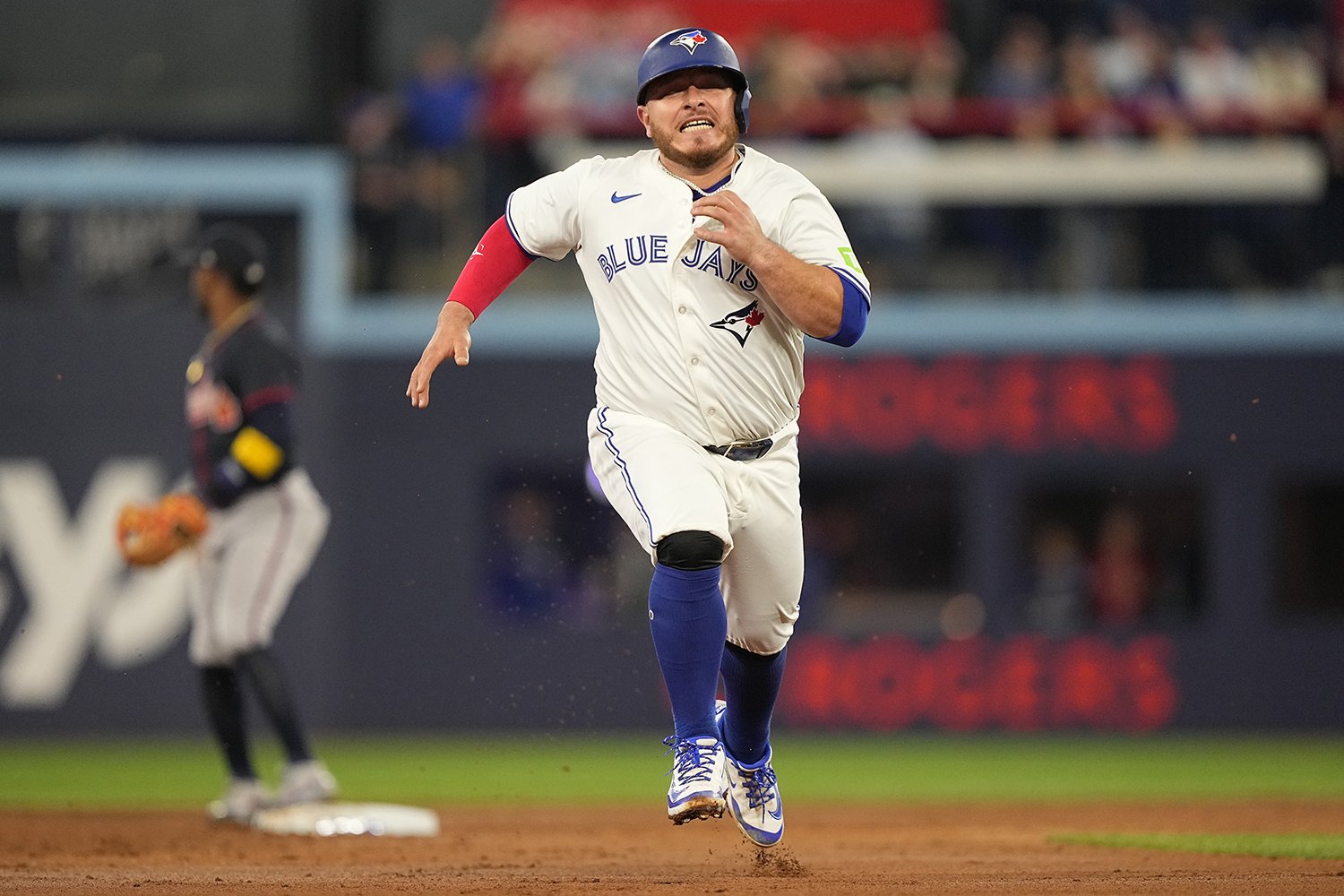 There was a moment in Wednesday’s game against the Braves that highlighted a small piece of baseball strategy. Leading off the bottom of the second, Alejandro Kirk singled, then moved up to second on an Alan Roden hit-by-pitch. After Ernie Clement popped out, Addison Barger hit a hard line drive out to center field. Kirk went halfway between second and third and then retreated when Michael Harris II pulled it in for the second out. On the broadcast, Buck Martinez mentioned that if there had been no outs, Kirk should have been looking to tag up, but with one out, the conventional wisdom is to go halfway. It’s an idea that sort of holds up with a few caveats. Ignoring the other runner, and using a run expectancy matrix, we can see that there is a marginal difference of around a tenth of a run between runner on second and runner on third with two outs. It’s slight, especially compared to numerous other scenarios. If we are being diehard sabermetric managers, we might prefer that Kirk tag up. Of course, this conventional wisdom predates run expectancy matrixes, probably by decades, and we can look at the argument from that perspective. It goes like this: Let’s start with the assumption that no matter what the runner does, they will likely score if the fly ball gets past the outfielder. Our scenario only applies to a ball that is caught, fumbled, or dropped. We also need to recognize that in most cases, the ball will be caught, and often in a location where tagging up wouldn’t be feasible (large portions of left and center field as well as shallow right). Tagging Up The benefit of tagging up, obviously, is that the runner can end up on third base if the ball is caught. Choosing to tag up comes with a slight risk of being thrown out. It also largely eliminates the chance to score if the fielder makes an error or doesn't get to the ball. With two outs, several opportunities to score a runner on third disappear. No more sacrifice fly or fielder’s choice, though they can still reach home on a passed ball, wild pitch, balk, or any kind of hit. Going Halfway If the runner goes halfway, they increase the chance of scoring if the outfielder makes a mistake fielding the ball, or if it lands without being caught. In most cases where the ball is caught and they retreat to second, they can then score on most hits, as they will be running on contact. This is why the run expectancy is so close: the inning ends on any out, so the number of possible outcomes is much smaller. They lose out on the opportunity to score on passed balls, wild pitches, and balks, but those instances are rare. On balance, you can see why managers have historically taught this baserunning strategy. If you squint just right, it works out. With our more sophisticated statistical models, we can see that tagging up is a marginally better strategy at a macro level. It wouldn’t be surprising to learn that some enterprising analyst has run the numbers on this and knows the optimal approach. Like so many of these small details, this choice is going to be pointless almost all the time but will pay off once in a while. One last wrinkle. During the next at-bat, Spencer Strider threw the ball away trying to pick Kirk off at second base. Roden and Kirk moved up and the inning ended with runners on second and third. There may be a universe where that error occurred at third because Kirk tagged up and the Jays added another run to a 3-1 victory. Maybe the matrix is right after all.
 -
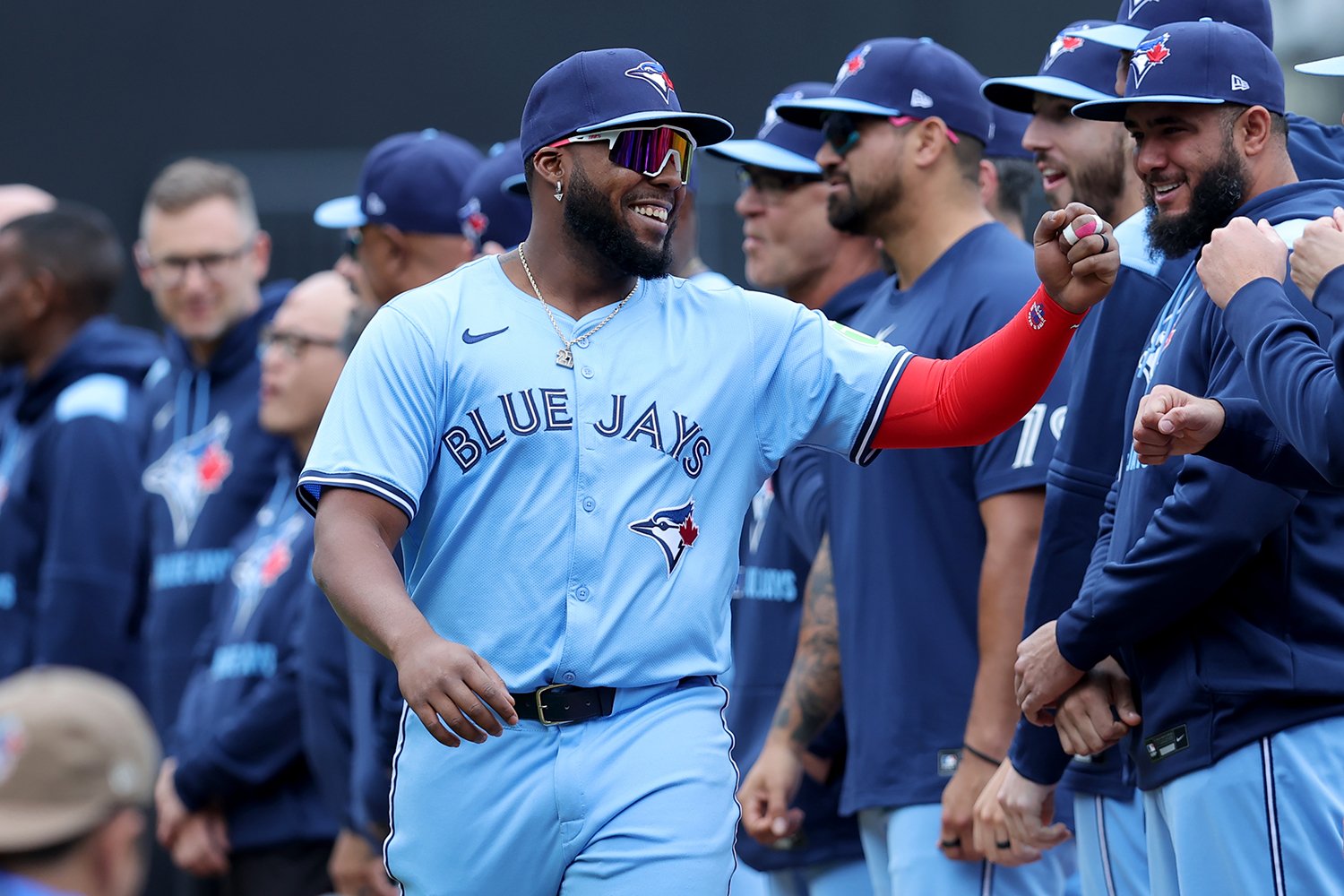 There’s a famous photo of a pre-school aged Vladimir Guerrero Jr. on the field at the Montreal’s Olympic stadium with his dad. It was Vladimir Guerrero’s final home game with the Expos, and Vlad Jr. is wearing a team uniform and waving a batting helmet to the crowd. It’s no secret that Vlad was born in Canada during his father’s stint with Montreal, eventually moving to the Dominican Republic with his mother. He spent most of his childhood there, while summering in the United States and learning baseball from his uncle Wilton Guerrero. It’s an often-told story and we can all appreciate the coincidence that this Canadian citizen would be signed by the other (and only remaining) Canadian team as an international free agent. As the cornerstone of the Blue Jays' effort to sign the child of every former major leaguer, Guerrero Jr. was part of a top-10 ranked farm system. Along with Bo Bichette, he was seen as the future face of the franchise. It remains to be seen what will happen to Bichette, but by awarding a 14-year contract extension, the Blue Jays have locked Guerrero in for the rest of his career. Ignoring the possibility of a future trade, discussions of contract value, and aging curves, let’s take a minute to talk about Vladimir “Blue Jay For Life” Guerrero Jr. as a current and future team legend. Looking up at the Rogers Centre Level of Excellence, you’ll notice a theme. There’s not a single, career-long Blue Jays player. Dave Stieb is the closest, but he pitched four games for the White Sox in his final season. Guerrero is already second on the list of games played by players who’ve only appeared for the Blue Jays, only 102 games behind Garth Iorg. The fact that Guerrero will likely pass him this season speaks to the nature of the modern game and how infrequently the Blue Jays have had a player they wanted to keep around forever. They tried with Vernon Wells and maybe should have with Carlos Delgado and Roy Halladay, but in the end, the organization had other priorities. Guerrero will also crack the top 20 in overall Blue Jays games played this year, and if he stays healthy for most of his contract he will catch Tony Fernandez for the all-time team lead. Ask any 10-year-old Blue Jays fan, and they probably love this signing. The odds are good they have a Guerrero jersey or shirsy hanging in their closet. Maybe they’ve got one of his many bobbleheads or a Funko pop figure. They’ve probably taken many at-bats with him in MLB the Show or pretended to be him while rounding the bases of their local sandlot. Guerero is fun, entertaining, marketable, and really good at baseball. It’s the perfect storm for becoming everyone’s favourite player and Mr. Blue Jay for the 2020s and beyond. Regardless of your thoughts on the deal, and lots of people have thoughts about the deal, Guerrero is a popular Blue Jay and he wants to play here. The fact that he is technically a Canadian is certainly a bonus, even if it has no practical impact on anything (see the Dominican Republic roster for the WBC). You couldn’t ask for a better player to market a franchise. As a homegrown star, if Guerrero spends the next 15 years setting Blue Jays records, competing for major awards, and leading the team to playoff success, he will undoubtedly be the greatest Blue Jay of all time. Whether he makes the Hall of Fame or not, he will find himself on the Level of Excellence (and probably the Canadian Baseball Hall of Fame.) An entire generation of Blue Jays fans will remember him as their favourite player, and his jersey will continue to fill the park for years to come. Even without team success, Guerrero is the face of this franchise. He will receive the greatest praise and the endure harshest criticism. Fans and pundits alike will analyze this deal for the next 15 years, but one thing is certain: Vladimir Guerrero Jr. is Mr. Blue Jay, now and probably forever.
 -
Beyond the analysis and the dollars and cents, Vladimir Guerrero Jr.'s contract extension will make him mean more to the Blue Jays franchise than any other player. There’s a famous photo of a pre-school aged Vladimir Guerrero Jr. on the field at the Montreal’s Olympic stadium with his dad. It was Vladimir Guerrero’s final home game with the Expos, and Vlad Jr. is wearing a team uniform and waving a batting helmet to the crowd. It’s no secret that Vlad was born in Canada during his father’s stint with Montreal, eventually moving to the Dominican Republic with his mother. He spent most of his childhood there, while summering in the United States and learning baseball from his uncle Wilton Guerrero. It’s an often-told story and we can all appreciate the coincidence that this Canadian citizen would be signed by the other (and only remaining) Canadian team as an international free agent. As the cornerstone of the Blue Jays' effort to sign the child of every former major leaguer, Guerrero Jr. was part of a top-10 ranked farm system. Along with Bo Bichette, he was seen as the future face of the franchise. It remains to be seen what will happen to Bichette, but by awarding a 14-year contract extension, the Blue Jays have locked Guerrero in for the rest of his career. Ignoring the possibility of a future trade, discussions of contract value, and aging curves, let’s take a minute to talk about Vladimir “Blue Jay For Life” Guerrero Jr. as a current and future team legend. Looking up at the Rogers Centre Level of Excellence, you’ll notice a theme. There’s not a single, career-long Blue Jays player. Dave Stieb is the closest, but he pitched four games for the White Sox in his final season. Guerrero is already second on the list of games played by players who’ve only appeared for the Blue Jays, only 102 games behind Garth Iorg. The fact that Guerrero will likely pass him this season speaks to the nature of the modern game and how infrequently the Blue Jays have had a player they wanted to keep around forever. They tried with Vernon Wells and maybe should have with Carlos Delgado and Roy Halladay, but in the end, the organization had other priorities. Guerrero will also crack the top 20 in overall Blue Jays games played this year, and if he stays healthy for most of his contract he will catch Tony Fernandez for the all-time team lead. Ask any 10-year-old Blue Jays fan, and they probably love this signing. The odds are good they have a Guerrero jersey or shirsy hanging in their closet. Maybe they’ve got one of his many bobbleheads or a Funko pop figure. They’ve probably taken many at-bats with him in MLB the Show or pretended to be him while rounding the bases of their local sandlot. Guerero is fun, entertaining, marketable, and really good at baseball. It’s the perfect storm for becoming everyone’s favourite player and Mr. Blue Jay for the 2020s and beyond. Regardless of your thoughts on the deal, and lots of people have thoughts about the deal, Guerrero is a popular Blue Jay and he wants to play here. The fact that he is technically a Canadian is certainly a bonus, even if it has no practical impact on anything (see the Dominican Republic roster for the WBC). You couldn’t ask for a better player to market a franchise. As a homegrown star, if Guerrero spends the next 15 years setting Blue Jays records, competing for major awards, and leading the team to playoff success, he will undoubtedly be the greatest Blue Jay of all time. Whether he makes the Hall of Fame or not, he will find himself on the Level of Excellence (and probably the Canadian Baseball Hall of Fame.) An entire generation of Blue Jays fans will remember him as their favourite player, and his jersey will continue to fill the park for years to come. Even without team success, Guerrero is the face of this franchise. He will receive the greatest praise and the endure harshest criticism. Fans and pundits alike will analyze this deal for the next 15 years, but one thing is certain: Vladimir Guerrero Jr. is Mr. Blue Jay, now and probably forever. View full article
-
Alek Manoah is throwing off a mound again for the first time since he tore his UCL. For Blue Jays fans, Alek Manoah’s major league career has been a fascinating and frustrating roller coaster. After a rapid ascent in 2021 and a third-place Cy Young finish in 2022, he struggled through 2023 and early 2024 before suffering a UCL tear. He is now in his ninth month of recovery and has just started playing catch and throwing from a mound. He told Sportsnet that he’s excited to be getting back to actual baseball activities after months of repetitive strength training. While the internal brace procedure he received is a kind of fast-track Tommy John, the recovery process is still long and tedious. By all accounts, he has been putting in the work, and Manoah reported feeling “amazing right now” after finishing his first bullpen session since May 2024. Although he threw only 15 fastballs, he is excited to be that much closer to returning. If he stays on track, you can expect him back later this season, and he will start the campaign on the 60 day IL. Before the injury, Manoah was showing some signs of improvement in 2024. He ran better walk and strikeout rates, and his hard-hit rate dropped back down to his previous levels. He wasn’t lights out, but the underlying numbers showed a serviceable major league pitcher. Accordingly, Dan Szymborski's ZiPS projection system sees him as a league-average pitcher when he returns this season. Given the Blue Jays' strong rotation, it might be hard for Manoah to find meaningful starts. But if his recovery stays on track, he could be a valuable replacement when injuries inevitably happen. After his rapid rise and sudden fall, you can forgive Blue Jays fans for being wary of Manoah. His oversized confidence won him fans and made enemies during his stellar 2022 season. After the humbling experience of 2023 and the devastation of suffering a serious elbow injury, it’s hard not to pull for Manoah’s return this year. Love him or hate him, Alek Manoah has the potential to contribute to the Blue Jays rotation in 2025 and beyond. And that’s a good reason to root for swift and painless recovery. "It's just a whirlwind of emotions but it feels amazing right now," Manoah said this week. Blue Jays fans can relate. View full article
-
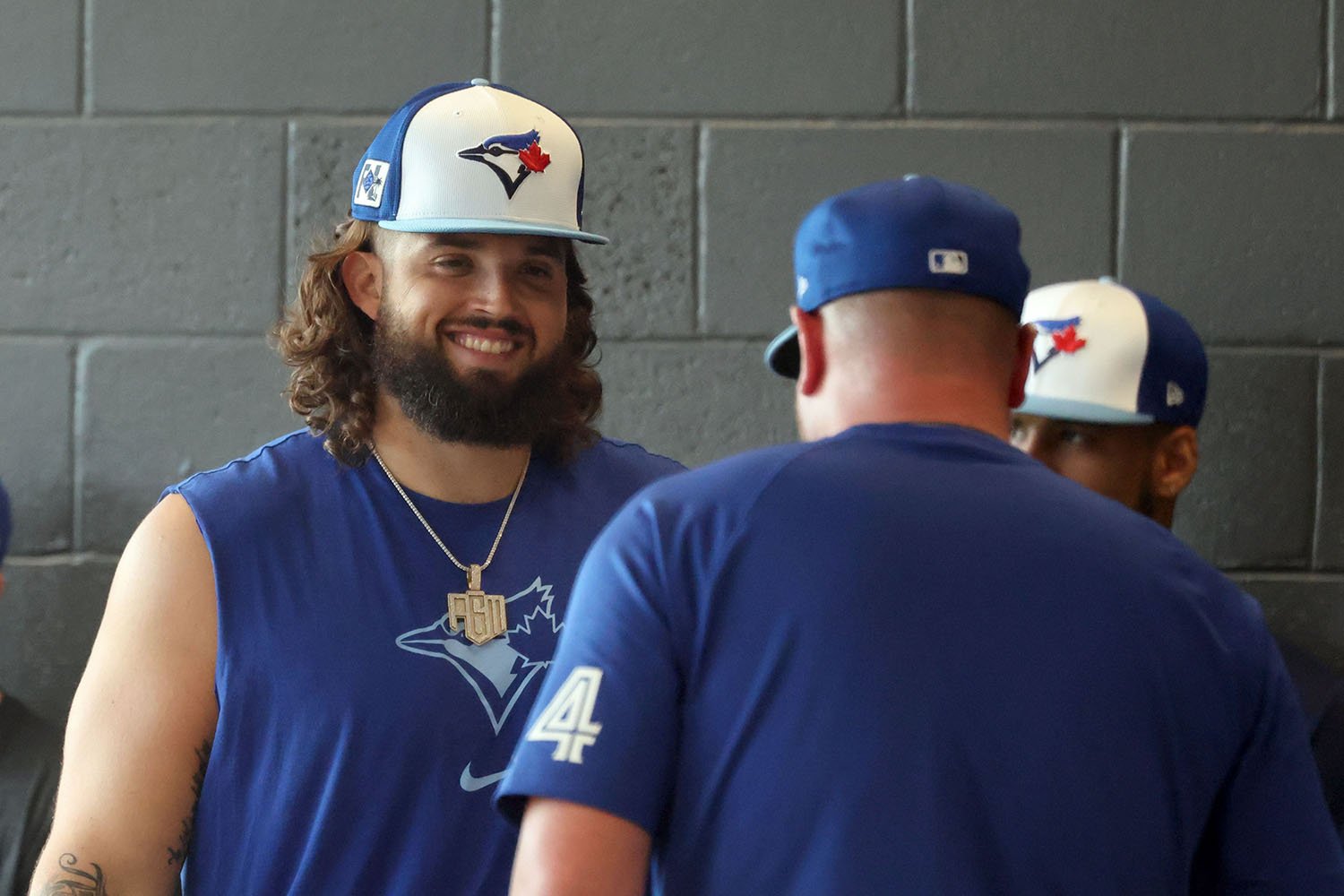 For Blue Jays fans, Alek Manoah’s major league career has been a fascinating and frustrating roller coaster. After a rapid ascent in 2021 and a third-place Cy Young finish in 2022, he struggled through 2023 and early 2024 before suffering a UCL tear. He is now in his ninth month of recovery and has just started playing catch and throwing from a mound. He told Sportsnet that he’s excited to be getting back to actual baseball activities after months of repetitive strength training. While the internal brace procedure he received is a kind of fast-track Tommy John, the recovery process is still long and tedious. By all accounts, he has been putting in the work, and Manoah reported feeling “amazing right now” after finishing his first bullpen session since May 2024. Although he threw only 15 fastballs, he is excited to be that much closer to returning. If he stays on track, you can expect him back later this season, and he will start the campaign on the 60 day IL. Before the injury, Manoah was showing some signs of improvement in 2024. He ran better walk and strikeout rates, and his hard-hit rate dropped back down to his previous levels. He wasn’t lights out, but the underlying numbers showed a serviceable major league pitcher. Accordingly, Dan Szymborski's ZiPS projection system sees him as a league-average pitcher when he returns this season. Given the Blue Jays' strong rotation, it might be hard for Manoah to find meaningful starts. But if his recovery stays on track, he could be a valuable replacement when injuries inevitably happen. After his rapid rise and sudden fall, you can forgive Blue Jays fans for being wary of Manoah. His oversized confidence won him fans and made enemies during his stellar 2022 season. After the humbling experience of 2023 and the devastation of suffering a serious elbow injury, it’s hard not to pull for Manoah’s return this year. Love him or hate him, Alek Manoah has the potential to contribute to the Blue Jays rotation in 2025 and beyond. And that’s a good reason to root for swift and painless recovery. "It's just a whirlwind of emotions but it feels amazing right now," Manoah said this week. Blue Jays fans can relate.
 -
Back in his day, umpires were people. The Blue Jays’ acquisition of Max Scherzer improved their overall pitching depth, and, despite his age, raised expectations for the rotation this year. What no one expected is that he would become a hilarious victim of the automated ball-strike (ABS) system. If you haven’t seen it, Scherzer decided to make his first challenge during an appearance against the Cardinals. Whether you credit the phenomenal framing abilities of Alejandro Kirk, Scherzer’s abundant confidence in his stuff, or just bad luck, this was a poor choice. The pitch was low to the naked eye of the viewer at home, and the ABS confirmed that it was well under the strike zone. The clip started making the rounds, and suddenly Scherzer’s folly was the talk of spring training. It gained enough traction that when Trea Turner faced Scherzer, he decided to troll the Jays starter by calling for a challenge on a pitch right down the middle. The internet had a good laugh at the situation, and it gives us the chance to discuss another question about the use of the challenge system. Since ABS was introduced to the minor leagues in 2022, teams have adjusted their practices to maximize their successful challenges. It’s common practice across the minors for catchers to make most challenges. While it varies from team to team, the new wisdom is that pitchers don’t get a good sense of when and where the ball crosses the plate, so catchers are better positioned to make the call. You might also speculate that catchers are a bit less biased about pitch location than pitchers, but there isn’t any hard evidence of that. So maybe Scherzer should leave the challenges alone and just focus on throwing strikes. And let’s be fair to Scherzer here. It was his first time using the challenge system, Kirk did a very smooth job of pulling that pitch into the strike zone, and calling balls and strikes is hard enough for umpires that the league is considering ABS in the first place. It’s understandable there would be growing pains for the players. Of course, the story doesn’t end with this funny little moment. After losing the first challenge, Scherzer spoke with Jayson Stark of The Athletic and wasn’t shy about his feelings: "I’m a little skeptical on this," Scherzer said. "I get what we’re trying to do here, but I think major league umpires are really good. They’re really good. So what are we actually changing here? We know there are going to be strikes that are changed to balls, and balls that are changed to strikes....So we’re going to basically be even. So are we actually going to improve the game? Are the umpires really that bad? I don’t think so." You can sympathize with his point here. Umpires are generally very good at their jobs, and without implementing a full robo-zone, you are adding a level of complexity that may not be necessary. The argument that the calls will even out over time is probably true. Now, not all balls and strikes are created equal, and some challenges will be more consequential than others. Indeed, teams will have to make decisions about the optimal time to use their challenges. It won’t be as simple as we’ll get a call today and they’ll get one tomorrow. ABS has been popular with fans. As players spend more time with it could become just another part of the game, like every other kind of replay challenge. The younger players will be more used to it from their time in Triple A, and the more reluctant vets will adapt or complain until they retire. For Scherzer’s sake, let’s hope he doesn’t need to make another challenge during spring training. View full article
-
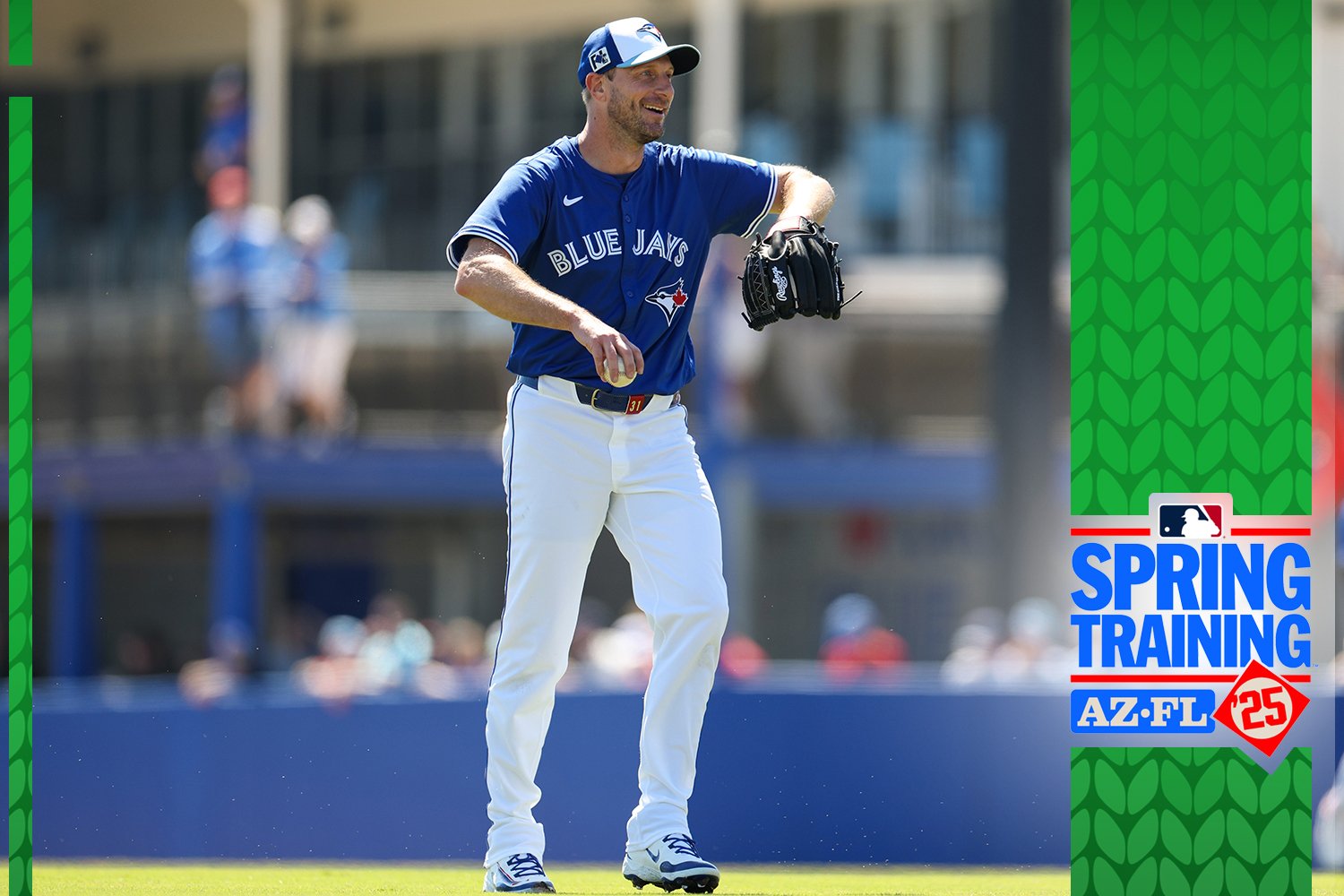 The Blue Jays’ acquisition of Max Scherzer improved their overall pitching depth, and, despite his age, raised expectations for the rotation this year. What no one expected is that he would become a hilarious victim of the automated ball-strike (ABS) system. If you haven’t seen it, Scherzer decided to make his first challenge during an appearance against the Cardinals. Whether you credit the phenomenal framing abilities of Alejandro Kirk, Scherzer’s abundant confidence in his stuff, or just bad luck, this was a poor choice. The pitch was low to the naked eye of the viewer at home, and the ABS confirmed that it was well under the strike zone. The clip started making the rounds, and suddenly Scherzer’s folly was the talk of spring training. It gained enough traction that when Trea Turner faced Scherzer, he decided to troll the Jays starter by calling for a challenge on a pitch right down the middle. The internet had a good laugh at the situation, and it gives us the chance to discuss another question about the use of the challenge system. Since ABS was introduced to the minor leagues in 2022, teams have adjusted their practices to maximize their successful challenges. It’s common practice across the minors for catchers to make most challenges. While it varies from team to team, the new wisdom is that pitchers don’t get a good sense of when and where the ball crosses the plate, so catchers are better positioned to make the call. You might also speculate that catchers are a bit less biased about pitch location than pitchers, but there isn’t any hard evidence of that. So maybe Scherzer should leave the challenges alone and just focus on throwing strikes. And let’s be fair to Scherzer here. It was his first time using the challenge system, Kirk did a very smooth job of pulling that pitch into the strike zone, and calling balls and strikes is hard enough for umpires that the league is considering ABS in the first place. It’s understandable there would be growing pains for the players. Of course, the story doesn’t end with this funny little moment. After losing the first challenge, Scherzer spoke with Jayson Stark of The Athletic and wasn’t shy about his feelings: "I’m a little skeptical on this," Scherzer said. "I get what we’re trying to do here, but I think major league umpires are really good. They’re really good. So what are we actually changing here? We know there are going to be strikes that are changed to balls, and balls that are changed to strikes....So we’re going to basically be even. So are we actually going to improve the game? Are the umpires really that bad? I don’t think so." You can sympathize with his point here. Umpires are generally very good at their jobs, and without implementing a full robo-zone, you are adding a level of complexity that may not be necessary. The argument that the calls will even out over time is probably true. Now, not all balls and strikes are created equal, and some challenges will be more consequential than others. Indeed, teams will have to make decisions about the optimal time to use their challenges. It won’t be as simple as we’ll get a call today and they’ll get one tomorrow. ABS has been popular with fans. As players spend more time with it could become just another part of the game, like every other kind of replay challenge. The younger players will be more used to it from their time in Triple A, and the more reluctant vets will adapt or complain until they retire. For Scherzer’s sake, let’s hope he doesn’t need to make another challenge during spring training.
 -
If the Blue Jays are going to find their way back into playoff contention, the back-end of the rotation will be every bit as important as the front. The Blue Jays rotation is set at the top, with Kevin Gausman, Chris Bassitt, and José Berríos all set to return. Future hall-of-famer Max Scherzer signed at the end of January, and while we will need to wait and see if the 40-year-old can stay healthy and productive, he is projected by most as the fourth starter. That leaves the fifth rotation spot, which the team has indicated is up for grabs, with Bowden Francis and Yariel Rodríguez entering camp as the front runners. Francis might be the obvious favourite. After an exceptional run in 2024, it’s easy for Jays fans to be excited about the possibilities. The projection systems foresee regression for Francis because of his probably unsustainable .211 BABIP in 2024. His FIP was a full run higher than his ERA. He was outperforming his peripherals, and given that he does not have a track record of success, it’s hard to err on the optimistic side. Age is one of Francis’ biggest challenges moving forward. Entering his age-29 season, and with only 48 major league appearances to his credit, he’s not exactly a hot, young prospect. If Francis can repeat last year’s performance, he fits right in with the Jays' reliable crew of starters. Rodríguez is widely projected as a swing arm who will spend time in the bullpen and make spot starts. In 86 2/3 innings in 2024, he pitched to a 4.47 ERA and a 4.34 FIP. Obviously, he is a below-average pitcher with a 112 ERA-, but his performance was more than adequate for a fifth starter. His biggest weakness is a 10.9% walk rate. He turns 28 in March and offers an impressive slider and above-average fastball. While the Blue Jays clearly want to use him as a starter, his pitch mix probably plays better out of the bullpen. Ross Atkins has indicated that Rodríguez will have an opportunity at a regular spot in the rotation, and he appears up to the task. Other Options? The Blue Jays enter camp without any obvious prospects or invitees who can offer more than Francis and Rodríguez. 23-year-old Jake Bloss is the one prospect who should get an opportunity to prove himself this season. As the key return for Yusei Kikuchi, the organization has high expectations for the young pitcher. He blew through the minors with Houston, then put up eight less-than-stellar starts with the Astros before the trade to Toronto. Bloss was mediocre finishing out the season with the Bisons. With a strong fastball, standout slider, and useful curveball and changeup, Eric Longenhagen of Fangraphs gave Bloss a future value of 50 on the 20-80 scale, making him the team's top prospect. If he can translate his minor league performance to the big club, it will be hard to keep him out of the rotation. On Longenhagen's 2023 list, lefty Adam Macko ranked seventh in the organization. He ran an uninspiring 4.87 ERA in 16 starts at AA New Hampshire, but barring an outstanding spring training, should start the season in AAA. He has a plus curveball and a good fastball. It’s not clear if he fits better as a starter or reliever at this point. He may find his way to the majors this year as a reliever, but he is a long shot to have an impact. Ross Atkins has made it very clear that he considers Bloss and Macko as duel options for the number seven spot coming into camp. The Darkest Horse After having an internal brace procedure last June, Alek Manoah is expected to return by August. His story is well-known, and he may have worn out his welcome with Blue Jays fans. It’s easy to dismiss him as a complete bust after his otherworldly 2022 season. He was inconsistent prior to his injury, but in limited action, his strikeout rate improved over 2023, and he cut his walk rate from over 14% to 7.8%. His xFIP was also greatly improved from the previous year. He may not be a start anymore, but if everything breaks right, Manoah could be a useful starter or injury fill-in down the stretch. The reality is that with the inevitable injuries, Francis and Rodríguez will get starts this year. The Blue Jays will need both to pitch well if they hope to compete. With some recent murmurs of a six-man rotation, it’s possible we will see even more starts from the pair. With Jake Bloss knocking on the door and the possible return of Alek Manoah, the Jays may find themselves with a surplus of options. That's a good problem to have. View full article
- 1 reply
-
- 1
-

-
- max scherzer
- yariel rodriguez
- (and 4 more)
-
With Max Scherzer in the Fold, Who Is the Blue Jays’ Fifth Starter?
Peter Snow posted an article in Blue Jays
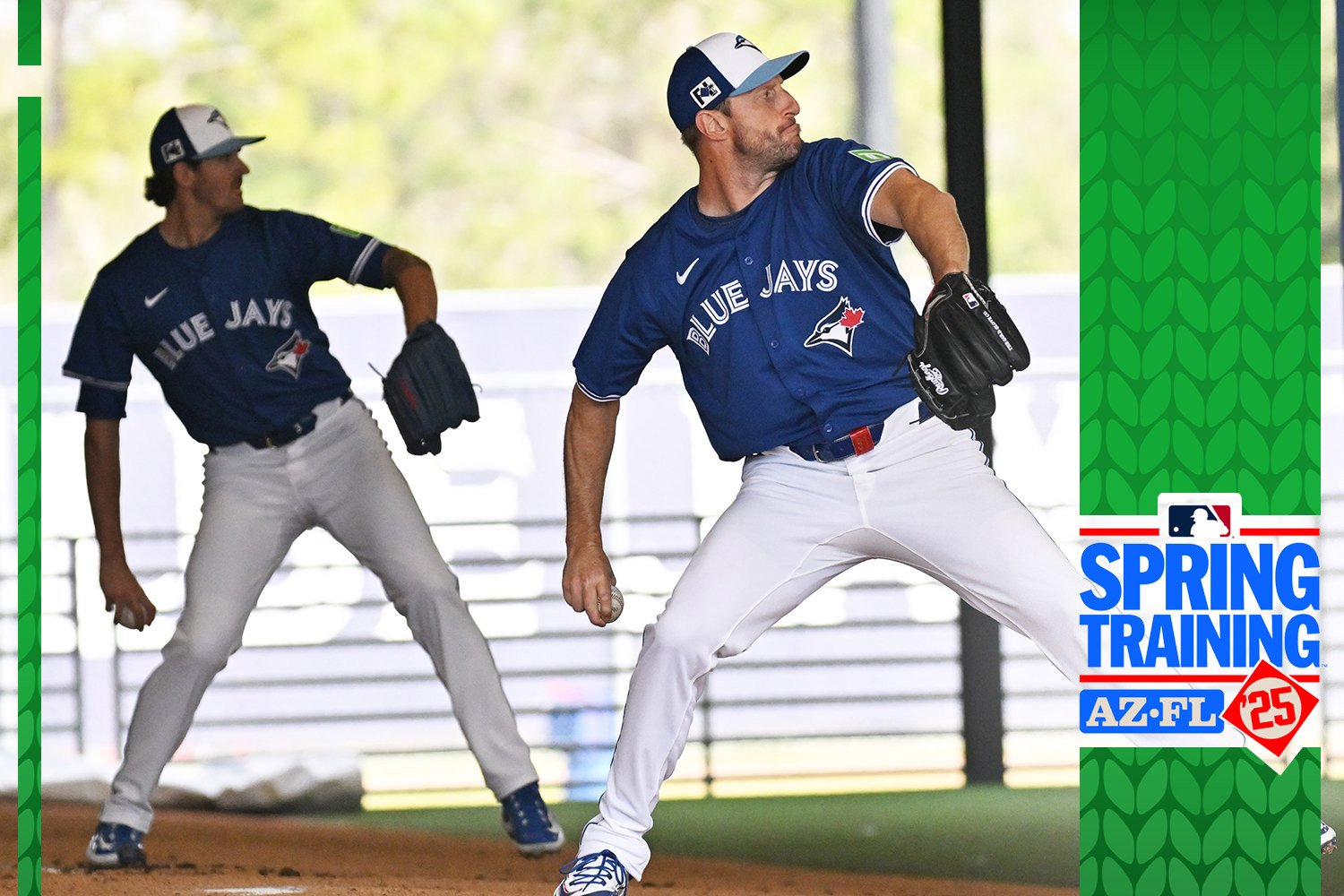 The Blue Jays rotation is set at the top, with Kevin Gausman, Chris Bassitt, and José Berríos all set to return. Future hall-of-famer Max Scherzer signed at the end of January, and while we will need to wait and see if the 40-year-old can stay healthy and productive, he is projected by most as the fourth starter. That leaves the fifth rotation spot, which the team has indicated is up for grabs, with Bowden Francis and Yariel Rodríguez entering camp as the front runners. Francis might be the obvious favourite. After an exceptional run in 2024, it’s easy for Jays fans to be excited about the possibilities. The projection systems foresee regression for Francis because of his probably unsustainable .211 BABIP in 2024. His FIP was a full run higher than his ERA. He was outperforming his peripherals, and given that he does not have a track record of success, it’s hard to err on the optimistic side. Age is one of Francis’ biggest challenges moving forward. Entering his age-29 season, and with only 48 major league appearances to his credit, he’s not exactly a hot, young prospect. If Francis can repeat last year’s performance, he fits right in with the Jays' reliable crew of starters. Rodríguez is widely projected as a swing arm who will spend time in the bullpen and make spot starts. In 86 2/3 innings in 2024, he pitched to a 4.47 ERA and a 4.34 FIP. Obviously, he is a below-average pitcher with a 112 ERA-, but his performance was more than adequate for a fifth starter. His biggest weakness is a 10.9% walk rate. He turns 28 in March and offers an impressive slider and above-average fastball. While the Blue Jays clearly want to use him as a starter, his pitch mix probably plays better out of the bullpen. Ross Atkins has indicated that Rodríguez will have an opportunity at a regular spot in the rotation, and he appears up to the task. Other Options? The Blue Jays enter camp without any obvious prospects or invitees who can offer more than Francis and Rodríguez. 23-year-old Jake Bloss is the one prospect who should get an opportunity to prove himself this season. As the key return for Yusei Kikuchi, the organization has high expectations for the young pitcher. He blew through the minors with Houston, then put up eight less-than-stellar starts with the Astros before the trade to Toronto. Bloss was mediocre finishing out the season with the Bisons. With a strong fastball, standout slider, and useful curveball and changeup, Eric Longenhagen of Fangraphs gave Bloss a future value of 50 on the 20-80 scale, making him the team's top prospect. If he can translate his minor league performance to the big club, it will be hard to keep him out of the rotation. On Longenhagen's 2023 list, lefty Adam Macko ranked seventh in the organization. He ran an uninspiring 4.87 ERA in 16 starts at AA New Hampshire, but barring an outstanding spring training, should start the season in AAA. He has a plus curveball and a good fastball. It’s not clear if he fits better as a starter or reliever at this point. He may find his way to the majors this year as a reliever, but he is a long shot to have an impact. Ross Atkins has made it very clear that he considers Bloss and Macko as duel options for the number seven spot coming into camp. The Darkest Horse After having an internal brace procedure last June, Alek Manoah is expected to return by August. His story is well-known, and he may have worn out his welcome with Blue Jays fans. It’s easy to dismiss him as a complete bust after his otherworldly 2022 season. He was inconsistent prior to his injury, but in limited action, his strikeout rate improved over 2023, and he cut his walk rate from over 14% to 7.8%. His xFIP was also greatly improved from the previous year. He may not be a start anymore, but if everything breaks right, Manoah could be a useful starter or injury fill-in down the stretch. The reality is that with the inevitable injuries, Francis and Rodríguez will get starts this year. The Blue Jays will need both to pitch well if they hope to compete. With some recent murmurs of a six-man rotation, it’s possible we will see even more starts from the pair. With Jake Bloss knocking on the door and the possible return of Alek Manoah, the Jays may find themselves with a surplus of options. That's a good problem to have.
 -
It would be difficult not to. Major League Baseball’s 2023 rule changes were intended, in part, to encourage base stealing. Although stolen base numbers have varied widely over the history of baseball, there is a current nostalgia for the wild days of Rickey Henderson, Lou Brock, and Tim Raines. There is also value in stealing bases and taking extra bases on hits. The larger bases and limits on pickoffs created a league-wide increase in steals, from 2,487 in 2022 to 3,503 in 2023 and 3,617 in 2025. Some teams have been more effective at taking advantage of the rules. The Jays did see a spike in total stolen bases in 2023, when they swiped 99 after only getting 67 the year before, but 2024 saw them regress to 72. They’ve ranked 22nd and 27th overall in the past two years. They had been as high as 12th in 2021. According to FanGraphs, over the last two seasons combined, the Blue Jays ranked been second last in Baserunning runs at -23 (ahead of the Angels with -26 and Yankees with -29). This all in one stat captures stolen bases, advances, and holds as a general measure of player’s value on the base paths. Over the same period, George Springer’s 4.0 runs have led the team, while Alejandro Kirk (-10.1) and Vladimir Guerrero Jr. (-9.7) have dragged far behind all other Blue Jays. There are several possible explanations Toronto’s failures in this department, with the most obvious being personnel. The ’21 Jays were led by Bo Bichette with 25 stolen bases, Marcus Semien at 15, and Teoscar Hernández at 12. With the latter two leaving town and Bichette regressing significantly, the team leaderboard changed over the following 3 years. The Jays were also more successful than average at stealing in 2021 (80.2% to 76.7%), but this was also true in 2024 (81.8% to 77.7%). Heading into 2025, the possibility of change is presenting itself. It’s no secret that George Springer has declined at the plate. He has, however, continued to be a net positive on the bases. In 2024, he led the team with 3.5 baserunning runs. His sprint speed placed seventh on the team last year, behind players that were in some cases as many as six years younger than him. He is still pretty fast and still knows how to pick his spots. Sixteen stolen bases is nice, but is not high-end thievery. Being a year older is not going to help, but if he remains a smart baserunner, he should be near the top of the team leaderboard again. Daulton Varsho and Ernie Clement were the only other everyday players who graded out as above average on the bases in 2024. After back-to-back seasons of 16 steals, Varsho declined to 10. At 28 years old, there is no reason why he couldn’t see that number increase. Clement is easy to overlook, but with a spring speed of 28.4 feet per second, his 12 stolen bases ranked second on the team. The drop-off in Bo Bichette’s production seems to be tied to a decrease in overall attempts. His percentage of attempts to opportunities has dropped from a high of 2.9% in 2021 to 0.7% in 2023, then rose slightly to 1.6% in 2024. He’s remained aggressive at taking extra bases, and his sprint speed has only declined slightly over the past four seasons. The addition of Andrés Giménez is an immediate boost to the team’s efforts on the bath paths. As my colleague Owen Hill wisely pointed out, Giménez could be the first Blue Jay to steal 30 bases since José Reyes way back in 2014. I won’t repeat Owen’s arguments, except to say that adding 30 on top of the Blue Jays total would be a huge boost to this team. If the Jays are going to increase their stolen base numbers, it will probably mean some of their younger players have been getting opportunities. Steward Berroa, Jonatan Clase, and Joey Loperfido are all fast players who have the potential to be base-stealing threats if they get playing time. Berroa stole six bases last year despite reaching base just eight times, but he’d have to find consistent at-bats and improve his offensive stats if he wants to contribute to this team. Clase has the fifth-fastest sprint speed in baseball, and Berroa and Loperfido are both in the top 100. Speed isn’t everything, but it certainly helps. Improving the running game would give the Jays a small boost that would help offset their offensive shortcomings. The addition of Giménez, and more playing time for the young players should increase the numbers without any special effort. The team has been willing to run in the past, and if they have another season of low offensive output, they could benefit from smart baserunning. View full article
-
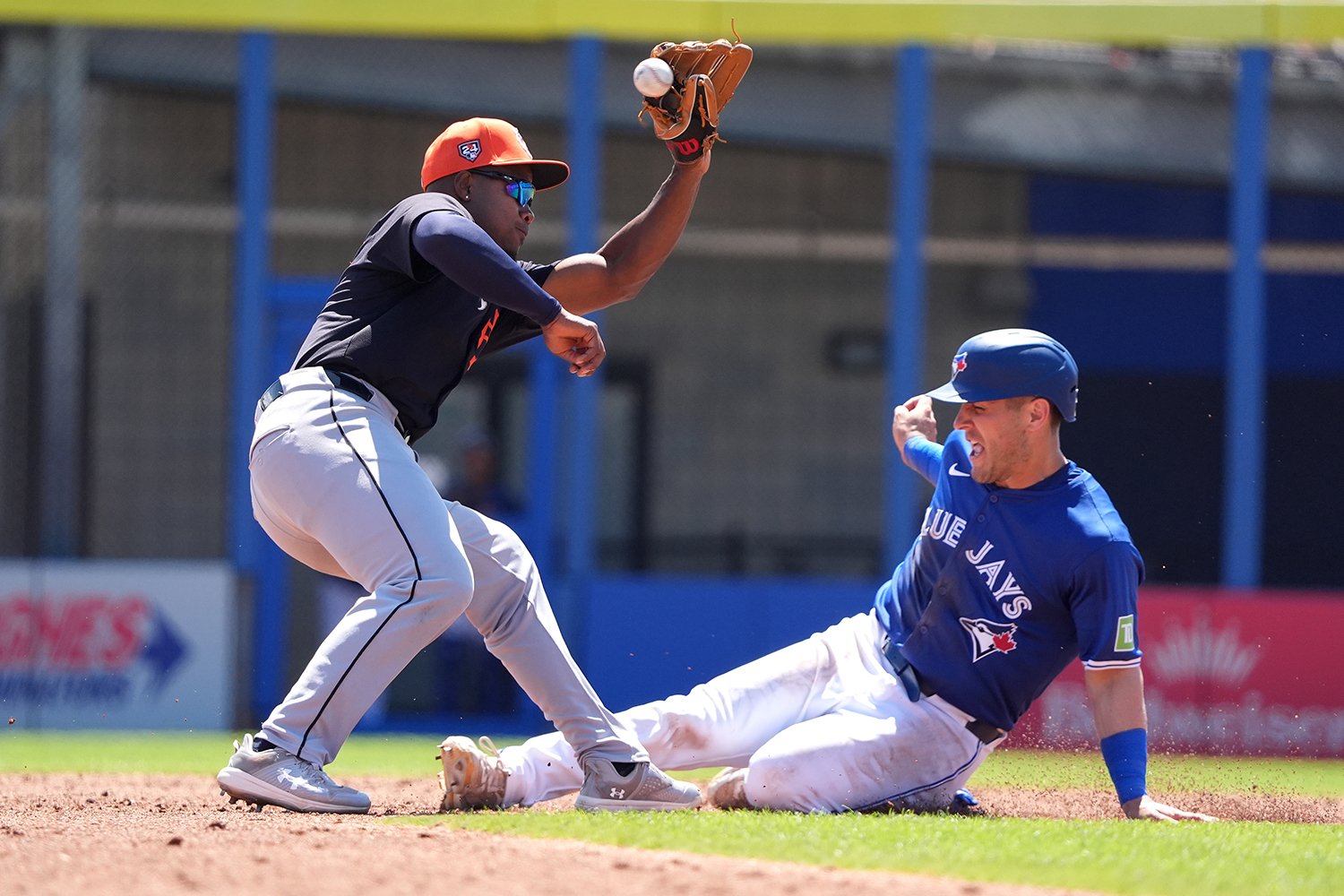 Major League Baseball’s 2023 rule changes were intended, in part, to encourage base stealing. Although stolen base numbers have varied widely over the history of baseball, there is a current nostalgia for the wild days of Rickey Henderson, Lou Brock, and Tim Raines. There is also value in stealing bases and taking extra bases on hits. The larger bases and limits on pickoffs created a league-wide increase in steals, from 2,487 in 2022 to 3,503 in 2023 and 3,617 in 2025. Some teams have been more effective at taking advantage of the rules. The Jays did see a spike in total stolen bases in 2023, when they swiped 99 after only getting 67 the year before, but 2024 saw them regress to 72. They’ve ranked 22nd and 27th overall in the past two years. They had been as high as 12th in 2021. According to FanGraphs, over the last two seasons combined, the Blue Jays ranked been second last in Baserunning runs at -23 (ahead of the Angels with -26 and Yankees with -29). This all in one stat captures stolen bases, advances, and holds as a general measure of player’s value on the base paths. Over the same period, George Springer’s 4.0 runs have led the team, while Alejandro Kirk (-10.1) and Vladimir Guerrero Jr. (-9.7) have dragged far behind all other Blue Jays. There are several possible explanations Toronto’s failures in this department, with the most obvious being personnel. The ’21 Jays were led by Bo Bichette with 25 stolen bases, Marcus Semien at 15, and Teoscar Hernández at 12. With the latter two leaving town and Bichette regressing significantly, the team leaderboard changed over the following 3 years. The Jays were also more successful than average at stealing in 2021 (80.2% to 76.7%), but this was also true in 2024 (81.8% to 77.7%). Heading into 2025, the possibility of change is presenting itself. It’s no secret that George Springer has declined at the plate. He has, however, continued to be a net positive on the bases. In 2024, he led the team with 3.5 baserunning runs. His sprint speed placed seventh on the team last year, behind players that were in some cases as many as six years younger than him. He is still pretty fast and still knows how to pick his spots. Sixteen stolen bases is nice, but is not high-end thievery. Being a year older is not going to help, but if he remains a smart baserunner, he should be near the top of the team leaderboard again. Daulton Varsho and Ernie Clement were the only other everyday players who graded out as above average on the bases in 2024. After back-to-back seasons of 16 steals, Varsho declined to 10. At 28 years old, there is no reason why he couldn’t see that number increase. Clement is easy to overlook, but with a spring speed of 28.4 feet per second, his 12 stolen bases ranked second on the team. The drop-off in Bo Bichette’s production seems to be tied to a decrease in overall attempts. His percentage of attempts to opportunities has dropped from a high of 2.9% in 2021 to 0.7% in 2023, then rose slightly to 1.6% in 2024. He’s remained aggressive at taking extra bases, and his sprint speed has only declined slightly over the past four seasons. The addition of Andrés Giménez is an immediate boost to the team’s efforts on the bath paths. As my colleague Owen Hill wisely pointed out, Giménez could be the first Blue Jay to steal 30 bases since José Reyes way back in 2014. I won’t repeat Owen’s arguments, except to say that adding 30 on top of the Blue Jays total would be a huge boost to this team. If the Jays are going to increase their stolen base numbers, it will probably mean some of their younger players have been getting opportunities. Steward Berroa, Jonatan Clase, and Joey Loperfido are all fast players who have the potential to be base-stealing threats if they get playing time. Berroa stole six bases last year despite reaching base just eight times, but he’d have to find consistent at-bats and improve his offensive stats if he wants to contribute to this team. Clase has the fifth-fastest sprint speed in baseball, and Berroa and Loperfido are both in the top 100. Speed isn’t everything, but it certainly helps. Improving the running game would give the Jays a small boost that would help offset their offensive shortcomings. The addition of Giménez, and more playing time for the young players should increase the numbers without any special effort. The team has been willing to run in the past, and if they have another season of low offensive output, they could benefit from smart baserunning.
 -
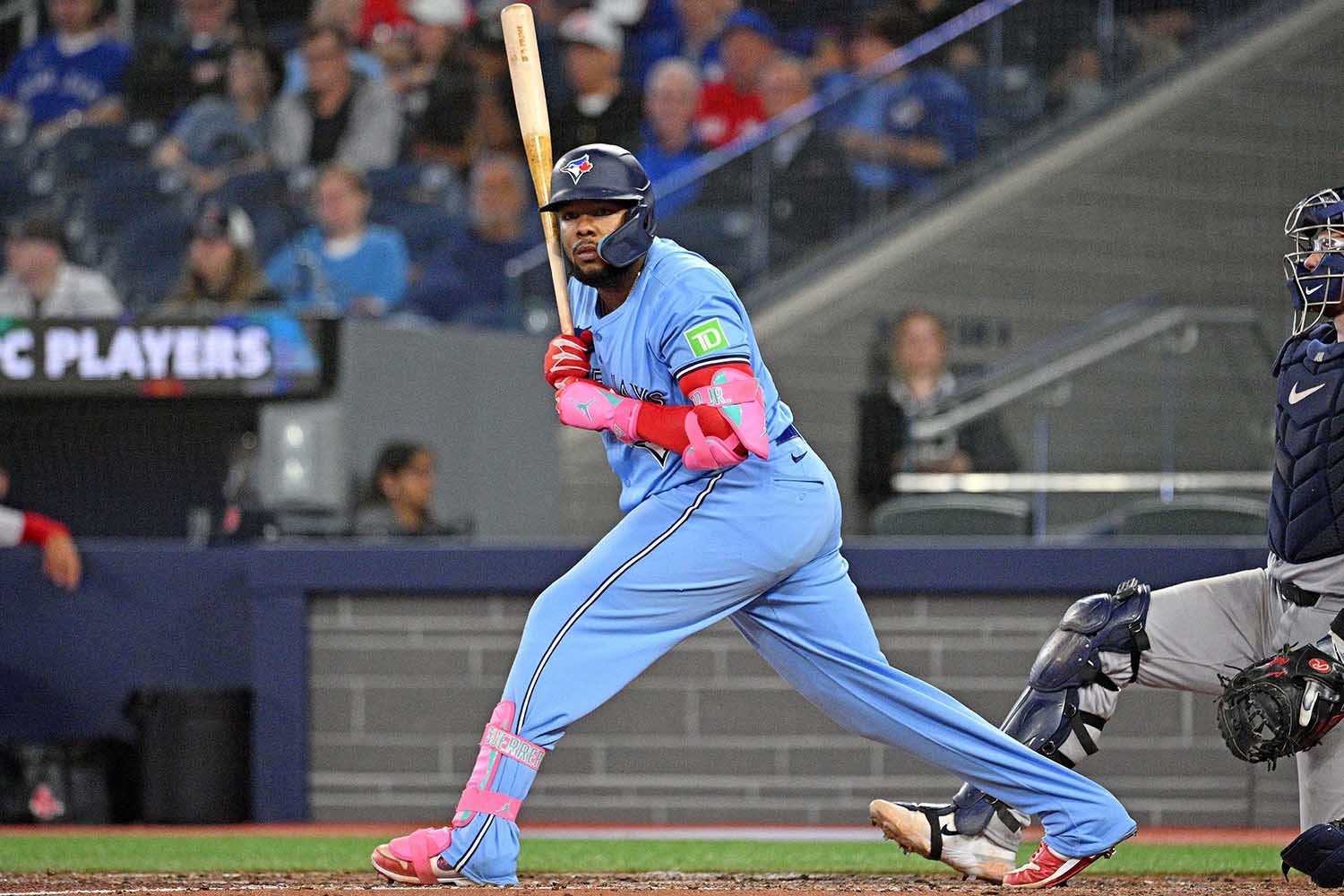 Let's start by addressing the elephant in the room: It’s possible that Vladimir Guerrero Jr. is tired of the Blue Jays organization and wants to get out of town. He might be longing for warmer weather, less income tax, or a different clubhouse vibe. We can’t know what’s in his heart and mind as he approaches free agency. Someday, Guerrero may reveal his true feelings on a podcast somewhere. For now, we can only speculate. Today our job is to ask the question: What if the Jays just pay him what he wants? Guerrero's $28.5-million contract in his final year of arbitration eligibility was just announced. It’s a large number for an arb-eligible player and an underpayment based on his 2024 season. There is speculation that he is looking for north of $500 million in his next contract. Given the current state of free agent contracts, that seems close to me. Barring a catastrophe, there will be significant money available to him next offseason, and the Jays should be in the running. Let’s start with the statistical argument. We know Guerrero has had outstanding seasons, including 2024, when he was near the top of the league at the plate. This past year was phenomenal: his 165 wRC+ made him the sixth-best hitter in baseball. It wasn’t a mirage, either, as his underlying numbers all rebounded from a below average 2023. He was hitting the ball much harder, and more like he did during his superlative 2021 campaign. Steamer really likes him going forward, to the tune of a predicted 5.1 fWAR and 155 wRC+ in 2025. In three of the past four seasons, Guerrero has put up more than 3.0 fWAR and been among the best hitters in baseball. If we view that year as an aberration, and I believe it was, then we are talking about a homegrown, soon-to-be 26-year-old offensive cornerstone. While his defence is a significant drag on his overall value, it’d be hard to find anyone particularly worried about that. If he can rake, then he will be paid. Aging curves are tricky and projections are educated guesses. The fact that Guerrero is just 26 years old certainly helps his case. Even a seven- or eight-year contract will take him into to his mid-30s. On the other hand, even a 10-year contract may not contain too many decline years. Of course, considering the time value of money, it doesn't make much sense to worry about the last few years of such a big contract. Players on megadeals usually accrue extra value at the beginning of their deals, with the last few factored in as the cost of doing business. Guerrero is also an extremely popular player with a fun personality. Sports are entertainment, and baseball in Canada is better with him in it. Another question for the front office is, “If not Vladdy, then who?” It’s become abundantly clear that superstar free agents aren’t lining up to come to Toronto. Some reasons are outside the team’s control. Despite the obscene wealth of Rogers, they were only going to offer so much money to Juan Soto and Shohei Ohtani, and it wouldn't have been enough to overcome the other obstacles. Teams like the Yankees can console themselves that they spent the money they offered Soto on other valuable pieces to try to replace his value, while the Jays haven't signed players with that much value. Their best recent acquisition came through trade. If you don’t give that money to Vlad, then the team is probably just keeping it in the vault. Every season, it looks less and less likely that a prospect will ascend to take Guerrero's place. Even if they did, wouldn’t you rather have that player and Guerrero? Even if the Jays were to enter a rebuild, at 26, Guerrero is still young enough to be part of the next great team, but that might be the point where he loses interest in coming back. No one would blame him for leaving Toronto for a contender if the team decides to rebuild or retool. In fact, the bigger question is "What is the team’s argument that he should stay?" This season will greatly affect that argument, but Guerrero knows this organization as well as anyone. If there are few signs of growth or improvement, he may well want to go elsewhere. He is aware of the state of the farm system, and there are reports that other free agents have seen the prospect pool as a reason to pass on Toronto. The team will have to work hard to convince Guerrero it’s worth staying. The Blue Jays need Guerrero. If he leaves and they enter a significant rebuild, even the most optimistic fans may give up on the team. An extension, or a free agent signing would go a long way to maintaining some hope for the short term of this team. It would also keep the door open for Guerrero to continue building his legacy here in Toronto.
 -
If not Vladdy, then who? Let's start by addressing the elephant in the room: It’s possible that Vladimir Guerrero Jr. is tired of the Blue Jays organization and wants to get out of town. He might be longing for warmer weather, less income tax, or a different clubhouse vibe. We can’t know what’s in his heart and mind as he approaches free agency. Someday, Guerrero may reveal his true feelings on a podcast somewhere. For now, we can only speculate. Today our job is to ask the question: What if the Jays just pay him what he wants? Guerrero's $28.5-million contract in his final year of arbitration eligibility was just announced. It’s a large number for an arb-eligible player and an underpayment based on his 2024 season. There is speculation that he is looking for north of $500 million in his next contract. Given the current state of free agent contracts, that seems close to me. Barring a catastrophe, there will be significant money available to him next offseason, and the Jays should be in the running. Let’s start with the statistical argument. We know Guerrero has had outstanding seasons, including 2024, when he was near the top of the league at the plate. This past year was phenomenal: his 165 wRC+ made him the sixth-best hitter in baseball. It wasn’t a mirage, either, as his underlying numbers all rebounded from a below average 2023. He was hitting the ball much harder, and more like he did during his superlative 2021 campaign. Steamer really likes him going forward, to the tune of a predicted 5.1 fWAR and 155 wRC+ in 2025. In three of the past four seasons, Guerrero has put up more than 3.0 fWAR and been among the best hitters in baseball. If we view that year as an aberration, and I believe it was, then we are talking about a homegrown, soon-to-be 26-year-old offensive cornerstone. While his defence is a significant drag on his overall value, it’d be hard to find anyone particularly worried about that. If he can rake, then he will be paid. Aging curves are tricky and projections are educated guesses. The fact that Guerrero is just 26 years old certainly helps his case. Even a seven- or eight-year contract will take him into to his mid-30s. On the other hand, even a 10-year contract may not contain too many decline years. Of course, considering the time value of money, it doesn't make much sense to worry about the last few years of such a big contract. Players on megadeals usually accrue extra value at the beginning of their deals, with the last few factored in as the cost of doing business. Guerrero is also an extremely popular player with a fun personality. Sports are entertainment, and baseball in Canada is better with him in it. Another question for the front office is, “If not Vladdy, then who?” It’s become abundantly clear that superstar free agents aren’t lining up to come to Toronto. Some reasons are outside the team’s control. Despite the obscene wealth of Rogers, they were only going to offer so much money to Juan Soto and Shohei Ohtani, and it wouldn't have been enough to overcome the other obstacles. Teams like the Yankees can console themselves that they spent the money they offered Soto on other valuable pieces to try to replace his value, while the Jays haven't signed players with that much value. Their best recent acquisition came through trade. If you don’t give that money to Vlad, then the team is probably just keeping it in the vault. Every season, it looks less and less likely that a prospect will ascend to take Guerrero's place. Even if they did, wouldn’t you rather have that player and Guerrero? Even if the Jays were to enter a rebuild, at 26, Guerrero is still young enough to be part of the next great team, but that might be the point where he loses interest in coming back. No one would blame him for leaving Toronto for a contender if the team decides to rebuild or retool. In fact, the bigger question is "What is the team’s argument that he should stay?" This season will greatly affect that argument, but Guerrero knows this organization as well as anyone. If there are few signs of growth or improvement, he may well want to go elsewhere. He is aware of the state of the farm system, and there are reports that other free agents have seen the prospect pool as a reason to pass on Toronto. The team will have to work hard to convince Guerrero it’s worth staying. The Blue Jays need Guerrero. If he leaves and they enter a significant rebuild, even the most optimistic fans may give up on the team. An extension, or a free agent signing would go a long way to maintaining some hope for the short term of this team. It would also keep the door open for Guerrero to continue building his legacy here in Toronto. View full article
-
Bounce Back Blues: More on the Blue Jays’ ZiPS Projections
Peter Snow posted an article in Blue Jays
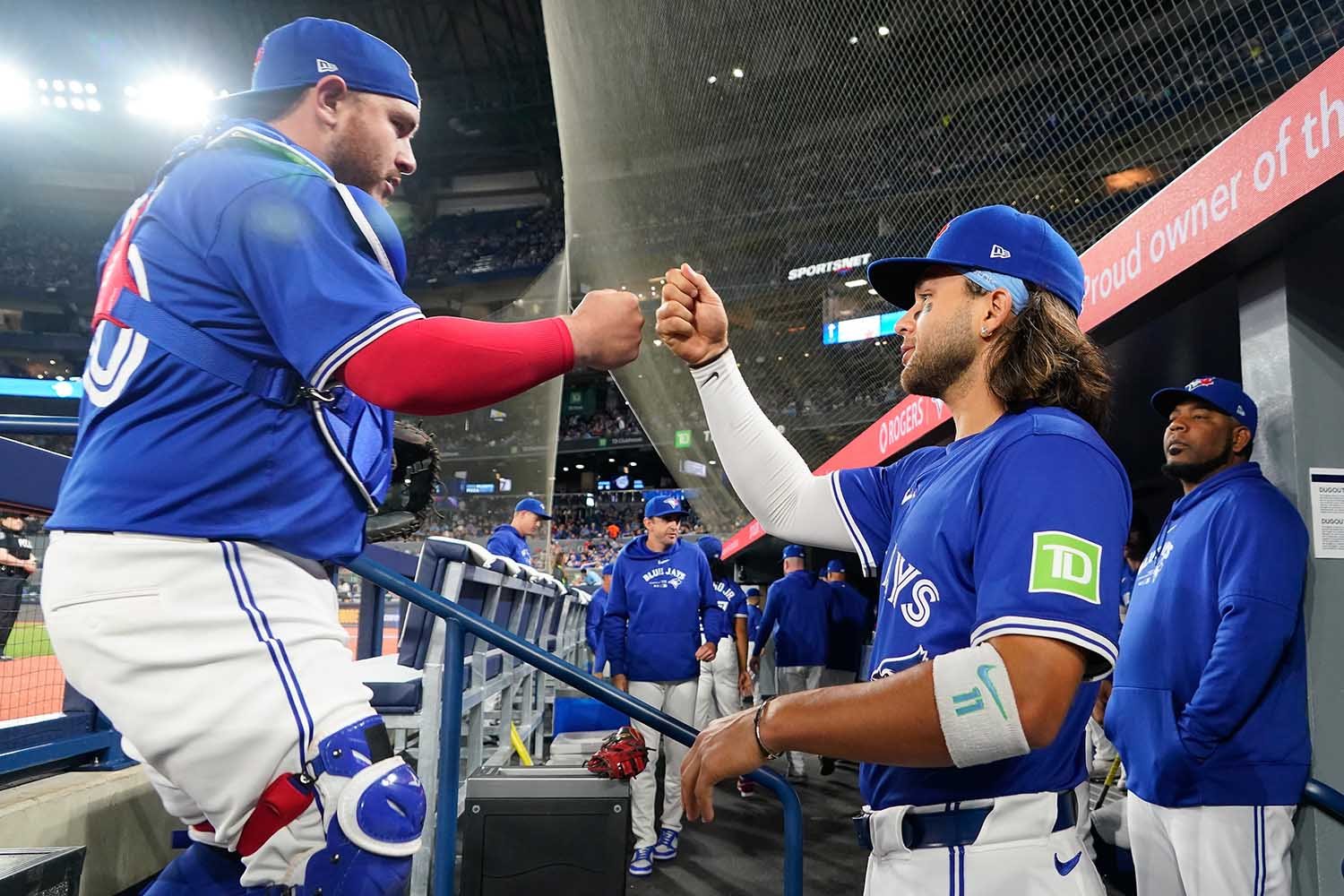 Last week, Dan Szymborski of FanGraphs released the 2025 ZiPS projection for the Blue Jays, and on Sunday, my colleague Mike LeSage broke down some of his takeaways from the projections. But here’s the thing about projections systems: They’re a “best guess” machine, providing a range of possible outcomes, and we’re allowed to have a range of opinions about them. It’s easy to get mad when the projections don’t like your favourite player, but short of finding a real fortune teller, they’re as close as we get to predicting the future. In 2024, ZiPS was pretty high on the Jays and they underperformed wildly in several areas. This year ZiPS still finds a lot to like on the roster, so let’s dive in to some quick reactions. As Dan writes, ZiPS sees the Jays as around an 84- to 85-win team this season. He calls it “a really awkward spot” and I’d say it’s just not good enough for a team in this position. They have an aging supporting cast, and their expected stars are approaching free agency. They need to perform at or near their ceiling, or they’ll be looking at a busy sell off at the deadline. On the hitting side, Vladimir Guerrero Jr. is in a class by himself, but below him, regression to the mean is doing some heavy lifting. ZiPS predicts bounce-back seasons Andrés Giménez, Alejandro Kirk, and Bo Bichette. ZiPs doesn’t expect much out of the outfield or third base (the less said about the DH situation the better). It’s reasonable to expect Giménez and Guerrero to land towards the top of their projected offensive numbers. While Vladdy has some recent lean years, he had an excellent season and could certainly replicate that in a walk year. ZiPS see’s him as the team’s only batter with a high floor; he’s the only one whose 20th percentile projection is above a 100 OPS+. It’s harder to get a read on the rest of the lineup. As much as ZiPS likes Kirk and Bichette, it’s fair to feel more comfortable with their 20th percentile projections (88 and 86 OPS+) than the high ceiling 80th percentile marks (126 and 133 OPS+). Every other batter is likely to be average or worse this season. Last year’s projections gave the team a high floor, which theoretically should have insulated them from the kind of season they had. ZiPS is not so optimistic this year, especially for the batters. As we’ve written elsewhere, there aren’t a lot of great, high-ceiling prospects to roll the dice on. Could Will Wagner, Addison Barger, or Leo Jimenez break out? It’s possible, but ZiPS doesn’t see any of them as more than an above-average player in even the most optimistic projections. The pitching staff was an overall disappointment last season. The team hasn’t done much to improve the rotation, and it projects out around league average overall. Still a season full of league-average pitching is encouraging. The projections for Bowden Francis are not as rosy as some fans may like. His 80th percentile WAR is 1.8, and his ERA+ is projected to be 107 both in 2025 and over the next three seasons. An ERA that’s 7% better than league-average would still put him firmly in the top half of the rotation, but not quite the kind of dominance we saw last season. It wouldn’t be surprising if he blew through his ceiling, and threw more than the 103 1/3 innings ZiPS predicts at a much higher level. ZiPS sees the bullpen as a potential strength, and that's from before the team added relief ace Jeff Hoffman. T hat’s a sharp contrast from the reality of last season, but there are enough new faces to think it’s possible. Reliever performance is so variable from year to year, it’s hard to feel confident in any projection system. Overall, ZiPS sees the Blue Jays the way many fans and media do: they have some talent, a lot of average players, and some glaring questions. Their success depends on multiple players bouncing back from dismal performances at the same time. Things don’t normally work that way, but for all the faults, if you squint just right you can see the makings of a fringe Wild Card team. Will that be enough to keep Vlad interested in a long-term deal? Opening day can’t come soon enough. Some additional thoughts: There’s something a little nostalgic about Daulton Varsho having Jose Cruz Jr. as a hitting comp. ZiPS thinks Andrés Giménez might steal 26 bases this year. That was Whit Merrifield’s total in 2023. As Owen Hill predicted this morning, perhaps we will see the team’s first 30-steal season since Jose Réyes in 2014. Alek Manoah’s projected stats put him at slightly above replacement level. It’s not surprising, but it’s sad to see how low his stock remains. A couple of dark horse break through candidates: RJ Schreck and Orelvis Martinez have solid 80th percentile projections.
-
- 1
-
-
- vladimir guerrero jr
- bowden francis
- (and 2 more)
-
He certainly has the arm to play third base. He hasn't really played there before but given his elite skillset I'm sure he could make the adjustment.
-
I'ts definitely worth discussing player comfort and preference for positions. I couldn't find any comments from Giménez about his feelings on playing second versus short. Bo does seem to prefer shortstop, and when he was a superstar hitter he had the leverage to make his case.
-
You're absolutely right, Bo is an adequate, average shortstop. If he is hitting well, then he's absolutely fine to stay there. If he's not hitting then it's probably worth exploring better options at short. If he doesn't bounce back it's going to be harder and harder to justify his average defense. If you look at someone like Javy Baez who is an above average shortstop and an abysmal hitter, he's mostly in the lineup for his contract, and his defense. Now Bo hasn't sunk to that level, and there are hopes he will recapture his form, but it's a tougher argument after last season. There are a lot of "ifs" around him this year.
-
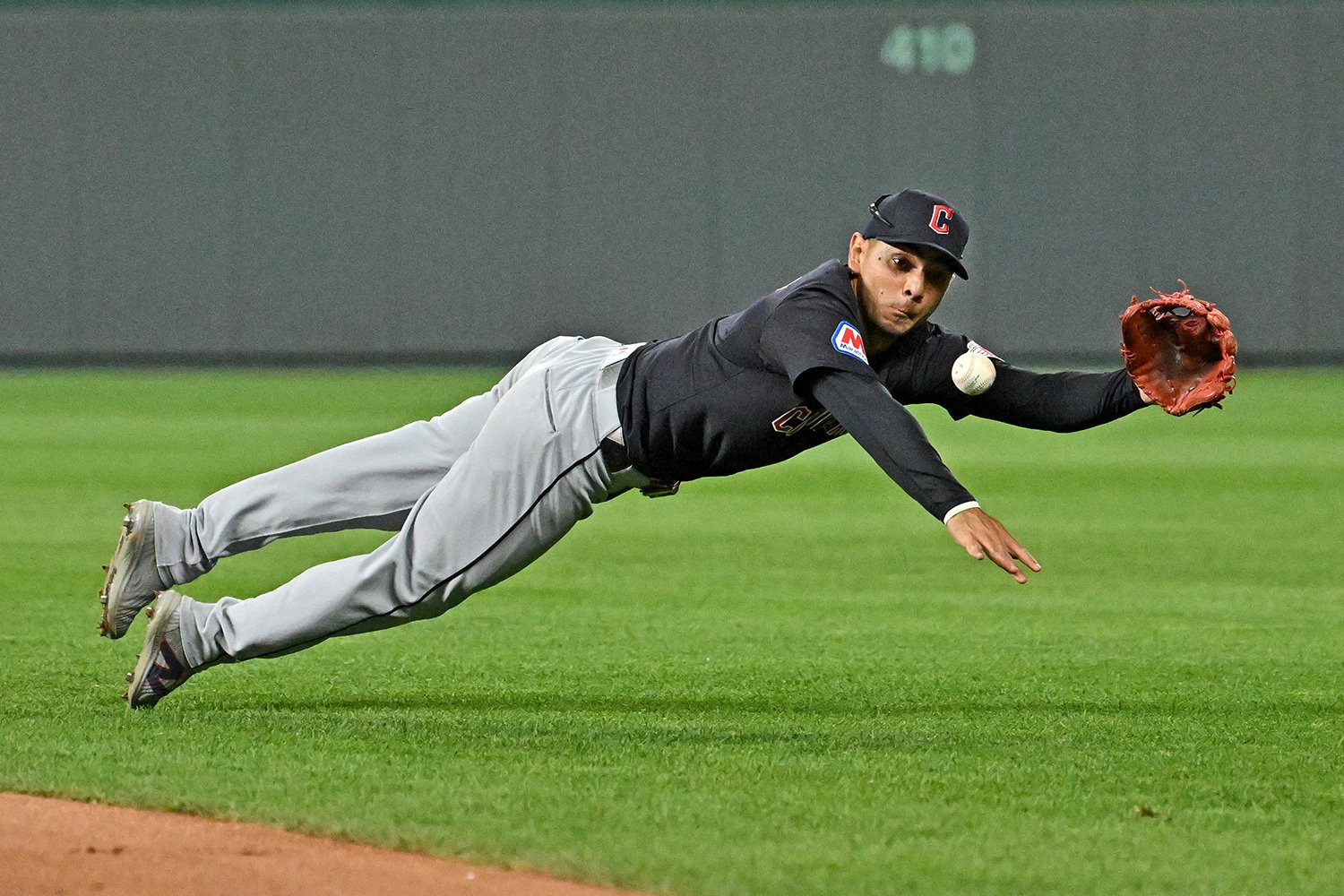 Andrés Giménez joins the Blue Jays as an acclaimed defender at second base. He’s won the last three Gold Gloves in the American League, the last two Fielding Bible Awards, and a Platinum Glove. Advanced metrics love his defense. Statcast had him at 19 Outs Above Average (OAA) in 2024, tied with Marcus Semien for best in baseball among second basemen. According to Sports Info Solutions, Giménez was worth 20 Defensive Runs Saved, second-most in baseball. He also stands up to the eye test, earning rave reviews for his work in Cleveland. The Blue Jays have prioritized defense in recent years, and Giménez fits those plans perfectly. For 2025, at least, the Jays can expect strong play at second base. Giménez’s elite defending is important because of the glaring weakness at shortstop. Bo Bichette missed half of 2024, and when he was in the lineup, his defense graded out somewhere between average and bad. He’s had some stretches of good defense, so it’s not like he’s incapable of playing the position, but whether through trade, free agency, or poor play, he may not be the long-term solution at shortstop. Ernie Clement graded out as the superior shortstop last year, although he will spend most of his time at third where he was worth 3 OAA last year. It’s worth asking whether Giménez could stabilize this premium defensive position. From 2020-2022, Giménez played 634 1/3 innings at short (along with 1334.2 at second). In fact, he spent much of his minor league career as a shortstop in the Mets system. Given his defensive skills, it made sense to play him there, and when Cleveland acquired him for Francisco Lindor, he was expected to be a direct replacement for the All-Star shortstop the Guardians were losing. In his first two years in Cleveland, he graded out as an above-average shortstop in limited action. In 2021, he recorded 4 OAA which tied for 13th among all players with 300 innings at short. However, 300 innings is hardly enough to draw any reasonable conclusions, and in the next season he was limited to just 130 innings when Cleveland decided to make him their regular second baseman. He rewarded them with 12 OAA at second, and 1 OAA at short. Over the last two seasons, he has dominated, earned all those accolades, and established himself as the best second baseman in MLB, if not the best overall defender. But could he be even more valuable to the Blue Jays at shortstop? Given that his defensive metrics have remained stable, and he grades out well on Statcast measurements, it could be worth an experiment. There is a case to be made that he should move to shortstop now. According to Statcast, his average throw is 86.6, more than three ticks above Bichette’s 83.3 mark and comparable to other top-end shortstops. He has elite range both to his left and his right, and he is already well-acquainted with shortstop. It’s possible that he would elevate an already excellent Blue Jays defense. It’s worth considering the additional value he could bring even if his play drops off some after the transition. According to most definitions of WAR, the average second baseman would save three fewer runs on defense were they to move to short, so even with a drop in play, Giménez could still be more valuable at short. Many players who play both positions, but none who have Giménez’s credentials. The Blue Jays’ options at second aren’t great, but it’s an easier position to fill. If the team does not extend Bichette, it would be hard for them to find a better shortstop through free agency or trade. The Blue Jays brought in Giménez to solidify their infield defense and improve a position that’s been a significant weakness for the past few seasons. They may also have created an opportunity to gain a huge upgrade at a premium position.
 -
More importantly, should Andrés Giménez end up as the Blue Jays’ shortstop? Andrés Giménez joins the Blue Jays as an acclaimed defender at second base. He’s won the last three Gold Gloves in the American League, the last two Fielding Bible Awards, and a Platinum Glove. Advanced metrics love his defense. Statcast had him at 19 Outs Above Average (OAA) in 2024, tied with Marcus Semien for best in baseball among second basemen. According to Sports Info Solutions, Giménez was worth 20 Defensive Runs Saved, second-most in baseball. He also stands up to the eye test, earning rave reviews for his work in Cleveland. The Blue Jays have prioritized defense in recent years, and Giménez fits those plans perfectly. For 2025, at least, the Jays can expect strong play at second base. Giménez’s elite defending is important because of the glaring weakness at shortstop. Bo Bichette missed half of 2024, and when he was in the lineup, his defense graded out somewhere between average and bad. He’s had some stretches of good defense, so it’s not like he’s incapable of playing the position, but whether through trade, free agency, or poor play, he may not be the long-term solution at shortstop. Ernie Clement graded out as the superior shortstop last year, although he will spend most of his time at third where he was worth 3 OAA last year. It’s worth asking whether Giménez could stabilize this premium defensive position. From 2020-2022, Giménez played 634 1/3 innings at short (along with 1334.2 at second). In fact, he spent much of his minor league career as a shortstop in the Mets system. Given his defensive skills, it made sense to play him there, and when Cleveland acquired him for Francisco Lindor, he was expected to be a direct replacement for the All-Star shortstop the Guardians were losing. In his first two years in Cleveland, he graded out as an above-average shortstop in limited action. In 2021, he recorded 4 OAA which tied for 13th among all players with 300 innings at short. However, 300 innings is hardly enough to draw any reasonable conclusions, and in the next season he was limited to just 130 innings when Cleveland decided to make him their regular second baseman. He rewarded them with 12 OAA at second, and 1 OAA at short. Over the last two seasons, he has dominated, earned all those accolades, and established himself as the best second baseman in MLB, if not the best overall defender. But could he be even more valuable to the Blue Jays at shortstop? Given that his defensive metrics have remained stable, and he grades out well on Statcast measurements, it could be worth an experiment. There is a case to be made that he should move to shortstop now. According to Statcast, his average throw is 86.6, more than three ticks above Bichette’s 83.3 mark and comparable to other top-end shortstops. He has elite range both to his left and his right, and he is already well-acquainted with shortstop. It’s possible that he would elevate an already excellent Blue Jays defense. It’s worth considering the additional value he could bring even if his play drops off some after the transition. According to most definitions of WAR, the average second baseman would save three fewer runs on defense were they to move to short, so even with a drop in play, Giménez could still be more valuable at short. Many players who play both positions, but none who have Giménez’s credentials. The Blue Jays’ options at second aren’t great, but it’s an easier position to fill. If the team does not extend Bichette, it would be hard for them to find a better shortstop through free agency or trade. The Blue Jays brought in Giménez to solidify their infield defense and improve a position that’s been a significant weakness for the past few seasons. They may also have created an opportunity to gain a huge upgrade at a premium position. View full article
.jpg.e29553552ab2106b05c626fbb2de2875.jpg)
