


Davy Andrews
-
Posts
106 -
Joined
-
Last visited
Content Type
Profiles
Toronto Blue Jays Videos
2026 Toronto Blue Jays Top Prospects Ranking
Toronto Blue Jays Free Agent & Trade Rumors, Notes, & Tidbits
Guides & Resources
2025 Toronto Blue Jays Draft Pick Tracker
News
2026 Toronto Blue Jays Draft Tracker: Picks & Bonuses
Forums
Blogs
Events
Store
Downloads
Gallery
Everything posted by Davy Andrews
-
 That wouldn't surprise me. Don't get me wrong, Straw's offense is brutal. It crushed the Guardians in 2023, and he spent almost the entire 2024 season batting .240 in Triple A. However, he'll do in a pinch.
 -
A few hours after news broke that Roki Sasaki had eliminated the Padres and was choosing between the Blue Jays and the Dodgers, the Blue Jays announced that they had traded for outfielder Myles Straw from the the Guardians in exchange for either cash or a player to be named later. However, Straw wasn't the real headliner, and neither was the cash. The real headliner was what the Jays got back: $2 million in international bonus pool money, the kind a team could spend on Roki Sasaki. We shouldn't take this as any indication about which way Sasaki is leaning, but it does make it clear that the Blue Jays still think they've got a chance. As for Straw, he's a very useful player, a Gold Glove outfielder who doesn't hit, so he is certainly capable of sliding right in for Kevin Kiermaier without missing a beat.
-
A few hours after news broke that Roki Sasaki had eliminated the Padres and was choosing between the Blue Jays and the Dodgers, the Blue Jays announced that they had traded for outfielder Myles Straw from the the Guardians in exchange for either cash or a player to be named later. However, Straw wasn't the real headliner, and neither was the cash. The real headliner was what the Jays got back: $2 million in international bonus pool money, the kind a team could spend on Roki Sasaki. We shouldn't take this as any indication about which way Sasaki is leaning, but it does make it clear that the Blue Jays still think they've got a chance. As for Straw, he's a very useful player, a Gold Glove outfielder who doesn't hit, so he is certainly capable of sliding right in for Kevin Kiermaier without missing a beat. View full rumor
-
Good morning, and I hope you're not sick of this same old picture from the photo services (© Sam Navarro-Imagn Images, thank you for your service). It appears that Roki Sasaki is now deciding between only the Blue Jays and the Dodgers. This morning, Francys Romero reported that multiple sources have told him the superlative 23-year-old Japanese pitcher is no longer considering the Padres. Sasaki announced just a few days ago that he was down to three finalists. In case math isn't your specialty, today's news leaves just the Blue Jays and the Dodgers standing in the Roki Sasaki Sweepstakes, bringing Toronto's chances from one-third to one-half. Well, we actually have no idea what the Blue Jays' chances are. We're busy chasing theories. The smart money is still on the Dodgers, who boast their own Japanese superstar, a juggernaut of a team that contends for a World Series ring year in and year out, a deep farm system, a cutting-edge player development department, deep pockets, closer proximity to Japan, and at this point, I think you get the picture so I will pause for a moment to breathe into a paper bag. Ok, so the Blue Jays are still plucky underdogs here. However, they clearly have something that interests Sasaki. Even if they don't land him, at least they didn't finish in third! Fingers crossed. Everything crossed. I need another paper bag. View full rumor
-
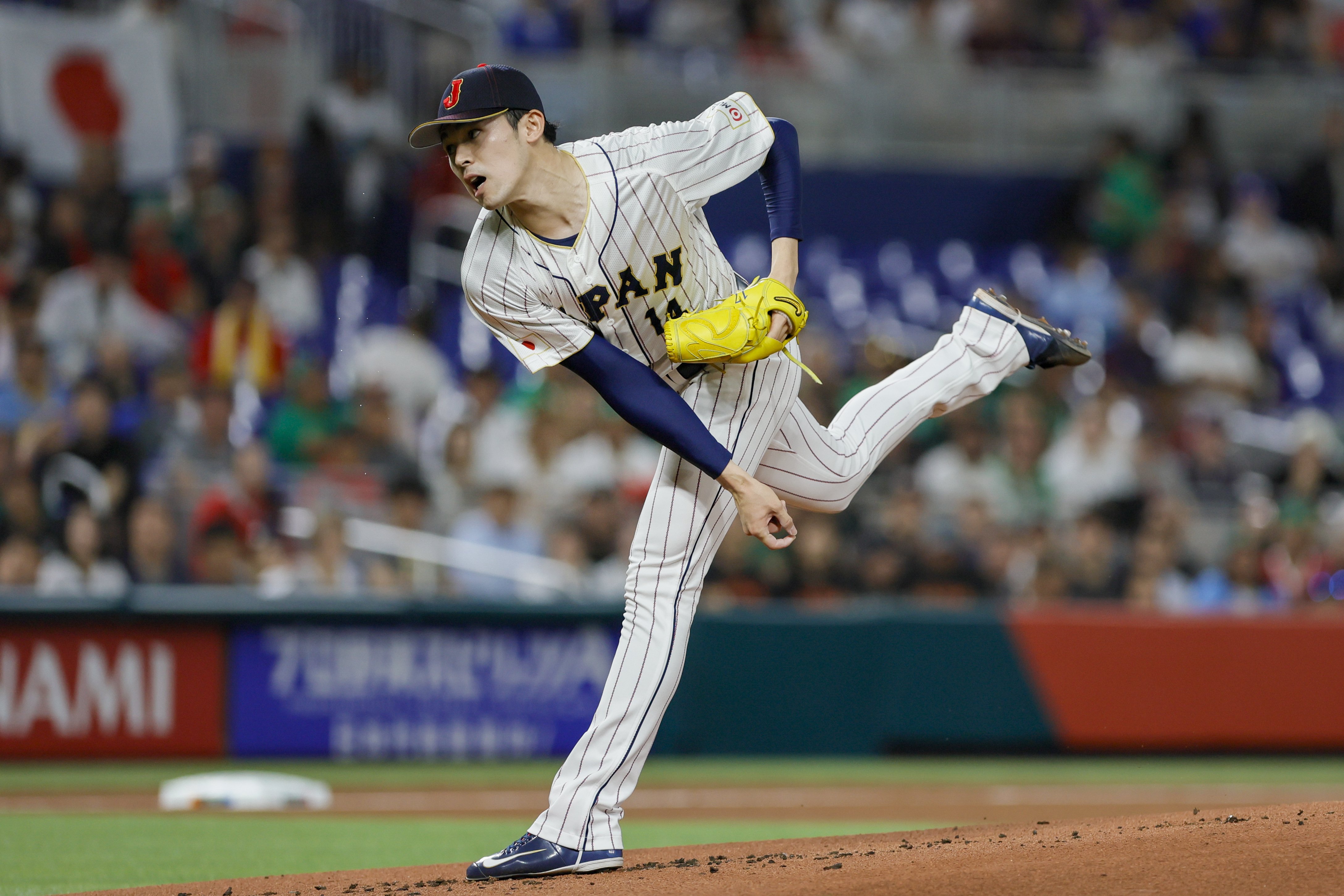 Good morning, and I hope you're not sick of this same old picture from the photo services (© Sam Navarro-Imagn Images, thank you for your service). It appears that Roki Sasaki is now deciding between only the Blue Jays and the Dodgers. This morning, Francys Romero reported that multiple sources have told him the superlative 23-year-old Japanese pitcher is no longer considering the Padres. Sasaki announced just a few days ago that he was down to three finalists. In case math isn't your specialty, today's news leaves just the Blue Jays and the Dodgers standing in the Roki Sasaki Sweepstakes, bringing Toronto's chances from one-third to one-half. Well, we actually have no idea what the Blue Jays' chances are. We're busy chasing theories. The smart money is still on the Dodgers, who boast their own Japanese superstar, a juggernaut of a team that contends for a World Series ring year in and year out, a deep farm system, a cutting-edge player development department, deep pockets, closer proximity to Japan, and at this point, I think you get the picture so I will pause for a moment to breathe into a paper bag. Ok, so the Blue Jays are still plucky underdogs here. However, they clearly have something that interests Sasaki. Even if they don't land him, at least they didn't finish in third! Fingers crossed. Everything crossed. I need another paper bag.
 -
The Blue Jays could make it into the playoffs, but only if a whole lot of things go right. Last week, Dan Szymborski of FanGraphs released the 2025 ZiPS projection for the Blue Jays, and on Sunday, my colleague Mike LeSage broke down some of his takeaways from the projections. But here’s the thing about projections systems: They’re a “best guess” machine, providing a range of possible outcomes, and we’re allowed to have a range of opinions about them. It’s easy to get mad when the projections don’t like your favourite player, but short of finding a real fortune teller, they’re as close as we get to predicting the future. In 2024, ZiPS was pretty high on the Jays and they underperformed wildly in several areas. This year ZiPS still finds a lot to like on the roster, so let’s dive in to some quick reactions. As Dan writes, ZiPS sees the Jays as around an 84- to 85-win team this season. He calls it “a really awkward spot” and I’d say it’s just not good enough for a team in this position. They have an aging supporting cast, and their expected stars are approaching free agency. They need to perform at or near their ceiling, or they’ll be looking at a busy sell off at the deadline. On the hitting side, Vladimir Guerrero Jr. is in a class by himself, but below him, regression to the mean is doing some heavy lifting. ZiPS predicts bounce-back seasons Andrés Giménez, Alejandro Kirk, and Bo Bichette. ZiPs doesn’t expect much out of the outfield or third base (the less said about the DH situation the better). It’s reasonable to expect Giménez and Guerrero to land towards the top of their projected offensive numbers. While Vladdy has some recent lean years, he had an excellent season and could certainly replicate that in a walk year. ZiPS see’s him as the team’s only batter with a high floor; he’s the only one whose 20th percentile projection is above a 100 OPS+. It’s harder to get a read on the rest of the lineup. As much as ZiPS likes Kirk and Bichette, it’s fair to feel more comfortable with their 20th percentile projections (88 and 86 OPS+) than the high ceiling 80th percentile marks (126 and 133 OPS+). Every other batter is likely to be average or worse this season. Last year’s projections gave the team a high floor, which theoretically should have insulated them from the kind of season they had. ZiPS is not so optimistic this year, especially for the batters. As we’ve written elsewhere, there aren’t a lot of great, high-ceiling prospects to roll the dice on. Could Will Wagner, Addison Barger, or Leo Jimenez break out? It’s possible, but ZiPS doesn’t see any of them as more than an above-average player in even the most optimistic projections. The pitching staff was an overall disappointment last season. The team hasn’t done much to improve the rotation, and it projects out around league average overall. Still a season full of league-average pitching is encouraging. The projections for Bowden Francis are not as rosy as some fans may like. His 80th percentile WAR is 1.8, and his ERA+ is projected to be 107 both in 2025 and over the next three seasons. An ERA that’s 7% better than league-average would still put him firmly in the top half of the rotation, but not quite the kind of dominance we saw last season. It wouldn’t be surprising if he blew through his ceiling, and threw more than the 103 1/3 innings ZiPS predicts at a much higher level. ZiPS sees the bullpen as a potential strength, and that's from before the team added relief ace Jeff Hoffman. T hat’s a sharp contrast from the reality of last season, but there are enough new faces to think it’s possible. Reliever performance is so variable from year to year, it’s hard to feel confident in any projection system. Overall, ZiPS sees the Blue Jays the way many fans and media do: they have some talent, a lot of average players, and some glaring questions. Their success depends on multiple players bouncing back from dismal performances at the same time. Things don’t normally work that way, but for all the faults, if you squint just right you can see the makings of a fringe Wild Card team. Will that be enough to keep Vlad interested in a long-term deal? Opening day can’t come soon enough. Some additional thoughts: There’s something a little nostalgic about Daulton Varsho having Jose Cruz Jr. as a hitting comp. ZiPS thinks Andrés Giménez might steal 26 bases this year. That was Whit Merrifield’s total in 2023. As Owen Hill predicted this morning, perhaps we will see the team’s first 30-steal season since Jose Réyes in 2014. Alek Manoah’s projected stats put him at slightly above replacement level. It’s not surprising, but it’s sad to see how low his stock remains. A couple of dark horse break through candidates: RJ Schreck and Orelvis Martinez have solid 80th percentile projections. View full article
-
- 1
-

-
- vladimir guerrero jr
- bowden francis
- (and 2 more)
-
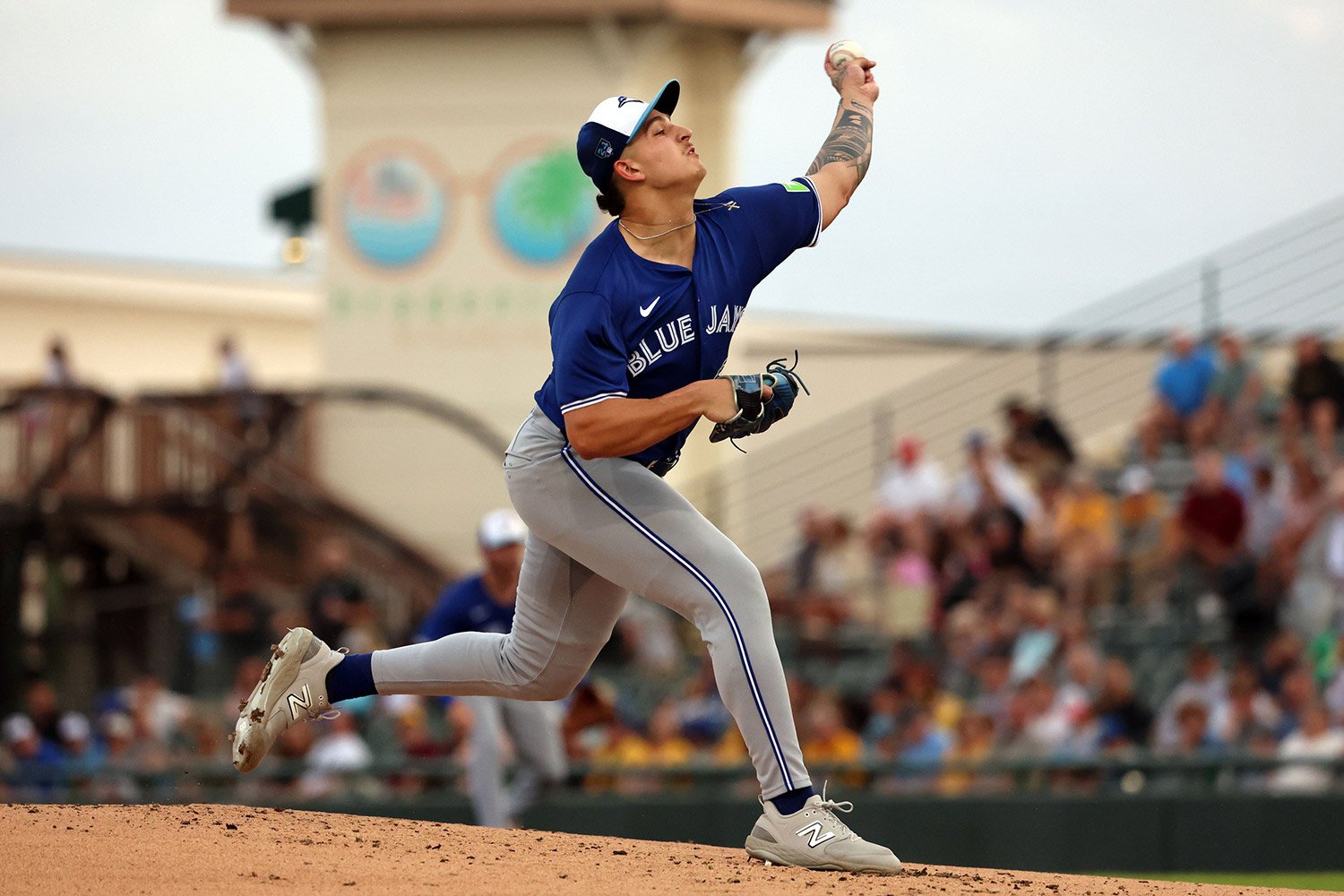 Well this isn't a great look. This morning, Baseball Prospectus released its long-awaited 2025 prospect rankings. The list is 101 names long and sortable, which makes it really to sort by the reverse alphabetical order of the organization and discover the zero names between WSH and TEX. There is no TOR. There are no Blue Jays in the top 101. It's a step down from 2024, when Ricky Tiedemann and Orelvis Martinez were the Blue Jays' only entries. Neither player has exhausted their prospect eligibility.
 -
Well this isn't a great look. This morning, Baseball Prospectus released its long-awaited 2025 prospect rankings. The list is 101 names long and sortable, which makes it really to sort by the reverse alphabetical order of the organization and discover the zero names between WSH and TEX. There is no TOR. There are no Blue Jays in the top 101. It's a step down from 2024, when Ricky Tiedemann and Orelvis Martinez were the Blue Jays' only entries. Neither player has exhausted their prospect eligibility. View full rumor
-
A Theory: Sasaki’s Splitter Kept the Blue Jays in the Running
Davy Andrews posted an article in Blue Jays
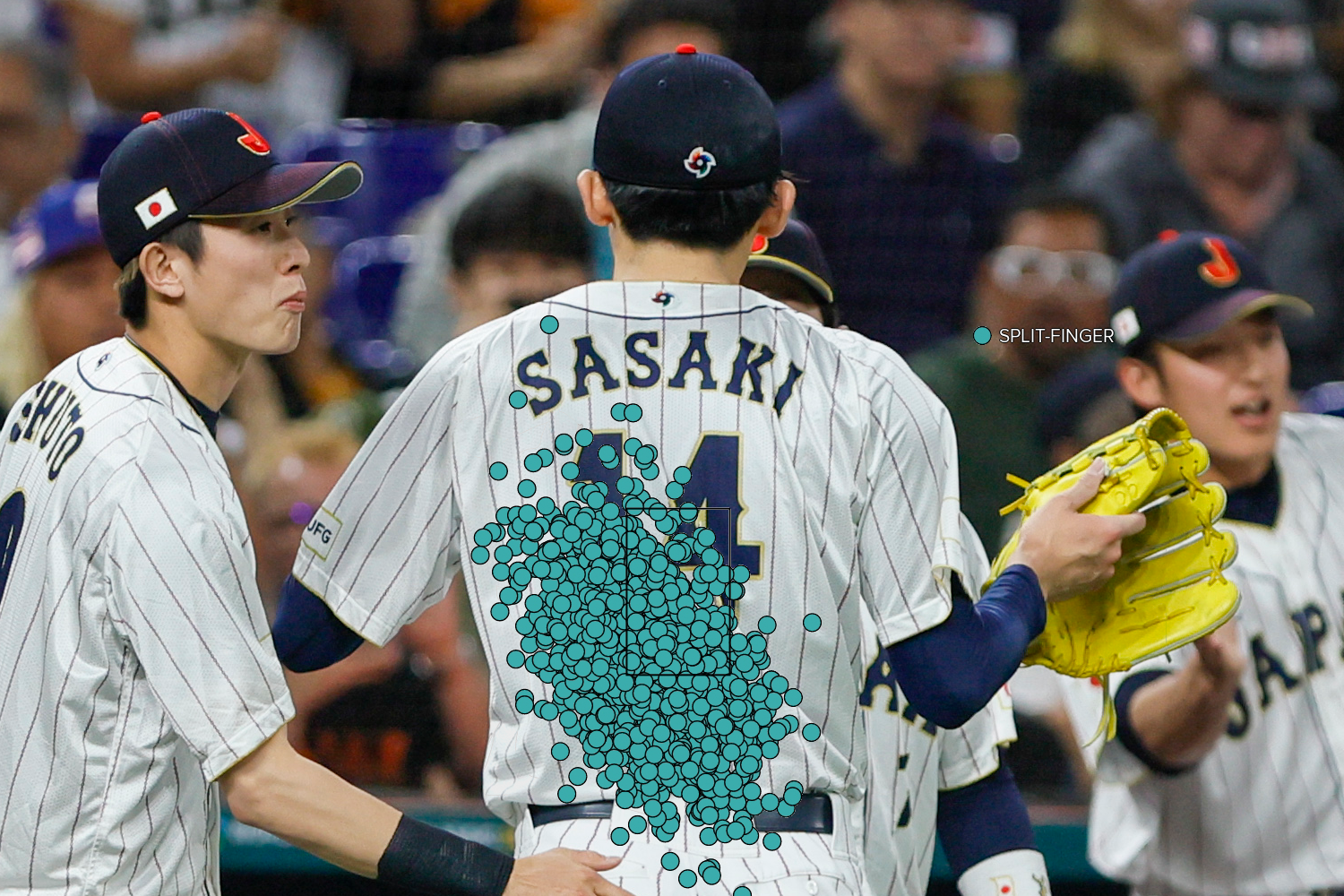 As we've been swept away in the unfolding Roki Sasaki saga, one thing we've stressed over and over again is that we don't know exactly what Sasaki is looking for in a team. His agent, Joel Wolfe, has made it clear that pitching development is a priority, but neither the Rays nor the Guardians were even granted a meeting. Sasaki presumably wants to win, but the Yankees and the Dodgers were the only division winners granted a meeting, and three of the eight teams he met with had losing records in 2024. There are rumors that Sasaki may or may not want to pitch for a team that already has a Japanese player, that he may want to avoid the intense scrutiny of the biggest media markets, and the understandable assumption that he'd prefer to pitch on the West Coast. However, it's clear that the 23-year-old phenom has been extremely thoughtful about the process, even if we can't piece together all of the variables from the outside. He set up firm rules about the way his free agency would be run and he moved in stages. This is someone with a plan. As such, I'd like to throw out a theory about why Sasaki is considering the Blue Jays. That's all it is, though: a theory. Sasaki boasts a fastball that hits triple digits and an above-average slider, but his pride and joy is an unhittable splitter that racked up an absurd 57% whiff rate last season. Sasaki employed the splitter 27% of the time, and in 2023, that number was above 35%. Few pitchers throw a splitter that often, at least in Major League Baseball. Splitters and forkballs are widespread in Japan, but after a rash of injuries in the 1980s, they've been rare over here. The splitter has made a comeback over the last few years, with 2024 being dubbed The Year of the Splitter (following 2023, The Year of the Cutter). Still, it's not a very common pitch; in The Year of the Splitter, it was thrown just 3% of the time, up from 2.2% in 2023. As pitching development is one of the few criteria that Sasaki has actually made public, it's not unreasonable to guess that he may prefer pitching for a team full of coaches and teammates who are comfortable with his signature pitch. Enter the Blue Jays. In 2024, the Blue Jays threw 1,724 splitters, which made up 7.4% of their total pitches. Both of those numbers were the highest in baseball. The Twins just beat them out for the crown in 2023, but if you go all the way back to 2020, the Blue Jays still lead baseball with a 5% splitter rate. The Toronto rotation is led by Kevin Gausman, who threw his excellent splitter 32% of the time in 2024. His 959 splitters were over 100 more than any other MLB pitcher threw. Fellow starters Bowden Francis, Chris Bassitt, and Yariel Rodríguez also throw splitters. In fact, were Sasaki to join the Blue Jays, he would likely leave José Berríos as the only starter who doesn't throw a splitter. No other team can boast that kind of knowledge base. Once again, this is only a guess, but the splitter's reputation for harming pitchers made it taboo for a long time in MLB. As such, many major league pitching coaches are likely less familiar with it than they are with other pitches. Institutional knowledge from the biomechanists, the analytics staff, the coaches, and the players, not just about how to harness the pitch, but about how to make adjustments and how to throw it safely, could be a separator. But that's only a theory.
 -
Familiarity with Sasaki's signature pitch could give the Blue Jays a leg up. Maybe. Possibly. As we've been swept away in the unfolding Roki Sasaki saga, one thing we've stressed over and over again is that we don't know exactly what Sasaki is looking for in a team. His agent, Joel Wolfe, has made it clear that pitching development is a priority, but neither the Rays nor the Guardians were even granted a meeting. Sasaki presumably wants to win, but the Yankees and the Dodgers were the only division winners granted a meeting, and three of the eight teams he met with had losing records in 2024. There are rumors that Sasaki may or may not want to pitch for a team that already has a Japanese player, that he may want to avoid the intense scrutiny of the biggest media markets, and the understandable assumption that he'd prefer to pitch on the West Coast. However, it's clear that the 23-year-old phenom has been extremely thoughtful about the process, even if we can't piece together all of the variables from the outside. He set up firm rules about the way his free agency would be run and he moved in stages. This is someone with a plan. As such, I'd like to throw out a theory about why Sasaki is considering the Blue Jays. That's all it is, though: a theory. Sasaki boasts a fastball that hits triple digits and an above-average slider, but his pride and joy is an unhittable splitter that racked up an absurd 57% whiff rate last season. Sasaki employed the splitter 27% of the time, and in 2023, that number was above 35%. Few pitchers throw a splitter that often, at least in Major League Baseball. Splitters and forkballs are widespread in Japan, but after a rash of injuries in the 1980s, they've been rare over here. The splitter has made a comeback over the last few years, with 2024 being dubbed The Year of the Splitter (following 2023, The Year of the Cutter). Still, it's not a very common pitch; in The Year of the Splitter, it was thrown just 3% of the time, up from 2.2% in 2023. As pitching development is one of the few criteria that Sasaki has actually made public, it's not unreasonable to guess that he may prefer pitching for a team full of coaches and teammates who are comfortable with his signature pitch. Enter the Blue Jays. In 2024, the Blue Jays threw 1,724 splitters, which made up 7.4% of their total pitches. Both of those numbers were the highest in baseball. The Twins just beat them out for the crown in 2023, but if you go all the way back to 2020, the Blue Jays still lead baseball with a 5% splitter rate. The Toronto rotation is led by Kevin Gausman, who threw his excellent splitter 32% of the time in 2024. His 959 splitters were over 100 more than any other MLB pitcher threw. Fellow starters Bowden Francis, Chris Bassitt, and Yariel Rodríguez also throw splitters. In fact, were Sasaki to join the Blue Jays, he would likely leave José Berríos as the only starter who doesn't throw a splitter. No other team can boast that kind of knowledge base. Once again, this is only a guess, but the splitter's reputation for harming pitchers made it taboo for a long time in MLB. As such, many major league pitching coaches are likely less familiar with it than they are with other pitches. Institutional knowledge from the biomechanists, the analytics staff, the coaches, and the players, not just about how to harness the pitch, but about how to make adjustments and how to throw it safely, could be a separator. But that's only a theory. View full article
-
Let's get excited! Well, not too excited. Let's get very cautiously, ever so slightly, petrified-to-our-very-cores optimistic! So right off the bat, let’s set our excitement meters to about 10%. We’re not going to lose our minds here. We know how this goes. The Blue Jays have a meeting with a top free agent, the top free agent signs elsewhere, and the Blue Jays tell reporters they were just grateful to be part of the process. We all remember Shohei Ohtani visiting the Dunedin spring training complex, and we all remember his phantom flight to Toronto. We’re not trying to set ourselves up for heartbreak here. That said, let’s crank it up to 10% excitement! According to Ken Rosenthal and Andy McCullough of The Athletic, Japanese ace Roki Sasaki met with the Blue Jays in Toronto last week. Previous reporting had indicated that of the 20 teams that made presentations to Sasaki and his agent, Joel Wolfe, only seven would get to meet with him: the Cubs, Dodgers, Giants, Mets, Padres, Rangers, and Yankees. The Red Sox reportedly couldn’t get a meeting with Sasaki. Even if it leads nowhere, as it probably will, this is still allowed to be exciting news. We previously noted that the Jays were reportedly "all-in" on Sasaki. I’m not going to get into the weeds about how adding Sasaki would affect the roster. Suffice it to say that he’s one of the best pitchers in the world and there’s no such thing as a starting rotation that wouldn’t be much better with him on it. The 23-year-old has a career 2.10 ERA in NPB while striking out more than 10 batters per nine innings. His fastball velocity ticked down a bit in 2024, but it still averaged a hair under 97 mph, and his trademark splitter ran a comical 57% whiff rate. Those kinds of numbers will play anywhere. Like Ohtani, Sasaki is so determined to challenge himself against the best the world has to offer that he’s entering the posting system early, before he reaches nine years of professional experience. That means instead of signing a free agent contract for the hundreds of millions of dollars that he’s actually worth, he’ll be on a rookie contract, with a signing bonus of whatever his chosen team has available in their international free agent bonus pool, likely around $7 million. (The Blue Jays are actually toward the very bottom, with just under $6.3 million available in their bonus pool.) It’s an enormous bet on himself, and it also means that every team is on roughly the same financial footing, so money won’t be a factor. Sasaki will have his own reasons for his decision. The smart money is still on the Dodgers. Even the byline of this report tells you that. Ken Rosenthal and Andy McCullough are both national writers, but McCullough wrote for the Los Angeles Times until 2019, was a Dodgers beat writer until 2018, recently wrote a book about Clayton Kershaw. However, the small possibility of landing one of the game’s best arms for the next six seasons is an excellent reason to get just a little bit excited. View full article
-
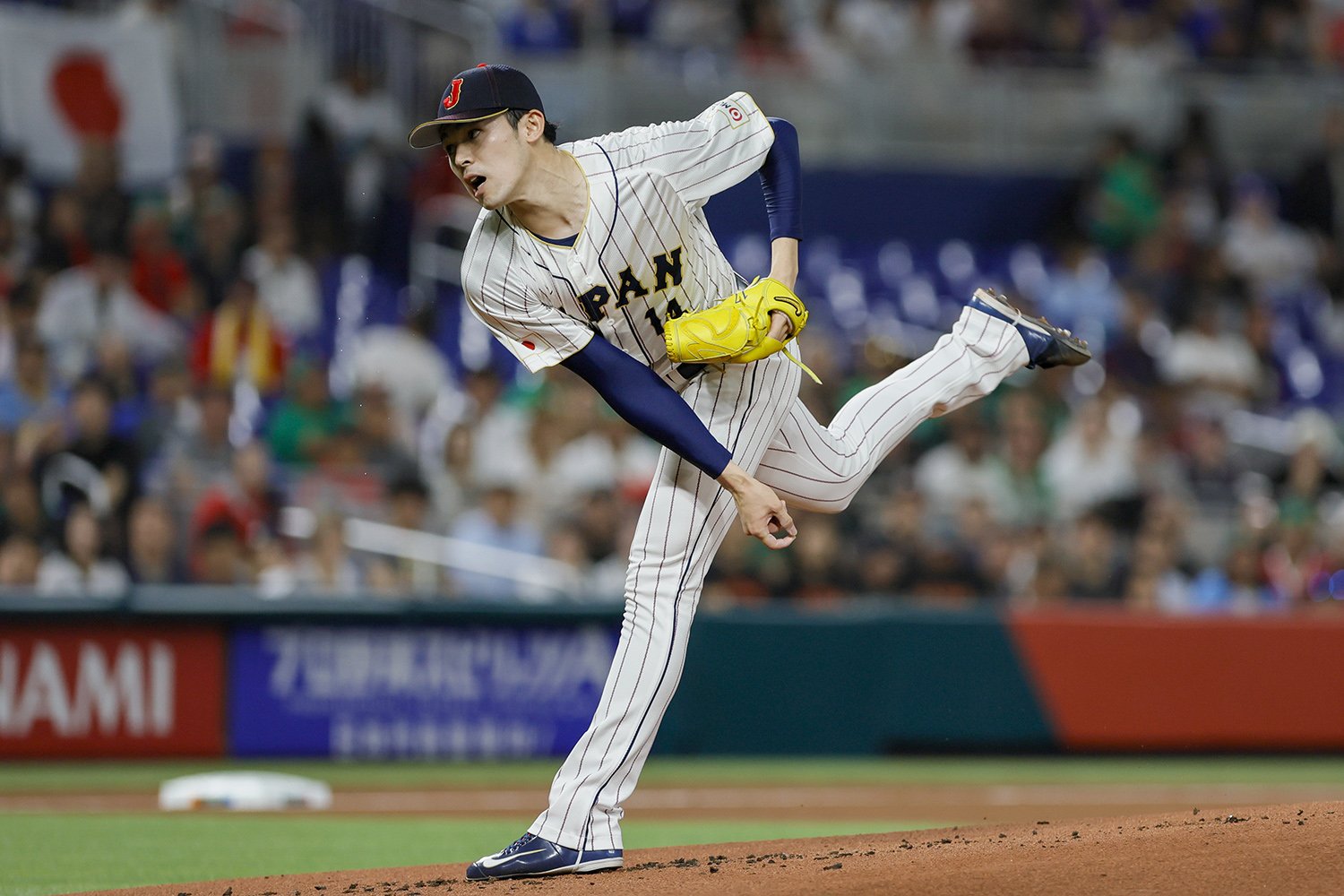 So right off the bat, let’s set our excitement meters to about 10%. We’re not going to lose our minds here. We know how this goes. The Blue Jays have a meeting with a top free agent, the top free agent signs elsewhere, and the Blue Jays tell reporters they were just grateful to be part of the process. We all remember Shohei Ohtani visiting the Dunedin spring training complex, and we all remember his phantom flight to Toronto. We’re not trying to set ourselves up for heartbreak here. That said, let’s crank it up to 10% excitement! According to Ken Rosenthal and Andy McCullough of The Athletic, Japanese ace Roki Sasaki met with the Blue Jays in Toronto last week. Previous reporting had indicated that of the 20 teams that made presentations to Sasaki and his agent, Joel Wolfe, only seven would get to meet with him: the Cubs, Dodgers, Giants, Mets, Padres, Rangers, and Yankees. The Red Sox reportedly couldn’t get a meeting with Sasaki. Even if it leads nowhere, as it probably will, this is still allowed to be exciting news. We previously noted that the Jays were reportedly "all-in" on Sasaki. I’m not going to get into the weeds about how adding Sasaki would affect the roster. Suffice it to say that he’s one of the best pitchers in the world and there’s no such thing as a starting rotation that wouldn’t be much better with him on it. The 23-year-old has a career 2.10 ERA in NPB while striking out more than 10 batters per nine innings. His fastball velocity ticked down a bit in 2024, but it still averaged a hair under 97 mph, and his trademark splitter ran a comical 57% whiff rate. Those kinds of numbers will play anywhere. Like Ohtani, Sasaki is so determined to challenge himself against the best the world has to offer that he’s entering the posting system early, before he reaches nine years of professional experience. That means instead of signing a free agent contract for the hundreds of millions of dollars that he’s actually worth, he’ll be on a rookie contract, with a signing bonus of whatever his chosen team has available in their international free agent bonus pool, likely around $7 million. (The Blue Jays are actually toward the very bottom, with just under $6.3 million available in their bonus pool.) It’s an enormous bet on himself, and it also means that every team is on roughly the same financial footing, so money won’t be a factor. Sasaki will have his own reasons for his decision. The smart money is still on the Dodgers. Even the byline of this report tells you that. Ken Rosenthal and Andy McCullough are both national writers, but McCullough wrote for the Los Angeles Times until 2019, was a Dodgers beat writer until 2018, recently wrote a book about Clayton Kershaw. However, the small possibility of landing one of the game’s best arms for the next six seasons is an excellent reason to get just a little bit excited.
 -
Article: The Case for an Uncooked George Springer
Davy Andrews replied to Davy Andrews's topic in Jays Centre Front Page News
I noticed this too and wasn't quite sure what to make of it. It's really odd and I will definitely be keeping an eye on it going forward. -
Thanks! First, I should admit that I'm biased because I adore players who make as much contact as Clement. I actually think what @Orgfiller said was spot on. Clement makes so much contact that he could absolutely have a great BABIP year and look like a star. And if there are no better options, than sure, let him try to make it work. Players with those kind of bat-to-ball skills don't come around every day. However, it's hard to argue that the team shouldn't be looking to improve the position.
-
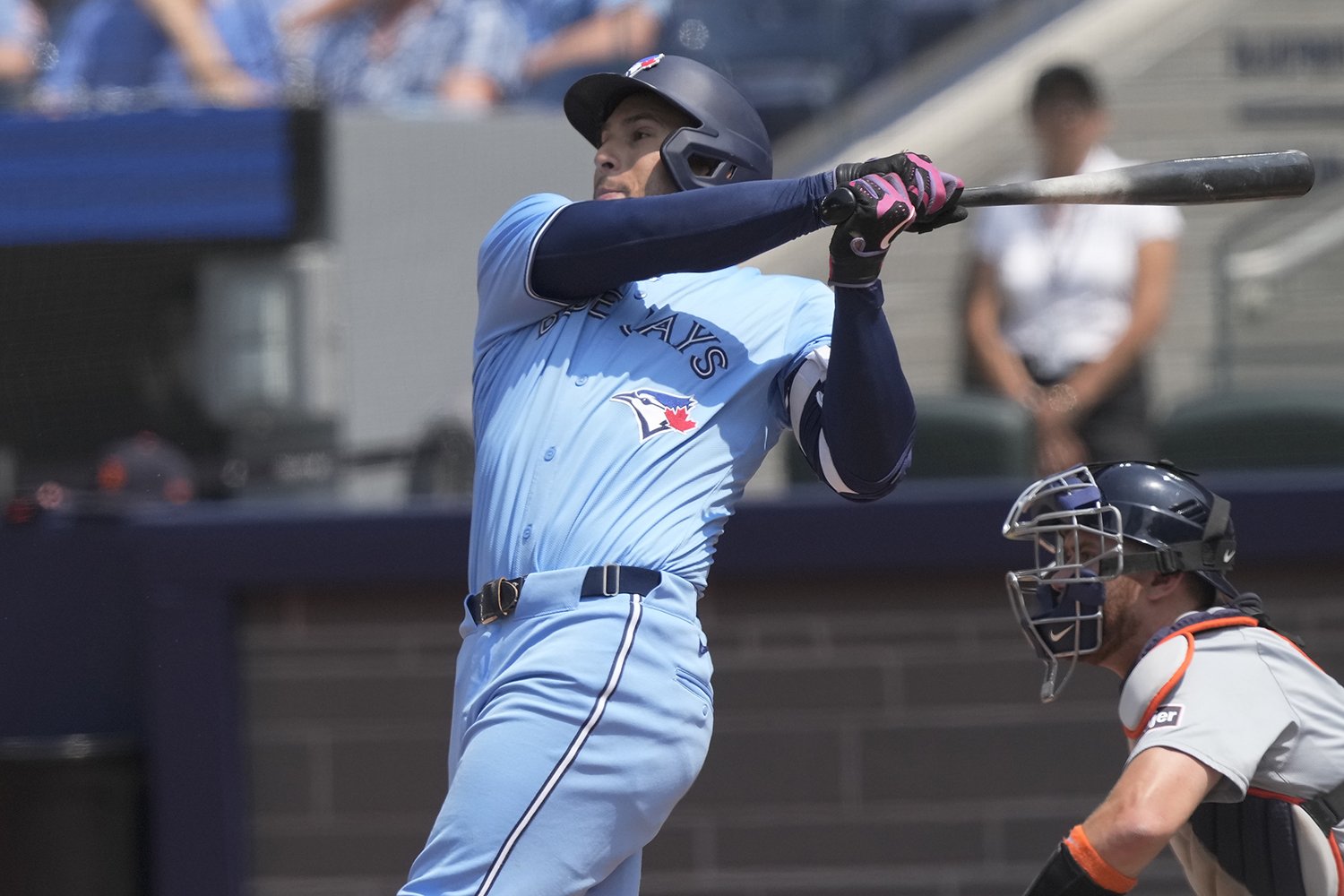 In 2024, George Springer slashed .220/.303/.371, good for 95 wRC+. His average exit velocity was 87.5 mph, his xwOBA was .324, and according to FanGraphs, he was worth 1.2 WAR. I threw all those numbers at you for a reason: every one of those numbers was the lowest of Springer’s entire career. In other words, during his age-34 season, Springer very much played like the game had passed him by. He’s been trending down for a while now. In 2019, he ran a 155 wRC+, which meant that he was 55% better than the average hitter. In every subsequent season, his wRC+ has steadily gotten worse. That’s not what you want to see. The bottom has dropped out over the last two years, and 2024 marked the first time in his entire career that Springer was below average at the plate. According to Statcast’s Fielding Runs Value, he was also worth -3 runs as a defender, also the worst mark of his career. So that’s the preamble: Springer is on the downslope of his career, and with two years left on his deal, it’s starting to look like a free fall. Now we’re going to look at some signs for optimism. Don’t get me wrong. I’m not about to argue that Springer can turn back into the star he once was, because that’s not happening. All the same, there’s a big difference from the 1.8 fWAR he put up in 2023 and his 1.2 in 2024. It’s the difference between an average player and a player who’s actively hurting his team. At this point, his defense likely is what it is, but Springer is still capable of putting up solid offensive numbers. Let’s start with batted ball luck. In 2024, Springer ran a .245 batting average on balls in play (BABIP). Not only was that the worst mark of his career, it was the fourth-lowest mark of all qualified players. Springer has a career .294 BABIP, and the other only time he’s ever been below .286 was the short 2020 season. Obviously, Springer isn’t as fast as he once was, so he’s not going to beat out quite so many infield hits, but we still wouldn’t expect his BABIP to drop off that suddenly. Furthering the luck argument is the fact that springer also had a 26-point gap between his .324 wOBA and his .298 expected wOBA. That’s not an enormous difference, but it’s tied for the second-largest gap of Springer’s career (once again with the short 2020 season). According to DRC+, Baseball Prospectus’s overall offensive metric that judges player not just on outcomes but on their deserved outcomes, Springer was at 99 in 2024, just three points off his 2023 mark of 102. Springer really did seem to have some bad batted ball luck, and that doesn’t usually last forever. There’s also a bit of encouraging information when it comes to Springer’s contact quality. I know his average exit velocity was a career-low, but it’s not as if he was completely unable to hit the ball hard. His 90th-percentile exit velocity – which is a better measure of a player’s overall power – was nearly identical to his 2023 mark. When I look at Springer’s overall offensive marks, I don’t love that his whiff rate crept up, but what really jumps out at me is the way he’s shifted to hitting more balls on the ground and fewer balls to the pull side. I still think he’s been unlucky, but the graph below is part of the reason his BABIP cratered; he’s grounding out a ton, and he’s not hitting the ball to the small part of the ballpark. Before the 2023 season, I wrote about how Springer had lived many lives as a hitter. When he was young and fast, he was able to perform well at the plate despite running a huge groundball rate. Then he got older, and he started optimizing his swing to pull the ball in the air, and it resulted in some of his best seasons. For a while he was very aggressive at the plate, and then he was patient again. My takeaway was that somehow, Springer always seemed to find a way to be an excellent hitter. However, in recent years, that has stopped. Springer is back to running one of the highest groundball rates in all of baseball, and without the speed or power of old, he’s no longer able to find success. Springer has always played the game like there was no tomorrow. It is joyous to watch, but it is finally catching up to him. At this point in his career, he no longer has the physical tools to be a superstar, but that doesn’t necessarily mean he’s done yet. He’s still got a great eye, he’s still got enough power, and he still makes enough contact to run excellent walk and strikeout rates. If Springer can figure out how to drive the ball in the air like he did just a couple years ago, he can still be a productive right fielder. If he keeps hitting the ball on the ground, the graphs are only going to get worse.
 -
The overall numbers aren't pretty, but George Springer still has the tools to be a productive hitter, even if he's no longer a star. In 2024, George Springer slashed .220/.303/.371, good for 95 wRC+. His average exit velocity was 87.5 mph, his xwOBA was .324, and according to FanGraphs, he was worth 1.2 WAR. I threw all those numbers at you for a reason: every one of those numbers was the lowest of Springer’s entire career. In other words, during his age-34 season, Springer very much played like the game had passed him by. He’s been trending down for a while now. In 2019, he ran a 155 wRC+, which meant that he was 55% better than the average hitter. In every subsequent season, his wRC+ has steadily gotten worse. That’s not what you want to see. The bottom has dropped out over the last two years, and 2024 marked the first time in his entire career that Springer was below average at the plate. According to Statcast’s Fielding Runs Value, he was also worth -3 runs as a defender, also the worst mark of his career. So that’s the preamble: Springer is on the downslope of his career, and with two years left on his deal, it’s starting to look like a free fall. Now we’re going to look at some signs for optimism. Don’t get me wrong. I’m not about to argue that Springer can turn back into the star he once was, because that’s not happening. All the same, there’s a big difference from the 1.8 fWAR he put up in 2023 and his 1.2 in 2024. It’s the difference between an average player and a player who’s actively hurting his team. At this point, his defense likely is what it is, but Springer is still capable of putting up solid offensive numbers. Let’s start with batted ball luck. In 2024, Springer ran a .245 batting average on balls in play (BABIP). Not only was that the worst mark of his career, it was the fourth-lowest mark of all qualified players. Springer has a career .294 BABIP, and the other only time he’s ever been below .286 was the short 2020 season. Obviously, Springer isn’t as fast as he once was, so he’s not going to beat out quite so many infield hits, but we still wouldn’t expect his BABIP to drop off that suddenly. Furthering the luck argument is the fact that springer also had a 26-point gap between his .324 wOBA and his .298 expected wOBA. That’s not an enormous difference, but it’s tied for the second-largest gap of Springer’s career (once again with the short 2020 season). According to DRC+, Baseball Prospectus’s overall offensive metric that judges player not just on outcomes but on their deserved outcomes, Springer was at 99 in 2024, just three points off his 2023 mark of 102. Springer really did seem to have some bad batted ball luck, and that doesn’t usually last forever. There’s also a bit of encouraging information when it comes to Springer’s contact quality. I know his average exit velocity was a career-low, but it’s not as if he was completely unable to hit the ball hard. His 90th-percentile exit velocity – which is a better measure of a player’s overall power – was nearly identical to his 2023 mark. When I look at Springer’s overall offensive marks, I don’t love that his whiff rate crept up, but what really jumps out at me is the way he’s shifted to hitting more balls on the ground and fewer balls to the pull side. I still think he’s been unlucky, but the graph below is part of the reason his BABIP cratered; he’s grounding out a ton, and he’s not hitting the ball to the small part of the ballpark. Before the 2023 season, I wrote about how Springer had lived many lives as a hitter. When he was young and fast, he was able to perform well at the plate despite running a huge groundball rate. Then he got older, and he started optimizing his swing to pull the ball in the air, and it resulted in some of his best seasons. For a while he was very aggressive at the plate, and then he was patient again. My takeaway was that somehow, Springer always seemed to find a way to be an excellent hitter. However, in recent years, that has stopped. Springer is back to running one of the highest groundball rates in all of baseball, and without the speed or power of old, he’s no longer able to find success. Springer has always played the game like there was no tomorrow. It is joyous to watch, but it is finally catching up to him. At this point in his career, he no longer has the physical tools to be a superstar, but that doesn’t necessarily mean he’s done yet. He’s still got a great eye, he’s still got enough power, and he still makes enough contact to run excellent walk and strikeout rates. If Springer can figure out how to drive the ball in the air like he did just a couple years ago, he can still be a productive right fielder. If he keeps hitting the ball on the ground, the graphs are only going to get worse. View full article
-
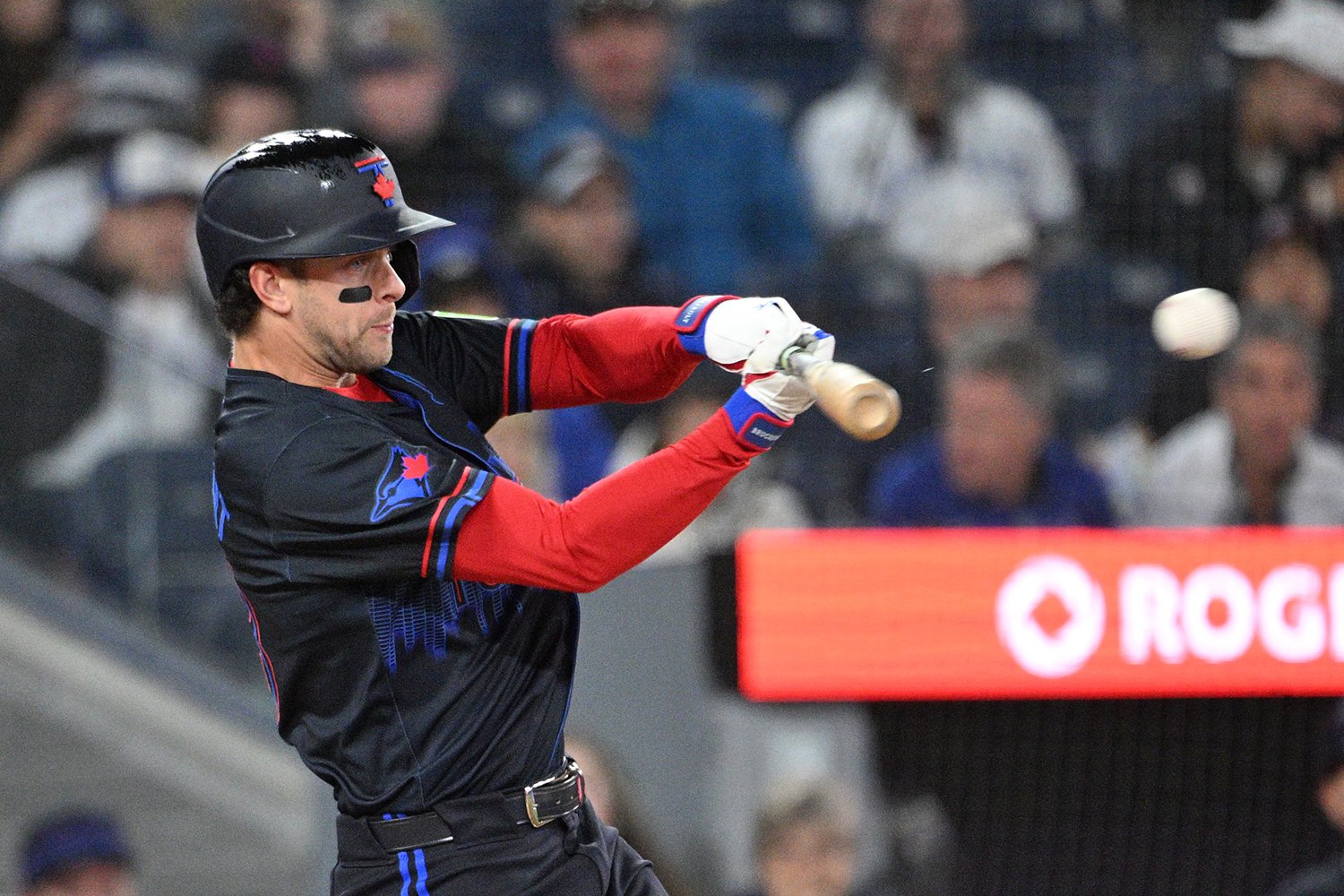 I don’t know else to say this, but Blue Jays third baseman Ernie Clement is a total freak. I mean that in a good way for the most part, but it’s undeniable. There is quite simply no one else in baseball like Clement. The 28-year-old infielder has a career wRC+ of 81, which means that he’s been 19% worse than the average hitter, but he possesses bat-to-ball skills that put him in the conversation with some of the game’s most talented hitters. That’s possible because Clement features a mish-mash of skills that don’t normally get stuffed into the same batter. It all starts with his odd idea of plate discipline. When he saw a pitch outside the strike zone in 2024, Clement swung 43.3% of the time. Among batters with at least 400 plate appearances, that was the third-highest rate in baseball. Quite simply, that is not where any batter wants to be. Chasing pitches out of the zone results in whiffs, strikeouts, and weak contact, and those are very bad things. However, on pitches inside the zone, Clement was more aggressive than average, but not particularly extreme. In 2024, the league as a whole swung at 67.7% of pitches in the strike zone. Clement’s 70.1% mark put him right around 95th place. For the most part, players who chase are just players who swing a lot, but not Clement. Here’s a scatterplot that shows the chase rate and the zone swing rate of every player who made at least 400 PAs in 2024. Clement is the red dot that's not near any of the other dots. Look how far below the trendline he is. Nobody who chases anywhere near as much as Clement does is as patient as he is when it comes to pitches over the plate. There’s a simple reason that Clement is unusual in this respect: This is not a recipe for success. Players who swing at bat pitches while letting the good ones go by don't last very long. So why is Clement still around, getting ready to play in his fifth big-league season? Because he can, to some extent, make this extremely suboptimal approach work. That brings us to Clement’s real superpower: he makes so, so much contact. He swings at more bad pitches than just about anybody, but he’s incredible at avoiding whiffs even on the most ill-advised swing. Baseball Savant breaks the strike zone down in to four categories: heart, shadow, chase, and waste. The heart zone is what it sounds like, pitches over the middle of the zone. The shadow zone is pitches within two inches of the edge. The chase zone is pitches that are outside the zone but close enough that batters might be tempted to swing at them. Lastly, the waste zone is pitches that are so far outside the zone that batters almost never swing at them. In 2024, no player put more pitches in the waste zone in play than Clement did. Only four players – each of whom saw over 1,000 pitches more than Clement – put more pitches in the chase zone into play than he did. Here he is homering on a pitch in the waste zone. It’s at his eyes! Here’s our second scatterplot. It once again features every batter with 400 PAs during the 2024 season, and once again Clement is the red dot way the hell away from everybody else in baseball. He’s all the way in the upper right in open defiance of the common-sense law decreeing that pitches that are hard to reach are also hard to hit. So Clement is a drastic outlier this season, but we can look further back. Here’s the same graph, but it shows every player season with at least 400 PAs dating all the way back to 2002. That’s 1,681 seasons. It’s a much noisier graph, but the trendline is even stronger, and Clement’s 2024 season still stands alone. Over the past 23 seasons, no one has ever chased as often while making as much contact as Clement did. This season was an enormous outlier. Clement didn’t just make a lot of contact, either. The 2024 season was the first in which Statcast started tracking squared-up rate, which uses pitch velocity, exit velocity, and bat speed to calculate how solidly the batter struck the ball. Clement’s 36.9% squared-up rate was the third highest in baseball, trailing only Luis Arráez (43.9%) and Steven Kwan (38.8%). He was just ahead of Mookie Betts (35.8%). That’s some incredible company. Clement truly has a gift for getting the barrel to the ball. If he ever figures out how to channel his aggression in a more productive manner Clement could easily find himself in the conversation with players like Arráez and Kwan. They’re not the best hitters in the world, but their incredible gifts for contact allow them to produce, year in and year out. Unfortunately, that’s an extremely tall order, because plate discipline is stubborn. Over the years, it has proven extremely hard to improve upon. If he wants to keep getting big league ABs, Clement will just have to keep making tons of solid contact, because almost nobody has ever gone from chasing as much as he did last season to showing excellent plate discipline the following year. Then again, maybe we shouldn’t count Clement out; if there’s one thing he’s good at, it’s doing things that previously seemed impossible.
 -
Clement's virtually unprecedented offensive profile makes him one of the oddest players in baseball. Will he be able to leverage it into success? I don’t know else to say this, but Blue Jays third baseman Ernie Clement is a total freak. I mean that in a good way for the most part, but it’s undeniable. There is quite simply no one else in baseball like Clement. The 28-year-old infielder has a career wRC+ of 81, which means that he’s been 19% worse than the average hitter, but he possesses bat-to-ball skills that put him in the conversation with some of the game’s most talented hitters. That’s possible because Clement features a mish-mash of skills that don’t normally get stuffed into the same batter. It all starts with his odd idea of plate discipline. When he saw a pitch outside the strike zone in 2024, Clement swung 43.3% of the time. Among batters with at least 400 plate appearances, that was the third-highest rate in baseball. Quite simply, that is not where any batter wants to be. Chasing pitches out of the zone results in whiffs, strikeouts, and weak contact, and those are very bad things. However, on pitches inside the zone, Clement was more aggressive than average, but not particularly extreme. In 2024, the league as a whole swung at 67.7% of pitches in the strike zone. Clement’s 70.1% mark put him right around 95th place. For the most part, players who chase are just players who swing a lot, but not Clement. Here’s a scatterplot that shows the chase rate and the zone swing rate of every player who made at least 400 PAs in 2024. Clement is the red dot that's not near any of the other dots. Look how far below the trendline he is. Nobody who chases anywhere near as much as Clement does is as patient as he is when it comes to pitches over the plate. There’s a simple reason that Clement is unusual in this respect: This is not a recipe for success. Players who swing at bat pitches while letting the good ones go by don't last very long. So why is Clement still around, getting ready to play in his fifth big-league season? Because he can, to some extent, make this extremely suboptimal approach work. That brings us to Clement’s real superpower: he makes so, so much contact. He swings at more bad pitches than just about anybody, but he’s incredible at avoiding whiffs even on the most ill-advised swing. Baseball Savant breaks the strike zone down in to four categories: heart, shadow, chase, and waste. The heart zone is what it sounds like, pitches over the middle of the zone. The shadow zone is pitches within two inches of the edge. The chase zone is pitches that are outside the zone but close enough that batters might be tempted to swing at them. Lastly, the waste zone is pitches that are so far outside the zone that batters almost never swing at them. In 2024, no player put more pitches in the waste zone in play than Clement did. Only four players – each of whom saw over 1,000 pitches more than Clement – put more pitches in the chase zone into play than he did. Here he is homering on a pitch in the waste zone. It’s at his eyes! Here’s our second scatterplot. It once again features every batter with 400 PAs during the 2024 season, and once again Clement is the red dot way the hell away from everybody else in baseball. He’s all the way in the upper right in open defiance of the common-sense law decreeing that pitches that are hard to reach are also hard to hit. So Clement is a drastic outlier this season, but we can look further back. Here’s the same graph, but it shows every player season with at least 400 PAs dating all the way back to 2002. That’s 1,681 seasons. It’s a much noisier graph, but the trendline is even stronger, and Clement’s 2024 season still stands alone. Over the past 23 seasons, no one has ever chased as often while making as much contact as Clement did. This season was an enormous outlier. Clement didn’t just make a lot of contact, either. The 2024 season was the first in which Statcast started tracking squared-up rate, which uses pitch velocity, exit velocity, and bat speed to calculate how solidly the batter struck the ball. Clement’s 36.9% squared-up rate was the third highest in baseball, trailing only Luis Arráez (43.9%) and Steven Kwan (38.8%). He was just ahead of Mookie Betts (35.8%). That’s some incredible company. Clement truly has a gift for getting the barrel to the ball. If he ever figures out how to channel his aggression in a more productive manner Clement could easily find himself in the conversation with players like Arráez and Kwan. They’re not the best hitters in the world, but their incredible gifts for contact allow them to produce, year in and year out. Unfortunately, that’s an extremely tall order, because plate discipline is stubborn. Over the years, it has proven extremely hard to improve upon. If he wants to keep getting big league ABs, Clement will just have to keep making tons of solid contact, because almost nobody has ever gone from chasing as much as he did last season to showing excellent plate discipline the following year. Then again, maybe we shouldn’t count Clement out; if there’s one thing he’s good at, it’s doing things that previously seemed impossible. View full article
-
The Blue Jays Have Made an Offer to Free Agent Anthony Santander
Davy Andrews posted an article in Blue Jays
 The Blue Jays haven't made a splash in free agency just yet, but we'll keep digging. Buried in an offseason round-up article by Ari Alexander of KPRC 2 in Houston, is this nugget: data:image/gif;base64,R0lGODlhAQABAPABAP///wAAACH5BAEKAAAALAAAAAABAAEAAAICRAEAOw== That’s a pretty big revelation: Not just that the Blue Jays are interested in Santander, but that they have made an offer. To be clear, none of this means that Santander is guaranteed to sign in Toronto, or even likely to do so. First, we should always take these rumors with a grain of salt. Second, the Blue Jays reportedly offered Corbin Burnes more money than he actually signed for in Arizona, and they were also in on Juan Soto, Max Fried, Clay Holmes, and Gleyber Torres with nothing to show for it. Still, there’s a big difference between reported interest and a reported offer. At FanGraphs, Ben Clemens ranked Santander 12th among the top 50 free agents, and predictions have him getting four or five years at an annual average value of $20 million. The 29-year-old Santander reportedly wants a five-year deal, which would take him into his age-34 season. So how would Santander fit with the Blue Jays if he were to sign in Toronto? One thing is certain: they’d love to have his power. Over the past three seasons, Santander has blasted 105 home runs while running a .234 isolated slugging percentage. Among all players who have made at least 1,000 plate appearances, those numbers rank sixth, and 19th, respectively. In 2024, the Blue Jays ranked 26th and 22nd in those categories. Here are all 44 of Santander’s 2024 home runs. That could be fun. Santander is coming off his first All-Star selection, his first Silver Slugger, and his first season earning MVP votes. Also, he led baseball with six homers off the Blue Jays in 2024. Since 2022, no one has hit more home runs off the Blue Jays than Santander. He and Aaron Judge are tied with 14. Maybe a deal would be worth it just to stop having to face the guy. Moreover, after a slow start to his career, Santander has been extremely consistent. He’s played in at least 110 games in each of the last four seasons, and at least 152 in each of the last three. He’s run a wRC+ above 119 (meaning his offensive performance was at least 19% better than a league-average hitter) in four of the last five seasons and each of the last three. He’s a switch-hitter who can hit both righties and lefties. Like many sluggers, he chases too much, but because he’s an excellent bad-ball hitter, he’s capable of running solid walk and strikeout rates. Inking him to a long-term deal means signing on for his decline years, and that’s a serious risk, but he’s starting from a great place and he’s been extremely consistent thus far. On the other hand, Santander is a particularly poor defender. He’d certainly DH at times, but putting him in the Toronto outfield would truly be destroying something beautiful. Since the team landed Kevin Kiermaier and George Springer, setting up an outfield with three legitimate center fielders, Toronto has had the best outfield defense in baseball. From 2023 to 2024, Statcast’s Fielding Run Value says the outfield has been worth an MLB-best 48 fielding runs. Sports Info Solutions’ Defensive Runs Saved metric has them at 93. That second figure is an astounding 35 runs ahead of the Brewers in second place — the Brewers and Red Sox were the only other teams to surpass 31 runs at all! With Kiermaier traded to the Dodgers and now retired, and with Springer entering his age-35 season, those defensive numbers are going to take a huge step back in 2025 no matter what; Daulton Varsho is an all-world defender, but he can’t do everything on his own. However, adding Santander would be adding insult to injury. Adding him to the team would cement Varsho as the full-time center fielder, while making sure that Nathan Lukes and Joey Loperfido remain depth pieces. The combination of those two skills, with the bat giving and the glove taking away, has made Santander an above-average regular, worth between 2.3 and 3.3 fWAR in each of the past three seasons. The Blue Jays could certainly use a two- or three-win outfielder, and it's hard to imagine someone a player with a more consistent track record. However, the risk of age-related decline is real, and Santander is not enough to put the team over the top in an AL East that is somehow even more competitive than usual. It would be great to see the Blue Jays add a competitive piece, but even after signing him, there would be plenty of work left to do.
 -
No one has victimized the Blue Jays with the home run ball more than Anthony Santander. How would the switch-hitting slugger look in blue? The Blue Jays haven't made a splash in free agency just yet, but we'll keep digging. Buried in an offseason round-up article by Ari Alexander of KPRC 2 in Houston, is this nugget: data:image/gif;base64,R0lGODlhAQABAPABAP///wAAACH5BAEKAAAALAAAAAABAAEAAAICRAEAOw== That’s a pretty big revelation: Not just that the Blue Jays are interested in Santander, but that they have made an offer. To be clear, none of this means that Santander is guaranteed to sign in Toronto, or even likely to do so. First, we should always take these rumors with a grain of salt. Second, the Blue Jays reportedly offered Corbin Burnes more money than he actually signed for in Arizona, and they were also in on Juan Soto, Max Fried, Clay Holmes, and Gleyber Torres with nothing to show for it. Still, there’s a big difference between reported interest and a reported offer. At FanGraphs, Ben Clemens ranked Santander 12th among the top 50 free agents, and predictions have him getting four or five years at an annual average value of $20 million. The 29-year-old Santander reportedly wants a five-year deal, which would take him into his age-34 season. So how would Santander fit with the Blue Jays if he were to sign in Toronto? One thing is certain: they’d love to have his power. Over the past three seasons, Santander has blasted 105 home runs while running a .234 isolated slugging percentage. Among all players who have made at least 1,000 plate appearances, those numbers rank sixth, and 19th, respectively. In 2024, the Blue Jays ranked 26th and 22nd in those categories. Here are all 44 of Santander’s 2024 home runs. That could be fun. Santander is coming off his first All-Star selection, his first Silver Slugger, and his first season earning MVP votes. Also, he led baseball with six homers off the Blue Jays in 2024. Since 2022, no one has hit more home runs off the Blue Jays than Santander. He and Aaron Judge are tied with 14. Maybe a deal would be worth it just to stop having to face the guy. Moreover, after a slow start to his career, Santander has been extremely consistent. He’s played in at least 110 games in each of the last four seasons, and at least 152 in each of the last three. He’s run a wRC+ above 119 (meaning his offensive performance was at least 19% better than a league-average hitter) in four of the last five seasons and each of the last three. He’s a switch-hitter who can hit both righties and lefties. Like many sluggers, he chases too much, but because he’s an excellent bad-ball hitter, he’s capable of running solid walk and strikeout rates. Inking him to a long-term deal means signing on for his decline years, and that’s a serious risk, but he’s starting from a great place and he’s been extremely consistent thus far. On the other hand, Santander is a particularly poor defender. He’d certainly DH at times, but putting him in the Toronto outfield would truly be destroying something beautiful. Since the team landed Kevin Kiermaier and George Springer, setting up an outfield with three legitimate center fielders, Toronto has had the best outfield defense in baseball. From 2023 to 2024, Statcast’s Fielding Run Value says the outfield has been worth an MLB-best 48 fielding runs. Sports Info Solutions’ Defensive Runs Saved metric has them at 93. That second figure is an astounding 35 runs ahead of the Brewers in second place — the Brewers and Red Sox were the only other teams to surpass 31 runs at all! With Kiermaier traded to the Dodgers and now retired, and with Springer entering his age-35 season, those defensive numbers are going to take a huge step back in 2025 no matter what; Daulton Varsho is an all-world defender, but he can’t do everything on his own. However, adding Santander would be adding insult to injury. Adding him to the team would cement Varsho as the full-time center fielder, while making sure that Nathan Lukes and Joey Loperfido remain depth pieces. The combination of those two skills, with the bat giving and the glove taking away, has made Santander an above-average regular, worth between 2.3 and 3.3 fWAR in each of the past three seasons. The Blue Jays could certainly use a two- or three-win outfielder, and it's hard to imagine someone a player with a more consistent track record. However, the risk of age-related decline is real, and Santander is not enough to put the team over the top in an AL East that is somehow even more competitive than usual. It would be great to see the Blue Jays add a competitive piece, but even after signing him, there would be plenty of work left to do. View full article
