Davy Andrews
-
Posts
106 -
Joined
-
Last visited
Content Type
Profiles
Toronto Blue Jays Videos
2026 Toronto Blue Jays Top Prospects Ranking
Toronto Blue Jays Free Agent & Trade Rumors, Notes, & Tidbits
Guides & Resources
2025 Toronto Blue Jays Draft Pick Tracker
News
2026 Toronto Blue Jays Draft Tracker: Picks & Bonuses
Forums
Blogs
Events
Store
Downloads
Gallery
Everything posted by Davy Andrews
-
 Yup, you are both right. Straw had himself a game last night and it changed a bunch of these numbers. I will have to think about whether it changes my feelings about the sustainability of his start. I've also noticed the high xwOBA and that he's making more contact than he ever did before, and both are at the very least intriguing. We should have an article about his home run up on the site tomorrow.
 -
Myles Straw Has Given More Than the Blue Jays Could Have Expected
Davy Andrews posted an article in Blue Jays
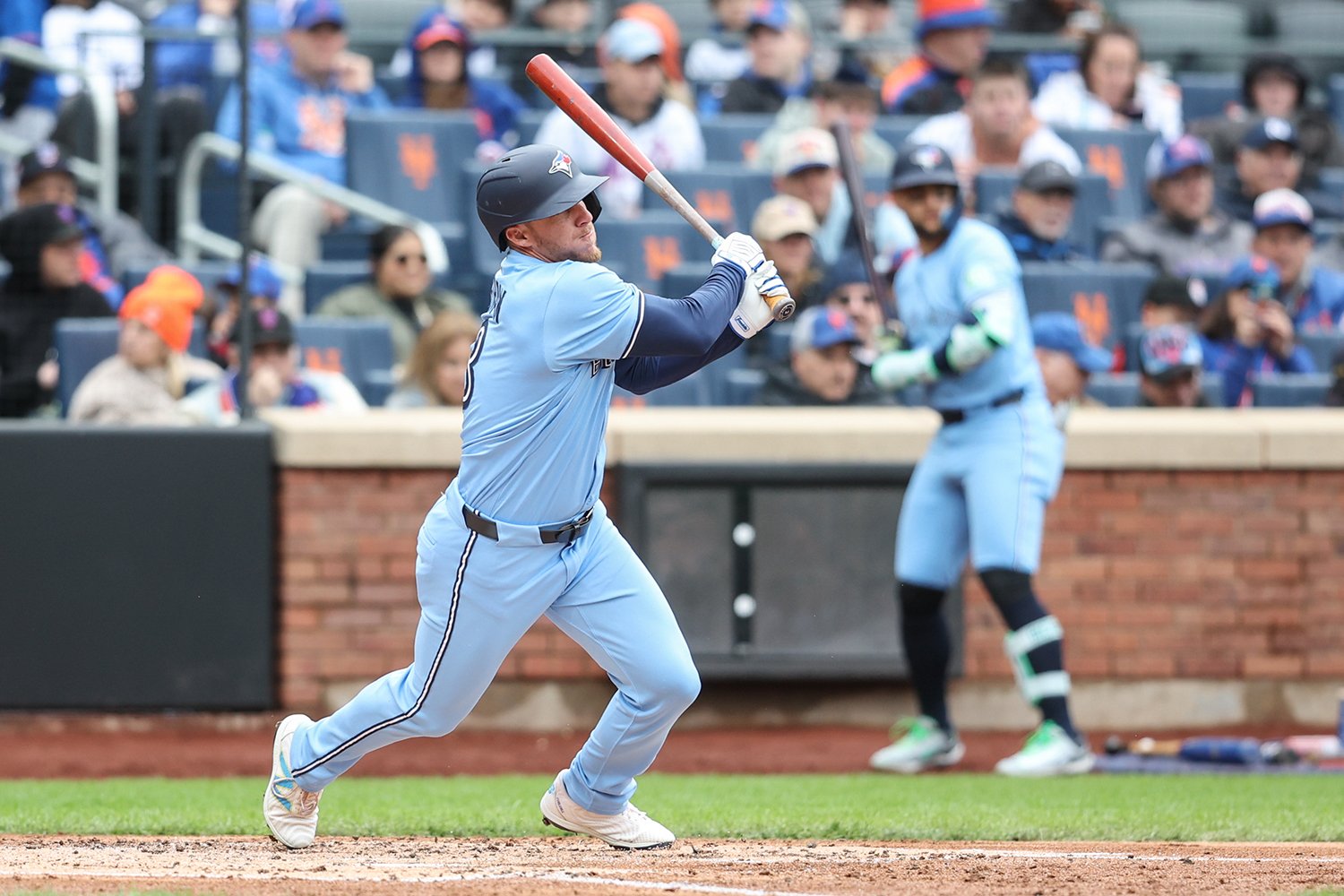 It’s still early in the season. Lots of player gets off to hot starts before cratering, and Myles Straw has only played in 11 games. I can give you a dozen reasons why he won’t keep this up for the entirety of the season – and I will – but let’s be clear about something: Myles Straw has been excellent so far this season. He’s playing decent center field defense, running the bases, and batting .375 with a 153 wRC+. In all, he’s put up 0.3 fWAR, tied for fourth-best among the team’s position players. As the graph below demonstrates, it’s not at all an exaggeration to say that Straw is in the midst of one of the best offensive stretches of his entire career. Alright. Now that we’ve established that Straw is hitting great, this is the part of the article where I explain that it’s largely batted ball luck, smoke and mirrors, or some other sort of sorcery. However, that’s not going to be the end of the article. I’m not here to bring you down, so let me just get through these two paragraphs and happy days will be here again, I promise. Here we go. Myles Straw has not suddenly turned into a better player. His defense, which was the only thing keeping him in the majors earlier in his career, has graded out as merely average. If he can’t keep playing above-average defense, it’s hard to justify keeping him on a big league roster at all. Straw is running a .429 BABIP, which puts him in the 94th percentile. That’s not going to last. His swing decisions haven’t gotten better; in fact, he’s running the lowest in-zone swing rate of his entire career. Straw hasn’t magically started hitting the ball hard. He’s arguably hitting it softer than ever. Straw has a 156 wRC+, but according to Baseball Prospectus’s Deserved Runs Creates Plus, which evaluates a hitter’s deserved performance rather than their actual outcomes, he’s at 89, pretty much where he’s been his entire career. Straw only has two extra-base hits, both of them doubles, and one was literally in a fielder’s glove before falling out. Okay, so we absolutely should not expect Straw to keep hitting like this going forward. Why is this article going to end on a happy note, you ask? Because even though we shouldn’t radically adjust our expectations of a player when they go on a BABIP-fueled hot streak, the team still gets to enjoy all that production. Straw may have had some good fortune, but he really has been a big part of the great stretch of baseball that has the Blue Jays in first place as of Monday morning. His production may dry up in the future, but those 0.3 fWAR and nine wins are already in the bank, and reinforcements will be coming soon. Anthony Santander hit a big homer in Baltimore on Sunday, which could be a sign that he’s about to turn it on at the plate. Daulton Varsho is heading to Triple-A to begin a rehab assignment, which means that the Blue Jays won’t be as dependent on Straw anymore. The team needed some solid center field production while Varsho was out, and fluky or not, Straw gave them significantly more than that. The American League East is shaping up to be a tight race, and injuries always play a huge part in determining tight races. Varsho’s absence is a big one, but Straw has helped the team weather it while playing the best baseball in the division. Once Varsho returns, he’ll get to return to the role of defensive and baserunning specialist that suits him better in the first place. The Blue Jays have asked a lot of him over the first few weeks of the season, and he’s delivered and then some. Once Varsho returns, he will be able to keep helping the team, and will be in an even better position to succeed.
 -
No matter the reasons behind his excellent play early in the season, Myles Straw has been a difference-maker for the Blue Jays despite his stopgap role. It’s still early in the season. Lots of player gets off to hot starts before cratering, and Myles Straw has only played in 11 games. I can give you a dozen reasons why he won’t keep this up for the entirety of the season – and I will – but let’s be clear about something: Myles Straw has been excellent so far this season. He’s playing decent center field defense, running the bases, and batting .375 with a 153 wRC+. In all, he’s put up 0.3 fWAR, tied for fourth-best among the team’s position players. As the graph below demonstrates, it’s not at all an exaggeration to say that Straw is in the midst of one of the best offensive stretches of his entire career. Alright. Now that we’ve established that Straw is hitting great, this is the part of the article where I explain that it’s largely batted ball luck, smoke and mirrors, or some other sort of sorcery. However, that’s not going to be the end of the article. I’m not here to bring you down, so let me just get through these two paragraphs and happy days will be here again, I promise. Here we go. Myles Straw has not suddenly turned into a better player. His defense, which was the only thing keeping him in the majors earlier in his career, has graded out as merely average. If he can’t keep playing above-average defense, it’s hard to justify keeping him on a big league roster at all. Straw is running a .429 BABIP, which puts him in the 94th percentile. That’s not going to last. His swing decisions haven’t gotten better; in fact, he’s running the lowest in-zone swing rate of his entire career. Straw hasn’t magically started hitting the ball hard. He’s arguably hitting it softer than ever. Straw has a 156 wRC+, but according to Baseball Prospectus’s Deserved Runs Creates Plus, which evaluates a hitter’s deserved performance rather than their actual outcomes, he’s at 89, pretty much where he’s been his entire career. Straw only has two extra-base hits, both of them doubles, and one was literally in a fielder’s glove before falling out. Okay, so we absolutely should not expect Straw to keep hitting like this going forward. Why is this article going to end on a happy note, you ask? Because even though we shouldn’t radically adjust our expectations of a player when they go on a BABIP-fueled hot streak, the team still gets to enjoy all that production. Straw may have had some good fortune, but he really has been a big part of the great stretch of baseball that has the Blue Jays in first place as of Monday morning. His production may dry up in the future, but those 0.3 fWAR and nine wins are already in the bank, and reinforcements will be coming soon. Anthony Santander hit a big homer in Baltimore on Sunday, which could be a sign that he’s about to turn it on at the plate. Daulton Varsho is heading to Triple-A to begin a rehab assignment, which means that the Blue Jays won’t be as dependent on Straw anymore. The team needed some solid center field production while Varsho was out, and fluky or not, Straw gave them significantly more than that. The American League East is shaping up to be a tight race, and injuries always play a huge part in determining tight races. Varsho’s absence is a big one, but Straw has helped the team weather it while playing the best baseball in the division. Once Varsho returns, he’ll get to return to the role of defensive and baserunning specialist that suits him better in the first place. The Blue Jays have asked a lot of him over the first few weeks of the season, and he’s delivered and then some. Once Varsho returns, he will be able to keep helping the team, and will be in an even better position to succeed. View full article
-
Kevin Gausman has been pitching lights-out despite not missing bats. How is he doing it, and will he be able to keep going it? Please allow me to drag you back down to this date one year ago. At that point, Kevin Gausman had made three starts and pitched just 9 1/3 innings. He had an 11.57 ERA, and lest you think he’d just gotten unlucky, his FIP was 6.17. He was bad, is what I’m trying to say, and it would take him a while to turn it around. Let’s return to 2025 now. Kevin Gausman has made three starts and he’s pitched 19 1/3 innings, 10 more than he had at this point last season. In his last start on Wednesday, he tore through Red Sox, allowing one unearned run over eight innings, striking out 10 and allowing just four hits and no walks. He’s 1-0. He's got a 2.33 ERA and 3.37 FIP. The skies are clearing and the birds are chirping and so on. So is Kevin Gausman back? It really, really depends who you ask. For starters, that 3.37 FIP says that he’s probably been a bit lucky so far, and his 3.98 xFIP says so even louder. So much of baseball writing, especially early in the season, is just trying to figure out what’s actually going on. The sample sizes are small. The variances are huge. Gausman’s fastball velocity ticked back up in his first two starts, but it dropped way down on Wednesday. Were the first two games a mirage, or was it just that the third game took place on a really cold night in Boston? Nobody else’s fastball velocity was way down that night. Some things just aren’t knowable. All I can do right now is take you through the good and the bad. One of Gausman’s big problems last year was that he stopped missing bats. In fact, his whiff rate has fallen in every season dating back to 2020. Season Whiff% Percentile 2020 33.1 84 2021 31.4 83 2022 29.4 75 2023 28.9 70 2024 23.4 33 2025 21.3 9 That’s right, Gausman has been pitching so well this season despite the fact that his whiff rate is worse than 91% of the other pitchers in baseball. However, his 20.6% strikeout rate isn’t disastrous. It’s not that far below the league average. So why is his strikeout rate in the 41st percentile rather than the first percentile if he’s not missing bats? Is he getting lots of called strikes? Nope. His 12.3% called strike rate is the lowest of his entire career. But you know what he is doing? Kevin Gausman is leading all pitchers with a 25.6% foul rate. He’s not missing bats, and he’s not earning called strikes, but he is making people foul it off a lot. His 72.1% first strike rate is also among the best in baseball, which shouldn’t be surprising, since his 22.1% foul rate on those pitches is second in all of baseball (respect to Boston’s Richard Fitts’ who’s sitting just below 33% on those pitches). How is Gausman earning so many foul balls? It’s mostly about his four-seamer. The pitch has added 1.6 inches of rise since last season, and that has made all of the difference. Batters have fouled off 29.7% of Gausman’s four-seamers this season. That’s 46 of them, the second-most of any pitch in baseball, behind Hunter Greene’s outstanding four-seamer. I watched all 46 of those fouls (and you can too if you’re messed up like me). The batters were underneath 45 of them, and late on most of them as well. (On the one foul where the batter wasn't underneath the pitch, they were just barely on top of it, and the pitch resulted in a foul tip into the catcher's mitt.) The uptick and velocity and rise is allowing the four-seamer to get on top of hitters, but as Lance Brozdowski noted on Friday, it's also about the location. Last season, Gausman attacked right-handed batters middle-up with the four-seamer, but this season, he's absolutely focused on jamming them high and inside with the pitch. It’s not enough to make them swing and miss, but enough to keep them from putting the ball in play, which lets Gausman get ahead in the count, which helps him keep runs off the board. Similarly, his splitter isn’t getting as many whiffs as it used to, but you know what sits right between whiffing and putting the ball in play? That’s right, a foul. No offspeed pitch in baseball has earned as many fouls as the 20 Gausman’s splitter has earned. So Gausman is struggling with both whiffs and called strikes, but all those fouls mean that he's earning a strike (or a foul with two strikes) on 68.2% of his pitches, and that puts him in the 81st percentile. He's still throwing a whole lot of strikes. The real question is whether Gausman can keep this up, and I am not at all certain. He’s is running a .143 BABIP right now, and there’s no way on earth that’s going to last. We should expect that number to double at least. He’s very definitely due for some regression, even if he manages to keep up all these foul balls. And I’m not sure he will keep earning all these fouls. Batters are more prepared than ever these days, with Trajekt pitching machines that mimic a pitcher’s exact offerings. They’re going to catch on about the increased vertical break and the up-and-in location and they'll train against it. At some point, they might not be swinging just under those pitches anymore. If they're not, look out. Baseball Prospectus’s Deserved Runs Allowed metric thinks that Gausman should be running a 5.77 ERA right now. It sees the lack of whiffs, the lack of strikeouts, and the good fortune on BABIP and home runs, and it thinks Gausman is due for some bad news. On the other hand, DRA doesn’t factor in Gausman’s raw stuff, and the advanced stuff models like Stuff+, StuffPro, TJStuff, and PitchingBot adore him right now. Stuff+ gives his four-seamer a 125 grade, putting it in the top 10 among starting pitchers. That really does give me hope me that this is sustainable, and he's combining that stuff with excellent command. Maybe he'll keep up all those fouls, or maybe he'll stop being so precise with the the location, or maybe some of them will start turning into strikes. I really don't know what's going to happen here. Gausman seems to be walking a very particular tightrope. View full article
-
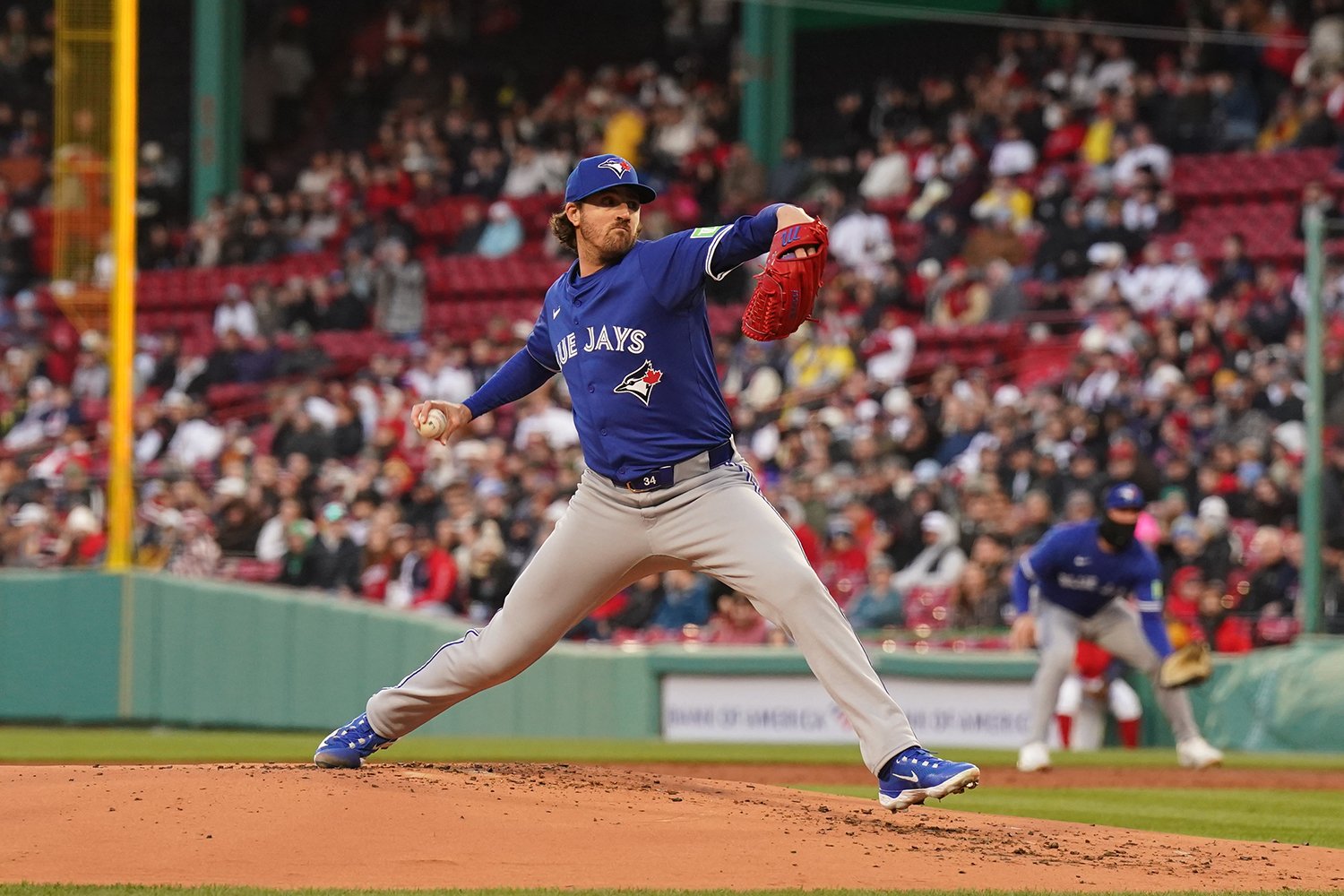 Please allow me to drag you back down to this date one year ago. At that point, Kevin Gausman had made three starts and pitched just 9 1/3 innings. He had an 11.57 ERA, and lest you think he’d just gotten unlucky, his FIP was 6.17. He was bad, is what I’m trying to say, and it would take him a while to turn it around. Let’s return to 2025 now. Kevin Gausman has made three starts and he’s pitched 19 1/3 innings, 10 more than he had at this point last season. In his last start on Wednesday, he tore through Red Sox, allowing one unearned run over eight innings, striking out 10 and allowing just four hits and no walks. He’s 1-0. He's got a 2.33 ERA and 3.37 FIP. The skies are clearing and the birds are chirping and so on. So is Kevin Gausman back? It really, really depends who you ask. For starters, that 3.37 FIP says that he’s probably been a bit lucky so far, and his 3.98 xFIP says so even louder. So much of baseball writing, especially early in the season, is just trying to figure out what’s actually going on. The sample sizes are small. The variances are huge. Gausman’s fastball velocity ticked back up in his first two starts, but it dropped way down on Wednesday. Were the first two games a mirage, or was it just that the third game took place on a really cold night in Boston? Nobody else’s fastball velocity was way down that night. Some things just aren’t knowable. All I can do right now is take you through the good and the bad. One of Gausman’s big problems last year was that he stopped missing bats. In fact, his whiff rate has fallen in every season dating back to 2020. Season Whiff% Percentile 2020 33.1 84 2021 31.4 83 2022 29.4 75 2023 28.9 70 2024 23.4 33 2025 21.3 9 That’s right, Gausman has been pitching so well this season despite the fact that his whiff rate is worse than 91% of the other pitchers in baseball. However, his 20.6% strikeout rate isn’t disastrous. It’s not that far below the league average. So why is his strikeout rate in the 41st percentile rather than the first percentile if he’s not missing bats? Is he getting lots of called strikes? Nope. His 12.3% called strike rate is the lowest of his entire career. But you know what he is doing? Kevin Gausman is leading all pitchers with a 25.6% foul rate. He’s not missing bats, and he’s not earning called strikes, but he is making people foul it off a lot. His 72.1% first strike rate is also among the best in baseball, which shouldn’t be surprising, since his 22.1% foul rate on those pitches is second in all of baseball (respect to Boston’s Richard Fitts’ who’s sitting just below 33% on those pitches). How is Gausman earning so many foul balls? It’s mostly about his four-seamer. The pitch has added 1.6 inches of rise since last season, and that has made all of the difference. Batters have fouled off 29.7% of Gausman’s four-seamers this season. That’s 46 of them, the second-most of any pitch in baseball, behind Hunter Greene’s outstanding four-seamer. I watched all 46 of those fouls (and you can too if you’re messed up like me). The batters were underneath 45 of them, and late on most of them as well. (On the one foul where the batter wasn't underneath the pitch, they were just barely on top of it, and the pitch resulted in a foul tip into the catcher's mitt.) The uptick and velocity and rise is allowing the four-seamer to get on top of hitters, but as Lance Brozdowski noted on Friday, it's also about the location. Last season, Gausman attacked right-handed batters middle-up with the four-seamer, but this season, he's absolutely focused on jamming them high and inside with the pitch. It’s not enough to make them swing and miss, but enough to keep them from putting the ball in play, which lets Gausman get ahead in the count, which helps him keep runs off the board. Similarly, his splitter isn’t getting as many whiffs as it used to, but you know what sits right between whiffing and putting the ball in play? That’s right, a foul. No offspeed pitch in baseball has earned as many fouls as the 20 Gausman’s splitter has earned. So Gausman is struggling with both whiffs and called strikes, but all those fouls mean that he's earning a strike (or a foul with two strikes) on 68.2% of his pitches, and that puts him in the 81st percentile. He's still throwing a whole lot of strikes. The real question is whether Gausman can keep this up, and I am not at all certain. He’s is running a .143 BABIP right now, and there’s no way on earth that’s going to last. We should expect that number to double at least. He’s very definitely due for some regression, even if he manages to keep up all these foul balls. And I’m not sure he will keep earning all these fouls. Batters are more prepared than ever these days, with Trajekt pitching machines that mimic a pitcher’s exact offerings. They’re going to catch on about the increased vertical break and the up-and-in location and they'll train against it. At some point, they might not be swinging just under those pitches anymore. If they're not, look out. Baseball Prospectus’s Deserved Runs Allowed metric thinks that Gausman should be running a 5.77 ERA right now. It sees the lack of whiffs, the lack of strikeouts, and the good fortune on BABIP and home runs, and it thinks Gausman is due for some bad news. On the other hand, DRA doesn’t factor in Gausman’s raw stuff, and the advanced stuff models like Stuff+, StuffPro, TJStuff, and PitchingBot adore him right now. Stuff+ gives his four-seamer a 125 grade, putting it in the top 10 among starting pitchers. That really does give me hope me that this is sustainable, and he's combining that stuff with excellent command. Maybe he'll keep up all those fouls, or maybe he'll stop being so precise with the the location, or maybe some of them will start turning into strikes. I really don't know what's going to happen here. Gausman seems to be walking a very particular tightrope.
 -
 During the last week of spring training, I expressed some serious concerns about how George Springer would play this season. “He’s 35,” I wrote, “and it wouldn’t be crazy to see him put up one more three-win campaign. But if he doesn’t, if he gets off to a scary, slow start, the Blue Jays will have to act.” As it turns out, George Springer is not off to a scary, slow start. In fact, as I write this on Thursday morning, his 256 wRC+ is the best among all qualified players. After two weeks of games, George Springer has been the best hitter in baseball and I should probably consider shutting up. Like anyone who’s off to this crazy a start, Springer has definitely benefitted from some luck. Not only is his .625 BABIP the highest in baseball, it’s more than 100 points higher than Will Smith in second place. If his BABIP were to get cut in half, it would still be on the higher side! However, his .445 xwOBA is still 15th-highest among all qualified players. So maybe he doesn’t deserve to be the absolute best hitter in baseball, but he’s still right near the top. He’s running absurd exit velocity numbers and a 55.6% hard-hit rate, and because he’s lifting the ball in the air too, his barrel rate is right at the top of the league. Obviously, it’s very early in the season. We’re only talking about 44 plate appearances and 27 batted balls. Nobody in baseball is going to keep running a 256 wRC+. However, there’s more going on with Springer right now, and I’m honestly not sure what it means. The first thing I did was check whether he’s gone on a run like this in recent years. Is he doing something new that should change our perception of his abilities, or is this just part of the package and we just happen to be catching him at a good time? Here’s his rolling hard-hit rate over the past five seasons, courtesy of FanGraphs. Ok, so this isn’t anything new. Don’t get me wrong; it’s a great sign that Springer came out of the gate mashing the ball. However, the graph makes it clear that he’s had a stretch that was as good or better than this in each of the last four seasons. We’re seeing him at his best, but we probably shouldn’t adjust our expectations about how much hard contact he’s capable of making. I won’t make you look at another chart, but I pulled the same graph for groundball rate. Once again, we’re not seeing Springer reach a new plane of existence when it comes to launch angle. He’s had a stretch where he lifted the ball like this in all of his recent seasons. Here's where things get weird. When a player is hitting the ball harder like this, you would naturally expect them to be swinging harder. Springer isn’t. In fact, his bat speed has fallen from 71.9 mph last year, which put him in the 52nd percentile down to 70 mph this year, which puts him in the 22nd percentile. He went from average bat speed to the bottom quartile of the league while hitting the ball much harder. Baseball Savant lets us break things down further. It's not just that some soft swings are skewing the average. The distribution graph above shows that Springer’s median swing is softer too. When Springer really swings it, he’s not swinging as hard. So why is the ball jumping off his bat? It’s time to look at the other aspect of Statcast’s new bat tracking metrics. Springer’s squared-up rate has skyrocketed from the 55th percentile to the 84th. I’ve broken down the whole formula here, but in case you’re not familiar, squared-up rate shows how often a player hits the ball flush, and it’s calculated on a sliding scale, depending on the velocity of the bat and ball. So you don’t have to have great bat speed to have a great squared-up rate. In fact, it usually works the other way. The players who lead the league in squared-up rate are always bat-control guys with slow swings and low exit velocities, most notably Steven Kwan and Luis Arráez. Springer has somehow traded a bunch of bat speed for a bunch of flush contact, and the result has been a huge increase in exit velocity. Bat tracking is still very new, but to put it plainly, that’s not something we’ve seen before. I’m not at all certain that it will last, but you can bet I’ll be watching.
 -
That's not how things usually work. During the last week of spring training, I expressed some serious concerns about how George Springer would play this season. “He’s 35,” I wrote, “and it wouldn’t be crazy to see him put up one more three-win campaign. But if he doesn’t, if he gets off to a scary, slow start, the Blue Jays will have to act.” As it turns out, George Springer is not off to a scary, slow start. In fact, as I write this on Thursday morning, his 256 wRC+ is the best among all qualified players. After two weeks of games, George Springer has been the best hitter in baseball and I should probably consider shutting up. Like anyone who’s off to this crazy a start, Springer has definitely benefitted from some luck. Not only is his .625 BABIP the highest in baseball, it’s more than 100 points higher than Will Smith in second place. If his BABIP were to get cut in half, it would still be on the higher side! However, his .445 xwOBA is still 15th-highest among all qualified players. So maybe he doesn’t deserve to be the absolute best hitter in baseball, but he’s still right near the top. He’s running absurd exit velocity numbers and a 55.6% hard-hit rate, and because he’s lifting the ball in the air too, his barrel rate is right at the top of the league. Obviously, it’s very early in the season. We’re only talking about 44 plate appearances and 27 batted balls. Nobody in baseball is going to keep running a 256 wRC+. However, there’s more going on with Springer right now, and I’m honestly not sure what it means. The first thing I did was check whether he’s gone on a run like this in recent years. Is he doing something new that should change our perception of his abilities, or is this just part of the package and we just happen to be catching him at a good time? Here’s his rolling hard-hit rate over the past five seasons, courtesy of FanGraphs. Ok, so this isn’t anything new. Don’t get me wrong; it’s a great sign that Springer came out of the gate mashing the ball. However, the graph makes it clear that he’s had a stretch that was as good or better than this in each of the last four seasons. We’re seeing him at his best, but we probably shouldn’t adjust our expectations about how much hard contact he’s capable of making. I won’t make you look at another chart, but I pulled the same graph for groundball rate. Once again, we’re not seeing Springer reach a new plane of existence when it comes to launch angle. He’s had a stretch where he lifted the ball like this in all of his recent seasons. Here's where things get weird. When a player is hitting the ball harder like this, you would naturally expect them to be swinging harder. Springer isn’t. In fact, his bat speed has fallen from 71.9 mph last year, which put him in the 52nd percentile down to 70 mph this year, which puts him in the 22nd percentile. He went from average bat speed to the bottom quartile of the league while hitting the ball much harder. Baseball Savant lets us break things down further. It's not just that some soft swings are skewing the average. The distribution graph above shows that Springer’s median swing is softer too. When Springer really swings it, he’s not swinging as hard. So why is the ball jumping off his bat? It’s time to look at the other aspect of Statcast’s new bat tracking metrics. Springer’s squared-up rate has skyrocketed from the 55th percentile to the 84th. I’ve broken down the whole formula here, but in case you’re not familiar, squared-up rate shows how often a player hits the ball flush, and it’s calculated on a sliding scale, depending on the velocity of the bat and ball. So you don’t have to have great bat speed to have a great squared-up rate. In fact, it usually works the other way. The players who lead the league in squared-up rate are always bat-control guys with slow swings and low exit velocities, most notably Steven Kwan and Luis Arráez. Springer has somehow traded a bunch of bat speed for a bunch of flush contact, and the result has been a huge increase in exit velocity. Bat tracking is still very new, but to put it plainly, that’s not something we’ve seen before. I’m not at all certain that it will last, but you can bet I’ll be watching. View full article
-
Bo Bichette is a star. He deserves a uniform that fits properly. It's Wednesday, and that means it's time to get really serious. This is no time for the Friday sillies. Let's dig in. Dug in? Ok. Did you know that you can buy Bo Bichette socks? You surely can. In fact, you can buy multiple different kinds of Bo Bichette socks. A quick search brought me to these two objects of beauty. Actually, I suppose this is four objects of beauty (and eight if you count the weird severed manakin legs that must be lurking inside these glorious cerulean socks). Point is, they’re beautiful. They’re a feast for the eyes and the feet. What could be better than Bo Bichette wearing Bo Bishades on your Bo Bishins? Oh, and I also found these bad boys, but tragically, it doesn't look like you can buy them anymore. Now that we’ve enjoyed ourselves, it’s time to move on to our real topic: not Bo Bichette on socks, but rather, socks on Bo Bichette. You see, I’ve noticed something that bothers me about Bichette’s socks. The problem isn’t always apparent. Bichette usually wears his pant legs high in old-school fashion, but not always. So far this season, he’s worn them high in every game but one. He wore them at half-mast last Tuesday, presumably as a solemn acknowledgment for some sort of national tragedy. But in every other game, Bichette has proudly kept it classic, wearing his pant legs not just at his knees, but well above them. They're basically breeches. He’s not just old-school, he’s OG. But here’s the thing: Bichette seems to be so old school that the Blue Jays can’t keep up with him. Watch this clip all the way to the end if you don’t mind. At the end, Bichette will hang out on second base and you’ll get a good view of his gams. Just in case you can't watch a video right now, allow me zoom way in for you. There are Bichette’s pants, stopping a couple inches above his knees. But his socks don’t even make it up to the knees. In fact, they're well below his knees. There’s a big, slightly different-blue gap. That blue gap is clearly a pair of tights or performance compression pants. Now, because Rogers Centre has a turf field and turf is notorious for tearing up knees when a player slides, Bichette would probably have to wear tights under his socks anyway. But he wouldn’t have to match the color perfectly, and when he’s playing on grass on the road, he wouldn’t have to wear them at all. They're probably confining, and Bichette, like all of us, deserves to be free. And in case you were wondering, he takes the color matching seriously. Here he is on March 28, when the Jays were wearing their City Connect uniforms. Red socks, red tights underneath. So here’s the question: Why can’t Bichette find socks that go up to his knees? I have trouble believing that the Blue Jays wouldn’t be able to find taller socks. Bichette’s not enormous. He’s 5-foot-11. By big league standards, that practically makes him a shrimp! But as it turns out, that's just the beginning. If you look closely, you’ll see that George Springer, another high socks champion, often has the same problem. It’s just harder to see, because Springer prefers to wear socks that are a very dark navy blue. There’s also Ernie Clement, Andrés Giménez, Chad Green, Alejandro Kirk – it’s an epidemic of exposed knees! You have to imagine that given their druthers, these players would rather just be able to wear socks that go all the way up to their charmingly short pants. I want them to be happy, so here’s what I propose: collective action. I call on Bichette, Springer, Giménez, and all the rest to ditch the tights. Keep proudly wearing your socks up high and your pant legs even higher, but play with exposed knees. Get some eyeballs on this situation. People would notice the gap. They would rally around you. Would it put you at risk of some pretty bad turf burn? Yes it would. But what better way to draw attention to these shameful working conditions than the blood of martyrs? As with so many things, it'll be a battle, but one that's worth fighting. As for the Blue Jays, you’re lucky to have so many cool players who wear their pants up high like old-school heroes. Please extend Bichette’s socks (and maybe his contract if you get around to it). View full article
-
Attention Toronto Blue Jays: Please Find Higher Socks for Bo Bichette
Davy Andrews posted an article in Blue Jays
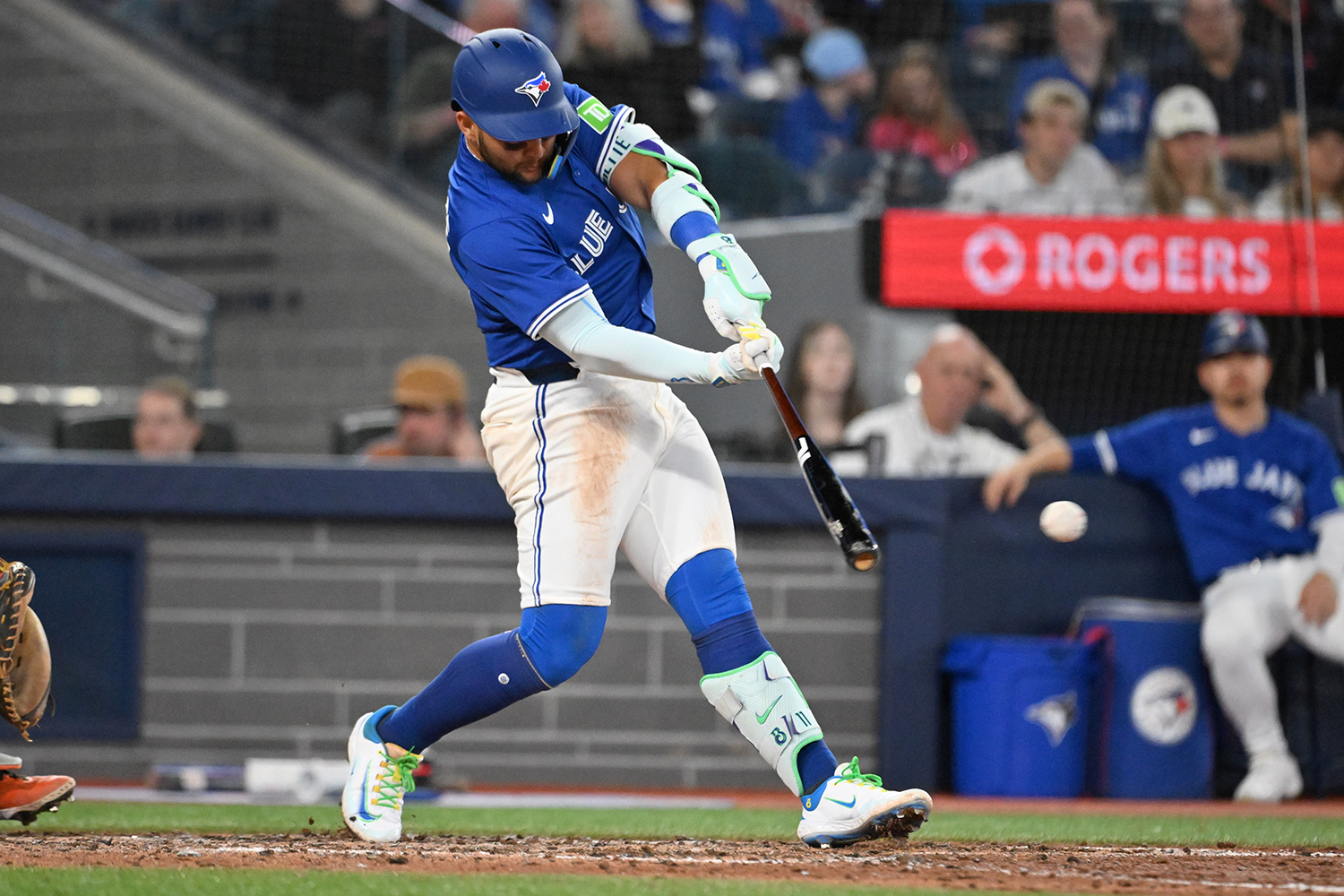 It's Wednesday, and that means it's time to get really serious. This is no time for the Friday sillies. Let's dig in. Dug in? Ok. Did you know that you can buy Bo Bichette socks? You surely can. In fact, you can buy multiple different kinds of Bo Bichette socks. A quick search brought me to these two objects of beauty. Actually, I suppose this is four objects of beauty (and eight if you count the weird severed manakin legs that must be lurking inside these glorious cerulean socks). Point is, they’re beautiful. They’re a feast for the eyes and the feet. What could be better than Bo Bichette wearing Bo Bishades on your Bo Bishins? Oh, and I also found these bad boys, but tragically, it doesn't look like you can buy them anymore. Now that we’ve enjoyed ourselves, it’s time to move on to our real topic: not Bo Bichette on socks, but rather, socks on Bo Bichette. You see, I’ve noticed something that bothers me about Bichette’s socks. The problem isn’t always apparent. Bichette usually wears his pant legs high in old-school fashion, but not always. So far this season, he’s worn them high in every game but one. He wore them at half-mast last Tuesday, presumably as a solemn acknowledgment for some sort of national tragedy. But in every other game, Bichette has proudly kept it classic, wearing his pant legs not just at his knees, but well above them. They're basically breeches. He’s not just old-school, he’s OG. But here’s the thing: Bichette seems to be so old school that the Blue Jays can’t keep up with him. Watch this clip all the way to the end if you don’t mind. At the end, Bichette will hang out on second base and you’ll get a good view of his gams. Just in case you can't watch a video right now, allow me zoom way in for you. There are Bichette’s pants, stopping a couple inches above his knees. But his socks don’t even make it up to the knees. In fact, they're well below his knees. There’s a big, slightly different-blue gap. That blue gap is clearly a pair of tights or performance compression pants. Now, because Rogers Centre has a turf field and turf is notorious for tearing up knees when a player slides, Bichette would probably have to wear tights under his socks anyway. But he wouldn’t have to match the color perfectly, and when he’s playing on grass on the road, he wouldn’t have to wear them at all. They're probably confining, and Bichette, like all of us, deserves to be free. And in case you were wondering, he takes the color matching seriously. Here he is on March 28, when the Jays were wearing their City Connect uniforms. Red socks, red tights underneath. So here’s the question: Why can’t Bichette find socks that go up to his knees? I have trouble believing that the Blue Jays wouldn’t be able to find taller socks. Bichette’s not enormous. He’s 5-foot-11. By big league standards, that practically makes him a shrimp! But as it turns out, that's just the beginning. If you look closely, you’ll see that George Springer, another high socks champion, often has the same problem. It’s just harder to see, because Springer prefers to wear socks that are a very dark navy blue. There’s also Ernie Clement, Andrés Giménez, Chad Green, Alejandro Kirk – it’s an epidemic of exposed knees! You have to imagine that given their druthers, these players would rather just be able to wear socks that go all the way up to their charmingly short pants. I want them to be happy, so here’s what I propose: collective action. I call on Bichette, Springer, Giménez, and all the rest to ditch the tights. Keep proudly wearing your socks up high and your pant legs even higher, but play with exposed knees. Get some eyeballs on this situation. People would notice the gap. They would rally around you. Would it put you at risk of some pretty bad turf burn? Yes it would. But what better way to draw attention to these shameful working conditions than the blood of martyrs? As with so many things, it'll be a battle, but one that's worth fighting. As for the Blue Jays, you’re lucky to have so many cool players who wear their pants up high like old-school heroes. Please extend Bichette’s socks (and maybe his contract if you get around to it).
 -
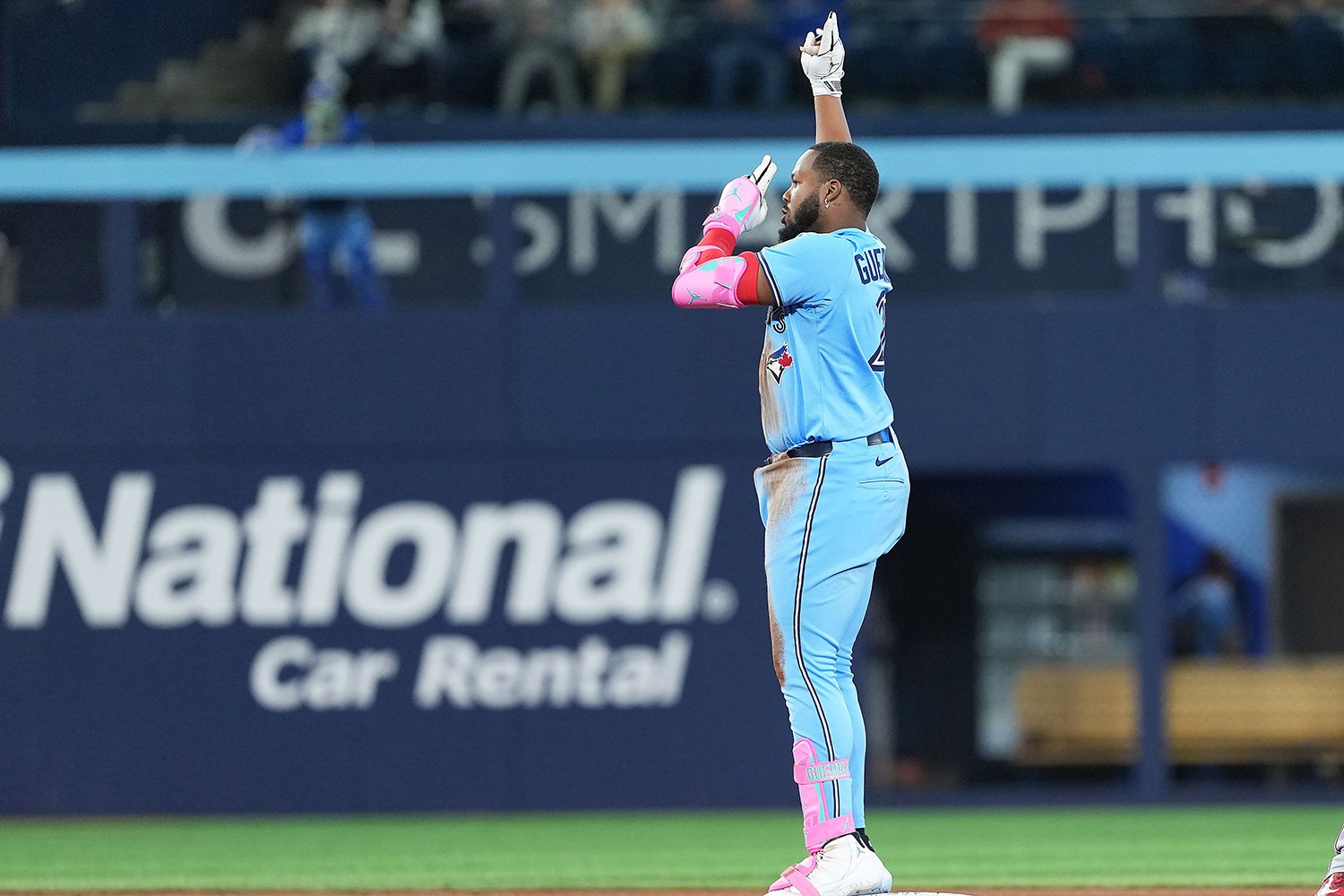 I’m not here to dampen the mood. I am just as excited as anyone that Vladimir Guerrero Jr. will be a member of the Blue Jays until the sun expands and swallows the earth – or rather, for the next 15 years. I’m sure you’re excited too, and there are so many reasons to be excited: Guerrero’s ties to Canada, his charisma, his youth, his incredible talent, the team’s struggles to land the biggest free agents, the rarity of a one-team Hall of Famer in this day and age, and on and on. The goal of this article is not to rain on that particular parade. The goal is to make sure we understand the risks of the deal because there's no doubt about it: this is a huge risk. The Blue Jays are tying up an enormous amount of money in a great player, but one whose game is extremely one-dimensional and whose play has been inconsistent. In the next several paragraphs, I will analyze things on a WAR-per-dollar basis. In other words, I will be asking whether Guerrero’s on-field production can provide enough value to cover his 14-year, $500 million contract. However, I just want to be clear that I realize this isn't the only way to analyze a contract situation and it’s certainly the least fun way to do it. In that sense, the Blue Jays are overpaying Guerrero, and they’re not doing it because they’re fools. They’re doing it because they think he’s worth it anyway. That said, I do think it’s important that we understand the extent to which this is an overpay, and that we appreciate the effect it might have on the team’s ability to put a consistent winner on the field. Even the most pessimistic view of this deal would have to start with an acknowledgment that the Blue Jays just locked up one of the world’s greatest hitters, a beloved player who is only now entering his prime. That argument would close like this: But they’re paying too much for too long. That’s it. That’s the whole argument. The Blue Jays just committed themselves to paying $35.7 million dollars to Guerrero for the next 14 years, and maybe that’s too much. It’s disturbingly easy to think of first basemen who got huge contracts and then put up essentially no value later in their careers. Albert Pujols put up 84.6 fWAR through his age-32 season, then 5.3 over the next 10 years. Prince Fielder was one of the game’s great sluggers, but injuries ended his career at age 32 and his production at age 29. Miguel Cabrera put up -2.1 fWAR from his age-34 season onward. That said, there are some important differences here. First, Guerrero is just 26, so even if he were to fall off hard at age 32 or 34, the Blue Jays would still be getting five to seven years of production from one of the greatest hitters on this doomed planet. Second, Guerrero has been incredibly durable. Over the past five seasons, he has missed a combined total of 12 games. Since 2020, his 706 games played rank third in all of baseball. That doesn’t mean he can’t get hurt tomorrow, but it's hard to ask for a better track record. These two factors are important because when a player signs a huge contract, the beginning is by far the most important part. These long-term deals are always way underwater for the last few years, and that will certainly be true for Guerrero. If you’re expecting him to be worth $35.7 million in his age-37 season, you probably shouldn’t read any further. No one plays like that as a 37-year-old. When these deals work out in terms of value, it’s because the player massively overperformed in the first several years. That’s the problem, because it’s far from a slam dunk that Guerrero will overperform this contract over the first several years. The Blue Jays are paying Guerrero $35.7 million per year, and in terms of WAR per dollar, that means they’re paying him to put up approximately 4.45 WAR per season. Guerrero has only reached that threshold twice, putting up 6.3 fWAR in 2021 and 5.4 in 2024. Over the past four seasons, he’s averaged just under 4.1 fWAR per year. So let’s say that Guerrero’s next four seasons are exactly like his last four; in that case, his contract would already be $12 million underwater. What I’m saying is that he’d need to get significantly better (or at least more consistent), just to reach the break-even point in his prime. Guerrero is capable of putting up five- or six-win seasons, but he’s only done it twice, and never back-to-back. If he’s actually going to bank enough value to give himself a chance of making this whole contract break even, he’d have to reel off several seasons in a row at the very highest level that we’ve ever seen from him. While that’s possible, it seems very, very unlikely. Guerrero has, to this point in his career, been inconsistent from year to year, so that’s probably what we should expect from him going forward: a mix of brilliance and underachievement. And if that’s what we get, then there’s no way he’ll put up even $350 million worth of production. Just to hammer this point home once more: I understand that this is a narrow-minded way to view Monday’s news. Guerrero is one of the most exciting players in the game, and none of the numbers I’ve beaten you over the head with over the past thousand words takes that into account. Keeping him is good for baseball and good for the soul of the Blue Jays. It gives the fans hope and someone to rally around, even when the team isn’t playing well. We don’t have to spend every day worried about the dollars and cents. That said, I’m really going to end on a bummer note here, because I think the amount of money that the Blue Jays have given Guerrero really could hurt them in the long-term. I get that contract values go up and up, and in 10 years, this deal probably won’t look as big, but it will still look mighty big. And as much as having Guerrero around bolsters the mood now, it will hurt even more if the team spends seven or more years with their highest paid player providing no value to speak of. It will hurt even more if the team’s biggest contract gashes the roster so badly that the team simply isn’t willing to invest enough money to build a winner because it’s already starting out in such a deep hole. Cabrera is a great example of this in Detroit, as are Stephen Strasburg and Patrick Corbin in Washington. Fans love stars, but they care a lot more about winning, and if their aging star is perceived to be standing in the way of winning, they'll sing a different tune. I would love nothing more than for Guerrero to suddenly provide serious defensive value, finally figure out how to turn all his hard contact into sustainable extra-base production, and to reel off a series of seven-win seasons. But barring that, the downside of this contract is very real and very, very large.
 -
By all means, let's get excited about Monday's news. But whenever you're ready, let's think about the deal's very real risks. I’m not here to dampen the mood. I am just as excited as anyone that Vladimir Guerrero Jr. will be a member of the Blue Jays until the sun expands and swallows the earth – or rather, for the next 15 years. I’m sure you’re excited too, and there are so many reasons to be excited: Guerrero’s ties to Canada, his charisma, his youth, his incredible talent, the team’s struggles to land the biggest free agents, the rarity of a one-team Hall of Famer in this day and age, and on and on. The goal of this article is not to rain on that particular parade. The goal is to make sure we understand the risks of the deal because there's no doubt about it: this is a huge risk. The Blue Jays are tying up an enormous amount of money in a great player, but one whose game is extremely one-dimensional and whose play has been inconsistent. In the next several paragraphs, I will analyze things on a WAR-per-dollar basis. In other words, I will be asking whether Guerrero’s on-field production can provide enough value to cover his 14-year, $500 million contract. However, I just want to be clear that I realize this isn't the only way to analyze a contract situation and it’s certainly the least fun way to do it. In that sense, the Blue Jays are overpaying Guerrero, and they’re not doing it because they’re fools. They’re doing it because they think he’s worth it anyway. That said, I do think it’s important that we understand the extent to which this is an overpay, and that we appreciate the effect it might have on the team’s ability to put a consistent winner on the field. Even the most pessimistic view of this deal would have to start with an acknowledgment that the Blue Jays just locked up one of the world’s greatest hitters, a beloved player who is only now entering his prime. That argument would close like this: But they’re paying too much for too long. That’s it. That’s the whole argument. The Blue Jays just committed themselves to paying $35.7 million dollars to Guerrero for the next 14 years, and maybe that’s too much. It’s disturbingly easy to think of first basemen who got huge contracts and then put up essentially no value later in their careers. Albert Pujols put up 84.6 fWAR through his age-32 season, then 5.3 over the next 10 years. Prince Fielder was one of the game’s great sluggers, but injuries ended his career at age 32 and his production at age 29. Miguel Cabrera put up -2.1 fWAR from his age-34 season onward. That said, there are some important differences here. First, Guerrero is just 26, so even if he were to fall off hard at age 32 or 34, the Blue Jays would still be getting five to seven years of production from one of the greatest hitters on this doomed planet. Second, Guerrero has been incredibly durable. Over the past five seasons, he has missed a combined total of 12 games. Since 2020, his 706 games played rank third in all of baseball. That doesn’t mean he can’t get hurt tomorrow, but it's hard to ask for a better track record. These two factors are important because when a player signs a huge contract, the beginning is by far the most important part. These long-term deals are always way underwater for the last few years, and that will certainly be true for Guerrero. If you’re expecting him to be worth $35.7 million in his age-37 season, you probably shouldn’t read any further. No one plays like that as a 37-year-old. When these deals work out in terms of value, it’s because the player massively overperformed in the first several years. That’s the problem, because it’s far from a slam dunk that Guerrero will overperform this contract over the first several years. The Blue Jays are paying Guerrero $35.7 million per year, and in terms of WAR per dollar, that means they’re paying him to put up approximately 4.45 WAR per season. Guerrero has only reached that threshold twice, putting up 6.3 fWAR in 2021 and 5.4 in 2024. Over the past four seasons, he’s averaged just under 4.1 fWAR per year. So let’s say that Guerrero’s next four seasons are exactly like his last four; in that case, his contract would already be $12 million underwater. What I’m saying is that he’d need to get significantly better (or at least more consistent), just to reach the break-even point in his prime. Guerrero is capable of putting up five- or six-win seasons, but he’s only done it twice, and never back-to-back. If he’s actually going to bank enough value to give himself a chance of making this whole contract break even, he’d have to reel off several seasons in a row at the very highest level that we’ve ever seen from him. While that’s possible, it seems very, very unlikely. Guerrero has, to this point in his career, been inconsistent from year to year, so that’s probably what we should expect from him going forward: a mix of brilliance and underachievement. And if that’s what we get, then there’s no way he’ll put up even $350 million worth of production. Just to hammer this point home once more: I understand that this is a narrow-minded way to view Monday’s news. Guerrero is one of the most exciting players in the game, and none of the numbers I’ve beaten you over the head with over the past thousand words takes that into account. Keeping him is good for baseball and good for the soul of the Blue Jays. It gives the fans hope and someone to rally around, even when the team isn’t playing well. We don’t have to spend every day worried about the dollars and cents. That said, I’m really going to end on a bummer note here, because I think the amount of money that the Blue Jays have given Guerrero really could hurt them in the long-term. I get that contract values go up and up, and in 10 years, this deal probably won’t look as big, but it will still look mighty big. And as much as having Guerrero around bolsters the mood now, it will hurt even more if the team spends seven or more years with their highest paid player providing no value to speak of. It will hurt even more if the team’s biggest contract gashes the roster so badly that the team simply isn’t willing to invest enough money to build a winner because it’s already starting out in such a deep hole. Cabrera is a great example of this in Detroit, as are Stephen Strasburg and Patrick Corbin in Washington. Fans love stars, but they care a lot more about winning, and if their aging star is perceived to be standing in the way of winning, they'll sing a different tune. I would love nothing more than for Guerrero to suddenly provide serious defensive value, finally figure out how to turn all his hard contact into sustainable extra-base production, and to reel off a series of seven-win seasons. But barring that, the downside of this contract is very real and very, very large. View full article
-
Article: Easton Lucas Aces His First Test
Davy Andrews posted a topic in Jays Centre Front Page News
With Max Scherzer on the IL, Easton Lucas mowed the Nationals down on Work From Dome day. If you had Easton Lucas outdueling Washington starter MacKenzie Gore on your bingo card for this season, you might want to invest in some lottery tickets. On Wednesday afternoon, Lucas, the 28-year-old southpaw with just eight major-league appearances to his name, all of them in relief, wiped the floor with the Nationals. He picked up the win as the Blue Jays dispatched the Nats, 4-2. Lucas started the season at Triple-A Buffalo, but what looked like it would be a spot start while Max Scherzer attempted to figure out his chronic thumb inflammation ended up as an impressive audition. The game was the subject of the team’s Work From Dome promotion, and whether or not any fans took the Blue Jays up on the offer, Lucas certainly put in work. “Way to step up,” Scherzer told the young left-hander once his day was finished. In fact, Wednesday was actually supposed to be Kevin Gausman’s turn to pitch, but the Blue Jays decided to give him a bit more rest and the tougher task of facing the Mets in their home opener. Lucas got to face the lowly Nationals at home in Toronto as the rain screamed down outside. He delivered, going five scoreless innings, and although he only struck out three Nationals, he allowed just one hit and two walks. Not bad for a player the team picked up on waivers back in July, and who came into the game with a career 9.82 ERA over 11 2/3 innings. Lucas did run excellent numbers in the minors last season, putting up a 2.75 ERA and 3.61 FIP while striking out more than a batter per inning. Making that performance even more impressive, he had to split his 38 38 appearances between the Triple-A affiliates of the A’s, Tigers, and Blue Jays (in addition to the eight major-league games he split between those three teams). “I got back (to the locker-room) and I had a couple of hundred text messages,” Lucas told reporters after the game. “I’m going to go over there and start responding as soon as I get the chance.” The Blue Jays offense was bolstered by George Springer, Andrés Giménez, and Vladimir Guerrero Jr., all of whom extended their respective hot streaks, but Lucas was the story of the day. He led with his four-seam fastball, which averaged 93.1 mph and topped out at 94.9. Lucas threw the fastball 55% of the time and his changeup 32% of the time, mixin in the occasional cutter or slider. The fastball was the star of the show, earning nine whiffs on 26 pitches, a 35% rate. To put that in perspective, Mason Miller’s 100.9-mph four-seamer had the best whiff rate in baseball last season: 37.2%. It’s undeniable that the Nationals are a whiff-prone team, and coming into Wednesday’s game, they had the highest strikeout rate in baseball. That surely helped Lucas plenty. Nonetheless, this was the first start of his career, and he deserves plenty of credit for acing the test. It's hard to imagine that this performance won’t improve Lucas’s chances of getting the ball again when this spot in the rotation rolls around next week. That would be a bigger test, as the Blue Jays will be in Fenway Park to face the Red Sox. “We’ve liked him since we’ve acquired him,” said manager John Schneider. “And I think an outing like today does nothing but boost our confidence in him and hopefully it boosts his confidence in himself.” View full article -
 If you had Easton Lucas outdueling Washington starter MacKenzie Gore on your bingo card for this season, you might want to invest in some lottery tickets. On Wednesday afternoon, Lucas, the 28-year-old southpaw with just eight major-league appearances to his name, all of them in relief, wiped the floor with the Nationals. He picked up the win as the Blue Jays dispatched the Nats, 4-2. Lucas started the season at Triple-A Buffalo, but what looked like it would be a spot start while Max Scherzer attempted to figure out his chronic thumb inflammation ended up as an impressive audition. The game was the subject of the team’s Work From Dome promotion, and whether or not any fans took the Blue Jays up on the offer, Lucas certainly put in work. “Way to step up,” Scherzer told the young left-hander once his day was finished. In fact, Wednesday was actually supposed to be Kevin Gausman’s turn to pitch, but the Blue Jays decided to give him a bit more rest and the tougher task of facing the Mets in their home opener. Lucas got to face the lowly Nationals at home in Toronto as the rain screamed down outside. He delivered, going five scoreless innings, and although he only struck out three Nationals, he allowed just one hit and two walks. Not bad for a player the team picked up on waivers back in July, and who came into the game with a career 9.82 ERA over 11 2/3 innings. Lucas did run excellent numbers in the minors last season, putting up a 2.75 ERA and 3.61 FIP while striking out more than a batter per inning. Making that performance even more impressive, he had to split his 38 38 appearances between the Triple-A affiliates of the A’s, Tigers, and Blue Jays (in addition to the eight major-league games he split between those three teams). “I got back (to the locker-room) and I had a couple of hundred text messages,” Lucas told reporters after the game. “I’m going to go over there and start responding as soon as I get the chance.” The Blue Jays offense was bolstered by George Springer, Andrés Giménez, and Vladimir Guerrero Jr., all of whom extended their respective hot streaks, but Lucas was the story of the day. He led with his four-seam fastball, which averaged 93.1 mph and topped out at 94.9. Lucas threw the fastball 55% of the time and his changeup 32% of the time, mixin in the occasional cutter or slider. The fastball was the star of the show, earning nine whiffs on 26 pitches, a 35% rate. To put that in perspective, Mason Miller’s 100.9-mph four-seamer had the best whiff rate in baseball last season: 37.2%. It’s undeniable that the Nationals are a whiff-prone team, and coming into Wednesday’s game, they had the highest strikeout rate in baseball. That surely helped Lucas plenty. Nonetheless, this was the first start of his career, and he deserves plenty of credit for acing the test. It's hard to imagine that this performance won’t improve Lucas’s chances of getting the ball again when this spot in the rotation rolls around next week. That would be a bigger test, as the Blue Jays will be in Fenway Park to face the Red Sox. “We’ve liked him since we’ve acquired him,” said manager John Schneider. “And I think an outing like today does nothing but boost our confidence in him and hopefully it boosts his confidence in himself.”
 -
Max Scherzer's first start began with lat tightness and ended with a trip to the IL. It feels like I’m writing these a couple times a week at this point, but here we go: welcome to your Twice-Weekly Max Scherzer’s Thumb Update: Injured List Edition. After the team signed the future Hall of Famer, the biggest questions were about Scherzer’s health, which limited him to just nine starts in 2024, and about his fastball velocity, which had fallen to just 92.6 mph in 2024. On Saturday, Scherzer made his first start in a Blue Jays uniform, and both questions got some very bad answers. Scherzer made it through just three innings, allowing two runs on solo homers and striking out just one batter. More importantly, he left due to an injury and was visibly frustrated in the dugout after coming out. ‘I think that’s enough,” he reportedly told manager John Schneider. “I think we’re in imminent danger.’’ During the game, the issue was reported to be right lat soreness, but as you may recall from last season, Scherzer said that the lat and shoulder injuries that torpedoed his season started with thumb soreness. That’s why the issue has been such a concern over recent weeks, and it turned out that when Scherzer was placed on the 15-day injured list on Sunday morning, it wasn’t listed a lat injury, but as thumb inflammation. Scherzer apparently didn’t feel right even when warming up before the game, warning Schneider and pitching coach Pete Walker of lat tightness but not wanting to crush the bullpen with a last-second scratch. “You’re really hurting but you can still go out there and pitch and navigate,” he told himself. “I just didn’t feel like I could really let the ball go,” he told reporters later. “I had to back down the effort level. I was able to at least get through three and not blow up the bullpen, but after that third inning, I could just tell that we were in imminent danger. If you keep pitching through this as the arm fatigues. This is going to go.” If you didn’t like that quote, this one won’t make you feel any better. “This is 100% related to the thumb,” Scherzer said. “My shoulder, everything is compensating because of that thumb. The thumb is slightly better, but I still have discomfort in there. Even though I was able to grip the ball a little bit better today, I still have discomfort in my thumb. My arm is making adjustments because of that. That’s a recipe for disaster.” Scherzer wasn’t joking about dialing back the effort level. “I couldn’t really go after that last gear, really let the ball fly, really step on the gas,” Scherzer said. “I had to back off the effort level to guard that lat. I’m not the same pitcher when I have to back up on intensity.’’ He threw just 19 fastballs, topping out at 3.4 mph and averaging just 91.9 mph, a big drop even from Scherzer’s 2024 nadir. As I write this on Monday morning, 211 pitchers have thrown at least 25 pitches, including one four-seamer, this season. Scherzer’s fastball ranks 184th in terms of velocity. All of us who were hoping he’d get healthy and see his velocity bounce back up somewhere closer to the league average should probably let go of that dream right now. Scherzer may come back and pitch well at some point, but we shouldn’t expect him to blow fastballs by anybody. It's great that Scherzer is a veteran who knows his body well enough to take himself out before he does lasting damage, but it’s hard to see where he goes from here. He spent the offseason working to improve his thumb and grip strength, but it clearly hasn’t worked. He’s still facing the same issue: thumb pain that ripples back up the kinetic chain to his shoulder and back as he approaches the 50-pitch mark. “I’m frustrated. I want to pitch. I know I can pitch,” Scherzer said. “I know I can throw the ball really well. Unfortunately, I have an issue going on that’s coming from the thumb. I’ve got to address this. I’ve got to zero out that thumb before I pitch again.” The question is how to fix the thumb, and Scherzer is still looking for answers. He visited a thumb specialist in the United States on Monday, and there’s no doubt that he’ll do everything possible to get back to full strength. But at this point, it’s probably time to start wondering whether that’s really possible. We’ll have more on Scherzer’s injury and what it does to the rotation and bullpen this week. For now, though, the biggest takeaway simply has to do with Scherzer himself. Scherzer pitched for scouts and said he felt better, and the Blue Jays took a calculated risk that he would be able to bounce back and provide something approaching a full season’s worth of solid production. I was a bold move with a high upside and an equally low downside. Right now, the odds of that gamble paying off look much lower. View full article
-
The Blue Jays’ Max Scherzer Gamble Just Got Even Riskier
Davy Andrews posted an article in Blue Jays
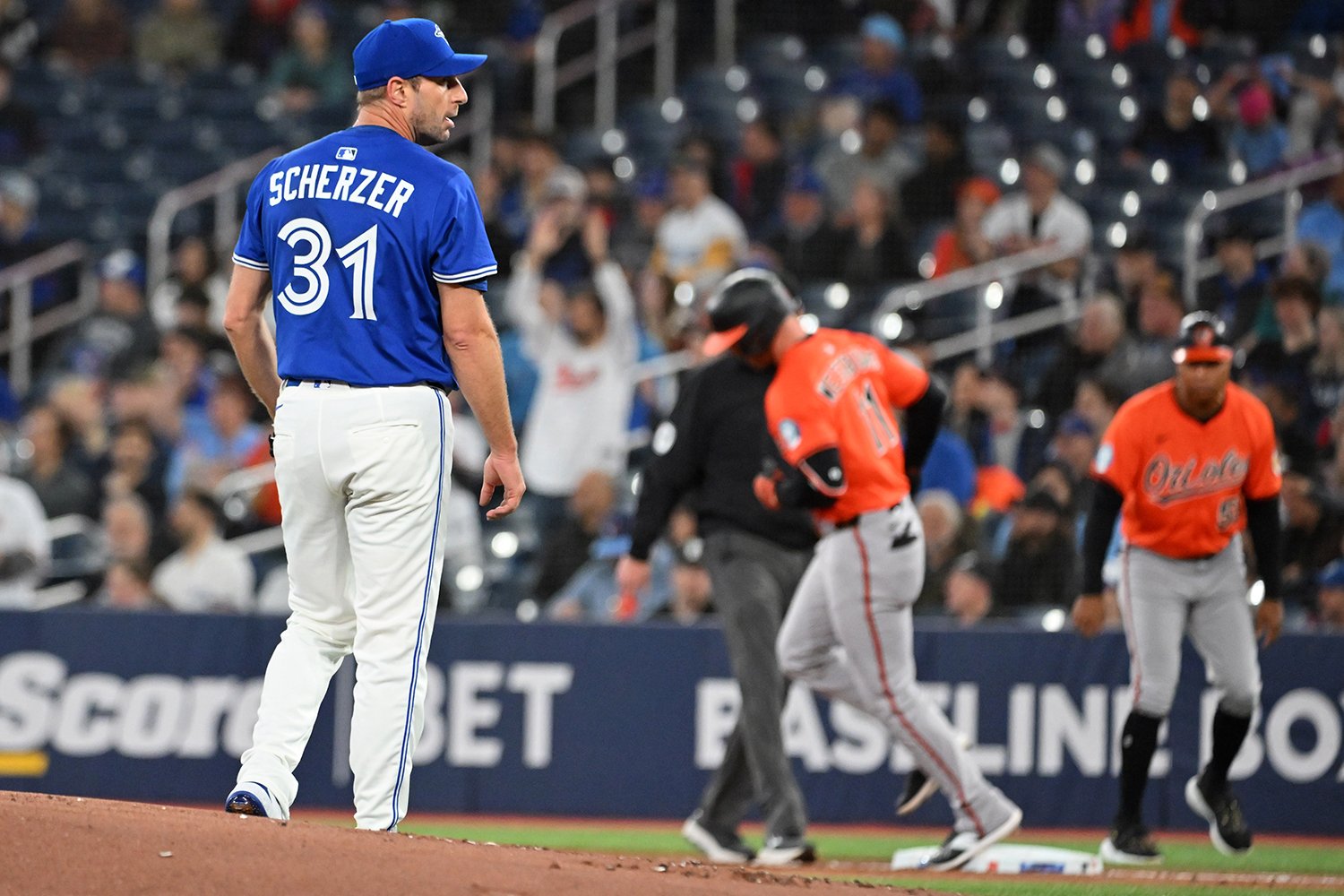 It feels like I’m writing these a couple times a week at this point, but here we go: welcome to your Twice-Weekly Max Scherzer’s Thumb Update: Injured List Edition. After the team signed the future Hall of Famer, the biggest questions were about Scherzer’s health, which limited him to just nine starts in 2024, and about his fastball velocity, which had fallen to just 92.6 mph in 2024. On Saturday, Scherzer made his first start in a Blue Jays uniform, and both questions got some very bad answers. Scherzer made it through just three innings, allowing two runs on solo homers and striking out just one batter. More importantly, he left due to an injury and was visibly frustrated in the dugout after coming out. ‘I think that’s enough,” he reportedly told manager John Schneider. “I think we’re in imminent danger.’’ During the game, the issue was reported to be right lat soreness, but as you may recall from last season, Scherzer said that the lat and shoulder injuries that torpedoed his season started with thumb soreness. That’s why the issue has been such a concern over recent weeks, and it turned out that when Scherzer was placed on the 15-day injured list on Sunday morning, it wasn’t listed a lat injury, but as thumb inflammation. Scherzer apparently didn’t feel right even when warming up before the game, warning Schneider and pitching coach Pete Walker of lat tightness but not wanting to crush the bullpen with a last-second scratch. “You’re really hurting but you can still go out there and pitch and navigate,” he told himself. “I just didn’t feel like I could really let the ball go,” he told reporters later. “I had to back down the effort level. I was able to at least get through three and not blow up the bullpen, but after that third inning, I could just tell that we were in imminent danger. If you keep pitching through this as the arm fatigues. This is going to go.” If you didn’t like that quote, this one won’t make you feel any better. “This is 100% related to the thumb,” Scherzer said. “My shoulder, everything is compensating because of that thumb. The thumb is slightly better, but I still have discomfort in there. Even though I was able to grip the ball a little bit better today, I still have discomfort in my thumb. My arm is making adjustments because of that. That’s a recipe for disaster.” Scherzer wasn’t joking about dialing back the effort level. “I couldn’t really go after that last gear, really let the ball fly, really step on the gas,” Scherzer said. “I had to back off the effort level to guard that lat. I’m not the same pitcher when I have to back up on intensity.’’ He threw just 19 fastballs, topping out at 3.4 mph and averaging just 91.9 mph, a big drop even from Scherzer’s 2024 nadir. As I write this on Monday morning, 211 pitchers have thrown at least 25 pitches, including one four-seamer, this season. Scherzer’s fastball ranks 184th in terms of velocity. All of us who were hoping he’d get healthy and see his velocity bounce back up somewhere closer to the league average should probably let go of that dream right now. Scherzer may come back and pitch well at some point, but we shouldn’t expect him to blow fastballs by anybody. It's great that Scherzer is a veteran who knows his body well enough to take himself out before he does lasting damage, but it’s hard to see where he goes from here. He spent the offseason working to improve his thumb and grip strength, but it clearly hasn’t worked. He’s still facing the same issue: thumb pain that ripples back up the kinetic chain to his shoulder and back as he approaches the 50-pitch mark. “I’m frustrated. I want to pitch. I know I can pitch,” Scherzer said. “I know I can throw the ball really well. Unfortunately, I have an issue going on that’s coming from the thumb. I’ve got to address this. I’ve got to zero out that thumb before I pitch again.” The question is how to fix the thumb, and Scherzer is still looking for answers. He visited a thumb specialist in the United States on Monday, and there’s no doubt that he’ll do everything possible to get back to full strength. But at this point, it’s probably time to start wondering whether that’s really possible. We’ll have more on Scherzer’s injury and what it does to the rotation and bullpen this week. For now, though, the biggest takeaway simply has to do with Scherzer himself. Scherzer pitched for scouts and said he felt better, and the Blue Jays took a calculated risk that he would be able to bounce back and provide something approaching a full season’s worth of solid production. I was a bold move with a high upside and an equally low downside. Right now, the odds of that gamble paying off look much lower.
 -
On Thursday, Alan Roden notched his first big major league hit. It's a truly special occasion for any player. We will now make fun of it. With love. It’s hard to imagine that there’s a Blue Jays fan anywhere who’s not rooting for Alen Roden to succeed this spring. After batting an absurd .407 during spring training, the 25-year-old outfield wasted no time notching the first hit of his major league career. In the sixth inning of the Opening Day blowout at the hands of the Orioles, Roden turned around a sinker from Zack Eflin, directing a seeing-eye chopper past a diving Jordan Westburg and into center field. Behold it in all its glory. The camera cut to Roden’s family, who had flown in from Wisconsin to witness his debut. The broadcast even followed the ball to the MLB authenticator to bear witness to the ritual affixing of the sticker. It now sits proudly in Roden’s locker. Regardless of the fanfare, you might have noticed Roden didn’t exactly clobber the ball. His seeing-eye single was a far cry from the double Daulton Varsho ripped down the right field line for his first career base hit. It definitely doesn’t compare to Vladimir Guerrero Jr., Bo Bichette, Alejandro Kirk, and Ernie Clement, all four of whom ripped hard-hit balls for their first career hits. By contrast, Roden’s first hit took a solid three-Mississippi count to make it through the infield. Eflin’s pitch came in at 90.9 mph, and Roden softened it to 88.3 mph. However, 88.3 mph isn’t necessarily a softly hit ball. It’s more that Eflin’s sinker did exactly what it was supposed to do: make Roden pound the ball into the ground rather than the air. The fact that it slithered through the infield wasn’t a surprise because of the exit velocity. It was a surprise because the ball had a launch angle of -19 degrees and a distance of, wait for it, six feet. It wasn’t even the softest first hit on the team. So far as I can tell, that honor belongs to Davis Schneider, who plopped this 65.5-mph two-hopper at the second base spot and received an absolute gift from Julio Urias. Regardless, I was curious about just how lucky Roden got here. According to Statcast, Roden's single had an expected batting average of just .094. That sounds pretty lucky! Even more fun was what the play did to Jordan Westburg’s defensive numbers. Over eight innings, Westburg saw the ball five times: he served as the pivot man on two double plays, fielded one routine grounder and one routine popup, and, of course, just missed Roden’s seeing-eye single. That’s one putout and two assists with a nice round fielding percentage of 1.000. But the advanced defensive metrics see all and they have no mercy. For his lack of range, Defensive Runs Saved docked Westburg a run, meaning that after one game, he was tied with 25 other players as the third-worst defender in baseball. That’s right, even though he made four other solid plays, missing Roden’s chopper made Westburg one of just 27 players (out of the 400 who got into a game on Opening Day) to lose a whole run according to DRS. Not content with that information, I reached out to Craig Goldstein, editor-in-chief of Baseball Prospectus. BP’s defensive numbers weren’t posted yet on Friday, because why would they be? No one would be ridiculous enough to read anything into those numbers after one single day. Defensive stats can sometimes take years to stabilize. But I couldn’t help myself. I asked Craig if he could pull them anyway, because sometimes you’ve just got to know. BP's numbers also docked Westburg for failing to snag Roden's first hit: they expected him to field three balls, but since he only fielded, his attempt range sat at -1. So congratulations to Alan Roden on his first hit, and on his second hit, which he notched yesterday. They are truly special accomplishments for any player and no one can take them away from him. But, uh, we can still make fun of them just a little. View full article
-
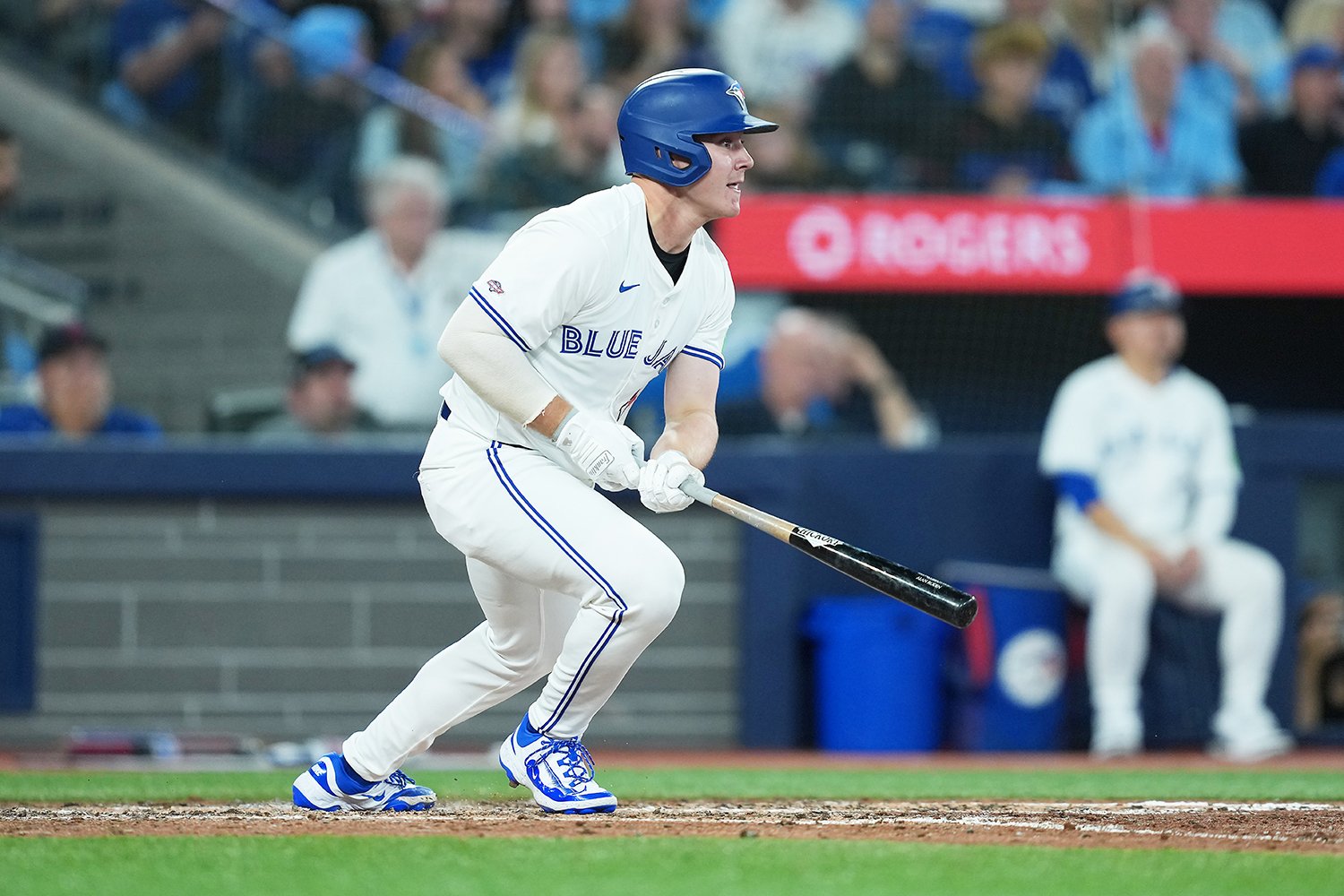 It’s hard to imagine that there’s a Blue Jays fan anywhere who’s not rooting for Alen Roden to succeed this spring. After batting an absurd .407 during spring training, the 25-year-old outfield wasted no time notching the first hit of his major league career. In the sixth inning of the Opening Day blowout at the hands of the Orioles, Roden turned around a sinker from Zack Eflin, directing a seeing-eye chopper past a diving Jordan Westburg and into center field. Behold it in all its glory. The camera cut to Roden’s family, who had flown in from Wisconsin to witness his debut. The broadcast even followed the ball to the MLB authenticator to bear witness to the ritual affixing of the sticker. It now sits proudly in Roden’s locker. Regardless of the fanfare, you might have noticed Roden didn’t exactly clobber the ball. His seeing-eye single was a far cry from the double Daulton Varsho ripped down the right field line for his first career base hit. It definitely doesn’t compare to Vladimir Guerrero Jr., Bo Bichette, Alejandro Kirk, and Ernie Clement, all four of whom ripped hard-hit balls for their first career hits. By contrast, Roden’s first hit took a solid three-Mississippi count to make it through the infield. Eflin’s pitch came in at 90.9 mph, and Roden softened it to 88.3 mph. However, 88.3 mph isn’t necessarily a softly hit ball. It’s more that Eflin’s sinker did exactly what it was supposed to do: make Roden pound the ball into the ground rather than the air. The fact that it slithered through the infield wasn’t a surprise because of the exit velocity. It was a surprise because the ball had a launch angle of -19 degrees and a distance of, wait for it, six feet. It wasn’t even the softest first hit on the team. So far as I can tell, that honor belongs to Davis Schneider, who plopped this 65.5-mph two-hopper at the second base spot and received an absolute gift from Julio Urias. Regardless, I was curious about just how lucky Roden got here. According to Statcast, Roden's single had an expected batting average of just .094. That sounds pretty lucky! Even more fun was what the play did to Jordan Westburg’s defensive numbers. Over eight innings, Westburg saw the ball five times: he served as the pivot man on two double plays, fielded one routine grounder and one routine popup, and, of course, just missed Roden’s seeing-eye single. That’s one putout and two assists with a nice round fielding percentage of 1.000. But the advanced defensive metrics see all and they have no mercy. For his lack of range, Defensive Runs Saved docked Westburg a run, meaning that after one game, he was tied with 25 other players as the third-worst defender in baseball. That’s right, even though he made four other solid plays, missing Roden’s chopper made Westburg one of just 27 players (out of the 400 who got into a game on Opening Day) to lose a whole run according to DRS. Not content with that information, I reached out to Craig Goldstein, editor-in-chief of Baseball Prospectus. BP’s defensive numbers weren’t posted yet on Friday, because why would they be? No one would be ridiculous enough to read anything into those numbers after one single day. Defensive stats can sometimes take years to stabilize. But I couldn’t help myself. I asked Craig if he could pull them anyway, because sometimes you’ve just got to know. BP's numbers also docked Westburg for failing to snag Roden's first hit: they expected him to field three balls, but since he only fielded, his attempt range sat at -1. So congratulations to Alan Roden on his first hit, and on his second hit, which he notched yesterday. They are truly special accomplishments for any player and no one can take them away from him. But, uh, we can still make fun of them just a little.
 -
Blue Jays Make an Opening Day Offer to Vladimir Guerrero Jr.
Davy Andrews posted an article in Blue Jays
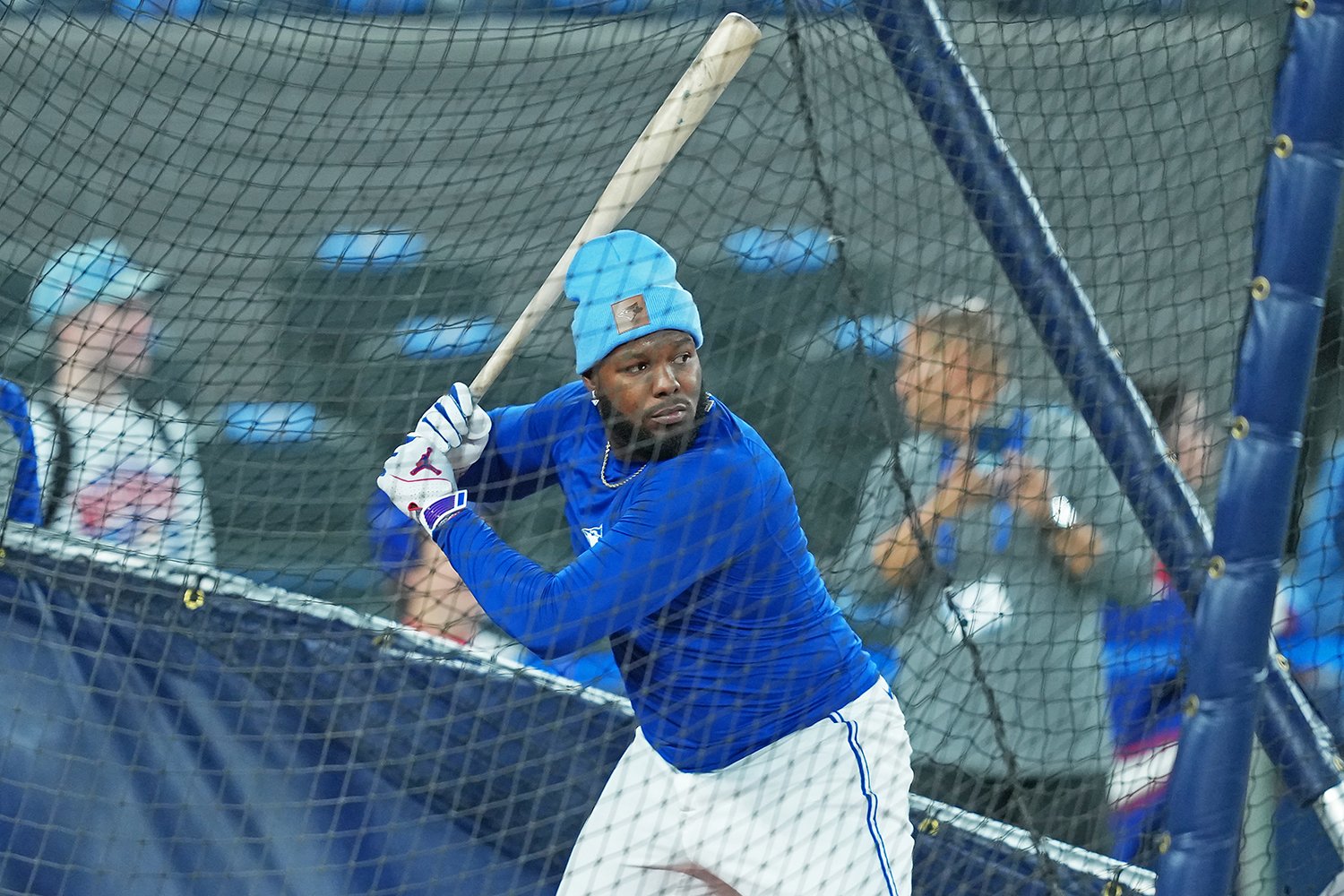 And the saga continues. On Thursday, just hours before the Blue Jays played their season opener against the Orioles, ESPN’s Buster Olney announced that the team had made another contract extension offer to Vladimir Guerrero Jr. Guerrero is entering his final year of arbitration in Toronto, and he set a very public deadline for negotiations, cutting them off when he reported for spring training. The agita surrounding Guerrero’s situation (not to mention Bo Bichette’s similarly unresolved contract situation) has not necessarily been ugly, but it has been very public and somewhat disheartening. This latest news indicates that the Blue Jays are still holding out hope that they can get a deal done early this season, and it explains the extremely sanguine public comments Ross Atkins made on Wednesday, “I have hope. That’s how I feel.” While fans will be both relieved and encouraged to know that the team is still trying, the report definitely cast a shadow on Opening Day, making Guerrero’s contract situation even more of a story during an otherwise celebratory occasion. Not long after Olney’s report, Héctor Gómez reported that the offer would be for 14 or 15 years and somewhere between $550 and 600 million. Gómez didn’t mention anything about deferred money, but the offer must have included some deferrals. Otherwise, it was almost certainly for more than Guerrero had requested. The deferrals are the whole ballgame here, as they lower both the present value of the deal and the average annual value for competitive balance tax purposes. Unfortunately, without knowing about the deferrals, those numbers don’t actually give us much new information. During an interview a few weeks ago, Guerrero made it very that he was looking for 14 years and somewhere between $500 and 550 million dollars in present value. Previous reports indicated that the Blue Jays had offered him $500 million, but with deferrals that reduced the present value to between $400 and 450 million. That left a gap of somewhere between $50 and 150 million, and on a per-year basis, that doesn’t sound like a lot. Would the Jays really let Guerrero walk because of $3.6 to 11 million, the amount they might pay a reliever in any given year? That said, I’d remind you that sometimes the difference between a decent team and playoff-caliber team absolutely is $10 million. Maybe that’s the difference between signing another star player and settling for a league-average player. Or maybe it really is just one reliever. Just last season, the Mariners got only 1.7 fWAR from their relievers, fifth-worst in baseball, and they missed the last Wild Card spot by one game. Signing just one decent reliever could’ve been the difference between success and failure. Clearly, the offer the Blue Jays just made has trimmed the gap between them and Guerrero even further, but it’s important to keep in mind that Guerrero’s original asking price was extraordinarily large. I broke this down at the time, but Guerrero is basically asking to be paid the way one of the five best players in all of baseball would be paid on the open market. As great a hitter as Guerrero is, he’s closer to a top-30 talent, and he’s not yet on the free open market. This is likely one reason that MLB.com’s Keegan Matheson predicted that Guerrero would end up signing with the Blue Jays, but only after the season ended. Aside from a desire to tamp down the drama, it’s just not particularly clear why the team would pay top of the market prices without being forced to by the actual market. That’s not really what extensions are for. For right now, Atkins’ comments and this recent offer make it abundantly clear that the team feels that they’re close enough to get a deal done now. As frustrating as the insistence of the Shapiro-Atkins regime that every expenditure meet and extremely rigid valuation framework can be, it’s designed to keep the team from making big mistakes. A contract this large for one player is a big swing, and the potential for it to be either a huge success or a huge failure is very real.
 -
Although Guerrero's window for negotiation a possible contract extension was said to have closed when he reported to spring training, the Blue Jays clearly think they can still get a deal done now. And the saga continues. On Thursday, just hours before the Blue Jays played their season opener against the Orioles, ESPN’s Buster Olney announced that the team had made another contract extension offer to Vladimir Guerrero Jr. Guerrero is entering his final year of arbitration in Toronto, and he set a very public deadline for negotiations, cutting them off when he reported for spring training. The agita surrounding Guerrero’s situation (not to mention Bo Bichette’s similarly unresolved contract situation) has not necessarily been ugly, but it has been very public and somewhat disheartening. This latest news indicates that the Blue Jays are still holding out hope that they can get a deal done early this season, and it explains the extremely sanguine public comments Ross Atkins made on Wednesday, “I have hope. That’s how I feel.” While fans will be both relieved and encouraged to know that the team is still trying, the report definitely cast a shadow on Opening Day, making Guerrero’s contract situation even more of a story during an otherwise celebratory occasion. Not long after Olney’s report, Héctor Gómez reported that the offer would be for 14 or 15 years and somewhere between $550 and 600 million. Gómez didn’t mention anything about deferred money, but the offer must have included some deferrals. Otherwise, it was almost certainly for more than Guerrero had requested. The deferrals are the whole ballgame here, as they lower both the present value of the deal and the average annual value for competitive balance tax purposes. Unfortunately, without knowing about the deferrals, those numbers don’t actually give us much new information. During an interview a few weeks ago, Guerrero made it very that he was looking for 14 years and somewhere between $500 and 550 million dollars in present value. Previous reports indicated that the Blue Jays had offered him $500 million, but with deferrals that reduced the present value to between $400 and 450 million. That left a gap of somewhere between $50 and 150 million, and on a per-year basis, that doesn’t sound like a lot. Would the Jays really let Guerrero walk because of $3.6 to 11 million, the amount they might pay a reliever in any given year? That said, I’d remind you that sometimes the difference between a decent team and playoff-caliber team absolutely is $10 million. Maybe that’s the difference between signing another star player and settling for a league-average player. Or maybe it really is just one reliever. Just last season, the Mariners got only 1.7 fWAR from their relievers, fifth-worst in baseball, and they missed the last Wild Card spot by one game. Signing just one decent reliever could’ve been the difference between success and failure. Clearly, the offer the Blue Jays just made has trimmed the gap between them and Guerrero even further, but it’s important to keep in mind that Guerrero’s original asking price was extraordinarily large. I broke this down at the time, but Guerrero is basically asking to be paid the way one of the five best players in all of baseball would be paid on the open market. As great a hitter as Guerrero is, he’s closer to a top-30 talent, and he’s not yet on the free open market. This is likely one reason that MLB.com’s Keegan Matheson predicted that Guerrero would end up signing with the Blue Jays, but only after the season ended. Aside from a desire to tamp down the drama, it’s just not particularly clear why the team would pay top of the market prices without being forced to by the actual market. That’s not really what extensions are for. For right now, Atkins’ comments and this recent offer make it abundantly clear that the team feels that they’re close enough to get a deal done now. As frustrating as the insistence of the Shapiro-Atkins regime that every expenditure meet and extremely rigid valuation framework can be, it’s designed to keep the team from making big mistakes. A contract this large for one player is a big swing, and the potential for it to be either a huge success or a huge failure is very real. View full article
-
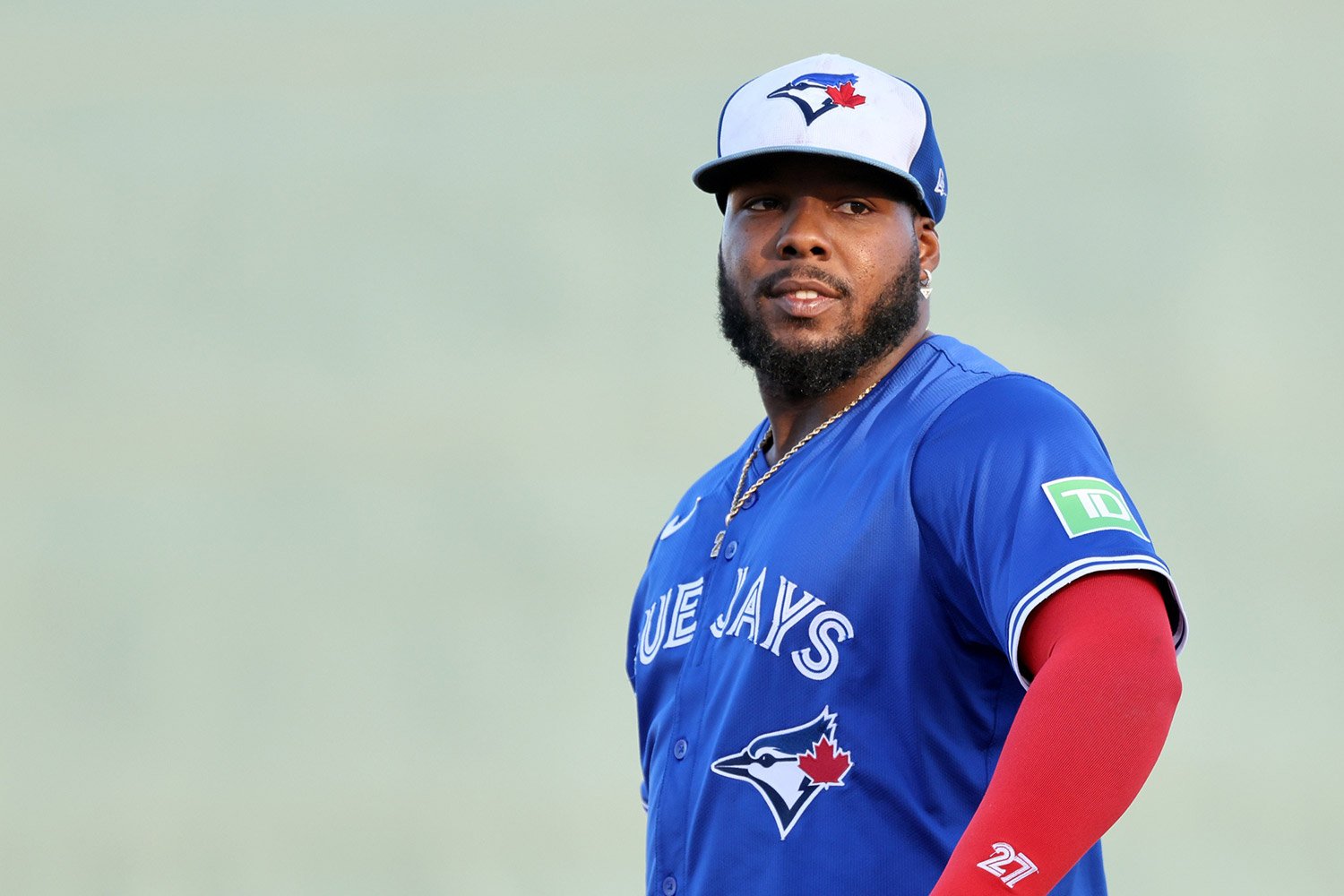 This morning, Buster Olney of ESPN reported that the Blue Jays had made another offer to Vladimir Guerrero Jr. Not much later, Héctor Gómez reported that the offer would be for 14 of 15 years and in the range of $550-600 million. The big question that has not yet been answered is how much deferred money the contract includes. That's important because it will determine the actual value of the deal. In the meantime, it looks like Guerrero's contract will remain top of mind throughout Opening Day.
 -
This morning, Buster Olney of ESPN reported that the Blue Jays had made another offer to Vladimir Guerrero Jr. Not much later, Héctor Gómez reported that the offer would be for 14 of 15 years and in the range of $550-600 million. The big question that has not yet been answered is how much deferred money the contract includes. That's important because it will determine the actual value of the deal. In the meantime, it looks like Guerrero's contract will remain top of mind throughout Opening Day. View full rumor
-
Hi Max, you make a good point, and I know that Roden was considered for the top 100 at FanGraphs. I think the biggest concerns are physical. He has some bat path issues, his defense will likely be a problem as he ages, and he doesn't hit the ball particularly hard. It's not impossible to overcome those issues and succeed, but when you put them all together, it does limit his upside.
-
The Blue Jays' Opening Day roster doesn't look exactly how most of us expected. How did Myles Straw and Alan Roden make the cut, and what should we expect from them? On Sunday evening, Blue Jays manager John Schneider gave reporters a few roster updates. Right-handed reliever Jacob Barnes will break camp with the big club, as will outfielders Alan Roden, Myles Straw, and Nathan Lukes. Neither Barnes, Roden, nor Straw is on the 40-man roster, so the team will need to make space for them. Barnes’ inclusion on the roster makes plenty of sense, as the veteran would have had the chance to opt out had he missed the roster and the team needs to fill the spots of injured Erik Swanson, Zach Pop, and Ryan Burr. Likewise, Lukes’s inclusion makes sense, as he performed well in both Buffalo and a 22-game sample in Toronto last season. But just on Saturday, Mark Polishuk of MLB Trade Rumors wrote that the competition to fill in for Daulton Varsho, who will start the season on the IL, was down to Roden, Straw and Lukes. Now it’s going to be all of them? Let’s talk about the roster and how Straw and Roden ended up on it. The answer is a bit simpler for Roden: the guy has been mashing. Roden batted .407 during spring training while running a 16% walk rate and 11% strikeout rate. He hit two home runs and ran a 219 wRC+. That means that he was 119% better than the league-average hitter. Obviously, there’s some serious small sample size theater going on here. The best batting average Roden has run at any stop in the minors is .317, and the projections see him batting around .256 with a roughly 108 wRC+ this season. In other words, the computers think he’ll be just a bit better than league-average at the plate, rather than the second coming of Ted Williams. That said, how can you not be impressed with what Roden did this spring? He’s 25 years old, and even though he hasn’t shown the most impressive tools – he doesn’t possess great athleticism and doesn’t hit the ball as hard as you’d expect from a bat-first corner outfielder – he’s run immaculate walk and strikeout rates and he’s hit at absolutely every stop. He’s earned a chance, and it’s hard to argue that staying at Triple-A would be the best thing for him from a developmental point of view. Even if his ceiling is league-average corner outfielder who doesn’t hit for as much power as you’d like, that’s still, at minimum, a useful bench piece. Toward that end, Arden Zwelling's report that the team wants Roden getting regular playing time is very encouraging. Bringing him up to Toronto only to make him sit on the bench would be the worst possible thing for his development. He’s made the team, and now he’ll get a chance to see what he can do against major league pitching. Manager John Schneider told reporters, “We trust his skillset, not only on the field but between his ears,” manager John Schneider said, “when it comes to being able to process things and slow things down. I think there’s a really good chance he’s an impact player for us, and I think there’s a really good chance he won’t be [up and down] in that time. I think he’s going to be [steady].” Myles Straw had every bit as good (and unsustainable) a spring training as Roden. The Gold Glover batted .400 with a .440 BABIP en route to a 173 wRC+. Even more amazing, Straw, who has six career home runs at the big league level, even managed to hit one out during spring training. It was, as the video below makes clear, the world’s most Myles Straw-coded home run imaginable, a low line drive hit that just barely squeaked over the wall in the left field corner. That’s still a home run, and Straw really did run excellent walk, strikeout, and hard-hit rates during spring training, but there’s nobody in baseball who’s expecting him to magically turn into a good hitter. He’s got a career wRC+ of 78, and he was even worse than that in the minor leagues for the Guardians last season. Worst of all, Straw played a full season in Cleveland in 2023, but his defense took a major step back; that’s really not an option for a player whose defense is his only tool. Straw is in the organization both because of his glove and because the Blue Jays decided to make a last-second shot at wooing Roki Sasaki with some extra bonus pool money. Now that he’s made the team, it seems safe to assume that the Blue Jays really were high on Straw, and that they believe he can go back to contributing on defense, even if his batting average falls back down to .200 rather than .400. According to Keegan Matheson, Straw and Lukes will essentially platoon in center field until Daulton Varsho returns from the IL, with the right-handed Straw facing lefties. Roden is expected to see time in all three outfield spots, allowing George Springer and Anthony Santander to get frequent turns as designated hitter. The team wants Joey Loperfido and Addison Barger (who also excelled during spring training) to get regular playing time, which means starting the season in Triple-A. That’s a lot of outfielders to keep track of, and the calculus will change once Varsho returns. Assuming everyone hits as expected, it would make sense for Straw to be the first one back down once Varsho returns, as the all-world defender would essentially render him redundant. And if Loperfido or Barger should tear up minor league pitching, demanding a spot in Toronto? That would certainly be a good problem to have. View full article
-
Making Sense of the Blue Jays’ Opening Day Roster Decisions
Davy Andrews posted an article in Blue Jays
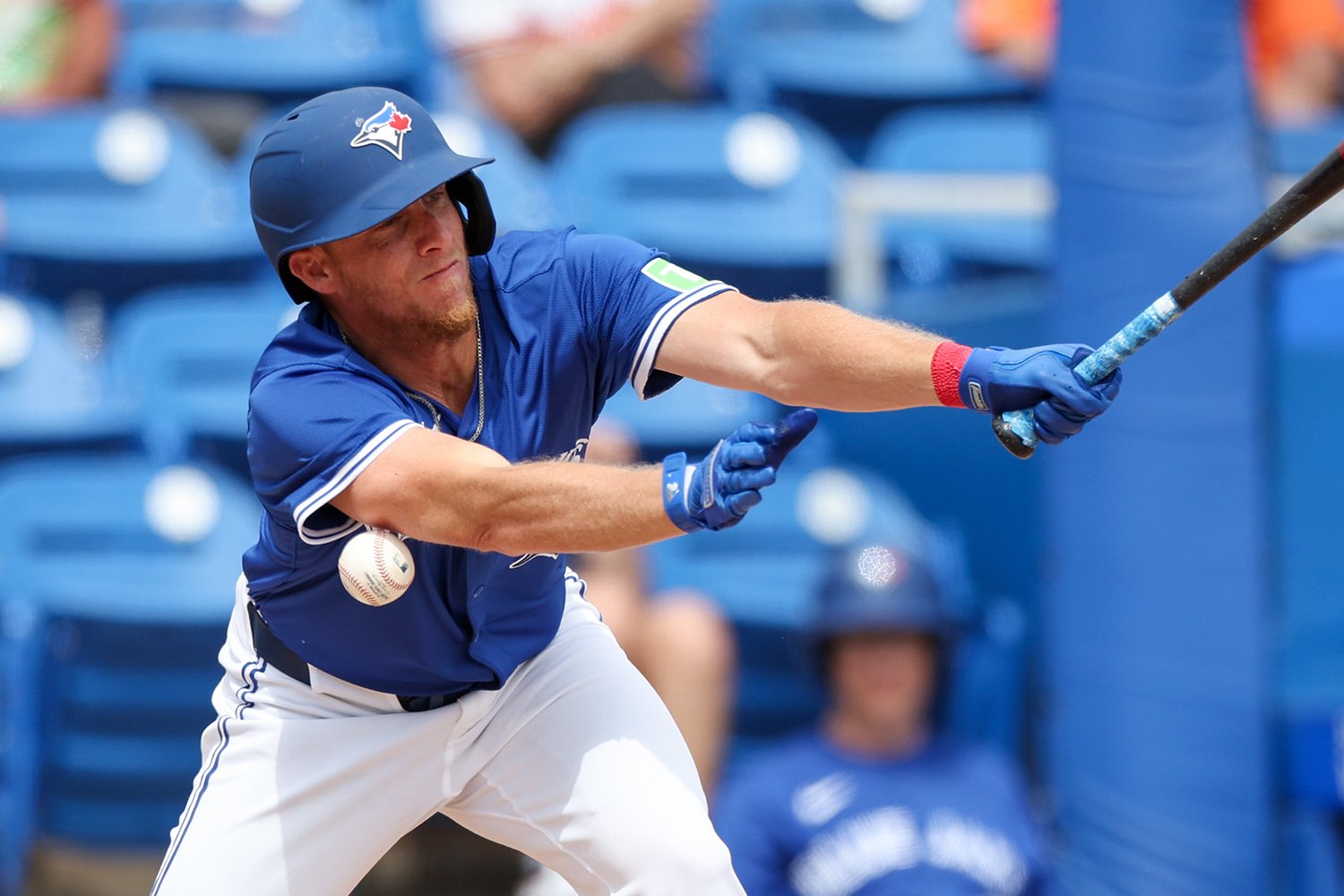 On Sunday evening, Blue Jays manager John Schneider gave reporters a few roster updates. Right-handed reliever Jacob Barnes will break camp with the big club, as will outfielders Alan Roden, Myles Straw, and Nathan Lukes. Neither Barnes, Roden, nor Straw is on the 40-man roster, so the team will need to make space for them. Barnes’ inclusion on the roster makes plenty of sense, as the veteran would have had the chance to opt out had he missed the roster and the team needs to fill the spots of injured Erik Swanson, Zach Pop, and Ryan Burr. Likewise, Lukes’s inclusion makes sense, as he performed well in both Buffalo and a 22-game sample in Toronto last season. But just on Saturday, Mark Polishuk of MLB Trade Rumors wrote that the competition to fill in for Daulton Varsho, who will start the season on the IL, was down to Roden, Straw and Lukes. Now it’s going to be all of them? Let’s talk about the roster and how Straw and Roden ended up on it. The answer is a bit simpler for Roden: the guy has been mashing. Roden batted .407 during spring training while running a 16% walk rate and 11% strikeout rate. He hit two home runs and ran a 219 wRC+. That means that he was 119% better than the league-average hitter. Obviously, there’s some serious small sample size theater going on here. The best batting average Roden has run at any stop in the minors is .317, and the projections see him batting around .256 with a roughly 108 wRC+ this season. In other words, the computers think he’ll be just a bit better than league-average at the plate, rather than the second coming of Ted Williams. That said, how can you not be impressed with what Roden did this spring? He’s 25 years old, and even though he hasn’t shown the most impressive tools – he doesn’t possess great athleticism and doesn’t hit the ball as hard as you’d expect from a bat-first corner outfielder – he’s run immaculate walk and strikeout rates and he’s hit at absolutely every stop. He’s earned a chance, and it’s hard to argue that staying at Triple-A would be the best thing for him from a developmental point of view. Even if his ceiling is league-average corner outfielder who doesn’t hit for as much power as you’d like, that’s still, at minimum, a useful bench piece. Toward that end, Arden Zwelling's report that the team wants Roden getting regular playing time is very encouraging. Bringing him up to Toronto only to make him sit on the bench would be the worst possible thing for his development. He’s made the team, and now he’ll get a chance to see what he can do against major league pitching. Manager John Schneider told reporters, “We trust his skillset, not only on the field but between his ears,” manager John Schneider said, “when it comes to being able to process things and slow things down. I think there’s a really good chance he’s an impact player for us, and I think there’s a really good chance he won’t be [up and down] in that time. I think he’s going to be [steady].” Myles Straw had every bit as good (and unsustainable) a spring training as Roden. The Gold Glover batted .400 with a .440 BABIP en route to a 173 wRC+. Even more amazing, Straw, who has six career home runs at the big league level, even managed to hit one out during spring training. It was, as the video below makes clear, the world’s most Myles Straw-coded home run imaginable, a low line drive hit that just barely squeaked over the wall in the left field corner. That’s still a home run, and Straw really did run excellent walk, strikeout, and hard-hit rates during spring training, but there’s nobody in baseball who’s expecting him to magically turn into a good hitter. He’s got a career wRC+ of 78, and he was even worse than that in the minor leagues for the Guardians last season. Worst of all, Straw played a full season in Cleveland in 2023, but his defense took a major step back; that’s really not an option for a player whose defense is his only tool. Straw is in the organization both because of his glove and because the Blue Jays decided to make a last-second shot at wooing Roki Sasaki with some extra bonus pool money. Now that he’s made the team, it seems safe to assume that the Blue Jays really were high on Straw, and that they believe he can go back to contributing on defense, even if his batting average falls back down to .200 rather than .400. According to Keegan Matheson, Straw and Lukes will essentially platoon in center field until Daulton Varsho returns from the IL, with the right-handed Straw facing lefties. Roden is expected to see time in all three outfield spots, allowing George Springer and Anthony Santander to get frequent turns as designated hitter. The team wants Joey Loperfido and Addison Barger (who also excelled during spring training) to get regular playing time, which means starting the season in Triple-A. That’s a lot of outfielders to keep track of, and the calculus will change once Varsho returns. Assuming everyone hits as expected, it would make sense for Straw to be the first one back down once Varsho returns, as the all-world defender would essentially render him redundant. And if Loperfido or Barger should tear up minor league pitching, demanding a spot in Toronto? That would certainly be a good problem to have.
 -
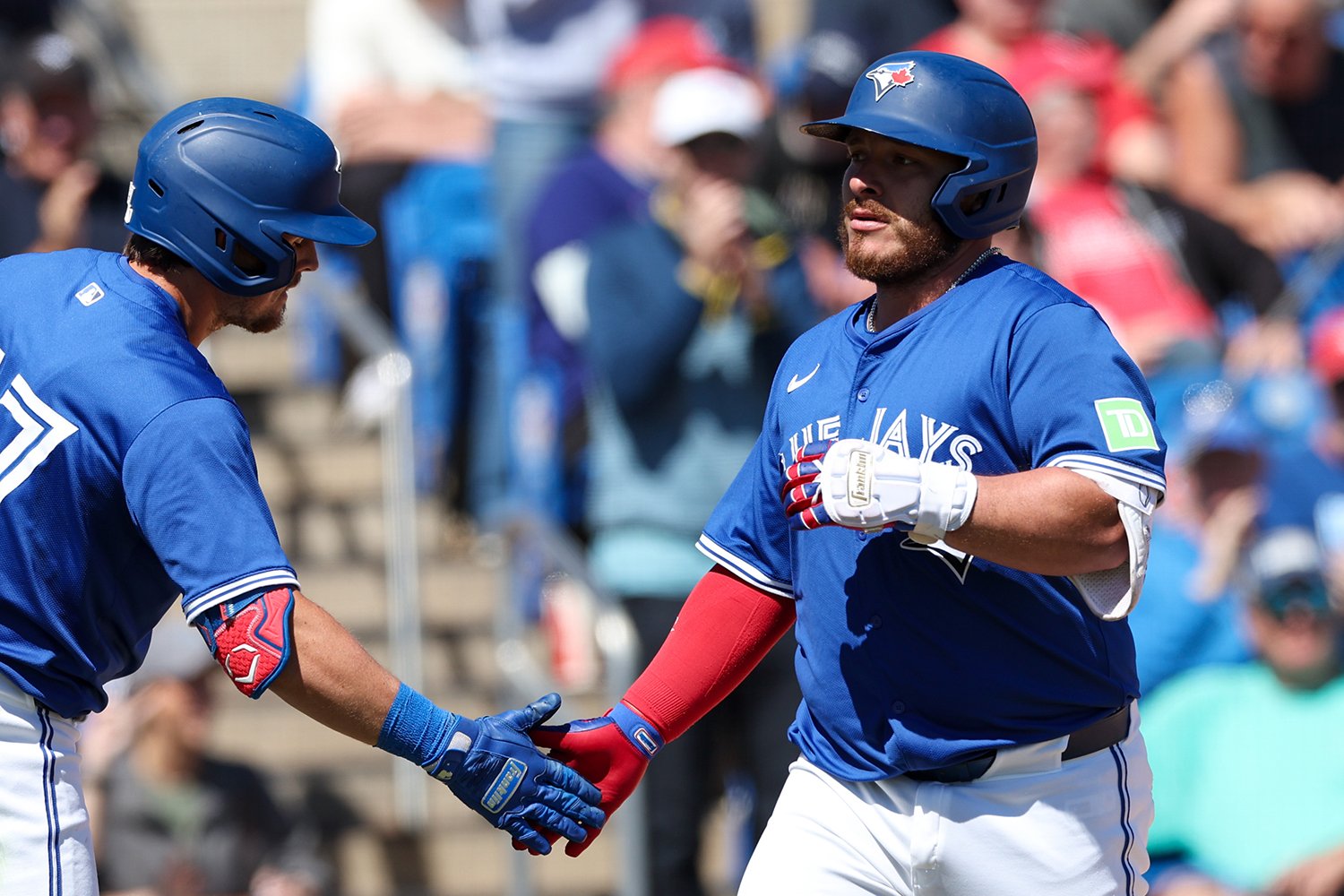 I don’t need to tell you how important Alejandro Kirk is to the Blue Jays in 2025, but we can now extend that importance into the next decade. On Saturday, Kirk agreed to a five-year, $58-million contract extension that will keep him on Canadian soil through the 2030 season. The deal has a $6-million signing bonus and no deferred money. Kirk will make $4.6 million in arbitration during the 2025 season, then the deal will buy out his final year of arbitration in 2026 and run through the 2030 season. adding a total of four years to his time in Toronto. According to Spotrac, the deal’s $11.5-million average annual value ranks sixth among all catchers. Because the deal is still unofficial pending a physical, manager John Schneider could only speak in generalities when asked about it. He still managed to say something interesting, telling MLB.com's Keegan Matheson, "Sometimes, you wonder if he’s even awake back there, which is a compliment to a catcher, I think. I’m just happy for him and for us that it’s a good fit and I’m happy for his family, too.” Catcher must be one of the few jobs in the world in which, when your boss accuses you of sleeping on the job, he means it as a compliment. As is often the case in contract extensions, Kirk left money on the table in exchange for the certainty of getting paid into the next decade. To this point in his career, Kirk has earned around $5 million, even though his on-field contributions have provided $81.7 million of value to the Blue Jays, according to FanGraphs’ valuations. Instead of testing the market at age 28, young for a free agent catcher, he'll be a free agent for the first time when he’s 32 and almost certainly on the decline. He just signed away his prime for less than it’s worth. That said, paying Kirk like a top-10 catcher in baseball does sound about right. After solid performance in shorter samples in 2020 and 2021, Kirk burst onto the scene in 2022, playing in 139 games and running a 129 wRC+ with excellent defense. He put up 4.3 fWAR, tied for fourth-most among all catchers. Even over the last two seasons, when Kirk’s offense fell off to the tune of a 95 wRC+ – below-average for a regular position player, but still above-average for a catcher – his excellent framing and blocking meant that he was worth 5.1 fWAR, ninth-most among all catchers. That is to say that Kirk has been a top-10 catcher in all of baseball, even in the two seasons when his offense fell off. Even more important, advanced offensive metrics like Statcast’s xwOBA and Baseball Prospectus’s DRC+ – which look not just at actual production, but at deserved production – indicate that Kirk’s step back hasn’t been as big as it looks. He’s still been an above-average hitter over the last couple seasons, but has just been the victim some rotten batted-ball luck. Even if you acknowledge that he probably won’t return to his 2022 form, when he launched 14 home runs, a .285 batting average, and a 129 wRC+, Kirk's true-talent level is better than what he’s shown over the past two seasons. The extension also raises the question of whether the Blue Jays will make a stronger effort to relieve some of Kirk’s large burden. He’s caught 270 games over the last three seasons, 15th-most in baseball, and the team is now wedded to him into the next decade. Keeping him rested and healthy over the long term just became a lot more important. If the Blue Jays share that concern, they have yet to demonstrate it. With Jansen gone, Tyler Heineman looks set to back Kirk up. Heineman is a 33-year-old journeyman who has put up 1.4 fWAR over parts of five seasons. This season, it looks like whatever production the Blue Jays get from the catcher spot, it will almost certainly come from come from Kirk and Kirk alone. In future seasons, protecting the investment in Kirk by finding a catcher who can share some of the workload would make a lot of sense. Overall, Blue Jays fans should be thrilled by this deal. Kirk is an excellent catcher whose offense looks primed to bounce back, even if it never returns to its previous heights. He’ll be a Blue Jay for the next six seasons, through the entirety of his prime. As with any deal, it’s possible that he gets hurt or takes a step back and the contract ends up not working out, but it’s more than worth the risk. As for Kirk, it's hard to know his motivation. He absolutely gave up the chance at quite a bit more money in order to stay in Toronto, but he’s still getting both security and life-changing money. For now, all that's left to worry about is whether the team has any more contract extensions in mind.