Brandon Glick
-
Posts
145 -
Joined
-
Last visited
Content Type
Profiles
Toronto Blue Jays Videos
2026 Toronto Blue Jays Top Prospects Ranking
Toronto Blue Jays Free Agent & Trade Rumors, Notes, & Tidbits
Guides & Resources
2025 Toronto Blue Jays Draft Pick Tracker
News
2026 Toronto Blue Jays Draft Tracker: Picks & Bonuses
Forums
Blogs
Events
Store
Downloads
Gallery
Everything posted by Brandon Glick
-
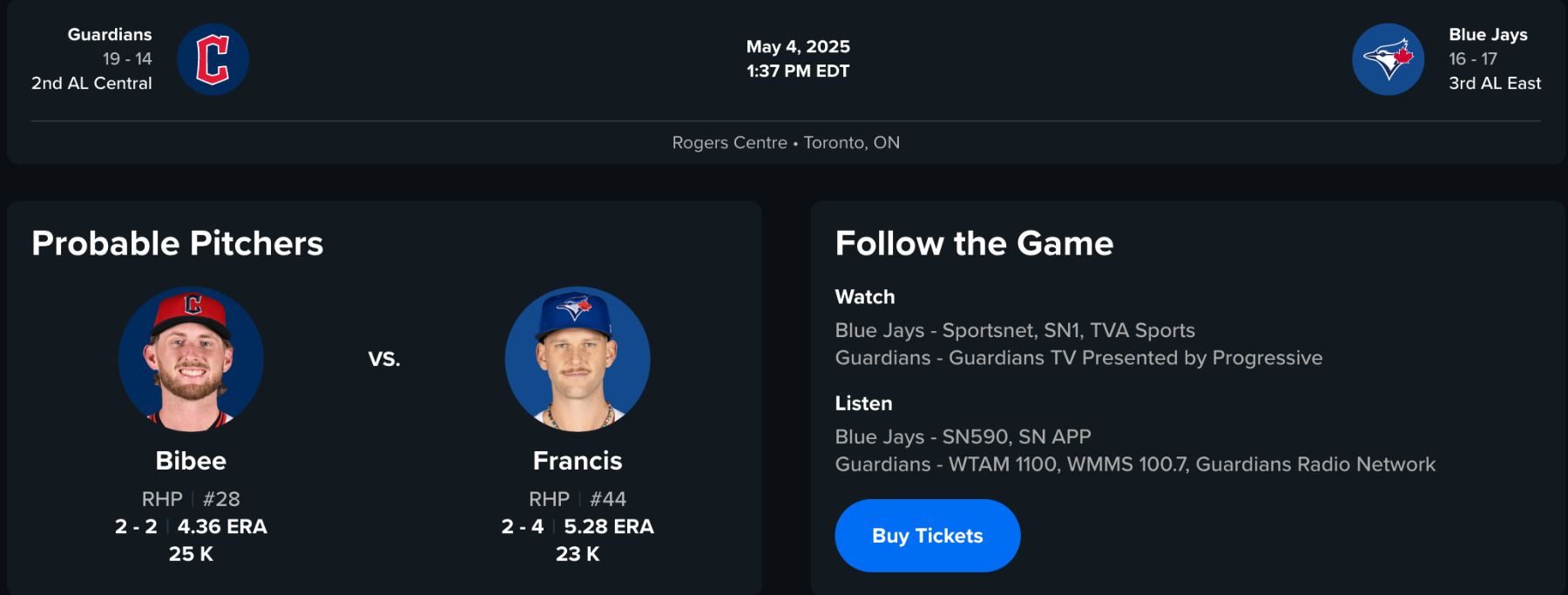
Blue Jays (Francis) vs Guardians (Bibee): 05/04/25, 1:37 pm
Brandon Glick replied to BTS's topic in Game Thread Archive
-
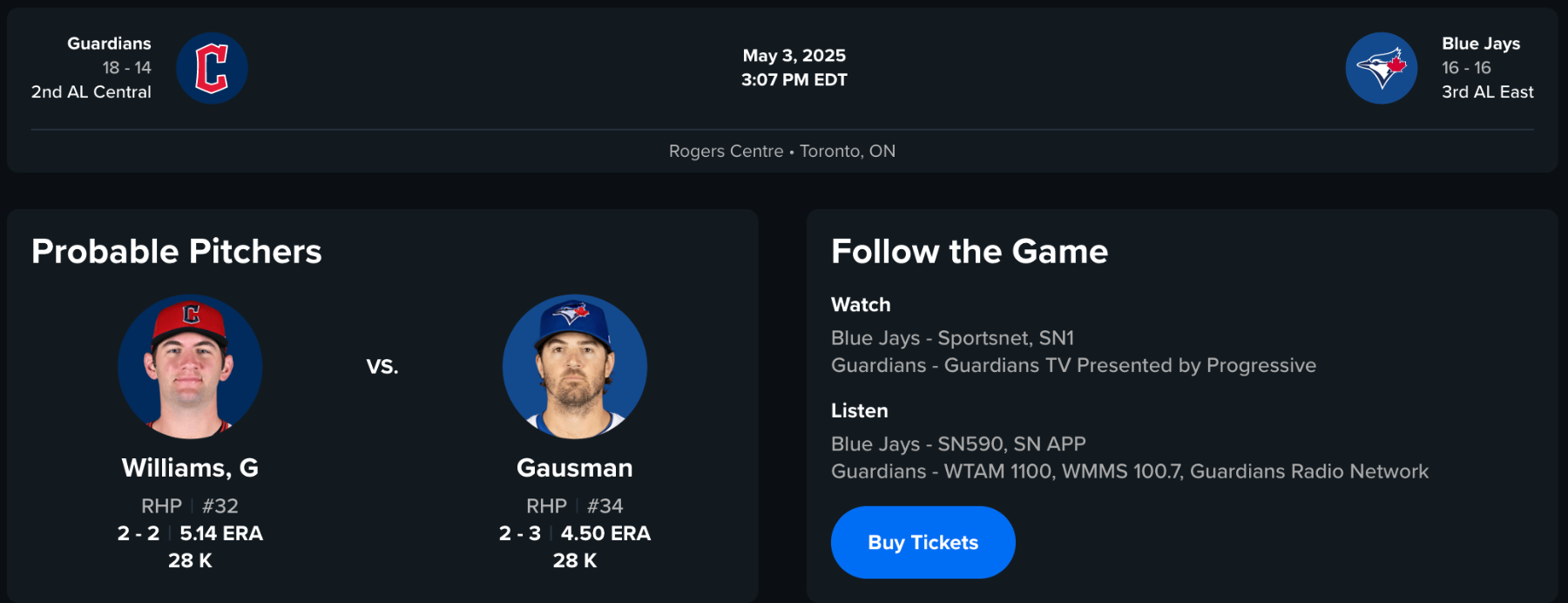
Kevin Gausman masterpiece incoming...
-
A debate on Vladimir Guerrero Jr.'s true value to the Blue Jays from Take Me Out To the Podcast. NOTE: This video was recorded shortly before Guerrero agreed to a $500 million extension. View full video
-
A debate on Vladimir Guerrero Jr.'s true value to the Blue Jays from Take Me Out To the Podcast. NOTE: This video was recorded shortly before Guerrero agreed to a $500 million extension.
-
A discussion about the marquee free agent addition who will help protect Vladimir Guerrero Jr. in the heart of Toronto's order, from Take Me Out To The Podcast.
-
A discussion about the marquee free agent addition who will help protect Vladimir Guerrero Jr. in the heart of Toronto's order, from Take Me Out To The Podcast. View full video
-
I wrote this in a waiting room after sitting on my phone for 4 hours. Happy to answer any questions people have about Tustin or the Ross.
-
This is a work of satire. Please enjoy. There are a lot of nervous fans in Toronto this offseason, and the Blue Jays continue to try and navigate the offseason before "the big one". Much has been made about the team's failures to secure star players in free agency, as well as their inability to lock down their in-house stars on long-term deals, but the front office got a small win on Thursday night, when it was announced that they had managed to avoid arbitration with Vladimir Guerrero Jr. The arbitration process is an unforgiving one, as teams and players must ruthlessly attack each other in an effort to to convince a (totally unbiased) third-party that the salary figure they submitted is a fair value for the player's contributions in the upcoming season. Avoiding this private trial may not help the team's chances to extend Guerrero Jr., but it certainly won't hurt them. `Speaking to a gaggle of independent content creators, Blue Jays general manager Ross Atkins expressed his joy in the team's ability to strike a deal with its best player: When asked by Tustin Jruedeau — a self-proclaimed "new face" to the scene — whether or not he felt the Blue Jays were nearing a contract extension with Guerrero Jr., Atkins hesitated before pointing and exclaiming "What's that over there?". By the time we all looked back, he was gone. Luckily, Tustin was able to catch up with Vladdy before we were escorted off the premises. He asked the star first baseman about the one-year, $28.5 million contract he signed, to which Guerrero Jr. replied "I just felt bad, man. You guys know how many free agents have chosen not to come here. I imagine it's gotta weigh on Ross. I was already under team control for this year, so I figured I'd throw him and the rest of the front office a bone by signing the deal they offered. Maybe it'll help them get their mojo back." Tustin said he asked if Guerrero Jr. if he expected to sign a long-term deal with Toronto, but before Tustin could get a response, Guerrero Jr. pointed out something in the corner of the room and disappeared by the time the reporter looked back. View full article
-
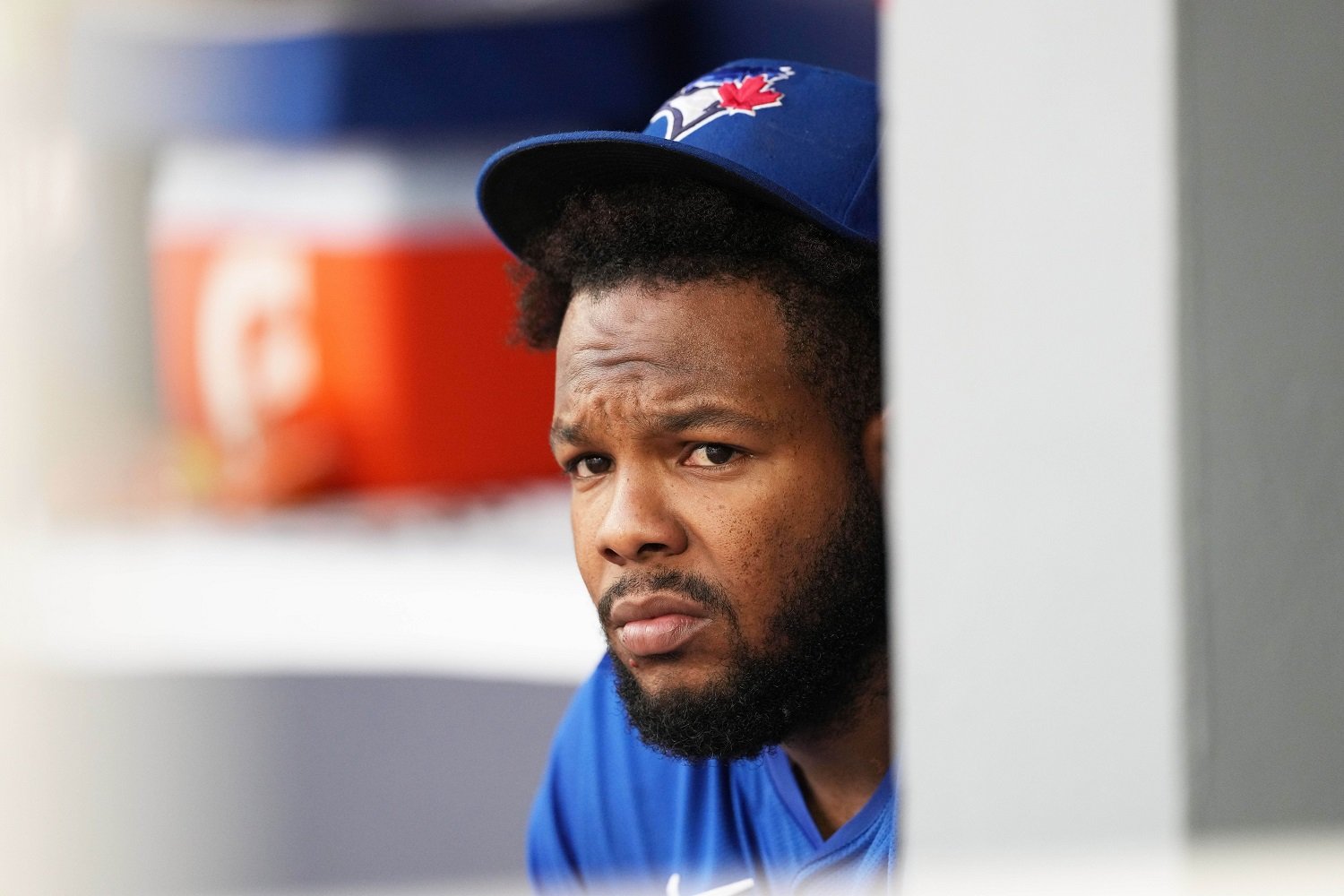 There are a lot of nervous fans in Toronto this offseason, and the Blue Jays continue to try and navigate the offseason before "the big one". Much has been made about the team's failures to secure star players in free agency, as well as their inability to lock down their in-house stars on long-term deals, but the front office got a small win on Thursday night, when it was announced that they had managed to avoid arbitration with Vladimir Guerrero Jr. The arbitration process is an unforgiving one, as teams and players must ruthlessly attack each other in an effort to to convince a (totally unbiased) third-party that the salary figure they submitted is a fair value for the player's contributions in the upcoming season. Avoiding this private trial may not help the team's chances to extend Guerrero Jr., but it certainly won't hurt them. `Speaking to a gaggle of independent content creators, Blue Jays general manager Ross Atkins expressed his joy in the team's ability to strike a deal with its best player: When asked by Tustin Jruedeau — a self-proclaimed "new face" to the scene — whether or not he felt the Blue Jays were nearing a contract extension with Guerrero Jr., Atkins hesitated before pointing and exclaiming "What's that over there?". By the time we all looked back, he was gone. Luckily, Tustin was able to catch up with Vladdy before we were escorted off the premises. He asked the star first baseman about the one-year, $28.5 million contract he signed, to which Guerrero Jr. replied "I just felt bad, man. You guys know how many free agents have chosen not to come here. I imagine it's gotta weigh on Ross. I was already under team control for this year, so I figured I'd throw him and the rest of the front office a bone by signing the deal they offered. Maybe it'll help them get their mojo back." Tustin said he asked if Guerrero Jr. if he expected to sign a long-term deal with Toronto, but before Tustin could get a response, Guerrero Jr. pointed out something in the corner of the room and disappeared by the time the reporter looked back.
 -
 In a report from Jeff Passan on Monday (locked behind the ESPN+ paywall, so we can't share everything here), the Blue Jays were listed, quite obviously, as a team that needs to make a move this offseason. Save your obligatory "no duh" for now, as one particular thing that Passan noted, somewhat in passing, is rather worrisome for a team that is far from the class of the AL East. It may not have been all that surprising when Shohei Ohtani chose the Dodgers or when Juan Soto chose the Mets, but the Blue Jays still finished somewhere in those sweepstakes. Was it off the podium? Most likely, but there's a difference between finishing fifth because Ohtani wanted to stay in Los Angeles on a $700-million deal and finishing fifth because Ohtani was worried that the team wouldn't be any good after 2025. Now, we don't know to what extent certain players — or even which free agents — took the Blue Jays' lackluster farm system into account when deciding not to come to Toronto. It's a lot to ask human beings to move their families to a new country. Unless a player is from Canada, it's not all that likely they're looking to head north of the United States. Still, this notion that the team's uncertain and uninspiring future is costing them tangible talent in the present is depressing at best and a condemnation at worst. You can see what our community members have had to say about this report over on the rumor forums of the site, but suffice to say: fans aren't happy. Take a look at different outlets' consensus Top 100 prospect rankings, and you won't find many Blue Jays prospects on those lists. MLB.com's rankings only place Trey Yesavage on the list (at the very back at No. 94), while FanGraphs is a bit nicer, giving Orelvis Martinez, Ricky Tiedemann, and Jake Bloss spots in the 80-95 range. Argue over those rankings all you like, the point stands that the farm system is lacking impact talent. Of course, the Jays are also lacking impact talent at the big league level, and what little they do have is dangerously close to walking out the door. Vladimir Guerrero Jr. and Bo Bichette are both impending free agents following the 2025 season, and Daulton Varsho, Alejandro Kirk, George Springer, Kevin Gausman, and Chris Bassitt are set to join them following the 2026 season. Toronto currently has just two players on its major league payroll that are pre-arbitration: 28-year-old Bowden Francis and Davis Schneider, who hit .191 in nearly 400 at-bats last year. Now, before we let ourselves sink into some Sartre-level existentialism, let's remind ourselves that this is merely a warning sign, not the actual doomsday siren. There's still time for the team to ink Guerrero and Bichette to extensions, or, at the very least, beef up that weak farm system by exchanging them on the trade market for top prospects. And while much of the rotation is aging and expensive, most of the team's best prospects are pitchers at various levels of the organization. Plus, plenty of quality free agents are still out there this offseason, including Anthony Santander, to whom the Jays have been extensively linked. So, yes, the Blue Jays are caught between a rock and a hard place right now. They've been kicking the can down the road for years, and it's finally back-boarded off a street sign and struck them directly in the face. 2025 may prove to be a last stand for this core — as well as the front office brain trust — but that doesn't mean the Blue Jays can't make some moves in the second half of this offseason that would position them better for the future. Then again, I say that as someone who would gladly accept $5 million to move to Canada. For actual MLB players, that may not be quite the selling point we want it to be.
- 6 comments
-
- 2
-

-
- orelvis martinez
- trey yesavage
- (and 1 more)
-
It's no secret that the Blue Jays haven't been able to lure superstars to their organization over the last few offseasons. What's particularly striking is that a depleted farm system is what's keeping the team from landing the big fish. In a report from Jeff Passan on Monday (locked behind the ESPN+ paywall, so we can't share everything here), the Blue Jays were listed, quite obviously, as a team that needs to make a move this offseason. Save your obligatory "no duh" for now, as one particular thing that Passan noted, somewhat in passing, is rather worrisome for a team that is far from the class of the AL East. It may not have been all that surprising when Shohei Ohtani chose the Dodgers or when Juan Soto chose the Mets, but the Blue Jays still finished somewhere in those sweepstakes. Was it off the podium? Most likely, but there's a difference between finishing fifth because Ohtani wanted to stay in Los Angeles on a $700-million deal and finishing fifth because Ohtani was worried that the team wouldn't be any good after 2025. Now, we don't know to what extent certain players — or even which free agents — took the Blue Jays' lackluster farm system into account when deciding not to come to Toronto. It's a lot to ask human beings to move their families to a new country. Unless a player is from Canada, it's not all that likely they're looking to head north of the United States. Still, this notion that the team's uncertain and uninspiring future is costing them tangible talent in the present is depressing at best and a condemnation at worst. You can see what our community members have had to say about this report over on the rumor forums of the site, but suffice to say: fans aren't happy. Take a look at different outlets' consensus Top 100 prospect rankings, and you won't find many Blue Jays prospects on those lists. MLB.com's rankings only place Trey Yesavage on the list (at the very back at No. 94), while FanGraphs is a bit nicer, giving Orelvis Martinez, Ricky Tiedemann, and Jake Bloss spots in the 80-95 range. Argue over those rankings all you like, the point stands that the farm system is lacking impact talent. Of course, the Jays are also lacking impact talent at the big league level, and what little they do have is dangerously close to walking out the door. Vladimir Guerrero Jr. and Bo Bichette are both impending free agents following the 2025 season, and Daulton Varsho, Alejandro Kirk, George Springer, Kevin Gausman, and Chris Bassitt are set to join them following the 2026 season. Toronto currently has just two players on its major league payroll that are pre-arbitration: 28-year-old Bowden Francis and Davis Schneider, who hit .191 in nearly 400 at-bats last year. Now, before we let ourselves sink into some Sartre-level existentialism, let's remind ourselves that this is merely a warning sign, not the actual doomsday siren. There's still time for the team to ink Guerrero and Bichette to extensions, or, at the very least, beef up that weak farm system by exchanging them on the trade market for top prospects. And while much of the rotation is aging and expensive, most of the team's best prospects are pitchers at various levels of the organization. Plus, plenty of quality free agents are still out there this offseason, including Anthony Santander, to whom the Jays have been extensively linked. So, yes, the Blue Jays are caught between a rock and a hard place right now. They've been kicking the can down the road for years, and it's finally back-boarded off a street sign and struck them directly in the face. 2025 may prove to be a last stand for this core — as well as the front office brain trust — but that doesn't mean the Blue Jays can't make some moves in the second half of this offseason that would position them better for the future. Then again, I say that as someone who would gladly accept $5 million to move to Canada. For actual MLB players, that may not be quite the selling point we want it to be. View full article
-
Sorry if I didn't make it clear enough in the piece: he was in the 29th percentile in EV in 2022. It's never been a strong suit for him, but the difference between an 87.8 MPH EV (where he was in 2022) and 86.3 MPH EV (2024) is monumental for a guy with his speed and hands. I agree that the Blue Jays probably won't be able to restore him to his MVP-caliber form, but he's a much better player than he showed last year. There's gotta be something in his profile the team really liked to give up Horwitz for him.
- 6 replies
-
- 1
-
-
- andres gimenez
- spencer horwitz
- (and 1 more)
-
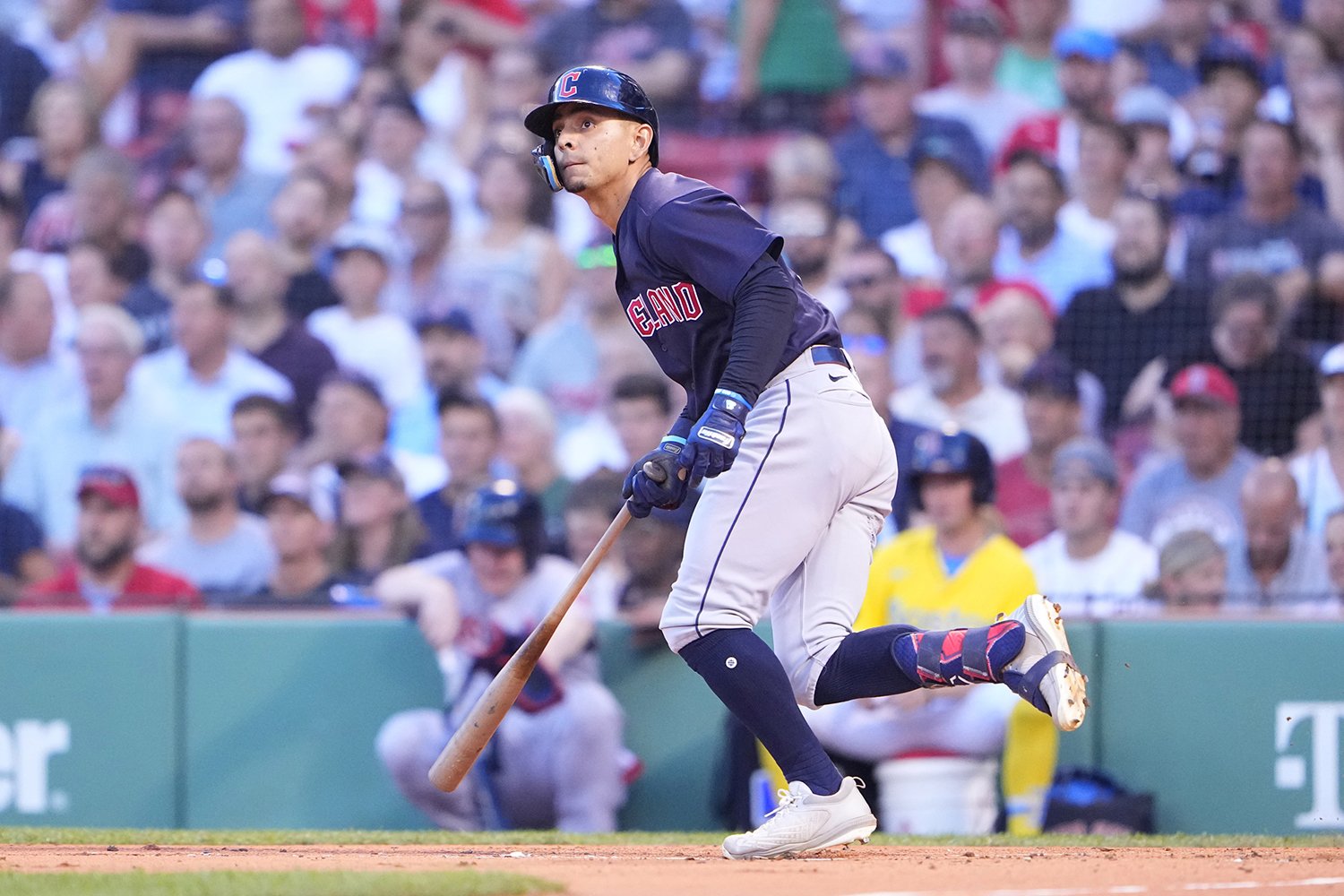 To recap: back during the Winter Meetings, the Blue Jays were going hard after Max Fried following a failed pursuit of Juan Soto. Fried would end up picking the Yankees, who were willing to give him an eighth year on his contract, and Toronto immediately responded by completing a trade for All-Star second baseman Andrés Giménez. Before diving into the 26-year-old's profile, it's worth noting that Nick Sandlin, the other piece coming to Toronto, has got three years of team control before hitting free agency. On the surface, his numbers are promising — career 3.27 ERA, 55-plus innings pitched in back-to-back seasons, 27.7% strikeout rate — but his peripherals are concerning. His FIP was a bloated 5.23 in 2024, and his career figure is more than a full run higher than his ERA (4.41). His walk rate sits at 11.4%, and his average exit velocity allowed has climbed throughout his career, peaking at 89.6 MPH in 2024. He's got elite off-speed offerings and a top-notch whiff rate, but the Blue Jays have work to do in order to extract maximum value out of Sandlin as a reliever. However, Giménez is the true prize in the deal that cost the Blue Jays slugging first baseman Spencer Horwitz. Giménez has been worth 16.7 WAR over the past three seasons, mostly thanks to his otherworldly defense and brilliant baserunning (20+ steals in each year since 2022). His bat, however, has declined, with his OPS peaking at .837 in 2022 and falling precipitously to its 2024 mark of .638. The Blue Jays are gambling on Giménez to make a bounce back at the plate. He is signed to a seven-year, $106.5-million deal that runs through 2029 (with a team option for 2030) and will pay him $23 million in each season from 2027 onwards. It's also worth noting that Giménez, who's played at least 146 games in each of the past three seasons, will bring some much-needed stability to second base. The Blue Jays started eight different players there in 2024. Given that he ranked in the 100th percentile for his fielding range and has an above-average arm, he'll provide positive value to the team on the strength of his defense alone. So let's take a look at his bat and whether or not he can recover at the plate enough to be more than just a Gold Glove in the field. Using that 2022 season as his benchmark, Giménez has declined significantly in terms of hard-hit rate (37.8% in 2022 to 28.5% in 2024) and pull rate (35.2% to 33.7%). Now, Giménez isn't a true power hitter, but that last figure matters a whole lot to a player who generates practically all of it when hitting to his pull side. Below is a spray chart that show all of his base hits over the past three seasons. In that time, he's hit one home run to the left of center field. Over the past three seasons, his wOBA is .452 to the pull side, .278 up the middle, and .303 to the opposite side. It isn't hard to see that so much of Giménez's value at the plate is tied into how much he can pull the ball. Like most players, that's where he does his damage. And with his speed and ability to generate base hits off of weak contact in or near the infield, he doesn't need to provide much power to offer a wholly usable offensive profile. He just can't produce a .087 ISO (.169 in 2022) and continue to get away with it. This is also where launch angles come into play, and Giménez hit the ball on the ground much more lately. From 2022 to 2024, his average launch angle fell from 13.1% to 8.6%, while his groundball rate has climbed from 48.2% to 51.1%. This presents a bit of a paradox for Giménez: if he wants to provide more power at the plate, he needs to pull the ball more. But if he can't lift the ball in the air, he needs to utilize an all-fields approach so he can generate hits from his speed. What he can't do is commit to both. It'll be up to the Blue Jays' staff to figure out which plate approach will be most conducive to his success in 2025 and beyond. As his 90th-percentile exit velocity numbers (which indicate overall power potential) have fallen, his zone rate has increased; pitchers are challenging him because they're not afraid that he'll do real damage. Now, for some good news, Giménez has improved in some key areas in recent years. His exit velocity is actually up from 2022, though he's merely in the 29th percentile after ranking in the bottom one percent of MLB two years ago. His strikeout rate is nearly down five points, and he's improved on it every year since 2021. His line-drive rate (24.0%) was practically the same as it was during his best season, and his .286 BABIP suggests some bad luck may have been involved in his results last year, given his career .304 mark. It's clear that he's traded some power for some contact. There's a talented hitter somewhere in there, but the Blue Jays need to decide which version of Giménez they want to see. Do they want the table-setting, slap-hitting leadoff man who can punch the ball to all fields, or the player who leans into his pull-first approach and provides some power to the top or bottom of the lineup? Neither answer to that $106 million question is wrong, but getting caught in the middle won't work.
- 6 comments
-
- 2
-
-
- andres gimenez
- spencer horwitz
- (and 1 more)
-
Last month, the Blue Jays acquired their new second baseman. What will he bring to the table next season? To recap: back during the Winter Meetings, the Blue Jays were going hard after Max Fried following a failed pursuit of Juan Soto. Fried would end up picking the Yankees, who were willing to give him an eighth year on his contract, and Toronto immediately responded by completing a trade for All-Star second baseman Andrés Giménez. Before diving into the 26-year-old's profile, it's worth noting that Nick Sandlin, the other piece coming to Toronto, has got three years of team control before hitting free agency. On the surface, his numbers are promising — career 3.27 ERA, 55-plus innings pitched in back-to-back seasons, 27.7% strikeout rate — but his peripherals are concerning. His FIP was a bloated 5.23 in 2024, and his career figure is more than a full run higher than his ERA (4.41). His walk rate sits at 11.4%, and his average exit velocity allowed has climbed throughout his career, peaking at 89.6 MPH in 2024. He's got elite off-speed offerings and a top-notch whiff rate, but the Blue Jays have work to do in order to extract maximum value out of Sandlin as a reliever. However, Giménez is the true prize in the deal that cost the Blue Jays slugging first baseman Spencer Horwitz. Giménez has been worth 16.7 WAR over the past three seasons, mostly thanks to his otherworldly defense and brilliant baserunning (20+ steals in each year since 2022). His bat, however, has declined, with his OPS peaking at .837 in 2022 and falling precipitously to its 2024 mark of .638. The Blue Jays are gambling on Giménez to make a bounce back at the plate. He is signed to a seven-year, $106.5-million deal that runs through 2029 (with a team option for 2030) and will pay him $23 million in each season from 2027 onwards. It's also worth noting that Giménez, who's played at least 146 games in each of the past three seasons, will bring some much-needed stability to second base. The Blue Jays started eight different players there in 2024. Given that he ranked in the 100th percentile for his fielding range and has an above-average arm, he'll provide positive value to the team on the strength of his defense alone. So let's take a look at his bat and whether or not he can recover at the plate enough to be more than just a Gold Glove in the field. Using that 2022 season as his benchmark, Giménez has declined significantly in terms of hard-hit rate (37.8% in 2022 to 28.5% in 2024) and pull rate (35.2% to 33.7%). Now, Giménez isn't a true power hitter, but that last figure matters a whole lot to a player who generates practically all of it when hitting to his pull side. Below is a spray chart that show all of his base hits over the past three seasons. In that time, he's hit one home run to the left of center field. Over the past three seasons, his wOBA is .452 to the pull side, .278 up the middle, and .303 to the opposite side. It isn't hard to see that so much of Giménez's value at the plate is tied into how much he can pull the ball. Like most players, that's where he does his damage. And with his speed and ability to generate base hits off of weak contact in or near the infield, he doesn't need to provide much power to offer a wholly usable offensive profile. He just can't produce a .087 ISO (.169 in 2022) and continue to get away with it. This is also where launch angles come into play, and Giménez hit the ball on the ground much more lately. From 2022 to 2024, his average launch angle fell from 13.1% to 8.6%, while his groundball rate has climbed from 48.2% to 51.1%. This presents a bit of a paradox for Giménez: if he wants to provide more power at the plate, he needs to pull the ball more. But if he can't lift the ball in the air, he needs to utilize an all-fields approach so he can generate hits from his speed. What he can't do is commit to both. It'll be up to the Blue Jays' staff to figure out which plate approach will be most conducive to his success in 2025 and beyond. As his 90th-percentile exit velocity numbers (which indicate overall power potential) have fallen, his zone rate has increased; pitchers are challenging him because they're not afraid that he'll do real damage. Now, for some good news, Giménez has improved in some key areas in recent years. His exit velocity is actually up from 2022, though he's merely in the 29th percentile after ranking in the bottom one percent of MLB two years ago. His strikeout rate is nearly down five points, and he's improved on it every year since 2021. His line-drive rate (24.0%) was practically the same as it was during his best season, and his .286 BABIP suggests some bad luck may have been involved in his results last year, given his career .304 mark. It's clear that he's traded some power for some contact. There's a talented hitter somewhere in there, but the Blue Jays need to decide which version of Giménez they want to see. Do they want the table-setting, slap-hitting leadoff man who can punch the ball to all fields, or the player who leans into his pull-first approach and provides some power to the top or bottom of the lineup? Neither answer to that $106 million question is wrong, but getting caught in the middle won't work. View full article
- 6 replies
-
- 5
-
-
- andres gimenez
- spencer horwitz
- (and 1 more)
-
In The Loaded AL East, The Blue Jays Must Choose Their Path Forward
Brandon Glick posted an article in Blue Jays
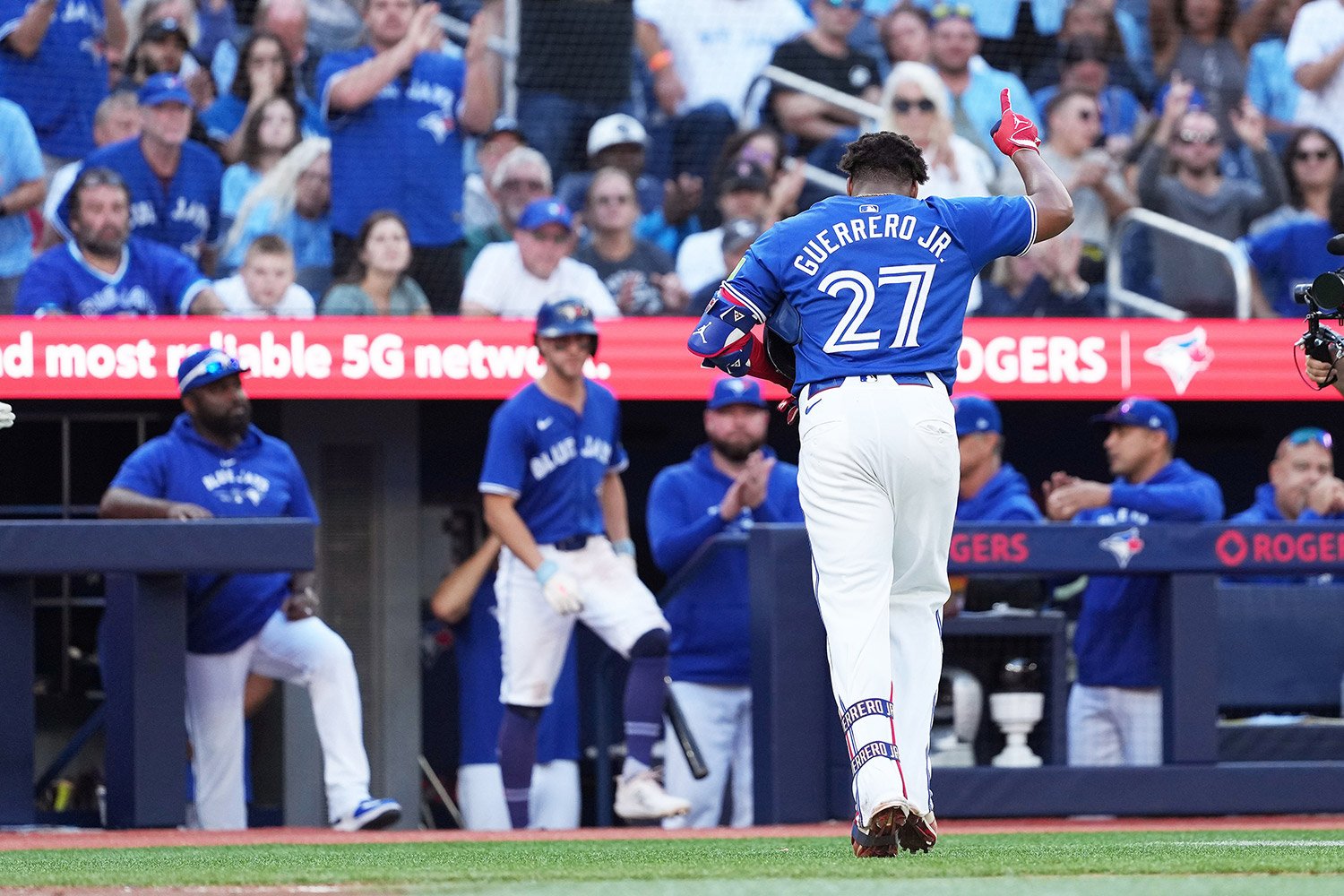 Welcome to Jays Centre, everyone! It's just Day One of what will be a long process as we rebrand and expand the site, but we're all very excited to be a part of this community. Speaking personally, I've followed the team closely since 2010, and I remember those Adam Lind-Vernon Wells-Ricky Romero teams as fondly as any squad the Blue Jays have trotted out since. I hope you're as jazzed as we are to get going here — here's to a great 2025! It's my first article here, so I'll cut right to the chase on this one: the Blue Jays haven't won a playoff game since 2016. They're 0-6 in the AL Wild Card round since 2020 (appearing in 2020, 2022, and 2023). And the real kicker: they haven't won the division since 2015, despite winning 89 or more games four times since then. Such is life playing in the gauntlet that is the AL East, where the endlessly-pocketed Yankees reside. It's also where the perennially overachieving Rays, upstart Orioles, and rapidly improving Red Sox call home. Sure, if the Blue Jays had the privilege of playing in, say, the NL Central, where the only real competition is the half-heartedly-trying Chicago Cubs and cost-cutting Milwaukee Brewers, they could get away with an offseason where their biggest move was trading Spencer Horwitz (and Nick Mitchell) for Andres Giménéz (and Nick Sandlin). We all know what awaits the Blue Jays in the next year or two. A lot of this core that was once young is now getting old if they aren't already there. George Springer, Kevin Gausman, and Chris Bassitt are all in their mid-30s and due for free agency after 2025 or 2026. Bo Bichette is only 26, but he's gone after next season, too. The same, of course, is true for Vladimir Guerrero Jr., who promises to be one of the best free agents on the market next offseason if he makes it there. Toronto currently has just two players on its major league payroll that are pre-arbitration: 28-year-old Bowden Francis and Davis Schneider, who hit .191 in nearly 400 at-bats last year. If that sounds like I'm painting a bit of a grim picture, that's because I am. This core has felt so close to breaking through for so long and is now expiring. A lot of the stories written about the Blue Jays over the last few offseasons are how they continue to finish "just behind" the winners of the big free agency sweepstakes. They lost out on Shohei Ohtani after a commendable effort; they "impressed' Juan Soto in meetings; they offered more money to Corbin Burnes than the Diamondbacks; these stories are as frustrating as they are repetitious. The two big-name free agents the Blue Jays have landed with this Bichette-Guerrero core in place were Springer (prior to the 2021 season) and Gausman (after the 2021 season). Sure, they've supplemented them with players like Bassitt (via free agency) and José Berrios (via trade, then extension), but they never really developed the rest of the team beyond a couple of key role players like Alejandro Kirk and those 15 minutes when Alek Manoah was good. It's an adage in sports, but the worst place to be is caught in the middle — too good to lose, but not good enough to win. The Blue Jays can (and will) ride this thing out into the beginning of the 2025 season, and there's a better-than-you-may-think chance that they can turn things around from a dismal 2024 with some better health and a few more additions like Giménez. But the mediocrity treadmill is no place for a franchise that's supposed to be taking itself seriously. If the team wants to extend Guerrero Jr., and it's willing to pay that $450+ million price tag, then it better look long and hard in the mirror about what it will take to build around him for the next decade. If it decides it's not worth the trouble and it's time to blow the whole thing up again, they better get prepared to hunker down for awhile because the farm system isn't anything to write home about, and the AL East is only getting tougher. Either way, they have to choose, and they have to do so quickly. Letting the last remnants of that once-tantalizing core walk away for nothing won't get them anything but a ticket to the bottom of the division for the foreseeable future.
-
- 4
-
-
- vladimir guerrero jr
- bo bichette
- (and 3 more)
-
In baseball's best division, the Blue Jays must commit to competing with behemoths or punting on a core that never quite worked out. Welcome to Jays Centre, everyone! It's just Day One of what will be a long process as we rebrand and expand the site, but we're all very excited to be a part of this community. Speaking personally, I've followed the team closely since 2010, and I remember those Adam Lind-Vernon Wells-Ricky Romero teams as fondly as any squad the Blue Jays have trotted out since. I hope you're as jazzed as we are to get going here — here's to a great 2025! It's my first article here, so I'll cut right to the chase on this one: the Blue Jays haven't won a playoff game since 2016. They're 0-6 in the AL Wild Card round since 2020 (appearing in 2020, 2022, and 2023). And the real kicker: they haven't won the division since 2015, despite winning 89 or more games four times since then. Such is life playing in the gauntlet that is the AL East, where the endlessly-pocketed Yankees reside. It's also where the perennially overachieving Rays, upstart Orioles, and rapidly improving Red Sox call home. Sure, if the Blue Jays had the privilege of playing in, say, the NL Central, where the only real competition is the half-heartedly-trying Chicago Cubs and cost-cutting Milwaukee Brewers, they could get away with an offseason where their biggest move was trading Spencer Horwitz (and Nick Mitchell) for Andres Giménéz (and Nick Sandlin). We all know what awaits the Blue Jays in the next year or two. A lot of this core that was once young is now getting old if they aren't already there. George Springer, Kevin Gausman, and Chris Bassitt are all in their mid-30s and due for free agency after 2025 or 2026. Bo Bichette is only 26, but he's gone after next season, too. The same, of course, is true for Vladimir Guerrero Jr., who promises to be one of the best free agents on the market next offseason if he makes it there. Toronto currently has just two players on its major league payroll that are pre-arbitration: 28-year-old Bowden Francis and Davis Schneider, who hit .191 in nearly 400 at-bats last year. If that sounds like I'm painting a bit of a grim picture, that's because I am. This core has felt so close to breaking through for so long and is now expiring. A lot of the stories written about the Blue Jays over the last few offseasons are how they continue to finish "just behind" the winners of the big free agency sweepstakes. They lost out on Shohei Ohtani after a commendable effort; they "impressed' Juan Soto in meetings; they offered more money to Corbin Burnes than the Diamondbacks; these stories are as frustrating as they are repetitious. The two big-name free agents the Blue Jays have landed with this Bichette-Guerrero core in place were Springer (prior to the 2021 season) and Gausman (after the 2021 season). Sure, they've supplemented them with players like Bassitt (via free agency) and José Berrios (via trade, then extension), but they never really developed the rest of the team beyond a couple of key role players like Alejandro Kirk and those 15 minutes when Alek Manoah was good. It's an adage in sports, but the worst place to be is caught in the middle — too good to lose, but not good enough to win. The Blue Jays can (and will) ride this thing out into the beginning of the 2025 season, and there's a better-than-you-may-think chance that they can turn things around from a dismal 2024 with some better health and a few more additions like Giménez. But the mediocrity treadmill is no place for a franchise that's supposed to be taking itself seriously. If the team wants to extend Guerrero Jr., and it's willing to pay that $450+ million price tag, then it better look long and hard in the mirror about what it will take to build around him for the next decade. If it decides it's not worth the trouble and it's time to blow the whole thing up again, they better get prepared to hunker down for awhile because the farm system isn't anything to write home about, and the AL East is only getting tougher. Either way, they have to choose, and they have to do so quickly. Letting the last remnants of that once-tantalizing core walk away for nothing won't get them anything but a ticket to the bottom of the division for the foreseeable future. View full article
-
- 2
-
-
- vladimir guerrero jr
- bo bichette
- (and 3 more)