


Brandon Glick
-
Posts
145 -
Joined
-
Last visited
Content Type
Profiles
Toronto Blue Jays Videos
2026 Toronto Blue Jays Top Prospects Ranking
Toronto Blue Jays Free Agent & Trade Rumors, Notes, & Tidbits
Guides & Resources
2025 Toronto Blue Jays Draft Pick Tracker
News
2026 Toronto Blue Jays Draft Tracker: Picks & Bonuses
Forums
Blogs
Events
Store
Downloads
Gallery
Everything posted by Brandon Glick
-
The Toronto Blue Jays signed yet another premier free agent in Kazuma Okamoto, but does his presence get in the way of another pact with Bo Bichette?
-
The Toronto Blue Jays sat on their laurels at the Winter Meetings while watching the rest of the league try to catch up to their signings of Dylan Cease and Cody Ponce.
-
The Toronto Blue Jays sat on their laurels at the Winter Meetings while watching the rest of the league try to catch up to their signings of Dylan Cease and Cody Ponce. View full video
-
Finally squashing the big-name free agent narrative, the Toronto Blue Jays' signing of ace pitcher Dylan Cease positions them at the forefront of the AL East for a long time. View full video
-
Finally squashing the big-name free agent narrative, the Toronto Blue Jays' signing of ace pitcher Dylan Cease positions them at the forefront of the AL East for a long time.
-
The Toronto Blue Jays have long been linked to Munetaka Murakami, but they may favor another NPB star with fewer red flags in Kazuma Okamoto. View full video
-
The Toronto Blue Jays have long been linked to Munetaka Murakami, but they may favor another NPB star with fewer red flags in Kazuma Okamoto.
-
A heartbreaking ending can't stop Blue Jays fans from remembering how fun—and important—the team's historic turnaround was.
-
A heartbreaking ending can't stop Blue Jays fans from remembering how fun—and important—the team's historic turnaround was. View full video
-
In devastating fashion, the Toronto Blue Jays came up just short in the 2025 World Series.
-
In devastating fashion, the Toronto Blue Jays came up just short in the 2025 World Series. View full video
-
Tied 2-2 against the reigning champion Dodgers, rookie pitcher Trey Yesavage authored one of the most legendary rookie performances in baseball history to put the Blue Jays on the cusp of a World Series title. View full video
-
Tied 2-2 against the reigning champion Dodgers, rookie pitcher Trey Yesavage authored one of the most legendary rookie performances in baseball history to put the Blue Jays on the cusp of a World Series title.
-
A crucial win in Game 4 behind the heroics of Shane Bieber and Vladimir Guerrero Jr. has put the Blue Jays in position to stun the Dodgers in the World Series. View full video
-
A crucial win in Game 4 behind the heroics of Shane Bieber and Vladimir Guerrero Jr. has put the Blue Jays in position to stun the Dodgers in the World Series.
-
After losing a soul-draining 18-inning affair in Game 3, the Blue Jays must find a way to stop Shohei Ohtani and the Dodgers from running away with the World Series. View full video
-
After losing a soul-draining 18-inning affair in Game 3, the Blue Jays must find a way to stop Shohei Ohtani and the Dodgers from running away with the World Series.
-
Losing a game in the World Series is always a gut punch. That's especially true when you blow a lead on the road—the chance to take (back) home-field advantage is a difficult one to miss. It's even more painful when the loss takes a previously tied series and puts the odds firmly in your opponent's favor. So, what is the feeling you're supposed to have when all of that happens... in an 18-inning marathon? Indeed, six hours and 39 minutes after the first pitch of Game 3 of the 2025 World Series, the Los Angeles Dodgers and Freddie Freeman walked off against the Toronto Blue Jays in the ultimate battle of attrition. It was the second time in seven years that the Dodgers won Game 3 of the World Series in the 18th inning on a walk-off against an AL East opponent (Red Sox, 2018). Seeing as you can't feasibly deploy a strategy of "don't let the game get to the 18th frame" on a nightly basis, the Blue Jays will need to find another way to recover from one of the most devastating losses in postseason history. There's plenty to analyze from what will undoubtedly go down as the most famous game from this series. Shohei Ohtani hit two home runs and reached base NINE times. Max Muncy went 0-for-7. George Springer got hurt and may not return. Alejandro Kirk hit another postseason home run. In a game where the two teams combined for 11 runs and 31 hits, you'd think offense would be the story. And yet, it's the unbelievable efforts from both pitching staffs that stands above all else. The starting pitchers—Max Scherzer and Tyler Glasnow—were far from their best, as both failed to get out of the fifth inning. That left 38 outs for the Blue Jays' bullpen to cover (37 for the Dodgers) just to get the game to the 18th inning. As you'd expect, both teams had to empty their entire reserves to complete this game. Here is a list of every pitcher that entered Game 3 after the starters departed (and their pitch count): Toronto Blue Jays Los Angeles Dodgers Mason Fluharty (14) Anthony Banda (3) Louis Varland (20) Justin Wrobleski (28) Seranthony Dominguez (27) Blake Treinen (15) Chris Bassitt (8) Jack Dreyer (5) Jeff Hoffman (33) Roki Sasaki (29) Braydon Fisher (19) Emmet Sheehan (37) Eric Lauer (68) Clayton Kershaw (8) Brendon Little (29) Edgardo Henriquez (30) Will Klein (72) For those keeping track at home, that is every reliever listed on both rosters. Given those pitch counts, who is realistically available in Game 4? Fluharty, Bassitt, and Fisher for the Jays, and Banda, Dreyer, Treinen, and maybe Kershaw for the Dodgers? You could argue that it'll be all hands on deck, so most will be available if another marathon ensues, but the point is that both relief corps will be gassed for the next two games in Los Angeles. That's only going to make the starting pitchers more important in Game 4, and lo and behold, those duties will fall upon trade deadline acquisition Shane Bieber. The 30-year-old right-hander has been as good as advertised since arriving from Cleveland in July, pitching to a 3.57 ERA and 4.47 FIP in 40 1/3 regular season innings. He's also handled three (mostly solid) starts in the postseason, including a strong six-inning performance against the Seattle Mariners in the tide-turning Game 3 of the ALCS. He's certainly not the same pitcher he was five years ago, but even with diminished fastball velocity following his Tommy John surgery, he's maintained his elite walk (4.4%) and whiff rates (27.9%). He's also generating more ground-balls than he has in the past (49.1%), which should help him remain efficient against the Dodgers. The good news is the 2020 AL Cy Young Award winner did throw at least 87 pitches in all of his regular season starts. John Schneider hasn't trusted him to flex those durable muscles too often in October, but Bieber has the ability to handle a lot of length—which may be more necessity than luxury right now, anyways. Of course, Bieber's opponent has the same pressure on him, but, of course, it just so happens to be Ohtani. The two-way phenom has been excellent on the mound this postseason, pitching six innings in both outings while allowing just three earned runs and striking out 19. His pitch count reached 100 in the NLCS against the Milwaukee Brewers, so if he's efficient, he can certainly give the Dodgers the length they need. However, he'll also be far less fresh than Bieber, simply by virtue of having been part of last night's historic contest. Playing 18 innings and reaching base nine times takes a lot out of a guy—even as a designated hitter. Is that reason enough to believe Bieber can out-duel Ohtani? Maybe not, seeing as the latter is a singularly-great entity that chose this sport as its area of expertise, but after 18 innings of grueling, heartbreaking baseball, this World Series has simply devolved into a battle of attrition. Bieber might not need to be better than Ohtani; he may just have to outlast him. Lastly, for anyone needing a pick-me-up after last night's sleep-depriving affair, remember that in 2018, the Red Sox came back after their own Game 3 heartbreak to win the next two contests at Dodger Stadium and close out the series. Though the Blue Jays can't win it all by Game 5 this time around, they just need one heroic start from their primary trade deadline acquisition to ensure the World Series comes back to Canada. That's not too much to ask, right? View full article
-
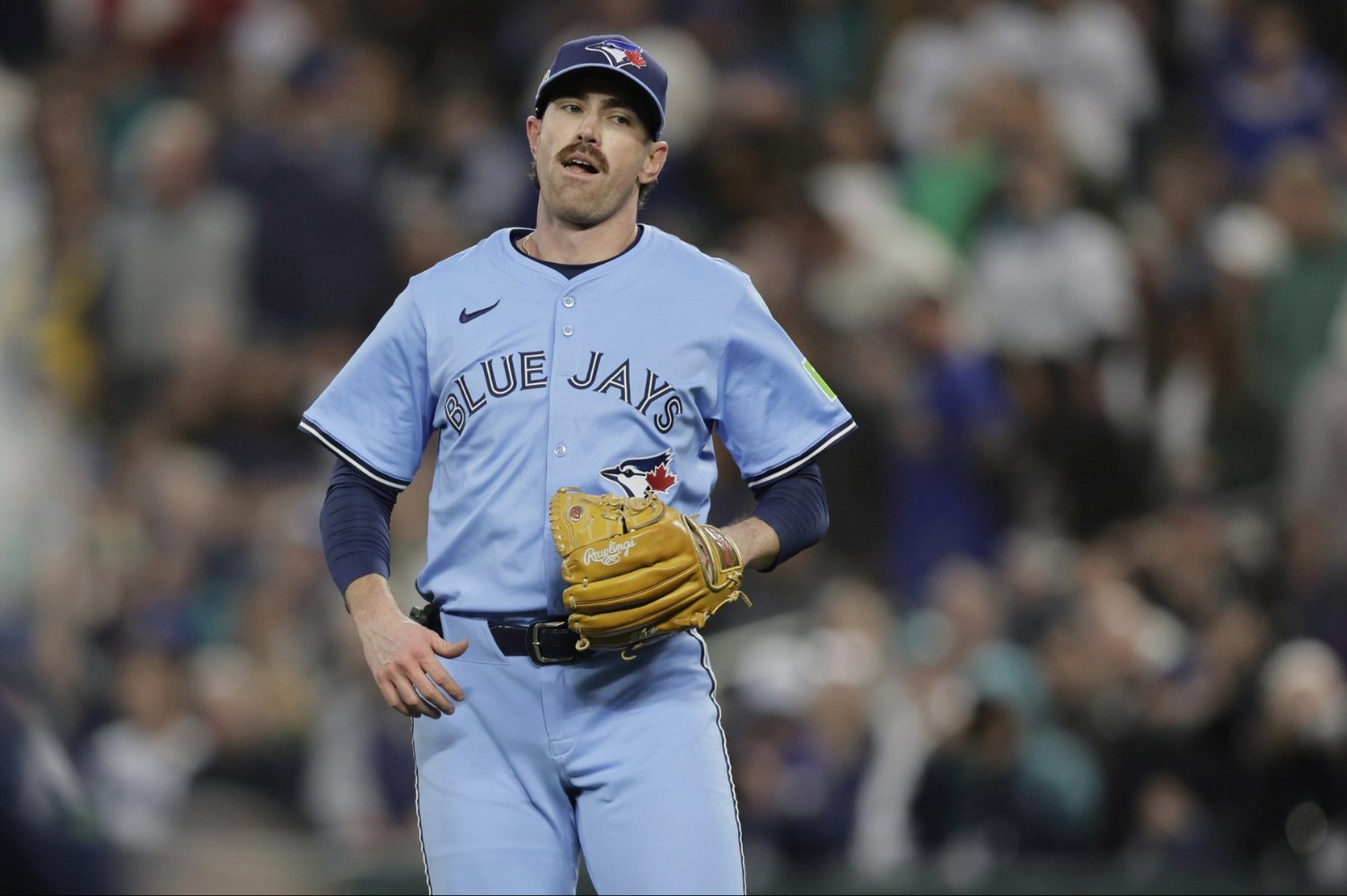 Losing a game in the World Series is always a gut punch. That's especially true when you blow a lead on the road—the chance to take (back) home-field advantage is a difficult one to miss. It's even more painful when the loss takes a previously tied series and puts the odds firmly in your opponent's favor. So, what is the feeling you're supposed to have when all of that happens... in an 18-inning marathon? Indeed, six hours and 39 minutes after the first pitch of Game 3 of the 2025 World Series, the Los Angeles Dodgers and Freddie Freeman walked off against the Toronto Blue Jays in the ultimate battle of attrition. It was the second time in seven years that the Dodgers won Game 3 of the World Series in the 18th inning on a walk-off against an AL East opponent (Red Sox, 2018). Seeing as you can't feasibly deploy a strategy of "don't let the game get to the 18th frame" on a nightly basis, the Blue Jays will need to find another way to recover from one of the most devastating losses in postseason history. There's plenty to analyze from what will undoubtedly go down as the most famous game from this series. Shohei Ohtani hit two home runs and reached base NINE times. Max Muncy went 0-for-7. George Springer got hurt and may not return. Alejandro Kirk hit another postseason home run. In a game where the two teams combined for 11 runs and 31 hits, you'd think offense would be the story. And yet, it's the unbelievable efforts from both pitching staffs that stands above all else. The starting pitchers—Max Scherzer and Tyler Glasnow—were far from their best, as both failed to get out of the fifth inning. That left 38 outs for the Blue Jays' bullpen to cover (37 for the Dodgers) just to get the game to the 18th inning. As you'd expect, both teams had to empty their entire reserves to complete this game. Here is a list of every pitcher that entered Game 3 after the starters departed (and their pitch count): Toronto Blue Jays Los Angeles Dodgers Mason Fluharty (14) Anthony Banda (3) Louis Varland (20) Justin Wrobleski (28) Seranthony Dominguez (27) Blake Treinen (15) Chris Bassitt (8) Jack Dreyer (5) Jeff Hoffman (33) Roki Sasaki (29) Braydon Fisher (19) Emmet Sheehan (37) Eric Lauer (68) Clayton Kershaw (8) Brendon Little (29) Edgardo Henriquez (30) Will Klein (72) For those keeping track at home, that is every reliever listed on both rosters. Given those pitch counts, who is realistically available in Game 4? Fluharty, Bassitt, and Fisher for the Jays, and Banda, Dreyer, Treinen, and maybe Kershaw for the Dodgers? You could argue that it'll be all hands on deck, so most will be available if another marathon ensues, but the point is that both relief corps will be gassed for the next two games in Los Angeles. That's only going to make the starting pitchers more important in Game 4, and lo and behold, those duties will fall upon trade deadline acquisition Shane Bieber. The 30-year-old right-hander has been as good as advertised since arriving from Cleveland in July, pitching to a 3.57 ERA and 4.47 FIP in 40 1/3 regular season innings. He's also handled three (mostly solid) starts in the postseason, including a strong six-inning performance against the Seattle Mariners in the tide-turning Game 3 of the ALCS. He's certainly not the same pitcher he was five years ago, but even with diminished fastball velocity following his Tommy John surgery, he's maintained his elite walk (4.4%) and whiff rates (27.9%). He's also generating more ground-balls than he has in the past (49.1%), which should help him remain efficient against the Dodgers. The good news is the 2020 AL Cy Young Award winner did throw at least 87 pitches in all of his regular season starts. John Schneider hasn't trusted him to flex those durable muscles too often in October, but Bieber has the ability to handle a lot of length—which may be more necessity than luxury right now, anyways. Of course, Bieber's opponent has the same pressure on him, but, of course, it just so happens to be Ohtani. The two-way phenom has been excellent on the mound this postseason, pitching six innings in both outings while allowing just three earned runs and striking out 19. His pitch count reached 100 in the NLCS against the Milwaukee Brewers, so if he's efficient, he can certainly give the Dodgers the length they need. However, he'll also be far less fresh than Bieber, simply by virtue of having been part of last night's historic contest. Playing 18 innings and reaching base nine times takes a lot out of a guy—even as a designated hitter. Is that reason enough to believe Bieber can out-duel Ohtani? Maybe not, seeing as the latter is a singularly-great entity that chose this sport as its area of expertise, but after 18 innings of grueling, heartbreaking baseball, this World Series has simply devolved into a battle of attrition. Bieber might not need to be better than Ohtani; he may just have to outlast him. Lastly, for anyone needing a pick-me-up after last night's sleep-depriving affair, remember that in 2018, the Red Sox came back after their own Game 3 heartbreak to win the next two contests at Dodger Stadium and close out the series. Though the Blue Jays can't win it all by Game 5 this time around, they just need one heroic start from their primary trade deadline acquisition to ensure the World Series comes back to Canada. That's not too much to ask, right?
 -
The Blue Jays followed up a Game 1 blowout with a dud of a performance in Game 2, sending the World Series to Los Angeles all tied up.
-
The Blue Jays followed up a Game 1 blowout with a dud of a performance in Game 2, sending the World Series to Los Angeles all tied up. View full video
-
For the first time since 1993, the Blue Jays are in the World Series! Unfortunately, they draw the reigning champion Dodgers in a clash of the titans. Can Toronto overcome the odds and lift the Commissioner's Trophy?
-
For the first time since 1993, the Blue Jays are in the World Series! Unfortunately, they draw the reigning champion Dodgers in a clash of the titans. Can Toronto overcome the odds and lift the Commissioner's Trophy? View full video
-
Thanks to the most timely home run in Canada since Joe Carter, the Blue Jays squeaked past the Mariners and will play the Dodgers in the 2025 World Series. View full video
-
Thanks to the most timely home run in Canada since Joe Carter, the Blue Jays squeaked past the Mariners and will play the Dodgers in the 2025 World Series.
