

.jpg.4edb8c3d79d5a930d7d7551bdf053f2f.jpg)
Blue Jays Video
The Boss said no.
Had the answer been different, Bobby Cox may never have been the manager of the Toronto Blue Jays.
Shortly after the 1981 season, Toronto manager Bobby Mattick stepped down from his post. Mattick had been an unusual choice for the job in the first place, with virtually no previous managerial experience. Mattick was one of the first employees of the Blue Jays, having been named scouting supervisor in 1976. When Roy Hartsfield wore out his welcome as skipper after three straight losing and miserable seasons, general manager Pat Gillick offered the job to Mattick, who called his boss “crazy,” but after being persistently asked, Mattick accepted. “If you guys have the guts to offer me the job, I've got the guts to take it,” he said.
Morale improved under Mattick, and so did the results, slightly. Toronto’s 67-95 record in 1980 was the first non-100-loss season the franchise had, but despite going 21-27 after the mid-season players’ strike in ‘81, the Blue Jays still finished dead last in the American League East for a fifth straight season. Rumours circulated that team president Peter Bavasi wanted to go a different direction, but both Bavasi and Mattick denied any truth to them when the manager stepped aside on October 7 to accept a newly-created position in Toronto’s front office. Bavasi said Mattick had the choice to continue. “If he wanted to subject himself to the pressures being a major league manager entails, he could have carried on,” said Bavasi. “I told him, ‘Make your choice.’ I think he made the right one.”
Needing a new manager, Gillick looked into his past for a pivotal hire in Toronto’s infancy. Before he was hired as Bavasi’s second-in-command, Gillick spent time in the Yankees organization, coinciding with the last season of Gene Michael’s playing career in pinstripes. Michael had since become a member of the George Steinbrenner regime, hired as general manager in 1980 before moving down to the dugout in ‘81, where he lasted until September, fired for criticizing Steinbrenner’s constant criticisms. A month later, with the Yankees playing their way into the World Series, Gillick asked Steinbrenner for permission to talk with the doing-nothing Michael. No can do, said the Boss; a minor setback for Gillick, who was also hoping to speak with another former Yankee.
Bobby Cox had been traded from Atlanta to New York in ‘67, and while he only played two seasons in pinstripes, it was his work afterwards that had him at the top of Gillick’s list. Cox began his managerial career in New York’s farm system, culminating in an International League championship in ‘76, also Gillick’s first summer in New York. Cox became Atlanta’s manager in ‘78, and the Braves showed slow but steady improvement over his tenure. It was seemingly coming to an abrupt halt. Atlanta bottomed out in ‘81 with an 11-16 record in September, and the question lingering into the offseason was whether Cox would remain the Braves’ manager.
He would not. Cox met with owner Ted Turner and then sat alongside him the next day at a press conference announcing his dismissal. It was peak Ted Turner. He called Cox a terrific manager and person, saying if he hadn’t just been fired, he’d be one of the first calls to become Atlanta’s new manager. Cox remained one of his closest friends, Turner said, but "a new broom sweeps clean".
QuoteMaybe we like each other too much. I always figured it was better to be friends than enemies. Obviously, it's a sport, not a war. We like to win, but we like to have fun, too.
It was cause to celebrate for Gillick, but one he couldn’t consummate just yet. Toronto had no idea if Cox would become available. Their previous interest in Michael was genuine, but as soon as Turner gaffed his way through his former manager’s dismissal, Gillick wanted no one else but Cox. He wasn’t the only one. The first call to Braves general manager John Mullen asking for permission to speak with Cox wasn’t Gillick, but Mets GM Frank Cashen, who had just fired Joe Torre. Cox was willing to entertain offers, and returning to New York had some appeal, enough for him to answer Cashen’s call.
So the Blue Jays did their diligence with other candidates. Toronto spoke to ousted Expos manager Dick (in a few ways) Williams, who indicated he had interest. Tony Kubek’s name was mentioned, as was former Blue Jay Doug Rader, currently managing in Triple-A for San Diego. They were all fallback options. The job was Cox’s if he wanted it. “There hasn’t been a signing, all we’ve done is talk,” said Cox, who was on his way to Toronto the next day.
There is no big story in the hiring of Bobby Cox. Gillick simply got his guy. Cox arrived in Toronto and sat in for a different type of press conference. He was introduced by Mattick, who joked he had been made the team’s new master of ceremonies. It was then Cox’s turn to wow those in attendance. “Smiling easily and speaking with crisp confidence,” said George Gamester in the Toronto Star, “the handsome, brown-eyed Oklahoma native vowed to field an aggressive, competitive team. Describing himself as ‘somewhere between Ralph Houk and Billy Martin’ in style, Cox summed up his goals with the Blue Jays as: I wanna win.”
QuoteHe said he was also impressed by the Jays organization and their farm system, ‘which is now starting to produce.’ The pitching staff, headed by Dave Stieb, ‘one of the best young pitchers in the major leagues’ was another feature, plus ‘the cozy little ballpark.’
And finally, ‘deep down in my heart, I wanted to come here.’
For Gillick, the hiring of Cox was a final piece in his growing puzzle to get Toronto out of the basement. Gillick opened up as he discussed the hiring, saying he studied previous expansion teams to find out how long managers lasted, and he said he detected a pattern in how things unfolded with each team. “Your first manager is in a totally impossible situation,” he said. “He has no talent to work with, so it’s just a matter of time until he and his players get discouraged and a change becomes necessary.”
“Then you need a guy to carry you over the next period,” he said as he transitioned into speaking about Mattick. “You’re improving, but he’s still got a tough row to hoe.”
QuoteNext, you have to think of a fellow who’s really going to accomplish something. You’re finally ready for a bit of success and this manager may even take you the whole distance. So you have to be absolutely correct.
I’d call [Cox] a players’ manager. His approach is to build confidence. He can be tough when that’s called for but basically, he gives the players the notion he’s on their side. He knows what it takes to play defensively and scratch out runs.
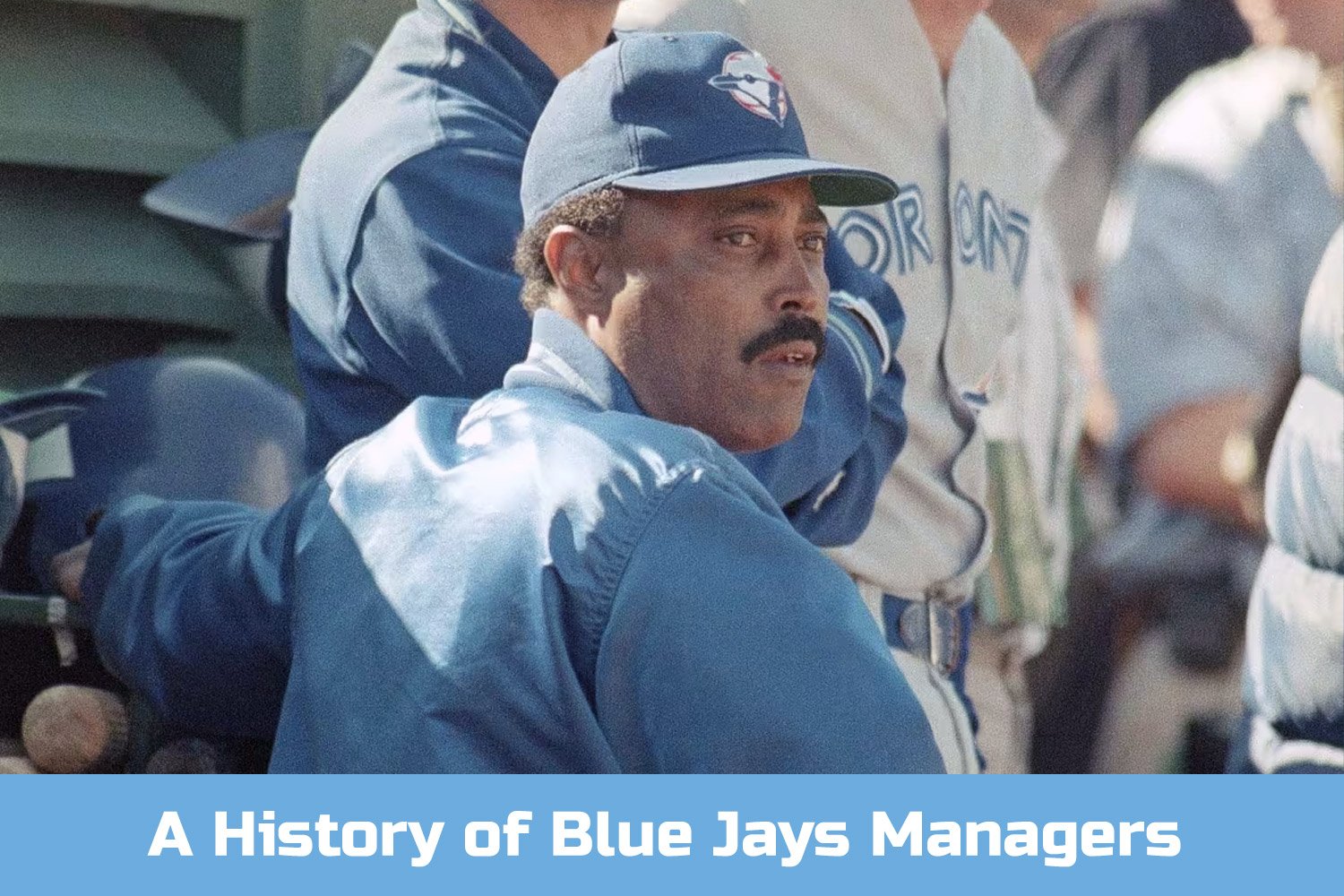
Cox won 78 games in his first season before winning 89 in his next two with Toronto. His final season ended in crushing defeat in the ‘85 ALCS, but the team's 99 wins that season remain a franchise record. Even after he left to rejoin the Braves as their general manager (and owner’s bestie), Cox’s legacy endured. The franchise he built up defeated him in the ‘92 World Series, and Toronto’s manager was one Cox had brought into the organization. With Bobby Doerr exiting as part-time hitting coach alongside Mattick, Cox hired Cito Gaston, who had played one season for Cox in Atlanta in 1978. If Gillick needed to make his third hire an absolutely correct one, there is no doubt he delivered.





Recommended Comments
There are no comments to display.
Create an account or sign in to comment
You need to be a member in order to leave a comment
Create an account
Sign up for a new account in our community. It's easy!
Register a new accountSign in
Already have an account? Sign in here.
Sign In Now