Jamie Cameron
-
Posts
44 -
Joined
-
Last visited
Jamie Cameron's Achievements





-
Nolan Perry was out of sight, out of mind in 2025, recovering from Tommy John surgery. In 2026, he came back with better velocity and better stuff, featuring on the back end of industry top 100 prospect lists by season's end. View full video
-
Nolan Perry was out of sight, out of mind in 2025, recovering from Tommy John surgery. In 2026, he came back with better velocity and better stuff, featuring on the back end of industry top 100 prospect lists by season's end.
-
JoJo Parker has been one of the most impressive prospects in the minors in 2026, blending an excellent hit tool with mature swing decisions. How did he round out his first full professional season? What's left to work on? View full video
-
JoJo Parker has been one of the most impressive prospects in the minors in 2026, blending an excellent hit tool with mature swing decisions. How did he round out his first full professional season? What's left to work on?
-
Johnny King continues to miss bats wherever he goes. Despite some warts with strike throwing and too many walks, an improved changeup has led to continued success at Double-A at the end of 2026. View full video
-
Johnny King continues to miss bats wherever he goes. Despite some warts with strike throwing and too many walks, an improved changeup has led to continued success at Double-A at the end of 2026.
-
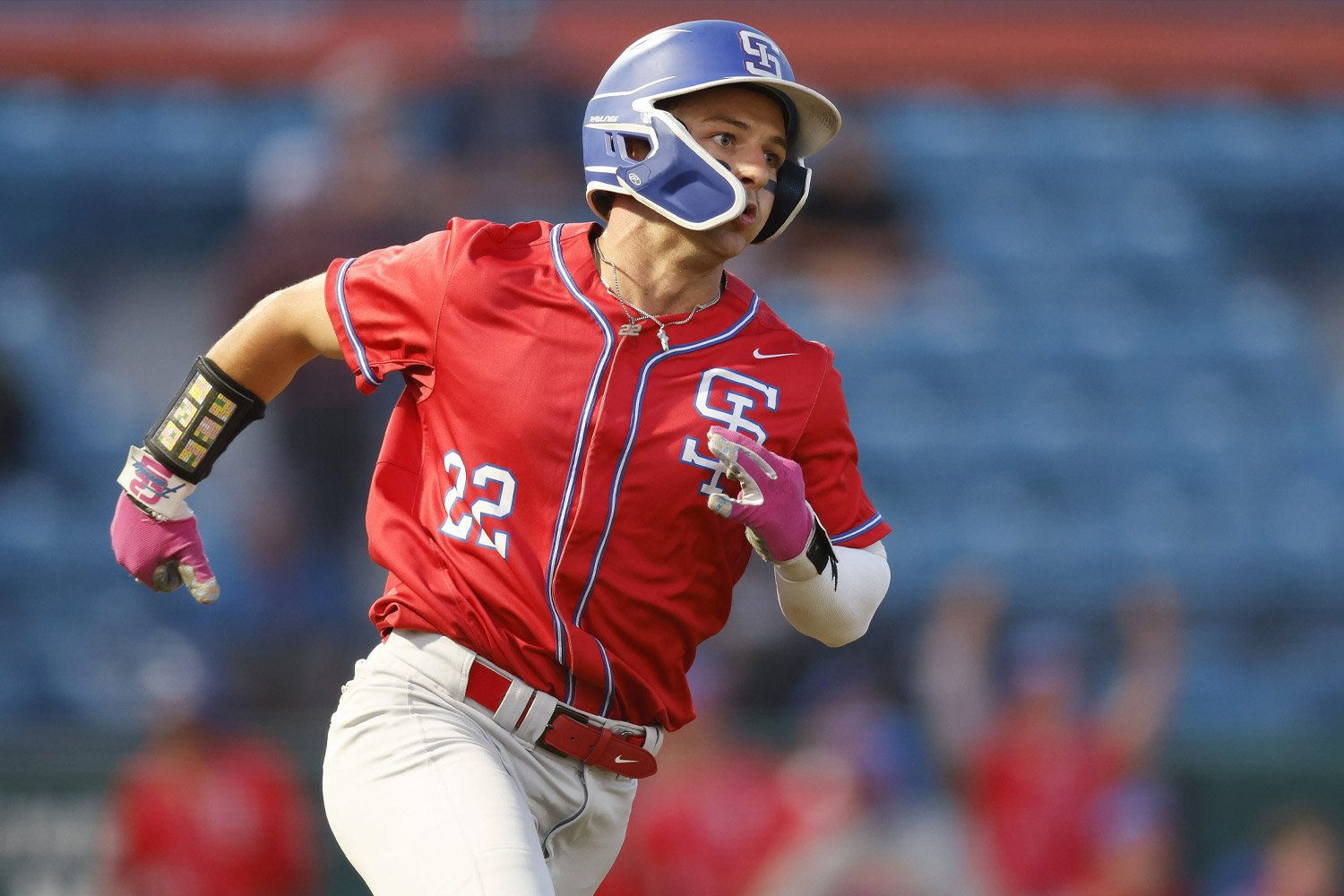 I take MLB mock draft rankings from major industry outlets like MLB Pipeline, ESPN, The Athletic (and many others) to form a consensus board, with a working hypothesis that using this approach will eliminate some of the noise and variance in MLB Draft mock rankings. This is the final mock draft board, locked in just before the 2026 MLB Draft on Saturday, July 11. Round 2: Archer Horn, SS/RHP, St. Ignatius College Prep, CA Horn is a two-way prospect out of Northern California, currently committed to Stanford. He's a talented pitcher who has been up to 95 mph with his fastball, also mixing in a good changeup and a solid curveball that has strong spin traits. Most evaluators think his future is as a hitter, however. In the box, Horn has good bat speed and barrel feel and demonstrates the ability to consistently generate loft in his left-handed swing. I think he'll eventually be a power over hit profile, but he currently has the potential to be at least solid average in both tools. Defensively, it's likely he moves off shortstop eventually, but he has a future on the first at second or third base. His commitment to Stanford and his placement on the board in the 40-60 range generate some skepticism around his signability. Round 3: Caden Ferraro, OF/1B, Texas Tech Ferraro was one of the most prolific college bats in the country for Texas Tech, managing a 143 wRC+ with a 16.7 BB% and 15.5 K%, buoyed by 19 doubles and 8 home runs. 2026 was his lone season in D1 baseball after spending two years at JUCO powerhouse Blinn. Ferraro's is a profile exclusively carried by his offensive tools, as the defense, arm, and legs are all fringy at best. It's a testament to the stick, then, that he's a top 100 consensus player. It's strong bat-to-ball skills, specifically in zone (and low in the zone), with strong swing decisions that lead to a high on-base floor. Ferraro has some of the best quality of contact in D1 baseball, consistently finding the barrel and producing excellent EV numbers throughout 2026. If Ferraro can navigate his mediocre supplementary tools to be an average corner outfielder, the offensive profile will carry him a long way. Round 4: Anthony Murphy, OF, Corona HS, CA Murphy is a prep outfielder out of perennial California powerhouse Corona HS, with a chance to have four above-average tools. He's currently committed to LSU. A strong 6'0, 195, Murphy has plus raw power and has no trouble getting into it in games, crushing 11 home runs his junior year of high school. The hit tool is a little more fringy, with an aggressive approach and some swing and miss, giving evaluators some pause. Murphy has a trio of strong supplementary tools. He's an excellent defensive outfielder, using plus speed to aid his range in center field, with at least a 55 arm. If he can hit enough, he has a chance to be an explosive, impactful player. Curious to see the players around the Toronto Blue Jays' picks in the draft? Click on the button below to view the entire mock draft board!
 -
I take MLB mock draft rankings from major industry outlets like MLB Pipeline, ESPN, The Athletic (and many others) to form a consensus board, with a working hypothesis that using this approach will eliminate some of the noise and variance in MLB Draft mock rankings. This is the final mock draft board, locked in just before the 2026 MLB Draft on Saturday, July 11. Round 2: Archer Horn, SS/RHP, St. Ignatius College Prep, CA Horn is a two-way prospect out of Northern California, currently committed to Stanford. He's a talented pitcher who has been up to 95 mph with his fastball, also mixing in a good changeup and a solid curveball that has strong spin traits. Most evaluators think his future is as a hitter, however. In the box, Horn has good bat speed and barrel feel and demonstrates the ability to consistently generate loft in his left-handed swing. I think he'll eventually be a power over hit profile, but he currently has the potential to be at least solid average in both tools. Defensively, it's likely he moves off shortstop eventually, but he has a future on the first at second or third base. His commitment to Stanford and his placement on the board in the 40-60 range generate some skepticism around his signability. Round 3: Caden Ferraro, OF/1B, Texas Tech Ferraro was one of the most prolific college bats in the country for Texas Tech, managing a 143 wRC+ with a 16.7 BB% and 15.5 K%, buoyed by 19 doubles and 8 home runs. 2026 was his lone season in D1 baseball after spending two years at JUCO powerhouse Blinn. Ferraro's is a profile exclusively carried by his offensive tools, as the defense, arm, and legs are all fringy at best. It's a testament to the stick, then, that he's a top 100 consensus player. It's strong bat-to-ball skills, specifically in zone (and low in the zone), with strong swing decisions that lead to a high on-base floor. Ferraro has some of the best quality of contact in D1 baseball, consistently finding the barrel and producing excellent EV numbers throughout 2026. If Ferraro can navigate his mediocre supplementary tools to be an average corner outfielder, the offensive profile will carry him a long way. Round 4: Anthony Murphy, OF, Corona HS, CA Murphy is a prep outfielder out of perennial California powerhouse Corona HS, with a chance to have four above-average tools. He's currently committed to LSU. A strong 6'0, 195, Murphy has plus raw power and has no trouble getting into it in games, crushing 11 home runs his junior year of high school. The hit tool is a little more fringy, with an aggressive approach and some swing and miss, giving evaluators some pause. Murphy has a trio of strong supplementary tools. He's an excellent defensive outfielder, using plus speed to aid his range in center field, with at least a 55 arm. If he can hit enough, he has a chance to be an explosive, impactful player. Curious to see the players around the Toronto Blue Jays' picks in the draft? Click on the button below to view the entire mock draft board! View full article
-
 This guide is a comprehensive look at the 2026 MLB Draft with a focus on the Toronto Blue Jays. You’ll find a list of key dates for the draft cycle, including the release of bonus pools and pick values, the MLB Draft combine, and a breakdown of the draft itself. Additionally, you’ll find an overview of the draft combine and MLB draft weekend, in addition to links to other important draft resources like the consensus board. Blue Jays 2025 MLB Draft Recap The Blue Jays led off the 2025 draft by leaning into one of the strengths of the class: prep shortstops. Toronto landed JoJo Parker, a highly regarded, left-handed hitting prep hitter out of Mississippi, with the eighth overall pick. Parker was followed by Jake Cook, a left-handed hitting outfielder out of Southern Miss, and Micah Bucknam, a Canadian native who finished his collegiate career at DBU. The Jays rounded out their first five rounds with Tim Piasentin, a left-handed hitting slugging corner infielder, and Eric Snow, a middle infielder out of Auburn. When Is The 2026 MLB Draft? April 1st 2026 - MLB announced draft bonus pools and pick values June 2026 - MLB Draft Combine (Chase Field, Arizona) July 11th - 12th: 2026 MLB Draft (Philadelphia, PA) July 11th - Rounds 1-4 (time TBA) July 12th - Round 5 through Round 20 (time TBA) 2026 MLB Draft Combine The draft combine is a newer event that started in the 2021 draft cycle. Held over a five-day period around a month before the draft itself, it serves as an opportunity for prospects to showcase their talents and boost their draft stock, while giving organizations better access to potential picks. In addition to medical examinations and educational programming, players have an opportunity to meet with teams in advance of the draft. Additionally, there are a number of televised workouts, featuring infield and outfield drills, batting practice for hitters, and bullpens for pitchers, all of which are tracked and underpinned by Statcast data. There is an incentive for players to attend and complete medicals, as prospects are guaranteed 75 percent of their draft slot bonus if they participate and complete medicals. How Many Rounds Are There In The MLB Draft? There is yet another design shift ahead of the 2026 draft cycle. It was shortened from a three-day event to a two-day event. Previously, day one included rounds 1 through the supplemental second round, day two included rounds 3 through 10, and day three included rounds 10 through 20. For the 2026 cycle, day one will be adjusted to include rounds one through four (~135 picks). The draft will conclude on day two with rounds five through twenty. MLB Draft Day One Explained The first day of the draft can be chaotic, as additional rounds and picks are in play beyond rounds one and two. The top of the draft (top 6 picks) is now determined by the draft lottery. Every non-playoff team is entered into the lottery, giving them the opportunity to move up in the draft order. Non-lottery-eligible teams are picked in the order they are eliminated from the postseason, with regular-season record ties broken. After the first round, prospect promotion incentive picks take place. If an eligible player wins Rookie of the Year, they earn their organization an extra pick immediately after the completion of the first round. Next come compensation picks, where teams who extend the qualifying offer to a player (who rejects it) earn an additional draft pick. Compensation pick positions depend on the contract size signed by the player rejecting the qualifying offer, as well as the payroll of the organization receiving them (there are additional compensation picks after competitive balance round B and the fourth round). After any compensation picks, comes the competitive balance round A. Teams that have one of the ten smallest markets or ten smallest revenue pools receive an additional pick in round A or round B, on an annually rotating basis. The first day of the draft is capped by the second round, competitive balance round B, and the third and fourth rounds, which typically take us through approximately 135 picks. MLB Draft Bonus Pool Allocations & Pick Values Prior to the draft, in April, MLB announces each team's bonus pool for the forthcoming draft cycle and the value of every pick in the top 10 rounds. Each pick in the first ten rounds of the draft is assigned a value, with the total of the slots for the picks each organization has in the top ten rounds comprising their total ‘bonus pool’. Organizations can sign a player to a deal greater than a slot or less than a slot, depending on their negotiations with the player, so it’s useful to think of the slots as ‘guidelines’ and little more. Organizations are allowed to spend up to 5% more than their total pool without incurring a penalty, a choice many teams take advantage of. The Twins and the Rockies are the only teams that have never spent any overage on their bonus pool. Any amount up to 5% over the pool is met with a 75% tax on the overage. If a team spends between 5-10% more than their pool, the penalty is 75% tax on the overage and loss of a future first-rounder. Any team that exceeds its bonus pool by more than 10% up to 15% pays 100% tax on the overage and will lose a first and second-round future pick. Any team that exceeds its bonus pool by more than 15% loses two future first-round picks in addition to paying 100% tax on the overage. Rounds 11-20 work differently from the first half of the draft. These picks do not come with an assigned slot value. Teams can spend up to $150,000 per pick without that spending coming out of their bonus pool. If they spend over that amount, any overage will be deducted from their bonus pool. For example, an 11th-round pick signing for $250,000 will result in $100,000 being subtracted from that team’s bonus pool. This is where some financial strategy comes into play. Often, teams will look to accrue some ‘savings’ from their bonus pool so they can spend over the maximum of $150,000 for a prospect in the second half of the draft. NOTE: Slot values increased by 2.5% from 2025 to 2026. View Blue Jays Mock Draft Board Blue Jays 2026 MLB Draft Bonus Pool Round Pick Slot Value Round 2* 39th $2,571,100 Round 3 103rd $762,900 Round 4 131st $581,100 Round 5 164th $421,300 Round 6 193rd $330,300 Round 7 222nd $262,300 Round 8 252nd $219,500 Round 9 282nd $202,100 Round 10 312th $191,900 Total Bonus Pool Allocation $5,543,100 (29th in MLB) * The Blue Jays first pick dropped 10 spots from 29th for exceeding the second surcharge threshold of the competitive balance tax.
 -
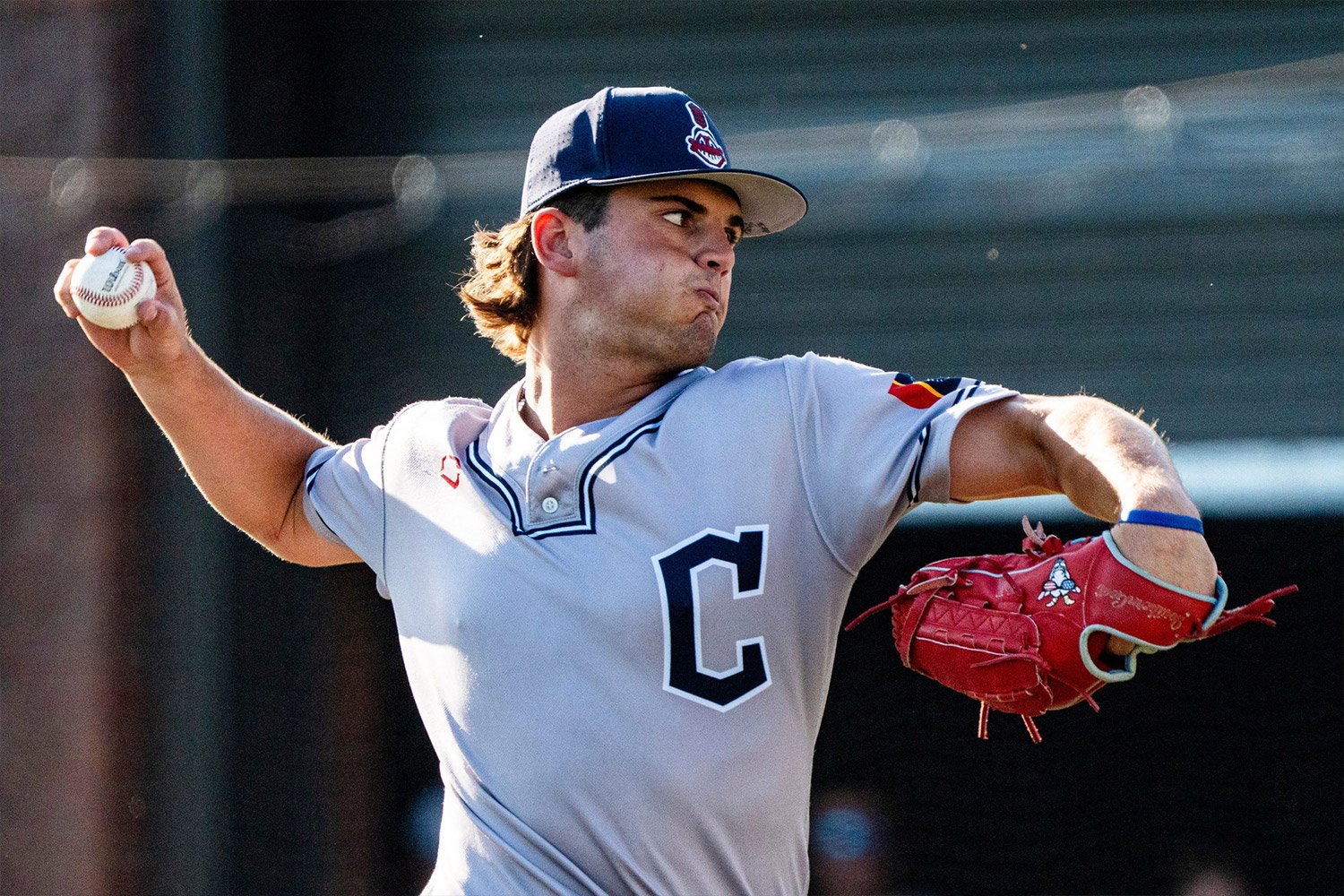 I take MLB mock draft rankings from major industry outlets like MLB Pipeline, ESPN, The Athletic (and many others) to form a consensus board, with a working hypothesis that using this approach will eliminate some of the noise and variance in MLB Draft mock rankings. The Toronto Blue Jays’ first five picks are: Round 2: 39th Overall Round 3: 103rd Overall Round 4: 131st Overall Round 5: 164th Overall Round 6: 193rd Overall Round 2: Cole Prosek, INF, Magnolia Heights HS (MS) Prosek is one of the most polished high school hitters in the class and is currently committed to Ole Miss. He hits from the left side of the plate, often starting deep in the batter's box, with a shoulder-high hand and minimal pre-swing movement. It's a long stride into his swing, but it's short, direct, and repeatable. This isn't simply a strong hit tool, however. Prosek can pull the ball in the air and may grow into ~20 home run power as a pro. Defensively, he's a bit more of a fringy athlete than some others in the class. He's not the most fleet of foot, but does have an above-average arm that should allow him to stick somewhere in the infield (second or third base) where his range limitations won't expose him. He’s also played increasingly as a catcher in recent months (including at the Draft Combine), a potential additional value add. Prosek will be a little older than some on draft day (19). He probably has one 60-grade tool, but it's the most important one. He'll be eligible again as a sophomore if he makes it to campus. Round 3: Elliot Lascelles, SS, Upper Canada College HS (Toronto) Lascelles is a Yale commit who is the best position player prospect out of Canada in the 2026 class. At 6'2, 190, he's grown and added size and strength in the last twelve months to a profile that has started to be more heavily scrutinized by scouts. Lascelles hits left-handed, with some pre-swing waggle in his stance and a slightly unorthodox look. His swing isn't the smoothest, and it doesn't look like Lascelles gets into his lower half as much as he might, potentially limiting his power output. What there's plenty of is bat-to-ball skills. Lascelles has exceptional hand-eye coordination and almost never strikes out, a tendency he combined with a ton of discipline in his at-bats. While he may move off shortstop long term due to a fringy arm, Lascelles should stick in the dirt, possibly at second base. He's a plus runner and a threat on the base paths. If he's to add more power, there's some swing work to do, but Lascelles has the most important tool in his bag. Curious to see the players around the Toronto Blue Jays
 -
I take MLB mock draft rankings from major industry outlets like MLB Pipeline, ESPN, The Athletic (and many others) to form a consensus board, with a working hypothesis that using this approach will eliminate some of the noise and variance in MLB Draft mock rankings. The Toronto Blue Jays’ first five picks are: Round 2: 39th Overall Round 3: 103rd Overall Round 4: 131st Overall Round 5: 164th Overall Round 6: 193rd Overall Round 2: Cole Prosek, INF, Magnolia Heights HS (MS) Prosek is one of the most polished high school hitters in the class and is currently committed to Ole Miss. He hits from the left side of the plate, often starting deep in the batter's box, with a shoulder-high hand and minimal pre-swing movement. It's a long stride into his swing, but it's short, direct, and repeatable. This isn't simply a strong hit tool, however. Prosek can pull the ball in the air and may grow into ~20 home run power as a pro. Defensively, he's a bit more of a fringy athlete than some others in the class. He's not the most fleet of foot, but does have an above-average arm that should allow him to stick somewhere in the infield (second or third base) where his range limitations won't expose him. He’s also played increasingly as a catcher in recent months (including at the Draft Combine), a potential additional value add. Prosek will be a little older than some on draft day (19). He probably has one 60-grade tool, but it's the most important one. He'll be eligible again as a sophomore if he makes it to campus. Round 3: Elliot Lascelles, SS, Upper Canada College HS (Toronto) Lascelles is a Yale commit who is the best position player prospect out of Canada in the 2026 class. At 6'2, 190, he's grown and added size and strength in the last twelve months to a profile that has started to be more heavily scrutinized by scouts. Lascelles hits left-handed, with some pre-swing waggle in his stance and a slightly unorthodox look. His swing isn't the smoothest, and it doesn't look like Lascelles gets into his lower half as much as he might, potentially limiting his power output. What there's plenty of is bat-to-ball skills. Lascelles has exceptional hand-eye coordination and almost never strikes out, a tendency he combined with a ton of discipline in his at-bats. While he may move off shortstop long term due to a fringy arm, Lascelles should stick in the dirt, possibly at second base. He's a plus runner and a threat on the base paths. If he's to add more power, there's some swing work to do, but Lascelles has the most important tool in his bag. Curious to see the players around the Toronto Blue Jays View full article
-
It's time to check back in with another Blue Jays mock. The MLB Draft is just five weeks away. This class is as muddled as any I've covered, though it's plenty deep in talent. You can find our mock consensus board here. Let's check in on some player profiles it's currently mocking to the Jays with their first few picks in July. With the 39th Overall Pick, the Jays Select: Caden Sorrell, OF, Texas A&M Sorrell was a good prep prospect in 2023 but opted to attend Texas A&M. Fast forward three years, and he's looking increasingly like a first-round pick. Sorrell's offensive skill set is geared towards damage and loft, a potent combination. It's excellent bat speed from the left side of the plate, and Sorrell was a productive hitter in both of his first two collegiate seasons, despite being derailed by some nagging injuries. There are some weaknesses to exploit, offensively. Sorrell does have some bat-to-ball issues, which, when combined with his propensity to chase, can lead to him racking up significant strikeout totals. It hasn't impeded his production in 2026, however, as he has 17 home runs (29 extra-base hits) through his first 33 games of the season. Sorrell has a plus arm and is an above-average runner. It's likely a corner profile long term, but with those additional tools, he has a chance to be a plus right fielder. If he continues to mash in the back end of SEC play, he'll cement his status as a worthy top-30 pick. With the 103rd Overall Pick, the Jays Select: Maddox Molony, SS, Oregon Maddox Molony was in my pre-season T30 draft prospects and has picked the wrong time to have his worst collegiate season to date. A shortstop at Oregon who has strong all-around tools, Molony put up back-to-back 128 and 120 wRC+ figures in his first two collegiate seasons. Hitting from the right side of the plate, it's a profile characterized by good bat-to-ball skills and a high on-base floor, thanks to his propensity to control the strike zone well in his plate appearances. While he's always had fringy power, Molony has gotten to double-digit home runs in each of his three seasons for the Ducks. There's good actions in the field, a plus arm, and above-average speed that give Molony a chance to stick at shortstop as a pro. He hasn't hit enough in 2026 and will likely continue to slide down the board a bit prior to draft day. View full article
-
 It's time to check back in with another Blue Jays mock. The MLB Draft is just five weeks away. This class is as muddled as any I've covered, though it's plenty deep in talent. You can find our mock consensus board here. Let's check in on some player profiles it's currently mocking to the Jays with their first few picks in July. With the 39th Overall Pick, the Jays Select: Caden Sorrell, OF, Texas A&M Sorrell was a good prep prospect in 2023 but opted to attend Texas A&M. Fast forward three years, and he's looking increasingly like a first-round pick. Sorrell's offensive skill set is geared towards damage and loft, a potent combination. It's excellent bat speed from the left side of the plate, and Sorrell was a productive hitter in both of his first two collegiate seasons, despite being derailed by some nagging injuries. There are some weaknesses to exploit, offensively. Sorrell does have some bat-to-ball issues, which, when combined with his propensity to chase, can lead to him racking up significant strikeout totals. It hasn't impeded his production in 2026, however, as he has 17 home runs (29 extra-base hits) through his first 33 games of the season. Sorrell has a plus arm and is an above-average runner. It's likely a corner profile long term, but with those additional tools, he has a chance to be a plus right fielder. If he continues to mash in the back end of SEC play, he'll cement his status as a worthy top-30 pick. With the 103rd Overall Pick, the Jays Select: Maddox Molony, SS, Oregon Maddox Molony was in my pre-season T30 draft prospects and has picked the wrong time to have his worst collegiate season to date. A shortstop at Oregon who has strong all-around tools, Molony put up back-to-back 128 and 120 wRC+ figures in his first two collegiate seasons. Hitting from the right side of the plate, it's a profile characterized by good bat-to-ball skills and a high on-base floor, thanks to his propensity to control the strike zone well in his plate appearances. While he's always had fringy power, Molony has gotten to double-digit home runs in each of his three seasons for the Ducks. There's good actions in the field, a plus arm, and above-average speed that give Molony a chance to stick at shortstop as a pro. He hasn't hit enough in 2026 and will likely continue to slide down the board a bit prior to draft day.
 -
 Welcome to the 2026 MLB Consensus Draft Board. This is the fifth version of the board, which started in 2022 as a top 30. Since then, it’s expanded to around 150 players on an annual basis, and it's featured on eight different team sites. So what is the Consensus Board? How is it made? How should it be used? The concept is loosely based on Arif Hasan’s NFL Consensus Board. It’s meant to be a tool for folks getting interested in the MLB Draft. As I was learning about the draft, I struggled to navigate wildly varied rankings and evaluations of players. The Consensus Board takes every major publicly available board and combines them into a consensus ranking, eliminating some of the noise and variance of an extremely challenging evaluation process. We’ve found this process to be useful in ranking players in appropriate ranges through around the first five rounds of the draft. On the board, you’ll find player names, handedness, listed height and weight, age, and a write-up, walking through their strengths and opportunities as a prospect. As we go through the cycle, these will be updated with tweaks, final college stats, etc. Every time a major outlet (Baseball America, ESPN, The Athletic, etc.) releases an updated list, the consensus ranking shifts. As such, the board is a lagging reflection of what the industry thinks of the class and its key players. The final Consensus Board will incorporate at least 10 other boards as inputs. New MLB Mock Draft Board Features There are a few important features to point out to help you navigate the board. There’s a search bar to help you find players of interest. If you click ‘expand,’ the board will focus on the write-up you are engaged with, in addition to one immediately above it and one immediately below it. Additionally, you’ll find the logo of your team next to their draft slots to help understand where they are picking. There will be a player slotted there, based on their consensus ranking. Rather than using that ranking as an indicator of who the team might actually pick, it’s more useful to use it as a proxy for what caliber of talent is available at that slot. We’ll dig in deeper to team-specific mock drafts later in the cycle. The last important note is that this year, the board features ‘push’ updates. It updates automatically every hour. The board is typically updated with new write-ups five days per week, so check back regularly for updates. At #39, the Blue Jays Select: Cade Townsend, RHP, Ole' Miss Cade Townsend was a solid prep prospect ahead of the 2024 draft, cracking T200 and T300 lists, but he made it to campus at Ole Miss. After splitting time between starting and relieving in his freshman season, he entered 2026 strictly as a starter. It was an explosive start to his season. In his first 35 innings pitched, he managed a 2.32 FIP, striking out over 32% of hitters and walking just 4.8%. Unfortunately, he left his fifth start with shoulder discomfort, missing some time on the shelf. It's an appealing fastball that sits 93-95 mph but can grab 98 mph. It has good carry and plays best at the top of the strike zone. It's supplemented by a nasty curveball, a hammer with a ton of drop that he imparts upwards of 3,000 rpm of spin onto with consistency. Rounding out Townsend's arsenal is a cutter that sits in the high 80s, a slider and a changeup with good fade. The missed time and smaller frame might give some teams pause, but if he returns strong down the stretch, he's one of the biggest up arrow college arms in the class.
 -
Welcome to the 2026 MLB Consensus Draft Board. This is the fifth version of the board, which started in 2022 as a top 30. Since then, it’s expanded to around 150 players on an annual basis, and it's featured on eight different team sites. So what is the Consensus Board? How is it made? How should it be used? The concept is loosely based on Arif Hasan’s NFL Consensus Board. It’s meant to be a tool for folks getting interested in the MLB Draft. As I was learning about the draft, I struggled to navigate wildly varied rankings and evaluations of players. The Consensus Board takes every major publicly available board and combines them into a consensus ranking, eliminating some of the noise and variance of an extremely challenging evaluation process. We’ve found this process to be useful in ranking players in appropriate ranges through around the first five rounds of the draft. On the board, you’ll find player names, handedness, listed height and weight, age, and a write-up, walking through their strengths and opportunities as a prospect. As we go through the cycle, these will be updated with tweaks, final college stats, etc. Every time a major outlet (Baseball America, ESPN, The Athletic, etc.) releases an updated list, the consensus ranking shifts. As such, the board is a lagging reflection of what the industry thinks of the class and its key players. The final Consensus Board will incorporate at least 10 other boards as inputs. New MLB Mock Draft Board Features There are a few important features to point out to help you navigate the board. There’s a search bar to help you find players of interest. If you click ‘expand,’ the board will focus on the write-up you are engaged with, in addition to one immediately above it and one immediately below it. Additionally, you’ll find the logo of your team next to their draft slots to help understand where they are picking. There will be a player slotted there, based on their consensus ranking. Rather than using that ranking as an indicator of who the team might actually pick, it’s more useful to use it as a proxy for what caliber of talent is available at that slot. We’ll dig in deeper to team-specific mock drafts later in the cycle. The last important note is that this year, the board features ‘push’ updates. It updates automatically every hour. The board is typically updated with new write-ups five days per week, so check back regularly for updates. At #39, the Blue Jays Select: Cade Townsend, RHP, Ole' Miss Cade Townsend was a solid prep prospect ahead of the 2024 draft, cracking T200 and T300 lists, but he made it to campus at Ole Miss. After splitting time between starting and relieving in his freshman season, he entered 2026 strictly as a starter. It was an explosive start to his season. In his first 35 innings pitched, he managed a 2.32 FIP, striking out over 32% of hitters and walking just 4.8%. Unfortunately, he left his fifth start with shoulder discomfort, missing some time on the shelf. It's an appealing fastball that sits 93-95 mph but can grab 98 mph. It has good carry and plays best at the top of the strike zone. It's supplemented by a nasty curveball, a hammer with a ton of drop that he imparts upwards of 3,000 rpm of spin onto with consistency. Rounding out Townsend's arsenal is a cutter that sits in the high 80s, a slider and a changeup with good fade. The missed time and smaller frame might give some teams pause, but if he returns strong down the stretch, he's one of the biggest up arrow college arms in the class. View full article