Davy Andrews
-
Posts
106 -
Joined
-
Last visited
Content Type
Profiles
Toronto Blue Jays Videos
2026 Toronto Blue Jays Top Prospects Ranking
Toronto Blue Jays Free Agent & Trade Rumors, Notes, & Tidbits
Guides & Resources
2025 Toronto Blue Jays Draft Pick Tracker
News
2026 Toronto Blue Jays Draft Tracker: Picks & Bonuses
Forums
Blogs
Events
Store
Downloads
Gallery
Everything posted by Davy Andrews
-
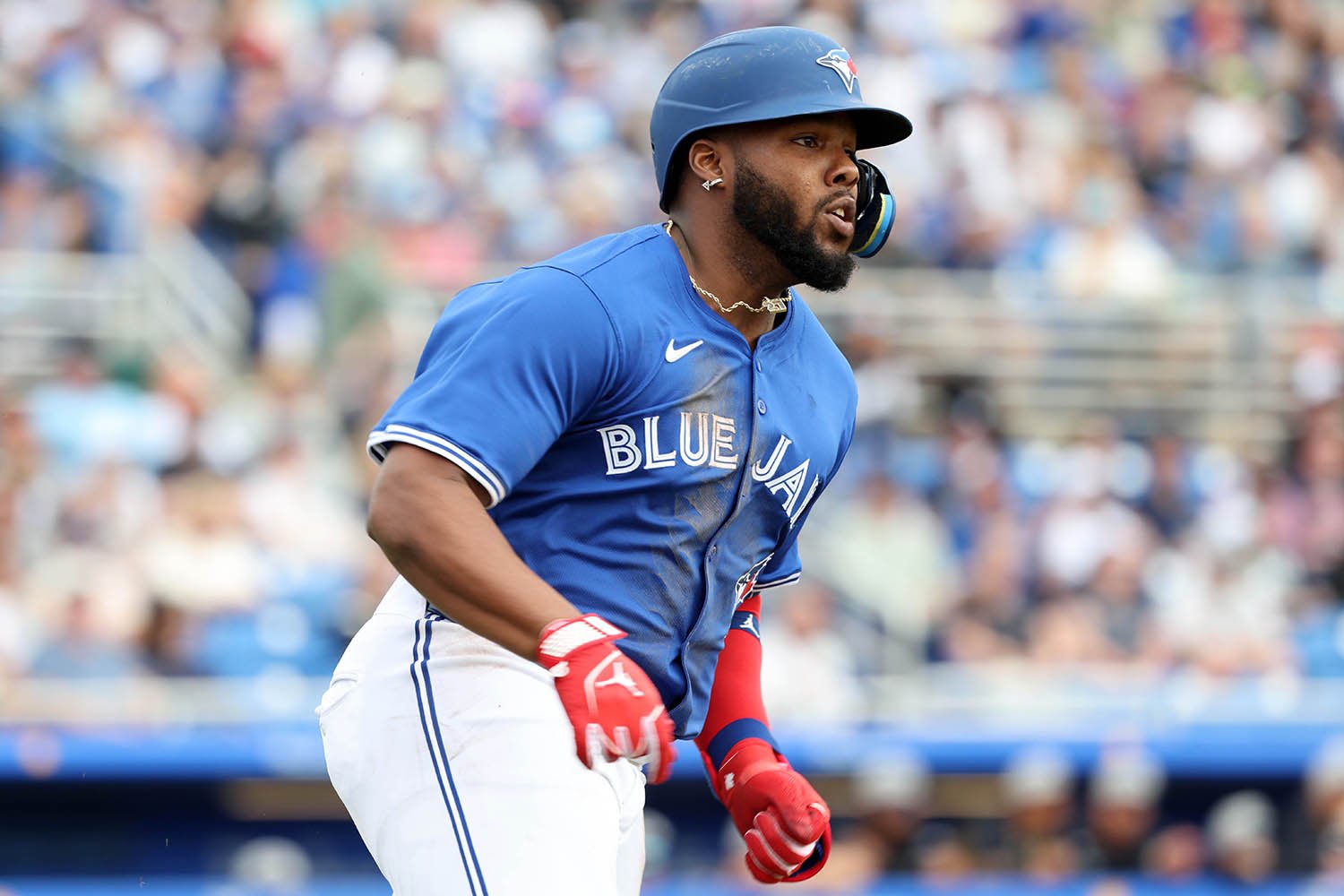 The Blue Jays and Tigers were rained out on Monday, but after just one spring training game, Vladimir Guerrero Jr. is 1-for-2, for a tidy .500 batting average. It's hard to think of something less surprising than Guerrero getting off to a good start at the plate. Since his debut in 2019, no one in baseball has hit the ball hard as many times as Vladimir Guerrero Jr. That's not hyperbole; Statcast, which classifies any ball with an exit velocity over 95 mph as hard-hit, tells the tale very clearly. Guerrero's 1,313 hard-hit balls lead all players. The bad news? Guerrero gets surprisingly little production from all that loud contact. Among players who have seen at least 2,000 pitches over that period, his .612 wOBA on hard-hit balls ranks 328th. There's a very simple reason for that, and I doubt it's a surprise to you: Over his career, Guerrero has hit 615 hard-hit groundballs. No other player is within 100 of that total. He led the league in both 2022 and 2020, and has never finished lower than third in any of the past five seasons. Guerrero just doesn't launch the ball the way other sluggers do, so even though he hits the ball harder than just about anyone on earth, he doesn't make the most of it. He's still an excellent hitter because he's excellent at just about every other part of the craft, but that one missing piece can get frustrating. It sometimes seems like it should be a simple thing to fix, but it's not. Swings are complicated, and Guerrero is so preternaturally talented that it would be downright irresponsible to attempt to mess with his. All the same, there's no question as to whether it affects who Guerrero is on the field. That's a graph that shows his wRC+ and groundball rate in every season of his career. With the exception of 2023, the pattern couldn't be more clear. When Guerrero's groundball rate is high, his offensive output is low (relatively speaking). That's just who he is. Coming into the 2025 season, we don't need to ask ourselves whether Guerrero will hit well; he always hits well. We need to ask ourselves whether he'll be one of the game's best hitters, and that depends to a great extent on his launch angle. All of this is preamble for Guerrero's first spring training performance on Saturday. Would you care to take a guess as to what Guerrero did during his two trips to the plate? Here's the hit from his first at-bat, an absolute rocket that left his bat at 105.5 mph and drove in a run. Yup, an absolute rocket that just barely made it past the glove of the diving first baseman. Classic Guerrero. And just for good measure, here's how his second at-bat ended. In case you're wondering, this was also a hard-hit ball, with an exit velocity of 96.5 mph. Guerrero is already in midseason form: Two crushed baseballs, launch angles of 2 and -12 degrees, a groundout and a single. To be clear, two spring training at-bats don't mean anything at all. But they are allowed to trigger us just a little bit. Before I go, I should mention one more thing. As you might be aware, Guerrero isn't the only culprit in this particular department. Bo Bichette has a higher career groundball rate than Guerrero. He led the league in hard-hit grounders in 2021 and finished in third in 2022. (Yes, that means that a Blue Jay has led the league in hard-hit groundballs three times, with six top-five finishes, in the last five seasons.) Remember when I told you Guerrero had a .612 wOBA on hard-hit grounders? Bichette was right behind him at .611. Every concern I've ascribed to Guerrero in the preceding paragraphs also applies to Bichette to some degree, and they also showed up on Saturday. Bichette came to the plate three times and ripped three hard-hit balls. He went 2-for-3 with a double (although the single was very much a gift from the official scorer). Although one was categorized as a line drive, none of them traveled as far as 150 feet, and all three had launch angles below 10 degrees. Here's the liner: At the very least, it's encouraging that Guerrero and Bichette have come into spring training mashing from day one. But hopefully they remember what a fly ball looks like at some point.
 -
 With spring training underway and Bo Bichette entering his contract year, it's not exactly reassuring to learn that the Blue Jays have not yet raised the possibility of an extension. Bo Bichette is the kind of player you build around. A fierce competitor with a career 119 wRC+ and adequate defense at shortstop, Bichette will turn 27 just before the season starts, meaning he’s in his prime. He’s an All-Star, and until his disastrous 2024 campaign, he’d received MVP votes in three straight seasons. I don’t know what to expect from Bichette in 2025. I don’t think anyone does. We should definitely expect him to bounce back to some degree; it’s hard to imagine a universe where the 71 wRC+ he put up during his injury-shortened 2024 reflects his true talent level. However, the season also contained some real reasons for concern, and we probably shouldn’t just expect him to return to the player he was before. When you don’t know what to expect from a player, it makes it awfully hard to figure out what kind of contract to offer him. Bichette actually ran a higher average bat speed in 2024 than he did in 2023. In fact, 13 of his 17 fastest tracked swings came in 2024. So, while the calf injury that kept him out for half the season surely slowed him down to some degree, it didn’t seem to be keeping him from getting his A-swing off. Bichette’s hard-hit rate wasn’t a career-low, but advanced metrics like 90th percentile exit velocity showed that his top-end power took a major step back. Moreover, when he did hit the ball hard, he didn’t optimize that contact. In 2024, Bichette pulled just five fly balls, or 2% of his balls in play. He’s always been the type to spray line drives around the field, but that was by far the lowest mark of his career. That’s something he’ll need to fix going forward, and the good news is that new hitting coach David Popkins joins the Blue Jays after years with the Twins, who have had an intense, years’-long focus on pulling the ball in the air. He just might be exactly what Bichette needs right now. With all of this uncertainty as Bichette goes into his contract year, it seems like this would be a good time to have an open dialogue. It would make sense for the Blue Jays to find out what Bichette is thinking. Maybe he’s willing to trade on the five years of excellent performance he already has in the bank, and he’s looking for a long-term deal. Maybe he’d prefer some security right now. Maybe he wants the chance to bounce back go into free agency on a positive note. Either way, the news that the Blue Jays haven’t discussed an extension with Bichette at all isn’t particularly encouraging. Bichette has said all the right things and made it clear that he understands the bigger picture, telling Hazel Mae, “Obviously, Vladdy is the priority at this point,” on Sunday. Ross Atkins has understandably been cagey with the press regarding his interactions with both Guerrero and Bichette, fearful of making an unforced error in a public statement. The Blue Jays spent the offseason chasing big free agents, and while they didn’t land everyone they had their eye on, they did succeed in improving the team. After that, the focus was on Vladimir Guerrero Jr., but now that his spring training deadline has passed, it should be time to focus on Bichette. Even if no deal gets done, this is the time to build bridges and to stress to Bichette that the team sees him as a Blue Jay over the long haul. View full article
 -
The Blue Jays Haven’t Discussed an Extension With Bo Bichette
Davy Andrews posted an article in Blue Jays
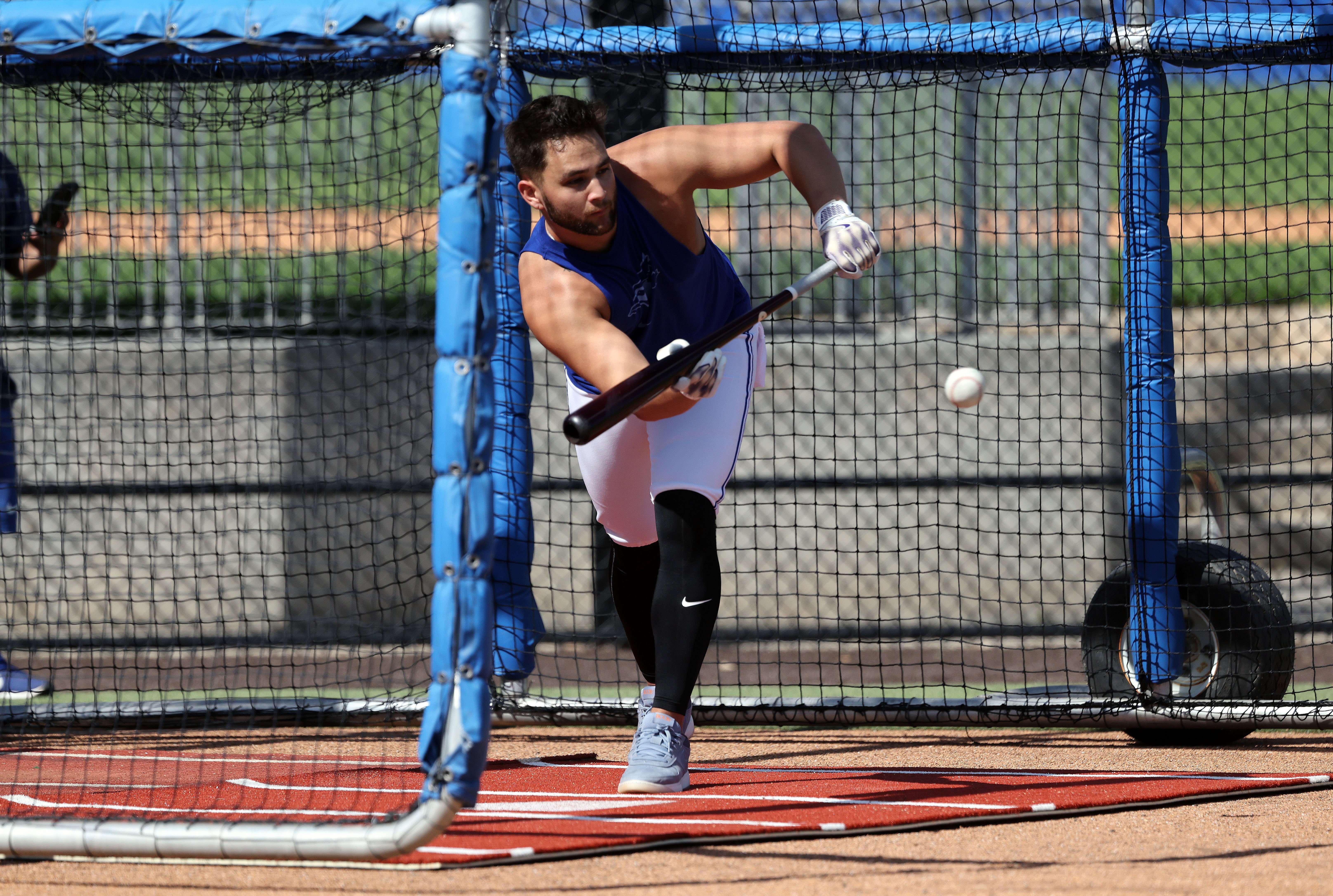 Bo Bichette is the kind of player you build around. A fierce competitor with a career 119 wRC+ and adequate defense at shortstop, Bichette will turn 27 just before the season starts, meaning he’s in his prime. He’s an All-Star, and until his disastrous 2024 campaign, he’d received MVP votes in three straight seasons. I don’t know what to expect from Bichette in 2025. I don’t think anyone does. We should definitely expect him to bounce back to some degree; it’s hard to imagine a universe where the 71 wRC+ he put up during his injury-shortened 2024 reflects his true talent level. However, the season also contained some real reasons for concern, and we probably shouldn’t just expect him to return to the player he was before. When you don’t know what to expect from a player, it makes it awfully hard to figure out what kind of contract to offer him. Bichette actually ran a higher average bat speed in 2024 than he did in 2023. In fact, 13 of his 17 fastest tracked swings came in 2024. So, while the calf injury that kept him out for half the season surely slowed him down to some degree, it didn’t seem to be keeping him from getting his A-swing off. Bichette’s hard-hit rate wasn’t a career-low, but advanced metrics like 90th percentile exit velocity showed that his top-end power took a major step back. Moreover, when he did hit the ball hard, he didn’t optimize that contact. In 2024, Bichette pulled just five fly balls, or 2% of his balls in play. He’s always been the type to spray line drives around the field, but that was by far the lowest mark of his career. That’s something he’ll need to fix going forward, and the good news is that new hitting coach David Popkins joins the Blue Jays after years with the Twins, who have had an intense, years’-long focus on pulling the ball in the air. He just might be exactly what Bichette needs right now. With all of this uncertainty as Bichette goes into his contract year, it seems like this would be a good time to have an open dialogue. It would make sense for the Blue Jays to find out what Bichette is thinking. Maybe he’s willing to trade on the five years of excellent performance he already has in the bank, and he’s looking for a long-term deal. Maybe he’d prefer some security right now. Maybe he wants the chance to bounce back go into free agency on a positive note. Either way, the news that the Blue Jays haven’t discussed an extension with Bichette at all isn’t particularly encouraging. Bichette has said all the right things and made it clear that he understands the bigger picture, telling Hazel Mae, “Obviously, Vladdy is the priority at this point,” on Sunday. Ross Atkins has understandably been cagey with the press regarding his interactions with both Guerrero and Bichette, fearful of making an unforced error in a public statement. The Blue Jays spent the offseason chasing big free agents, and while they didn’t land everyone they had their eye on, they did succeed in improving the team. After that, the focus was on Vladimir Guerrero Jr., but now that his spring training deadline has passed, it should be time to focus on Bichette. Even if no deal gets done, this is the time to build bridges and to stress to Bichette that the team sees him as a Blue Jay over the long haul.
 -
Vladimir Guerrero Jr. spoke to reporters on Tuesday morning, his deadline for negotiations, and confirmed that no deal had been reached. Well, you can finally stop holding your breath. As promised, Vladimir Guerrero Jr. met with reporters at 8:00 AM on the morning of Tuesday, February 18, his spring training deadline for extension talks with the Blue Jays. Revealing that calls between the two parties stretched to 10:30 on Monday night, Guerrero said, “They had their numbers; I had my numbers.” And just like that, any hope of Guerrero signing an extension with the Blue Jays has been extinguished. Guerrero wants to focus on baseball during spring training and the regular season, so he will go into his contract year with everything to prove. The news ratchets up the uncertainty even further for a Blue Jays team that spent heavily during the offseason, but still ended up with a team that needs a lot to break right in order to have a chance at the playoffs. As Guerrero is entering his age-26 season as one of the most feared sluggers in the game, his numbers are surely quite large. In the coming days and weeks, it’s possible that we’ll learn more about the specifics of the numbers that the Blue Jays proposed as the deadline. Back in December, Guerrero told reporters that the Blue Jays had made him an offer in the area of $340 million, and that it was “not even close to what we are looking for.” He also said that after his excellent 2021 season, the team offered him a seven-year, $150-million extension. Asked on Tuesday morning whether the Blue Jays were close to his number, Guerrero simply said, “No.” He also said, “I know my value.” After Juan Soto’s record-shattering 15-year, $765-million deal with the Mets, it’s hard to fault Guerrero for having a better sense of his value. While Soto occupies an echelon of his own – his 158 wRC+ is well above Guerrero’s still-excellent 137 – his age and prowess as a slugger still make him the best comparison for Guerrero’s contract situation. Soto entered free agency before his age-26 season, while Guerrero will do so before his age-27 season. Both players are extremely one-sided, providing excellent world-class offense and some of the game’s worst defense and baserunning. It’s a recipe for a long contract, and if the Blue Jays hope to retain Guerrero, they’ll now have to compete with the rest of the league. For those of you who’d like to panic, the New York Post’s Jon Heyman has already posted a top three list of Guerrero’s potential landing spots, “1. Red Sox 2. Mets (assuming Pete opts out) 3. Yankees.” However, Guerrero made it clear, as he has throughout the process, that he hasn’t closed any windows and would like to be a Blue Jay for life, saying "I will do anything, everything I can to stay here because I want to be here." He also made it clear that money isn't his only concern. "Winning team," he told reporters. "That’s what I’ll be looking for in free agency. As you guys know, my dad played a lot of years. He never won a World Series. My personal goal is to win a World Series and give the ring to my dad." We’ll update this story later this morning, when Ross Atkins and Mark Shapiro will address reporters about the situation. View full article
-
BREAKING: Vladimir Guerrero Jr. Won’t Sign Extension With Blue Jays
Davy Andrews posted an article in Blue Jays
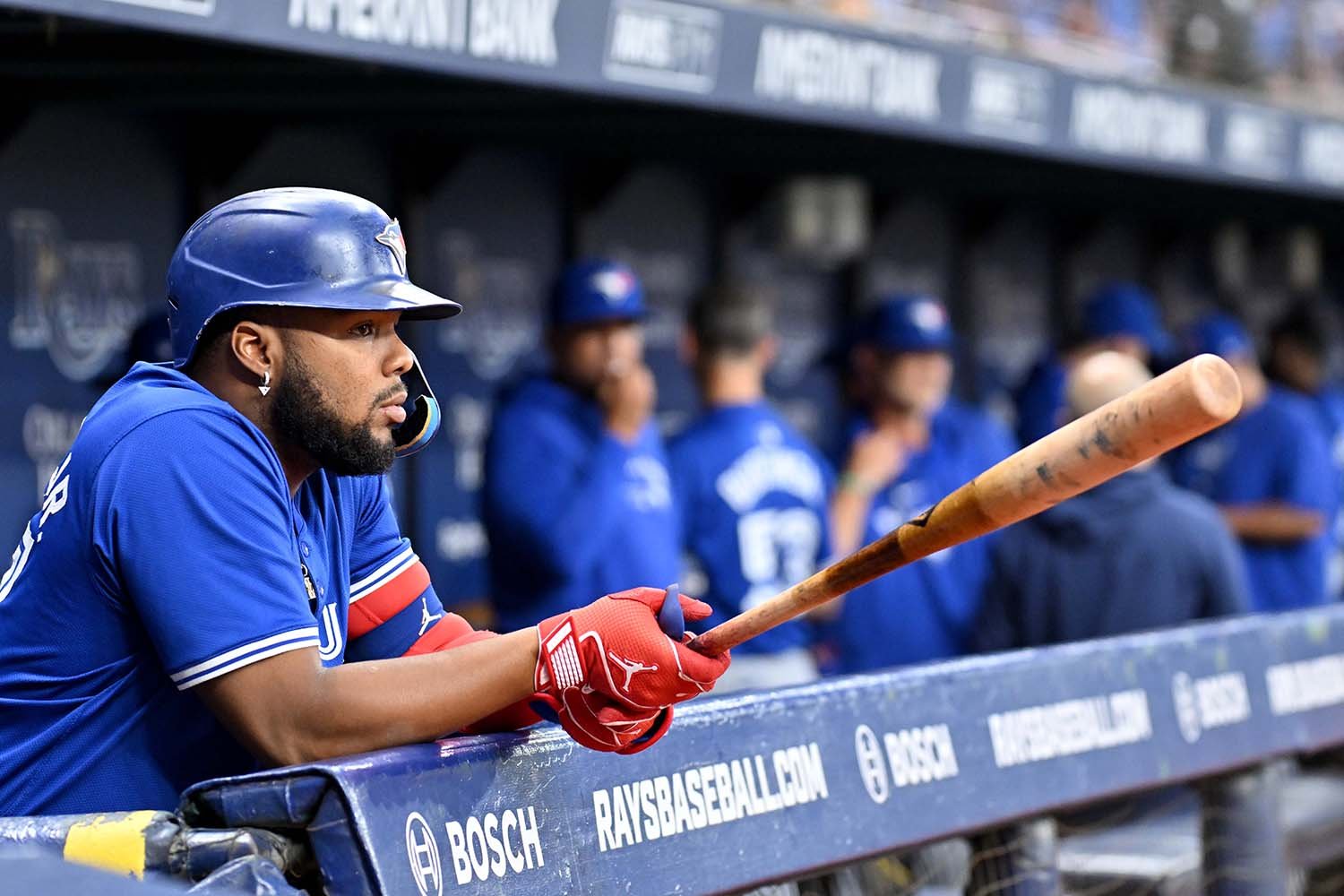 Well, you can finally stop holding your breath. As promised, Vladimir Guerrero Jr. met with reporters at 8:00 AM on the morning of Tuesday, February 18, his spring training deadline for extension talks with the Blue Jays. Revealing that calls between the two parties stretched to 10:30 on Monday night, Guerrero said, “They had their numbers; I had my numbers.” And just like that, any hope of Guerrero signing an extension with the Blue Jays has been extinguished. Guerrero wants to focus on baseball during spring training and the regular season, so he will go into his contract year with everything to prove. The news ratchets up the uncertainty even further for a Blue Jays team that spent heavily during the offseason, but still ended up with a team that needs a lot to break right in order to have a chance at the playoffs. As Guerrero is entering his age-26 season as one of the most feared sluggers in the game, his numbers are surely quite large. In the coming days and weeks, it’s possible that we’ll learn more about the specifics of the numbers that the Blue Jays proposed as the deadline. Back in December, Guerrero told reporters that the Blue Jays had made him an offer in the area of $340 million, and that it was “not even close to what we are looking for.” He also said that after his excellent 2021 season, the team offered him a seven-year, $150-million extension. Asked on Tuesday morning whether the Blue Jays were close to his number, Guerrero simply said, “No.” He also said, “I know my value.” After Juan Soto’s record-shattering 15-year, $765-million deal with the Mets, it’s hard to fault Guerrero for having a better sense of his value. While Soto occupies an echelon of his own – his 158 wRC+ is well above Guerrero’s still-excellent 137 – his age and prowess as a slugger still make him the best comparison for Guerrero’s contract situation. Soto entered free agency before his age-26 season, while Guerrero will do so before his age-27 season. Both players are extremely one-sided, providing excellent world-class offense and some of the game’s worst defense and baserunning. It’s a recipe for a long contract, and if the Blue Jays hope to retain Guerrero, they’ll now have to compete with the rest of the league. For those of you who’d like to panic, the New York Post’s Jon Heyman has already posted a top three list of Guerrero’s potential landing spots, “1. Red Sox 2. Mets (assuming Pete opts out) 3. Yankees.” However, Guerrero made it clear, as he has throughout the process, that he hasn’t closed any windows and would like to be a Blue Jay for life, saying "I will do anything, everything I can to stay here because I want to be here." He also made it clear that money isn't his only concern. "Winning team," he told reporters. "That’s what I’ll be looking for in free agency. As you guys know, my dad played a lot of years. He never won a World Series. My personal goal is to win a World Series and give the ring to my dad." We’ll update this story later this morning, when Ross Atkins and Mark Shapiro will address reporters about the situation.
 -
Chad Green lives and dies by his four-seam fastball. Unfortunately, he might need to tweak the pitch (again). When Mike LeSage wrote up his first version of his projected Opening Day Blue Jays lineup, Chad Green slotted in as the number two arm in the bullpen. FanGraphs’ depth charts show the same thing, projecting Green to throw 63 innings in 2025, just behind Jeff Hoffman’s 65 and just ahead of Yimi García’s 61. The bullpen doesn’t project as a strength, and the Blue Jays will need Green to be at his best. Unfortunately, his 2024 numbers contained quite a bit of helium. Let’s talk about whether he’s due to come back down to earth in 2025. Green debuted with the Yankees in 2016, and spent seven seasons with the team, running a 3.17 ERA and putting up 7.8 fWAR over 272 appearances and 383 2/3 innings. He was consistently excellent, but he underwent Tommy John surgery in 2022 after just 14 appearances. He signed with the Blue Jays in January 2023 and debuted in September, getting into 12 games. Green fully returned in 2024, running a 3.21 ERA that was almost exactly in line with his career mark of 3.23 over 53 appearances. However, his underlying numbers set off some alarm bells. His 4.29 FIP, was the worst full-season mark of his career, as was his 22% strikeout rate. Before 2025, Green had a career strikeout rate of 32.4%, more than 10 full percentage points higher! Why didn’t those worrisome numbers show up in his ERA? Because he had a bit of luck on his side, running an extremely high 81% strand rate and an extremely low .236 BABIP. Those kinds of numbers can make a pitcher look better than they really are. Let’s go back to Green’s strikeout rate. Why did it fall so precipitously in 2025? At various times over the course of his career, Green has thrown a four-seamer, slider, cutter, changeup, sinker, splitter, and sweeper. The four-seamer has been the only constant, and he throws it 60% of the time. As the four-seamer goes, so goes Green. Since joining the Blue Jays, Green has brought back his slider and ditched the other pitches, making him a two-pitch pitcher. Unfortunately, in 2025, the four-seamer registered disastrous 18% whiff rate. That’s not just the lowest mark of his career, it’s 10 points lower than his previous low, and and more than 11 points below his career mark. All of a sudden, his four-seamer just cannot miss bats. Why? Its velocity has stayed roughly the same since 2020, so that’s not the problem. I think the problem is its horizontal break. Take a look at the very right side of this graph. Can you see the way the slider and four-seamer both trended down in 2025? Both of Green’s pitches moved further to his arm side in 2025. For the slider, that meant less horizontal break. For the four-seamer, which already moved to his arm-side, that meant more. I know that in a vacuum, more break sounds like a good thing, but it’s not that simple. That four-seamer has always been Green's superpower, defying gravity and rising over bats. Now it’s got less rise and it’s tailing to his arm side quite a bit. Here’s a GIF that shows the difference in its movement from 2021 to 2024, courtesy of Baseball Savant. Over the past few years, you might have heard pitching analysts talk about something called the dead-zone fastball. What they’ve discovered is that using a pitch’s traits – release point, arm angle, velocity, spin rate, spin angle, and so on – you can calculate how a batter will expect it to break. The dead zone is the spot where a batter will expect a pitch to end up. When a pitch ends up there, it’s predictable and it gets hammered. That horizontal movement is moving Green’s pitch into the dead zone. The screenshots below are from Max Bay’s Dead Zone app, once again comparing Green’s four-seamer in 2021 and 2024. The pink oval is Green’s four-seamer movement, and the light blue oval is the dead zone, where the movement of a pitch becomes easy for a hitter to predict, and therefore to crush. In 2021 on the left, the pink oval barely overlaps with the lightest blue oval. In 2024, there’s a lot more overlap. Green still has an electric fastball, but ever since his arm injury, his arm angle has dropped a bit – going from 50 degrees in 2021 to 45 degrees in 2024. He’s also getting more arm-side movement and less rise on his fastball. He'll need to find a way to reverse that trend, killing some of that arm-side run and bringing back the unexpected rise that has helped him succeed for so many years. The good news is that this isn’t the first time that happened. As you may have noticed from the first graph in this article, Green’s four-seamer averaged seven inches of arm-side run in 2019, nearly as many as the eight it averaged in 2025. Perhaps not coincidentally, Green ran a career-worst ERA and FIP in 2019. In 2020, he killed some of that arm-side run, got a bit more rise, and knocked well over half a run off his ERA. He may need to repeat that trick if he’s going to succeed in 2025. View full article
-
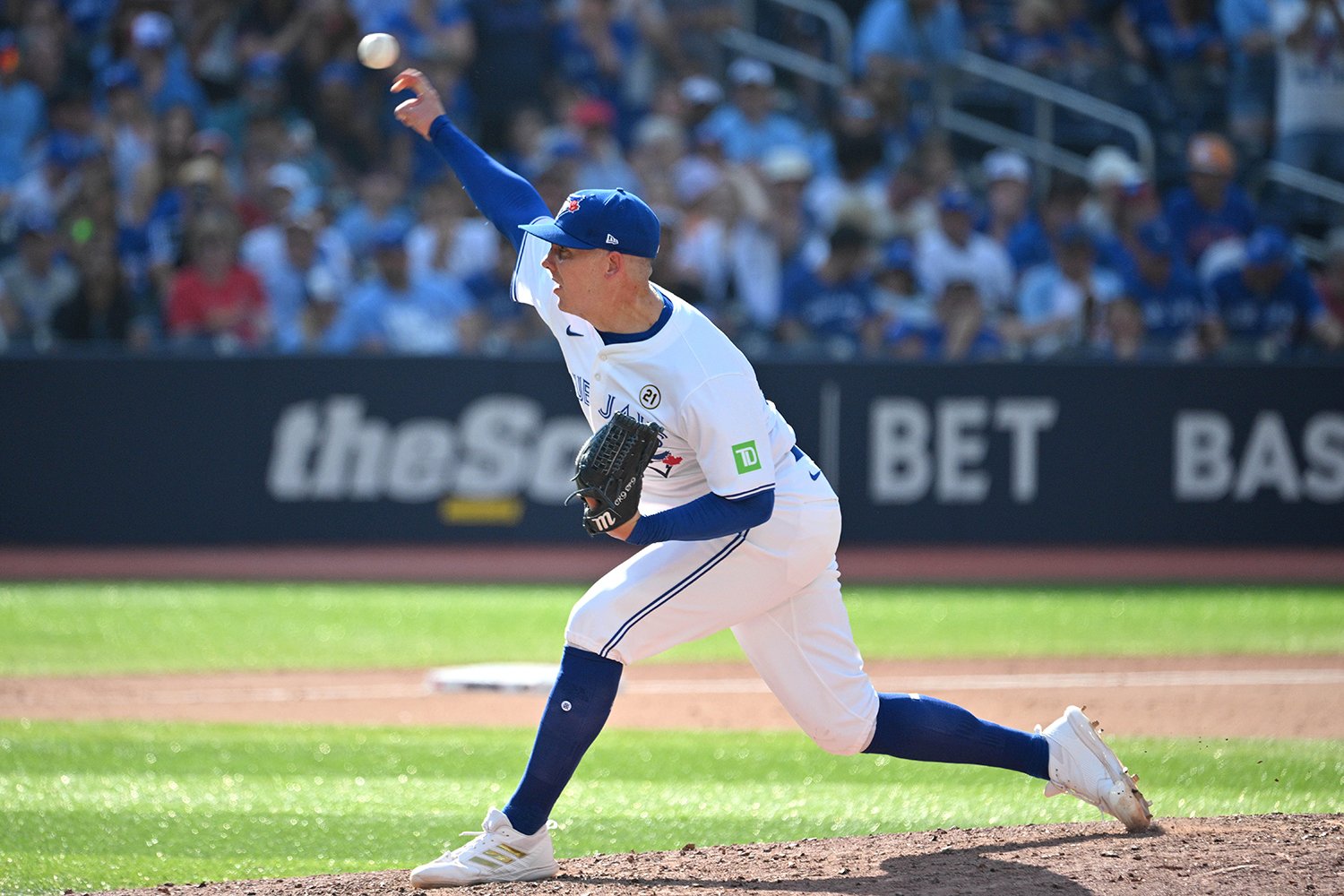 When Mike LeSage wrote up his first version of his projected Opening Day Blue Jays lineup, Chad Green slotted in as the number two arm in the bullpen. FanGraphs’ depth charts show the same thing, projecting Green to throw 63 innings in 2025, just behind Jeff Hoffman’s 65 and just ahead of Yimi García’s 61. The bullpen doesn’t project as a strength, and the Blue Jays will need Green to be at his best. Unfortunately, his 2024 numbers contained quite a bit of helium. Let’s talk about whether he’s due to come back down to earth in 2025. Green debuted with the Yankees in 2016, and spent seven seasons with the team, running a 3.17 ERA and putting up 7.8 fWAR over 272 appearances and 383 2/3 innings. He was consistently excellent, but he underwent Tommy John surgery in 2022 after just 14 appearances. He signed with the Blue Jays in January 2023 and debuted in September, getting into 12 games. Green fully returned in 2024, running a 3.21 ERA that was almost exactly in line with his career mark of 3.23 over 53 appearances. However, his underlying numbers set off some alarm bells. His 4.29 FIP, was the worst full-season mark of his career, as was his 22% strikeout rate. Before 2025, Green had a career strikeout rate of 32.4%, more than 10 full percentage points higher! Why didn’t those worrisome numbers show up in his ERA? Because he had a bit of luck on his side, running an extremely high 81% strand rate and an extremely low .236 BABIP. Those kinds of numbers can make a pitcher look better than they really are. Let’s go back to Green’s strikeout rate. Why did it fall so precipitously in 2025? At various times over the course of his career, Green has thrown a four-seamer, slider, cutter, changeup, sinker, splitter, and sweeper. The four-seamer has been the only constant, and he throws it 60% of the time. As the four-seamer goes, so goes Green. Since joining the Blue Jays, Green has brought back his slider and ditched the other pitches, making him a two-pitch pitcher. Unfortunately, in 2025, the four-seamer registered disastrous 18% whiff rate. That’s not just the lowest mark of his career, it’s 10 points lower than his previous low, and and more than 11 points below his career mark. All of a sudden, his four-seamer just cannot miss bats. Why? Its velocity has stayed roughly the same since 2020, so that’s not the problem. I think the problem is its horizontal break. Take a look at the very right side of this graph. Can you see the way the slider and four-seamer both trended down in 2025? Both of Green’s pitches moved further to his arm side in 2025. For the slider, that meant less horizontal break. For the four-seamer, which already moved to his arm-side, that meant more. I know that in a vacuum, more break sounds like a good thing, but it’s not that simple. That four-seamer has always been Green's superpower, defying gravity and rising over bats. Now it’s got less rise and it’s tailing to his arm side quite a bit. Here’s a GIF that shows the difference in its movement from 2021 to 2024, courtesy of Baseball Savant. Over the past few years, you might have heard pitching analysts talk about something called the dead-zone fastball. What they’ve discovered is that using a pitch’s traits – release point, arm angle, velocity, spin rate, spin angle, and so on – you can calculate how a batter will expect it to break. The dead zone is the spot where a batter will expect a pitch to end up. When a pitch ends up there, it’s predictable and it gets hammered. That horizontal movement is moving Green’s pitch into the dead zone. The screenshots below are from Max Bay’s Dead Zone app, once again comparing Green’s four-seamer in 2021 and 2024. The pink oval is Green’s four-seamer movement, and the light blue oval is the dead zone, where the movement of a pitch becomes easy for a hitter to predict, and therefore to crush. In 2021 on the left, the pink oval barely overlaps with the lightest blue oval. In 2024, there’s a lot more overlap. Green still has an electric fastball, but ever since his arm injury, his arm angle has dropped a bit – going from 50 degrees in 2021 to 45 degrees in 2024. He’s also getting more arm-side movement and less rise on his fastball. He'll need to find a way to reverse that trend, killing some of that arm-side run and bringing back the unexpected rise that has helped him succeed for so many years. The good news is that this isn’t the first time that happened. As you may have noticed from the first graph in this article, Green’s four-seamer averaged seven inches of arm-side run in 2019, nearly as many as the eight it averaged in 2025. Perhaps not coincidentally, Green ran a career-worst ERA and FIP in 2019. In 2020, he killed some of that arm-side run, got a bit more rise, and knocked well over half a run off his ERA. He may need to repeat that trick if he’s going to succeed in 2025.
 -
It certainly sounds like the Blue Jays ace will be working on a new pitch when spring training starts. Kevin Gausman might be trying something new. On Sportsnet’s Blair & Barker podcast this weekend, Gausman hinted very strongly at plans to add a cutter to his repertoire, which in 2024 consisted of a four-seam fastball, a splitter, and the occasional slider and sinker. Gausman has been one of the best pitchers in baseball over the past five seasons, going 55-39 with a 3.31 ERA and 3.04 FIP. His 19.9 fWAR over that period ranks third among all pitchers. However, his 2024 season looked a bit different from the four that preceded it, and it’s not hard to see why he might think it’s time for a change. His 3.83 ERA, 4.71 xERA, 3.77 FIP, and 4.22 xFIP were all his highest since at least 2019. His strikeout rate cratered from 31.1% to 21.4%, largely because he stopped being able to fool hitters as well. His chase rate fell, as did his whiff rate both inside and outside the zone. Clearly, batters were better able to track Gausman’s pitches. They made better swing decisions and made more, louder, contact. A look at the advanced numbers explains the reasons for this. For starters, Gausman's four-seam fastball dropped from 94.6 mph to 93.9 mph, cementing it as below-average in terms of velocity. His splitter also lost just over an inch of induced drop, which meant that by both velocity and movement, it was less of a departure from the four-seamer. His arm angle also fell from 38 to 36 degrees, which likely made the movement of his pitches slightly more predictable to hitters. According to pitching model Stuff+, 2024 was the first time Gausman’s stuff graded out as below average. Gausman couched the addition mainly as an acknowledgment of his declining fastball velocity: Gausman added a two-seamer (or sinker) in 2024, throwing it 5% of the time. In effect, it served a bit like a reverse cutter, as its movement profile sat right between his splitter and his four-seamer. We should probably expect that to be a template for a new cutter. In 2024, Gausman was one of the ever-smaller number of pitchers who threw a fastball more than 50% of the time. Clearly, he realizes that he won’t be able to get away with that forever. So what would Gausman look like with a cutter? Don’t expect the pitch to have much cut, if any. Gausman is a classic pronator, meaning that when he throws, his pitching hand naturally ends up facing outward toward third base. Pronators like Gausman are excellent at getting arm-side run on their pitches, but they struggle to throw breaking balls with glove-side movement. His Baseball Savant pitch movement graph makes that extremely clear. There’s simply nothing at all on the first-base side of the graph. Even his slider barely gets any horizontal break at all. That big maroon X is roughly where we should expect Gausman’s cutter to go. It will slot in between his four-seamer and slider both in terms of movement and velocity. As Lance Brozdowski has noted, because this pitch probably won’t get any actual cut – it will just have less arm-side movement than the fastball and splitter – stuff models might not like it. However, that doesn’t mean that it can’t be effective. Cutters are often used to bridge the gap between a four-seamer and a slider. Because they look a little bit like both pitches, they force batters to take an extra fraction of a second to make sure they know what’s coming. However, Gausman threw his slider just 8% of the time in 2024, and the pitch has never performed particularly well. In other words, Gausman will be using his cutter a bit differently than most pitchers. It will just be there to take pressure off his four-seamer and offer hitters a different look. View full article
-
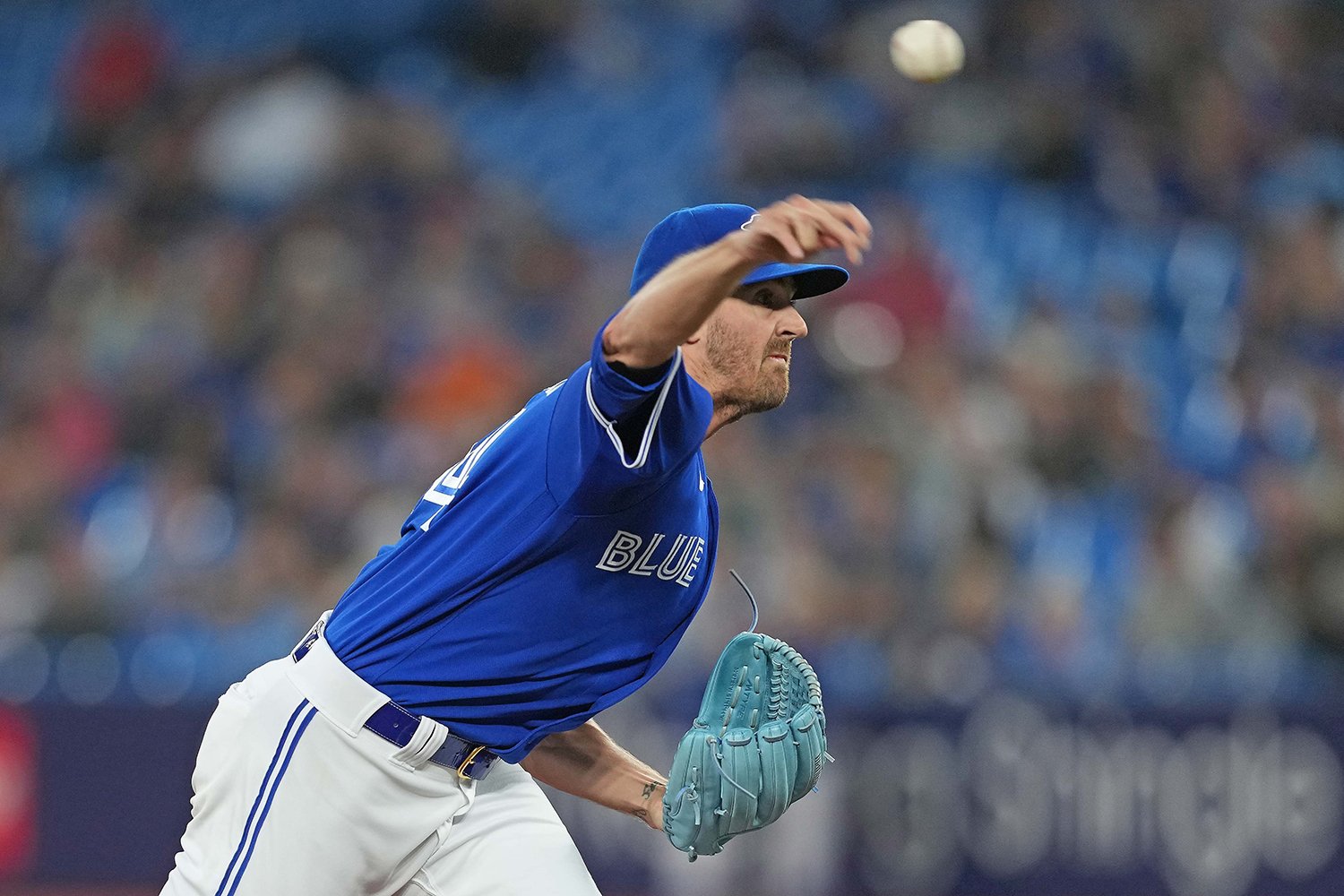 Kevin Gausman might be trying something new. On Sportsnet’s Blair & Barker podcast this weekend, Gausman hinted very strongly at plans to add a cutter to his repertoire, which in 2024 consisted of a four-seam fastball, a splitter, and the occasional slider and sinker. Gausman has been one of the best pitchers in baseball over the past five seasons, going 55-39 with a 3.31 ERA and 3.04 FIP. His 19.9 fWAR over that period ranks third among all pitchers. However, his 2024 season looked a bit different from the four that preceded it, and it’s not hard to see why he might think it’s time for a change. His 3.83 ERA, 4.71 xERA, 3.77 FIP, and 4.22 xFIP were all his highest since at least 2019. His strikeout rate cratered from 31.1% to 21.4%, largely because he stopped being able to fool hitters as well. His chase rate fell, as did his whiff rate both inside and outside the zone. Clearly, batters were better able to track Gausman’s pitches. They made better swing decisions and made more, louder, contact. A look at the advanced numbers explains the reasons for this. For starters, Gausman's four-seam fastball dropped from 94.6 mph to 93.9 mph, cementing it as below-average in terms of velocity. His splitter also lost just over an inch of induced drop, which meant that by both velocity and movement, it was less of a departure from the four-seamer. His arm angle also fell from 38 to 36 degrees, which likely made the movement of his pitches slightly more predictable to hitters. According to pitching model Stuff+, 2024 was the first time Gausman’s stuff graded out as below average. Gausman couched the addition mainly as an acknowledgment of his declining fastball velocity: Gausman added a two-seamer (or sinker) in 2024, throwing it 5% of the time. In effect, it served a bit like a reverse cutter, as its movement profile sat right between his splitter and his four-seamer. We should probably expect that to be a template for a new cutter. In 2024, Gausman was one of the ever-smaller number of pitchers who threw a fastball more than 50% of the time. Clearly, he realizes that he won’t be able to get away with that forever. So what would Gausman look like with a cutter? Don’t expect the pitch to have much cut, if any. Gausman is a classic pronator, meaning that when he throws, his pitching hand naturally ends up facing outward toward third base. Pronators like Gausman are excellent at getting arm-side run on their pitches, but they struggle to throw breaking balls with glove-side movement. His Baseball Savant pitch movement graph makes that extremely clear. There’s simply nothing at all on the first-base side of the graph. Even his slider barely gets any horizontal break at all. That big maroon X is roughly where we should expect Gausman’s cutter to go. It will slot in between his four-seamer and slider both in terms of movement and velocity. As Lance Brozdowski has noted, because this pitch probably won’t get any actual cut – it will just have less arm-side movement than the fastball and splitter – stuff models might not like it. However, that doesn’t mean that it can’t be effective. Cutters are often used to bridge the gap between a four-seamer and a slider. Because they look a little bit like both pitches, they force batters to take an extra fraction of a second to make sure they know what’s coming. However, Gausman threw his slider just 8% of the time in 2024, and the pitch has never performed particularly well. In other words, Gausman will be using his cutter a bit differently than most pitchers. It will just be there to take pressure off his four-seamer and offer hitters a different look.
 -
Projection systems think Max Scherzer still has another gear. Why might that be, and should we believe them? PECOTA is the projection system used by Baseball Prospectus, and you often hear about it because it doesn’t expect much from a player or team that you love. That’s how projection systems work; they’re inherently conservative, so if a player had a great 2024 season, they’ll expect that player to regress back to the mean in 2025. They’re usually right. Today, however, we’re talking about a player PECOTA loves: new Blue Jay Max Scherzer. PECOTA likes Scherzer because it expects him to regress in the other direction, putting up his best season since 2022. Baseball Prospectus’s flagship pitching metric is DRA-, Deserved Run Average Minus. Essentially, DRA is an ERA estimator, telling you what ERA a pitcher deserved to have. The minus part just puts that number on a scale where 100 is the league average, so that it’s easy to read. In 2024, Scherzer had a 3.95 ERA, but because a lot of his underlying metrics were very worrisome, DRA had him at 4.71, the worst mark of his entire career. That translated to a DRA- of 106, also the worst mark of Scherzer’s career. However, in 2025, PECOTA projects Scherzer’s ERA to be down to 3.54 and his DRA- to be down to 94, a huge improvement that would take him from being six points worse than league average to six points better. That number is also better than the 98 DRA- Scherzer put up in 2023. PECOTA doesn’t just think that 2024 was an outlier, it thinks that entering his age-40 season, he’ll pitch better than he has in two seasons, as do projection systems like ZiPS and OOPSY (yes, projection systems are legally required to have silly names). Today we're taking a closer look at the projections to see why that might be. Before we get to the good stuff, let’s get one scary thing out of the way. Scherzer pitched just 43 1/3 innings in 2024, and PECOTA only projects him for 46 1/3 in 2025. That’s understandable, considering Scherzer’s age and injury history, but the other projection systems are more bullish, and I think it’s fair to expect him to get to somewhere around 100 innings in 2025. The big reason that PECOTA expects big things from Scherzer is that after running a career-low 22.6% strikeout rate in 2024, he’s projected to bounce back to 25.5%. The other projection systems agree. That would still be way below his career mark of 29.3% and miles below the career-best 35.1% he put up in 2019, but it would bring Scherzer back to one of the higher marks among all starting pitchers. I can think of a couple reasons that Scherzer might be projected to strike more batters out. The big reason is velocity. Although Scherzer’s four-seam fastball has been falling in velocity for years, it took its biggest drop by far in 2024. Over the past five years, the drop-off was pretty gradual, never exceeding 0.4 mph. Then in 2024, it fell by a huge 1.3 mph. Not coincidentally, Scherzer battled multiple injuries in 2024. Even though he’s 40, we should probably expect his velocity to tick up at least a little bit, as long as he’s healthy. That would go a long way toward helping him miss more bats and rack up more strikeouts. Even though Scherzer’s stuff took a step back last season, the advanced stuff metrics still like his cutter and slider quite a bit. Even if he has to use the fastball less, they still offer a path to production for him. The last factor is simple regression to the mean. Over the past two seasons, Scherzer has run a 14.1% home run per fly ball rate. As a four-seamer specialist who lives at the top of the zone, Scherzer will with an elevated HR/FB rate, we should probably expect it to come down some; especially if Scherzer’s stuff ticks back up or if he focuses more on pitches that are harder to lift. The larger argument has less to do with numbers. Scherzer has already had a Hall of Fame career, and the last time he ran an ERA over 4.00 was 2011. His repertoire and approach have changed over the years, but he’s always found success. Every great pitcher turns into a pumpkin at some point, but it makes sense to give Scherzer the benefit of the doubt. That said, all of these arguments are predicated on Scherzer getting back to something resembling health and not pitching while compromised. It could turn out that's simply too much to ask of him at this stage in his career. Scherzer is a max-effort kind of pitcher, but keeping him fresh and, relatively speaking, in top form will be the real key. View full article
-
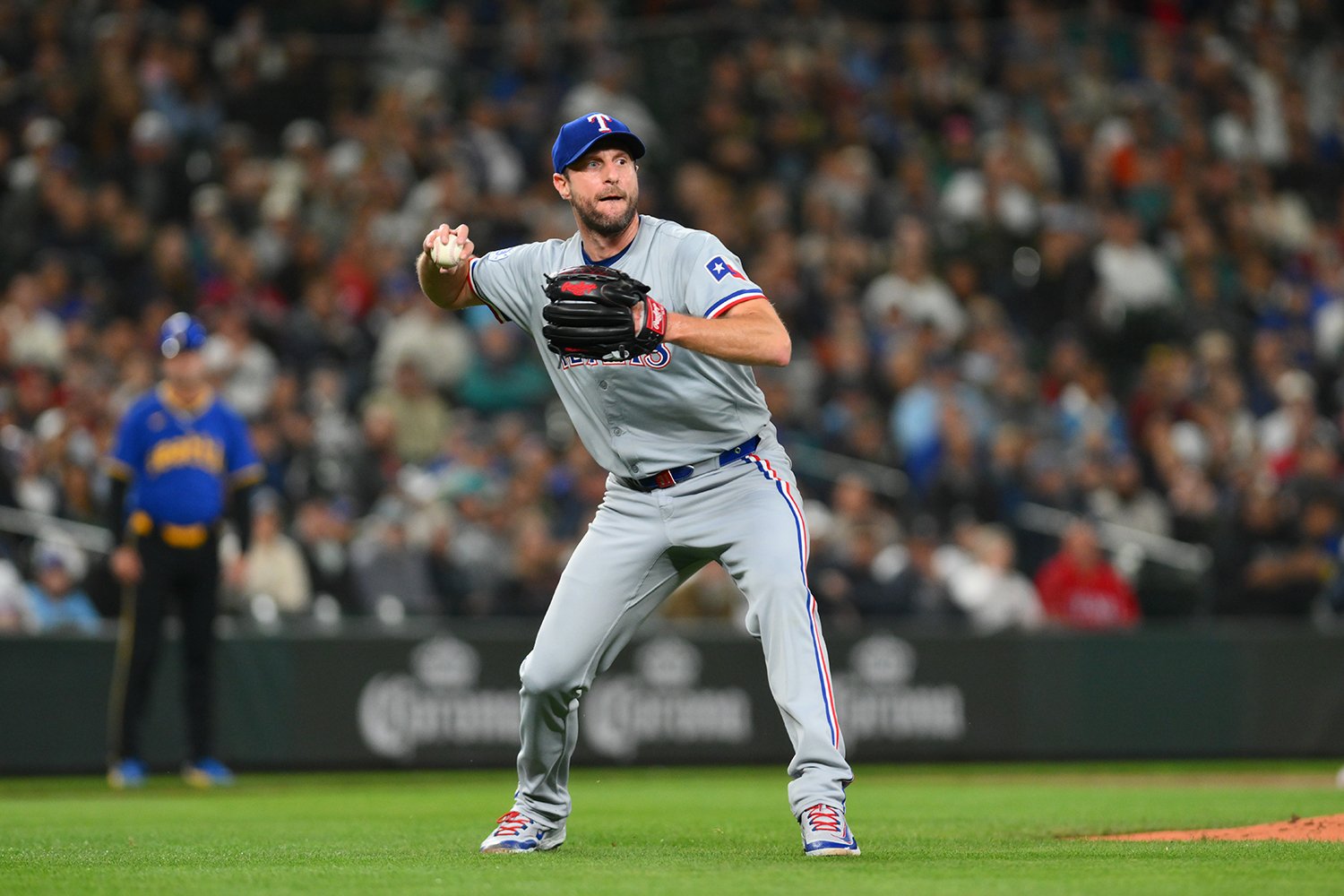 PECOTA is the projection system used by Baseball Prospectus, and you often hear about it because it doesn’t expect much from a player or team that you love. That’s how projection systems work; they’re inherently conservative, so if a player had a great 2024 season, they’ll expect that player to regress back to the mean in 2025. They’re usually right. Today, however, we’re talking about a player PECOTA loves: new Blue Jay Max Scherzer. PECOTA likes Scherzer because it expects him to regress in the other direction, putting up his best season since 2022. Baseball Prospectus’s flagship pitching metric is DRA-, Deserved Run Average Minus. Essentially, DRA is an ERA estimator, telling you what ERA a pitcher deserved to have. The minus part just puts that number on a scale where 100 is the league average, so that it’s easy to read. In 2024, Scherzer had a 3.95 ERA, but because a lot of his underlying metrics were very worrisome, DRA had him at 4.71, the worst mark of his entire career. That translated to a DRA- of 106, also the worst mark of Scherzer’s career. However, in 2025, PECOTA projects Scherzer’s ERA to be down to 3.54 and his DRA- to be down to 94, a huge improvement that would take him from being six points worse than league average to six points better. That number is also better than the 98 DRA- Scherzer put up in 2023. PECOTA doesn’t just think that 2024 was an outlier, it thinks that entering his age-40 season, he’ll pitch better than he has in two seasons, as do projection systems like ZiPS and OOPSY (yes, projection systems are legally required to have silly names). Today we're taking a closer look at the projections to see why that might be. Before we get to the good stuff, let’s get one scary thing out of the way. Scherzer pitched just 43 1/3 innings in 2024, and PECOTA only projects him for 46 1/3 in 2025. That’s understandable, considering Scherzer’s age and injury history, but the other projection systems are more bullish, and I think it’s fair to expect him to get to somewhere around 100 innings in 2025. The big reason that PECOTA expects big things from Scherzer is that after running a career-low 22.6% strikeout rate in 2024, he’s projected to bounce back to 25.5%. The other projection systems agree. That would still be way below his career mark of 29.3% and miles below the career-best 35.1% he put up in 2019, but it would bring Scherzer back to one of the higher marks among all starting pitchers. I can think of a couple reasons that Scherzer might be projected to strike more batters out. The big reason is velocity. Although Scherzer’s four-seam fastball has been falling in velocity for years, it took its biggest drop by far in 2024. Over the past five years, the drop-off was pretty gradual, never exceeding 0.4 mph. Then in 2024, it fell by a huge 1.3 mph. Not coincidentally, Scherzer battled multiple injuries in 2024. Even though he’s 40, we should probably expect his velocity to tick up at least a little bit, as long as he’s healthy. That would go a long way toward helping him miss more bats and rack up more strikeouts. Even though Scherzer’s stuff took a step back last season, the advanced stuff metrics still like his cutter and slider quite a bit. Even if he has to use the fastball less, they still offer a path to production for him. The last factor is simple regression to the mean. Over the past two seasons, Scherzer has run a 14.1% home run per fly ball rate. As a four-seamer specialist who lives at the top of the zone, Scherzer will with an elevated HR/FB rate, we should probably expect it to come down some; especially if Scherzer’s stuff ticks back up or if he focuses more on pitches that are harder to lift. The larger argument has less to do with numbers. Scherzer has already had a Hall of Fame career, and the last time he ran an ERA over 4.00 was 2011. His repertoire and approach have changed over the years, but he’s always found success. Every great pitcher turns into a pumpkin at some point, but it makes sense to give Scherzer the benefit of the doubt. That said, all of these arguments are predicated on Scherzer getting back to something resembling health and not pitching while compromised. It could turn out that's simply too much to ask of him at this stage in his career. Scherzer is a max-effort kind of pitcher, but keeping him fresh and, relatively speaking, in top form will be the real key.
 -
The 40-year-old ace is bringing his Hall of Fame talents and lengthy injury history to Toronto. Just one day after reports that Max Scherzer invited MLB teams to a workout to demonstrate that he still has what it takes to be an impact starter, his plan seems to have worked. On Thursday afternoon, Jon Heyman reported that Scherzer is signing with the Blue Jays on a one-year, $15.5-million deal. The 40-year-old Scherzer is a Hall of Fame lock: A three-time Cy Young Award winner, eight-time All-Star, and two-time World Series champion who has led his league in wins four times and complete games three times. He is also one of the game's fiercest competitors. However, Scherzer hasn't reached the 30-start threshold once in the last six seasons, and he threw just 43 innings in 2024. The Blue Jays are gambling that the Cooperstown-bound Scherzer has one more solid season in the tank. Scherzer started the 2024 season on the IL as he recovered from surgery to repair a herniated disc. After he returned, he battled a nerve issue in his hand, a hamstring strain, and shoulder fatigue. He debuted in June and made just eight starts before the shoulder issue shut him down. He returned for a ninth start in September, only for the hamstring strain to end his season. When he was on the mound, it's fair to say that he didn't look like himself. His velocity was down, and his cutter and slider seemed to merge into the same pitch. Despite all that, Scherzer managed a 3.95 ERA and 4.18 FIP. Even if they don't expect Scherzer to put any more black ink on his Baseball Reference page, the Blue Jays clearly think he has more to offer than he showed in 2024. MLB.com's Mark Feinsand wrote about Scherzer's workout, quoting one source as saying, “He looked like Max Scherzer. His Cy Young days are definitely behind him, but he’s still good enough to be an effective starter.” In 2024, Scherzer's fastball averaged just 92.6 mph. He's no longer the pitcher who was a threat to strike out 20 or throw a perfect game every single time he stepped out on the mound. However, even if Scherzer's ceiling is now that of the third or fourth man in a rotation, hitting it would make a real difference, because the Blue Jays are in need of starting pitching depth. Kevin Gausman is the de facto ace, but he's recently looked more like a number two starter. Chris Bassitt and José Berríos are also dependable arms, but all three of those players are at least 30 years old. Behind them sit Bowden Francis and Yariel Rodríguez, both of whom have a long way to go before they can be considered dependable pieces in a contending rotation. Alek Manoah is still a question mark, and Ricky Tiedemann will miss, at the very least, a large percentage of the 2025 season due to Tommy John surgery. If Scherzer does bounce back to his 2023 form, when he went 13-6 over 27 starts with the Mets and Rangers, throwing 152 2/3 innings with a 3.77 ERA, he'd be a steal for the Blue Jays. However, it's probably unreasonable to expect him to pitch a full complement of innings in 2025. The truth is that even 15 starts with a sub-4.00 ERA would be a valuable addition to a team that may not have a true ace and definitely has some real question marks at the back end of the rotation. It's great to be able to run out a pitcher who can blow the opposition away, but just as important is having pitchers who can at least give you a chance to win every night. Adding Scherzer gives the Blue Jays a much better chance of doing so. As for the bigger picture, the Blue Jays have now added Scherzer to strengthen the rotation, Anthony Santander to strengthen the lineup, Andres Giménez to strengthen the defense, and Jeff Hoffman to strengthen the bullpen. The chance they took on Myles Straw didn't help them land Roki Sasaki, but it may well help them keep the outfield together until Daulton Varsho is ready to return from hip surgery. With so many prominent misses on high-profile free agents, this may not be the way the Blue Jays hoped the offseason would shake out, but you can't argue that they're not trying to build a contender. View full article
-
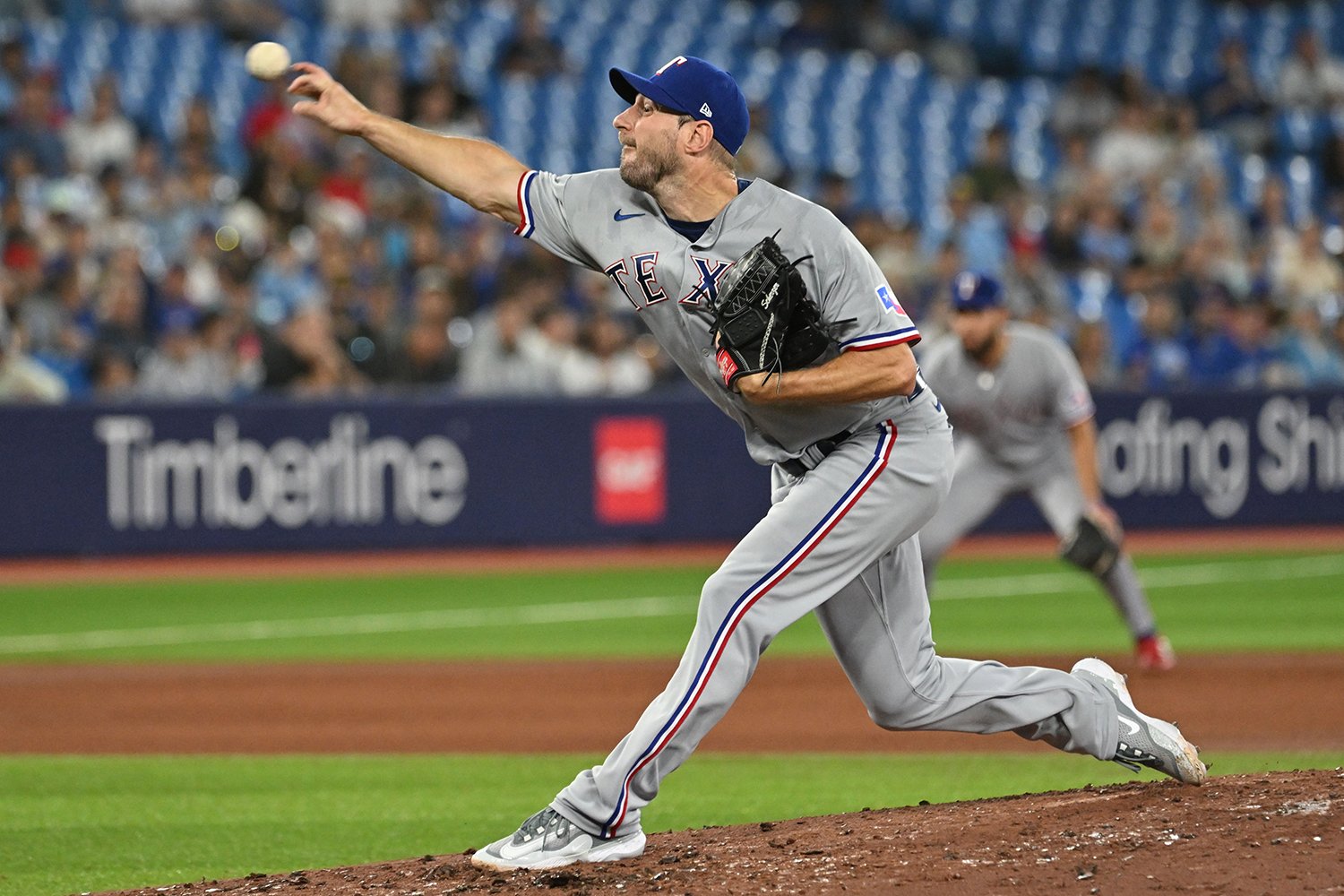 Just one day after reports that Max Scherzer invited MLB teams to a workout to demonstrate that he still has what it takes to be an impact starter, his plan seems to have worked. On Thursday afternoon, Jon Heyman reported that Scherzer is signing with the Blue Jays on a one-year, $15.5-million deal. The 40-year-old Scherzer is a Hall of Fame lock: A three-time Cy Young Award winner, eight-time All-Star, and two-time World Series champion who has led his league in wins four times and complete games three times. He is also one of the game's fiercest competitors. However, Scherzer hasn't reached the 30-start threshold once in the last six seasons, and he threw just 43 innings in 2024. The Blue Jays are gambling that the Cooperstown-bound Scherzer has one more solid season in the tank. Scherzer started the 2024 season on the IL as he recovered from surgery to repair a herniated disc. After he returned, he battled a nerve issue in his hand, a hamstring strain, and shoulder fatigue. He debuted in June and made just eight starts before the shoulder issue shut him down. He returned for a ninth start in September, only for the hamstring strain to end his season. When he was on the mound, it's fair to say that he didn't look like himself. His velocity was down, and his cutter and slider seemed to merge into the same pitch. Despite all that, Scherzer managed a 3.95 ERA and 4.18 FIP. Even if they don't expect Scherzer to put any more black ink on his Baseball Reference page, the Blue Jays clearly think he has more to offer than he showed in 2024. MLB.com's Mark Feinsand wrote about Scherzer's workout, quoting one source as saying, “He looked like Max Scherzer. His Cy Young days are definitely behind him, but he’s still good enough to be an effective starter.” In 2024, Scherzer's fastball averaged just 92.6 mph. He's no longer the pitcher who was a threat to strike out 20 or throw a perfect game every single time he stepped out on the mound. However, even if Scherzer's ceiling is now that of the third or fourth man in a rotation, hitting it would make a real difference, because the Blue Jays are in need of starting pitching depth. Kevin Gausman is the de facto ace, but he's recently looked more like a number two starter. Chris Bassitt and José Berríos are also dependable arms, but all three of those players are at least 30 years old. Behind them sit Bowden Francis and Yariel Rodríguez, both of whom have a long way to go before they can be considered dependable pieces in a contending rotation. Alek Manoah is still a question mark, and Ricky Tiedemann will miss, at the very least, a large percentage of the 2025 season due to Tommy John surgery. If Scherzer does bounce back to his 2023 form, when he went 13-6 over 27 starts with the Mets and Rangers, throwing 152 2/3 innings with a 3.77 ERA, he'd be a steal for the Blue Jays. However, it's probably unreasonable to expect him to pitch a full complement of innings in 2025. The truth is that even 15 starts with a sub-4.00 ERA would be a valuable addition to a team that may not have a true ace and definitely has some real question marks at the back end of the rotation. It's great to be able to run out a pitcher who can blow the opposition away, but just as important is having pitchers who can at least give you a chance to win every night. Adding Scherzer gives the Blue Jays a much better chance of doing so. As for the bigger picture, the Blue Jays have now added Scherzer to strengthen the rotation, Anthony Santander to strengthen the lineup, Andres Giménez to strengthen the defense, and Jeff Hoffman to strengthen the bullpen. The chance they took on Myles Straw didn't help them land Roki Sasaki, but it may well help them keep the outfield together until Daulton Varsho is ready to return from hip surgery. With so many prominent misses on high-profile free agents, this may not be the way the Blue Jays hoped the offseason would shake out, but you can't argue that they're not trying to build a contender.
 -
Alejandro Kirk has now had two below-average seasons in a row at the plate, so why do all the projection systems see him bouncing back to have a big 2025? From 2020 to 2022, Alejandro Kirk put up a 124 wRC+, meaning that he was 24% better than the average hitter. Only three catchers put up better offensive numbers: future Hall of Famer Buster Posey, number one overall draft pick Adley Rutschman, and Will Smith. That is rarefied air. Kirk started out as one of the best-hitting catchers in baseball, period. Then 2023 happened. Over the past two seasons, Kirk has a 95 wRC+. That’s above average for a catcher, but not by much, and it’s a radical drop-off for someone who started his career so hot. Deep into January, we now find ourselves in projection season, the time when sites like FanGraphs and Baseball Prospectus inform us of how advanced algorithms with adorable names think that each player will perform in 2025. Here’s a quick roundup of the projections for Kirk’s 2025 batting line. FGDC: 120 wRC+ Steamer: 120 wRC+ OOPSY: 118 wRC+ ATC: 112 wRC+ PECOTA: 110 DRC+ ZiPS: 105 OPS+ That’s a whole lot of projection systems, and they’re all predicting that Kirk will go back to being an above-average hitter and one of the best on the team in 2025. That’s our topic for the day. Why do the projection systems think that Kirk is going to bounce back, and should we trust them? For an in-depth look at how projection systems work, I’d recommend reading Jordan Rosenblum’s introduction to OOPSY, which FanGraphs just added to its stable of projections. The quick and dirty explanation is that projection systems use a player’s recent performance and underlying metrics to predict what they’ll do next season. They weight recent seasons more heavily, they adjust the predictions based on an aging curve, and they regress performance to the mean. Based on all of that, it makes sense that the projections systems would expect Bo Bichette to bounce right back after one bad season. But Kirk has now had two in a row; in his first three seasons, when he ran the 124 wRC+, he had 755 PAs, while in his last two seasons, he had 808 PAs. He's spent more time as a below-average hitter than an above-average hitter. I expected his 2025 projections to be way worse. Let me show you what I mean. This table shows Kirk’s preseason projections for each of the last three seasons, along with his actual wRC+. Projection 2022 2023 2024 2025 Actual wRC+ 129 96 94 TBD Steamer 129 140 121 120 ZiPS 105 125 110 105 PECOTA 109 122 117 110 After Kirk put up a 129 wRC+ in 2022, his 2023 projections shot up. After he put up a 96 wRC+ in 2023, his 2024 projections fell back to earth. That’s how it’s supposed to work. But after he ran the exact same numbers in 2024, Steamer, FGDC, and OOPSY, still see him as basically the same player, while ZiPS, PECOTA, and ATC have fairly small drop-offs. Once again: Why do the projection systems still see Kirk as such a good hitter? I don’t really know the answer to this question. For starters, just looking at Kirk’s raw wRC+ betrays the fact that he got pretty unlucky in 2024, as his .324 xwOBA and 112 DRC+ indicated that he deserved to end up as an above-average hitter. There were a few encouraging trends in his numbers: He hit fewer groundballs. After falling off hard in 2023, his contact quality improved. His hard-hit rate and both his average and 90th percentile exit velocities ticked back up in 2024; not all the way to their 2022 levels, but still better than 2023. He chased a little bit more, but he also got much more aggressive on pitches inside the strike zone. That led to more strikeouts and fewer walks, but it also meant that he was swinging at better pitches, which is a good sign in the long run. None of this is a slam dunk, but it helps explain why the projection systems still see Kirk as a solidly above-average hitter. Because he’s also an excellent defender, even in his down 2023 and 2024 seasons, Kirk put up a total of 5.1 fWAR, making him the ninth-most valuable catcher in baseball. If he’s able to put the offense and defense together once again, he could be a huge part of getting the Blue Jays back to the playoffs. As for whether or not to believe the projections, that’s up to you. View full article
-
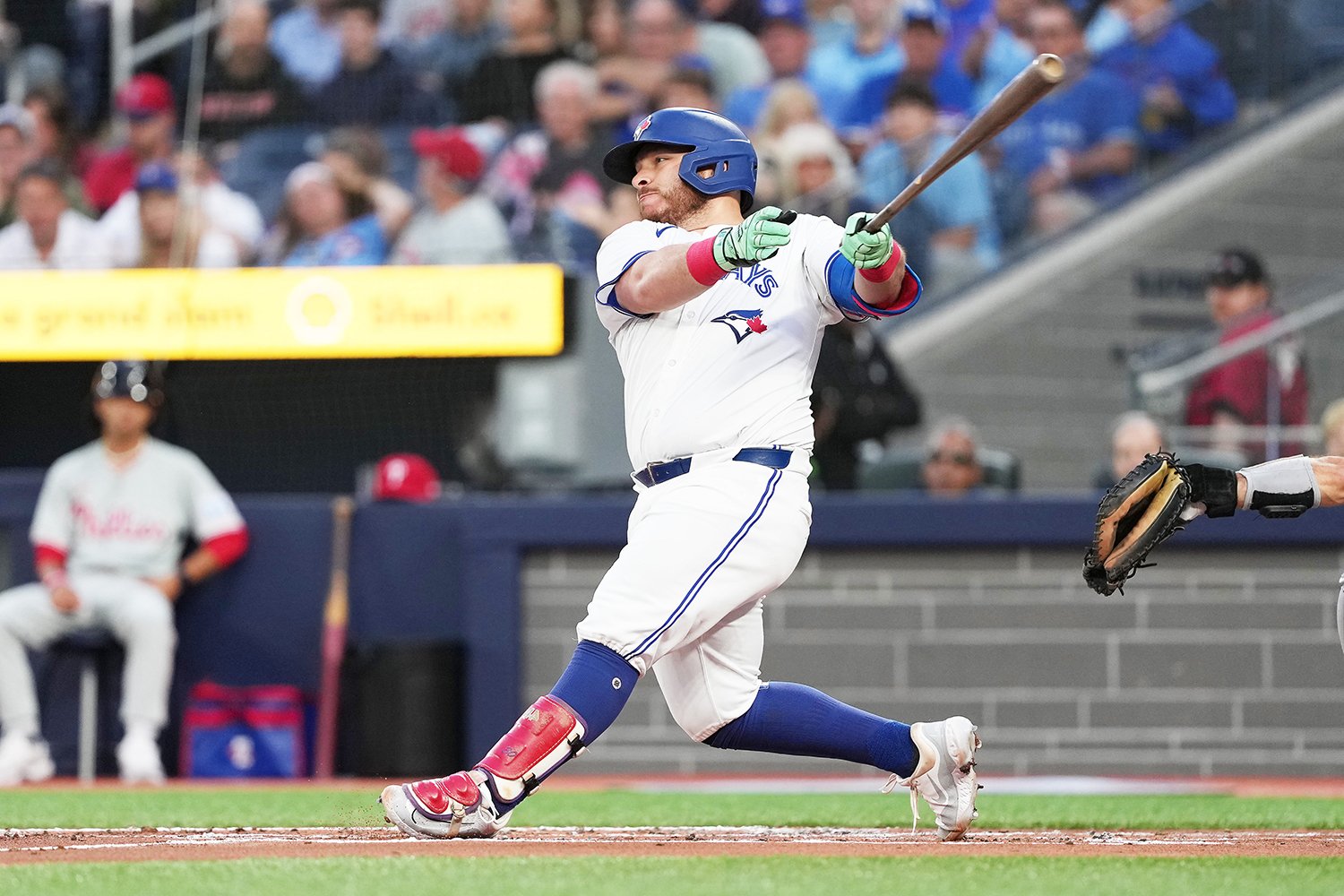 From 2020 to 2022, Alejandro Kirk put up a 124 wRC+, meaning that he was 24% better than the average hitter. Only three catchers put up better offensive numbers: future Hall of Famer Buster Posey, number one overall draft pick Adley Rutschman, and Will Smith. That is rarefied air. Kirk started out as one of the best-hitting catchers in baseball, period. Then 2023 happened. Over the past two seasons, Kirk has a 95 wRC+. That’s above average for a catcher, but not by much, and it’s a radical drop-off for someone who started his career so hot. Deep into January, we now find ourselves in projection season, the time when sites like FanGraphs and Baseball Prospectus inform us of how advanced algorithms with adorable names think that each player will perform in 2025. Here’s a quick roundup of the projections for Kirk’s 2025 batting line. FGDC: 120 wRC+ Steamer: 120 wRC+ OOPSY: 118 wRC+ ATC: 112 wRC+ PECOTA: 110 DRC+ ZiPS: 105 OPS+ That’s a whole lot of projection systems, and they’re all predicting that Kirk will go back to being an above-average hitter and one of the best on the team in 2025. That’s our topic for the day. Why do the projection systems think that Kirk is going to bounce back, and should we trust them? For an in-depth look at how projection systems work, I’d recommend reading Jordan Rosenblum’s introduction to OOPSY, which FanGraphs just added to its stable of projections. The quick and dirty explanation is that projection systems use a player’s recent performance and underlying metrics to predict what they’ll do next season. They weight recent seasons more heavily, they adjust the predictions based on an aging curve, and they regress performance to the mean. Based on all of that, it makes sense that the projections systems would expect Bo Bichette to bounce right back after one bad season. But Kirk has now had two in a row; in his first three seasons, when he ran the 124 wRC+, he had 755 PAs, while in his last two seasons, he had 808 PAs. He's spent more time as a below-average hitter than an above-average hitter. I expected his 2025 projections to be way worse. Let me show you what I mean. This table shows Kirk’s preseason projections for each of the last three seasons, along with his actual wRC+. Projection 2022 2023 2024 2025 Actual wRC+ 129 96 94 TBD Steamer 129 140 121 120 ZiPS 105 125 110 105 PECOTA 109 122 117 110 After Kirk put up a 129 wRC+ in 2022, his 2023 projections shot up. After he put up a 96 wRC+ in 2023, his 2024 projections fell back to earth. That’s how it’s supposed to work. But after he ran the exact same numbers in 2024, Steamer, FGDC, and OOPSY, still see him as basically the same player, while ZiPS, PECOTA, and ATC have fairly small drop-offs. Once again: Why do the projection systems still see Kirk as such a good hitter? I don’t really know the answer to this question. For starters, just looking at Kirk’s raw wRC+ betrays the fact that he got pretty unlucky in 2024, as his .324 xwOBA and 112 DRC+ indicated that he deserved to end up as an above-average hitter. There were a few encouraging trends in his numbers: He hit fewer groundballs. After falling off hard in 2023, his contact quality improved. His hard-hit rate and both his average and 90th percentile exit velocities ticked back up in 2024; not all the way to their 2022 levels, but still better than 2023. He chased a little bit more, but he also got much more aggressive on pitches inside the strike zone. That led to more strikeouts and fewer walks, but it also meant that he was swinging at better pitches, which is a good sign in the long run. None of this is a slam dunk, but it helps explain why the projection systems still see Kirk as a solidly above-average hitter. Because he’s also an excellent defender, even in his down 2023 and 2024 seasons, Kirk put up a total of 5.1 fWAR, making him the ninth-most valuable catcher in baseball. If he’s able to put the offense and defense together once again, he could be a huge part of getting the Blue Jays back to the playoffs. As for whether or not to believe the projections, that’s up to you.
 -
The Blue Jays have committed to five years with the slugger. It's time for some answers. On Monday, the Blue Jays signed former Orioles slugger Anthony Santander to a five-year, $92.5-million contract that is not without its risks. Let's dive into some questions about the deal and what it means for Toronto. Up to six years for a 30-year-old defensively challenged outfielder? Let’s tackle the contract length first. It’s a five-year deal, but it could be a three-year deal if Santander opts out (which could then become a six-year deal if the Jays want to void the opt-out). Who knows what the Jays roster might look like in three years? Right now, the only non-arbitration contracts that run beyond 2027 belong to José Berríos and the newly acquired Andrés Giménez. I’m not going to suggest that the Jays don’t care at all about years four, five, and six of this deal, but if they’re a problem, they’re a problem for another day (and maybe even a different front office). That’s how most long-term contracts work anyway: the player provides the bulk of their value up front, so they’re underpaid in the first few years and overpaid in the last few. The important part of this signing is now. Santander immediately makes this team better. He hit 44 home runs last season and is “only” projected to hit 32 to 36 this year. Those 32 homers would have led the Blue Jays. They need his power and they need it this season. Is this the George Springer signing repeating itself? In 2021, George Springer signed a six-year, $150-million deal to come to Toronto in his age-31 season. He put up a combined 6.7 fWAR in his first two seasons, but he has been below replacement level over the past two seasons. Springer and Santander don’t profile as the same type of player, but the contracts, ages and shared position will draw inevitable comparisons. Will Santander’s power decline gradually or are we headed for a cliff? From an impact perspective, again, the important thing is this season. I don’t think the front office is thinking too far out. Let’s also take a moment to appreciate some intangibles. Springer has been a fan favourite since his arrival ,and his signing really signified that the Jays were contenders in a heated AL East. If Santander is Springer 2.0, maybe that’s not such a bad thing. What about Vladdy and Bo? The contract status of Vladimir Guerrero Jr. and Bo Bichette is going to be the shadow that hangs over every transaction this front office makes until they’re extended, traded, or allowed to walk. Santander will, at the very least, provide some protection in the lineup for Guerrero Jr. If that boosts his trade value or entices him to stay, then that’s just the way it breaks. Both of Toronto’s pending free agents are going to get paid; the when and where are to be determined. What about Bregman and Alonso? Like Merry and Pippin said shortly after setting off an unlawfully acquired firework: “That was good.” “Let’s get another one!” There is still a pair of big name free agents out there, and the Jays still have a hole (or two) in their lineup. Could Toronto go all in and continue to add? Until we find out they’ve signed elsewhere, we can continue to dream. Alex Bregman is at the top of the list. He has the highest projected fWAR of the remaining free agent class at 4.0, and he comes with the highest projected contract. How does $162 million over six years sound for the (soon to be) 31-year-old third basemen? Bregman still grades out well according to the advanced metrics, and he won his first Gold Glove last year (the Jays love adding a Gold Glover). The Jays have also been linked to Pete Alonso. I’m of the opinion that the Jays should make signing the Polar Bear their priority and immediately cross-promote with the Toronto Zoo just based on the nickname! There would be some positional shuffling required. Santander and Springer would have to play every day in the outfield, while Alonso and Guerrero would have to share first and DH, with Guerrero getting the occasional start at third. But if the front office has decided privately that we’re back to digging the long ball, Alonso is the next bat we need. View full article
-
You're going to make me blush.
-
Anthony Santander is a Blue Jay for the next five years, at a cost of $92.5 million, some of it deferred. Good news for Blue Jays fans: they will no longer be tormented by Anthony Santander. On Monday afternoon, Jon Morosi of MLB.com reported that Santander is signing with Toronto. According to Ari Alexander, the deal is for five years, but Santander will have an opt-out after the third year. However, the Jays will have the power to void that opt-out by picking up a club option for 2030 (adding a sixth year to the deal). According to Ken Rosenthal, the deal is for $92.5 million, while Alexander has also reported that some of the money will be deferred. Back in November, Ben Clemens of FanGraphs ranked Santander as his number 12 free agent and predicted that he would command five years and $100 million, while MLB Trade Rumors predicted four years and $80 million. Going by average annual value, the Blue Jays came in a bit below those $20-million predictions, but the opt-out makes the contract more valuable for Santander, as it gives him a chance to hit free agency again in four years if he thinks he can go out and get more money elsewhere. While the terms of the deferral aren't known yet, they will end up making the deal cheaper for the Blue Jays. In the end, it sounds like both sides made concessions to get the deal done. This is a long-term deal for a player of Santander's age, and it's not without risk. While he has been extremely durable, playing in at least 152 games in each of the last three seasons, he is 30 years old, so this deal will take him into his age-34 season. However, Santander can slug, and that makes him a welcome addition to a Blue Jays team that ranked 26th in home runs (156) and 22nd in isolated slugging percentage (.148) in 2024. Santander immediately becomes a middle-of-the-lineup force who can hit both righties and lefties. The switch-hitting Santander is one of the game's premier home-run hitters, and he blasted 44 home runs in 2024. Over the past three seasons, he has hit 105 home runs. Fourteen of them have come against the Blue Jays, tied with Aaron Judge for the most in baseball. Over the past four seasons, Santander has run a combined 119 wRC+. However, that excellent offensive contribution has only resulted in 9.4 fWAR because he gives up a lot of value with his defense. According to Statcast's Fielding Run Values, he has put up negative value in the outfield in each of the past four seasons. Santander will see time in both the outfield and at DH. He's already one of the game's slower players. After the Blue Jays spent the past three seasons with three legitimate center fielders in the outfield, their days of running out the best defensive outfield in baseball are almost certainly over, despite the addition of defensive maven Myles Straw on Friday. Santander was a slow starter, debuting with the Orioles in 2017, putting up one great, short season in 2020, but not reaching the 100-game mark until 2021. To that point, he had a career wRC+ of 94, and had only been worth 1.3 fWAR over 286 career games, putting him well below replacement level. However, he figured things out in 2022. blasting 33 home runs in 152 games, and he hasn't looked back. The Blue Jays will count on Santander to stay healthy and powerful will into his mid-30s. Today, however, it's got to feel nice to finish first on a major free agent. View full article
-
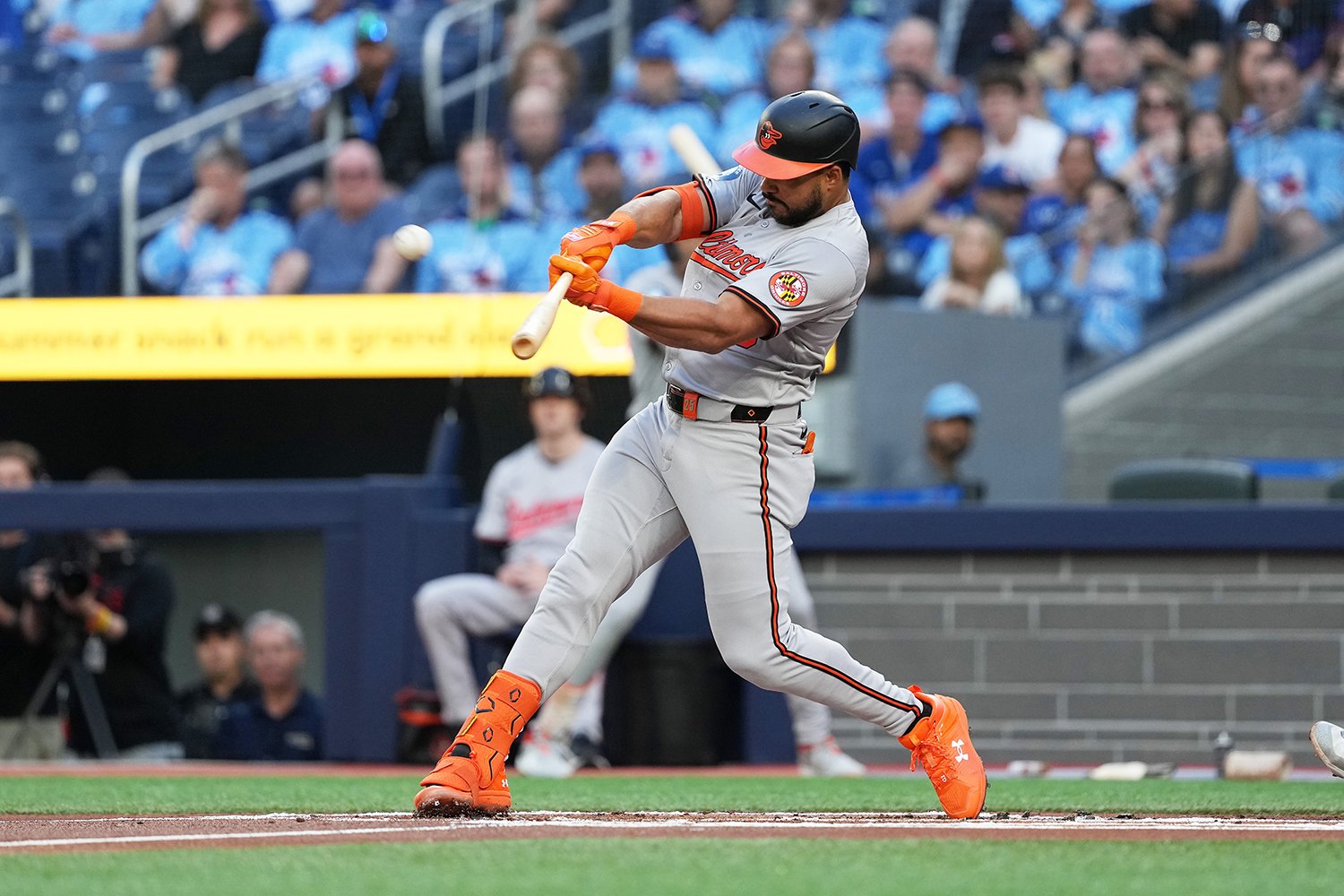 Good news for Blue Jays fans: they will no longer be tormented by Anthony Santander. On Monday afternoon, Jon Morosi of MLB.com reported that Santander is signing with Toronto. According to Ari Alexander, the deal is for five years, but Santander will have an opt-out after the third year. However, the Jays will have the power to void that opt-out by picking up a club option for 2030 (adding a sixth year to the deal). According to Ken Rosenthal, the deal is for $92.5 million, while Alexander has also reported that some of the money will be deferred. Back in November, Ben Clemens of FanGraphs ranked Santander as his number 12 free agent and predicted that he would command five years and $100 million, while MLB Trade Rumors predicted four years and $80 million. Going by average annual value, the Blue Jays came in a bit below those $20-million predictions, but the opt-out makes the contract more valuable for Santander, as it gives him a chance to hit free agency again in four years if he thinks he can go out and get more money elsewhere. While the terms of the deferral aren't known yet, they will end up making the deal cheaper for the Blue Jays. In the end, it sounds like both sides made concessions to get the deal done. This is a long-term deal for a player of Santander's age, and it's not without risk. While he has been extremely durable, playing in at least 152 games in each of the last three seasons, he is 30 years old, so this deal will take him into his age-34 season. However, Santander can slug, and that makes him a welcome addition to a Blue Jays team that ranked 26th in home runs (156) and 22nd in isolated slugging percentage (.148) in 2024. Santander immediately becomes a middle-of-the-lineup force who can hit both righties and lefties. The switch-hitting Santander is one of the game's premier home-run hitters, and he blasted 44 home runs in 2024. Over the past three seasons, he has hit 105 home runs. Fourteen of them have come against the Blue Jays, tied with Aaron Judge for the most in baseball. Over the past four seasons, Santander has run a combined 119 wRC+. However, that excellent offensive contribution has only resulted in 9.4 fWAR because he gives up a lot of value with his defense. According to Statcast's Fielding Run Values, he has put up negative value in the outfield in each of the past four seasons. Santander will see time in both the outfield and at DH. He's already one of the game's slower players. After the Blue Jays spent the past three seasons with three legitimate center fielders in the outfield, their days of running out the best defensive outfield in baseball are almost certainly over, despite the addition of defensive maven Myles Straw on Friday. Santander was a slow starter, debuting with the Orioles in 2017, putting up one great, short season in 2020, but not reaching the 100-game mark until 2021. To that point, he had a career wRC+ of 94, and had only been worth 1.3 fWAR over 286 career games, putting him well below replacement level. However, he figured things out in 2022. blasting 33 home runs in 152 games, and he hasn't looked back. The Blue Jays will count on Santander to stay healthy and powerful will into his mid-30s. Today, however, it's got to feel nice to finish first on a major free agent.
 -
The Blue Jays have been linked to Max Scherzer. The future Hall of Famer represents a different kind of gamble than most free agents. As recently as 2023, Max Scherzer went 13-6 with a 3.77 ERA, while striking out more than 10 batters per nine innings. And after a deadline trade from the Mets to the Rangers, Scherzer helped propel Texas into the playoffs, going 4-2 with a 3.20 ERA. In 2022, he was a full-on star, running a 2.29 ERA and putting up 4.5 fWAR for the 10th consecutive season (ignoring the short 2020 campaign). There are few teams that wouldn’t benefit from adding a pitcher like that to the back of their starting rotation. That’s the argument for signing Max Scherzer, and it’s relevant because on Sunday, Ben Nicholson-Smith reported that Scherzer is drawing interest from the Blue Jays. Here's the argument against signing Scherzer, and although I haven’t started typing it out yet, I can already tell you that it’s going to be a bit longer. For starters, Max Scherzer is 40 years old. Thanks to a litany of injuries, he hasn’t made 30 starts since the 2021 season. In 2024, he pitched just 43 1/3 innings thanks to recovery time for offseason back surgery, shoulder fatigue, and a hamstring strain. In that short sample, he ran a 3.95 ERA, but his FIP was higher, his 8.31 strikeouts per nine innings were his lowest mark since 2011, and his average fastball velocity was down to 92.6 mph. His fastball hasn’t been above the league average in velocity since 2020. Even in that last solid 2023 season, Scherzer’s 4.32 FIP was a career-high; it indicated that he was the beneficiary of some batted ball luck, and it might help explain why he ran a 6.52 ERA in the playoffs, making it just 9 2/3 innings over three starts. Here's a graph that shows Scherzer's ERA over the course of his entire career, along with his FIP and xFIP (two advanced metrics that show the ERA a pitcher deserved). Clearly, this isn't the same Max Scherzer. There’s a real argument to be made that Scherzer wasn’t himself in his short, injury-plagued 2024 campaign, and that velocity and stuff will tick back up to his 2023 levels. However, that’s a big assumption, and we should be very clear about that 2023 season: the underlying metrics say that Scherzer deserved a 4.00 ERA or higher, rather than the 3.77 he put up. Stuff metrics no longer love his electric four-seamer or his biting slider. In fact, in 2024, the only pitch of Scherzer’s that graded out as above-average according to Stuff+ was his cutter, which he throws just 6% of the time. Even at his best, Scherzer relied on locating his elite four-seamer above the zone, which led to a lot of fly balls and therefore home runs. Whoever signs Scherzer will be gambling: both on his health and on his true talent level at this point in his career. It's not a bet on Scherzer’s ceiling; it’s a bet that the bottom won’t fall out. That doesn’t mean that it’s a bad gamble to make. Scherzer is a Hall of Famer and one of the game’s great competitors. He’s a baseball fanatic who has seen and done everything in his 17 years in the big leagues. His knowledge and his legendary work ethic will surely help whoever signs him get the most out of their pitching staff. Someone is going to take a chance that 2023 wasn’t a mirage, and that Scherzer can still go out there and run a 3.80 ERA over 25 starts. If Scherzer could do that for Toronto, he’d slot in as the team’s third- or fourth-best starter. As the team is currently constructed, that could be the difference between making and missing the playoffs. On the other hand, one more injury would mean that sinking the last few millions remaining in the budget into Scherzer – rather than a safer bet like Anthony Santander – ends up being the move the team ends up regretting all season long. View full article
-
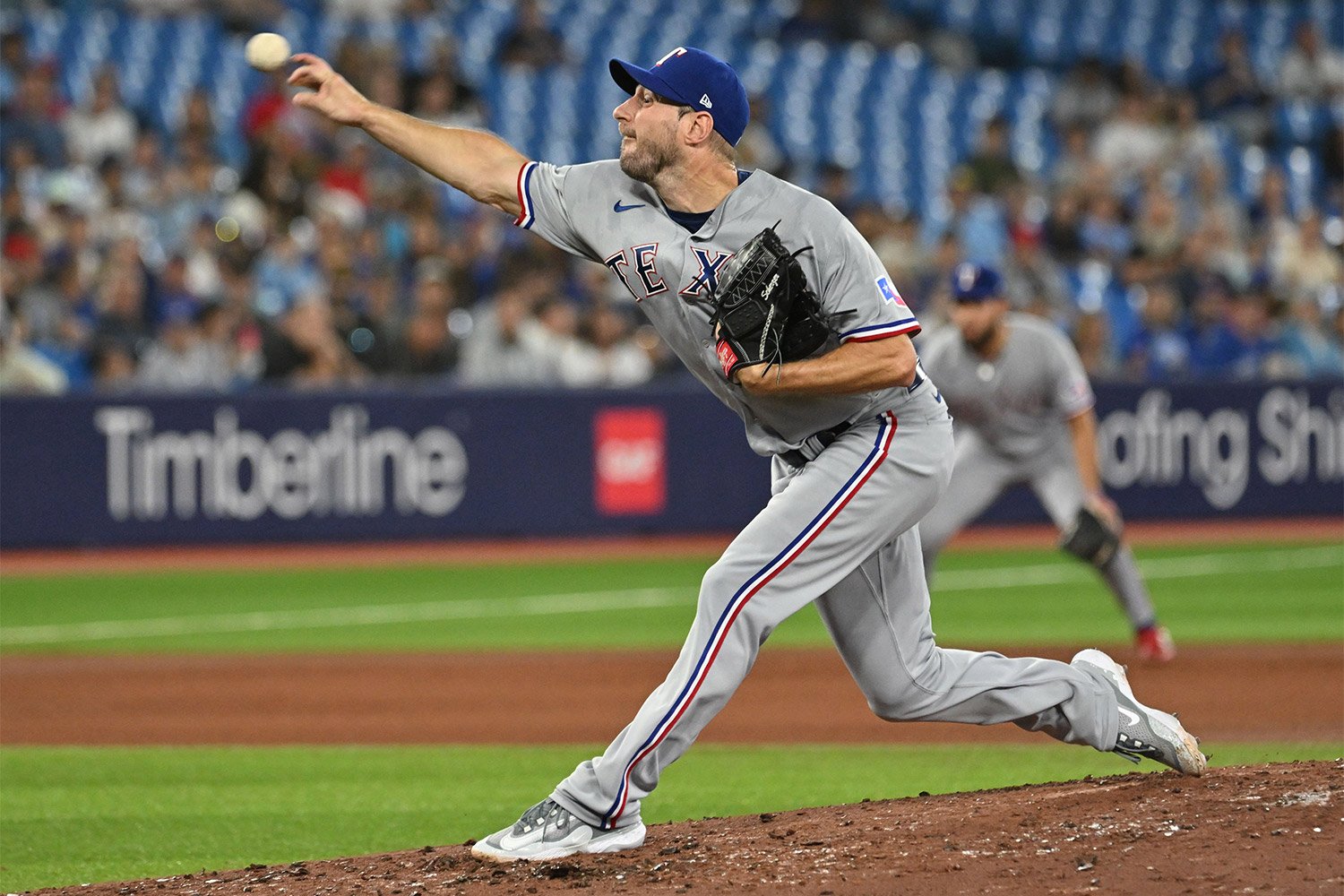 As recently as 2023, Max Scherzer went 13-6 with a 3.77 ERA, while striking out more than 10 batters per nine innings. And after a deadline trade from the Mets to the Rangers, Scherzer helped propel Texas into the playoffs, going 4-2 with a 3.20 ERA. In 2022, he was a full-on star, running a 2.29 ERA and putting up 4.5 fWAR for the 10th consecutive season (ignoring the short 2020 campaign). There are few teams that wouldn’t benefit from adding a pitcher like that to the back of their starting rotation. That’s the argument for signing Max Scherzer, and it’s relevant because on Sunday, Ben Nicholson-Smith reported that Scherzer is drawing interest from the Blue Jays. Here's the argument against signing Scherzer, and although I haven’t started typing it out yet, I can already tell you that it’s going to be a bit longer. For starters, Max Scherzer is 40 years old. Thanks to a litany of injuries, he hasn’t made 30 starts since the 2021 season. In 2024, he pitched just 43 1/3 innings thanks to recovery time for offseason back surgery, shoulder fatigue, and a hamstring strain. In that short sample, he ran a 3.95 ERA, but his FIP was higher, his 8.31 strikeouts per nine innings were his lowest mark since 2011, and his average fastball velocity was down to 92.6 mph. His fastball hasn’t been above the league average in velocity since 2020. Even in that last solid 2023 season, Scherzer’s 4.32 FIP was a career-high; it indicated that he was the beneficiary of some batted ball luck, and it might help explain why he ran a 6.52 ERA in the playoffs, making it just 9 2/3 innings over three starts. Here's a graph that shows Scherzer's ERA over the course of his entire career, along with his FIP and xFIP (two advanced metrics that show the ERA a pitcher deserved). Clearly, this isn't the same Max Scherzer. There’s a real argument to be made that Scherzer wasn’t himself in his short, injury-plagued 2024 campaign, and that velocity and stuff will tick back up to his 2023 levels. However, that’s a big assumption, and we should be very clear about that 2023 season: the underlying metrics say that Scherzer deserved a 4.00 ERA or higher, rather than the 3.77 he put up. Stuff metrics no longer love his electric four-seamer or his biting slider. In fact, in 2024, the only pitch of Scherzer’s that graded out as above-average according to Stuff+ was his cutter, which he throws just 6% of the time. Even at his best, Scherzer relied on locating his elite four-seamer above the zone, which led to a lot of fly balls and therefore home runs. Whoever signs Scherzer will be gambling: both on his health and on his true talent level at this point in his career. It's not a bet on Scherzer’s ceiling; it’s a bet that the bottom won’t fall out. That doesn’t mean that it’s a bad gamble to make. Scherzer is a Hall of Famer and one of the game’s great competitors. He’s a baseball fanatic who has seen and done everything in his 17 years in the big leagues. His knowledge and his legendary work ethic will surely help whoever signs him get the most out of their pitching staff. Someone is going to take a chance that 2023 wasn’t a mirage, and that Scherzer can still go out there and run a 3.80 ERA over 25 starts. If Scherzer could do that for Toronto, he’d slot in as the team’s third- or fourth-best starter. As the team is currently constructed, that could be the difference between making and missing the playoffs. On the other hand, one more injury would mean that sinking the last few millions remaining in the budget into Scherzer – rather than a safer bet like Anthony Santander – ends up being the move the team ends up regretting all season long.
 -
We already know he looks good in blue. Please don't yell at me. I'm not saying the Blue Jays should definitely do this. That's not what I'm saying. The Blue Jays should do everything necessary to sign Vladimir Guerrero Jr. to an extension. However, when you look at the Toronto roster, you see a team without a DH. You see a team with one reliable power bat in Guerrero, and several bounce-back candidates behind him. What I'm trying to say is that I'm starting to understand rumors that the Blue Jays are "engaged in discussions" with Pete Alonso. Alonso is coming off the two worst seasons of his career, but even in those seasons, he still put up a 121 wRC+ with 80 home runs. If he really is willing to consider a three-year deal as reports indicated, well, we already know he looks pretty good mashing home runs in blue. Let's consider the variables. First of all, Guerrero is the top priority. He's a homegrown talent and a fan favorite, he's one of the best pure hitters in the game, and he's only entering his age-26 season. He's the kind of player you lock down. So if the Blue Jays think they have a shot at extending Guerrero, but that signing Alonso could jeopardize it, then this idea should be a non-starter. However, we don't know if that's the case. Guerrero might welcome the chance to DH or play third from time to time. More importantly, he might just be glad that the Blue Jays are improving the roster and building a lineup where he doesn't have to do all the heavy lifting. Moreover, Ken Rosenthal and Will Sammon just reported that the Blue Jays and Guerrero haven't had extension talks since before Christmas. Talks are expected to continue, but Guerrero's spring training deadline for a moratorium on negotiations is looming very large in the windshield. If the team doesn't think they can lock him down, signing Alonso makes all the sense in the world. Just for the sake of argument, allow me to point out that Alonso and Guerrero both debuted in 2019, and that they've provided nearly identical value to their clubs. Alonso has a 131 career wRC+ with 17.3 fWAR, while Guerrero is at 137 and 17.0. Guerrero is capable of higher highs, as he's put up two five-win seasons to Alonso's zero, but Alonso has shown a higher floor. He's never put up a WAR below 2.0 (except in the short 2020 season), while Guerrero has done that twice, and he's never put up a wRC+ below 120, which Guerero has done three times. I'm not saying Alonso will be better going forward, or that he should take Guerrero's place. I'm just saying that he's a reliable bat, and although he just turned 30 and hasn't been at his best in recent seasons, he'd make a pretty fantastic DH. Imagine being an opposing pitcher and having to face Alonso and Guerrero back-to-back in the lineup. I know it's not ideal to roster two players who are so extremely similar. These are both right-handed power bats who are stuck providing sub-par first base defense. However, it's not as if the Blue Jays are fighting off free agents with a stick right now. Versatility is very valuable in today's game, and it's great to have a roster that fits together beautifully, but it's a lot more important to simply get the best players you can. We all laughed when the Phillies constructed an roster out of defensively challenged sluggers like Bryce Harper, Nick Castellanos, Rhys Hoskins, and Kyle Schwarber, but they've been one of the best teams in baseball for years now. Moreover, the Blue Jays really do have a space for Alonso. I'm sure I don't need to tell you how many Blue Jays Steamer projects for a higher wRC+ than Alonso, but just in case, the answer is one: Guerrero. Right now, ZiPS projects the Blue Jays to get 0.9 WAR out of the DH spot from a combination of Will Wagner, George Springer, Davis Schneider, Orelvis Martinez, and Addison Barger. It makes sense to give Springer a DH day every once in a while, and I'm all for giving Wagner a longer look and finding out what he can do, but this is not a plan. With 25 ZiPS projections published, here are the teams with a worse projection at DH than the Blue Jays: the White Sox, Rockies, Marlins, Mariners, and Diamondbacks. If you're keeping score at home, that's the three worst teams in the league, one of the worst offenses in the game, and the Diamondbacks. This is not the company the Blue Jays want to be keeping. More importantly, it means that DH is a spot where a big free agent signing could make a drastic difference in the win-loss column, turning the position from a glaring weakness into a strength. It's starting to make sense. View full article
-
Those Pete Alonso Blue Jays Rumors Are Starting To Make Sense
Davy Andrews posted an article in Blue Jays
 I'm not saying the Blue Jays should definitely do this. That's not what I'm saying. The Blue Jays should do everything necessary to sign Vladimir Guerrero Jr. to an extension. However, when you look at the Toronto roster, you see a team without a DH. You see a team with one reliable power bat in Guerrero, and several bounce-back candidates behind him. What I'm trying to say is that I'm starting to understand rumors that the Blue Jays are "engaged in discussions" with Pete Alonso. Alonso is coming off the two worst seasons of his career, but even in those seasons, he still put up a 121 wRC+ with 80 home runs. If he really is willing to consider a three-year deal as reports indicated, well, we already know he looks pretty good mashing home runs in blue. Let's consider the variables. First of all, Guerrero is the top priority. He's a homegrown talent and a fan favorite, he's one of the best pure hitters in the game, and he's only entering his age-26 season. He's the kind of player you lock down. So if the Blue Jays think they have a shot at extending Guerrero, but that signing Alonso could jeopardize it, then this idea should be a non-starter. However, we don't know if that's the case. Guerrero might welcome the chance to DH or play third from time to time. More importantly, he might just be glad that the Blue Jays are improving the roster and building a lineup where he doesn't have to do all the heavy lifting. Moreover, Ken Rosenthal and Will Sammon just reported that the Blue Jays and Guerrero haven't had extension talks since before Christmas. Talks are expected to continue, but Guerrero's spring training deadline for a moratorium on negotiations is looming very large in the windshield. If the team doesn't think they can lock him down, signing Alonso makes all the sense in the world. Just for the sake of argument, allow me to point out that Alonso and Guerrero both debuted in 2019, and that they've provided nearly identical value to their clubs. Alonso has a 131 career wRC+ with 17.3 fWAR, while Guerrero is at 137 and 17.0. Guerrero is capable of higher highs, as he's put up two five-win seasons to Alonso's zero, but Alonso has shown a higher floor. He's never put up a WAR below 2.0 (except in the short 2020 season), while Guerrero has done that twice, and he's never put up a wRC+ below 120, which Guerero has done three times. I'm not saying Alonso will be better going forward, or that he should take Guerrero's place. I'm just saying that he's a reliable bat, and although he just turned 30 and hasn't been at his best in recent seasons, he'd make a pretty fantastic DH. Imagine being an opposing pitcher and having to face Alonso and Guerrero back-to-back in the lineup. I know it's not ideal to roster two players who are so extremely similar. These are both right-handed power bats who are stuck providing sub-par first base defense. However, it's not as if the Blue Jays are fighting off free agents with a stick right now. Versatility is very valuable in today's game, and it's great to have a roster that fits together beautifully, but it's a lot more important to simply get the best players you can. We all laughed when the Phillies constructed an roster out of defensively challenged sluggers like Bryce Harper, Nick Castellanos, Rhys Hoskins, and Kyle Schwarber, but they've been one of the best teams in baseball for years now. Moreover, the Blue Jays really do have a space for Alonso. I'm sure I don't need to tell you how many Blue Jays Steamer projects for a higher wRC+ than Alonso, but just in case, the answer is one: Guerrero. Right now, ZiPS projects the Blue Jays to get 0.9 WAR out of the DH spot from a combination of Will Wagner, George Springer, Davis Schneider, Orelvis Martinez, and Addison Barger. It makes sense to give Springer a DH day every once in a while, and I'm all for giving Wagner a longer look and finding out what he can do, but this is not a plan. With 25 ZiPS projections published, here are the teams with a worse projection at DH than the Blue Jays: the White Sox, Rockies, Marlins, Mariners, and Diamondbacks. If you're keeping score at home, that's the three worst teams in the league, one of the worst offenses in the game, and the Diamondbacks. This is not the company the Blue Jays want to be keeping. More importantly, it means that DH is a spot where a big free agent signing could make a drastic difference in the win-loss column, turning the position from a glaring weakness into a strength. It's starting to make sense.
 -
The Blue Jays have added a defense-first center fielder to take the place of Kevin Kiermaier, and they've done what they can to bolster their chances of landing Roki Sasaki. On Friday morning, just three hours after word spread that the Padres were no longer a possible destination for Roki Saski, the Blue Jays swung a move that could only be interpreted as a bid to bolster their chances of landing the ace. The Blue Jays announced that they had traded either cash or a player to be named later to the Guardians in exchange for center fielder Myles Straw, along with international bonus pool money. Just after noon Eastern, Zack Meisel reported some specifics: The Guardians will be sending Cleveland $1 million in 2025 along with $1.75 million in 2026, along with $2 million in international bonus pool money. The Blue Jays will be sending a player to be named later. The deal's biggest takeaway is that although the Dodgers remain the favorite to land Sasaki, the Blue Jays clearly think they still they have a chance. The Blue Jays started the offseason with just under $6.3 million in bonus pool money, and all teams are allowed to increase their pool to up to 60%, so this is a major addition to their total. With Sasaki coming over from Japan before age 25, he will be on a rookie contract, and the only real money he will see until he enters arbitration in his fourth season is his bonus money. Clearly, money is not the biggest motivating factor for him, or else he would have waited the extra two years to land a contract in the hundreds of millions of dollars. However, the Blue Jays clearly think this could help them. There is no way to know what calculus Sasaki is using to make his decision, though it's clear that his process has been extremely thorough. All the money heading Toronto's way is an indication of just how far underwater Straw's contract truly is. However, between players like Kevin Pillar and Kevin Kiermaier, the Blue Jays clearly love themselves a defense-first center fielder, and few players feature defense that stands further out in front of their offense than Straw. Straw came up with the Astros, making his debut in 2018. His first full season didn't come until 2021, when he put up 3.0 fWAR thanks to a .271 batting average, 98 wRC+, 30 stolen bases, and his trademark excellent defense. He also got traded to Cleveland at the deadline in exchange for Yainer Diaz and Phil Maton. With Straw coming off a three-win season, Cleveland saw the chance to lock a potential star up long-term. In April of 2022, they signed Straw to an extension, buying out some arbitration years with a five-year, $25 million contract that took Straw through 2026 and included team options for 2027 and 2028. Straw will make $7 million in 2025 and 2026. The team options are for $8 million in 2027 (with a $1.75 million buyout) and $8.5 million in 2028 (and a $500,000 buyout). The problem is that the moment Straw signed the extension, he stopped hitting. Although he won a Gold Glove in 2022, he was only worth 1.4 fWAR, making him a below-average player, because his batting line was 35% worse than the league average. He didn't hit any better in 2023, and because the advanced metrics saw his defense as more good than spectacular, his 0.2 WAR was just barely better than replacement-level. Straw spent nearly the entire 2024 season in triple-A Columbus, where he put up a 72 wRC+ while batting .240. That's right, Straw hit .240 in Triple A. He has six career home runs to his name, with no power to speak of, he pretty much needs to hit .300 in order to provide any value at the plate. Instead, over the past four seasons, he has a .307 slugging percentage. Straw is now Toronto's problem, but there are certainly worse problems a team could have. Sure, it would be unreasonable to expect him to hit at all, but he's only 30 years old, he's only under contract for two years, and unless you're the Cleveland Guardians, he's not owed all that much money. In fact, if you count the international bonus pool money, you the Jays are only paying Straw $4 million this season and $5.25 million next season, plus the $1.75 million buyout. That's a lot for a fourth outfielder, and it's a ton for a triple-A outfielder, but Straw could still be useful to the Blue Jays. He stole 30 bases in Triple A last year, so he's clearly still got the speed to be a great center fielder. It's possible that he'll start the season as the team's everyday center fielder, ceding the role to Daulton Varsho when the latter returns from rotator cuff surgery. Moreover, he's extremely fun to watch, especially if you enjoy players cursing loudly when they get out. He plays great defense, steals bases, puts the ball in play, and busts it out of the left-handed batter's box. The likeliest outcome here is still that Sasaki lands in Los Angeles, which will end up making this move look somewhat silly in retrospect. However, Straw does fill a need for the Blue Jays, and while he's unlikely to make anyone forget about Devon White, he could be a helpful piece. View full article
-
 On Friday morning, just three hours after word spread that the Padres were no longer a possible destination for Roki Saski, the Blue Jays swung a move that could only be interpreted as a bid to bolster their chances of landing the ace. The Blue Jays announced that they had traded either cash or a player to be named later to the Guardians in exchange for center fielder Myles Straw, along with international bonus pool money. Just after noon Eastern, Zack Meisel reported some specifics: The Guardians will be sending Cleveland $1 million in 2025 along with $1.75 million in 2026, along with $2 million in international bonus pool money. The Blue Jays will be sending a player to be named later. The deal's biggest takeaway is that although the Dodgers remain the favorite to land Sasaki, the Blue Jays clearly think they still they have a chance. The Blue Jays started the offseason with just under $6.3 million in bonus pool money, and all teams are allowed to increase their pool to up to 60%, so this is a major addition to their total. With Sasaki coming over from Japan before age 25, he will be on a rookie contract, and the only real money he will see until he enters arbitration in his fourth season is his bonus money. Clearly, money is not the biggest motivating factor for him, or else he would have waited the extra two years to land a contract in the hundreds of millions of dollars. However, the Blue Jays clearly think this could help them. There is no way to know what calculus Sasaki is using to make his decision, though it's clear that his process has been extremely thorough. All the money heading Toronto's way is an indication of just how far underwater Straw's contract truly is. However, between players like Kevin Pillar and Kevin Kiermaier, the Blue Jays clearly love themselves a defense-first center fielder, and few players feature defense that stands further out in front of their offense than Straw. Straw came up with the Astros, making his debut in 2018. His first full season didn't come until 2021, when he put up 3.0 fWAR thanks to a .271 batting average, 98 wRC+, 30 stolen bases, and his trademark excellent defense. He also got traded to Cleveland at the deadline in exchange for Yainer Diaz and Phil Maton. With Straw coming off a three-win season, Cleveland saw the chance to lock a potential star up long-term. In April of 2022, they signed Straw to an extension, buying out some arbitration years with a five-year, $25 million contract that took Straw through 2026 and included team options for 2027 and 2028. Straw will make $7 million in 2025 and 2026. The team options are for $8 million in 2027 (with a $1.75 million buyout) and $8.5 million in 2028 (and a $500,000 buyout). The problem is that the moment Straw signed the extension, he stopped hitting. Although he won a Gold Glove in 2022, he was only worth 1.4 fWAR, making him a below-average player, because his batting line was 35% worse than the league average. He didn't hit any better in 2023, and because the advanced metrics saw his defense as more good than spectacular, his 0.2 WAR was just barely better than replacement-level. Straw spent nearly the entire 2024 season in triple-A Columbus, where he put up a 72 wRC+ while batting .240. That's right, Straw hit .240 in Triple A. He has six career home runs to his name, with no power to speak of, he pretty much needs to hit .300 in order to provide any value at the plate. Instead, over the past four seasons, he has a .307 slugging percentage. Straw is now Toronto's problem, but there are certainly worse problems a team could have. Sure, it would be unreasonable to expect him to hit at all, but he's only 30 years old, he's only under contract for two years, and unless you're the Cleveland Guardians, he's not owed all that much money. In fact, if you count the international bonus pool money, you the Jays are only paying Straw $4 million this season and $5.25 million next season, plus the $1.75 million buyout. That's a lot for a fourth outfielder, and it's a ton for a triple-A outfielder, but Straw could still be useful to the Blue Jays. He stole 30 bases in Triple A last year, so he's clearly still got the speed to be a great center fielder. It's possible that he'll start the season as the team's everyday center fielder, ceding the role to Daulton Varsho when the latter returns from rotator cuff surgery. Moreover, he's extremely fun to watch, especially if you enjoy players cursing loudly when they get out. He plays great defense, steals bases, puts the ball in play, and busts it out of the left-handed batter's box. The likeliest outcome here is still that Sasaki lands in Los Angeles, which will end up making this move look somewhat silly in retrospect. However, Straw does fill a need for the Blue Jays, and while he's unlikely to make anyone forget about Devon White, he could be a helpful piece.