Davy Andrews
-
Posts
106 -
Joined
-
Last visited
Content Type
Profiles
Toronto Blue Jays Videos
2026 Toronto Blue Jays Top Prospects Ranking
Toronto Blue Jays Free Agent & Trade Rumors, Notes, & Tidbits
Guides & Resources
2025 Toronto Blue Jays Draft Pick Tracker
News
2026 Toronto Blue Jays Draft Tracker: Picks & Bonuses
Forums
Blogs
Events
Store
Downloads
Gallery
Everything posted by Davy Andrews
-
 It certainly looks like the Blue Jays got a bargain for one of the game's best young catchers. I don’t need to tell you how important Alejandro Kirk is to the Blue Jays in 2025, but we can now extend that importance into the next decade. On Saturday, Kirk agreed to a five-year, $58-million contract extension that will keep him on Canadian soil through the 2030 season. The deal has a $6-million signing bonus and no deferred money. Kirk will make $4.6 million in arbitration during the 2025 season, then the deal will buy out his final year of arbitration in 2026 and run through the 2030 season. adding a total of four years to his time in Toronto. According to Spotrac, the deal’s $11.5-million average annual value ranks sixth among all catchers. Because the deal is still unofficial pending a physical, manager John Schneider could only speak in generalities when asked about it. He still managed to say something interesting, telling MLB.com's Keegan Matheson, "Sometimes, you wonder if he’s even awake back there, which is a compliment to a catcher, I think. I’m just happy for him and for us that it’s a good fit and I’m happy for his family, too.” Catcher must be one of the few jobs in the world in which, when your boss accuses you of sleeping on the job, he means it as a compliment. As is often the case in contract extensions, Kirk left money on the table in exchange for the certainty of getting paid into the next decade. To this point in his career, Kirk has earned around $5 million, even though his on-field contributions have provided $81.7 million of value to the Blue Jays, according to FanGraphs’ valuations. Instead of testing the market at age 28, young for a free agent catcher, he'll be a free agent for the first time when he’s 32 and almost certainly on the decline. He just signed away his prime for less than it’s worth. That said, paying Kirk like a top-10 catcher in baseball does sound about right. After solid performance in shorter samples in 2020 and 2021, Kirk burst onto the scene in 2022, playing in 139 games and running a 129 wRC+ with excellent defense. He put up 4.3 fWAR, tied for fourth-most among all catchers. Even over the last two seasons, when Kirk’s offense fell off to the tune of a 95 wRC+ – below-average for a regular position player, but still above-average for a catcher – his excellent framing and blocking meant that he was worth 5.1 fWAR, ninth-most among all catchers. That is to say that Kirk has been a top-10 catcher in all of baseball, even in the two seasons when his offense fell off. Even more important, advanced offensive metrics like Statcast’s xwOBA and Baseball Prospectus’s DRC+ – which look not just at actual production, but at deserved production – indicate that Kirk’s step back hasn’t been as big as it looks. He’s still been an above-average hitter over the last couple seasons, but has just been the victim some rotten batted-ball luck. Even if you acknowledge that he probably won’t return to his 2022 form, when he launched 14 home runs, a .285 batting average, and a 129 wRC+, Kirk's true-talent level is better than what he’s shown over the past two seasons. The extension also raises the question of whether the Blue Jays will make a stronger effort to relieve some of Kirk’s large burden. He’s caught 270 games over the last three seasons, 15th-most in baseball, and the team is now wedded to him into the next decade. Keeping him rested and healthy over the long term just became a lot more important. If the Blue Jays share that concern, they have yet to demonstrate it. With Jansen gone, Tyler Heineman looks set to back Kirk up. Heineman is a 33-year-old journeyman who has put up 1.4 fWAR over parts of five seasons. This season, it looks like whatever production the Blue Jays get from the catcher spot, it will almost certainly come from come from Kirk and Kirk alone. In future seasons, protecting the investment in Kirk by finding a catcher who can share some of the workload would make a lot of sense. Overall, Blue Jays fans should be thrilled by this deal. Kirk is an excellent catcher whose offense looks primed to bounce back, even if it never returns to its previous heights. He’ll be a Blue Jay for the next six seasons, through the entirety of his prime. As with any deal, it’s possible that he gets hurt or takes a step back and the contract ends up not working out, but it’s more than worth the risk. As for Kirk, it's hard to know his motivation. He absolutely gave up the chance at quite a bit more money in order to stay in Toronto, but he’s still getting both security and life-changing money. For now, all that's left to worry about is whether the team has any more contract extensions in mind. View full article
 -
While it's great that Zach Pop's MRI came back clean, his injury adds uncertainty to a Blue Jays bullpen that doesn't need any more of it. The Blue Jays got some good news yesterday, relatively speaking. An MRI on reliever Zach Pop’s elbow came back negative. The scan revealed only inflammation rather than structural damage, and Pop will be shut down for seven to 10 days before throwing again. The bad news is that this good news sounds awfully familiar. Last week, the team received similar good-bad news about Erik Swanson, whose MRI revealed with a median nerve entrapment but no structural damage. He received a cortisone injection and his own doctor’s note excusing him from throwing for a few days. While it’s great that neither player appears to be seriously injured, the Blue Jays don’t have enough bullpen depth to do this dance indefinitely. Let’s start with Swanson and Pop. The important thing to remember is that there’s no guarantee that either of these players will be back up to speed after their throwing hiatus ends. They’re just giving their elbows time to calm down. They came into camp, pitched for a couple weeks, and it didn’t feel right; now they’re waiting and hoping. If this short rest doesn’t work, maybe they’ll get a longer rest, or maybe they’ll go for another opinion or some more imaging. The truth is the only thing we know about when Swanson and Pop will be ready to pitch is that it will be some time after Opening Day. Swanson is more integral to the overall success of the bullpen, and the good news is that the Blue Jays don’t have a shortage of decent arms. According to Dan Szymborski’s ZiPS projection system, the Blue Jays have eight relievers who are projected to throw at least 20 innings with an ERA below 4.00. That’s tied with several teams for fifth most in baseball. All the same, they only have two pitchers projected to run an ERA below 3.60, which drops them into the bottom half of the league. FanGraphs’ depth chart projections see the Blue Jays ranking 20th in baseball with 2.4 fWAR, running a 3.92 ERA. Free agent signing Jeff Hoffman is a huge addition, as is the Yimi García who returns to the team after a brief foray in Seattle, but Blue Jays fans will be spending the whole season watching Hoffman for signs of the shoulder issue that caused both the Orioles and the Braves to walk away from deals with him. Moreover, Nick Sandlin, Brendon Little, and Richard Lovelady are the only relievers expected to break camp with the team who are under 30 years old. Every pitcher in baseball represents an injury risk, but the Blue Jays are just plain short on young, live arms. Here’s a very long list of Blue Jays relievers whose fastballs averaged below 95 mph last season: Swanson, Sandlin, Little, Lovelady, Dillon Tate, Tommy Nance, Ryan Yarbrough, Yariel Rodríguez. If that sounds to you like everybody but Hoffman, García, and Chad Green, you’re not wrong. The Blue Jays have enough solid arms to field a competent bullpen, but health will be paramount, because there aren’t many replacements waiting in the wings. The bullpen really can’t afford any more bad news, even if it comes with good news too. View full article
-
 The Blue Jays got some good news yesterday, relatively speaking. An MRI on reliever Zach Pop’s elbow came back negative. The scan revealed only inflammation rather than structural damage, and Pop will be shut down for seven to 10 days before throwing again. The bad news is that this good news sounds awfully familiar. Last week, the team received similar good-bad news about Erik Swanson, whose MRI revealed with a median nerve entrapment but no structural damage. He received a cortisone injection and his own doctor’s note excusing him from throwing for a few days. While it’s great that neither player appears to be seriously injured, the Blue Jays don’t have enough bullpen depth to do this dance indefinitely. Let’s start with Swanson and Pop. The important thing to remember is that there’s no guarantee that either of these players will be back up to speed after their throwing hiatus ends. They’re just giving their elbows time to calm down. They came into camp, pitched for a couple weeks, and it didn’t feel right; now they’re waiting and hoping. If this short rest doesn’t work, maybe they’ll get a longer rest, or maybe they’ll go for another opinion or some more imaging. The truth is the only thing we know about when Swanson and Pop will be ready to pitch is that it will be some time after Opening Day. Swanson is more integral to the overall success of the bullpen, and the good news is that the Blue Jays don’t have a shortage of decent arms. According to Dan Szymborski’s ZiPS projection system, the Blue Jays have eight relievers who are projected to throw at least 20 innings with an ERA below 4.00. That’s tied with several teams for fifth most in baseball. All the same, they only have two pitchers projected to run an ERA below 3.60, which drops them into the bottom half of the league. FanGraphs’ depth chart projections see the Blue Jays ranking 20th in baseball with 2.4 fWAR, running a 3.92 ERA. Free agent signing Jeff Hoffman is a huge addition, as is the Yimi García who returns to the team after a brief foray in Seattle, but Blue Jays fans will be spending the whole season watching Hoffman for signs of the shoulder issue that caused both the Orioles and the Braves to walk away from deals with him. Moreover, Nick Sandlin, Brendon Little, and Richard Lovelady are the only relievers expected to break camp with the team who are under 30 years old. Every pitcher in baseball represents an injury risk, but the Blue Jays are just plain short on young, live arms. Here’s a very long list of Blue Jays relievers whose fastballs averaged below 95 mph last season: Swanson, Sandlin, Little, Lovelady, Dillon Tate, Tommy Nance, Ryan Yarbrough, Yariel Rodríguez. If that sounds to you like everybody but Hoffman, García, and Chad Green, you’re not wrong. The Blue Jays have enough solid arms to field a competent bullpen, but health will be paramount, because there aren’t many replacements waiting in the wings. The bullpen really can’t afford any more bad news, even if it comes with good news too.
 -
Max Scherzer is dealing with minor day-to-day thumb pain, but that doesn't mean it's a minor problem. “It’s day-to-day,” said Max Scherzer. “It’s really stupid, that’s what it is.” While those comments could apply to any number of things these days, Scherzer was describing his his right thumb to the Toronto Sun’s Rob Longley. It’s frustrating, as Scherzer has looked excellent during spring training, flashing improved stuff and striking out nearly half the batters he’s faced. However, it turns out that this exact issue has derailed Scherzer’s seasons in the past, which should concern Blue Jays fans a great deal. Pitching is such a specific, strange skill that even small injuries like blisters or fingernail issues can completely sideline a player. Scherzer’s dealing with thumb pain, but he’s not messing around, figuring it out now rather than waiting until it gets more serious. Unfortunately, what the pain means for the immediate future of both Scherzer and the Blue Jays is by no means certain. The thumb issue cropped up after Scherzer faced the Tigers on March 8. He struggled to recover and was scratched from his expected start on Thursday. "That's been the issue with this whole thumb injury," Scherzer told reporters. "It's nothing during the game or after the game. It's the next day. I just don't recover well." Forty-year-olds around the world can relate. Scherzer underwent an MRI that came back clean and he pitched on Saturday, though not in a game. He then faced minor leaguers in a simulated game on Monday, throwing 47 pitches. Right now, we’re waiting to hear how the recovery goes, and he’s due to throw a side session, likely today or tomorrow. “My thumb hurts. It just hurts to grip the ball,” Scherzer told reporters. “The critical thing I’ve learned over the years here is that your thumb is absolutely critical to your arm health. Unfortunately, this is what I’ve been dealing with since 2023.” That last sentence is the scary one. Scherzer is 40 years old and has hit the IL five times in the last three seasons. “The danger of pitching with this is that you could sustain a shoulder injury,” he explained. That’s how pitching tends to work; compensating for a small injury can throw your mechanics out of whack, hurting your performance and causing a bigger injury down the line. “Just soreness,” explained manager John Schneider, trying to make it clear that Scherzer wasn’t dealing with nerve pain. “Just one of those things that happens when you get a little older.” MLB.com’s Keegan Matheson indicated that the thumb issue, through its downstream effects, is what caused Scherzer’s teres major strain in 2023. And Scherzer said pretty clearly that although he’s not dealing with nerve pain yet, he’s afraid it will head in that direction. “It’s similar. It hasn’t manifested out into the nerve pain yet, but that’s why I’m working with the hand specialist, the doctors, the trainers," he said. "How can we move forward and not have this blow up into something worse?” That’s a sobering realization for Blue Jays fans. Even if you understood that Scherzer was an older pitcher who might be more susceptible to injuries, you no doubt hoped that by signing him, the Blue Jays felt confident that he was past his recent issues. He’s not. He’s been dealing with this same thumb issue for years now, and it’s already ruined his season once. That’s not good. In an attempt to avoid suffering that fate again, Scherzer worked on grip strength and thumb strength during the offseason. He’s still dealing with thumb pain when he gets to 50 pitches. In case you’re wondering, Scherzer has reached the 50-pitch mark in 452 of his 466 career appearances. That’s 97%, and it means that he can’t really be Max Scherzer, or a starting pitcher at all, without the ability to get to 50 pitches. Moreover, at this point in spring training, pitchers are supposed to be ramping up their workloads for the regular season. Right now, his readiness for the start of the season is in question. If he feels good enough to pitch over the weekend, and if he feels good after that all-important appearance, then he should be back on track. His target for that outing would be 65 pitches. Assuming he’s the team’s fifth starter, he'd make his first appearance on April 1 against the Nationals, his former team. However, this doesn’t really seem like a time to make those assumptions, and focusing on Scherzer’s ability to pitch on Saturday seems like it’s missing the bigger point. Even if all goes well during Scherzer’s current recovery, then his side session, then his start on Saturday – and that’s a lot of ifs – it certainly sounds like Scherzer and the Blue Jays will have to worry about his thumb all season long. So while it may be day-to-day, it’s an injury that’s been affecting Scherzer for years and we shouldn’t expect it to go away any time soon. And while it may just be some stupid, small thing, we all know how stupid, small things can end up causing major problems. View full article
-
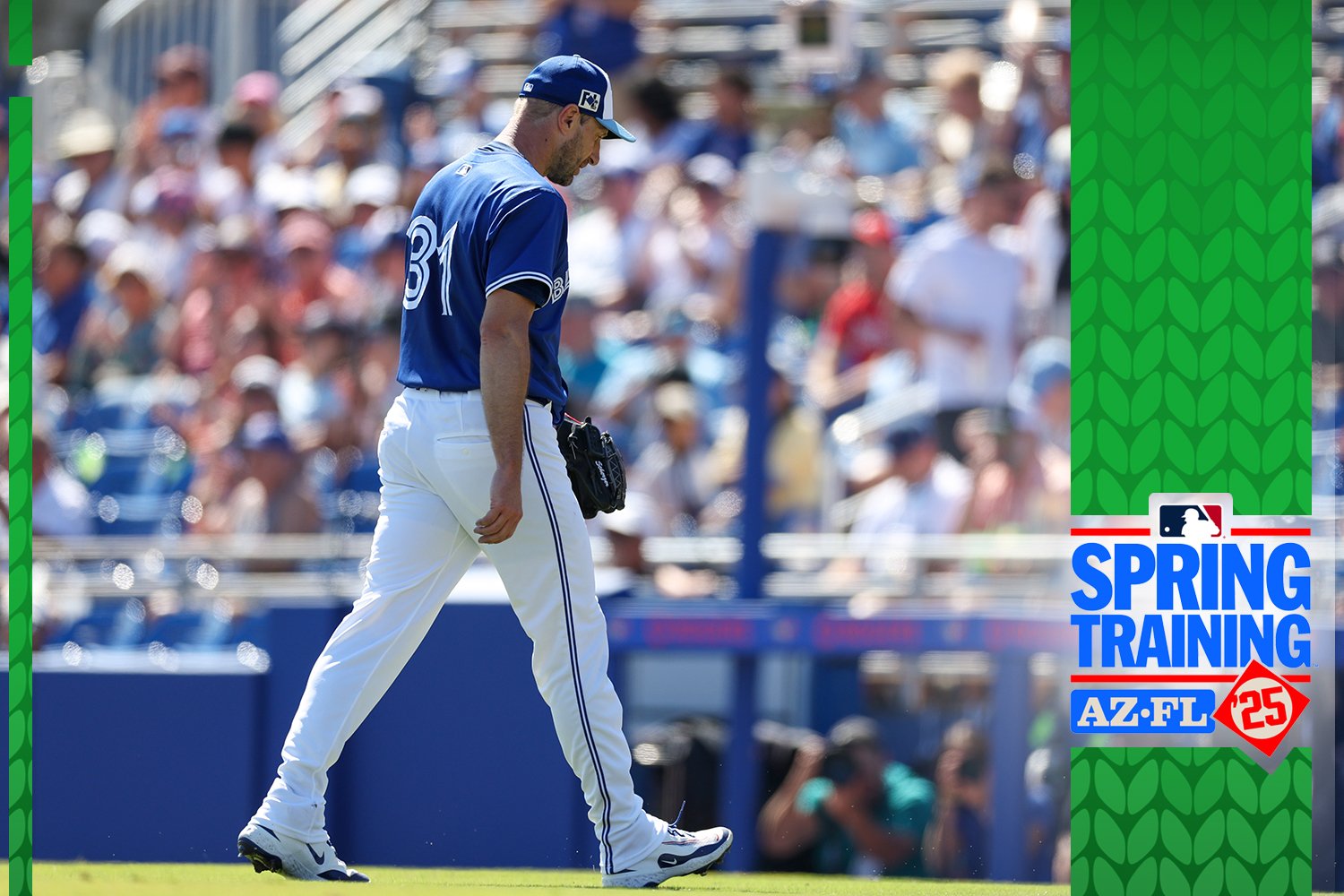 “It’s day-to-day,” said Max Scherzer. “It’s really stupid, that’s what it is.” While those comments could apply to any number of things these days, Scherzer was describing his his right thumb to the Toronto Sun’s Rob Longley. It’s frustrating, as Scherzer has looked excellent during spring training, flashing improved stuff and striking out nearly half the batters he’s faced. However, it turns out that this exact issue has derailed Scherzer’s seasons in the past, which should concern Blue Jays fans a great deal. Pitching is such a specific, strange skill that even small injuries like blisters or fingernail issues can completely sideline a player. Scherzer’s dealing with thumb pain, but he’s not messing around, figuring it out now rather than waiting until it gets more serious. Unfortunately, what the pain means for the immediate future of both Scherzer and the Blue Jays is by no means certain. The thumb issue cropped up after Scherzer faced the Tigers on March 8. He struggled to recover and was scratched from his expected start on Thursday. "That's been the issue with this whole thumb injury," Scherzer told reporters. "It's nothing during the game or after the game. It's the next day. I just don't recover well." Forty-year-olds around the world can relate. Scherzer underwent an MRI that came back clean and he pitched on Saturday, though not in a game. He then faced minor leaguers in a simulated game on Monday, throwing 47 pitches. Right now, we’re waiting to hear how the recovery goes, and he’s due to throw a side session, likely today or tomorrow. “My thumb hurts. It just hurts to grip the ball,” Scherzer told reporters. “The critical thing I’ve learned over the years here is that your thumb is absolutely critical to your arm health. Unfortunately, this is what I’ve been dealing with since 2023.” That last sentence is the scary one. Scherzer is 40 years old and has hit the IL five times in the last three seasons. “The danger of pitching with this is that you could sustain a shoulder injury,” he explained. That’s how pitching tends to work; compensating for a small injury can throw your mechanics out of whack, hurting your performance and causing a bigger injury down the line. “Just soreness,” explained manager John Schneider, trying to make it clear that Scherzer wasn’t dealing with nerve pain. “Just one of those things that happens when you get a little older.” MLB.com’s Keegan Matheson indicated that the thumb issue, through its downstream effects, is what caused Scherzer’s teres major strain in 2023. And Scherzer said pretty clearly that although he’s not dealing with nerve pain yet, he’s afraid it will head in that direction. “It’s similar. It hasn’t manifested out into the nerve pain yet, but that’s why I’m working with the hand specialist, the doctors, the trainers," he said. "How can we move forward and not have this blow up into something worse?” That’s a sobering realization for Blue Jays fans. Even if you understood that Scherzer was an older pitcher who might be more susceptible to injuries, you no doubt hoped that by signing him, the Blue Jays felt confident that he was past his recent issues. He’s not. He’s been dealing with this same thumb issue for years now, and it’s already ruined his season once. That’s not good. In an attempt to avoid suffering that fate again, Scherzer worked on grip strength and thumb strength during the offseason. He’s still dealing with thumb pain when he gets to 50 pitches. In case you’re wondering, Scherzer has reached the 50-pitch mark in 452 of his 466 career appearances. That’s 97%, and it means that he can’t really be Max Scherzer, or a starting pitcher at all, without the ability to get to 50 pitches. Moreover, at this point in spring training, pitchers are supposed to be ramping up their workloads for the regular season. Right now, his readiness for the start of the season is in question. If he feels good enough to pitch over the weekend, and if he feels good after that all-important appearance, then he should be back on track. His target for that outing would be 65 pitches. Assuming he’s the team’s fifth starter, he'd make his first appearance on April 1 against the Nationals, his former team. However, this doesn’t really seem like a time to make those assumptions, and focusing on Scherzer’s ability to pitch on Saturday seems like it’s missing the bigger point. Even if all goes well during Scherzer’s current recovery, then his side session, then his start on Saturday – and that’s a lot of ifs – it certainly sounds like Scherzer and the Blue Jays will have to worry about his thumb all season long. So while it may be day-to-day, it’s an injury that’s been affecting Scherzer for years and we shouldn’t expect it to go away any time soon. And while it may just be some stupid, small thing, we all know how stupid, small things can end up causing major problems.
 -
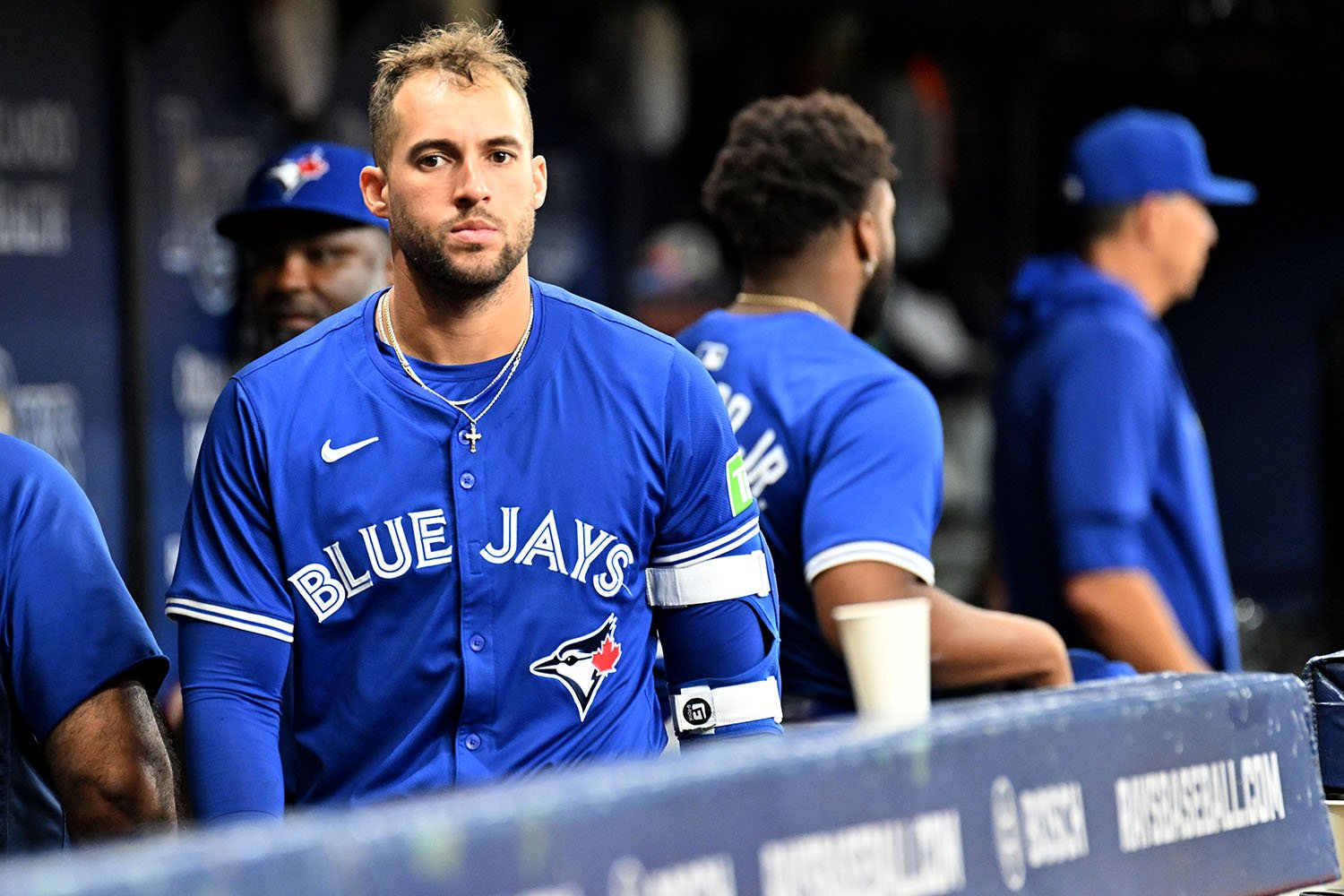 We need to talk about George Springer. I want to make it clear right up front that I love Springer. He seems like a genuinely good guy, and he’s had an excellent career. I will absolutely be rooting for him this season. However, we need to prepare ourselves to have a difficult conversation about him, because I’m genuinely worried about his performance. It’s not because Springer is so far batting just .136 during spring training, though obviously I don’t love that. We need to look at the bigger picture. In 2024, Springer ran a 95 wRC+, mostly because of some bad luck at the plate. He deserved to be right around 104, where he was in 2023, 4% better than the league-average hitter. Unfortunately, that’s still a huge drop-off from who Springer was as a hitter of the first nine years of his career. From 2014 to 2022, Springer ran a 134 wRC+, making him 34% better than the average hitter. Over the past two seasons he’s been at an even 100, completely average. Moreover, as he’s got gotten older, his defensive value has eroded to the point that it's now underwater. He’s no longer a bat-first center fielder, he’s a corner outfielder who doesn’t hit or field. It’s been two years now since Springer could muster even league-average performance. That’s just plain not tenable for a team with playoff ambitions, especially when things don’t have to play out that way. I went over to FanGraphs and pulled the ZiPS projections for every Blue Jays outfielder. This season, ZiPS sees Springer bouncing back somewhat – after all, he really did get unlucky in 2024 – to run a 105 wRC+, to hit 17 home runs, and to put up 2.0 WAR over 128 games. But here’s the thing: Even the bounce-back season that ZiPS is projecting wouldn’t make him one of the team’s best outfielders. In fact, it wouldn’t even be close. The table below shows projected WAR, prorated for 600 PAs, for all of the team’s contenders in the outfield. Essentially, it shows what ZiPS thinks every player would do if they got to play a full season in the outfield. Name wRC+ WAR/600 Daulton Varsho 103 3.5 Anthony Santander 130 3.2 Davis Schneider 109 3.1 Nathan Lukes 107 2.9 Addison Barger 107 2.8 Alan Roden 109 2.4 George Springer 105 2.2 Joey Loperfido 98 2.2 Jonatan Clase 88 2.1 Steward Berroa 90 2.0 RJ Schreck 101 1.7 Myles Straw 74 1.6 I don’t know how much clearer things could be here. It’s not just that the projections don’t think Springer is one of the team’s three best outfielders; they don’t even think he’s in the top five. Over a full season – and once again, this would constitute a bounce-back season – ZiPS sees Springer putting up 2.2 WAR. That’s a hair better than a league-average player and it’s tied with Joey Loperfido for seventh-best among Toronto outfielders. Davis Schneider, Nathan Lukes, Addison Barger, even Alan Roden, who has only played 71 games above Double-A: all of them are projected to perform better than Springer this season. Steamer, another projection system run by FanGraphs sees Springer as the team’s fourth-best option, behind Roden and a hair ahead of Lukes and Barger. Maybe Springer will bounce back this season, not just in a league-average way but in a big way. He’s 35, and it wouldn’t be crazy to see him put up one more three-win campaign. But if he doesn’t, if he gets off to a scary, slow start, the Blue Jays will have to act. They’ll have to act because the season hangs in the balance and a win here or there could make all the difference. They’ll have to act because they will have several materially better options waiting on the bench and in the minors. As always, some players will outperform their projections and some players will underperform. If Springer can’t turn into one of the pleasant surprises, the Blue Jays will have to make room for whichever one of those players can. Here's a possible scenario: Daulton Varsho’s shoulder ends up not quite being ready for Opening Day, so for the first week or two, he sits or needs to DH. During that time, Lukes or Roden fill in and plays great while Springer scuffles. Are the Blue Jays really just going to sit the player who’s performing well down in order to spare the feelings of the player who is now, for the third year in a row, performing badly? I recognize that this would be an extremely difficult conversation. Springer is a leader: a respected veteran, an All-Star, a World Series champion, even a World Series MVP. Putting him on the bench (or worse) would probably be really ugly. Moreover, Springer will make $22.5 million this season and next. But that’s a sunk cost. The Blue Jays can’t let it deter them from putting their best team on the field. And they can't deny their best prospects at-bats, hurting their development. Too much depends on it. The team’s outfield depth is a real strength, but only if they actually use it.
 -
The time when it just no longer makes sense to let George Springer play the outfield every day is coming faster than you might realize. We need to talk about George Springer. I want to make it clear right up front that I love Springer. He seems like a genuinely good guy, and he’s had an excellent career. I will absolutely be rooting for him this season. However, we need to prepare ourselves to have a difficult conversation about him, because I’m genuinely worried about his performance. It’s not because Springer is so far batting just .136 during spring training, though obviously I don’t love that. We need to look at the bigger picture. In 2024, Springer ran a 95 wRC+, mostly because of some bad luck at the plate. He deserved to be right around 104, where he was in 2023, 4% better than the league-average hitter. Unfortunately, that’s still a huge drop-off from who Springer was as a hitter of the first nine years of his career. From 2014 to 2022, Springer ran a 134 wRC+, making him 34% better than the average hitter. Over the past two seasons he’s been at an even 100, completely average. Moreover, as he’s got gotten older, his defensive value has eroded to the point that it's now underwater. He’s no longer a bat-first center fielder, he’s a corner outfielder who doesn’t hit or field. It’s been two years now since Springer could muster even league-average performance. That’s just plain not tenable for a team with playoff ambitions, especially when things don’t have to play out that way. I went over to FanGraphs and pulled the ZiPS projections for every Blue Jays outfielder. This season, ZiPS sees Springer bouncing back somewhat – after all, he really did get unlucky in 2024 – to run a 105 wRC+, to hit 17 home runs, and to put up 2.0 WAR over 128 games. But here’s the thing: Even the bounce-back season that ZiPS is projecting wouldn’t make him one of the team’s best outfielders. In fact, it wouldn’t even be close. The table below shows projected WAR, prorated for 600 PAs, for all of the team’s contenders in the outfield. Essentially, it shows what ZiPS thinks every player would do if they got to play a full season in the outfield. Name wRC+ WAR/600 Daulton Varsho 103 3.5 Anthony Santander 130 3.2 Davis Schneider 109 3.1 Nathan Lukes 107 2.9 Addison Barger 107 2.8 Alan Roden 109 2.4 George Springer 105 2.2 Joey Loperfido 98 2.2 Jonatan Clase 88 2.1 Steward Berroa 90 2.0 RJ Schreck 101 1.7 Myles Straw 74 1.6 I don’t know how much clearer things could be here. It’s not just that the projections don’t think Springer is one of the team’s three best outfielders; they don’t even think he’s in the top five. Over a full season – and once again, this would constitute a bounce-back season – ZiPS sees Springer putting up 2.2 WAR. That’s a hair better than a league-average player and it’s tied with Joey Loperfido for seventh-best among Toronto outfielders. Davis Schneider, Nathan Lukes, Addison Barger, even Alan Roden, who has only played 71 games above Double-A: all of them are projected to perform better than Springer this season. Steamer, another projection system run by FanGraphs sees Springer as the team’s fourth-best option, behind Roden and a hair ahead of Lukes and Barger. Maybe Springer will bounce back this season, not just in a league-average way but in a big way. He’s 35, and it wouldn’t be crazy to see him put up one more three-win campaign. But if he doesn’t, if he gets off to a scary, slow start, the Blue Jays will have to act. They’ll have to act because the season hangs in the balance and a win here or there could make all the difference. They’ll have to act because they will have several materially better options waiting on the bench and in the minors. As always, some players will outperform their projections and some players will underperform. If Springer can’t turn into one of the pleasant surprises, the Blue Jays will have to make room for whichever one of those players can. Here's a possible scenario: Daulton Varsho’s shoulder ends up not quite being ready for Opening Day, so for the first week or two, he sits or needs to DH. During that time, Lukes or Roden fill in and plays great while Springer scuffles. Are the Blue Jays really just going to sit the player who’s performing well down in order to spare the feelings of the player who is now, for the third year in a row, performing badly? I recognize that this would be an extremely difficult conversation. Springer is a leader: a respected veteran, an All-Star, a World Series champion, even a World Series MVP. Putting him on the bench (or worse) would probably be really ugly. Moreover, Springer will make $22.5 million this season and next. But that’s a sunk cost. The Blue Jays can’t let it deter them from putting their best team on the field. And they can't deny their best prospects at-bats, hurting their development. Too much depends on it. The team’s outfield depth is a real strength, but only if they actually use it. View full article
-
That sounds totally reasonable. I picked $550 as my example because I wanted to make sure I was giving him the benefit of the doubt.
-
It's not just that Bo Bichette is playing well. It's that he's hitting the ball the way he did before injuries ruined his 2024 season. We’re not supposed to read too much into spring training stats, so I’m not going to go crazy with the spring training stats. I won't tell you Bo Bichette's spring training batting average or his wRC+. We can start with the eye test, because I’m writing this on Monday afternoon, and Bo Bichette just did this: In case you’re curious, that’s Bichette’s second home run of the spring, and he hit that ball 109.5 mph. During the 2024 season, Bichette didn’t hit a ball that hard until June 27. Bichette has now put 22 balls into play under the watchful eyes of Statcast cameras this spring, and although that one was the hardest, it was his ninth to top 100 mph. If you’re keeping score at home, that means that 41% of his tracked batted balls have been hit at least 100 mph. Bichette’s career mark is 31.4%, and his season high of 34.3% came in 2022. He’s blowing that out of the water. On Monday alone, he came to the plate three times and hit the ball 109.5 mph, 100.7, and 99.7. That's some day. As you may know, Statcast’s definition of a hard-hit ball doesn’t start at 100 mph. It starts at 95 mph, and there’s a solid, logical reason for that. If you’re interested, in December 2023, I broke down all the different ways to interpret exit velocity for FanGraphs, explaining the pros and cons of each method. One of the things I found was that, especially over a shorter sample size like spring training, the louder the contact, the more predictive the results are. Let me show you what I mean with a graph from that article. It shows the correlation between hard-hit rate and performance in the following season, but the threshold for hard-hit rate changes as the graph goes on. The blue line is for players who have bigger sample sizes, and the red line is for players with smaller sample sizes. We’re interested in the right side of the graph, where they hit their peaks. You can see that the blue line peaks earlier, a bit after 90 mph, while the red line doesn’t peak until right around 100 mph. Over a long season, what matters is the ability to hit the ball hard consistently. But when you don’t have as much information to go on, what matters is demonstrating the ability to really crush it. That’s what Bichette is doing right now. He’s healthy, he’s got a cool, new haircut, and he’s demonstrating that 2024 was a blip by obliterating the baseball. Maybe you believed that 2024 was a blip already. Injuries limited Bichette to 81 games, and he certainly didn’t look like himself. Moreover, the advanced stats said that he got very unlucky, running a .269 BABIP that was miles below his career mark and a .264 wOBA that was nearly 40 points below his xwOBA of .303. However, there was a real dip in exit velocity numbers, provided you look in the right place. Although his average exit velocity of 89.2 mph matched a career low, it was still roughly at the league average, and his 43.5% hard-hit rate was still well above average. This is where the different ways of interpreting exit velocity really matter. If we look at 95th percentile exit velocity, which throws out the bottom 94% of a player’s batted balls and just tells you the exit velocity of the ball at 95%, we can see the problem. Bichette was still able to hit the ball hard in 2024, he just wasn’t able to hit it hard hard. All of a sudden, he lacked the top-end power that made him a 20-homer threat in each of the three previous seasons. But now let’s add 2025's spring training data into the mix and see how it affects the graph. See what I’m getting at here? It’s a resurrection! It’s still too early to draw firm conclusions. It's March 10. All the same, I’m not sure what else Bichette could do to show us that he’s back to being the player he was before injuries laid him low in 2024. He's not just hitting the ball hard. He's hitting the ball hard hard. View full article
-
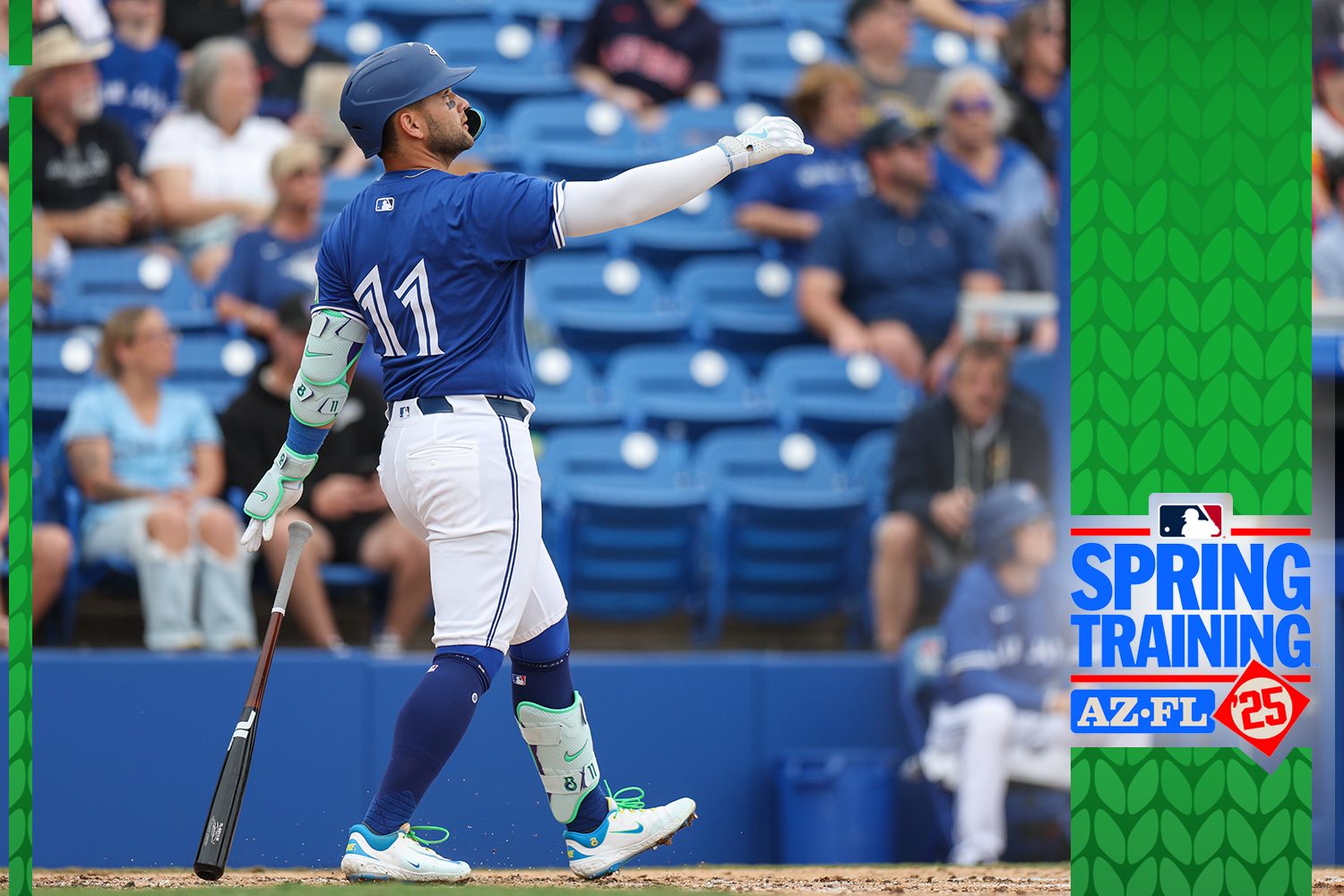 We’re not supposed to read too much into spring training stats, so I’m not going to go crazy with the spring training stats. I won't tell you Bo Bichette's spring training batting average or his wRC+. We can start with the eye test, because I’m writing this on Monday afternoon, and Bo Bichette just did this: In case you’re curious, that’s Bichette’s second home run of the spring, and he hit that ball 109.5 mph. During the 2024 season, Bichette didn’t hit a ball that hard until June 27. Bichette has now put 22 balls into play under the watchful eyes of Statcast cameras this spring, and although that one was the hardest, it was his ninth to top 100 mph. If you’re keeping score at home, that means that 41% of his tracked batted balls have been hit at least 100 mph. Bichette’s career mark is 31.4%, and his season high of 34.3% came in 2022. He’s blowing that out of the water. On Monday alone, he came to the plate three times and hit the ball 109.5 mph, 100.7, and 99.7. That's some day. As you may know, Statcast’s definition of a hard-hit ball doesn’t start at 100 mph. It starts at 95 mph, and there’s a solid, logical reason for that. If you’re interested, in December 2023, I broke down all the different ways to interpret exit velocity for FanGraphs, explaining the pros and cons of each method. One of the things I found was that, especially over a shorter sample size like spring training, the louder the contact, the more predictive the results are. Let me show you what I mean with a graph from that article. It shows the correlation between hard-hit rate and performance in the following season, but the threshold for hard-hit rate changes as the graph goes on. The blue line is for players who have bigger sample sizes, and the red line is for players with smaller sample sizes. We’re interested in the right side of the graph, where they hit their peaks. You can see that the blue line peaks earlier, a bit after 90 mph, while the red line doesn’t peak until right around 100 mph. Over a long season, what matters is the ability to hit the ball hard consistently. But when you don’t have as much information to go on, what matters is demonstrating the ability to really crush it. That’s what Bichette is doing right now. He’s healthy, he’s got a cool, new haircut, and he’s demonstrating that 2024 was a blip by obliterating the baseball. Maybe you believed that 2024 was a blip already. Injuries limited Bichette to 81 games, and he certainly didn’t look like himself. Moreover, the advanced stats said that he got very unlucky, running a .269 BABIP that was miles below his career mark and a .264 wOBA that was nearly 40 points below his xwOBA of .303. However, there was a real dip in exit velocity numbers, provided you look in the right place. Although his average exit velocity of 89.2 mph matched a career low, it was still roughly at the league average, and his 43.5% hard-hit rate was still well above average. This is where the different ways of interpreting exit velocity really matter. If we look at 95th percentile exit velocity, which throws out the bottom 94% of a player’s batted balls and just tells you the exit velocity of the ball at 95%, we can see the problem. Bichette was still able to hit the ball hard in 2024, he just wasn’t able to hit it hard hard. All of a sudden, he lacked the top-end power that made him a 20-homer threat in each of the three previous seasons. But now let’s add 2025's spring training data into the mix and see how it affects the graph. See what I’m getting at here? It’s a resurrection! It’s still too early to draw firm conclusions. It's March 10. All the same, I’m not sure what else Bichette could do to show us that he’s back to being the player he was before injuries laid him low in 2024. He's not just hitting the ball hard. He's hitting the ball hard hard.
 -
So That’s Why the Blue Jays Didn’t Extend Vladimir Guerrero Jr.
Davy Andrews posted an article in Blue Jays
 When the Blue Jays missed Vladimir Guerrero Jr.’s spring training deadline for negotiating a contract extension with the young superstar, the future of the franchise was condemned to uncertainty for the next season. However, the decision made one thing extremely certain: the rest of us were doomed to spend the entire season discussing that uncertainty. Well, here we are again. On Thursday, Guerrero spoke with ESPN’s Enrique Rojas and Ernesto Jerez about his negotiations with the team. He also revealed further details about what he was asking for, attempting to make it clear that he wasn’t asking for something commensurate with Juan Soto’s record-breaking contract with the Mets. Let’s start with Guerrero’s comments themselves, and then we’ll break them down. If you speak Spanish, you can watch the interview here, and if you don’t, you can read ESPN’s English-language article here. The quotes below were pulled from the second article, but in some parts, I translated Guerrero’s words myself. I did that not because ESPN did anything wrong – they absolutely didn’t – but just because they combined some answers for readability, whereas I thought the back and forth between Guerrero and the interviewers gave more nuance to the discussion, and I think there was a little bit more information to be gleaned. It started with a question about how important it was that Guerrero has a father who’s been through the negotiation process. He dismissed that notion, saying that he didn’t discuss the matter with his father, but that he would when negotiations got more serious. Guerrero was then asked about the comments he made back on February 18, when he said, “They had their numbers; I had my numbers,” and that Toronto’s offer was, “not even close to what we are looking for.” "There was an exchange [of salary figures],” he said. “The meetings lasted until the last day of the deadline, but they [the Blue Jays and Guerrero's agents] couldn't reach an agreement on the numbers. But as I've always said, just because we couldn't reach an agreement, I'm not going to change the way I work. I have to keep working." Guerrero was then asked if he could give more details about the numbers. He replied, “So a little bit less than Soto. Much, much, much, much, much less than Soto. We’re talking about an amount of money that’s much less than Soto. More than 100. So more than 100 less than Soto.” He then said something that I don’t quite know how to translate properly: “Que saquen cálculos lo que saben sacar cálculos.” It translates to, “Let them [the Blue Jays] make the calculations they know how to make,” and what I think he meant was, essentially, that he’s asking for a deal for way less money than Soto, so they can run all the numbers they want. If you detect a tiny bit of bitterness there, I think you might be right. However, I want to be very clear once again that a native Spanish speaker might have a better grasp of the nuance here. He was then asked, “Six-hundred [million], then?” “No,” he said. “Because, I don’t think it reaches 600, the amount I was looking for. The amount we gave [as a counteroffer] didn’t reach 600.” He was then asked if the number he was looking for was for fewer years. “No,” he said, “it was the same years, but it didn’t reach 600. But now…like I told you, I know the business. I lowered it [the salary request] a little, but I also lowered the years. Now, we’re going to have,” he paused. “If they want to sign me,” he paused again. “For me, I’m looking for 14 [years]. I would like 14, 15, even 20 if they give them to me.” “Years?” he was asked. “Years,” he said. “But doing it the right way.” That’s a lot to unpack from a video clip that’s two minutes and 30 seconds long. Let’s start here. First and foremost, Guerrero is aware of the rumors that he was asking the Blue Jays for a contract in the neighborhood of Juan Soto’s 15-year, $755-million deal with the Mets. He wanted to make it very clear – “mucho, mucho, mucho, mucho, mucho menos” clear – that he asked for much less than what Soto got. That’s the message he wanted out there, and there’s good reason for it. Soto is a year younger, and by fWAR, he’s literally been more than twice as valuable as Guerrero to this point in their careers: 36.3 to 17.0. Although Guerrero is a true superstar who takes his value seriously, even he knows that there’s only one Juan Soto. That said, Guerrero’s phrasing, saying that the amount he asked for didn’t reach $600 million, makes it clear that he wasn’t that far away from it. The whole point of this interview was to make his contract demands sound reasonable, so if he’d been in a position to say, “It wasn’t even close to $600 million,” he absolutely would’ve said that. Clearly, he was asking for significantly more than $500 million, let alone the $340 that the Blue Jays were rumored to have offered. Working from that starting point and knowing that he said he did ask for the same number of years as Soto – 15 years, though it’s worth noting that a deal would have bought out 2025, his final year of arbitration, so in effect, it would only add 14 years to his stint in Toronto – let’s make a guess and say that he wanted a $550 million contract. To be clear, this is just an estimate for us to work from, nothing more, but based on his comments, it can't be far off. In terms of total value, that would be the third-largest contract in baseball history. Process that for a moment. Processed? That breaks down to an average annual value of $36.67 million. That’s still a huge amount of money. By AAV, it would make Guerrero the ninth-highest-paid player in baseball, but only technically. Once you weed out expired contracts and contracts with deferrals that inflate their value, he’d actually be in sixth, behind Soto, Shohei Ohtani, Zack Wheeler, Aaron Judge, and Jacob deGrom. If that sounds to you like a list of the absolute best hitters and pitchers in baseball (plus Ohtani who is both), then you’re not wrong. Moreover, Wheeler’s and deGrom’s deals had such a high AAV because they were shorter deals. Guerrero was asking to be paid like a top-five player in all of baseball. Guerrero is a true star and one of the game’s great hitters, but it’s really hard to construct an argument in which he’s a top-five player in baseball. Even if you throw out his underwhelming rookie season and the short 2020 season, over the past four years, his 16.4 fWAR makes him the 25th-most valuable position player. He is the game’s worst defender at the worst defensive position, and he’s also one of the worst baserunners. But even if we look just at wRC+, so as to look only at value created at the plate, and even if we once again ignore the first two years of his career, Guerrero’s 145 wRC+ makes him the ninth-best hitter in baseball. There’s just no way to slice things so that he’s a top-five player in the game. Moreover, one-dimensional first basemen are simply not valued very highly right now. Anthony Rizzo can’t find a place to play. Pete Alonso struggled all offseason to find a deal and accepted much less than he was asking for. It’s just a tough market. Let’s step back for a second and think about these negotiations differently. Speaking very generally, contract extensions can be a way for both parties to win, by balancing risk and security. If Guerrero were to get injured or to play badly in 2025, it would depress his value, and he wouldn’t be able to make as much money in free agency. By signing an extension early, he’d get some security against that possibility, and for that security he would give up some money. Likewise, by strapping itself to one player for such a long time, the team is taking on significant risk. If that one player tanks, so does the team. For that risk, they expect a discount. That mutual benefit is why extensions happen. You can argue that the Blue Jays should have signed Guerrero to an extension years ago, and while I think that would have been a tough swing, I certainly hear the argument. But when it comes to right now, as I hope I made clear in the previous two paragraphs, Guerrero seemed to be asking not just for his full market value, but more than it. That’s just not usually how extensions work. To be clear, Guerrero has every right to choose free agency and to seek what he believes he's worth. If he does, it will be the first time in his life that he's ever had any control over his employment situation, a factor that I think we often fail to consider in these discussions. Moreover, he has several things working in his favor. He’ll only be 26 this season, so he’s still got several years of his prime left. He’s beloved in Toronto, and the front office knows all too well how upset the city would be to see him sign somewhere else. He also knows that the Blue Jays don’t have a ton of depth either in the majors or the minors, so losing him would be a huge blow. Lastly, the Blue Jays certainly fear that by failing to meet Guerrero’s demands now, they will lose the chance to negotiate with him later. All of those factors make Guerrero more valuable to the Blue Jays than to another team, and they give him more leverage. However, they weren't enough to push the team that far this early. He came out on Thursday hoping to show that he was asking for a reasonable figure, but under the circumstances, I do not think that he achieved that goal. What he revealed is that he wasn’t really asking for an extension deal at all. He was essentially asking the Blue Jays to bid against themselves, taking the number all the way up to and then past his value on the open market. That’s a hard calculation to make.
 -
On Thursday, Vladimir Guerrero Jr. spoke to ESPN reporters about what he asked for in his negotiations with the Blue Jays. It was a lot. When the Blue Jays missed Vladimir Guerrero Jr.’s spring training deadline for negotiating a contract extension with the young superstar, the future of the franchise was condemned to uncertainty for the next season. However, the decision made one thing extremely certain: the rest of us were doomed to spend the entire season discussing that uncertainty. Well, here we are again. On Thursday, Guerrero spoke with ESPN’s Enrique Rojas and Ernesto Jerez about his negotiations with the team. He also revealed further details about what he was asking for, attempting to make it clear that he wasn’t asking for something commensurate with Juan Soto’s record-breaking contract with the Mets. Let’s start with Guerrero’s comments themselves, and then we’ll break them down. If you speak Spanish, you can watch the interview here, and if you don’t, you can read ESPN’s English-language article here. The quotes below were pulled from the second article, but in some parts, I translated Guerrero’s words myself. I did that not because ESPN did anything wrong – they absolutely didn’t – but just because they combined some answers for readability, whereas I thought the back and forth between Guerrero and the interviewers gave more nuance to the discussion, and I think there was a little bit more information to be gleaned. It started with a question about how important it was that Guerrero has a father who’s been through the negotiation process. He dismissed that notion, saying that he didn’t discuss the matter with his father, but that he would when negotiations got more serious. Guerrero was then asked about the comments he made back on February 18, when he said, “They had their numbers; I had my numbers,” and that Toronto’s offer was, “not even close to what we are looking for.” "There was an exchange [of salary figures],” he said. “The meetings lasted until the last day of the deadline, but they [the Blue Jays and Guerrero's agents] couldn't reach an agreement on the numbers. But as I've always said, just because we couldn't reach an agreement, I'm not going to change the way I work. I have to keep working." Guerrero was then asked if he could give more details about the numbers. He replied, “So a little bit less than Soto. Much, much, much, much, much less than Soto. We’re talking about an amount of money that’s much less than Soto. More than 100. So more than 100 less than Soto.” He then said something that I don’t quite know how to translate properly: “Que saquen cálculos lo que saben sacar cálculos.” It translates to, “Let them [the Blue Jays] make the calculations they know how to make,” and what I think he meant was, essentially, that he’s asking for a deal for way less money than Soto, so they can run all the numbers they want. If you detect a tiny bit of bitterness there, I think you might be right. However, I want to be very clear once again that a native Spanish speaker might have a better grasp of the nuance here. He was then asked, “Six-hundred [million], then?” “No,” he said. “Because, I don’t think it reaches 600, the amount I was looking for. The amount we gave [as a counteroffer] didn’t reach 600.” He was then asked if the number he was looking for was for fewer years. “No,” he said, “it was the same years, but it didn’t reach 600. But now…like I told you, I know the business. I lowered it [the salary request] a little, but I also lowered the years. Now, we’re going to have,” he paused. “If they want to sign me,” he paused again. “For me, I’m looking for 14 [years]. I would like 14, 15, even 20 if they give them to me.” “Years?” he was asked. “Years,” he said. “But doing it the right way.” That’s a lot to unpack from a video clip that’s two minutes and 30 seconds long. Let’s start here. First and foremost, Guerrero is aware of the rumors that he was asking the Blue Jays for a contract in the neighborhood of Juan Soto’s 15-year, $755-million deal with the Mets. He wanted to make it very clear – “mucho, mucho, mucho, mucho, mucho menos” clear – that he asked for much less than what Soto got. That’s the message he wanted out there, and there’s good reason for it. Soto is a year younger, and by fWAR, he’s literally been more than twice as valuable as Guerrero to this point in their careers: 36.3 to 17.0. Although Guerrero is a true superstar who takes his value seriously, even he knows that there’s only one Juan Soto. That said, Guerrero’s phrasing, saying that the amount he asked for didn’t reach $600 million, makes it clear that he wasn’t that far away from it. The whole point of this interview was to make his contract demands sound reasonable, so if he’d been in a position to say, “It wasn’t even close to $600 million,” he absolutely would’ve said that. Clearly, he was asking for significantly more than $500 million, let alone the $340 that the Blue Jays were rumored to have offered. Working from that starting point and knowing that he said he did ask for the same number of years as Soto – 15 years, though it’s worth noting that a deal would have bought out 2025, his final year of arbitration, so in effect, it would only add 14 years to his stint in Toronto – let’s make a guess and say that he wanted a $550 million contract. To be clear, this is just an estimate for us to work from, nothing more, but based on his comments, it can't be far off. In terms of total value, that would be the third-largest contract in baseball history. Process that for a moment. Processed? That breaks down to an average annual value of $36.67 million. That’s still a huge amount of money. By AAV, it would make Guerrero the ninth-highest-paid player in baseball, but only technically. Once you weed out expired contracts and contracts with deferrals that inflate their value, he’d actually be in sixth, behind Soto, Shohei Ohtani, Zack Wheeler, Aaron Judge, and Jacob deGrom. If that sounds to you like a list of the absolute best hitters and pitchers in baseball (plus Ohtani who is both), then you’re not wrong. Moreover, Wheeler’s and deGrom’s deals had such a high AAV because they were shorter deals. Guerrero was asking to be paid like a top-five player in all of baseball. Guerrero is a true star and one of the game’s great hitters, but it’s really hard to construct an argument in which he’s a top-five player in baseball. Even if you throw out his underwhelming rookie season and the short 2020 season, over the past four years, his 16.4 fWAR makes him the 25th-most valuable position player. He is the game’s worst defender at the worst defensive position, and he’s also one of the worst baserunners. But even if we look just at wRC+, so as to look only at value created at the plate, and even if we once again ignore the first two years of his career, Guerrero’s 145 wRC+ makes him the ninth-best hitter in baseball. There’s just no way to slice things so that he’s a top-five player in the game. Moreover, one-dimensional first basemen are simply not valued very highly right now. Anthony Rizzo can’t find a place to play. Pete Alonso struggled all offseason to find a deal and accepted much less than he was asking for. It’s just a tough market. Let’s step back for a second and think about these negotiations differently. Speaking very generally, contract extensions can be a way for both parties to win, by balancing risk and security. If Guerrero were to get injured or to play badly in 2025, it would depress his value, and he wouldn’t be able to make as much money in free agency. By signing an extension early, he’d get some security against that possibility, and for that security he would give up some money. Likewise, by strapping itself to one player for such a long time, the team is taking on significant risk. If that one player tanks, so does the team. For that risk, they expect a discount. That mutual benefit is why extensions happen. You can argue that the Blue Jays should have signed Guerrero to an extension years ago, and while I think that would have been a tough swing, I certainly hear the argument. But when it comes to right now, as I hope I made clear in the previous two paragraphs, Guerrero seemed to be asking not just for his full market value, but more than it. That’s just not usually how extensions work. To be clear, Guerrero has every right to choose free agency and to seek what he believes he's worth. If he does, it will be the first time in his life that he's ever had any control over his employment situation, a factor that I think we often fail to consider in these discussions. Moreover, he has several things working in his favor. He’ll only be 26 this season, so he’s still got several years of his prime left. He’s beloved in Toronto, and the front office knows all too well how upset the city would be to see him sign somewhere else. He also knows that the Blue Jays don’t have a ton of depth either in the majors or the minors, so losing him would be a huge blow. Lastly, the Blue Jays certainly fear that by failing to meet Guerrero’s demands now, they will lose the chance to negotiate with him later. All of those factors make Guerrero more valuable to the Blue Jays than to another team, and they give him more leverage. However, they weren't enough to push the team that far this early. He came out on Thursday hoping to show that he was asking for a reasonable figure, but under the circumstances, I do not think that he achieved that goal. What he revealed is that he wasn’t really asking for an extension deal at all. He was essentially asking the Blue Jays to bid against themselves, taking the number all the way up to and then past his value on the open market. That’s a hard calculation to make. View full article
-
On Thursday's spring training game against the Red Sox, the ABS challenge system gave Alejandro Kirk the platform to show off one of the game's sharpest weapons: his eyeballs. On Thursday afternoon, the Blue Jays hosted the Red Sox in Dunedin, earning a 7-4 victory. The game featured plenty of notable events. The matchup maybe, possibly offered a preview of the team’s Opening Day lineup. Vladimir Guerrero Jr. and Bo Bichette continued to rake, as they have all spring. Ernie Clement and Davis Schneider went off for back-to-back homers, Clement on the first pitch he saw since taking a pitch to the face on Monday. “I guess I had to get a little bit of revenge there,” he said after the game. Chris Bassitt allowed two earned runs in 2/13 innigs, but more importantly, he called his own pitches on a PitchCom clipped to his belt, rather than attached to the glove. The odd placement made him look like every dad in the 2000s who owned a phone holster. Our subject for today is Alejandro Kirk, who made the most of several chances to demonstrate his mastery of the strike zone. No one disputes that Kirk is among the game’s best framers. According to Statcast, Kirk’s 10 framing runs were the fourth-most in baseball in 2024. He also ranked 11th in 2023 and fifth in 2022. It started in the top of the first. Number two batter Nick Sogard took an 0-1 pitch that was called low, but Kirk knew better. He challenged the pitch, and the ABS system proved that he was correct by a couple of microns. The pitch had just barely nicked the bottom of the zone. It was truly an impressive an impressive display of zone awareness. Kirk wasn’t done. Just three batters later, Bassitt got ahead of Boston catcher Carlos Narváez, then finished him off looking with a slider on the outside corner. Or at least Kirk made it look like it was the outside corner, and the umpire very definitely believed him. However, Narváez quickly challenged, and the ABS system showed that not only was the pitch a ball, it was more than two inches outside the strike zone. Kirk had absolutely stolen a strike, and he would’ve gotten away with it too if it weren’t for those meddling robots. Have I mentioned that Kirk also demonstrates a pretty good knowledge of the strike zone when he’s hitting too? His chase rate took a step back in 2024, but it was still right around the league average. From 2021 to 2023, Kirk possessed one of the better batting eyes in the game. He showed that off as well in the bottom of the second inning, taking a 1-2 pitch from pitcher Austin Adams that Narváez was sure had hit a piece of the zone. Not so, ruled ABS. This pitch was even further off the plate than the one that Kirk had successfully (for a moment) framed earlier. The call stayed a ball, and he went on to walk. Kirk would win one more challenge, and as fate would have it, Narváez would once again serve as the victim. With one out in the top of the fifth, Yimi García fell behind, 1-0, and fired a 98-mph fastball on the outside corner. The home plate umpire ruled it a ball, and Kirk calmly signaled for another challenge. He looked absolutely certain that the call would go his way, exuding as much confidence as it his humanly possible to exude while also patting the top of one’s head. He was right again. The pitch caught quite a bit of plate, and Narváez went on to ground out. The final score: While catching, Kirk successfully challenged a pitch that just barely caught a millimeter or two of zone, then lost one challenge initiated by the batter because he’d framed it so well. Next, he laid off a pitch that fooled the catcher into wasting a challenge. And finally, Kirk availed himself of his second challenge from behind the plate and won it. In each situation, Kirk showed himself to have the best eye among the trio of catcher, batter, and umpire. Maybe we don’t need an ABS system or an umpire. We can just trust the eyes of Alejandro Kirk. View full article
-
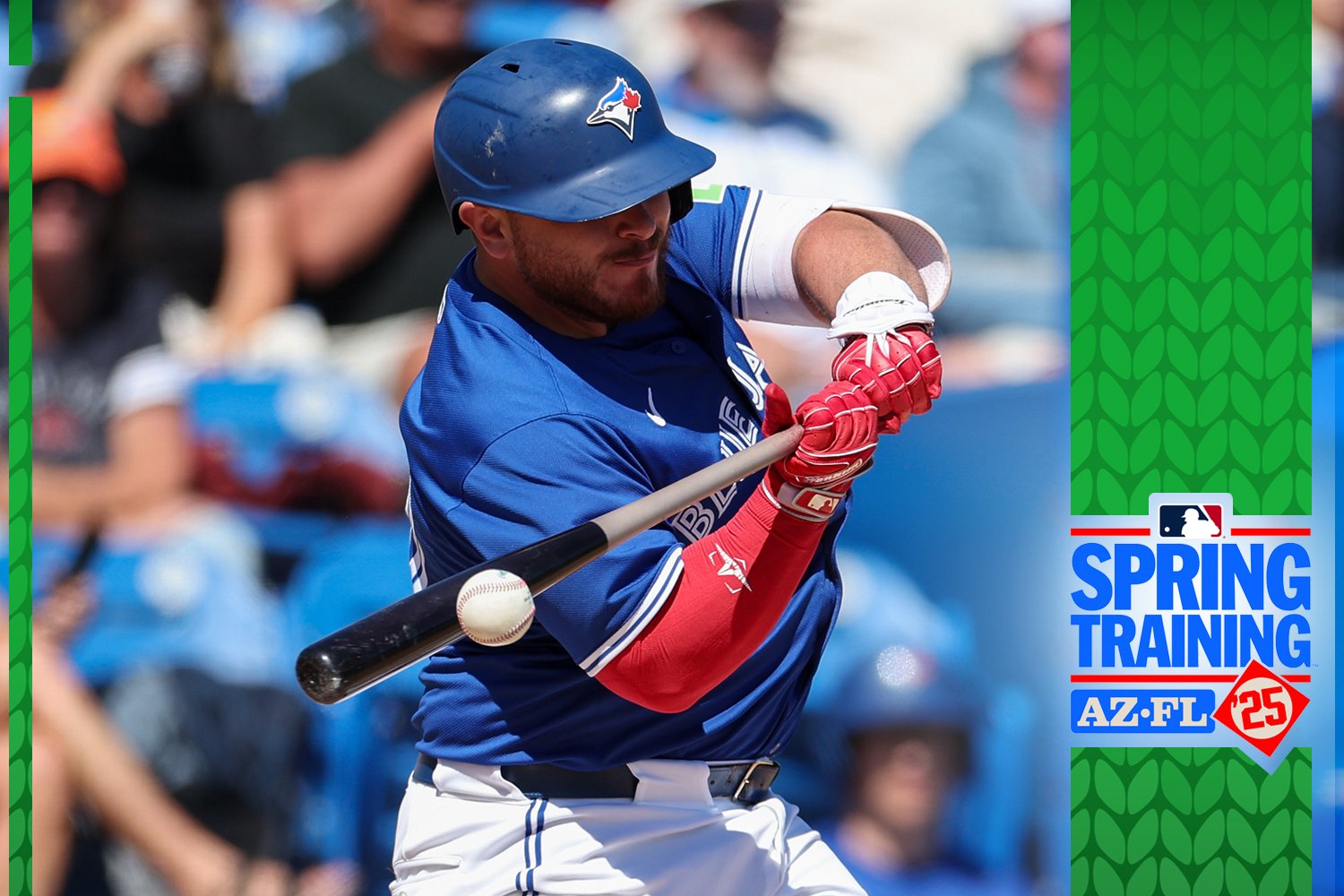 On Thursday afternoon, the Blue Jays hosted the Red Sox in Dunedin, earning a 7-4 victory. The game featured plenty of notable events. The matchup maybe, possibly offered a preview of the team’s Opening Day lineup. Vladimir Guerrero Jr. and Bo Bichette continued to rake, as they have all spring. Ernie Clement and Davis Schneider went off for back-to-back homers, Clement on the first pitch he saw since taking a pitch to the face on Monday. “I guess I had to get a little bit of revenge there,” he said after the game. Chris Bassitt allowed two earned runs in 2/13 innigs, but more importantly, he called his own pitches on a PitchCom clipped to his belt, rather than attached to the glove. The odd placement made him look like every dad in the 2000s who owned a phone holster. Our subject for today is Alejandro Kirk, who made the most of several chances to demonstrate his mastery of the strike zone. No one disputes that Kirk is among the game’s best framers. According to Statcast, Kirk’s 10 framing runs were the fourth-most in baseball in 2024. He also ranked 11th in 2023 and fifth in 2022. It started in the top of the first. Number two batter Nick Sogard took an 0-1 pitch that was called low, but Kirk knew better. He challenged the pitch, and the ABS system proved that he was correct by a couple of microns. The pitch had just barely nicked the bottom of the zone. It was truly an impressive an impressive display of zone awareness. Kirk wasn’t done. Just three batters later, Bassitt got ahead of Boston catcher Carlos Narváez, then finished him off looking with a slider on the outside corner. Or at least Kirk made it look like it was the outside corner, and the umpire very definitely believed him. However, Narváez quickly challenged, and the ABS system showed that not only was the pitch a ball, it was more than two inches outside the strike zone. Kirk had absolutely stolen a strike, and he would’ve gotten away with it too if it weren’t for those meddling robots. Have I mentioned that Kirk also demonstrates a pretty good knowledge of the strike zone when he’s hitting too? His chase rate took a step back in 2024, but it was still right around the league average. From 2021 to 2023, Kirk possessed one of the better batting eyes in the game. He showed that off as well in the bottom of the second inning, taking a 1-2 pitch from pitcher Austin Adams that Narváez was sure had hit a piece of the zone. Not so, ruled ABS. This pitch was even further off the plate than the one that Kirk had successfully (for a moment) framed earlier. The call stayed a ball, and he went on to walk. Kirk would win one more challenge, and as fate would have it, Narváez would once again serve as the victim. With one out in the top of the fifth, Yimi García fell behind, 1-0, and fired a 98-mph fastball on the outside corner. The home plate umpire ruled it a ball, and Kirk calmly signaled for another challenge. He looked absolutely certain that the call would go his way, exuding as much confidence as it his humanly possible to exude while also patting the top of one’s head. He was right again. The pitch caught quite a bit of plate, and Narváez went on to ground out. The final score: While catching, Kirk successfully challenged a pitch that just barely caught a millimeter or two of zone, then lost one challenge initiated by the batter because he’d framed it so well. Next, he laid off a pitch that fooled the catcher into wasting a challenge. And finally, Kirk availed himself of his second challenge from behind the plate and won it. In each situation, Kirk showed himself to have the best eye among the trio of catcher, batter, and umpire. Maybe we don’t need an ABS system or an umpire. We can just trust the eyes of Alejandro Kirk.
 -
Vladimir Guerrero Jr. is a very different player, in a very different situation, than the many players Anthopoulos has locked down to contract extensions. On Sunday, Mike Wilner, baseball columnist at the Toronto Star, published an opinion piece titled “Blue Jays fans know Vladimir Guerrero Jr. would likely be staying if Alex Anthopoulos didn’t go,” and, well, the title pretty much says it all. Like so many Blue Jays fans, Wilner is understandably disheartened by the team’s failure to lock up young stars Guerrero and Bo Bichette. He’s watching Anthopolous build a juggernaut through long-term contract extensions and wishing that could have happened in Toronto. However, I disagree pretty strongly with Wilner’s central premise, and I thought it might be helpful to lay out my reasoning. Let’s start with where I agree with Wilner. First, obviously, anyone who loves the Blue Jays wants to see Guerrero and Bichette wearing blue forever. It would be good for the team and good for baseball. And I don’t think anyone can argue the point that the current front office led by Mark Shapiro and Ross Atkins has at times made it discouraging to be a fan. No one actually knows what goes on in the room during negotiations, but the team has earned a reputation for coming to its own determination about the value of a player, and sticking to it no matter what. That can help a team avoid disastrous moves, but it can also make them whiff on a lot of impact players. Andrew Freidman famously said, “If you’re always rational about every free agent, you will finish third on every free agent,” and lately, no team has finished third more often than the Blue Jays. That said, it’s not as if the Blue Jays aren’t trying. According to Cot’s Contracts, they’ve run top-10 payrolls in each of the last two seasons, and they rank fifth for 2025, as things stand now. They’re committed to winning, and they’re putting their money where their mouth is. Although they haven’t won a playoff game in years, they’ve made it there in two of the last three seasons while playing in the toughest division in baseball, and it’s hard to ding them too much for the randomness of the postseason. My bigger issue with the piece is that it lacks some crucial context about the players that Anthopoulos has targeted. Over the past seven years, he’s locked in long-term extensions to Ronald Acuña Jr., Ozzie Albies, Austin Riley, Sean Murphy, Matt Olson, Michael Harris II, and Spencer Strider. That’s a whole lot of stars, and many of them were signed for well below market value. That’s not an accident. The Braves have targeted extensions for players and agents who were not in a position to negotiate for the best deal possible. So many star players pick big, powerful agencies like Boras Corp and CAA for a reason. They’ve got experience and resources that give them leverage to fight for the best deal possible, even if it means waiting for years until their clients hit free agency. Acuña and Albies were represented by small agencies for whom an early extension, even one that was dramatically under market value, meant a huge increase in revenue. Sure, Acuña and Albies signed deals that gave them generational wealth, but they were still staggering, arguably unethical underpays of young players who got signing bonuses as teenagers and then made virtually nothing for years as they worked their way through the minors. Those deals prompted headlines like “Ronald Acuña changes agents years after signing insane team-friendly contract” and “Here’s Why the Ozzie Albies Deal Was Terrible” and “What Can the MLBPA Do About Ozzie Albies’ Deal?”. I’m not asking you to feel sorry for Albies and Acuña. They have almost certainly made more money than everyone who will read this article put together. However, if I were a fan of the Braves, I don’t know that I’d feel great about these deals. Bichette and Guerrero are not in the same position at all. They’re the sons of two major leaguers who made plenty of money in their day. They’re not desperate and their agencies aren’t desperate either. Bichette is represented by Vayner Sports and is a former client of CAA, two major agencies. Guerrero is represented by Magnus Sports, a smaller agency, but one owned by a celebrity trying to make a major impact in the game. These are two players who were never in a million years going to sign deals like the ones Albies and Acuña signed. The Blue Jays did a great job of picking and developing them, and they’ve reaped tons of value from it. It’s not the team’s fault Guerrero and Bichette have more options available to them than Acuña and Albies did, and it would have been absurd for them to avoid signing or drafting them on that basis. A more apt comp for Guerrero would be Freddie Freeman. The first baseman was a star with the Braves for 10 years and was all but certain to end up with a cursive A on his hat in Cooperstown. He had already signed one deal to stay in Atlanta, in 2014, before Anthopoulos’s tenure. It was an eight-year deal that bought out his final two years of arbitration, meaning that it extended him for six years. To be clear, there’s no way Guerrero would have signed a deal like that. When that extension was was up, the Braves decided to get younger, waving goodbye to Freeman without a second thought. They traded for Matt Olson and signed him to an extension that was similar to Freeman’s deal with the Dodgers in terms of dollars, but included two extra years. Like Olson, Murphy is represented by a smaller agency, arrived in Atlanta via trade, and was promptly locked into a contract extension. This is a pattern, and a clever one: targeting players with agents who might be more likely to play ball on extensions. Wilner is right to recognize that Anthopoulos has exploited this particular inefficiency and to wish that the Blue Jays had found their own secret sauce. However, let's get back to Freeman and Olson. Starting in 2022, Freeman has put up 18.7 fWAR to Olson’s 12.2, and he just won World Series MVP. Now, as I mentioned, Olson is five years younger, so his deal way end up looking better in the long run, but I think there are some real parallels here. This was a future Hall of Fame first baseman looking to get paid what he deserved his first free agent contract, and Anthopoulos wanted nothing to do with that. Say what you will about the Blue Jays’ efforts, but there’s no doubt that they did make genuine offers to Guerrero. So that’s my main argument. I’m don’t mean to drag Wilner at all, and I don’t think you can fault anyone for looking at what’s happening in Atlanta and wishing that it were happening in Toronto. I just didn’t think he was quite comparing apples to apples, so I wanted to take a more nuanced look. I’d also remind you that long-term extensions can have downsides. I’m a big fan of them, especially when they seem to have a fair proportion of risk to certainty. A young player with potential Jackson Chourio or Julio Rodriguez gets big money before they’re a sure thing, and the team gets a bargain because they’re taking a chance. There’s a fairness there. But still, not every extension is going to work out, and not all will be slam dunks like Acuña’s and Albies’. Strider, Acuña, and Albies have all been fantastic, but have also missed significant time to injuries. Riley, Olson, Harris, and Murphy all took major steps back in 2024. I think most of them will bounce back to play well in the future, but that’s part of the deal when it comes to long-term extensions. You end up taking the good with the bad. There was a time when the Blue Jays would have looked like prophets for locking up Alek Manoah to a shiny 10-year deal. We would have been singing the praises of Shapiro and Atkins for two seasons, and then we would have spent the last two seasons – and maybe the next six! – tearing our hair out and complaining about how the deal was hamstringing the team. My point is that these things are complicated. We won’t know for many years how the careers of Guerrero or Bichette turn out. For now, I guess we should just enjoy them while we can. View full article
- 9 replies
-
- 7
-

-

-
- vladimir guerrero jr
- bo bichette
- (and 6 more)
-
Even Alex Anthopoulos Wouldn’t Have Extended Vladimir Guerrero Jr.
Davy Andrews posted an article in Blue Jays
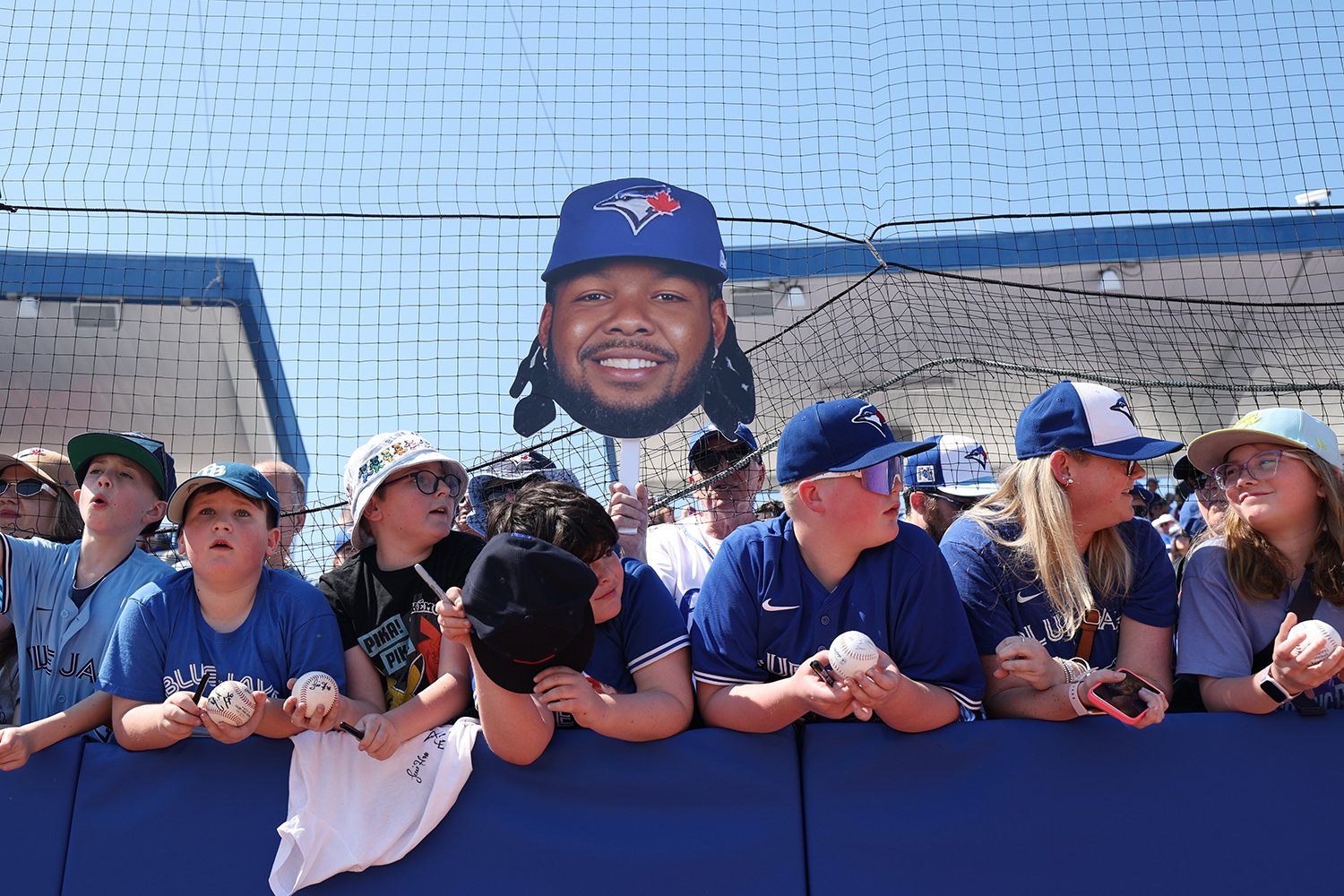 On Sunday, Mike Wilner, baseball columnist at the Toronto Star, published an opinion piece titled “Blue Jays fans know Vladimir Guerrero Jr. would likely be staying if Alex Anthopoulos didn’t go,” and, well, the title pretty much says it all. Like so many Blue Jays fans, Wilner is understandably disheartened by the team’s failure to lock up young stars Guerrero and Bo Bichette. He’s watching Anthopolous build a juggernaut through long-term contract extensions and wishing that could have happened in Toronto. However, I disagree pretty strongly with Wilner’s central premise, and I thought it might be helpful to lay out my reasoning. Let’s start with where I agree with Wilner. First, obviously, anyone who loves the Blue Jays wants to see Guerrero and Bichette wearing blue forever. It would be good for the team and good for baseball. And I don’t think anyone can argue the point that the current front office led by Mark Shapiro and Ross Atkins has at times made it discouraging to be a fan. No one actually knows what goes on in the room during negotiations, but the team has earned a reputation for coming to its own determination about the value of a player, and sticking to it no matter what. That can help a team avoid disastrous moves, but it can also make them whiff on a lot of impact players. Andrew Freidman famously said, “If you’re always rational about every free agent, you will finish third on every free agent,” and lately, no team has finished third more often than the Blue Jays. That said, it’s not as if the Blue Jays aren’t trying. According to Cot’s Contracts, they’ve run top-10 payrolls in each of the last two seasons, and they rank fifth for 2025, as things stand now. They’re committed to winning, and they’re putting their money where their mouth is. Although they haven’t won a playoff game in years, they’ve made it there in two of the last three seasons while playing in the toughest division in baseball, and it’s hard to ding them too much for the randomness of the postseason. My bigger issue with the piece is that it lacks some crucial context about the players that Anthopoulos has targeted. Over the past seven years, he’s locked in long-term extensions to Ronald Acuña Jr., Ozzie Albies, Austin Riley, Sean Murphy, Matt Olson, Michael Harris II, and Spencer Strider. That’s a whole lot of stars, and many of them were signed for well below market value. That’s not an accident. The Braves have targeted extensions for players and agents who were not in a position to negotiate for the best deal possible. So many star players pick big, powerful agencies like Boras Corp and CAA for a reason. They’ve got experience and resources that give them leverage to fight for the best deal possible, even if it means waiting for years until their clients hit free agency. Acuña and Albies were represented by small agencies for whom an early extension, even one that was dramatically under market value, meant a huge increase in revenue. Sure, Acuña and Albies signed deals that gave them generational wealth, but they were still staggering, arguably unethical underpays of young players who got signing bonuses as teenagers and then made virtually nothing for years as they worked their way through the minors. Those deals prompted headlines like “Ronald Acuña changes agents years after signing insane team-friendly contract” and “Here’s Why the Ozzie Albies Deal Was Terrible” and “What Can the MLBPA Do About Ozzie Albies’ Deal?”. I’m not asking you to feel sorry for Albies and Acuña. They have almost certainly made more money than everyone who will read this article put together. However, if I were a fan of the Braves, I don’t know that I’d feel great about these deals. Bichette and Guerrero are not in the same position at all. They’re the sons of two major leaguers who made plenty of money in their day. They’re not desperate and their agencies aren’t desperate either. Bichette is represented by Vayner Sports and is a former client of CAA, two major agencies. Guerrero is represented by Magnus Sports, a smaller agency, but one owned by a celebrity trying to make a major impact in the game. These are two players who were never in a million years going to sign deals like the ones Albies and Acuña signed. The Blue Jays did a great job of picking and developing them, and they’ve reaped tons of value from it. It’s not the team’s fault Guerrero and Bichette have more options available to them than Acuña and Albies did, and it would have been absurd for them to avoid signing or drafting them on that basis. A more apt comp for Guerrero would be Freddie Freeman. The first baseman was a star with the Braves for 10 years and was all but certain to end up with a cursive A on his hat in Cooperstown. He had already signed one deal to stay in Atlanta, in 2014, before Anthopoulos’s tenure. It was an eight-year deal that bought out his final two years of arbitration, meaning that it extended him for six years. To be clear, there’s no way Guerrero would have signed a deal like that. When that extension was was up, the Braves decided to get younger, waving goodbye to Freeman without a second thought. They traded for Matt Olson and signed him to an extension that was similar to Freeman’s deal with the Dodgers in terms of dollars, but included two extra years. Like Olson, Murphy is represented by a smaller agency, arrived in Atlanta via trade, and was promptly locked into a contract extension. This is a pattern, and a clever one: targeting players with agents who might be more likely to play ball on extensions. Wilner is right to recognize that Anthopoulos has exploited this particular inefficiency and to wish that the Blue Jays had found their own secret sauce. However, let's get back to Freeman and Olson. Starting in 2022, Freeman has put up 18.7 fWAR to Olson’s 12.2, and he just won World Series MVP. Now, as I mentioned, Olson is five years younger, so his deal way end up looking better in the long run, but I think there are some real parallels here. This was a future Hall of Fame first baseman looking to get paid what he deserved his first free agent contract, and Anthopoulos wanted nothing to do with that. Say what you will about the Blue Jays’ efforts, but there’s no doubt that they did make genuine offers to Guerrero. So that’s my main argument. I’m don’t mean to drag Wilner at all, and I don’t think you can fault anyone for looking at what’s happening in Atlanta and wishing that it were happening in Toronto. I just didn’t think he was quite comparing apples to apples, so I wanted to take a more nuanced look. I’d also remind you that long-term extensions can have downsides. I’m a big fan of them, especially when they seem to have a fair proportion of risk to certainty. A young player with potential Jackson Chourio or Julio Rodriguez gets big money before they’re a sure thing, and the team gets a bargain because they’re taking a chance. There’s a fairness there. But still, not every extension is going to work out, and not all will be slam dunks like Acuña’s and Albies’. Strider, Acuña, and Albies have all been fantastic, but have also missed significant time to injuries. Riley, Olson, Harris, and Murphy all took major steps back in 2024. I think most of them will bounce back to play well in the future, but that’s part of the deal when it comes to long-term extensions. You end up taking the good with the bad. There was a time when the Blue Jays would have looked like prophets for locking up Alek Manoah to a shiny 10-year deal. We would have been singing the praises of Shapiro and Atkins for two seasons, and then we would have spent the last two seasons – and maybe the next six! – tearing our hair out and complaining about how the deal was hamstringing the team. My point is that these things are complicated. We won’t know for many years how the careers of Guerrero or Bichette turn out. For now, I guess we should just enjoy them while we can.
- 9 comments
-
- 1
-
-
- vladimir guerrero jr
- bo bichette
- (and 6 more)
-
After Shoulder Surgery, Daulton Varsho Looks Like Daulton Varsho
Davy Andrews posted an article in Blue Jays
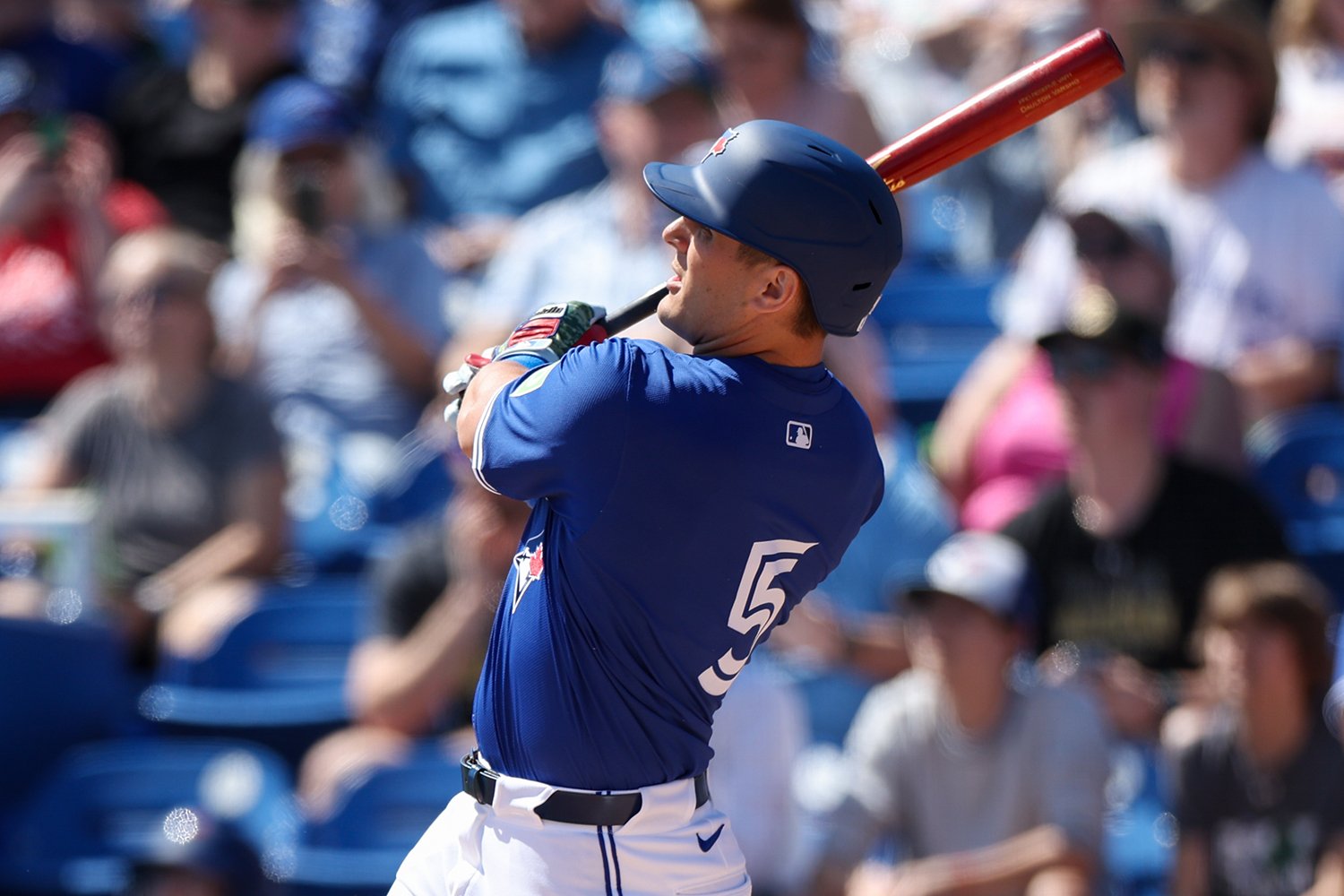 Daulton Varsho has now gotten into two spring training games – his first game action since the rotator cuff injury that cut his 2024 season short and necessitated surgery – and he’s started off with a bang. Two of them, actually. As I write on Monday, Varsho has one walk, no strikeouts, and two hits – both of them home runs – in his six spring training playoff PAs. Yes, of course I’ll be happy to show them to you. Enjoy. First of all, it’s a great sign that Varsho is ahead of schedule in his recovery and back hitting bombs. Further, I don’t know that you could pick two home runs that better encapsulate who he is as a hitter. The first one is an inside pitch, and it allows Varsho to do what he loves: turn on the ball. As I wrote last week, Varsho’s whole swing is geared toward pulling the ball in the air, and when a right-hander leaves a changeup hanging right over the middle of the plate like Olson Reese did here, it’s Christmas in February. If you watch it again, you’ll see Varsho lean back on the ball, which players only do when they’re really swinging comfortably. This is Varsho’s ideal swing. It’s amazing that it came in his first plate appearance after returning from surgery. In its own way, the second homer is even more Varsho. It’s not his ideal swing, but it highlights his swing’s defining characteristic: it’s incredible steepness. Few players bring their barrel up through the zone at such an extreme angle. Varsho goes down and golfs a Taijuan Walker sweeper below the plate straight up in the air. The ball has an absurd launch angle of 45 degrees, and yet it just keeps on going. This is a rare feat; through the entire 2024 season, just nine home runs were hit at such an extreme launch angle. This is who Varsho is. He launches the ball. But neither of those is the swing that I really want to talk about. So far, Varsho has put five balls into play: two homers and three groundouts. Unsurprisingly, the homers came on slower pitches that gave Varsho time to go out and attack the ball in front of the plate, the secret to pull-side power. Two of the three groundouts were fastballs that didn’t give Varsho time to get his arms extended, and one other a curveball that just plain fooled him. Once again, all of this tracks. He likes to go out and yank the ball toward right field, and that’s easier to do on a slower pitch. When he can’t catch up, he’ll roll over the ball and groundout to the pull side. But one of those groundouts was not like the others. I know this doesn’t look like much, but Varsho hit this ball 109.4 mph. That's not just extremely hard; it's tied for the 17th-hardest ball of his entire career. Keep in mind that he’s still recovering from shoulder surgery, and keep in mind that shoulder injuries tend to sap hitters’ power. There was never any guarantee that he would be able to swing quite as hard coming back from this injury. Varsho is not all the way back, not by any stretch a sure thing to be in the lineup on Opening Day, and yet he just hit one of the hardest balls of his entire career. I know this was a routine groundout, and I know everyone’s excited that his rehab is ahead of schedule, but this is more exciting. It’s one of the best signs we could’ve gotten about where Varsho is and who he’ll be when he gets back. Varsho still has plenty of work to do to make himself a productive hitter and all-around star, but power is a huge part of his game. Knowing that he can still reach top-end exit velocity means that we can still dream on that star potential, in 2025 and beyond.
 -
Yes, the home runs are great, but a routine groundout told us a lot more about Varsho's recovery and what we should expect from him in 2025. Daulton Varsho has now gotten into two spring training games – his first game action since the rotator cuff injury that cut his 2024 season short and necessitated surgery – and he’s started off with a bang. Two of them, actually. As I write on Monday, Varsho has one walk, no strikeouts, and two hits – both of them home runs – in his six spring training playoff PAs. Yes, of course I’ll be happy to show them to you. Enjoy. First of all, it’s a great sign that Varsho is ahead of schedule in his recovery and back hitting bombs. Further, I don’t know that you could pick two home runs that better encapsulate who he is as a hitter. The first one is an inside pitch, and it allows Varsho to do what he loves: turn on the ball. As I wrote last week, Varsho’s whole swing is geared toward pulling the ball in the air, and when a right-hander leaves a changeup hanging right over the middle of the plate like Olson Reese did here, it’s Christmas in February. If you watch it again, you’ll see Varsho lean back on the ball, which players only do when they’re really swinging comfortably. This is Varsho’s ideal swing. It’s amazing that it came in his first plate appearance after returning from surgery. In its own way, the second homer is even more Varsho. It’s not his ideal swing, but it highlights his swing’s defining characteristic: it’s incredible steepness. Few players bring their barrel up through the zone at such an extreme angle. Varsho goes down and golfs a Taijuan Walker sweeper below the plate straight up in the air. The ball has an absurd launch angle of 45 degrees, and yet it just keeps on going. This is a rare feat; through the entire 2024 season, just nine home runs were hit at such an extreme launch angle. This is who Varsho is. He launches the ball. But neither of those is the swing that I really want to talk about. So far, Varsho has put five balls into play: two homers and three groundouts. Unsurprisingly, the homers came on slower pitches that gave Varsho time to go out and attack the ball in front of the plate, the secret to pull-side power. Two of the three groundouts were fastballs that didn’t give Varsho time to get his arms extended, and one other a curveball that just plain fooled him. Once again, all of this tracks. He likes to go out and yank the ball toward right field, and that’s easier to do on a slower pitch. When he can’t catch up, he’ll roll over the ball and groundout to the pull side. But one of those groundouts was not like the others. I know this doesn’t look like much, but Varsho hit this ball 109.4 mph. That's not just extremely hard; it's tied for the 17th-hardest ball of his entire career. Keep in mind that he’s still recovering from shoulder surgery, and keep in mind that shoulder injuries tend to sap hitters’ power. There was never any guarantee that he would be able to swing quite as hard coming back from this injury. Varsho is not all the way back, not by any stretch a sure thing to be in the lineup on Opening Day, and yet he just hit one of the hardest balls of his entire career. I know this was a routine groundout, and I know everyone’s excited that his rehab is ahead of schedule, but this is more exciting. It’s one of the best signs we could’ve gotten about where Varsho is and who he’ll be when he gets back. Varsho still has plenty of work to do to make himself a productive hitter and all-around star, but power is a huge part of his game. Knowing that he can still reach top-end exit velocity means that we can still dream on that star potential, in 2025 and beyond. View full article
-
Daulton Varsho's recovery from shoulder surgery is going better than expected, and he'll suit up as the designated hitter against the Yankees this afternoon. Later today, Daulton Varsho will get his first taste of spring training. In recent days, it has emerged that Varsho’s recovery from September surgery on his right rotator cuff is ahead of schedule. Varsho has been shagging fly balls and hitting with no restraints, and he has progressed to throwing from a distance of 120 feet. At 1:07 PM today, the Blue Jays will face the Yankees and he’ll get his first taste of game action in 2025, as the designated hitter. The team listed him as questionable for opening day over the winter, but with things going so well, Gregor Chisholm reported that “there’s growing optimism in camp that Varsho might be ready by opening day,” even if no one wants to be the person to risk saying those words out loud. “I think, for everybody, I’m ahead of schedule,” Varsho told reporters. “I’m taking it day by day, knowing that hitting is ahead and throwing is going to be further behind. But things are going well. I’m feeling it come out a little bit more. I heard my arm whip the other day. So I was like, all right, we’re getting close.” Varsho had been throwing every other day, but he threw on consecutive days for the first time this week. It would be hard to overstate how big a lift it would be to have a fully healthy Varsho for the whole season. He’s absolutely one of the team’s biggest make-or-break players. “It’s a big year for Varsh,” said manager John Schneider. The 28-year-old has a solid argument as the greatest defensive outfielder in the game today, and for the first time in his career, he’s expected to have sole possession of center field. Between his defense and his excellent baserunning, he doesn’t have to provide much value at the plate to be a standout. He’s only put up an above-average batting line once, in 2022, when his 106 wRC+ (just 6% better than the average hitter) allowed him to put up 4.4 fWAR. Despite putting up an almost exactly average offensive season in 2024, Varsho was still one of the Blue Jays’ best players, putting up 3.3 fWAR. But the thing is, Varsho absolutely has the tools to put up big offensive numbers. Although his surface-level exit velocity numbers are underwhelming, Varsho possesses above-average bat speed, and his 90th percentile exit velocity, one of the best indicators of power, has consistently registered around the league average. The left-handed hitter excels at pulling the ball in the air, a recipe for making the most of his contact, and it has allowed him to hit at least 18 home runs in each of his three full major league seasons. That steep swing also results in a lot of swing-and-miss and mishits, the real reason that his exit velocity numbers are lacking. According to Sports Info Solution, his 22% soft contact rate was the second-highest among all qualified players in 2024, while Statcast rated his 24% squared-up rate as the absolute worst. Still, that approach might make Varsho just the kind of player who could benefit the most from the tutelage of new hitting coach David Popkins, who arrived from a Minnesota organization that has for years specialized in pulling the ball in the air. Because of the surgery, Varsho didn’t have the chance to spend the full offseason working on his swing, but he’s still at an age when most players are just hitting their offensive primes. Despite his contact issues, he ran chase and walk rates in 2024, so it’s not as if he’s incapable of making good swing decisions. There’s a more complete hitter in there waiting to be unlocked if Varsho can find a way to modulate his sell-out-for-pull-and-loft approach in order to make more, better contact. Even if he doesn’t, another league-average season at the plate would make him to continue performing as a solid three-win player. With Bo Bichette and Vladimir Guerrero Jr. e ntering the walk years, and after the Blue Jays signed free agents Max Scherzer, Anthony Santander, and Jeff Hoffman and traded for Andrés Giménez, there’s serious urgency to compete in a stacked American League East. Getting a whole season of Varsho would go a long way toward that goal. View full article
-
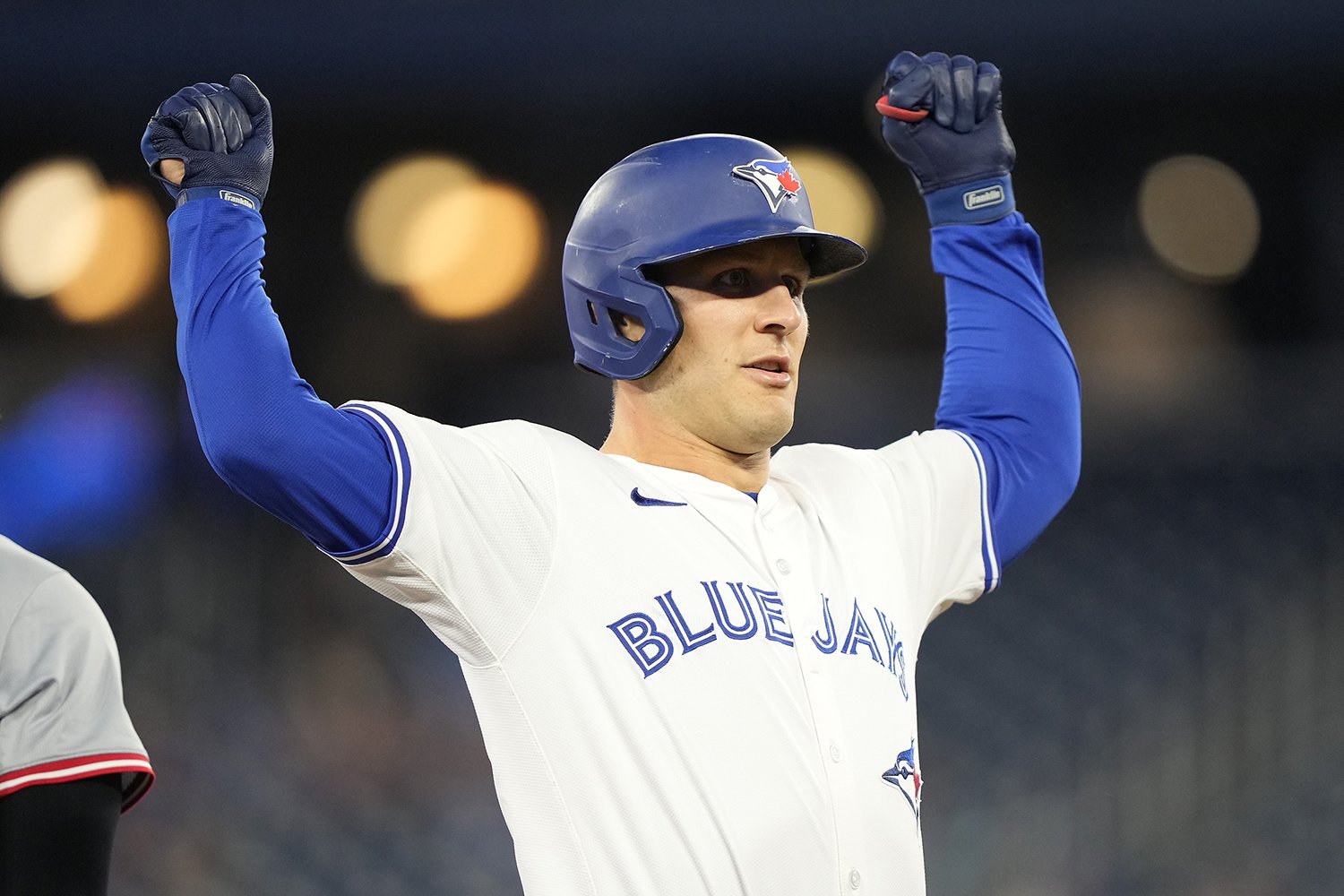 Later today, Daulton Varsho will get his first taste of spring training. In recent days, it has emerged that Varsho’s recovery from September surgery on his right rotator cuff is ahead of schedule. Varsho has been shagging fly balls and hitting with no restraints, and he has progressed to throwing from a distance of 120 feet. At 1:07 PM today, the Blue Jays will face the Yankees and he’ll get his first taste of game action in 2025, as the designated hitter. The team listed him as questionable for opening day over the winter, but with things going so well, Gregor Chisholm reported that “there’s growing optimism in camp that Varsho might be ready by opening day,” even if no one wants to be the person to risk saying those words out loud. “I think, for everybody, I’m ahead of schedule,” Varsho told reporters. “I’m taking it day by day, knowing that hitting is ahead and throwing is going to be further behind. But things are going well. I’m feeling it come out a little bit more. I heard my arm whip the other day. So I was like, all right, we’re getting close.” Varsho had been throwing every other day, but he threw on consecutive days for the first time this week. It would be hard to overstate how big a lift it would be to have a fully healthy Varsho for the whole season. He’s absolutely one of the team’s biggest make-or-break players. “It’s a big year for Varsh,” said manager John Schneider. The 28-year-old has a solid argument as the greatest defensive outfielder in the game today, and for the first time in his career, he’s expected to have sole possession of center field. Between his defense and his excellent baserunning, he doesn’t have to provide much value at the plate to be a standout. He’s only put up an above-average batting line once, in 2022, when his 106 wRC+ (just 6% better than the average hitter) allowed him to put up 4.4 fWAR. Despite putting up an almost exactly average offensive season in 2024, Varsho was still one of the Blue Jays’ best players, putting up 3.3 fWAR. But the thing is, Varsho absolutely has the tools to put up big offensive numbers. Although his surface-level exit velocity numbers are underwhelming, Varsho possesses above-average bat speed, and his 90th percentile exit velocity, one of the best indicators of power, has consistently registered around the league average. The left-handed hitter excels at pulling the ball in the air, a recipe for making the most of his contact, and it has allowed him to hit at least 18 home runs in each of his three full major league seasons. That steep swing also results in a lot of swing-and-miss and mishits, the real reason that his exit velocity numbers are lacking. According to Sports Info Solution, his 22% soft contact rate was the second-highest among all qualified players in 2024, while Statcast rated his 24% squared-up rate as the absolute worst. Still, that approach might make Varsho just the kind of player who could benefit the most from the tutelage of new hitting coach David Popkins, who arrived from a Minnesota organization that has for years specialized in pulling the ball in the air. Because of the surgery, Varsho didn’t have the chance to spend the full offseason working on his swing, but he’s still at an age when most players are just hitting their offensive primes. Despite his contact issues, he ran chase and walk rates in 2024, so it’s not as if he’s incapable of making good swing decisions. There’s a more complete hitter in there waiting to be unlocked if Varsho can find a way to modulate his sell-out-for-pull-and-loft approach in order to make more, better contact. Even if he doesn’t, another league-average season at the plate would make him to continue performing as a solid three-win player. With Bo Bichette and Vladimir Guerrero Jr. e ntering the walk years, and after the Blue Jays signed free agents Max Scherzer, Anthony Santander, and Jeff Hoffman and traded for Andrés Giménez, there’s serious urgency to compete in a stacked American League East. Getting a whole season of Varsho would go a long way toward that goal.
 -
Orelvis Martinez has plenty of limitations, but on Saturday, he reminded the Blue Jays that he does one thing so well that the rest of it might not matter. Question marks surround Orelvis Martinez. They start with his 80-game suspension for failing a performance enhancing drug test, which was announced just three days after he made his big league debut in June. They continue onto the field. Martinez’s defense is far from a sure thing. He’s an infielder who’s spent time at second, short, and third over his six years in the minors, but he still doesn’t have a position. His plate discipline is equally concerning. In 2024, his 30% chase rate put him in the 32nd percentile of triple-A batters (minimum 500 pitches outside the zone), and his 35% whiff rate put him in the 12th percentile (minimum 1,000 total pitches). Simply put, Martinez may well chase too much and whiff too much to ever be a productive big leaguer. That’s a whole lot of uncertainty, but one thing has never been in doubt: Martinez can crush a baseball. He hit at least 28 home runs in his last three full minor-league seasons, and he hit 17 over just 74 games in 2024. On Saturday, in the Blue Jays’ spring training opener against the Yankees, he wielded that power to give us a reminder of why all those question marks might be worth the worry, sending a Brandon Leibrandt fastball over the right center field fence. The 105.6-mph exit velocity was notable, especially for a line drive opposite-field shot that traveled 389 feet. That’s just not something every player can do. Although the trade for Andrés Giménez closed off one potential avenue for Martinez, the Blue Jays’ third base situation is still very much unsettled, with Ernie Clement seeming to be the leading contender. Designated hitter is even more wide open. If Martinez keeps hitting in spring training, if he looks like he could pass for any kind of defender, the Blue Jays won’t have much choice but to roster him and let him swing for the fences. After signing as an international free agent in 2018, Martinez is 23 years old with 455 minor league games under his belt. At some point, he’ll have to get his shot against big league pitching, and the Blue Jays don’t exactly have him blocked. The projection systems are nearly unanimous in their view of Martinez. They see him putting up a wRC+ right around 90 in 2024 – 10% worse than the average hitter – blasting plenty of home runs, but striking out more than a quarter of the time. The one projection system that sees Martinez blowing those expectations out of the water is OOPSY, Jordan Rosenblum’s new system that pegs Martinez for a 107 wRC+, enough to make him a solid regular even if his defense underwhelms. Why does OOPSY love Martinez? Because it incorporates a lot of the newly available exit velocity and bat tracking data, and if there’s one thing Martinez can do, it’s generate bat speed. In other words, OOPSY is excited about him for all the same reasons that we are. It’s hard to know what to expect from Martinez. Plate discipline numbers tend to be very predictive. Players just don’t massively improve their ability to lay off bad pitches or make contact out of nowhere. If he’s going to make it with the Jays, Martinez will have to keep mashing enough homers to offset the strikeouts and the lack of walks. So far, he’s done that at every level of the minors, and he’s unlikely to get a better chance in the majors than the one he has right now. View full article
-
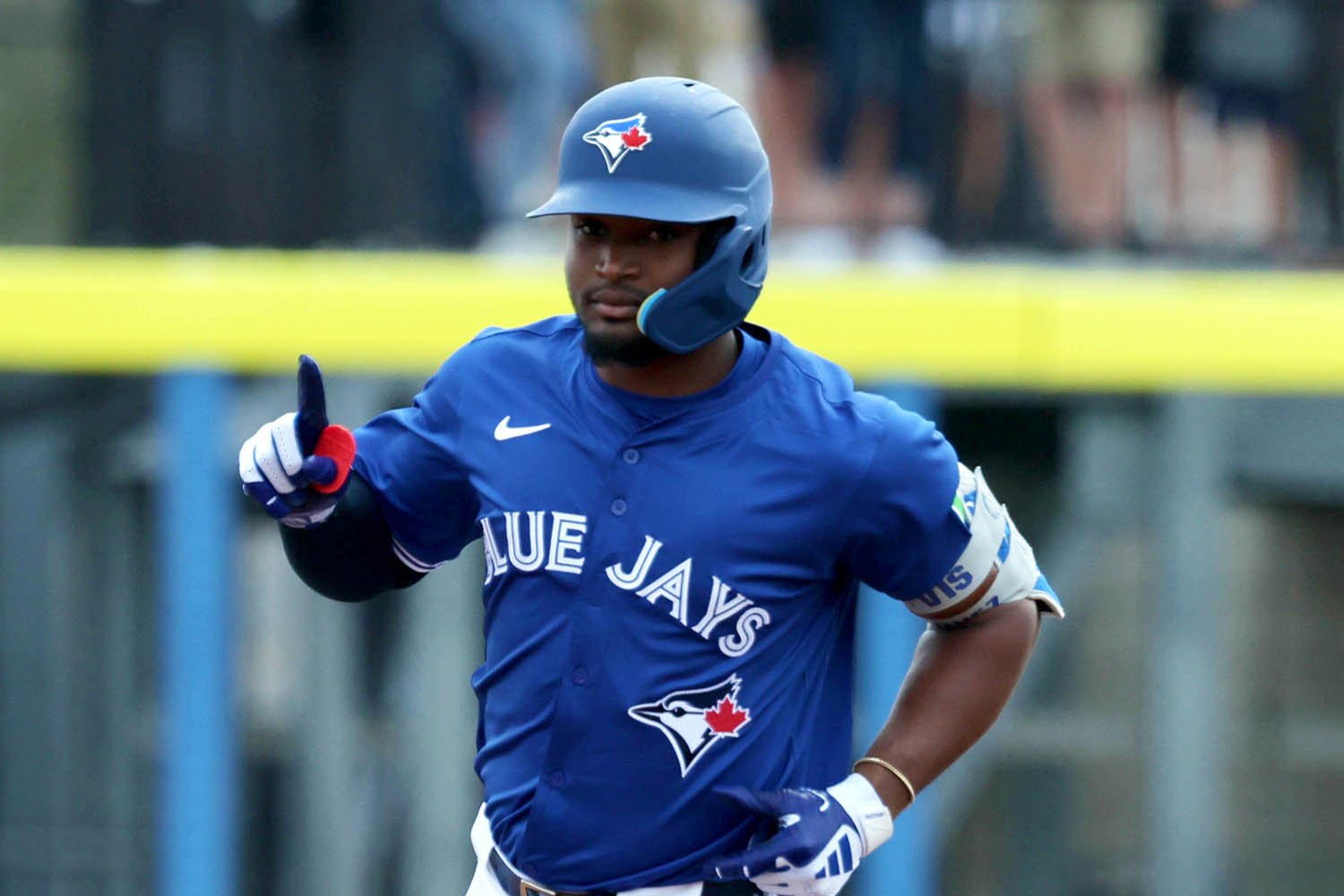 Question marks surround Orelvis Martinez. They start with his 80-game suspension for failing a performance enhancing drug test, which was announced just three days after he made his big league debut in June. They continue onto the field. Martinez’s defense is far from a sure thing. He’s an infielder who’s spent time at second, short, and third over his six years in the minors, but he still doesn’t have a position. His plate discipline is equally concerning. In 2024, his 30% chase rate put him in the 32nd percentile of triple-A batters (minimum 500 pitches outside the zone), and his 35% whiff rate put him in the 12th percentile (minimum 1,000 total pitches). Simply put, Martinez may well chase too much and whiff too much to ever be a productive big leaguer. That’s a whole lot of uncertainty, but one thing has never been in doubt: Martinez can crush a baseball. He hit at least 28 home runs in his last three full minor-league seasons, and he hit 17 over just 74 games in 2024. On Saturday, in the Blue Jays’ spring training opener against the Yankees, he wielded that power to give us a reminder of why all those question marks might be worth the worry, sending a Brandon Leibrandt fastball over the right center field fence. The 105.6-mph exit velocity was notable, especially for a line drive opposite-field shot that traveled 389 feet. That’s just not something every player can do. Although the trade for Andrés Giménez closed off one potential avenue for Martinez, the Blue Jays’ third base situation is still very much unsettled, with Ernie Clement seeming to be the leading contender. Designated hitter is even more wide open. If Martinez keeps hitting in spring training, if he looks like he could pass for any kind of defender, the Blue Jays won’t have much choice but to roster him and let him swing for the fences. After signing as an international free agent in 2018, Martinez is 23 years old with 455 minor league games under his belt. At some point, he’ll have to get his shot against big league pitching, and the Blue Jays don’t exactly have him blocked. The projection systems are nearly unanimous in their view of Martinez. They see him putting up a wRC+ right around 90 in 2024 – 10% worse than the average hitter – blasting plenty of home runs, but striking out more than a quarter of the time. The one projection system that sees Martinez blowing those expectations out of the water is OOPSY, Jordan Rosenblum’s new system that pegs Martinez for a 107 wRC+, enough to make him a solid regular even if his defense underwhelms. Why does OOPSY love Martinez? Because it incorporates a lot of the newly available exit velocity and bat tracking data, and if there’s one thing Martinez can do, it’s generate bat speed. In other words, OOPSY is excited about him for all the same reasons that we are. It’s hard to know what to expect from Martinez. Plate discipline numbers tend to be very predictive. Players just don’t massively improve their ability to lay off bad pitches or make contact out of nowhere. If he’s going to make it with the Jays, Martinez will have to keep mashing enough homers to offset the strikeouts and the lack of walks. So far, he’s done that at every level of the minors, and he’s unlikely to get a better chance in the majors than the one he has right now.
 -
Max Scherzer took one small step toward answering the big question of his offseason. Age and health are the big concerns for Max Scherzer this year. Will the 40-year-old Scherzer be able to bounce back from an injury-plagued 2024 season in which his velocity ticked down and his stuff ticked down even further, or is that just who he is now? The Blue Jays got an encouraging sign on Tuesday, as Scherzers' first spring training went off without a hitch. Well, with two minor hitches. The first hitch came early, when Scherzer allowed Cardinals leadoff batter Victor Scott III to lace a triple into left center. More concerning than the hard contact was center fielder Joey Loperfido getting turned around and crashing awkwardly into the wall. The second hitch came in Scherzer’s second and final inning, when he challenged an umpire’s call only for the automated ball-strike system to demonstrate that his curveball missed the plate by a massive margin. But that was it for the hitches! Scherzer looked fantastic, reaching 94.2 mph with his fastball, striking out four, and needing just 34 pitches to get through his two innings. Scherzer’s fastball averaged 92.6 mph, a tenth of a mile an hour faster than he averaged in 2024. That’s an encouraging sign this early in spring training, as bouncing back toward the 93.7 mph he averaged in 2023 would be a huge help in making sure that his stuff plays well. Scherzer even got one of his trademark strikeouts on a fastball up at the top of the zone, a huge part of his game. The thing that jumped out at me was Scherzer’s changeup. He threw just four changeups, but they looked particularly sharp to the naked eye, and Statcast confirmed that the pitch averaged 16 inches of arm-side run while coming in at 82.8 mph, almost exactly what it averaged in 2024. Scherzer’s changeup never approached that much horizontal break in any of his 2024 starts, and only reached it a couple times in 2023. Here’s a graph to help you visualize the difference. It shows the average break on Scherzer’s changeup for every game over the past three seasons. The big orange dot is Tuesday’s game. As you can see, the dots have drifted down and toward the left over time. The yellow dots for 2022 had more rise and more arm-side run, and the blue dots for 2024 had the least. However, on Saturday, Scherzer’s change looked much closer to its 2023 form, with some of the most extreme run he's seen in quite a bit. According to pitching analyst Thomas Nestico, Scherzer’s changeup earned a stuff grade of 95 in 2024, but on Tuesday, it was worth an excellent 114. The changeup has historically been the weak spot in Scherzer’s repertoire. Pitch modeling system Stuff+ has considered it Scherzer’s weakest offering in each of the past five seasons, and according to Baseball Savant’s run values, it has cost accrued a negative run value in nearly every season dating all the way back to 2019. Just to be very transparent, I am overreacting to four pitches. It’s still just February, and we’ll have to wait and see whether Scherzer’s changeup is able to hold onto that extra bite. It’s absolutely possible that it will disappear. However, his other stuff looked sharper too, and let’s not forget that Scherzer was very impaired by injury in 2024. If what we saw on Tuesday is indicative of who Scherzer is once he’s fully healthy, Jays fans could be in for a treat. View full article
-
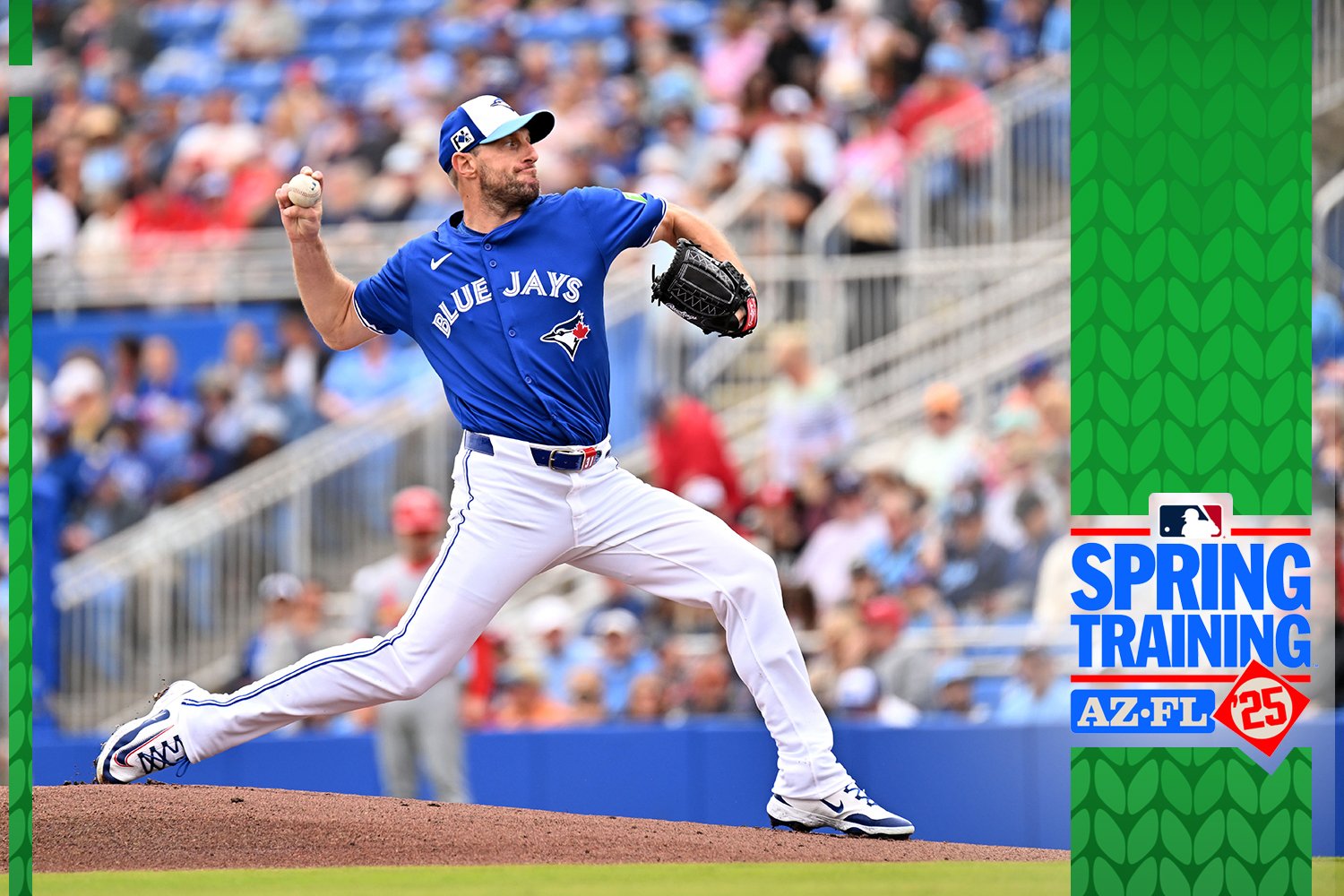 Age and health are the big concerns for Max Scherzer this year. Will the 40-year-old Scherzer be able to bounce back from an injury-plagued 2024 season in which his velocity ticked down and his stuff ticked down even further, or is that just who he is now? The Blue Jays got an encouraging sign on Tuesday, as Scherzers' first spring training went off without a hitch. Well, with two minor hitches. The first hitch came early, when Scherzer allowed Cardinals leadoff batter Victor Scott III to lace a triple into left center. More concerning than the hard contact was center fielder Joey Loperfido getting turned around and crashing awkwardly into the wall. The second hitch came in Scherzer’s second and final inning, when he challenged an umpire’s call only for the automated ball-strike system to demonstrate that his curveball missed the plate by a massive margin. But that was it for the hitches! Scherzer looked fantastic, reaching 94.2 mph with his fastball, striking out four, and needing just 34 pitches to get through his two innings. Scherzer’s fastball averaged 92.6 mph, a tenth of a mile an hour faster than he averaged in 2024. That’s an encouraging sign this early in spring training, as bouncing back toward the 93.7 mph he averaged in 2023 would be a huge help in making sure that his stuff plays well. Scherzer even got one of his trademark strikeouts on a fastball up at the top of the zone, a huge part of his game. The thing that jumped out at me was Scherzer’s changeup. He threw just four changeups, but they looked particularly sharp to the naked eye, and Statcast confirmed that the pitch averaged 16 inches of arm-side run while coming in at 82.8 mph, almost exactly what it averaged in 2024. Scherzer’s changeup never approached that much horizontal break in any of his 2024 starts, and only reached it a couple times in 2023. Here’s a graph to help you visualize the difference. It shows the average break on Scherzer’s changeup for every game over the past three seasons. The big orange dot is Tuesday’s game. As you can see, the dots have drifted down and toward the left over time. The yellow dots for 2022 had more rise and more arm-side run, and the blue dots for 2024 had the least. However, on Saturday, Scherzer’s change looked much closer to its 2023 form, with some of the most extreme run he's seen in quite a bit. According to pitching analyst Thomas Nestico, Scherzer’s changeup earned a stuff grade of 95 in 2024, but on Tuesday, it was worth an excellent 114. The changeup has historically been the weak spot in Scherzer’s repertoire. Pitch modeling system Stuff+ has considered it Scherzer’s weakest offering in each of the past five seasons, and according to Baseball Savant’s run values, it has cost accrued a negative run value in nearly every season dating all the way back to 2019. Just to be very transparent, I am overreacting to four pitches. It’s still just February, and we’ll have to wait and see whether Scherzer’s changeup is able to hold onto that extra bite. It’s absolutely possible that it will disappear. However, his other stuff looked sharper too, and let’s not forget that Scherzer was very impaired by injury in 2024. If what we saw on Tuesday is indicative of who Scherzer is once he’s fully healthy, Jays fans could be in for a treat.
 -
Vladimir Guerrero Jr. and Bo Bichette came into their first spring training game ready to hit the ball hard. And on the ground. Always on the ground. The Blue Jays and Tigers were rained out on Monday, but after just one spring training game, Vladimir Guerrero Jr. is 1-for-2, for a tidy .500 batting average. It's hard to think of something less surprising than Guerrero getting off to a good start at the plate. Since his debut in 2019, no one in baseball has hit the ball hard as many times as Vladimir Guerrero Jr. That's not hyperbole; Statcast, which classifies any ball with an exit velocity over 95 mph as hard-hit, tells the tale very clearly. Guerrero's 1,313 hard-hit balls lead all players. The bad news? Guerrero gets surprisingly little production from all that loud contact. Among players who have seen at least 2,000 pitches over that period, his .612 wOBA on hard-hit balls ranks 328th. There's a very simple reason for that, and I doubt it's a surprise to you: Over his career, Guerrero has hit 615 hard-hit groundballs. No other player is within 100 of that total. He led the league in both 2022 and 2020, and has never finished lower than third in any of the past five seasons. Guerrero just doesn't launch the ball the way other sluggers do, so even though he hits the ball harder than just about anyone on earth, he doesn't make the most of it. He's still an excellent hitter because he's excellent at just about every other part of the craft, but that one missing piece can get frustrating. It sometimes seems like it should be a simple thing to fix, but it's not. Swings are complicated, and Guerrero is so preternaturally talented that it would be downright irresponsible to attempt to mess with his. All the same, there's no question as to whether it affects who Guerrero is on the field. That's a graph that shows his wRC+ and groundball rate in every season of his career. With the exception of 2023, the pattern couldn't be more clear. When Guerrero's groundball rate is high, his offensive output is low (relatively speaking). That's just who he is. Coming into the 2025 season, we don't need to ask ourselves whether Guerrero will hit well; he always hits well. We need to ask ourselves whether he'll be one of the game's best hitters, and that depends to a great extent on his launch angle. All of this is preamble for Guerrero's first spring training performance on Saturday. Would you care to take a guess as to what Guerrero did during his two trips to the plate? Here's the hit from his first at-bat, an absolute rocket that left his bat at 105.5 mph and drove in a run. Yup, an absolute rocket that just barely made it past the glove of the diving first baseman. Classic Guerrero. And just for good measure, here's how his second at-bat ended. In case you're wondering, this was also a hard-hit ball, with an exit velocity of 96.5 mph. Guerrero is already in midseason form: Two crushed baseballs, launch angles of 2 and -12 degrees, a groundout and a single. To be clear, two spring training at-bats don't mean anything at all. But they are allowed to trigger us just a little bit. Before I go, I should mention one more thing. As you might be aware, Guerrero isn't the only culprit in this particular department. Bo Bichette has a higher career groundball rate than Guerrero. He led the league in hard-hit grounders in 2021 and finished in third in 2022. (Yes, that means that a Blue Jay has led the league in hard-hit groundballs three times, with six top-five finishes, in the last five seasons.) Remember when I told you Guerrero had a .612 wOBA on hard-hit grounders? Bichette was right behind him at .611. Every concern I've ascribed to Guerrero in the preceding paragraphs also applies to Bichette to some degree, and they also showed up on Saturday. Bichette came to the plate three times and ripped three hard-hit balls. He went 2-for-3 with a double (although the single was very much a gift from the official scorer). Although one was categorized as a line drive, none of them traveled as far as 150 feet, and all three had launch angles below 10 degrees. Here's the liner: At the very least, it's encouraging that Guerrero and Bichette have come into spring training mashing from day one. But hopefully they remember what a fly ball looks like at some point. View full article